
Belcea Quartet [Corina Belcea, Axel Schacher (violins), Krzysztof Chorzelski (viola), Antoine Lederlin (cello)] Photo (c) Marco Borggreve
Haydn String Quartet in D minor Op.76/2 ‘Fifths’ (1797) (4:27 – 25:22 on the broadcast link)
Britten String Quartet no.3 Op.94 (1975) (28:18 – 56:35)
Wigmore Hall, London
Monday 11 March 2019
To hear the BBC broadcast through BBC Sounds, please follow this link
Commentary and Review by Ben Hogwood
Hans Keller was one of the great musicologists and musical writers of the 20th century, and this BBC Radio 3 Lunchtime Concert at the Wigmore Hall marked the occasion of what would have been his 100th birthday.
Despite his obvious talents as a writer and analyst Keller was a divisive figure, his forthright views often creating controversy, but the notes for the program accompanying this concert reflected a deeply passionate listener who simply loved the music of Haydn and Britten.
For Keller, Haydn was ‘musical history’s greatest thematic economist’ – a point borne out by the String Quartet in D minor Op.76/2. The nicknames applied to some of Haydn’s best-loved works are evocative, even if they do relegate some more deserving works to the sidelines. The ‘Fifths’ for this quartet refer not just to the melodic intervals in the first theme of the first movement (from 4:27 on the broadcast), where Corina Belcea’s first violin took an authoritative lead in this performance, but to the second theme too.
The discourse of the first movement was extremely satisfying in this performance, the Belcea Quartet lingering on one particularly spicy chord () while providing energy and passion. The second movement Andante (11:45), more a graceful minuet than a slow movement, had some lovely moments of radiance from all four players, with a lightness of touch carrying the whole way through.
In complete contrast the Menuetto itself (17:42) wore a stern expression, dramatically poised as its canon played out between upper and lower parts. It did relent a little however for its trio section (18:58), Haydn slipping into the major key for a rustic dance. Here the Belcea Quartet judged the speeds just right, leaning on the down beat perfectly, before the gruff Minuetto theme returned (20:16).
The finale, marked Vivace assai (21:11), began with a hushed urgency, the main theme a little flighty in Corina Belcea’s hands, but by the time Haydn transported the music into the major key the quartet had an assertive grip on the performance.
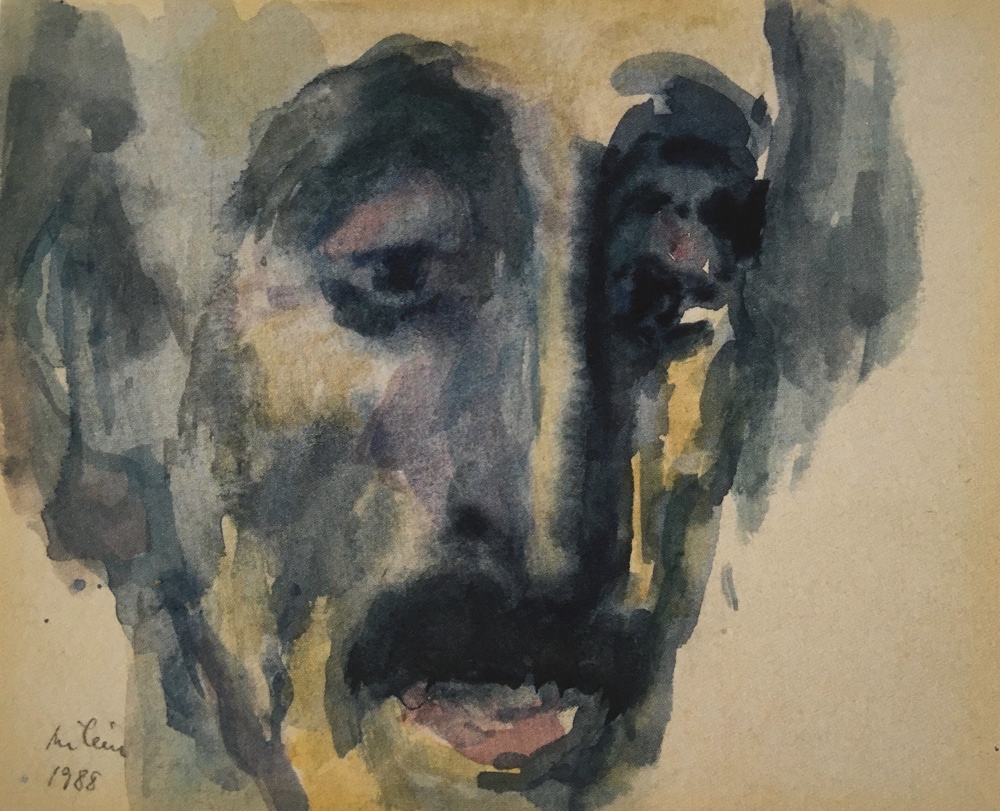
Hans Keller, as captured by his wife, the artist Milein Cosman
Benjamin Britten loved the music of Haydn, declaring ‘If I feel down when I go to bed, I take a Haydn quartet with me. It’s all in there.’ His own contributions to the string quartet have proved to be long lasting, but the third – dedicated to Hans Keller who had been persisting that Britten write it – is an extraordinary piece.
Britten conceived it in five movements which might look unconventional on paper, but which translate to an extremely clever interpretation of the traditional sonata form, impressing his friend Keller greatly. However the technical achievements are not at the expense of emotion, as the Belcea Quartet showed here. The first movement, Duets (28:18) pairs second violin with viola – Axel Schacher and Krzysztof Chorzelski beginning authoritatively – before first violin and cello add their thoughts (Belcea and Antoine Lederlin in similar unity of voice).
A scabrous Ostinato movement follows (34:24), the quartet stretched to their limits by Britten’s ‘multiple stopping’ (several notes played at once on each instrument) and on the edge emotionally, but brilliantly played here.
It felt like time ceased to exist for the Solo movement (38:04), Belcea finding a radiant calm in a hall so silent that even a passing tube train could be heard underneath. This was a deeply felt but incredibly free account from the violinist, its central section like a swift on the wing with no restrictions of movement or direction until pure stillness from 42:31.
Following this the forthright Burlesque (43:38), with its elements of Shostakovich, came as something of a shock – but led inevitably into the final Recitative and Passacaglia, subtitled La Serenissima (46:23). The shafts of bright light at the opening are unmistakeably linked to Aldeburgh, and here the quartet found yet another higher plain, Britten’s last substantial work playing out his last days but taking his leave in music of great restraint and beauty.
The reassuring rising motif of the Passacaglia (from 49:22) sets a firm base, from which Britten spins a number of variations. It ends openly (56:08), on a remarkable chord – as Keller says ‘a non-end’, Britten effectively declaring ‘I’m not dead yet’. It is a calling card for his music, restraint packed with hidden emotion – and the Belcea Quartet found its heart unerringly.
Further reading and listening
For more on Britten’s String Quartet no.3, you can visit this entry on the Good Morning Britten blog – an anniversary tribute to the composer from 2013 from yours truly.
Meanwhile the music played in this concert can be heard on the Spotify playlist below, including the Belcea Quartet’s own recording of the Britten:
The six works making up Haydn’s Op.76 represent the pinnacle of his writing for string quartet, and can be heard below in one of several fine available versions, this one from the Hungarian Takács String Quartet:
Britten’s contribution to the string quartet repertoire is hardly negligible itself, mind, and Keller was in great awe of the String Quartet no.2 in particular. Here is a link to the Belcea Quartet’s recordings of that, the extrovert D major String Quartet no.1 and the youthful but assured 3 Divertimenti:


 Arcana.fm