Adès O Albion (1994, arr. 2019) Pärt Fratres (1977, arr. 1991) Purcell (arr. Britten) Chacony in G minor Z730 (c1680, arr. 1948) Barber Adagio in B flat minor Op.11 (1935, arr. 1936) interspersed with poetry readings by Casey Bailey Fauré Requiem in D minor Op.48 (1887-90, rev. 1893)
James Platt (bass), Casey Bailey (poet), CBSO Children’s Chorus, CBSO Youth Chorus, CBSO Chorus, City of Birmingham Symphony Orchestra / Tomo Keller (violin/director), Mirga Gražinytė-Tyla (conductor)
Symphony Hall, Birmingham Saturday 6 November 2021
Written by Richard Whitehouse
Even if live music-making has gradually been returning to how it was, the (ongoing) legacy of Coronavirus could hardly be overlooked, thus a concert such as that given this evening by the City of Birmingham Symphony Orchestra was a necessary act of remembrance for all the many concertgoers to have been affected by the pandemic. As befitted such an occasion, no speeches or prefatory remarks were needed, with the darkening of the auditorium during the performance a simple but effective gesture which helped focus musicians and listeners alike.
Strings only were onstage in the first half – Tomo Keller directing a sequence as began with O Albion, Thomas Adès’s arrangement of the sixth movement from his quartet Arcadiana, whose gentle pathos made for the ideal entrée. Arvo Pärt has written numerous memorials and while Cantus might have been more appropriate in this context than Fratres, the latter’s sparing deployment of percussion as to underline its ritualistic emergence then withdrawal conveyed no mean eloquence. Surprising, perhaps, that Britten’s arrangement of Purcell’s Chacony is not heard more frequently on such occasions, its expressive intensification here informed by an acute rhythmic clarity. Barber’s Adagio is, of course, a staple at these times – the visceral emotion of its climax and subdued fatalism that ensues audibly conveyed here.
Interspersed between these pieces were poems by Casey Bailey, currently Birmingham Poet Laureate and whose readings were undeniably affecting in their sincerity – whether the heady reportage of 23.03.21 (a date no-one in the UK could hope to forget), the intimate evocation of Weight or graphic remembrance of Once. His appearances on stage were precisely judged as to segue into then out of the music either side and it was a pity when he did not take a call at the end of this first half, alongside the CBSO strings, given his contribution to proceedings.
Tomo Keller remained for the second half – adding ethereal counter-melodies to two of the sections in Fauré’s Requiem, whose 1893 version is without violins but with divided violas and cellos along with reduced woodwind and brass to make for a reading closer to the initial conception and certainly more apposite tonight. Her credentials in the choral repertoire well established, Mirga Gražinytė-Tyla conducted with a real sense of this work’s essential poise but without neglecting any deeper emotions. James Platt brought a ruminative warmth to the Hostias and Libera me, and it was an inspired touch to have the Pie Jesu sung in unison by the Children’s Chorus; its plaintiveness offsetting those richer tones of the Youth Chorus and CBSO Chorus, while opening-out the music’s textural and expressive range accordingly.
In one sense it would have been better had this concert not had to take place, given the legacy it commemorated (as was witnessed by the personal recollections occupying five pages of the programme) and yet, as those ethereal strains of the In Paradisum receded beyond earshot, a feeling of the Covid crisis having been recognized then overcome was palpable on the part of those present. Moreover, the CBSO’s next event is a performance of Janáček’s The Cunning Little Vixen – surely as transcendent and life-affirming an experience as could be hoped for.
Further information on the CBSO’s current season can be found at the orchestra’swebsite. For more on Casey Bailey, clickhere, for James Platt click here, and for Tomo Kellner here
Beethoven 7 Variations on ‘Bei Männern, welche Liebe fühlen’ from Mozart’s Die Zauberflöte WoO 46 (1796) Britten Cello Sonata in C major Op.65 (1961) Piazzolla Le grand tango (1982)
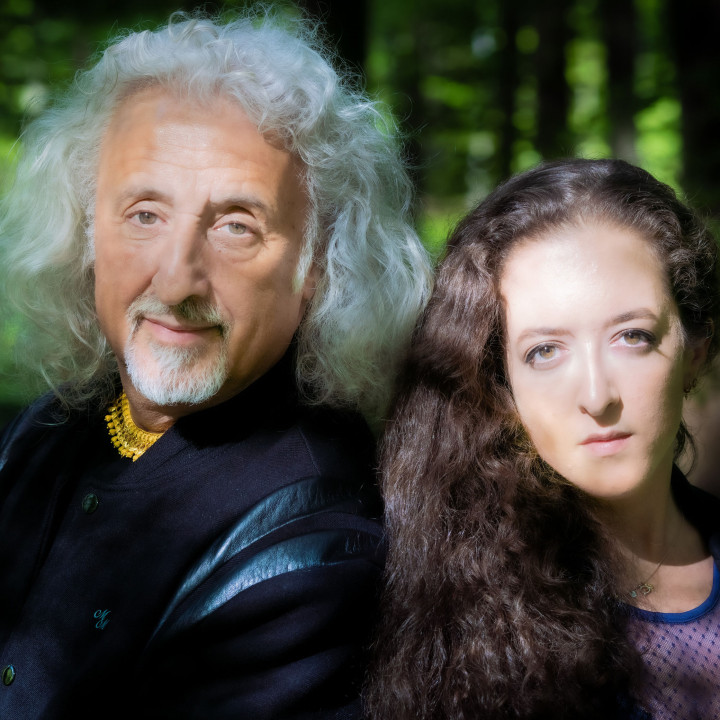
Mischa Maisky (cello), Lily Maisky (piano)
Wigmore Hall, London Monday 1 November 2021
Written by Ben Hogwood
Father and daughter duo Mischa and Lily Maisky presented an imaginative program of works for cello and piano in this BBC Radio 3 Lunchtime Concert, where it was gratifying to note a full attendance at the Wigmore Hall.
They immediately found the light-hearted spirit of Beethoven’s 7 Variations on Bei Männern, welche Liebe fühlen, an aria from Mozart’s Die Zauberflöte. The piano takes the lead for much of this work, and Lily’s phrasing was subtle yet nicely shaped. The burnished tone of Mischa’s cello was a feature in the minor-key fourth variation, while Lily’s sensitive ornamentation at the start of the sixth was especially attractive.
A compelling performance of Britten’s Cello Sonata followed. As a former pupil of Mstislav Rostropovich, Mischa Maisky effectively has a direct line to a work that started the beginning of an extremely fruitful musical friendship between Britten and Rostropovich that lasted up to the composer’s death 15 years later. This performance inhabited the spirit of the work from first note to last, with the feeling in the first movement Dialogo that we were eavesdropping on a private conversation. Britten’s frequent but subtle references to Shostakovich were nicely highlighted here, with a few witty asides.
In the second movement Scherzo the Maiskys were dancing a balletic routine, Mischa’s pizzicato questions finished off by Lily’s featherweight answers. The tempo was slightly slower than is often used here, but in this way the pair effectively pointed out the work’s proximity in Britten’s output to the opera A Midsummer Night’s Dream. The sombre third movement Elegie had a silvery tone from the cello, while the following Marcia dealt in sardonic humour. The finale was a tour de force, featuring low notes from Mischa’s cello capable of rattling the windows, before powering through to an emphatic finish.
Piazzolla’s Le Grand Tango celebrates the dance form with which the Argentinian composer became obsessed, though as he stated the preoccupation was in his mind rather than the dancing feet. This was a passionate performance, the Maiskys in hold throughout as they maintained their close musical chemistry, right from the full bodied notes with which the cello began to a red-blooded dance for the closing pages. In between we had music of great tenderness and affection, not to mention rhythmic persuasion.
The duo gave us two encores, the first of which was a heartfelt tribute to the recent passing of Nelson Freire, clearly a dear friend. Bloch’s Prayer, from the short suite From Jewish Life, was an ideal choice, reverently played and with a searing tone quality to the highest register. It was a moving tribute that could hardly be bettered. There was also an ideal response in the form of Mischa’s own transcription of Brahms’s Lerchengesang Op.70/2, where Lily’s piano took the expressive lead.
You can hear the music played by Mischa and Lily on the Spotify playlist below, compiling Mischa’s recordings for Deutsche Grammophon of all the repertoire:
For more information on Mischa Maisky you can visit hisartist page
Howard Argentum (2017) Britten Diversions Op.21 (1940, rev. 1954) Shostakovich Symphony no.10 in E minor Op.93 (1953)
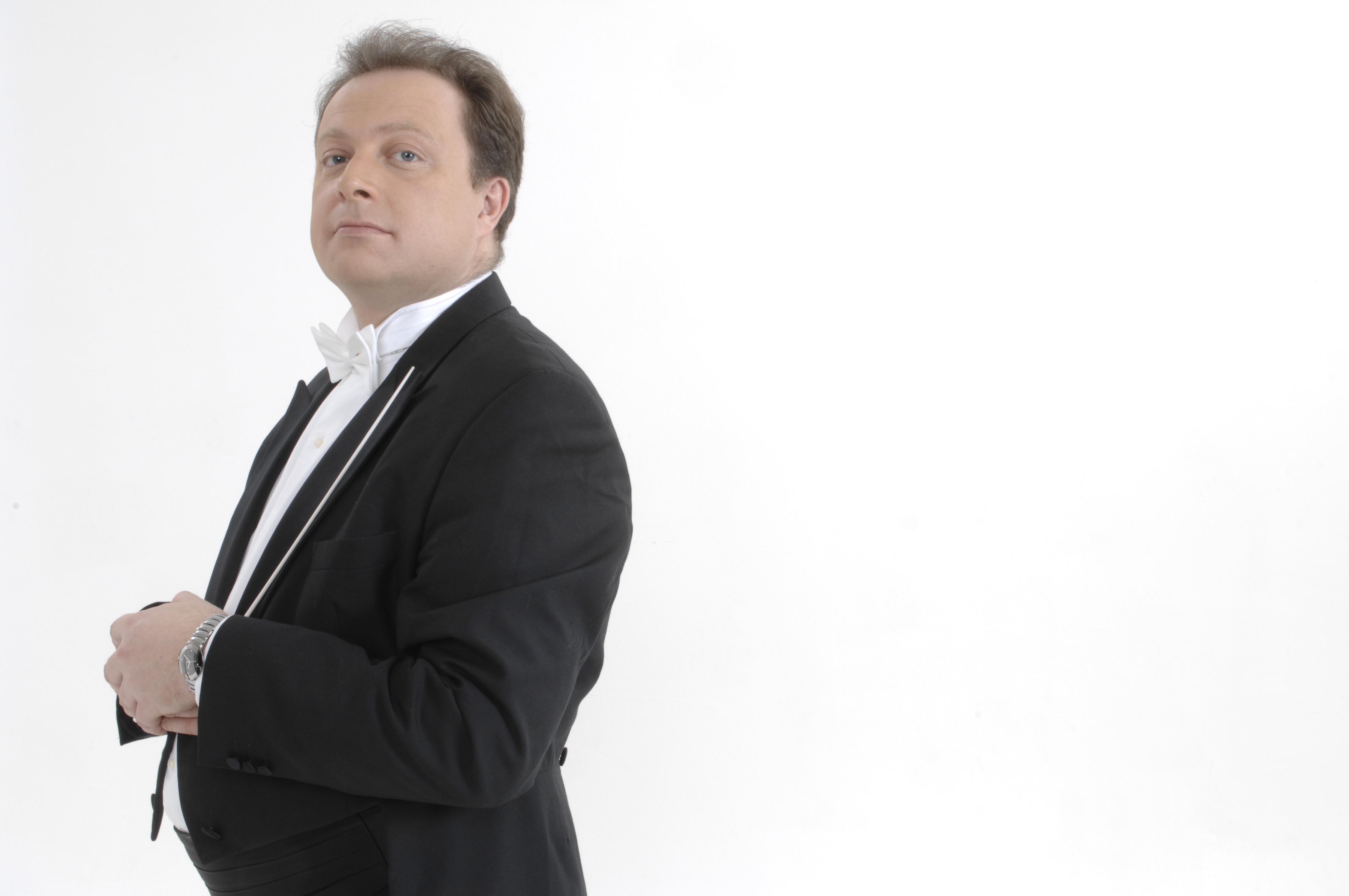
Nicholas McCarthy (piano, below), CBSO Youth Orchestra / Michael Seal (above)
Symphony Hall, Birmingham Sunday 31 October 2021 (3pm)
Written by Richard Whitehouse
It seems quite a while since the CBSO Youth Orchestra was last in action – this afternoon’s concert playing to its strengths with a programme as featured respectively early and mature works from Britten and Shostakovich, while beginning with a recent piece by Dani Howard.
Now in her late twenties, Howard is one among several British composers who have come to prominence in the past five years. Written to commemorate the silver-wedding anniversary of two close friends, the appropriately named Argentum is in a lineage of curtain-raisers by such as John Adams or Michael Torke – drawing audibly yet productively on such post-minimalist traits in music whose unbridled animation subsides towards a mid-point stasis, before rapidly regaining its previous energy over the course of a build-up to the pointedly affirmative close.
The CBSOYO evidently enjoyed making its acquaintance, then seemed no less attuned to the eclecticism pursued by Britten in his Diversions. Written for Paul Wittgenstein, who had lost his right-arm in the First World War, it takes the form of 12 variations on a theme announced by the orchestra whose faux-portentousness determines what follows. Prokofiev is the main influence (Britten could not have known his left-hand Fourth Concerto, written for but never played by Wittgenstein and unheard until the 1950s) on music of an inventiveness and verve admirably conveyed here by Nicholas McCarthy; his characterizing of each variation astutely gauged through to a scintillating ‘Toccata’ cadenza, with Michael Seal similarly judicious in the mock-solemnity of the ‘Adagio’ then a final ‘Tarantella’ of suitably uproarious humour.
Over his years as Associate Conductor of the CBSO, Seal has gained a formidable reputation in symphonic repertoire, with his account of Shostakovich’s Tenth Symphony never less than satisfying in its long-term cohesion. Not least the opening Moderato, unfolding at an almost unbroken pulse with the stark main theme powerfully wrought and its successor lacking only a degree of irony. The central development exuded palpable impetus and while the climactic arrival of the reprise could have been even more shattering, the wind-down into the musing coda was ideally judged. Taken at a swift if never headlong tempo, the Scherzo was suitably graphic in its evoking of violence (whether, or not, a ‘portrait’ of Stalin is beside the point), then the ensuing Allegretto was poised unerringly between slow movement and intermezzo.
This most intriguing portion of the work again lacked little in insight – with due credit to first horn Alex Hocknull for coming through, almost unscathed, in one of the lengthiest and most testing solos of the orchestral literature. A pity that Seal did not head straight into the finale, but his handling of its Andante introduction astutely mingled pathos with anticipation – the main Allegro itself pivoting between nonchalance and defiance through to a conclusion in which any thought of triumph over adversity was – rightly- withheld until the closing bars.
All in all, a gripping performance of a symphonic masterpiece and a fine demonstration of the CBSO Youth Orchestra’s collective prowess. The CBSO returns this Wednesday for Mozart and Mendelssohn frère et soeur, with Benjamin Grosvenor in Beethoven’s First Concerto.
Further information on the CBSO’s current season can be found at the orchestra’swebsite. For more on Michael Seal, clickhere – and for more on pianist Nicholas McCarthy, click here
Miller La Donna (2021) [UK premiere] Britten Violin Concerto in D minor Op.15 (1938-9) Beethoven Symphony no.6 in F major Op.68 ‘Pastoral’ (1807-08)
James Ehnes (violin), City of Birmingham Symphony Orchestra / Finnegan Downie Dear (above)
Symphony Hall, Birmingham Wednesday 6 October 2021
Written by Richard Whitehouse; Picture of Frankie Downie Dear (c) Frank Bloedhorn
Tonight’s concert by the City of Birmingham Symphony Orchestra saw a first appearance with British conductor Finnegan Downie Dear, winner of the 2020 Mahler Competition in Bamberg, and a first hearing in the UK for an orchestral piece by the Canadian composer Cassandra Miller.
Currently based in London, where she is Professor of Composition at the Guildhall, Miller’s output has often drawn on pre-existing sources as are then integrated into the work at hand. Such is the case with La Donna, premiered at Barcelona earlier this year, where a group of Genoese male voices singing La Partenza da Parigi (as recorded by the redoubtable Alan Lomax in 1954) is channelled into music of intensive polyphonic activity and topped by a falsetto melodic line – the eponymous La donna. This builds to an apex as intricate in its texture as it is immediate in expression, then gradually subsides in a resonance of suffused elation. Such was the impression left by this performance, Downie Dear drawing sustained amplitude from relatively modest forces in a visceral demonstration of tension and release.
A time there was when Britten’s Violin Concerto enjoyed only a modest presence in British concert halls, though recent years have seen it taken up by leading soloists from around the world. Its edgy yet intense lyricism has a persuasive exponent in James Ehnes (above), who brought out the restless emotion of the initial Moderato – the five-note motto underlining the context of war and unrest from which it emerged. The Vivace’s rhythmic velocity and sardonic tone were no less evident, a tensile reading of the cadenza pointing up its thematic function and leading inevitably into the final Passacaglia. After a superbly shaped orchestral introduction, Ehnes characterized its variations with mounting intensity to a powerfully wrought climax – the final pages exuding a fatalistic eloquence no less affecting now than eight decades ago.
Perhaps this music’s rapt equivocation explains why it has often been programmed in recent seasons with Beethoven’s Pastoral. While by no means revelatory, the present account gave a good indication of Downie Dear’s abilities – not least his emphasis on rhythmic articulation during what was a relatively swift traversal of the opening Allegro, along with his fastidious attention to dynamics as brought the requisite focus and lucidity to the Scene by the Brook with its warmly enveloping string textures and its bird-calls deftly inflected towards the close.
The final three movements unfolded in much the same vein – the peasants lithe if arguably a little too well-behaved in their merrymaking and the thunderstorm forceful if not electrifying in response, though with a seamless diminuendo of volume and energy going into the finale. Without drawing the ultimate gravitas from its interplay of rondo and variation procedures, Downie Dear guided it surely and attentively to a ruminative coda – Beethoven transcending the incipient era of musical romanticism through the (deliberate) absence of any defining ego.
This evening’s programme is repeated tomorrow afternoon – with the Miller being replaced by Mozart’s Idomeneo overture – while the CBSO returns next week for Rossini, Berlioz, and Prokofiev under François Leleux, along with Baiba Skride in Mozart’s Fifth Violin Concerto.
Further information on the CBSO’s current season can be found at the orchestra’swebsite. For more on Cassandra Miller, clickhere – and for more information on Finnegan Downie Dear, head to the conductor’s website
This year in the Summer at Snape series, Britten Pears Arts has been presenting premieres of new arrangements of works by Benjamin Britten. The last in the series will be composer Joseph Phibbs’ arrangement of Britten’s landmark orchestral song cycle Our Hunting Fathers for the chamber forces of the Hebrides Ensemble and soprano Elizabeth Llewellyn. Described by Britten as ‘my real Op.1’, the piece represents the full flowering of his creative relationship with W.H. Auden, who supplied the texts for the three middle poems, writing his own new verse for the Prologue and Epilogue. It is also the first of Britten’s works to explore the theme of humans’ inhumanity, which ran as a thread throughout his life and music. Arcana was able to talk with Joseph about his arrangement, and about the meaningful relationship he has with the music of its composer.
BH: I understand you have a long-standing relationship with Britten’s music. Can you remember the first time you heard anything by him?
JP: I was around 13, and borrowed some cassettes of the String Quartets from my local library. The opening of No.1 immediately captivated me, the violins and viola sustaining a soft cluster of notes at the very top of their registers, with gentle cello pizzicato gestures beneath. The sound world had a disorientating effect, one that was totally alien as well as extraordinarily beautiful. My impressions were of wide landscapes bathed in a glowing, evening light, and it may indeed have been influenced by the impressions Britten had of America around the time he composed it.
A few months later, I heard the Dirge from the Serenade for tenor, horn and strings, which was riveting, and shortly after became obsessed with Peter Grimes, listening to it non-stop, before making a pilgrimage to The Red House when I was about 16.
I was incensed by a documentary that had just been made called J’accuse, which dismissed most of what Britten composed after 1945, and spoke at length to the curator about it, who kindly allowed me look around the Britten-Pears Library (perhaps to calm me down!). I remember picking up a stone from the drive way, in the hope that Britten’s shoe may have graced it 20 years earlier..
It all sounds crazy to me now (it probably was crazy), but my reverence for Britten has never really left me. He strikes me as an extraordinary and mysterious figure, a workaholic who was in some ways compelled to compose because his own irrepressible genius.
When I first heard Our Hunting Fathers it made an incredibly strong impression on me, and I found it emotionally very powerful. How did you respond on first hearing?
Of Britten’s mature works, it was one I knew less well. Having now rediscovered it, I can see how remarkable it is. Britten’s technique was fully formed when he composed it in 1936, at the age of 22, and although it’s his first mature work to include orchestra the scoring is both impeccably judged and extremely imaginative in ways that would have been unusual at the time. He himself regarded it as his first ‘real opus 1’, so clearly felt he had achieved something important. It’s also his first large-scale expression of pacifism. Fascism was on the rise throughout Europe at the time – the Spanish Civil War erupted while the piece was being composed – and Auden’s juxtaposition of ‘German’ and Jew’ (dogs in a hunting pack) at the close of The Dance of Death has a chilling prescience in light of how the world would look ten years later. In some respects it’s an atypical work for Britten, a reason why even some of his detractors have a soft spot for it.
How would you describe Britten’s ability at scoring for orchestra?
As mentioned above, there’s a certain glow to his sound, as well as a clarity and lightness of touch, which I’ve always loved. His music is the opposite of ‘dense’, and he disliked orchestral music that sounded heavy (famously so in the case of Brahms – though also in some Beethoven). He discovered new ways of approaching the orchestra throughout his life; the textures of Peter Grimes, for example, are completely different from those of A Midsummer Night’s Dream or Death in Venice. The melodic and harmonic aspects of his music are always perfectly aligned to his orchestration, and can’t really be divorced from it. For this reason, in this arrangement the original orchestral colour has been kept as possible, and elsewhere I’ve tried to imagine what Britten would have done were he scoring for a small ensemble.
What other Britten works do you particularly admire?
I drift in and out of pieces, and am at the moment re-familiarising myself with Rejoice in the Lamb, another early work. Death in Venice is my favourite opera, and Les Illuminations has always been high on my list. A Boy was Born, which predates Our Hunting Fathers, is to my mind one of the most extraordinary works in the repertoire, and the pinnacle of his choral writing from a technical angle. I discovered the cello suites through the superb Tim Hugh recordings around 15 years ago, and they became a big influence on my work. They are perhaps his most private, intimate pieces.
In recent years I’ve enjoyed getting to know his more obscure works better: Prelude and Fugue, for example, and The Journey of the Magi, both wonderful pieces. Occasionally pieces I haven’t listened to for several years suddenly come alive again through an unfamiliar recording, as with Noseda‘s live LSO recording of War Reqiuem, or Iona Brown‘s riveting take on Variations on a Theme of Frank Bridge.
How did the commission come about?
I was asked last year by Roger Wright at Britten Pears Arts – on Colin Matthew’s recommendation – to make this new arrangement, in part due to COVID restrictions. I discussed the instrumentation with William Conway, Artistic Director of the Hebrides Ensemble, and we decided on a scoring that would be compatible with the Sinfonietta Op.1, in the hope that these two pieces might be programmed together in the future. Boosey and Hawkes, who publish the work, granted permission, and it was then then a matter of gaining an overview of the whole piece, isolating particular sections that might be more challenging than others, and then working from beginning to end.
In Britten’s scoring for Our Hunting Fathers I felt I could detect the influence of in the idea of chamber-like passages in a work set for symphony orchestra. Was this something you were conscious of?
The chamber ensembles that emerge in parts of Mahler were clearly an influence, and his imagination had also been fired by Schoenberg, Berg, and Stravinsky, if not harmonically then in a more transparent, colouristic approach to scoring. It’s an unusual piece for the time in which it was written, when a denser approach to orchestral writing in England would have been more typical. I don’t know a work of Britten’s that is more fastidiously scored; every bar is packed full of instructions, and one has the impression he was setting out the full extent of his orchestral technique for the world to see. It left the audience – including Frank Bridge – fairly baffled after the premiere, and was savaged in most of the press. Though it was performed the following year, under Adrian Boult, it had to wait until 1950 before resurfacing.
Did you refer to other smaller-scale Britten works when you were doing the arrangement? I was thinking of the economical scoring in works like Curlew River or the Nocturne.
The Sinfonietta was my closest reference point, although some of the chamber operas, in particular The Turn of the Screw, were also in my mind. Every one of the 12 instruments were essential to do justice to the piece; without, for example, the strident, brassy quality of the horn, the moments of high drama would have been lost.
It must be quite something having the premiere at Snape, and to have your own work back in the live environment.
To have something of Britten’s performed which I’ve tampered with, in the concert hall he built, feels a bit daunting. I can only hope he’d be pleased that one of his most original and neglected works might reach a wider public, albeit in a new guise.
Has Britten been an influence on your own music? I’m thinking particularly of the string quartets.
His instrumentation and orchestration has probably had the biggest single influence. The way he reinvents old forms, such as the passacaglia – which he used many times – is also intriguing. But more than that, it’s his willingness to be emotionally direct which I find so appealing. His music has a spontaneity which I adore; there’s no struggle in order to enjoy it, since his technique is so impeccable. The music seems to move in a direction that it could only go, and in this sense there’s a mastery of judgement – of effortlessness and inevitability, as in Bach or Mozart – which is extremely seductive. His ability to enthral and yet not confuse is, for me, one of the hallmarks of his genius.
How would you describe your new Cello Sonata?
This is a joint commission between Wigmore Hall and Hatfield House Chamber Music Festival, which will host the premiere by Guy Johnston and Tom Poster at the end of September. I got to know Guy’s playing more intimately while composing the work, and have since become a huge fan. Tom, who I’ve worked with before, is also a superb musician, so I couldn’t hope to be better served. The work is written in memory of someone I’d worked with closely, who passed away in his early 50s, and this lends the piece an elegiac quality at times. It’s in several movements, some linked, and includes an arrangement of a 16th Century pavane, in a movement entitled Ghost Dance, as a link to Hatfield House, where Elizabeth I lived as a child.
Is it important for you to have a friendship / understanding with your performers in the way that Britten had with his?
In a few cases, such as my Clarinet Concerto or Letters from Warsaw, I’ve written for close friends whose playing I know well. In other cases, it’s important for me to have a clear grasp of the technical capabilities of the performers, assuming it’s a commissioned work. Aside from that, it’s a question of trying to ‘ find the right notes’, as Britten put it, and to that extent the process is a personal and sometimes chaotic one, involving a large number of ideas and sketches. I get nervous sharing drafts before the piece is finished, as a player’s response – whether positive, negative, or silent – can divert you from what you intended to do.
What else are you working on at the moment?
I’m writing some guitar miniatures for a superb young player, Alex Hart, as well as a set of pieces for Tom Kimura – a wonderful pianist who I studied with at The Purcell School. After that, I’m starting a string piece for the Britten Sinfonia, and also gathering ideas together for a Violin Concerto.
JosephPhibbs’ arrangement of Britten’s orchestral song cycle Our Hunting Fathers for the chamber forces of the Hebrides Ensemble and soprano Elizabeth Llewellyn receives its world premiere at Snape Maltings on Tuesday 24 August. More information can be found here.





 Arcana.fm