In concert – Carolin Widmann, CBSO / Nicholas Carter: Haydn, Ligeti & Brahms

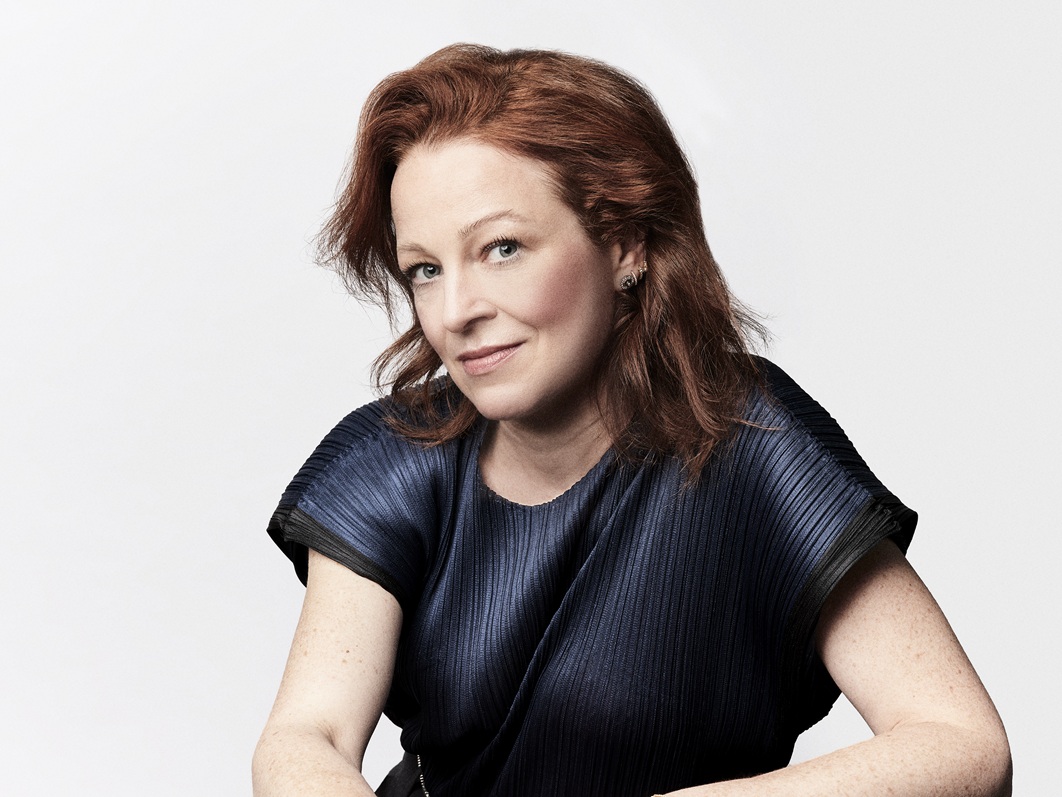
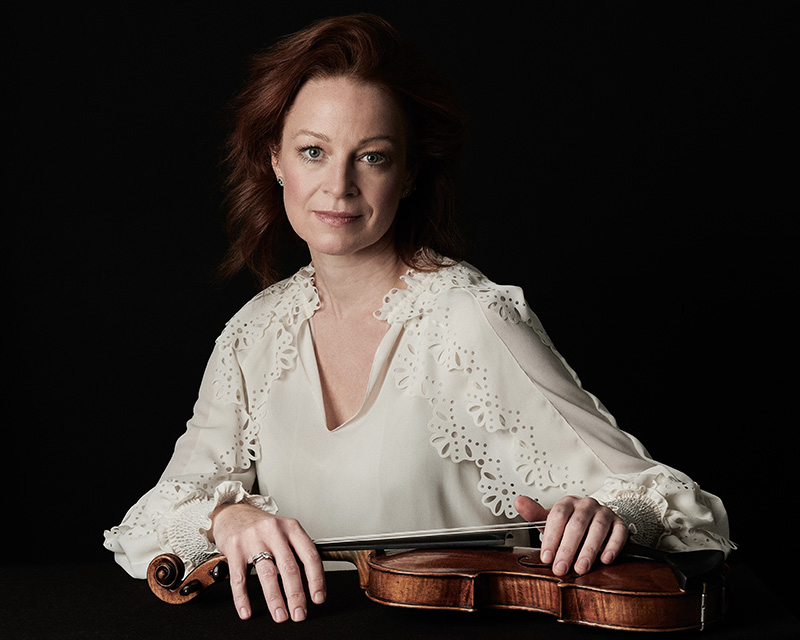
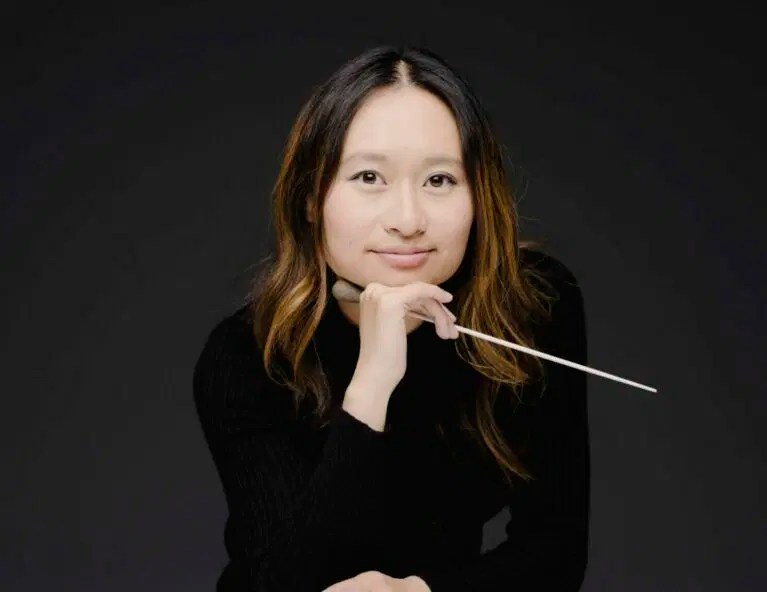
Carolin Widmann (violin, below), City of Birmingham Symphony Orchestra / Nicholas Carter

Haydn Symphony no.96 in D major Hob.1/96 ‘Miracle’ (1791)
Ligeti Violin Concerto (1989-93)
Brahms Symphony no.3 in F major Op.90 (1883)

Symphony Hall, Birmingham
Wednesday 1 November 2023

Reviewed by Richard Whitehouse

Tonight’s concert by the City of Birmingham Symphony Orchestra saw a collaboration with the well-regarded Nicholas Carter – former chief conductor of the Adelaide Symphony, now holding that position with Bühnen Bern alongside guest appearances in Europe and the US.

Few conductors would nowadays begin a programme with a Haydn symphony, and Carter’s take on no.96 did not lack for conviction. The Miracle of a falling if harmless chandelier may have taken place at the premiere of no.102 but does not lessen the quality of this work, its slyly portentous Adagio introducing an Allegro whose motivic unity is most evident in a tensile development and agile coda. With felicitous writing for oboe (rendered so by Helena Mackie) and violin (a welcome ‘guest lead’ from Zoë Beyers), the Andante is the highlight – Carter making the most of antiphonal violins where the gains in clarity or incisiveness were never in doubt. Steady but with a lilting grace then a piquant trio, the Minuetto was a perfect foil to the final Vivace – its energetic interplay duly capped by a coda of uninhibited verve.

Good that the CBSO marked György Ligeti’s centenary with his Violin Concerto, combining the composer’s love of polyrhythms and varied tunings with a heady recall of his Hungarian heritage. No stranger to this piece, Carolin Widmann emphasized the teasing reticence of its Praeludium and found aching nostalgia in the folk inflections of its Aria-Hoquetus-Choral. The coruscating build-up of its Intermezzo and finely wrought intensity of its Passacaglia were well judged, Carter bringing out the strangeness of orchestral writing with its extremes of register and an array of unorthodox instruments. The final Appassionato was trenchantly done, and while Widmann’s overly matter-of-fact cadenza robbed the closing ensemble bars of their barbed humour, it proved a small blemish on this otherwise captivating performance.

BrahmsThird Symphony has done well by the CBSO in recent seasons, and Carter’s reading was no exception. Any hint of stolidity at the outset of the initial Allegro had gone during the exposition’s repeat, then the development accrued a momentum such as carried through to the end of this movement. The coda’s transfigured poise (Brahms’ riposte to Tristan?) was no less evident in the Andante, its melodic simplicity belying an emotional ambiguity as was implied by its ruminative asides before suddenly being made explicit during the confiding final pages.

The Poco allegretto was (rightly) taken not as an extra slow movement, rather an intermezzo of a pathos which was accentuated by its deft forward motion. The final Allegro then brought a culmination in all respects – Carter alive to its stark contrasts between the speculative and the combative, with a thrilling transition into the reprise then a coda that recalled the work’s defining motto with mingled aspiration and benediction on its way to an ending of perfectly judged repose. Never the easiest symphony to bring off, this was a Brahms Three to savour.

Carter will hopefully be working with this orchestra again soon. Next Wednesday’s concert brings Cristian Macelaru in a programme with Sibelius and Mendelssohn, while Thursday’s Centre Stage recital has a welcome revival of the Clarinet Quintet by Elizabeth Maconchy.

You can read all about the 2023/24 season and book tickets at the CBSO website. Click on the artist names for more information on violinist Carolin Widmann and conductor Nicholas Carter, and for more about composer György Ligeti

Published post no.1,998 – Friday 3 November 2023

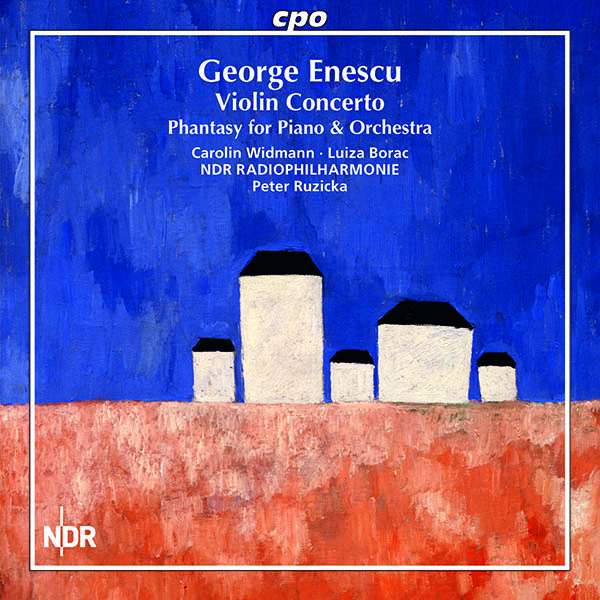
On record – Enescu: Violin Concerto & Phantasy (Carolin Widmann, Luiza Borac, NDR Radiophilharmonie / Peter Ruzicka) (CPO)

enescu

Enescu
Violin Concerto in A minor (1896)
Phantasy in D minor (1896/8)

Carolin Widmann (violin), Luiza Borac (piano), NDR Radiophilharmonie / Peter Ruzicka

Producer Elisabeth Kemper Engineer Daniel Kemper

CPO 555 487-2 [53’32”]

Recorded 25-28 May 2021 at Grosser Sendesaal, Landesfunkhaus, Hannover

Written by Richard Whitehouse

What’s the story?

CPO continues its coverage of little-known Enescu with this coupling of two pieces from the composer’s teenage years, persuasively rendered by leading performers and with a conductor second to none through his expanding the orchestral output of a still under-appreciated figure.

What’s the music like?

Although not his ‘breakthrough’ year, 1896 was a significant one for Enescu in terms of those compositions he at least attempted. He was not yet 15 when premiering the first movement of a Violin Concerto whose Andante was not played and its finale likely never written. Even so, the audience must have been surprised and even a little bemused at the audacity of a teenager who opened with an Allegro moderato rivalling those of the Brahms and Beethoven concertos in its scale and intent, and one whose technical display is secondary to its weight of argument.

Enescu having relocated to Paris after seven years in Vienna, evidence of competing aesthetic influences is not hard to discern – with Brahms the audible precursor of that Allegro, down to the climactic entry of the soloist after a lengthy opening tutti, then a (self-written) cadenza as serves a formal rather than virtuosic purpose. Despite being considerably longer than that of the Brahms, the Andante looks more to French antecedents – notably the Third Concerto of Saint-Saëns whose siciliano profile it utilizes, but not a tendency for pronounced expressive contrasts that is exemplified by the rhythmic impetus of its alternating episodes. Exactly why Enescu never completed this work is uncertain, yet if he felt its influences too obvious, such derivativeness need not be a barrier to appreciation or enjoyment of these movements today.

Enescu unlikely had any knowledge of the Violin Concerto that Busoni was writing at much this time, yet the former’s Phantasy has a tangible aura of the music his older contemporary was then writing. Witness the stealthy introduction as surges forth into the main movement, its alternation of genial assertiveness and ironic rumination itself a Busonian trait, as too the close-knit integration between soloist and orchestra or the subtle ambiguities of its harmonic writing. CPO’s booklet note gives 1898 as the date of composition which other sources give as two years earlier, but there is general agreement that its (only) performance took place at Bucharest in 1900. By then Enescu had written his first undoubted masterpieces, the Second Violin Sonata and Octet for strings, and no doubt felt the piece suffered through comparison.

Does it all work?

Yes, on its own terms. The rapidity with which Enescu evolved as a composer meant he soon left behind the influences as are audible here, which does not make either of these pieces any less worth hearing or merely for enthusiasts. Carolin Widmann is classy casting in the Violin Concerto, articulating its lengthy structures with no mean artistry, while the Enescu specialist Luiza Borac (most recently heard in in the torso of a Piano Concerto from the same period on Profil Hänssler) ensures a cohesion in the Phantasy without limiting its imaginative qualities.

Is it recommended?

Indeed, not least when the recording is unexceptionally fine and Volker Tarnow’s annotations are unfailingly informative. Hopefully CPO and Ruzicka will further their Enescu exploration with the Second and Third ‘School’ Symphonies or sundry orchestral pieces from this period.

Listen

Buy

You can discover more about this release and make a purchase at the Presto website.  For more information on the artists, click on the names for Carolin Widmann, Luiza Borac, Peter Ruzicka and the NDR Radiophilharmonie