In concert – CBSO Chorus & Orchestra / Joshua Weilerstein: Haas, Bernstein, Shaw & Dvořak

Michael Mulroy (treble), CBSO Chorus, City of Birmingham Symphony Orchestra / Joshua Weilerstein

Haas Study for Strings (1943)
Bernstein Chichester Psalms (1965)
Shaw Music in Common Time (2014)
Dvořak Symphony no.9 in E minor Op.95 ‘From the New World’ (1893)

Symphony Hall, Birmingham
Wednesday 15 May 2024

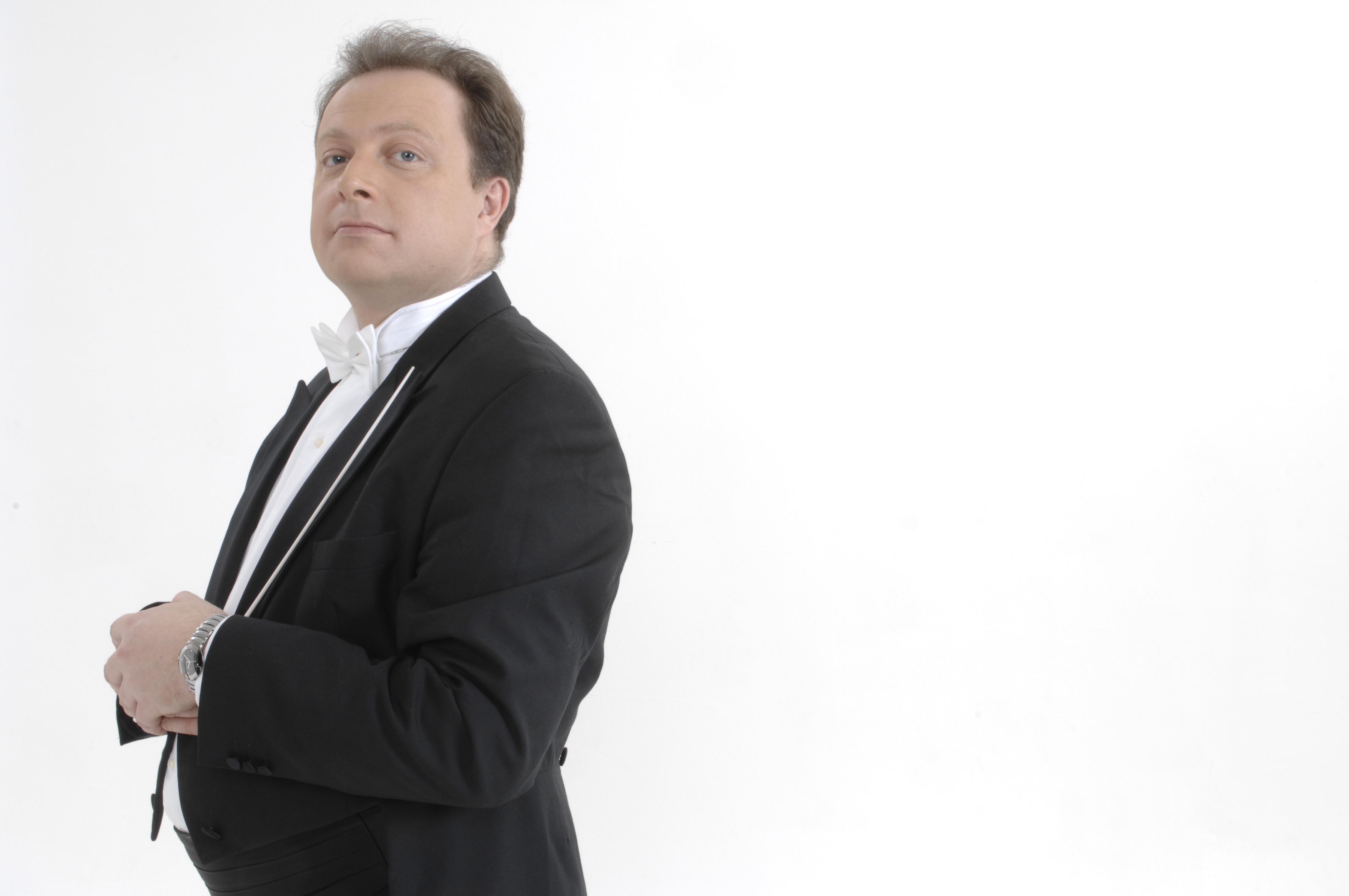
Reviewed by Richard Whitehouse Picture (c) Yuri Pires Tavares

In recent seasons, Joshua Weilerstein has presided over several of the City of Birmingham Symphony Orchestra’s most thought-provoking concerts and tonight’s programme was no exception in its potent mix of the recent and unfamiliar, alongside a symphonic evergreen.

It was thanks to the conductor and Auschwitz survivor Karel Ančerl that Study for Strings by Pavel Haas survived its immediate context, as propaganda for a Nazi documentary on cultural activity at the Theresienstadt transit-camp, to become one of this composer’s defining works. Felicitously combining Czech folk music with traditional Jewish inflections and (in its central section) more expressionist undertones, alongside a compact and quasi-symphonic design, it is a potent indication as to where post-war Czech music might conceivably have been headed.

It duly brought a vivid and energetic response from the CBSO strings, who were then joined by brass and percussion in Bernstein’s Chichester Psalms. Commissioned by the Dean of the city’s cathedral, it enabled the composer to pull together a number of earlier or aborted ideas in three Psalm-settings given focus by being heard in Hebrew translation with an authentic (if impractical as regards the percussion) scoring. Weilerstein drew the requisite verve from its initial setting, and if Michael Mulroy seemed tentative in its successor (discreet amplification might have helped), the contrast between his plaintiveness and edginess of the male-chorus interludes was pertinently drawn. Its anguished prelude for strings powerfully rendered, the final setting had an affecting eloquence through to the serene unaccompanied closing chorus.

After the interval, the CBSO Chorus was heard in rather more restrained guise with Music in Common Time by Caroline Shaw. Its brief and oblique text might have come from a late song by Talk Talk, but it yet provides the framework for a cannily unfolding fantasia in which the eddying textures of John Adams frame a speculative section with its string writing more than a little redolent of early Penderecki. Throughout, voices and instruments were finely melded in a composition that certainly suggests a plausible way out of any post-minimalist impasse.

What to say about the New World Symphony? Firstly, that it fitted judiciously into the overall programme as to conception; secondly, that it brought out the best in this partnership. Right from its evocative introduction, Weilerstein was alive to those many expressive ambiguities in the initial Allegro (a pity, though, that he omitted the exposition repeat as this undermines the formal balance overall), then drew a rapt and often searching response from the CBSO in the Largo – Rachel Pankhurst making the most of its indelible cor anglais melody. Nor was there any lack of bite or (in its trio section) gracefulness in the scherzo; such incisiveness of ensemble consistent throughout the finale, whose rhythmic impetus ensured the coda was not merely decisive but crowned the whole work in an apotheosis as conclusive as it was joyous. In his thoughtful initial remarks, Weilerstein spoke of this programme as being defined by its complexity, nuance and confrontation: qualities not always evident in present-day music, or in present-day discourse, but whose absence is our loss – as this concert eloquently confirmed.

Click on the link to read more on the current CBSO concert season, and on this link to read about the CBSO’s 2024/25 season. Click on the names for more on conductor Joshua Weilerstein, the CBSO Chorus and composer Caroline Shaw

Published post no.2,181 – Friday 17 May 2024
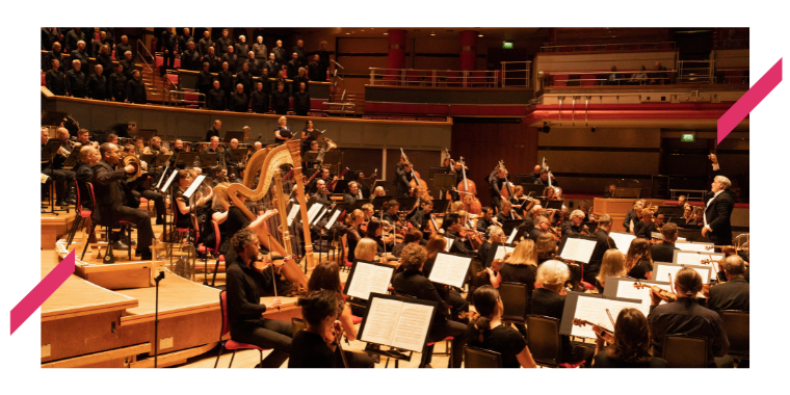
In concert – Alice Coote, Brenden Gunnell, Ashley Riches, CBSO Chorus and Orchestra / Ryan Wigglesworth – Elgar: The Dream of Gerontius

Alice Coote (mezzo-soprano), Brenden Gunnell (tenor), Ashley Riches (bass-baritone), CBSO Chorus, City of Birmingham Symphony Orchestra / Ryan Wigglesworth

Elgar The Dream of Gerontius Op.38 (1899-1900)

Symphony Hall, Birmingham
Thursday 2 March 2023

Reviewed by Richard Whitehouse

It may have had a disastrous premiere here in October 1900, but Birmingham has more than made amends to The Dream of Gerontius through many subsequent performances by the City of Birmingham Symphony Orchestra with conductors ranging from Vernon Handley to John Eliot Gardiner, two recordings from its previous chief conductors (Simon Rattle and Sakari Oramo), and tonight a reading which more than confirmed that this ground-breaking piece remains a touchstone of the choral repertoire almost 125 years on from that initial failure.

Although the innate Catholicism of John Henry Newman’s text no longer presents obstacles, the work’s technical demands remain considerable. Not least the characterizing of Gerontius himself, in which Brenden Gunnell acquitted himself with conviction – whether his wearied pallor then combative reckoning with Sancta fortis in Part One, or his wonderous musings then anguished acceptance of his purgatorial fate with Take me away in the longer second part. This role was consequently more believable and more empathetic because more human.

Not a little of that impression was abetted by Alice Coote’s contribution as the Angel. Less imperious than many predecessors (or contemporaries), the extent of her involvement only deepened as Part Two unfolded – the restraint, even reticence, of My work is done taking on heightened eloquence during There was a Mortal, before the Softly and gently of her farewell brought with it a transfiguring radiance as carried through to the close. This was a thoughtful and, increasingly, affecting approach to some of this work’s musical highpoints.

Nor should the contribution of Ashley Riches be underestimated, even though this is limited   to two, albeit crucial, appearances in either part. Arresting and suitably proclamatory at the Priest in Proficisere, anima Christiana, he brought unfailing gravity and powerfully wrought rhetoric to Angel of the Agony – the substance of whose musical presentation can be heard in Elgar’s music across the decades to come, whatever the extent to which the composer moved away from accepting those tenets of Catholic orthodoxy that are set out in Newman’s poem.

One of several works to which it has returned regularly over its half-century of existence, the CBSO Chorus brought its wealth of experience to a piece whose difficulties of ensemble and intonation cannot be gainsaid. From the halting appearances of the Assistants, through to the intricate polyphony of the Demons then cumulative grandeur of the Choir of Angelicals and distanced poise of the Souls in Purgatory, the authority of its contribution – prepared on this occasion by Julian Wilkins – added in no small measure to the impact of the performance.

As, of course, did that of the CBSO. Any regret over Andrew Davis’s indisposition was duly tempered by Ryan Wigglesworth’s tangible immersion and belief in this score – to which he brought a composer’s concern for clarity and cohesion, with a sense of pacing and a placing of its emotional climaxes which made appreciate anew the ambition and audacity of Elgar’s overall conception. Birmingham will doubtless hear many more performances of Gerontius over ensuing decades, with this one a marker as to what the work can and should represent.

You can read all about the 2022/23 season and book tickets at the CBSO website. Click on the artist names for more on Alice Coote, Brenden Gunnell, Ashley Riches and the CBSO Chorus. Meanwhile you can read more about Ryan Wigglesworth at two different locations – his composer profile from publisher Schott, and his conductor profile

In concert – Roderick Williams, CBSO Chorus, CBSO / Michael Seal: Vaughan Williams at 150: 5 Mystical Songs, Symphony no.5

Vaughan Williams
The Wasps – Overture (1909); Towards the Unknown Region (1906-07); Five Mystical Songs (1906-11); Symphony no.5 in D major (1938-43)

Roderick Williams (baritone, above), CBSO Chorus, City of Birmingham Symphony Orchestra / Michael Seal

Symphony Hall, Birmingham
Thursday 10 November 2022

Reviewed by Richard Whitehouse

The City of Birmingham Symphony Orchestra’s mini-series devoted to Vaughan Williams continued this evening with the overture from his music to Aristophenes’ satire The Wasps, paced by Michael Seal (below) so its animated and soulful themes complemented each other perfectly.

Judicious was no less true of this first half with its overview of the composer’s music across the first decade of the last century. Its premiere at the Leeds Festival bringing a first taste of national acclaim, his ‘song for chorus and orchestra’ Toward the Unknown Region sets Walt Whitman with assurance and imagination in its evocative opening section, and if the ensuing peroration feels a little contrived – the journey proving more memorable than the destination – that was no fault of the CBSO Chorus whose contribution was sensitively attuned throughout.

As it was with those Five Mystical Songs in which the composer gave full vent to his love for the Metaphysical poets and George Herbert in particular. A curiously hybrid conception, the chorus is very much secondary to the baritone soloist throughout much of the first three songs – a congregational presence in the processional Easter and then underpinning the emotional intimacy of I Got Me Flowers or confiding profundity of Love Bade Me Welcome, before falling silent in The Call. Roderick Williams was eloquence itself in this latter setting and a forthright presence in the preceding, before sitting out the Antiphon with its pealing bells and mounting exultation. Williams has recently given the rarely heard version of these songs with piano but hearing them with such burnished splendour as here was its own justification.

Is the Fifth Symphony unduly exposed nowadays? The composer’s most characteristic and culturally significant such piece might risk palling with too much repetition, but there was no chance of that here. Seal (above) set a flowing if not too swift tempo for the Preludio, pointing up the radiant tonal contrast between its themes – the second of them capping the movement to thrilling effect towards its close. Its rhythmic pitfalls ably negotiated, the Scherzo had the requisite deftness and mystery while taking on a degree of malevolence over its later stages. The Romanza then emerged surely yet unforcedly through glowing chorales and plaintive soliloquy (CBSO woodwind at its most felicitous) to a heartfelt culmination before subsiding into a hardly less enveloping serenity – its inspiration in John Bunyan tacitly acknowledged.

Enough had wisely been kept in reserve for the final Passacaglia – its initial stages evincing an almost nonchalant gaiety as only clouded towards its centre with the recollection of earlier ideas. By making it the work’s emotional highpoint, moreover, Seal ensured that the epilogue capped not just this movement but the work overall – its transcendence (hopefully) speaking as directly to listeners today as those at the premiere almost 80 years ago. Certainly, it would be a real misfortune were this music ever to be viewed solely from the perspective of the past.

An absorbing performance, then, that reaffirmed the greatness of this music to an enthusiastic audience. Vaughan Williams at 50 concludes tomorrow evening with the CBSO providing a live soundtrack to the composer’s most ambitious cinematic project – Scott of the Antarctic.

You can read all about the 2022/23 season and book tickets at the CBSO website. For more information on Scott of the Antarctic, click here – and click on the artist names for more on Roderick Williams, the CBSO Chorus and Michael Seal

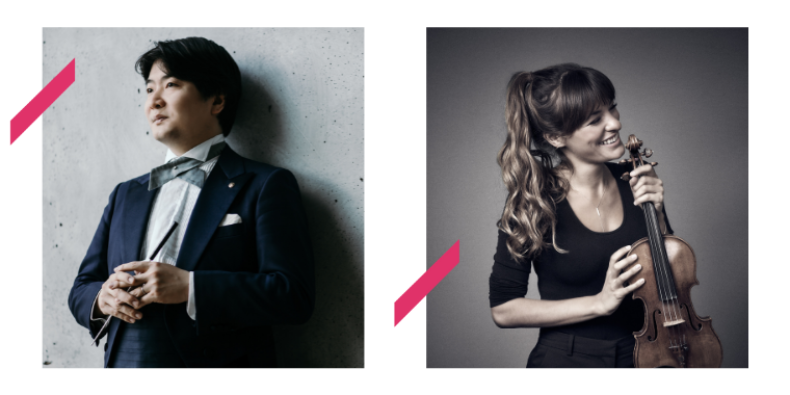
In concert – Nicola Benedetti, CBSO Chorus and Symphony Orchestra / Kazuki Yamada: Dvořák, Mendelssohn & Grigorjeva

Dvořák Carnival Overture, Op. 92 (1892)
Mendelssohn Violin Concerto in E minor, Op. 64 (1844)
Grigorjeva In Paradisum (2012)
Dvořák Symphony no.9 in E minor Op.95 ‘From the New World’ (1893)

Nicola Benedetti (violin), CBSO Chorus, City of Birmingham Symphony Orchestra / Kazuki Yamada

Symphony Hall, Birmingham
Tuesday 20 September 2022

Reviewed by Richard Whitehouse

It may have been a largely mainstream programme, but tonight’s concert by the City of Birmingham Symphony Orchestra drew a capacity house at the beginning of a season in which Kazuki Yamada takes on the reins for what looks an eventful new era near the start of the orchestra’s second century. The CBSO’s response in Dvořák’s Carnival Overture more than confirmed it was ready for the challenge – Yamada ensuring the nocturnal evocation at its centre worked its evocative spell, then building an irresistible momentum going into the thrilling final bars.

Mendelsohn’s Violin Concerto cannot have been absent from many of the CBSO’s previous 102 seasons and made its appearance this evening, Nicola Benedetti tackling a piece she must herself have played on many occasions. Not that there was anything routine about a reading such as abounded in subtle touches – especially the opening Allegro’s cadenza, which more than usually fulfilled its role as this movement’s structural fulcrum. In the Andante, Benedetti pointed up the expressive contrast between its main themes; the second of which was notable for a tonal astringency that brought out its plangency in full measure. If there was nothing so arresting in the finale, the interplay of soloist and orchestra was astutely judged through to the effervescence of the closing bars. Certainly, a performance to make one enjoy the piece anew.

Introducing the second half, Yamada requested the audience remain silent during the pause between pieces – the first a setting of In Paradisum by Ukrainian-born Galina Grigorjeva (b 1962), its lucid harmonies and heady culmination bringing the best out of the CBSO Chorus.

From here to the New World Symphony was no great step. Once again, a work rarely absent from the CBSO’s schedule seemed largely revitalized. Not that all of Yamada’s interpretative decisions came off – after an introduction of no mean gravitas the opening Allegro unfolded a little fitfully, though so interventionist an approach might have gained from the exposition repeat to place these in greater context. There were similar touches in the Largo, yet here the focus of Yamada’s conception and the raptness of the player’s concentration were their own justification – not least towards the close, with the front desks combining to poignant effect. Without being driven as ruthlessly as is often the case, the Scherzo has the requisite impetus and, throughout its trio, a whimsical elegance which proved as engaging as the charged coda.

Heading into the final Allegro with minimal pause, Yamada brought out its inherent force but also the ruminative eloquence of its second theme; the transition to which, in the reprise, was ideally judged. Nor did the apotheosis lack for drama as those closing bars melted into silence.

Prior to the start of this concert, a minute’s silence was observed then (most of) the audience joined in possibly its first rendering of God Save the King. A more localized farewell was paid later in the evening to Colin Twigg, first violinist for over 31 years and whose retirement will hopefully see more of his own compositions as have featured in Centre Stage recitals over the years. A miscellany is featured on a Toccata Classics release and worth anyone’s investment. The CBSO will be back in action on Saturday with a major new commission from Brett Dean.

You can read all about the 2022/23 season and book tickets at the CBSO website. For further information on the night’s artists, click on the names for composer Galina Grigorjeva, and for artists Nicola Benedetti and Kazuki Yamada

BBC Proms #49 – Louise Alder, Dame Sarah Connolly, CBSO Chorus, London Symphony Chorus, London Symphony Orchestra / Sir Simon Rattle – Mahler ‘Resurrection’ Symphony

Prom 49 – Louise Alder, Dame Sarah Connolly, CBSO Chorus, London Symphony Chorus, London Symphony Orchestra / Sir Simon Rattle

Birtwistle Donum Simoni MMXVIII (2018)
Mahler Symphony no.2 in C minor ‘Resurrection’ (1888-1894)

Royal Albert Hall, London
Wednesday 24 August 2022

Reviewed by Ben Hogwood Photos (c) Chris Christodoulou

“A symphony must be like the world. It must contain everything.”

The words of Gustav Mahler were never more appropriate than in the context of this exceptional BBC Proms concert, as Sir Simon Rattle and assembled forces from London and Birmingham threw body and soul into a spectacular performance of the composer’s Symphony no.2.

This, Mahler’s ‘Resurrection’ symphony, puts its listener through the emotional wringer on a journey inhabiting life and death itself. The work has become a calling card for Rattle, too – he marked the opening of Birmingham’s Symphony Hall with a memorable performance in 1991, and took his leave of the CBSO with the same piece. Here, as he prepares to step down as Music Director of the London Symphony Orchestra, he was marking the turning of a page through a move to pastures new in Bavaria, where he will become Chief Conductor of the Symphonieorchester des Bayerischen Rundfunks and the Bavarian Radio Chorus.

The pastures were a standout feature of this performance – but we began in turmoil, the huge first movement funeral march rumbling into gear with lines hewn from granite in the lower strings. Rattle pushes this movement forward much more than he once did, keeping a firm hand on the tiller, but with immediate and full immersion in Mahler’s thoughts. As the first movement took shape the horrors of death revealed themselves – along with hopes of sunnier climes through some beautifully shaded rustic scenes. Yet the chill winds kept returning, ultimately sweeping these away as the movement closed in their bleak acceptance.

Many accounts of the ‘Resurrection’ lose their focus at this point, but not this one. Instead we had a balletic triple time Ländler, danced with grace as the feather-light strings had their charming way. The main theme swelled like a newly budding flower, and although ghoulish reminders of the first movement persisted, this was the abiding impression. As Rattle pressed on without a break, however, the reveries were abruptly quashed by the hammer and tongs of the third movement Scherzo. Here the music twisted and turned sharply, the LSO responding to its conductor with peerless virtuosity in music of fire and brimstone. Percussion, wind and brass were superb.

Then, as the music teetered on the point of collapse, it was time to be borne away with the consoling tones of Dame Sarah Connolly (above, right). A consummate Mahlerian, she sang with compelling strength and grace, a powerful stage presence in league with Rattle, who presided over accompaniment of the greatest clarity. Connolly’s Urlicht was beautifully judged, taking us ever nearer to the wondrous entry of the choir.

Now time stood still. The audience, especially in the arena, were rooted to the spot at the massed choirs of the CBSO Chorus and London Symphony Chorus, singing as one in magically hushed tones. As the finale took shape it was by turns earth-moving and tender. Scenes flashed before the eyes, and an especially vivid episode from brass and percussion in the gallery observed a village-band intimacy. Here the Royal Albert Hall was utilised to its full potential, managing the wide scope of Mahler’s vision to perfection.

At the centre of this apocalyptic finale, percussion depicted the rising of the dead and the release of their chains, Rattle intentionally dragging his feet here to heighten the seismic impact. And then we were free, the resurrection itself met with blazing colours all around as the choirs sang Friedrich Klopstock’s text ‘Aufersteh’n, ja aufersteh’n wirst di’ (‘Rise again, yea rise again, shalt thou’) as though their lives depended on it. Was it fanciful to suggest three years’ worth of pent-up emotion being released at this point? Probably not, when you consider the day-to-day roles of the choral singers themselves – carers, key workers, parents and children alike – with all finding the time and the need to bring us this music of the utmost quality.

Great credit should go to chorus director Simon Halsey for securing such discipline and humanity in the texts, and to soprano Louise Alder (both above with Dame Sarah Connolly and Sir Simon Rattle). Alder sang above the masses with perfectly judged dynamics and phrasing, like Connolly fully aware of the scope of her role. Organist Richard Gowers added the icing on the cake, underpinning the throng with ideally judged balance.

This was a performance to talk about for years to come, a throwing-open of the doors to proclaim that music can – really – triumph over pretty much anything, the ‘Resurrection’ symphony, clearing everything in its path.

As an upbeat to the symphony we heard a short gift to Rattle from Sir Harrison Birtwistle, to whose memory the Prom was dedicated.  Donum Simoni MMXVIII was typical of its composer, a spiky and even snarky postcard firing out missives from the (superb) percussion section against barbed comments from wind and brass. Lasting barely four minutes, it served its function well – but for tonight, as Mahler would have wished, the symphony was everything.

You can listen to Sir Simon Rattle’s recording of Mahler’s ‘Resurrection’ symphony on Spotify below, where the CBSO Chorus and Symphony Orchestra are joined by soloists Arleen Auger and Dame Janet Baker: