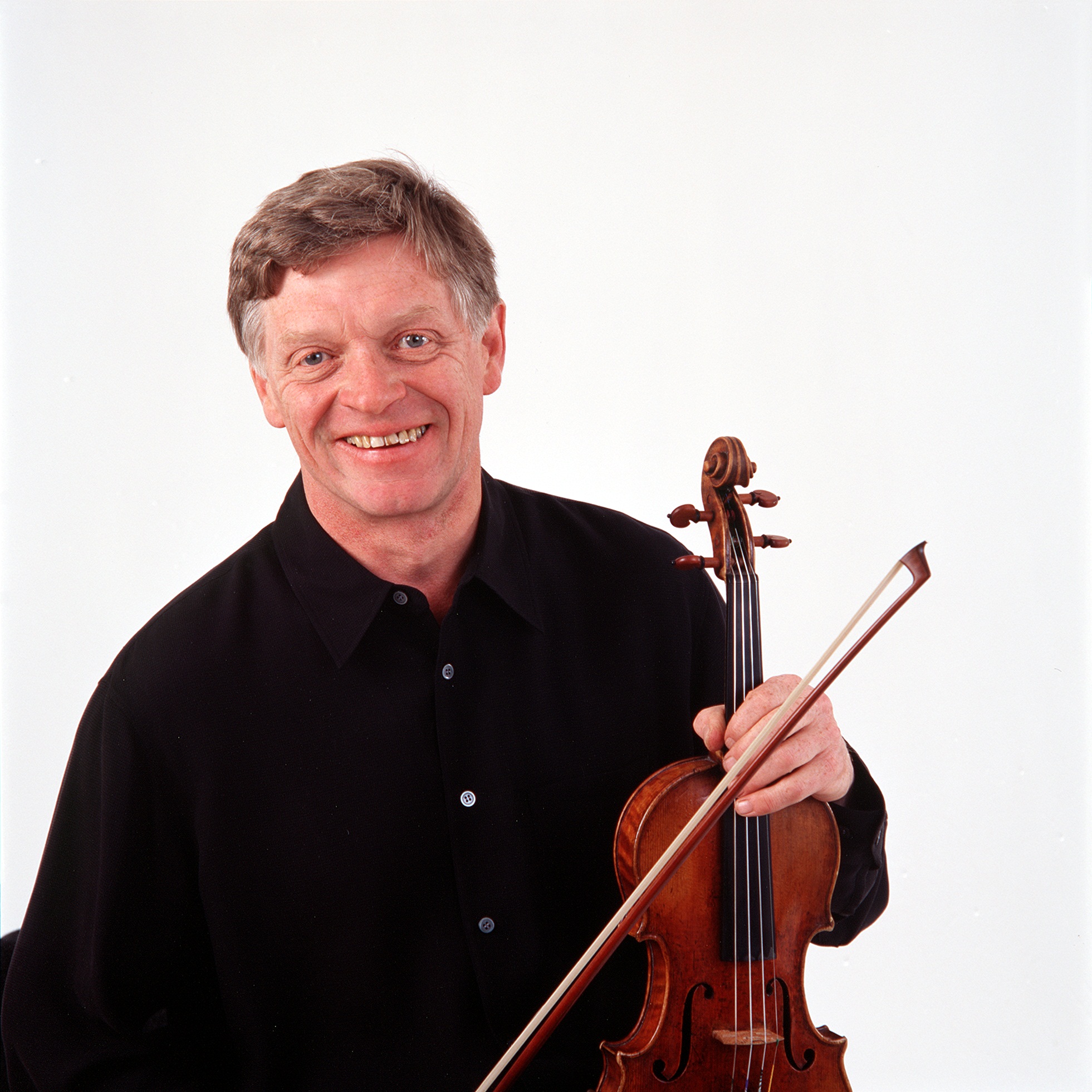
Raluca Stirbat plays Enescu at the Romanian Cultural Institute

raluca-stirbat

Raluca Stirbat (piano), above

Romanian Cultural Institute, London; Thursday 3rd November, 2016

Enescu Prélude et Scherzo (1896)

Franck Prélude, Chorale et Fugue, Op. 21 (1884)

Liszt Mephisto Waltz No. 1, S514 (1862)

Enescu Piano Sonata in D, Op. 24 No. 3 (1935)

The Enescu Concerts Season at Romanian Cultural Institute continued tonight with a recital by Raluca Stirbat, the Vienna-based pianist whose advocacy of Enescu – his residencies as well as his music – has long been central to her activities.

Enescu’s music, what she termed the ‘frames’ of his piano output, book-ended this programme – opening with the Prélude et Scherzo which is the composer’s first piano work of real consequence. A little too rhetorical and rhythmically stolid as the Prelude may be, the Scherzo’s vivid alternating between devil-may-care impetus and (in its trio) elegant repose recalls the eponymous work with which the teenage Brahms announced himself some 45 years earlier. Good, also, that these pieces were heard together, as the resulting expressive duality was to inform Enescu’s thinking thereafter.

Franck had passed on by the time Enescu arrived at the Paris Conservatoire, yet his approach to harmony and texture undoubtedly left its imprint – not least the Prélude, Chorale et Fugue with which the mature composer returned to the solo medium after several decades. Keeping its discursive manner in check, Stirbat duly pursued a secure course through the Prelude and maintained a keen textural clarity in the Chorale, before the Fugue wended its eventful course to a culmination where cyclical ingenuity and emotional fervour were bound together as one.

If Liszt is a less discernible influence on Enescu, the sheer virtuosity and lack of inhibition in much of his piano music is an audible touchstone; not least as deployed in the First Mephisto Waltz. Stirbat despatched the opening pages of this ‘dance in the village inn’ with requisite abandon, and if the central section slightly hung fire, this is arguably as much Liszt’s fault in overly delaying the transformed return of that earlier music; the latter being projected here as characterfully as were the teasing insouciance then the surging irony of its heady conclusion.

The main programme (played without pause and from memory) ended with the Piano Sonata in D which was to have formed the final part of Enescu’s Op.24 sequence had he completed its central portion. Despite advocacy from such as Dinu Lipatti and John Ogdon, the present work enjoys only infrequent revival – doubtless owing to its technical difficulty but also its singularity as music that opens ostensibly in the world of the late Baroque only to close with that of a renewed Classicism.

Stirbat had the measure of the initial Vivace’s rhythmic agility, then brought understated eloquence to the central Andante with its improvisatory variants on a motive of blithe self-effacement, before the final Allegro evinced purposeful onward drive toward an apotheosis which superimposes all the salient themes in a truly joyful outpouring.

A demanding recital, then, which Stirbat rendered with unflagging commitment and resolve. She returned for two encores: first the Baccanale from the Third Piano Suite by Constantin Silvestri, given with due physicality, and the Bourrée from Enescu’s Second Piano Suite – which, as was pointed out, is linked to the finale of the Third Sonata thematically as well as in terms of key. It made for an exhilarating conclusion to an impressive recital that reaffirmed Raluca Stirbat’s authority in the piano music of her native country’s pre-eminent composer.

Richard Whitehouse

The next event in the Enescu Concert Season is a recital by soprano Valentina Naforniţă on Friday 2nd December. More information at the Romanian Cultural Institute website

Wigmore Mondays – Kathryn Stott

kathryn-stott
Photo (c) Nikolaj Lund

Kathryn Stott (piano) performs piano music by Fauré, Franck, Ravel and Graham Fitkin

Wigmore Hall, London, live on BBC Radio 3, 14 September 2015

Listening link (open in a new window):

http://www.bbc.co.uk/programmes/b06c9nwj

on the iPlayer until 20 October

Spotify

In case you cannot hear the broadcast, here is a Spotify playlist of the music in this concert – most of which Kathryn Stott has recorded.

https://open.spotify.com/user/arcana.fm/playlist/14B8Ld3EVlXF6jlyZUeA9y

What’s the music?

Fauré: Nocturne no.4 (1884) (8 minutes)

Franck: Prélude, Chorale et Fugue (1884) (20 minutes)

Ravel: Sonatine (1905) (12 minutes)

Fitkin: Relent (1998) (10 minutes)

What about the music?

Fauré wrote a good deal of extremely attractive piano music, ranging from dreamy Barcarolles and Impromptus to the Nocturnes, which tend to be more moody. Kathryn Stott’s choice for this concert, the fourth of thirteen such works Fauré completed, is one of the lighter coloured examples.

César Franck, treated as French although he was born in Liège, which is now Belgium, wrote a lot of organ music – but is not often regarded as a composer of piano music. This is a shame, because in the Prélude, chorale et Fugue he shows off a distinctive style and an adventurous harmonic approach, while also acknowledging a debt to J.S. Bach in the form and construction of the piece. This reaches its apex in the central chorale, a kind of hymn tune that is first heard in a solemn intonation but which then rings out in glorious technicolour.

Ravel completes the triptych of French piano works, his Sonatine a model of economy and precision – but also an intimate piece of three movements that is quite beautifully written for the piano. The word Sonatine refers to the short length of the piece rather than anything else that might be modest – for this is one of Ravel’s finest piano works.

Kathryn Stott ends her recital with Graham Fitkin’s Relent, completed in 1998 and written for Stott herself. On the composer’s website, Fitkin writes of how “This piece is about time. It is about my perception of time, its various manifestations and ultimate inevitability. I think about the way I use my time, how much I need and just how long it feels like. I think about continuous time, circular time and our society’s preoccupation with marking the passage of time. And then I think about the relentless addition of time and how for me some day it will just stop.”

Performance verdict

Initially this concert was to be given by Tine Thing Helseth, with Kathryn Stott in support at the piano, but the Norwegian trumpeter sadly had to withdraw through illness.

In her place Stott constructed a fine recital, moving naturally from the nocturnal thoughts of Fauré through a passionate performance of the Franck, beautifully played and extremely well voiced so that the themes could be clearly heard.

Stott is a modest performer – by which I mean she has a gracious air when performing – and that suited her performance of the Ravel and Fauré especially. However when she needs the power it is easily found, and the performance of Fitkin’s Relent brought out the kinetic energy of the piece perfectly.

What should I listen out for?

Fauré

1:22 – a relatively gentle beginning to the piece, which is deceptively simple in its execution, harking back a little to Chopin. The theme comes back at 2’29, this time in ‘octaves’ – that is, the tune is doubled by another finger in the right hand playing an octave higher on the keyboard.

The mood then darkens as we head into the minor key. As Stott herself was quoted in Fiona Talkington’s introduction on Radio 3, Fauré’s “harmonic language is fascinating, and I’m never bored by it”. Greater turbulence can be felt in the music – but an inner radiance returns with the theme at 6:41. The piece finishes in serene mood at 8’53”.

Franck

10:51 – the Prélude suggests a relatively relaxed approach and is almost improvisatory at first, before we hear the main theme in octaves. Despite being based on an older form this to me is a forward looking piece, using some spicy harmony and strong romantic leanings.

16:18 – the Chorale section begins (chorale essentially another word for hymn), and we first here the Chorale itself in subdued form at 17:21. At 18:37 we hear it in another key, the mood of contemplation starting to give way to more passionate thoughts – and when we hear it once more at 20:20, the effect is like a peal of bells.

21:30 – the fugue section begins, though the fugue itself doesn’t start until 22:56, initially retreating into quiet thoughts but then gathering momentum. Once again it softens though, the choral theme peeping through the rippling piano textures at 27:58. At 30:06 the final peal of bells rings out, ending with an emphatic double ‘B’ from the left hand.

Ravel

32:24 – this piece is notable for its clean lines and immaculate structure but also for the intimate atmosphere that Ravel immediately conjures within seconds of this first movement beginning. It has a slightly melancholic feel but is essentially positive. Some of the quieter music is beautiful and dreamy, especially at the end.

37:05 – Ravel leads more or less straight into the second movement, a Minuet (a dance in triple time). This has a persuasive lilt, as well as the same feel of intimacy carried over from the first movement.

40:07 – the third movement, a much more forthright piece of music marked Animé (Animated).The textures of the piano here suggest rippling water. The piece moves to a convincing finish at 43:54, Ravel’s structure nigh-on perfect.

Fitkin

44:57 – immediately Fitkin’s use of the piano suggests mechanical movements. The writing is incredibly bold, from the big, beefy sound of the lower register of the piano – often dealt out in octaves – to the syncopated lines from the right hand. These suggest a strong jazz influence, but possibly even the sound of a gamelan.

As the piece progresses so its mechanical nature continues, with a terrific amount of energy generated in its ten minute duration.

Encore

55:57 – ChopinPrelude for piano in E minor (3 minutes) – an encore of suitable stillness to follow the Fitkin, Chopin’s E minor prelude is one of his most popular, and one of his most sorrowful too.

Further listening

There are plenty of options available for further listening after this varied concert. Those enjoying the Ravel would be urged to seek out more of the composer’s piano music, in particular Gaspard de la nuit. The Franck may have its roots in the past a bit more but has some pretty exotic harmonies – and anyone enjoying it might want to head for Debussy’s suite Pour Le Piano, another look back to the past with an especially beautiful Sarabande at its heart.

Meanwhile for lovers of the Fauré the composer’s piano music has a particular late night beauty, as this selection of Barcarolles and Impromptus suggests. All are tagged onto the end of the original playlist here:

https://open.spotify.com/user/arcana.fm/playlist/14B8Ld3EVlXF6jlyZUeA9y


Tasmin Little and Martin Roscoe at the Wigmore Hall – A fitting tribute

Tasmin Little and Martin Roscoe at the Wigmore Hall – A fitting tribute

tasmin-little-martin-roscoe

Tasmin Little (violin), Martin Roscoe (piano) – Wigmore Hall, London, live on BBC Radio 3, 1 June 2015

Listening link (opens in a new window):

http://www.bbc.co.uk/programmes/b05wytj1

on the iPlayer until 30 June

Spotify

In case you cannot hear the broadcast, I have put together a Spotify playlist of most of the music in this concert, including recordings the artists have made where possible. The playlist can be found here

What’s the music?

Brahms: Scherzo from the ‘FAE Sonata’ (1853) (6 minutes)

Dvořák: 4 Romantic Pieces, Op.75 (1887) (13 minutes)

Franck: Violin Sonata (1886) (28 minutes)

What about the music?

A well-chosen program of music for violin and piano, drawn from the period in the late nineteenth century known as ‘Romantic’. Yet as well as being from that period it is Romantic in nature.

Brahms wrote three substantial sonatas for violin and piano, each of them admired, and he also wrote a sonata in collaboration with Robert Schumann and his pupil Albert Dietrich. It was a gift to their friend Joseph Joachim, himself a composer and also a virtuoso violinist who was to inspire many more works from Brahms, Schumann and Dvořák among others.

The 4 Romantic Pieces of Dvořák were not written for Joachim, and are not greatly demanding technically – but are a perfect illustration of just how tuneful the composer’s music can be, and how through great simplicity he could write music of great expression. There is charm and wit in abundance here, music that seems to celebrate the great outdoors.

The Violin Sonata by Belgian-born French citizen César Franck is one of the chamber music masterpieces of the nineteenth century. Treating the two instruments very much as equals, it is memorable firstly for its dreamy first movement theme, which creeps in like a summer breeze, then for the darkly passionate movement that follows it. After the freedom of the third movement Franck plays his trump card, a ‘canon’ – that is, where violin and piano play the same melody but a little distance apart. This one is a beauty.

Peter Cropper. Credit: Hanya Chlala/ArenaPAL

Credit: Hanya Chlala/ArenaPAL

Performance verdict

This was a particularly moving concert, given a short while after the announcement of the death of Peter Cropper, first violinist with the Lindsay String Quartet and a close personal friend of Martin Roscoe. Not only was Roscoe intent on going ahead with this concert, he and Tasmin Little chose to dedicate their performance of the Franck Sonata to his memory – and in doing so they paid a deeply meaningful tribute.

The Franck is a lovely work and both Little and Roscoe brought out the deep-seated passion of the second and third movements, dovetailing beautifully with the charm of the outer movements. Roscoe was extremely responsive so that the melodies were passed back and forward with ease and enthusiasm.

The Dvořák Romantic Pieces were also extremely appealing, their apparent simplicity still given plenty of depth in this performance, with an especially poignant last piece. Warmth and wistfulness combined irresistibly in the first and third pieces, while for the second country dance it was as though someone had flung open the windows of the hall!

It was like that too for the Brahms Scherzo, which Little began almost before Roscoe had sat down, such was her eagerness to get on with it. The music surged forward as though intent on devouring everything in its path.

What should I listen out for?

Brahms

1:26 A surge of excitement as the piece begins, the violin using its lowest string and the ‘G’ an octave above it. The swaying motion of the theme is typical of Brahms, who often writes in triplet rhythms, and it creates an appealing syncopation, an ebb and flow between violin and piano.

There is a triumphant coda from 6:30, crowning this piece by the young Brahms with a flourish.

Dvořák

8:32 The first piece is warm and a little wistful, affectionately played.

11:48 The second piece is a grander affair, but also takes on the form of a country dance.

14:34 Marked ‘Allegro appassionato’, the third piece at first sounds remarkably similar to the first, being in the same mood and key, but becomes more passionate with Little playing two strings at once

16:43 A shadow falls over the sunshine created by Dvořák in the first three pieces, with music of introspection and contemplation. There is however still a positive ending.

Franck

23:40 A dreamy introduction from the piano, which hovers on an exotic chord until the violin comes in with the tune, also in a dreamy state. The mood becomes more passionate – amorous perhaps – and Franck manages that expression with very little variation to the tune itself.

30:00 The second movement begins with the turbulent rumblings of the piano, which give way to a passionate violin theme. At 33:35 this reaches a natural climax, before the turbulent theme is heard again. The onward flow of the music is impressive here, a torrent of notes – so much so that there is applause at the end of this movement!

38:05 – A ‘recitative’ forms the third movement – that is a passage of freedom for the violin, after the piano has set the scene. This gives it the opportunity to show off in a semi-improvised way, and after this the violin and piano exchange ideas, leading to a natural climax point at 41:10, the music at its most passionate again. There is a strong reference to the sonata’s opening at 43:30 – an example of Franck’s ‘cyclical’ way of writing, where he brings back themes from earlier in the work.

45:07 The canon, as described above, begun by the piano and followed by the violin. Franck writes it rather sweetly, with an innocence that proves touching throughout, but again it grows in stature. The violin and piano spend much of the movement imitating each other’s melodies in this way, with references to the first movement, before returning to the main music at 49:57 and then an uplifting finish.

Encore

53:00 An encore of Brahms’ Hungarian Dance no.5, probably in the arrangement by Joseph Joachim, as described above. Little plays this with great theatricality, Roscoe very sure-footed (or should that be handed?!) by her side.

Further listening

A rather attractive companion piece to both the FAE Scherzo and the Franck Violin Sonata is BrahmsViolin Sonata no.2, a summery piece that finds the composer in relatively relaxed mode. A nice complement to this is the shorter but quite fiery Légende by the Polish composer Henryk

A rather attractive companion piece to both the FAE Scherzo and the Franck Violin Sonata is Brahms’ Violin Sonata no.2, a summery piece that finds the composer in relatively relaxed mode. A nice complement to this is the shorter but quite fiery Légende by the Polish composer Henryk Wieniawski. Meanwhile a piece that joins everything together nicely is another red blooded piece of chamber music by Franck, his Piano Quintet, which in the right performance offers some high voltage music making! The one on this playlist, by Sviatoslav Richter and the Borodin Quartet, leaves absolutely nothing to chance.

Meanwhile a piece that joins everything together nicely is another red blooded piece of chamber music by Franck, his Piano Quintet, which in the right performance offers some high voltage music making! The one on this playlist, by Sviatoslav Richter and the Borodin Quartet, leaves absolutely nothing to chance.

For more concerts click here