In concert – Anne Queffélec @ Wigmore Hall: Mozart and a French ‘musical garden’

Anne Queffélec (piano)

Mozart Piano Sonata no.13 in B flat major K333 (1783-4)
Debussy Images Set 1: Reflets dans l’eau (1901-5); Suite Bergamasque: Clair de lune (c1890, rev. 1905)
Dupont Les heures dolentes: Après-midi de Dimanche (1905)
Hahn Le Rossignol éperdu: Hivernale; Le banc songeur (1902-10)
Koechlin Paysages et marines Op.63: Chant de pêcheurs (1915-6)
Schmitt Musiques intimes Book 2 Op.29: Glas (1889-1904)

Wigmore Hall, London
Monday 28 April 2025 (1pm)

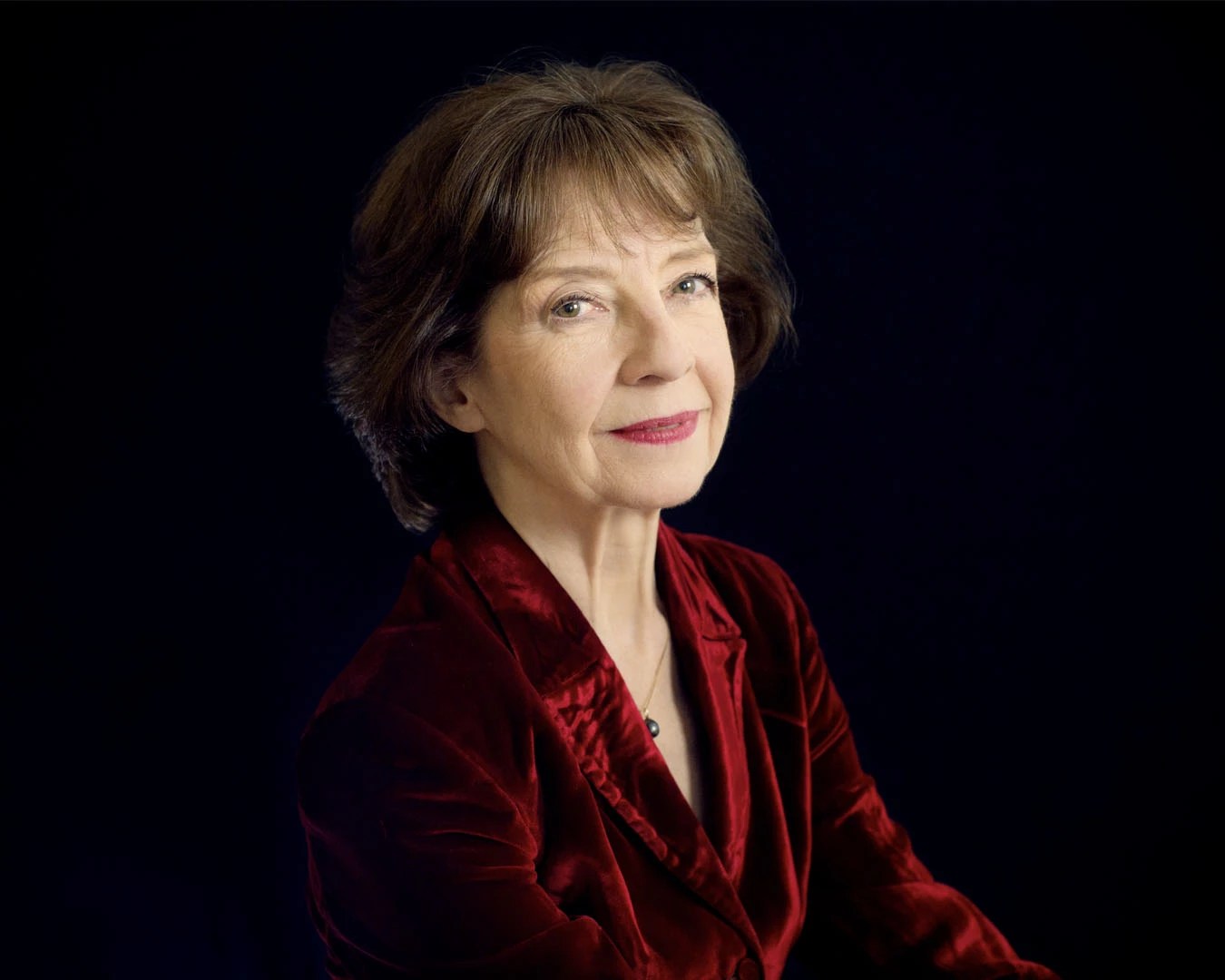
by Ben Hogwood picture of Anne Queffélec (c) Jean-Baptiste Millot

The celebrated French pianist Anne Queffélec is elegantly moving through her eighth decade, and her musical inspiration is as fresh as ever. The temptation for this recital may have been to play anniversary composer Ravel, but instead she chose to look beneath the surface, emerging with a captivating sequence of lesser-known French piano gems from the Belle Époque, successfully debuted on CD in 2013 and described by the pianist herself as “a walk in the musical garden à la Française.”

Before the guided tour, we had Mozart at this most inquisitive and chromatic. The Piano Sonata no.13 in B flat major, K.333, was written in transit between Salzburg and Vienna, and the restlessness of travel runs through its syncopation and wandering melodic lines. Queffélec phrased these stylishly, giving a little more emphasis to the left hand in order to bring out Mozart’s imaginative counterpoint. She enjoyed the ornamental flourishes of the first movement, the singing right hand following Mozart’s Andante cantabile marking for the second movement, and the attractive earworm theme of the finale, developed in virtuosic keystrokes while making perfect sense formally.

The sequence of French piano music began with two of Debussy’s best known evocations. An expansive take on the first of Debussy’s Images Book 1, Reflets dans l’eau led directly into an enchanting account Clair de Lune, magically held in suspense and not played too loud at its climactic point, heightening the emotional impact.

The move to the music of the seldom heard and short lived Gabriel Dupont was surprisingly smooth, his evocative Après-midi de Dimanche given as a reverie punctuated by more urgent bells. Hahn’s Hivernale was a mysterious counterpart, its modal tune evoking memories long past that looked far beyond the hall. Le banc songeur floated softly, its watery profile evident in the outwardly rippling piano lines. The music of Charles Koechlin is all too rarely heard these days, yet the brief Le Chant des Pêcheur left a mark, its folksy melody remarkably similar to that heard in the second (Fêtes) of Debussy’s orchestral Nocturnes.

Yet the most striking of these piano pieces was left until last, Florent Schmitt’s Glas including unusual and rather haunting overtones to the ringing of the bells in the right hand. Queffélec’s playing was descriptive and exquisitely balanced in the quieter passages, so much so that the largely restless Wigmore Hall audience was rapt, fully in the moment. Even the persistent hammering of the neighbouring builders, a threat to concert halls London-wide, at last fell silent.

Queffélec had an encore to add to her expertly curated playlist, a French dance by way of Germany and England. Handel’s Minuet in G minor, arranged by Wilhelm Kempff, was appropriately bittersweet and played with rare beauty, completing a memorable hour of music from one of the finest pianists alive today.

Listen

You can listen to this concert as the first hour of BBC Radio 3’s Classical Live, which can be found on BBC Sounds. The Spotify playlist below has collected Anne Queffélec’s available recordings of the repertoire played:

Published post no.2,517 – Tuesday 29 April 2025
In concert – Steven Isserlis and Friends – Fauré at the Wigmore Hall (5)

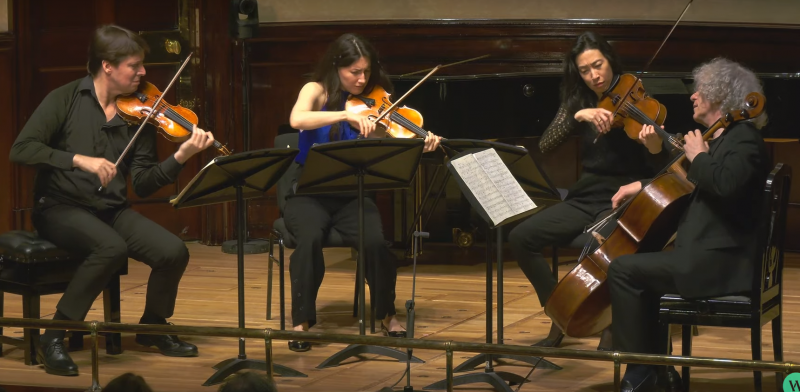
Steven Isserlis (cello) – with Joshua Bell, Irène Duval (violins), Blythe Teh Engstroem (viola), Connie Shih, Jeremy Denk (pianos)

Fauré Dolly Suite Op.56 (1894-6)
Enescu Pièce sur le nom de Fauré (1922)
Ravel arr. Garban Berceuse sur le nom de Garbriel Fauré M74 (1922)
Koechlin Hommage à Gabriel Fauré Op.73bis (1922)
Fauré Cello Sonata no.2 in G minor Op.117 (1921)
Fauré String Quartet in E minor Op.121 (1923-4)

Wigmore Hall, London
Tuesday 5 November 2024

Reviewed by Richard Whitehouse Picture (c) Wigmore Hall Trust

So to the final concert of this series, curated by cellist Steven Isserlis and centred on Fauré’s larger chamber works in the centenary of his death. The last of five concerts was rounded out in its coverage by including his most popular work for piano duet, along with miniatures from several pupils of one who was held in equal esteem as a teacher.

It is doubtless as easy to describe the Dolly Suite with patronizing charm as it is to play it so but, with Jeremy Denk and Connie Shih an alert if always sensitive partnership, there was no likelihood of this latter. A limpid take on the evergreen Berceuse was followed by no less a deft rendition of Mi-a-ou; the ineffable charm of Le jardin de Dolly made a telling foil to the skittish evocation (of a dog) that is Kitty-valse, then the searching poise of Tendresse created a delightful contrast with that affectionate send-up of Chabrier in Le pas espagnol.

Quite why the journal Le Revue chose Fauré’s 77th year to publish an edition devoted to his music is unclear, but it did enable seven former students to express their admiration through miniatures that encapsulate his own idiom as surely as theirs. Hence the intricate texture and enfolding harmony of Enescu’s Pièce, the pert elegance of Ravel’s Berceuse arranged (from its violin-and-piano original by Lucien Garbon), then the gently inflected wit of Koechlin’s Hommage to remind one of the latter composer’s service to Fauré as sometime orchestrator.

These three items were engagingly played (and introduced) by Denk, and it seemed a pity the other four (by Aubert, Ladmirault, Roger-Ducasse and Schmitt) could not have been included – perhaps at the start of the second half – given the appositeness of the programme. This first half ended with the Second Cello Sonata which, while it resembles its predecessor in form, is appreciably more forthcoming as to expression. It is evidently a work that Steven Isserlis first played as a teenager, and there could be no mistaking his identity with the close-knit dialogue of its opening Allegro, pathos bordering on the elegiac of its central Andante that started out as music commemorating the centenary of Napoleon’s death, and effervescence of a finale as endows what is otherwise typical late Fauré with a genial humour never less than captivating.

After the interval, this series ended in the only way possible with the String Quartet that was Fauré’s last work. In his initial remarks, Isserlis mentioned how long it had taken for him to ‘get’ this piece and, indeed, its three movements each unfolds in a seamless polyphonic flow which can feel disconcerting even in the context of the composer’s other late chamber works. Whether or not they play it frequently, Joshua Bell, Irène Duval, Blythe Teh Engstroem and Isserlis audibly had its measure – their steady though always flowing tempo for its Allegro moderato ideally complemented by the luminous radiance of its Andante; before its Allegro elides elements of scherzo and finale in music whose dextrous pizzicato writing and gently cumulative intensity conveys an affirmation that speaks of a challenge, and a life, fulfilled.

As a work and as a performance, it set the seal in the only way possible on a series of concerts through which the quality and substance of Fauré’s chamber music could not have been more eloquently confirmed, which is just as should be expected from a retrospective of this nature.

You can watch the concert below, thanks to the Wigmore Hall YouTube channel:

For more information on the Fauré series, visit the Wigmore Hall website – while you can also read Arcana’s interview with Steven Isserlis about the French composer

Published post no.2,355 – Thursday 5 November 2024

In concert – BBC Scottish Symphony Orchestra: Koechlin’s Seven Stars Symphony

ilan-volkov-2Kari Kriiku (clarinet), BBC Scottish Symphony Orchestra / Ilan Volkov, live from City Halls, Glasgow, Thursday 14 January 2016
Written by Ben Hogwood

What’s the music?

Dukas – L’apprenti sorcier (1896-7) (11 minutes)

Unsuk Chin – Clarinet Concerto (2014) (24 minutes)

Koechlin – Seven Stars Symphony (1933) (46 minutes)

Broadcast link (open in a new window):

http://www.bbc.co.uk/programmes/b06v2667

About the music

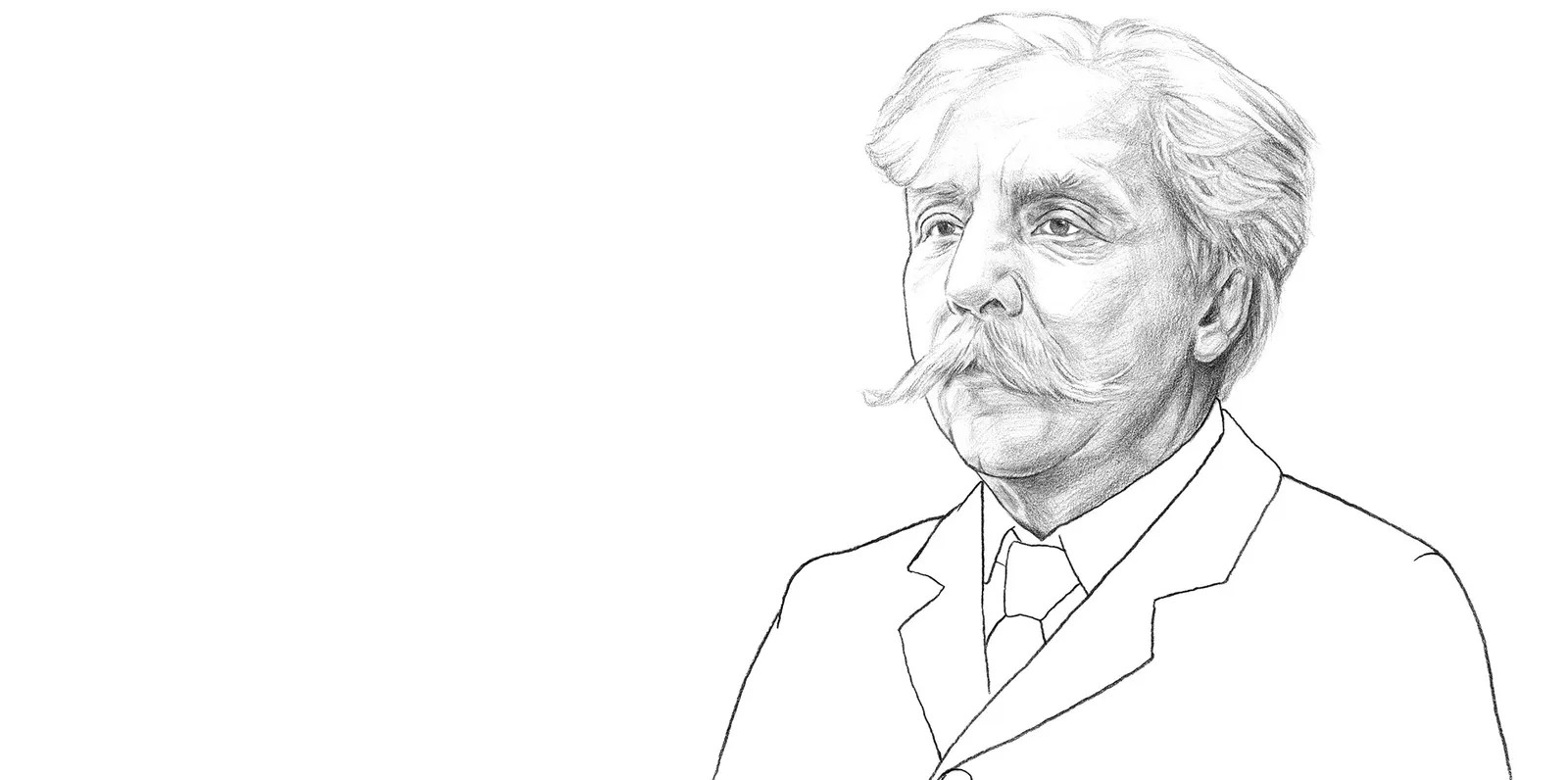
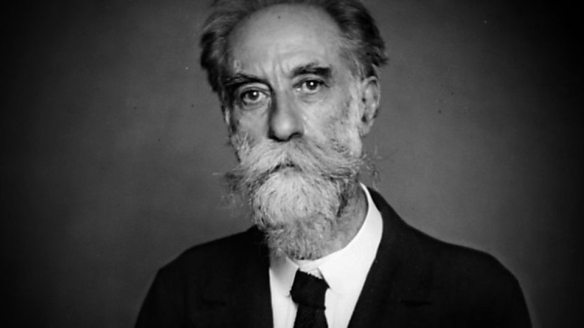
koechlin

Anyone who has seen the BBC Scottish Symphony Orchestra in Glasgow knows how valuable they are to the community, not just in Glasgow but Scotland too. City Halls, the impressive building that has been their home for the last ten years, is the perfect venue for them. In that time they have explored an impressive range of repertoire with principal conductor Ilan Volkov, who has become a versatile conductor capable of turning his hand to any music from the last five centuries.

A typically inventive program here includes a rare performance of the Seven Stars Symphony by Charles Koechlin (above). Long before the likes of Heat magazine fuelled celebrity culture, Koechlin was a star-struck fan in awe of the Hollywood actors and actresses of the day, especially Lilian Harvey, subject of the second movement, who became his muse. Volkov includes this piece as an example of 1930s that is not often heard, with most programmers opting for the ubiquitous works of the period by Schoenberg, Shostakovich and early-period Stravinsky.

Before that we hear a classical music favourite, Dukas‘ L’apprenti sorcier (The Sorcerer’s Apprentice), surely one of the biggest influences on Walt Disney – appearing in the Fantasia film. This is followed by the Clarinet Concerto from Unsuk Chin, the South Korean composer’s sixth work in a form that suits her style.

What should I listen out for?

Dukas L’apprenti Sorcier (The Sorcerer’s Apprentice)

2:06 – an enchanted introduction, the clarinet spelling out what the profile of the main theme will sound like. The spell has been cast. The orchestral colouring is vivid but then the music stops – awaiting the bassoon’s big moment at 4:26 with the tune we all know and love. The orchestra develop and play around with this until we hear it again in full technicolour at 6:00.

Throughout the piece has a macabre element and this comes to the fore at 9:07 where we hear the creaking sound of the contrabassoon right at its lower end. Gradually the tune comes out again and the full orchestra play it at …with glittering touches applied to the top end with woodwind and piccolo.

Then the door seemingly slams shut, and at 12:10 we hear the enchanted music of the start again – before a sudden end at 13:00.

Unsuk Chin – Clarinet Concerto

16:30 – we hear the clarinet straight away, with its sonorous low end sounding almost like a bird – a swan maybe, ducking and diving over the orchestra like a bird with a big bill. The influence of Messiaen is clear in some of this writing.The brass are prominent with rich accompaniment, and then the strings are heard, shimmering in accompaniment to the clarinet’s playful notes. There uis a build-up and then the orchestra scatter at 22’53”, and the music is much more agitated. Then at 24’20” the music takes a thoughtful angle, the clarinet with

26:07 – the second movement begins with the clarinet playing multiphonics – as in two notes at once – which is a very difficult skill for the clarinettist! He does so very quietly and alone, and is gradually joined by members of the orchestra. The sound is akin to bottles in the wind, and is quite spooky. Then from 29’18” the clarinet returns to the top of the picture, but with some incredibly difficult passagework exploiting its whole range.

The music subsides but then gradually builds again – before the quiet multiphonics make a brief reappearance.

35:26 – the whirring of the percussion inspires the clarinet to a playful approach. Chin uses much more of the orchestra this time, and we hear the bass end in its fullest voice yet. The two forces then play off each other, the clarinet with short squeaks and pips to the end.

Koechlin – Seven Stars Symphony

You can listen to a BBC feature on the Seven Stars Symphony here

1:04:40 Douglas Fairbanks, Sr. – Immediately we get a taste of Koechlin’s rich orchestral palette through exotic solos for clarinet and violin. A rich harmonic backdrop creates a sultry atmosphere, while also suggesting a night time portrait. Flutes, clarinets, bassoon and oboe are all prominent over soft strings, painting pictures in the manner of an early detective soundtrack – far ahead of its time, given this piece was written in 1933!

1:11:43 – Lilian Harvey – a brief but affectionate portrait of Koechlin’s muse / obsession, assigned initially to the oboe but with high violins taking much of the melodic material.

1:14:27 – Greta Garbo – now we hear the weird but wonderful tones of the electronic ondes martenot, a similar instrument to the theremin. It begins the portrait of Greta Garbo with a highly chromatic melody, and Koechlin is to use the orchestra sparingly, creating an exotic atmosphere.

1:18:42 – Clara Bow Et La Joyeuse California – a lively dance led by high violins, countered by a wary sequence. Koechlin uses a wide range of orchestral colour in this movement. At 1:23:08 we hear a saxophone solo before the orchestral gathers for a big, exaggerated Hollywood finish.

1:25:31 – Marlene Dietrich – a soft clarinet solo cuts to an affectionate passage accompanied by softly rippling piano and harp. This slow movement is richly scored, and takes the profile of a declaration of love, settled by an affectionate viola solo at the end.

1:30:55 – Emil Jannings – more exotic scoring from Koechlin at the start of this movement, as the strings come surging through, before a quieter but no less atmospheric passage of play from the woodwind. The portrait ends with a warm string sound.

1:35:15 – Charlie Chaplin – Koechlin’s final portrait is also the most substantial, and could stand as a piece on its own. A luxurious violin solo is then interrupted by a lively sequence suggesting one of Chaplin’s fast moving black and white films – very expressive! Chaplin then becomes furtive, seemingly peering round corners in a slow section. Again Koechlin uses the whole orchestra in a rich variety of colours and moods, right from double basses and piano at the lower end to sparkling woodwind and brass at the top.

Even the harpsichord makes an appearance at 1:44:37. After this the orchestra begin to suggest a slow Habanera dance – but after hinting at a fast section indulges in a serene passage led by the strings – before a softly voiced march takes the music off into the distance – from which point sumptuous strings lead us home to a grand finish.