

Un giorno di regno (1840)
Melodramma giocoso in Two Acts – music by Giuseppe Verdi; Libretto by Felice Romani (revised by the composer)
Sung in Italian with English surtitles
Il Cavaliere di Belfiore – Joshua Hopkins (baritone), Il Barone di Kelbar – Henry Waddington (bass-baritone), La Marchesa del Poggio – Christine Rice (mezzo-soprano), Giulietta di Kelbar – Maddison Leonard (soprano), Edoardo di Sanval – Oliver Sewell (tenor), La Rocca – Grant Doyle (baritone), Il Conte Ivrea – Robert Murray (tenor), Delmonte – James Micklethwaite (tenor), Servant – Daniel Vening (bass)
Christopher Alden (director), Charles Edwards (sets), Sue Willmington (costumes), Ben Pickersgill (lighting), Illuminos (Matt and Rob Vale) (video), Tim Claydon (choreographer)
Garsington Opera Chorus, Philharmonia Orchestra / Chris Hopkins
Garsington Opera, Wormsley
Monday 1 July 2024
review by Richard Whitehouse Photos by (c) Julian Guidera and Richard Hubert Smith (as marked)
Garsington Opera has a laudable track-record in presenting rarities or supposed ‘also-rans’ to best advantage, with this new production of Un giorno di regno no exception. Verdi’s second opera fell flat on its premiere at La Scala in September 1840, though the death of his wife and both of his children over the previous two years meant his heart was simply not in the writing of a comic opera: one of several extenuating circumstances that included a dearth of suitable singers for the main roles plus the demonstrably backward-looking nature of the work itself.
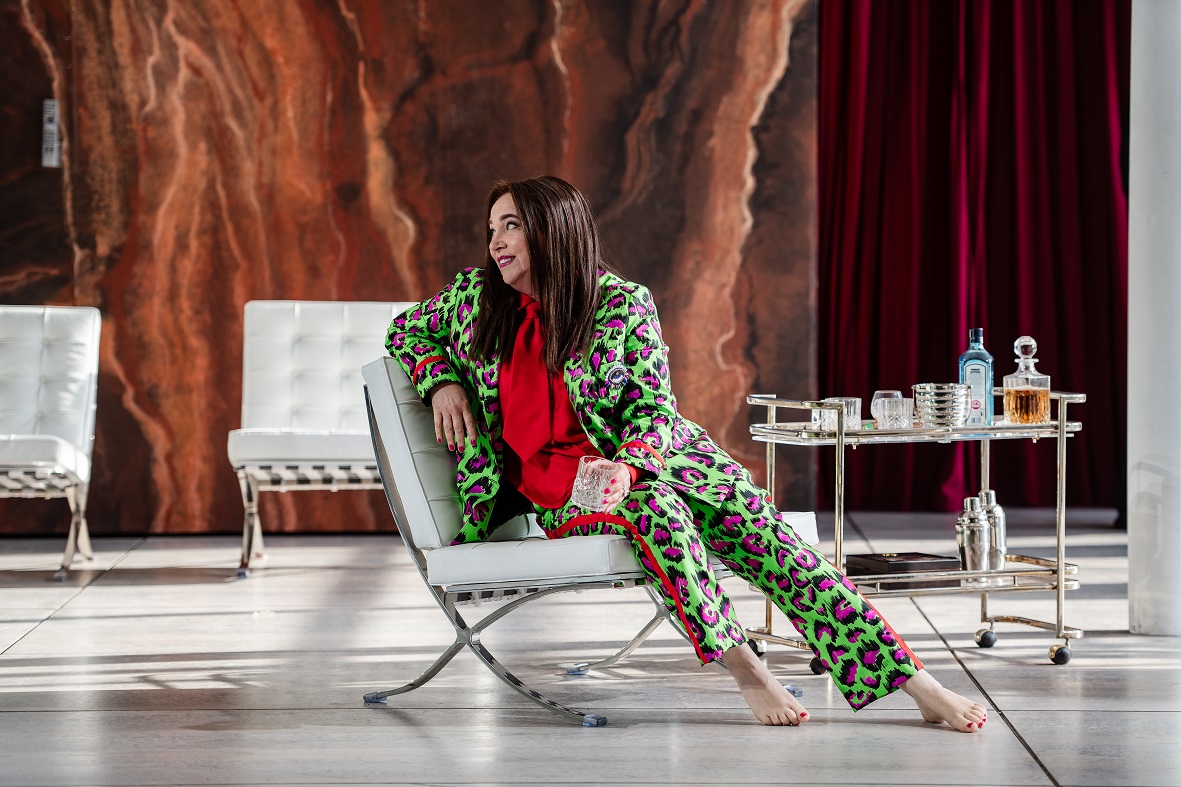
All credit to Christopher Alden for creating a production which, whatever its modishness of appearance, is rarely less then relevant and always entertaining. Verdi’s hurried refashioning of a 22-year-old libretto – concerning real-life impersonation of King Stanislaus prior to his briefly regaining the Polish crown in 1733 – was never likely to thrill the Milanese audience, but it does provide a lively context for this sequence of increasingly inane goings-on such as respond well to being situated in an authoritarian state swamped by ‘fake news’ and political one-upmanship. Just occasionally the deluge of video imagery threatens to overwhelm what is being enacted on stage but, overall, what can seem a needlessly involved and diffuse plot is, if not simplified, thrown into sharper focus so as to maintain the interest of those present.

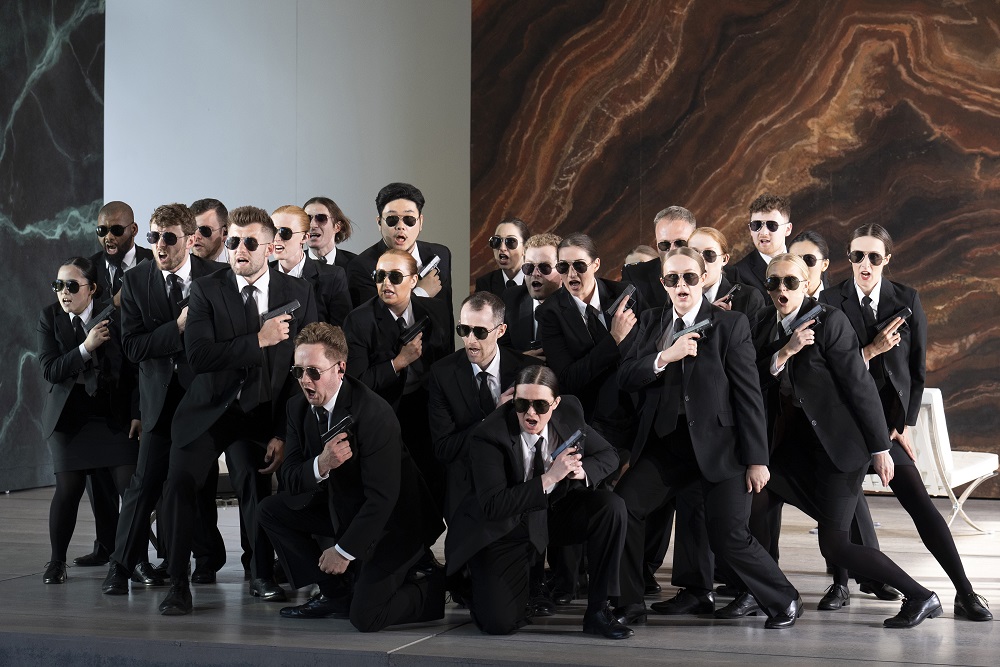
In so doing, Alden is abetted by the faux-stylishness of Charles Edwards’s sets and the no less eye-catching costumes of Sue Willmington – their combined effect enhanced by the dextrous lighting of Ben Pickersgill and a video component from the Illuminos duo that adds greatly to the effect of immersive decadence. Nor is the choreography of Tim Claydon found wanting in its physicality and convincing use of all available stage-space, not least those gangways in the auditorium that function briefly if vividly as its extension for certain highpoints of the action.

An opera production is arguably only as good as its singers, and the present cast could hardly be bettered. As the false king Belfiore, Joshua Hopkins brings style and suavity to a role that could easily become insipid – and with his ‘Freddie Mercury’ cameo carried off to perfection. Teasing out the cowardliness behind his thuggery, Henry Waddington is ideally cast as Kelbar and Grant Doyle hardly less so as the scheming La Rocca – his ‘sparring partner’ made literal during their uproarious breakfast confrontation. Oliver Sewell overcame initial unsteadiness to deliver an Edoardo of resolve and eloquence, with Robert Murray the stealthily insinuating Ivrea. Neither female role leaves anything to be desired – Madison Leonard vulnerable for all her minx-like persona; Christine Rice stealing the show as the Marchesa whose solo spots are the opera’s likely highlights. James Micklethwaite and Daniel Vening both acquit themselves ably, while Garsington Opera Chorus evidently enjoys its collective function as those ‘people in black’ who variously comment on the action then intervene often forcibly when necessary.
Stepping in at the eleventh hour (for an indisposed Tobias Ringborg), Chris Hopkins directed with verve and real sense of musical continuity – not least when Verdi (seemingly for the only time in his career) made recourse to ‘recitativo secco’ which here furthers the action without impeding its progress. Otherwise, the Philharmonia Orchestra despatches with relish a score which, for all that this lacks the sophistication and urbanity of Rossini’s or Donizetti’s mature comedies, crackles with energy along with an engaging personality for which it has not yet had its due.
Although a lesser opera in the Verdi canon, Un giorno di regno met with modest success even in his lifetime and its later revivals were well received. Thanks to this Garsington production, his ‘King for a Day’ finds itself more than able to enjoy a timely 15 minutes in the spotlight.
For further information and performances, visit the Garsington Opera website. For more on the performers, click on the names to read about director Christopher Alden, conductor Chris Hopkins and the Philharmonia Orchestra
 Arcana.fm