Arcana at the BBC Proms – John Wilson conducts Respighi’s Roman Trilogy

Jonathan Aasgaard (cello), Sinfonia of London / John Wilson

Verdi Overture: La forza del destino (1861-2, revised 1869)
Walton Cello Concerto (1955-56)
Respighi Feste romane (Roman Festivals) (1928); Fontane di Roma (Fountains of Rome) (1915-16); Pini di Roma (Pines of Rome) (1923-4)

Royal Albert Hall, London
Friday 24 July 2026

Reviewed by Ben Hogwood Photos (c) BBC / Chris Christodoulou

On a sultry Friday evening at the BBC Proms it was entirely appropriate for John Wilson and the Sinfonia of London to relocate their audience to the heat of Italy.

Verdi’s overture to La forza del destino was the curtain raiser, beautifully phrased and with its ‘fate’ theme brilliantly delivered by the strings. The lyrical counterpart – recognizable from certain beer adverts – simply floated on air.

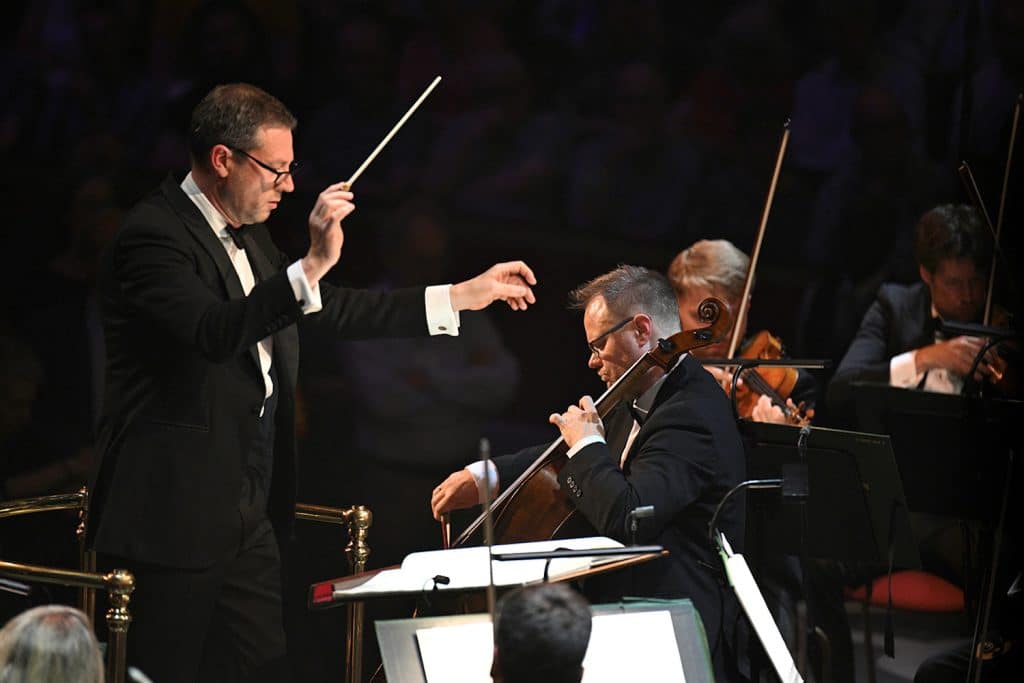
Walton’s Cello Concerto was similarly airborne, though this is a very different work, written while the composer was living on Ischia, in the Bay of Naples. The opening bars, though precise, were shrouded in mystery, the ticking chords from the orchestra striking an unease from which it took soloist Jonathan Aasgaard a while to emerge. The cello’s opening melody, one of Walton’s finest, was initially tentative but subsequent reappearances gave it more conviction, the orchestra providing exquisitely shaded support.

Aasgard has recorded the work with the Sinfonia of London, whose cello section he leads, and the established togetherness with the orchestra was a clear asset. As the faster music evolved, there was a singularity of voice, though not the extravert approach of some performances, the anxieties in Walton’s music remaining. These were ultimately banished by a lyrical third movement, then a terrific cadenza and some lively exchanges between soloist and orchestra, though even here the closing bars were left with an open-ended question. A compelling performance, nonetheless – and one to revisit.
To say Respighi throws open the doors and windows when writing for orchestra would be an understatement. It is rare to encounter works of such colour and characterisation, secured through an experienced hand whose training with Rimsky-Korsakov and Martucci yielded a bold and often extravagant style. Coarse, too, on occasion, as Wilson and his charges illustrated with the beginning of Roman Festivals.

The first of a triptych written by Respighi in homage to his home city, the festivals are not for the shrinking violet, with Christian martyrs thrown to the lions even before the end of the first movement. The loud music was suitably dramatic but there was reverence and restraint in the quiet passages, where we could have been in the depths of the Colosseum itself. Here there was extraordinary control, a quality not always associated with Respighi but one which served him well here. Jubilee was terrific, as was the cut and thrust of The October Festival, and it is a credit to Wilson that the most uneven piece of the triptych was brought off with conviction, its finale reminding us of Stravinsky’s influence on the composer.

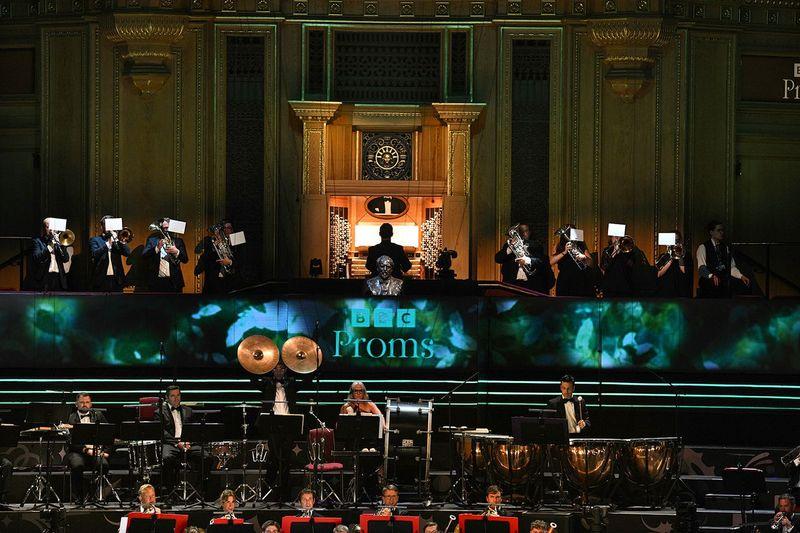
This is also evident in Fountains of Rome, but the riot of colour that found the orchestral virtuosos in their element is purely of Respighi’s hand. The wind and brass excelled through the undulations of The Fountain of Valle Giulia at dawn, with beautiful solos from oboe (Fergus McCready) and horn (Christopher Parkes), while Respighi’s lavish illustrations of the Triton and Trevi fountains were rendered with equal parts care and extravagance. The latter rose to full-bodied splendour as an ideal balance was struck between organ (Richard Hills) and orchestra. Delicacy was however once again evident in The Fountain of the Villa Medici, Wilson’s eye for detail highlighting the twinkling edges of Respighi’s wonderful part writing.

And so to the biggest crowd pleaser, the Pines of Rome, whose opening flourish in the Pines of the Villa Borghese set the tone in glorious technicolour. The murky, dusty humidity of the Pines near a catacomb was vividly portrayed, the solemn utterance of its Gregorian chant growing to an awesome climax of poise and power. Pianist Ben Dawson was superb in the rippling textures of The Pines of the Janiculum Hill, as was the baleful clarinet of Chris Richards. The movement ended memorably with the recording of the nightingale, with which Respighi transfixed his audience from a gramophone back in 1924. Over a century on, it once again held the Albert Hall in its grasp. From the depths emerged the final march, The Pines of the Via Appia. This was the night’s crowning glory, a long and brilliantly managed crescendo that somehow kept getting louder, 130 players giving their all in a thunderous and exultant finish to raise the roof.

This moment alone was worth the admission, but there was a final treat in the form of Rossini, the final galop from his overture to William Tell, entirely appropriate and given with evident pleasure. For this is what John Wilson and the Sinfonia of London are all about, their pure enjoyment of music translated into performances of rare distinction and character. No wonder the house was full, the cheers long and loud – we all knew we had seen one of the standout moments of this year’s Proms festival.

You can watch this Prom on the BBC iPlayer, or listen to it on BBC Sounds until the end of September 2026. Meanwhile you can click on the links to access the Roman Trilogy in recorded form from the Sinfonia of London and John Wilson, and Jonathan Aasgaard’s recording of Walton’s Cello Concerto with the same orchestra

Published post no.2,959 – Sunday 26 July 2026
Arcana at the Opera – Verdi: La Traviata @ Garsington Opera

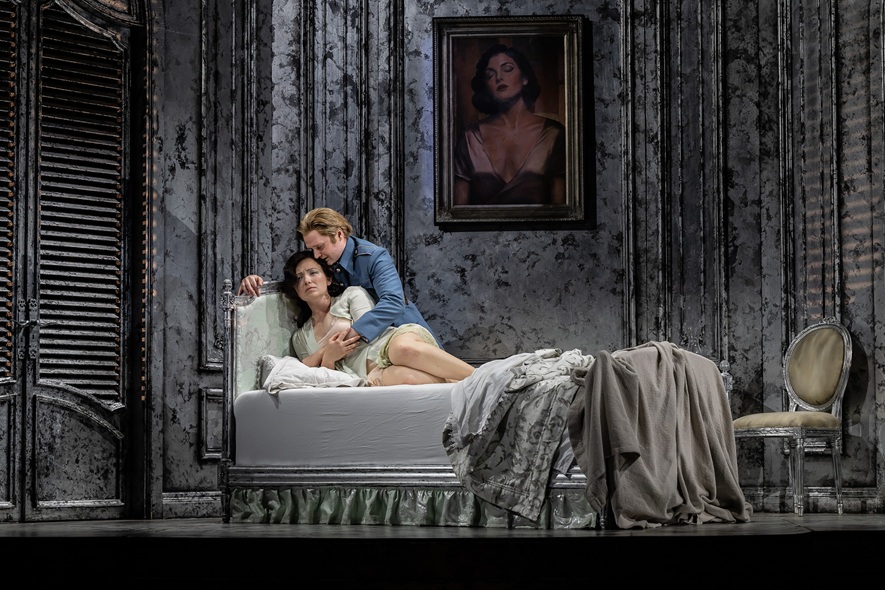
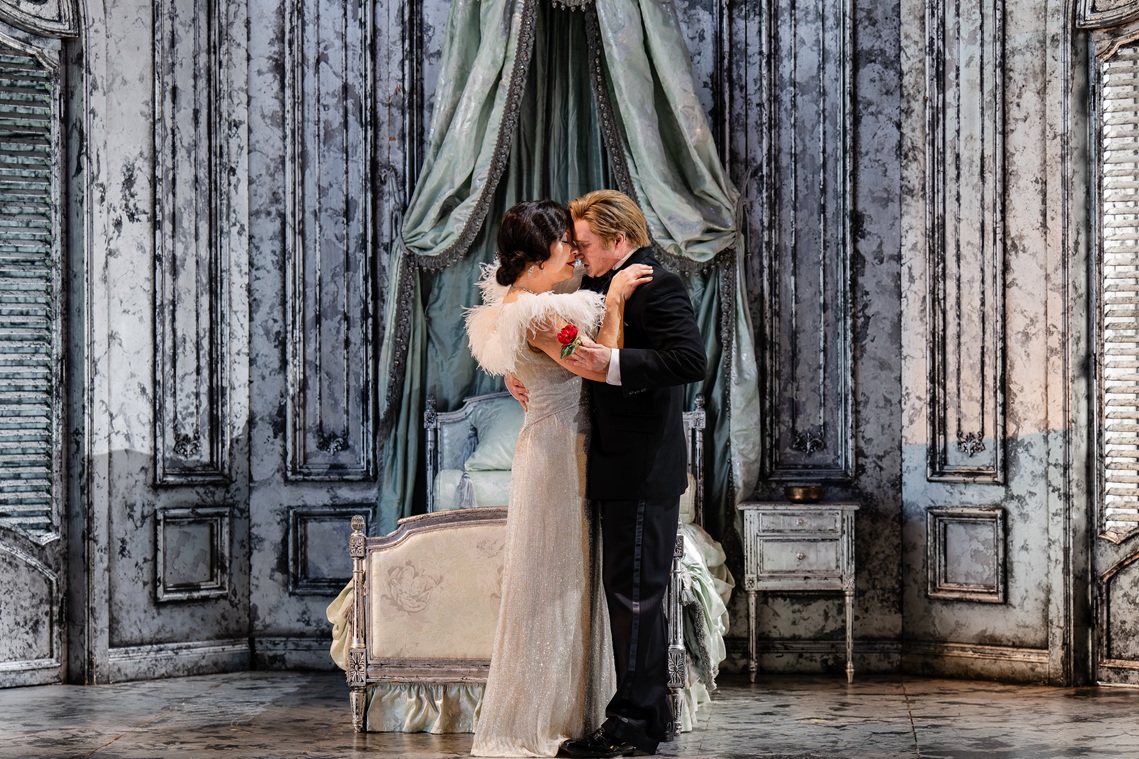
Verdi’s La Traviata, Garsington Opera at Wormsley, Stokenchurch, UK | Pictured: Madison Leonard (Violetta Valéry); Oleksiy Palchykov (Alfredo Germont) | Image © Julian Guidera 2026

Violetta Valéry – Madison Leonard (soprano); Alfredo Germont – Oleksiy Palchykov (tenor); Giorgio Germont – Roland Wood (baritone); Gastone de Letorières – Sam Harris (tenor); Baron Douphol – Chuma Sijeqa (baritone); Doctor Grenvil – Henry Waddington (bass baritone); Annina – Mathilda Bryngelsson (mezzo-soprano); Flora BervoixAlexandria Moon (mezzo-soprano); Marchese d’Obigny – Sam Young (baritone); Giuseppe – Matthew Sotillo-Cooke (tenor); Messenger – Peter Lidbetter (bass); Flora’s Servant – Sisa Mjekula (baritone)

Garsington Opera Chorus, Philharmonia Orchestra / Douglas Boyd

Director Louisa Muller; Designer Christopher Oram; Lighting Designer Marcus Doshi; Movement Director Matthew Steffens

Garsington Opera, Wormsley
Sunday 31 May 2026

Reviewed by Richard Whitehouse

Among Verdi’s most often revived works, despite a somewhat fraught premiere at La Fenice, La traviata has long since became a victim of that familiarity breeding contempt. From which vantage this production, itself a first for Garsington Opera, affords something of a corrective.

First unveiled at Santa Fe Opera two years ago, Louisa Muller’s staging provides a welcome abstraction – blurring the sense of any specific time or place without sacrificing that dramatic realism Verdi was intent on conveying in his handling of Piave’s skilful libretto. What comes over most readily is the interplay of outward (public) show and inward (private) confessional – abetted by Christopher Oram’s arresting and deftly rotating sets, along with Marcus Doshi’s alternately garish or spectral lighting and Matthew Steffens’s fluid yet alluring choreography.

Cast-wise the evening is dominated by Madison Leonard’s Violetta, a victim of circumstance too capricious to warrant respect if never too obstinate to seem other than empathetic. Caught between the dictates of her own desires and those of a society intent on having a piece of her, she presides over or propels the action even at her most vulnerable and has the vocal presence to match. Hardly her equal emotionally, Oleksy Palchykov is a steadfast Alfredo as out of his depth in this social milieu as in affairs of the heart, while always believable in his protestation of love as to override those admittedly selfish warnings from his father. To which end Roland Wood is a forthright but never unyielding Germont, drawn unwillingly yet inevitably into that ‘love triangle’ such as makes this opera far more social commentary than escapist indulgence.

© Copyright Clive Barda 2026

Smaller roles are unobtrusively well taken, among them Mathilda Bryngelsson’s supportive if uncomplaining Annina and Henry Waddington’s brooding yet compassionate Doctor. Chuma Sijeqa brings panache to the otherwise vacuous Douphol, with Alexandria Moon’s Flora and Sam Harris’ Gastone pertinent cameos both as confidants of Violetta or Alfredo respectively, and Sam Young not a little amusing as Flora’s lover d’Obigny. Neither can Garsington Opera Chorus be faulted for its contributions which, in themselves, mark something of a departure for Verdi by eschewing the brazenness of his earlier ‘crowd scenes’ for something altogether subtler and more insinuating. Verdi might not have drawn attention to the psychology of his situations as did Wagner, but this does not make his approach any less probing or insightful.

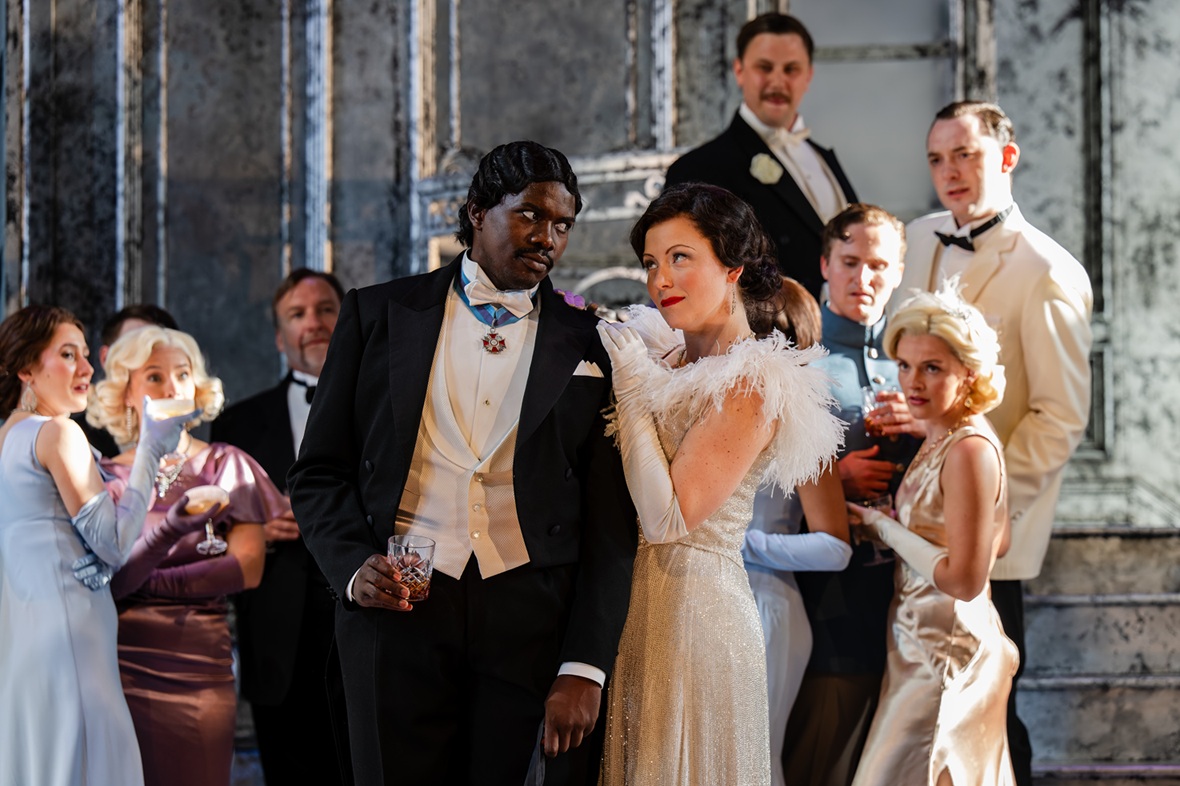
Verdi’s La Traviata, Garsington Opera at Wormsley, Stokenchurch, UK | Pictured: Alexandria Moon (Flora Bervoix) | Image © Julian Guidera 2026

Douglas Boyd steers a confident and assured course across an opera which can all too easily become episodic whatever its relative concision. He is no less mindful of a need to underline the restraint in orchestral writing that finds Verdi exploring more equivocal and ambivalent shades of expression; not least the fateful preludes to the first and third acts which, between them, encapsulate this drama’s emotional as surely as its motivic essence. Suffice to add that the Philharmonia renders the score with a finesse not always to be expected in the opera-pit.

A finesse, moreover, maintained throughout a final scene whose gradual evanescence makes the implacability of its closing chords the more startling. They undoubtedly set the seal on a production which, taken overall, restores to this opera an integrity it should always have had.

La Traviata runs until 24 July 2026 – with performances on 13, 20, 24 & 28 June, then 9, 11, 16, 20 & 24 July. You can find more information on the production and explore ticket options at the Garsington Opera website

Published post no.2,910 – Sunday 7 June 2026

Arcana at the Opera – Verdi: La Traviata @ Garsington Opera


© Copyright Clive Barda 2026

Violetta Valéry – Madison Leonard (soprano); Alfredo Germont – Oleksiy Palchykov (tenor); Giorgio Germont – Roland Wood (baritone); Gastone de Letorières – Sam Harris (tenor); Baron Douphol – Chuma Sijeqa (baritone); Doctor Grenvil – Henry Waddington (bass baritone); Annina – Mathilda Bryngelsson (mezzo-soprano); Flora BervoixAlexandria Moon (mezzo-soprano); Marchese d’Obigny – Sam Young (baritone); Giuseppe – Matthew Sotillo-Cooke (tenor); Messenger – Peter Lidbetter (bass); Flora’s Servant – Sisa Mjekula (baritone)

Garsington Opera Chorus, Philharmonia Orchestra / Douglas Boyd

Director Louisa Muller; Designer Christopher Oram; Lighting Designer Marcus Doshi; Movement Director Matthew Steffens

Reviewed by Tom Hardwick

Garsington Opera started its 2026 season with a punchy, classy La Traviata, its first production of a reliable standby of the repertoire. Giuseppe Verdi’s adaptation of Alexandre Dumas Fils’s 1852 play La Dame aux camélias narrates the relationship between tubercular courtesan Violetta Valéry and Alfredo Germont, doomed by his father’s insistence that she break off the affair so his daughter can make a respectable marriage. Will Violetta and Alfredo be allowed to reconcile before she breathes her last?

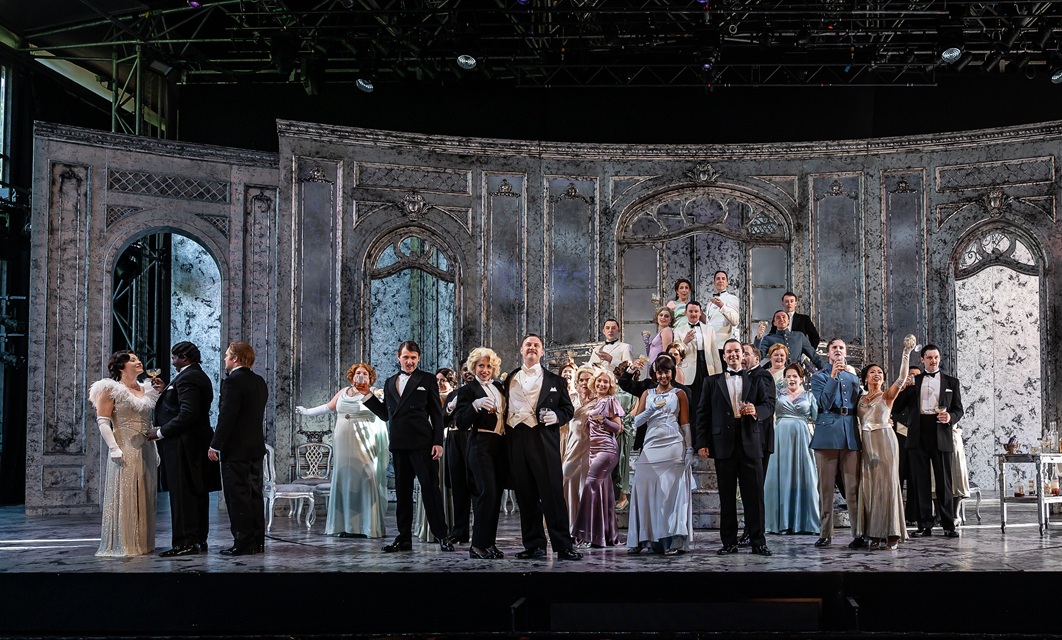
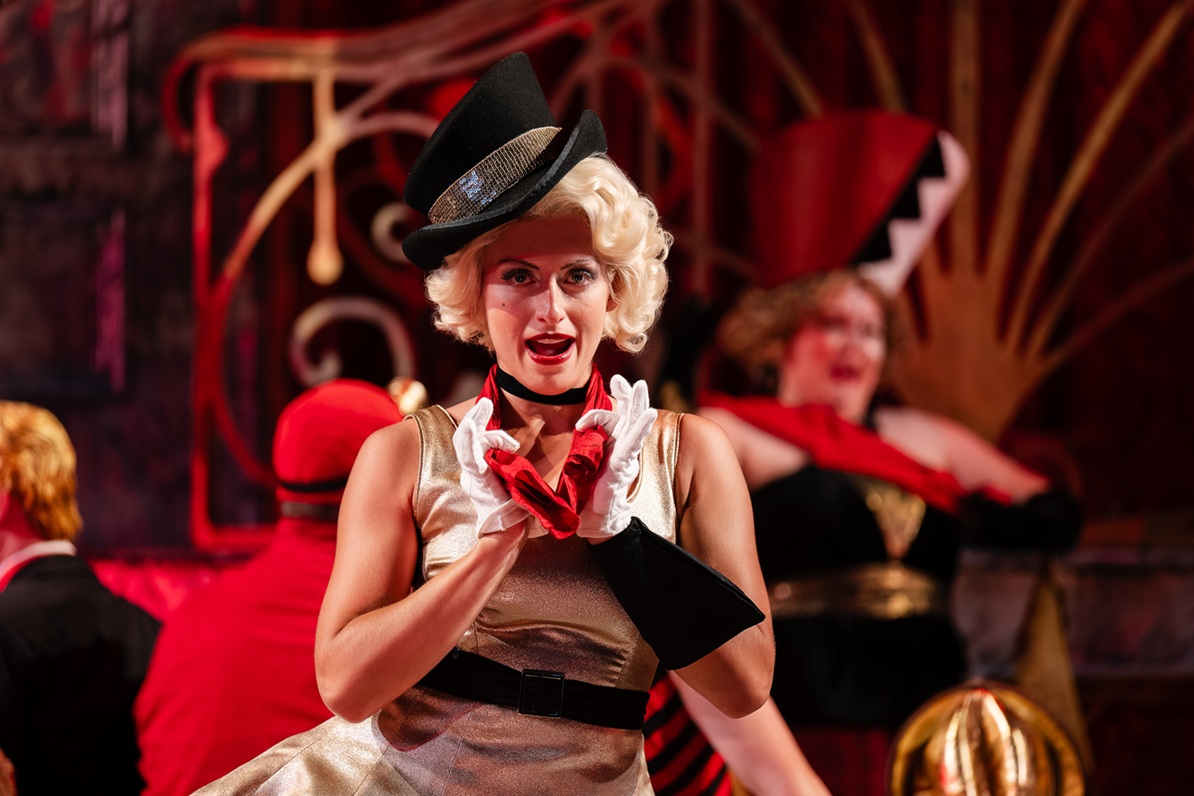
Before the opera’s 1853 première at La Fenice, objections from the Venetian censor’s office obliged Verdi to set Dumas’s contemporary story around 1700. In Louisa Muller’s production, which premiered at Santa Fe in 2024, the setting was updated to Paris in the late 1930s. Germont père’s unyielding morality is still believable rather than anachronistic, while Muller and designer Christopher Oram could indulge in an inter-war baroque silver leaf revolving set, chrome-plated accoutrements, and stylish costumes and wigs. In Act 2’s vaguely de Lempicka / Cocteau-inspired fancy dress ball, the well-disciplined Garsington chorus made brisk work of Verdi’s party goers posing as Gipsy fortune-tellers and matadors (spirited dancers Nikki Cheung and Jonathan Milton), before they synchronised to pass comment on Alfredo’s denunciation of Violetta. Smaller roles were well cast in a strong ensemble, particularly Mathilda Bryngelsson as Annina and Alexandria Moon as Flora.

Verdi’s La Traviata, Garsington Opera at Wormsley, Stokenchurch, UK | Pictured: Madison Leonard (Violetta Valéry); Chuma Sijeqa (Baron Douphol); Garsington Opera Chorus | Image © Julian Guidera 2026

Violetta and Alfredo’s love happens largely offstage. Their relationship is defined by anticipation and by its dissolution. In act one Violetta dreams of love with Alfredo before dismissing it as a fantasy and resolving to live for pleasure. Act two sees Germont père, a remorseless humbug carefully sung by Roland Wood, dapper and imposing in military uniform (was this really necessary?), browbeat Violetta into submission. Oleksiy Palchykov and Madison Leonard, as Alfredo and Violetta, had sung the (happier fated) lovers in Garsington’s L’elisir d’amore last year, and made an attractive couple with plausible chemistry. Palchykov was an eager and enthusiastic Alfredo with an easy-going, fluid line and great diction. However American soprano Leonard, who was a stand-out Sophie in Garsington’s 2021 Rosenkavalier, gave the performance of the night. Her Violetta was assertive, strong, and angry rather than the usual wet tart with a heart: a powerful view of the role. As twilight deepened outside the see-through wings of the theatre at Wormsley, Violetta did not go gentle into that good night.

Verdi’s La Traviata, Garsington Opera at Wormsley, Stokenchurch, UK | Pictured: Garsington Opera Chorus | Image © Julian Guidera 2026

Douglas Boyd conducted the Philharmonia Orchestra through the score at almost breakneck pace without sacrificing detail. There’s always something rather jarring about the country house opera principle of confronting extremely well-dined opera goers with tragedy, but the company left the audience enraptured. Do what you can to get a ticket.

La Traviata runs until 24 July 2026 – and you can find more information on the production and explore ticket options at the Garsington Opera website

Published post no.2,904 – Monday 1 June 2026

Arcana at the Opera – Verdi: Le Touvère @ Wexford Festival Opera


Reviewed by Tom Hardwick


If the Wexford Festival is known and acclaimed for its commitment to reviving obscurer corners of the operatic repertoire, how could it also manage to open its 2025 season with one of Giuseppe Verdi’s best-known works? The instant success of Il Trovatore after its première in Rome in 1853 encouraged the financially astute composer to revise it for the lucrative Paris market, which preferred operas in French, before pirate versions of the score could deprive him of rights and royalties.

Verdi transformed Il Trovatore into Le Trouvère, revising the score to take account of the French text, adding a ballet to conform to the format of the Paris Opera (and justify his fee), tweaking the final scene, and overseeing the first performance in February 1857. Le Trouvère enjoyed a long reign in France and its colonies, before falling from favour by the 1930s. Musicological research led by David Lawton has encouraged revivals and the production of a critical edition of Le Trouvère. If Wexford could have its cake and eat it with this very familiar rarity, there’s an eeriness in hearing unanticipated words to very familiar melodies – who would have guessed “di quella pira” rendered down to “bûcher infame” – which remains slightly disconcerting.


Director Ben Barnes brought forward Verdi’s plot, originally set in medieval Spain and encompassing love triangles, civil war, burnings at the stake, and a gipsy’s curse, to the Spanish Civil War. The rebellious troubadour Manrique is now a dashing bicycle-mounted leader of an Anarcho-Syndicalist detachment; the Comte de Luna, his rival for Leonore, is a smartly uniformed Nationalist, albeit one who seems very happy to break into convents (shouldn’t it have been the other way round?). Liam Doona’s single set, with lofty shuttered openings upstage, flexibly suggested bivouacs, cafes and prison cells, as well as the bedroom where Leonore and Manrique finally manage to spend some time before fate and duty tear them apart.

The major difference between Il Trovatore and Le Trouvère is the ballet sequence at the start of Act III. Although rarely performed, the music showcases Verdi’s talent for orchestral writing, and the Wexford Festival Opera Orchestra sparkled under conductor Marcus Bosch. In 1857 the ballet illustrated the colourful life of a gypsy encampment, but it presents a problem for contemporary directors lacking the huge corps de ballet and budget of the Paris Opera. Ben Barnes used newsreel footage of the Spanish Civil War, and three rifle-toting dancers, to turn the ballet into the Comte de Luna’s uneasy dreams, but it remained one of the slacker parts of a production that usually kept the action belting along; in the last act the imprisoned Manrique and the gypsy Azucena (his mother – or is she?) even rose rather squeakily through the floor to avoid a scene change and keep the melodies unfurling.

The Wexford Festival Opera Chorus convinced as revolutionaries, soldiers, monks, and (especially) nuns, but the grand scenes only serve to outline the relationships between the four leads. Kseniia Nikolaieva sang Azucena powerfully but with few consonants, while Giorgi Lomiselli grew into the Comte de Luna and put some depth into one of Verdi’s less engaging baddies. Lydia Grindatto as Leonore showed no signs of the illness that was announced at curtain up, and Eduardo Niave, whose French accent was the best in the cast, was a young and charismatic Manrique. A solid – and sold out – start to the 2025 Festival.

You can watch this production of Le Trouvère below:

Arcana at the Opera – Wexford Festival Opera present Verdi’s Le Trouvère

Stand by for a review of this production, due tomorrow on Arcana (internet permitting, as I’ve just moved house!) – but thanks to Wexford / RTÉ you can enjoy the production online: