Arcana at the Opera – Verdi: La Traviata @ Garsington Opera

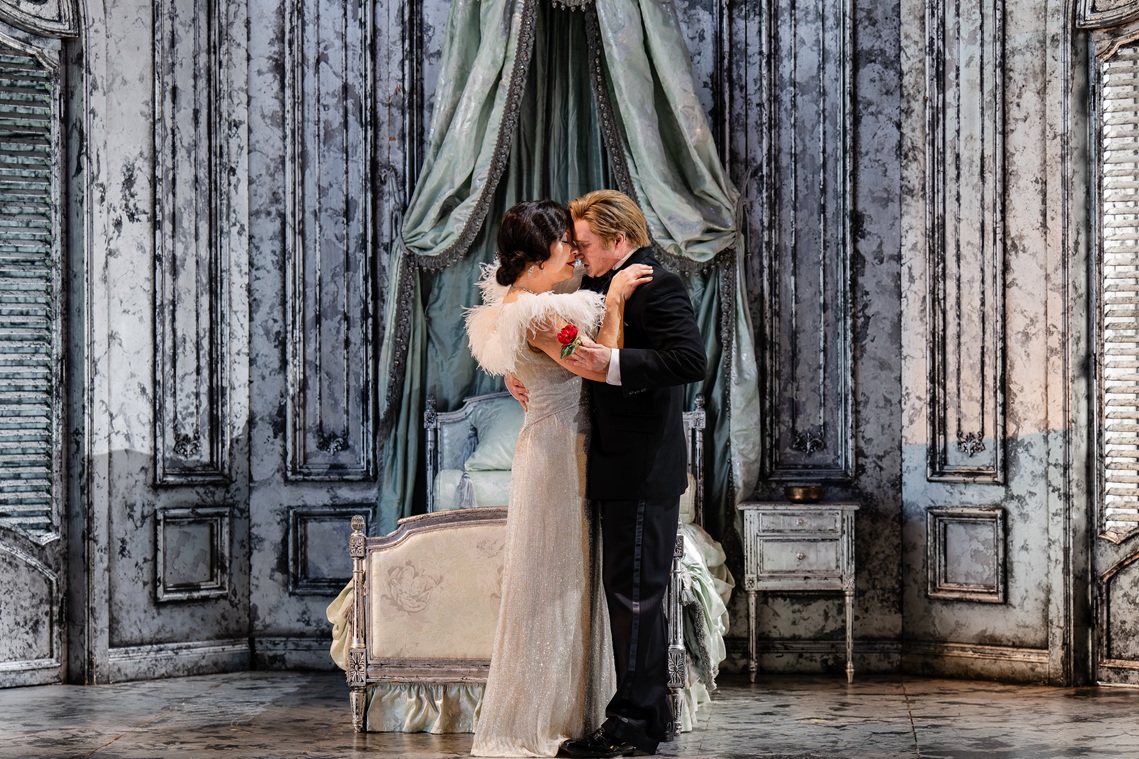
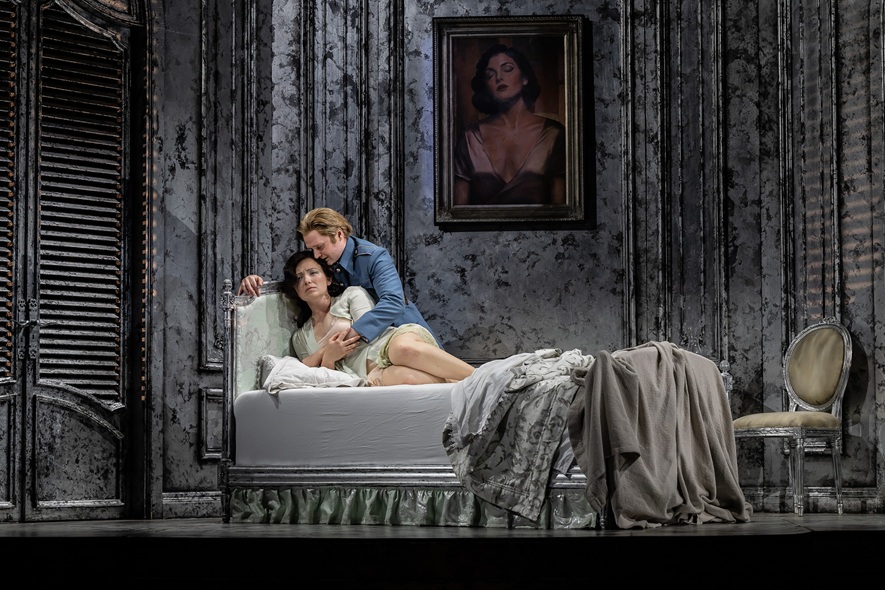
Verdi’s La Traviata, Garsington Opera at Wormsley, Stokenchurch, UK | Pictured: Madison Leonard (Violetta Valéry); Oleksiy Palchykov (Alfredo Germont) | Image © Julian Guidera 2026

Violetta Valéry – Madison Leonard (soprano); Alfredo Germont – Oleksiy Palchykov (tenor); Giorgio Germont – Roland Wood (baritone); Gastone de Letorières – Sam Harris (tenor); Baron Douphol – Chuma Sijeqa (baritone); Doctor Grenvil – Henry Waddington (bass baritone); Annina – Mathilda Bryngelsson (mezzo-soprano); Flora BervoixAlexandria Moon (mezzo-soprano); Marchese d’Obigny – Sam Young (baritone); Giuseppe – Matthew Sotillo-Cooke (tenor); Messenger – Peter Lidbetter (bass); Flora’s Servant – Sisa Mjekula (baritone)

Garsington Opera Chorus, Philharmonia Orchestra / Douglas Boyd

Director Louisa Muller; Designer Christopher Oram; Lighting Designer Marcus Doshi; Movement Director Matthew Steffens

Garsington Opera, Wormsley
Sunday 31 May 2026

Reviewed by Richard Whitehouse

Among Verdi’s most often revived works, despite a somewhat fraught premiere at La Fenice, La traviata has long since became a victim of that familiarity breeding contempt. From which vantage this production, itself a first for Garsington Opera, affords something of a corrective.

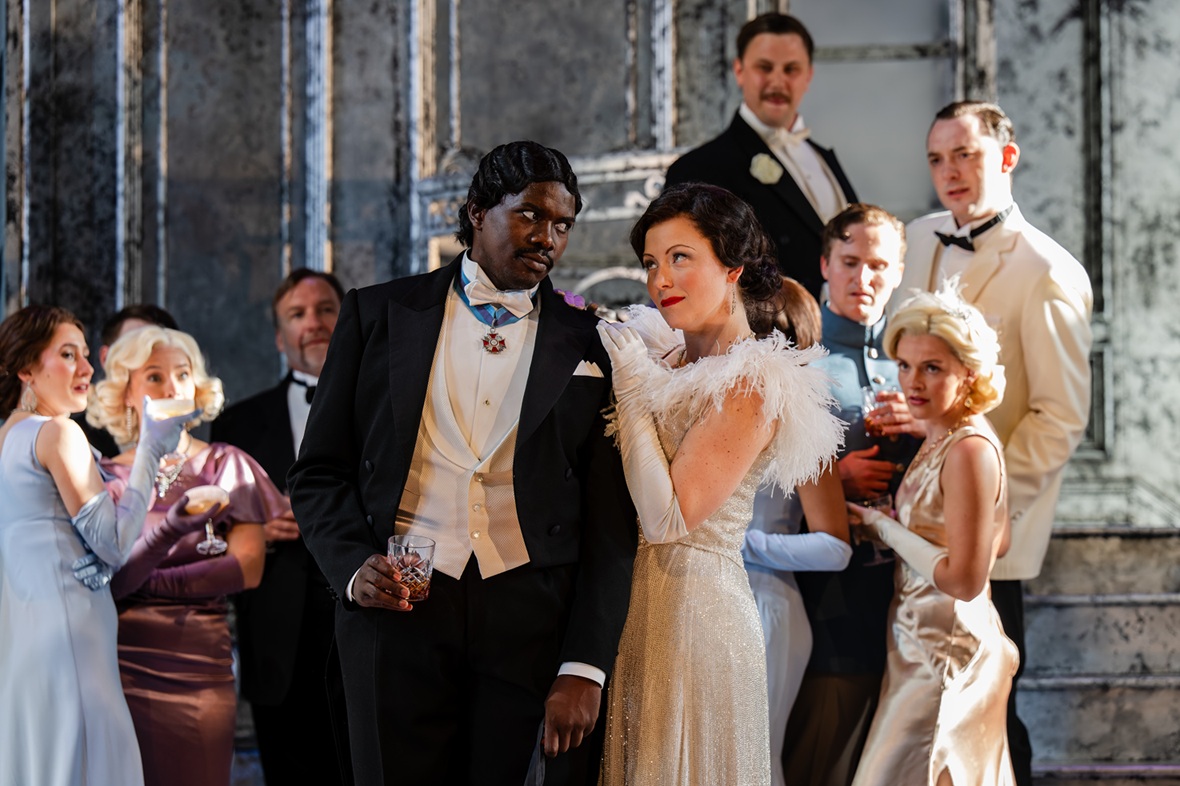
First unveiled at Santa Fe Opera two years ago, Louisa Muller’s staging provides a welcome abstraction – blurring the sense of any specific time or place without sacrificing that dramatic realism Verdi was intent on conveying in his handling of Piave’s skilful libretto. What comes over most readily is the interplay of outward (public) show and inward (private) confessional – abetted by Christopher Oram’s arresting and deftly rotating sets, along with Marcus Doshi’s alternately garish or spectral lighting and Matthew Steffens’s fluid yet alluring choreography.

Cast-wise the evening is dominated by Madison Leonard’s Violetta, a victim of circumstance too capricious to warrant respect if never too obstinate to seem other than empathetic. Caught between the dictates of her own desires and those of a society intent on having a piece of her, she presides over or propels the action even at her most vulnerable and has the vocal presence to match. Hardly her equal emotionally, Oleksy Palchykov is a steadfast Alfredo as out of his depth in this social milieu as in affairs of the heart, while always believable in his protestation of love as to override those admittedly selfish warnings from his father. To which end Roland Wood is a forthright but never unyielding Germont, drawn unwillingly yet inevitably into that ‘love triangle’ such as makes this opera far more social commentary than escapist indulgence.
© Copyright Clive Barda 2026

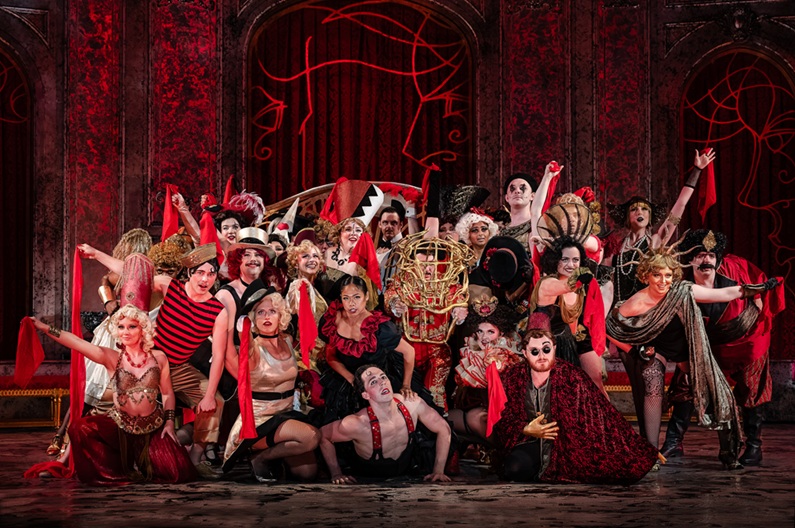
Smaller roles are unobtrusively well taken, among them Mathilda Bryngelsson’s supportive if uncomplaining Annina and Henry Waddington’s brooding yet compassionate Doctor. Chuma Sijeqa brings panache to the otherwise vacuous Douphol, with Alexandria Moon’s Flora and Sam Harris’ Gastone pertinent cameos both as confidants of Violetta or Alfredo respectively, and Sam Young not a little amusing as Flora’s lover d’Obigny. Neither can Garsington Opera Chorus be faulted for its contributions which, in themselves, mark something of a departure for Verdi by eschewing the brazenness of his earlier ‘crowd scenes’ for something altogether subtler and more insinuating. Verdi might not have drawn attention to the psychology of his situations as did Wagner, but this does not make his approach any less probing or insightful.
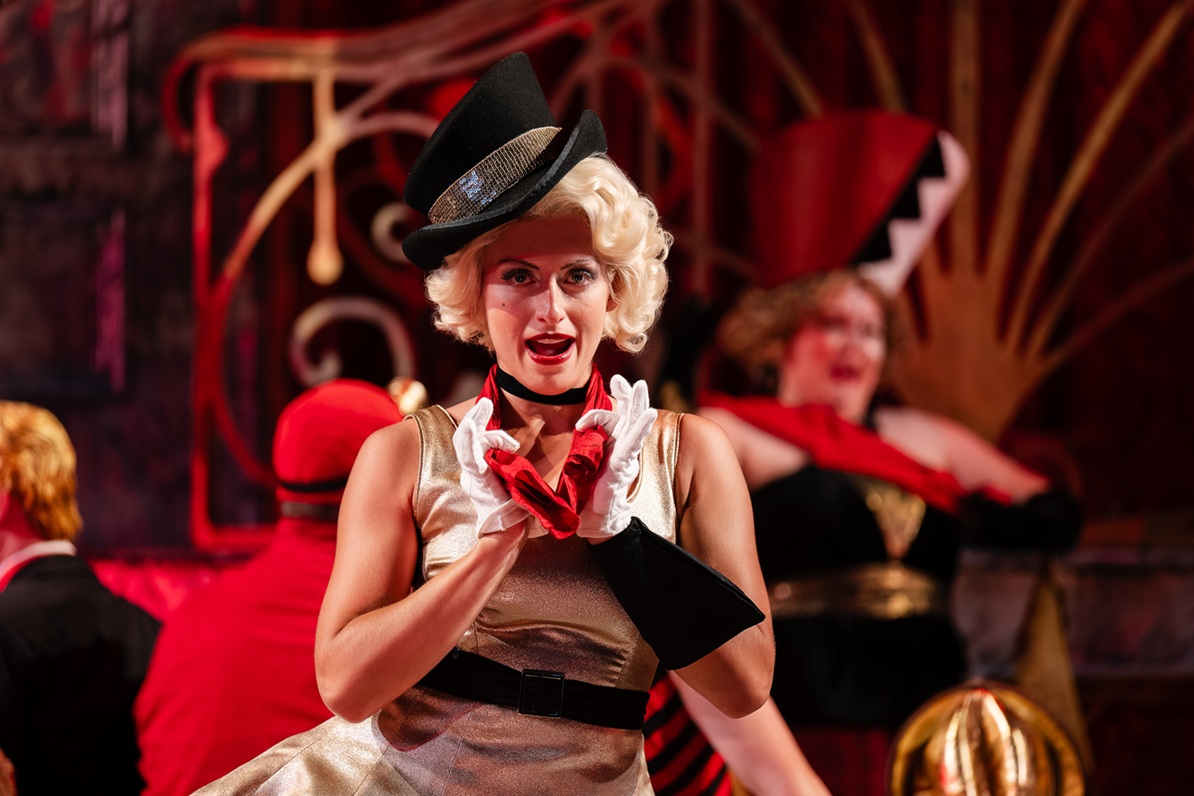
Verdi’s La Traviata, Garsington Opera at Wormsley, Stokenchurch, UK | Pictured: Alexandria Moon (Flora Bervoix) | Image © Julian Guidera 2026

Douglas Boyd steers a confident and assured course across an opera which can all too easily become episodic whatever its relative concision. He is no less mindful of a need to underline the restraint in orchestral writing that finds Verdi exploring more equivocal and ambivalent shades of expression; not least the fateful preludes to the first and third acts which, between them, encapsulate this drama’s emotional as surely as its motivic essence. Suffice to add that the Philharmonia renders the score with a finesse not always to be expected in the opera-pit.

A finesse, moreover, maintained throughout a final scene whose gradual evanescence makes the implacability of its closing chords the more startling. They undoubtedly set the seal on a production which, taken overall, restores to this opera an integrity it should always have had.

La Traviata runs until 24 July 2026 – with performances on 13, 20, 24 & 28 June, then 9, 11, 16, 20 & 24 July. You can find more information on the production and explore ticket options at the Garsington Opera website

Published post no.2,910 – Sunday 7 June 2026
Arcana at the Opera – Verdi: La Traviata @ Garsington Opera


© Copyright Clive Barda 2026

Violetta Valéry – Madison Leonard (soprano); Alfredo Germont – Oleksiy Palchykov (tenor); Giorgio Germont – Roland Wood (baritone); Gastone de Letorières – Sam Harris (tenor); Baron Douphol – Chuma Sijeqa (baritone); Doctor Grenvil – Henry Waddington (bass baritone); Annina – Mathilda Bryngelsson (mezzo-soprano); Flora BervoixAlexandria Moon (mezzo-soprano); Marchese d’Obigny – Sam Young (baritone); Giuseppe – Matthew Sotillo-Cooke (tenor); Messenger – Peter Lidbetter (bass); Flora’s Servant – Sisa Mjekula (baritone)

Garsington Opera Chorus, Philharmonia Orchestra / Douglas Boyd

Director Louisa Muller; Designer Christopher Oram; Lighting Designer Marcus Doshi; Movement Director Matthew Steffens

Reviewed by Tom Hardwick

Garsington Opera started its 2026 season with a punchy, classy La Traviata, its first production of a reliable standby of the repertoire. Giuseppe Verdi’s adaptation of Alexandre Dumas Fils’s 1852 play La Dame aux camélias narrates the relationship between tubercular courtesan Violetta Valéry and Alfredo Germont, doomed by his father’s insistence that she break off the affair so his daughter can make a respectable marriage. Will Violetta and Alfredo be allowed to reconcile before she breathes her last?

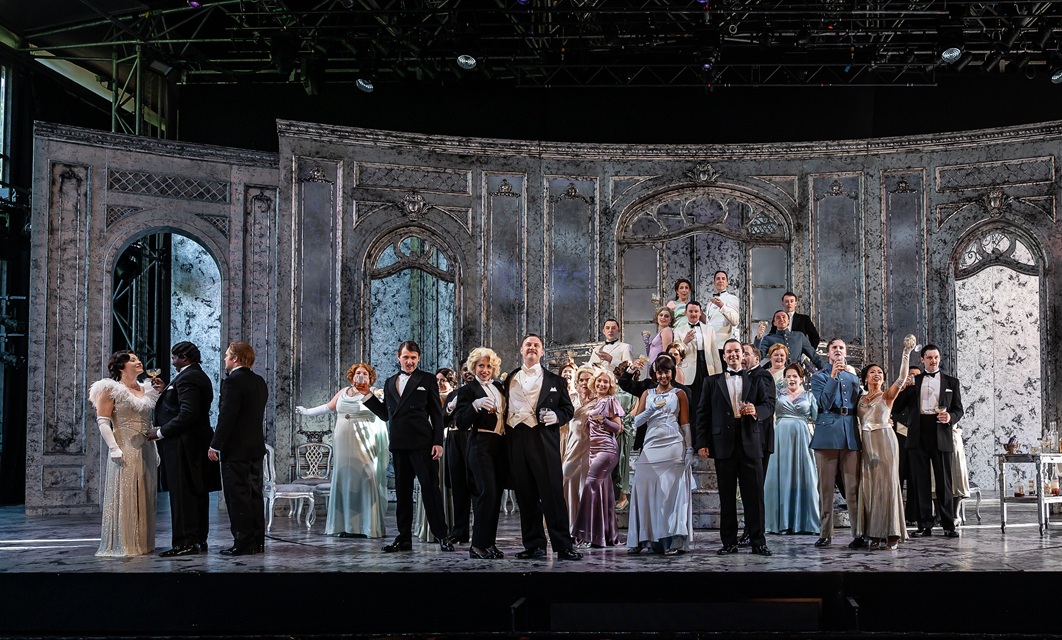
Before the opera’s 1853 première at La Fenice, objections from the Venetian censor’s office obliged Verdi to set Dumas’s contemporary story around 1700. In Louisa Muller’s production, which premiered at Santa Fe in 2024, the setting was updated to Paris in the late 1930s. Germont père’s unyielding morality is still believable rather than anachronistic, while Muller and designer Christopher Oram could indulge in an inter-war baroque silver leaf revolving set, chrome-plated accoutrements, and stylish costumes and wigs. In Act 2’s vaguely de Lempicka / Cocteau-inspired fancy dress ball, the well-disciplined Garsington chorus made brisk work of Verdi’s party goers posing as Gipsy fortune-tellers and matadors (spirited dancers Nikki Cheung and Jonathan Milton), before they synchronised to pass comment on Alfredo’s denunciation of Violetta. Smaller roles were well cast in a strong ensemble, particularly Mathilda Bryngelsson as Annina and Alexandria Moon as Flora.

Verdi’s La Traviata, Garsington Opera at Wormsley, Stokenchurch, UK | Pictured: Madison Leonard (Violetta Valéry); Chuma Sijeqa (Baron Douphol); Garsington Opera Chorus | Image © Julian Guidera 2026

Violetta and Alfredo’s love happens largely offstage. Their relationship is defined by anticipation and by its dissolution. In act one Violetta dreams of love with Alfredo before dismissing it as a fantasy and resolving to live for pleasure. Act two sees Germont père, a remorseless humbug carefully sung by Roland Wood, dapper and imposing in military uniform (was this really necessary?), browbeat Violetta into submission. Oleksiy Palchykov and Madison Leonard, as Alfredo and Violetta, had sung the (happier fated) lovers in Garsington’s L’elisir d’amore last year, and made an attractive couple with plausible chemistry. Palchykov was an eager and enthusiastic Alfredo with an easy-going, fluid line and great diction. However American soprano Leonard, who was a stand-out Sophie in Garsington’s 2021 Rosenkavalier, gave the performance of the night. Her Violetta was assertive, strong, and angry rather than the usual wet tart with a heart: a powerful view of the role. As twilight deepened outside the see-through wings of the theatre at Wormsley, Violetta did not go gentle into that good night.

Verdi’s La Traviata, Garsington Opera at Wormsley, Stokenchurch, UK | Pictured: Garsington Opera Chorus | Image © Julian Guidera 2026

Douglas Boyd conducted the Philharmonia Orchestra through the score at almost breakneck pace without sacrificing detail. There’s always something rather jarring about the country house opera principle of confronting extremely well-dined opera goers with tragedy, but the company left the audience enraptured. Do what you can to get a ticket.

La Traviata runs until 24 July 2026 – and you can find more information on the production and explore ticket options at the Garsington Opera website

Published post no.2,904 – Monday 1 June 2026

Arcana at the opera: Pelléas et Mélisande @ Symphony Hall

Debussy Pelléas et Mélisande

Saturday 23rd June, 2018

Review by Richard Whitehouse

Pelléas – Jacques Imbrailo (baritone), Mélisande – Katja Stuber (soprano), Golaud – Roland Wood (bass-baritone), Arkel – Matthew Best (bass), Geneviève – Dame Felicity Palmer (mezzo-soprano), Doctor – Renaud Delaigue (bass), Yniold – Freddie Jemison (treble)

Members of CBSO Chorus, City of Birmingham Symphony OrchestraMirga Graźinytė-Tyla

Symphony Hall, Birmingham
Saturday 23 June 2018

It might not have been on the scale of the two weekends with which the City of Birmingham Symphony marked the centenary of Debussy’s death in March, though this evening’s concert performance of Pelléas et Mélisande provided a fitting climax to this year’s commemorations.

Premiered in 1902 after a genesis of almost a decade, Pelléas et Mélisande is Debussy’s only completed opera and his treatment of Maurice Maeterlinck’s symbolist drama a highpoint of musical impressionism. It was this blend of aesthetics that the present account brought out in full measure, so confirming Mirga Graźinytė-Tyla’s authority and the CBSO’s conviction in French repertoire as extends back almost a half-century to Louis Frémaux’s tenure. Obscure as the opera’s narrative can appear, there was nothing equivocal about tonight’s performance.

Vocally it was cast from strength and not least in the title-roles – Jacques Imbrailo’s eloquent and imploring assumption finely complemented by that from Katja Stuber, whose poise and limpidity betrayed no hint of coyness. Between them they amply conveyed a sense of people drawn together despite themselves and prevailing circumstances; the serenity characterizing their relationship gradually eroded as the net of fate closes around them. Golaud unwittingly plays the defining part in this, such as Roland Wood recognized with singing of great force but equally an emotional fragility which undermined every exchange with his wife and half-brother. Dramatic tension generated in the third and fourth acts is as tangible as in any opera of the period, and there was no doubting its presence as this account reached a fateful climax.

This is not to decry the other vocal contributions. In particular, Matthew Best was riveting as Arkel – ruler of a decaying kingdom (and dysfunctional dynasty) whose haunted demeanour was allied to a pathos and compassion that commanded the platform at his every appearance. Nor was there anything undersold about Felicity Palmer’s Geneviève – which, limited as this role may be, conjured the requisite foreboding in the face of inevitability that sets the course for all that follows. Renaud Delaigue was sympathetic if a little over-insistent as the Doctor, while Freddie Jemison was ideally cast as Yniold – his exchanges in Act Three with Golaud a heart-rending instance of innocence corrupted. It may enjoy the most incidental of roles, but the CBSO Chorus duly acquitted its brief (and here offstage) contribution with great subtlety.

Otherwise, and for all its radical take on French prosody, this is an opera where the orchestra plays a pivotal (and arguably determining) role, such as Graźinytė-Tyla recognized in the way she steered the emotional ebb and flow of the music with calm assurance. Momentum during the first two acts seemed a touch fitful, but that across the two which follow was unerringly gauged – so leaving the fifth act to unfold as a distanced while undeniably poignant epilogue which ultimately evaporates as if to underline the dream-like aura of much that has occurred.

This performance was enhanced by Jonathan Burton’s idiomatic surtitles and an absence of concert presentation or ‘scenic treatment’ as might have impeded the musical impact. A pity it does not seem to have been recorded, as this reading would have been worth hearing again.

For Arcana’s coverage of the two Debussy weekends in Symphony Hall, click here for the first weekend and here for the second