
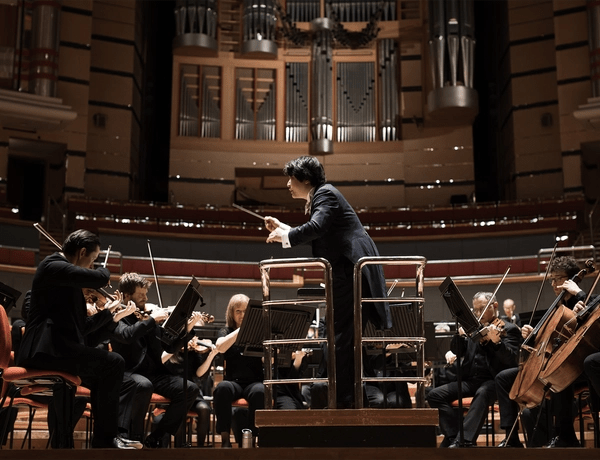
Eduardo Vassallo (cello), Chris Yates (viola), City of Birmingham Symphony Orchestra / Kazuki Yamada
Richard Strauss Don Quixote Op.35 (1897)
Beethoven Symphony no.3 in E flat major Op.55 ‘Eroica’ (1803-4)
Kazuki Yamada and Tom Morris (concept), Rod Maclachlan (video design), Zeynep Kepekli, lighting design), Gustave Doré (illustrations)
Symphony Hall, Birmingham
Wednesday 13 December 2023
Reviewed by Richard Whitehouse. Photos (c) Hannah Fathers
Tonight’s concert from the City of Birmingham Symphony Orchestra was not only the orchestra’s final concert before its Christmas season, but also the first to feature a new concept of presentation with a view to reimagining just what the concertgoing experience might be like in the future.
Not that this concept was uniformly applied to the pair of works in question. In the first half, Richard Strauss’s Don Quixote was accompanied by rehearsal and live footage relayed via screens as placed to the left, above and to the right of the platform. They gave passing insight into cellist Eduardo Vassallo’s preparing to take the stage, then kept a close watch on his interaction with violist Chris Yates – their musical repartee informing much of what follows. Less convincing was the selection from Gustave Doré who, while he died over a decade before Strauss’s work, still anticipated its concerns in his illustrations for an 1863 edition of Cervantes. These were rather generally applied over the work’s course with few references to Dulcinea who, while she does not appear in the novel, is yet a pervasive influence on the latter stages of the score.

The performance was a notable one in terms of Kazuki Yamada’s surveying this piece as a cumulatively unfolding whole – its 10 variations, each keenly characterized, framed by an increasingly ominous introduction and warmly resigned epilogue. Vassallo had the measure of what, for all its virtuosity, is essentially a concertante rather than solo part and, for which reason, tends to come off best when taken by a section-leader. Not all those frequently dense textures emerged with ideal clarity and motivic unity, which ensures formal and expressive focus as the work proceeds, could have been clearer in its climactic stages, but an essential humanity was always to the fore as Yamada perceived it. Those hearing it for the first time could hardly have failed to be impressed with Strauss’s ambition or moved by his response.
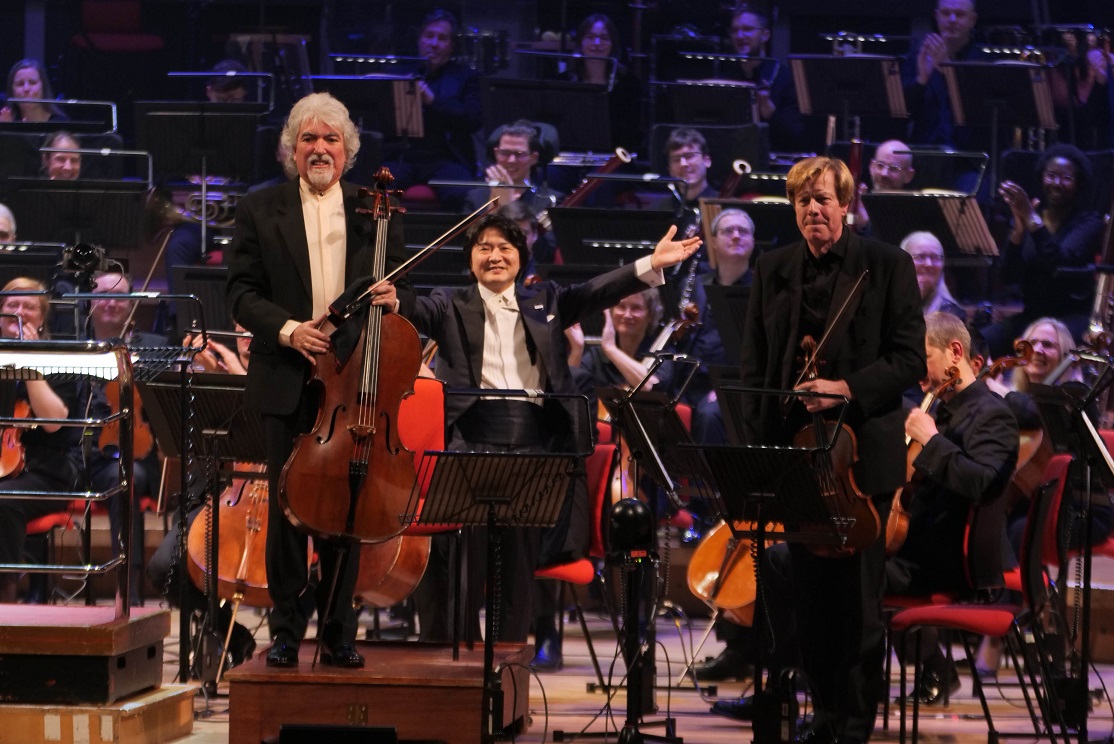
Less so, perhaps, by Beethoven’s Eroica Symphony after the interval. Here the visual element centred largely on the musicians as the account took place – except during the first movement, when a photographic roll-call of the CBSO’s ‘heroes’ (musical and otherwise) was laminated onto the music – thus robbing it of the means to transcend time and place as surely as had the composer those of revolution or Bonaparte. Elsewhere, the standing-up of individual players and sections to highlight salient aspects of the piece was rather inconsistently applied – why, for instance, did the horns not do so with their unison statement of the ‘Prometheus’ theme in the finale (Thomas Beecham did this decades ago) – while the emerging photos of orchestral members mid-way through that movement risked seeming an awkwardly sentimental gesture.
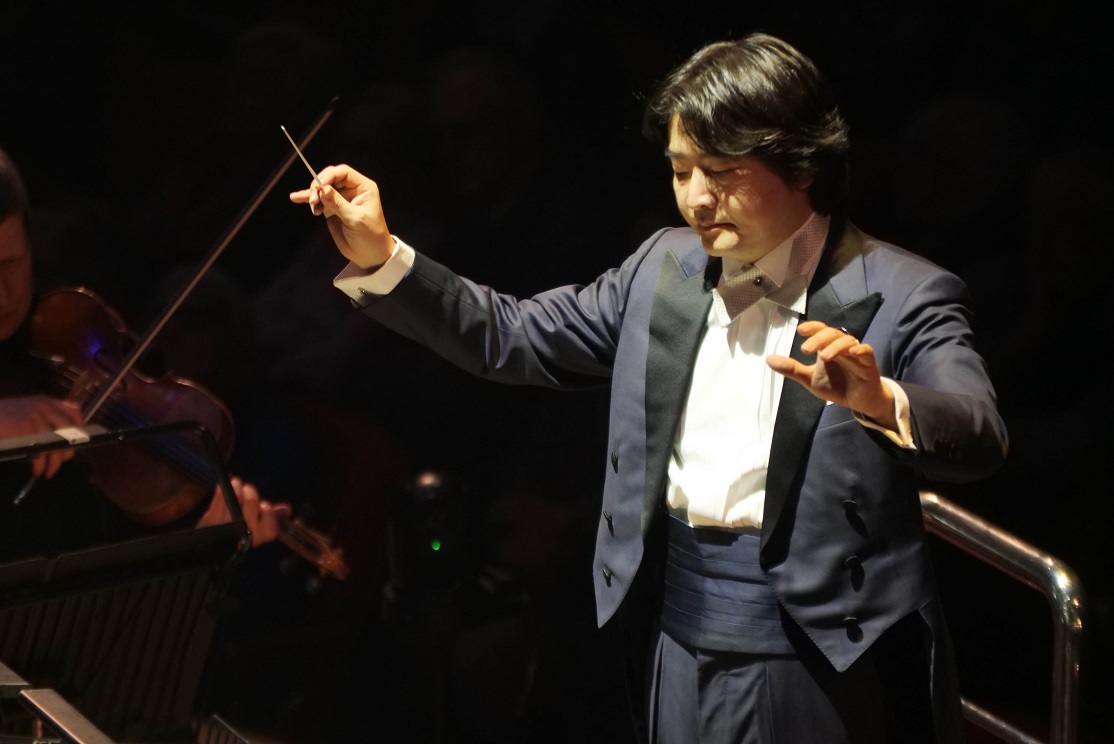
All of this might have mattered less had the reading carried consistent conviction. As it was, the opening Allegro stuck doggedly to a tempo that felt more than a little stolid – its climactic moments undermined by pauses that impeded the musical flow, though the coda yielded the right emotional frisson. The highlight was a Funeral March whose fatalism was leavened by acute pathos at its climax, with a coda whose disintegration audibly left its mark. If the outer sections of the Scherzo seemed just a little deadpan, its trio was rousingly despatched by the three horns, and the initial stages of the finale had a welcome spontaneity as the ‘Prometheus’ theme is put through its paces. A pity Yamada slowed right down for its restatement midway through, resulting in a serious loss of momentum that not even an incisive coda could regain.
Tonight’s concert was a concerted and not unsuccessful attempt to confront the issue of how to attract a younger and more inclusive audience to classical music. Where it foundered was on a misguided premise that bombarding those present with images somehow makes them listen more intently. For this to come about, they need to be encouraged to focus collective attention aurally rather than just visually – a challenge such as Symphony Hall, with its all-round excellence and its many acoustical resources, would seem ideally equipped to fulfil.
This is evidently an experimental phase for the CBSO, as various possibilities are tried out, but an emphasis on sonic enhancement, allied to the subtle if pervasive presence of lighting, is arguably one way forward and could ultimately blaze a trail for the concert of the future.
You can read all about the 2023/24 season and book tickets at the CBSO website. Click on the names for more information on conductor Kazuki Yamada, cellist Eduardo Vassallo, violist Chris Yates – and also on the names for more on Tom Morris, Rod Maclachlan, Zeynep Kepekli and Gustave Doré
Published post no.2,044 – Tuesday 19 December 2023
 Arcana.fm