In concert – Nicola Benedetti, CBSO Chorus and Symphony Orchestra / Kazuki Yamada: Dvořák, Mendelssohn & Grigorjeva

Dvořák Carnival Overture, Op. 92 (1892)
Mendelssohn Violin Concerto in E minor, Op. 64 (1844)
Grigorjeva In Paradisum (2012)
Dvořák Symphony no.9 in E minor Op.95 ‘From the New World’ (1893)

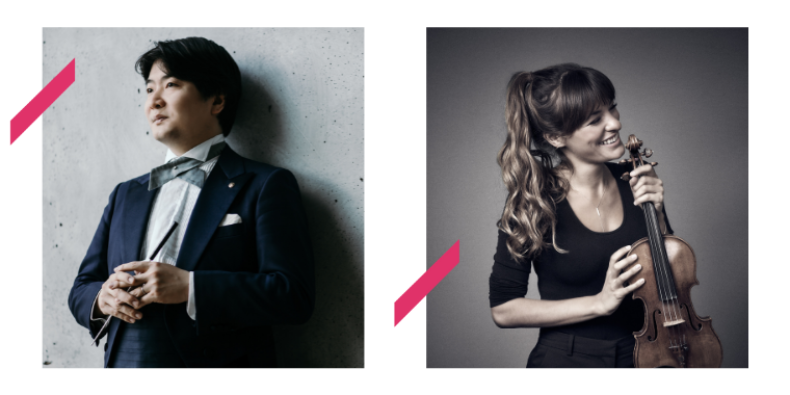
Nicola Benedetti (violin), CBSO Chorus, City of Birmingham Symphony Orchestra / Kazuki Yamada

Symphony Hall, Birmingham
Tuesday 20 September 2022

Reviewed by Richard Whitehouse

It may have been a largely mainstream programme, but tonight’s concert by the City of Birmingham Symphony Orchestra drew a capacity house at the beginning of a season in which Kazuki Yamada takes on the reins for what looks an eventful new era near the start of the orchestra’s second century. The CBSO’s response in Dvořák’s Carnival Overture more than confirmed it was ready for the challenge – Yamada ensuring the nocturnal evocation at its centre worked its evocative spell, then building an irresistible momentum going into the thrilling final bars.

Mendelsohn’s Violin Concerto cannot have been absent from many of the CBSO’s previous 102 seasons and made its appearance this evening, Nicola Benedetti tackling a piece she must herself have played on many occasions. Not that there was anything routine about a reading such as abounded in subtle touches – especially the opening Allegro’s cadenza, which more than usually fulfilled its role as this movement’s structural fulcrum. In the Andante, Benedetti pointed up the expressive contrast between its main themes; the second of which was notable for a tonal astringency that brought out its plangency in full measure. If there was nothing so arresting in the finale, the interplay of soloist and orchestra was astutely judged through to the effervescence of the closing bars. Certainly, a performance to make one enjoy the piece anew.

Introducing the second half, Yamada requested the audience remain silent during the pause between pieces – the first a setting of In Paradisum by Ukrainian-born Galina Grigorjeva (b 1962), its lucid harmonies and heady culmination bringing the best out of the CBSO Chorus.

From here to the New World Symphony was no great step. Once again, a work rarely absent from the CBSO’s schedule seemed largely revitalized. Not that all of Yamada’s interpretative decisions came off – after an introduction of no mean gravitas the opening Allegro unfolded a little fitfully, though so interventionist an approach might have gained from the exposition repeat to place these in greater context. There were similar touches in the Largo, yet here the focus of Yamada’s conception and the raptness of the player’s concentration were their own justification – not least towards the close, with the front desks combining to poignant effect. Without being driven as ruthlessly as is often the case, the Scherzo has the requisite impetus and, throughout its trio, a whimsical elegance which proved as engaging as the charged coda.

Heading into the final Allegro with minimal pause, Yamada brought out its inherent force but also the ruminative eloquence of its second theme; the transition to which, in the reprise, was ideally judged. Nor did the apotheosis lack for drama as those closing bars melted into silence.

Prior to the start of this concert, a minute’s silence was observed then (most of) the audience joined in possibly its first rendering of God Save the King. A more localized farewell was paid later in the evening to Colin Twigg, first violinist for over 31 years and whose retirement will hopefully see more of his own compositions as have featured in Centre Stage recitals over the years. A miscellany is featured on a Toccata Classics release and worth anyone’s investment. The CBSO will be back in action on Saturday with a major new commission from Brett Dean.

You can read all about the 2022/23 season and book tickets at the CBSO website. For further information on the night’s artists, click on the names for composer Galina Grigorjeva, and for artists Nicola Benedetti and Kazuki Yamada
In concert – Elena Urioste, Ben Goldscheider, CBSO / Kazuki Yamada: Glinka, Ethel Smyth & Rachmaninoff

Glinka Ruslan and Lyudmila (1842) – Overture
Smyth Concerto for Violin and Horn (1926-7)
Rachmaninoff Symphony No. 2 in E minor, Op. 27 (1906-7)

Elena Urioste (violin), Ben Goldscheider (horn), City of Birmingham Symphony Orchestra / Kazuki Yamada

Symphony Hall, Birmingham
Sunday 24 July 2022

Written by Richard Whitehouse

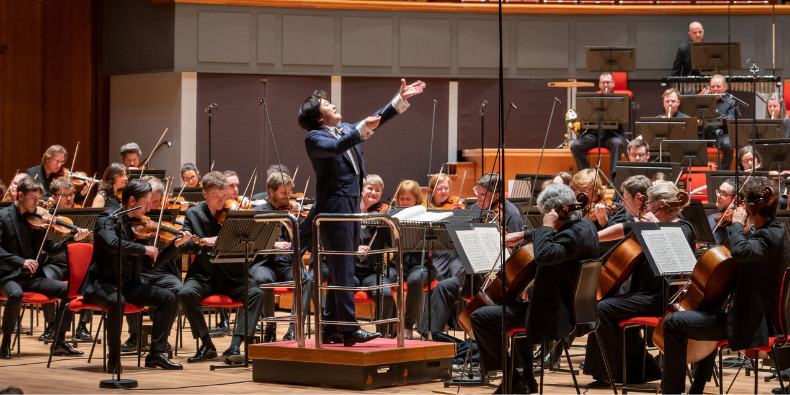
It might have been a ‘warm up’ for tomorrow night’s Proms appearance, but this afternoon’s concert by the City of Birmingham Symphony Orchestra with its Chief Conductor designate Kazuki Yamada gave ample indication of what to expect of this partnership during 2022/23.

On one level, this was an appealingly old-fashioned programme in consisting of an overture, concerto and symphony. The former was that to Glinka’s opera Ruslan and Lyudmila, always an effervescent curtain-raiser which here unfolded at a lively but never headlong tempo that brought out the formal precision of this piece with its deft sonata design. Neither did Yamada under-characterize the amiable second theme, while the strangely ominous atmosphere of the development was made more so through a telling contribution by timpanist Matthew Hardy.

Ethel Smyth is a notable presence at this year’s Proms, the CBSO tackling her Concerto for Violin and Horn. Among her last major works (encroaching deafness saw her write little over the next 18 years), its nominally Classical trajectory belies a formal freedom as extends to an orchestration evoking her French contemporaries as much as her German forebears. Not least the initial Allegro with its trenchant and stealthily imitative writing for the soloists against an orchestral texture at once intricate and luminous. Yamada marshalled his forces accordingly, before giving Elena Urioste and Ben Goldscheider the stage for the ensuing Elegy whose ‘In memoriam’ marking encouraged a response of real eloquence. Robust yet never unyielding, the final Allegro took in a combative cadenza before striding forth to its decisive peroration.

Rachmaninoff’s Second Symphony has moved to the very centre of the repertoire in the four decades since Simon Rattle made it a signature piece with this orchestra. Yamada holds it in equally high esteem – witness the finesse with which he built the first movement introduction to its impassioned apex, before subsiding into an Allegro which drew anxiety and grace into a purposeful accord heightened by the development’s surging inevitability then a coda of terse finality. Unfolding at an animated while not unduly hectic tempo, the scherzo was marginally over-indulged in its lilting second theme, but this did not pre-empt an incisive response in the central fugato – the CBSO strings at their collective best – nor a transition back into the main theme of irresistible verve. The coda exuded a fugitive inwardness that was no less arresting.

Ubiquitous these days as a radio staple, the Adagio needs astute handling if its rapture is not to become cloying and Yamada responded accordingly – not least in his attentive pacing of the main theme with a contribution from clarinettist Oliver Janes of melting poignancy, then a climax whose emotional intensity never became hectoring. The slightly too flaccid tempo for its easeful central span meant that the finale lacked the ultimate in cohesion, but Yamada balanced this elsewhere with an energy which carried through into a scintillating apotheosis.

So, an eminently worthwhile concert beyond merely enabling those who are unable to attend that Royal Albert Hall performance to hear Yamada with the CBSO in a programme such as played to both their strengths. Much to look forward to, then, over the course of next season.

For more information on the CBSO Prom, click on the link on their website. Meanwhile click on the artist names for more on Elena Urioste, Ben Goldscheider and Kazuki Yamada – and for a website dedicated to Dame Ethel Smyth

In concert – CBSO / Edward Gardner: Simply Schubert – Symphonies 1 & 4

ed-gardner

Schubert

Fierrabras D796 – Overture (1823); Symphony no.1 in D major D82 (1813); Symphony no.4 in C minor D417 ‘Tragic’ (1816)

City of Birmingham Symphony Orchestra / Edward Gardner

Town Hall, Birmingham
Thursday 14 July 2022

Written by Richard Whitehouse

One of many projects left in abeyance by the pandemic, the City of Birmingham Symphony Orchestra’s Schubert cycle with its former principal guest conductor Edward Gardner duly continued this evening with a programme of that composer’s First and Fourth Symphonies.

Schubert may have been barely 16 when he essayed his First Symphony, but its confident if quirky assimilation of traits as derived from Haydn and Beethoven is more than a statement of intent – not least with an opening Allegro whose imposing introduction returns after the development to broaden the movement’s emotional scope. Gardner realized this unerringly, while drawing an incisive response from the CBSO in the first theme and winsome elegance in its successor as subsequently headed into a coda of bracing if not overly insistent finality.

For all its Mozartian gracefulness, the Andante yields an emotional ambivalence most notable in the plangent exchanges of woodwind and string towards its centre. These were enticingly conveyed, as was that contrast between rhythmic trenchancy in the Menuetto’s outer sections with its trio’s more affable demeanour. Precision of ensemble meant the final Allegro never risked seeming repetitious, Gardner steering it with assurance and not a little flexibility to a coda that emerged as never less than entertaining in its forceful reiterations of the home key.

Three years on, the Fourth Symphony confirms a greater formal and expressive breadth – not least in the first movement’s introductory Adagio whose underlying portentousness makes its contrast with an impulsive and often anxious Allegro more acute. Gardner and the CBSO had its measure, as they did the ensuing Andante in which Schubert’s woodwind writing is heard at its most felicitous. Any contrived distinction between the hymnic main theme and its more volatile alternate episodes was hardly in evidence as this movement drew to its easeful close.

For all its brevity, the Menuetto (a scherzo in all but name) can be rhythmically treacherous in its syncopation, but there was no lack of focus here or in the trio’s folk-like lyricism. Nor did the moto perpetuo underpinning the final Allegro run out of steam – Gardner sustaining   a cumulative momentum across the exposition’s repeat then into an intensive development which brought an opening-out of mood through to those decisive closing chords. Its ‘tragic’ connotations may be tangential, but the teenager’s seriousness of purpose cannot be denied.

Opening the programme was a relatively rare revival of the overture to Fierrabras, the last of Schubert’s ill-fated attempts at grand opera – even though time and subsequent stagings have largely vindicated his efforts. Gardner drew palpable expectation from its introduction, and if what ensues seemed a little stolid rhythmically, the dramatic flair of the composer’s orchestral writing was not in doubt. A pity the even less often heard Overture in E minor (1819) did not open the second half, as its abstract drama would have prefaced the Fourth Symphony ideally.

In any case, this was a welcome addendum to the CBSO’s current season and not least for an opportunity to hear the orchestra playing at its former venue of Town Hall. Hopefully another such concert, featuring Schubert’s Great Symphony, can be scheduled sometime next year.

For more information on the CBSO and their 2022-23 season, visit the dedicated page on their website. Meanwhile click here for more on conductor Edward Gardner.

In concert – Soloists, University of Birmingham Voices & CBSO / Martyn Brabbins: Stanford: Requiem

stanford-requiem

Stanford Requiem Op.63 (1896)

Carolyn Sampson (soprano), Marta Fontanals-Simmons (mezzo-soprano), James Way (tenor), Ross Ramgobin (baritone), University of Birmingham Voices, City of Birmingham Symphony Orchestra / Martyn Brabbins

Symphony Hall, Birmingham
Saturday 25 July 2022

Written by Richard Whitehouse

Its official season may have ended over a week before, but the City of Birmingham Symphony Orchestra was heard this evening in a rare revival of a work whose premiere it gave 125 years ago at the Birmingham Triennial Festival – that of the Requiem by Charles Villiers Stanford.

As historian Paul Rodmell recounted in his programme note, this Festival saw the launching of a host of major choral works during its 128 years of existence – notably Mendelssohn’s Elijah in 1846 and Elgar’s The Dream of Gerontius in 1900. That the latter piece was soon regarded as trailblazing despite a largely unsuccessful premiere might be thought ironic given that, just three years earlier, Stanford’s Requiem had been received with some acclaim only to fall into obscurity along with the greater part of his sizable output in the wake of the First World War.

Not unexpectedly, Brahms instead of Berlioz or Verdi is the main presence – thus the Introit with its understated opening theme that recurs often in the work, while its distinction between sombre choral and aspiring vocal music is further emphasized by those expressive contrasts in the Kyrie. The vocalists come into their own in a Gradual whose orchestral textures find this composer at his most felicitous. A telling foil, moreover, to the Sequence with its menacing Dies irae or proclamatory Tuba mirum, then what follows bringing the soloists into individual focus: hence the heightened fervour of Carolyn Sampson, the more circumspect eloquence of Marta Fontanals-Simmons, slightly hectoring impulsiveness of James Way, and the brooding power of Ross Ramgobin; though the sequence overall exudes an almost symphonic cohesion.

Arguably the finest portion, however, comprises the final three movements. The Offertorium makes much of the contrast between warmly martial and intensively fugal sections, while the Sanctus has an ethereal radiance which carries through the ruminative Benedictus and into deftly resounding Hosannas. The funereal orchestral music preceding the Agnus Dei affords the darkest emotion of the whole work, but this only enhances the ensuing Lux aeterna with its serene fatalism that Frederic Leighton – artist and friend of Stanford, whose death early in 1896 was the catalyst – would doubtless have appreciated. Throughout this performance, the University of Birmingham Voices responded with alacrity to choral writing whose poise and translucency were always in evidence – not least in the most earnestly contrapuntal passages.

Special praise for Martyn Brabbins who, whether or not he considers it a masterpiece, directed this work with unwavering conviction. The balance between soloists or chorus and orchestra might largely take care of itself, but orchestral textures need astute handling if these are not to risk uniformity or even monotony and Brabbins drew a committed response from the CBSO such that the autumnal hues of Stanford’s writing came through unimpeded. Good to hear this performance is being released commercially, as it did full justice to a largely neglected work.

A last thought. One of Stanford’s earlier choral pieces is The Resurrection, a setting of the ode by Friedrich Klopstock. Maybe when the CBSO performs Mahler’s Second Symphony in a future season, it would be worth programming these assuredly very different works together?

For more information on the CBSO visit their website. For more information on Charles Stanford, meanwhile, visit the website of The Stanford Society

In concert – Janai Brugger, Karen Cargill, CBSO Chorus & CBSO / Markus Stenz: Mahler ‘Resurrection’ Symphony

CBSO season finale: Mahler.

Mahler Symphony no.2 in C minor ‘Resurrection’ (1888-94)

Janai Brugger (soprano), Karen Cargill (mezzo-soprano), CBSO Chorus, City of Birmingham Symphony Orchestra / Markus Stenz

Symphony Hall, Birmingham
Saturday 25 June 2022

Written by Richard Whitehouse Photos courtesy of Beki Smith

At the end of another season by the City of Birmingham Symphony Orchestra what could be more fitting than the symphony to have been programmed by the orchestra’s last five principal conductors, defining the Simon Rattle era and been scheduled during the majority of seasons ever since?

Tonight’s performance (and that on the previous Wednesday) was to have been conducted by Mirga Gražinytė-Tyla, but maternity leave occasioned an infrequent UK appearance (at least since his highly regarded tenure with London Sinfonietta in the mid-1990s) for Markus Stenz, who has recorded a Mahler cycle with the Gürzenich Orchestra of Cologne as centrepiece of his discography majoring on 20th-century music and that of the post-war era. A ‘Resurrection’, indeed, where this work’s ‘darkness to light’ trajectory seemed by no means a fait accompli.

Many are the conductors who, even now, ride roughshod across the first movement’s fraught trajectory or fall victim to a deceptively sectional unfolding; under Stenz, there was no doubt as to the cohesion with which dramatic and pastoral elements were drawn into an integrated and dynamic whole. Suffused if not overloaded with pathos, those closing pages carried over the ensuing (two-minute) pause into an Andante whose alternation of the genial and ominous was pointedly but never self-consciously evident. Felicitous playing here from CBSO strings and woodwind, then by the brass in a scherzo whose barbed irony and ‘dancing on a volcano’ volatility was tangible. Stenz was right to proceed directly through the latter four movements with minimal pause – so ensuring an intensifying emotional curve into those conflicts ahead.

First, Karen Cargill made for an eloquent though not ideally steady exponent of the ‘Urlicht’ setting with its calm before the storm of the vast closing movement. Positioned at upper left of the platform, she and Janai Brugger gave of their best in a setting of Friedrich Klopstock’s (suitably Mahler-ized) hymn Die Auferstehung where the relatively lean CBSO Chorus gave notice of its long familiarity in this music. The route taken there brought out the best from the CBSO but also Stenz’s interpretive focus – the starkly contrasted orchestral episodes evincing a formal logic and expressive inclusiveness that, with playing of unfailing clarity (not least by his antiphonal placing of the violins), ensured the finale never degenerated into a sequence of dramatic tableaux – the sureness of Mahler’s symphonic reach tangible throughout its course.

At around 85 minutes, this was a spacious while never lethargic reading which positioned the work as a precursor to the existential symphonic battles ahead rather than the culmination of a symphonic lineage stretching back to Beethoven’s Fifth. Nor was there any impersonality or lack of conviction with Stenz’s approach – his grip on the formal dimensions of the outer movements being matched by his conception of the work as a cohesive and cumulative unity. The CBSO’s playing married assurance with a palpable sense of responding ‘to the moment’.

Birmingham might have waited until 1975 to hear Mahler Two, but it gave the premiere of Stanford’s Requiem back in 1897 and gives this work again when Martyn Brabbins directs the CBSO in a revival next Saturday. An event which, in itself, is of no mean significance.

For more information on the CBSO visit their website, and for more on the soloists click on the names to read about Janai Brugger, Karen Cargill and conductor Markus Stenz