Live review – CBSO Chorus and Orchestra / Mirga Gražinytė-Tyla: Brahms’ German Requiem & Mozart Serenade for wind

Camilla Tilling (soprano), Florian Boesch (baritone), CBSO Chorus, City of Birmingham Symphony Orchestra / Mirga Gražinytė-Tyla

Symphony Hall, Birmingham
Wednesday 4 March 2020

Mozart Serenade for wind in C minor K388 (1782-3)
Brahms Ein Deutsches Requiem Op.45 (1865-9)

Written by Richard Whitehouse

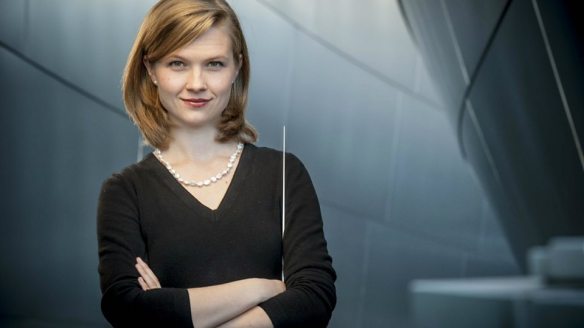
The City of Birmingham Symphony Orchestra’s current season features several major choral works that have long been central to this orchestra’s repertoire. While it has received numerous readings (most recently with Andrew Manze), Brahms‘s A German Requiem is not among these – so it was fascinating to hear what Mirga Gražinytė-Tyla might make of a piece that, though it has never fallen from favour since its premiere 152 years ago, remains a stern interpretive test in terms of projecting formal integration and an expressive essence more elusive for its restraint.

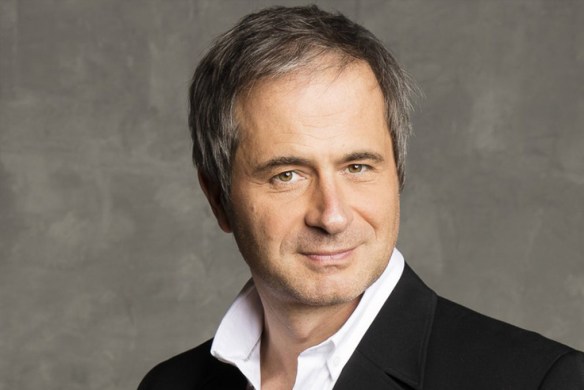
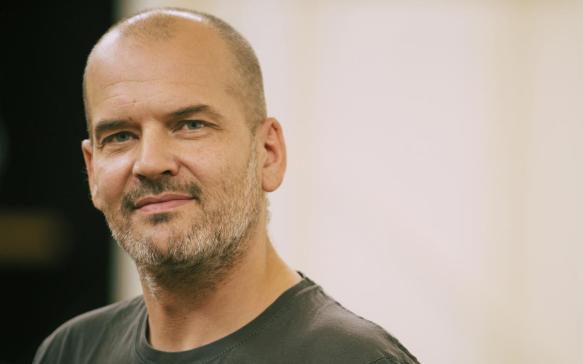
In the event the performance was a fine one – not least because this conductor found the right balance between flexibility of motion, without which the textures all too easily risk stolidity, and that seriousness of manner without which the music soon loses any sense of purpose. A balance as evident in the lengthy second movement, the inexorable tread of its outer sections framing an interlude of wistful grace then with the ensuing fugue building animatedly to its serene close, as in the brief fourth movement whose blithe exterior conceals music of artful dexterity. Camilla Tilling (above) summoned a winsome response in the fifth movement, a late but necessary addition in its opening-out the work’s emotional range, while Florian Boesch (below) was suitably if not unduly vehement in his initial contributions to the third and sixth; the former crowned by a fugue of visceral and unflagging energy, though that in the latter movement marginally lost focus as its grandly rhetorical gestures ran their (too?) predictable course.

It is in the first and seventh movements that Brahms’s highly personal concept of redemption through love is at its most explicit, MG-T duly having the measure of their calmly insistent searching towards eventual catharsis – even if the finale’s gradual winding-down resulted in less than the ideal repose. The CBSO Chorus was on fine form throughout – a tribute to the expertise of associate chorus director Julian Wilkins, who also made a pertinent contribution in an organ part no less crucial for its understatement; underpinning and often motivating an orchestration which adds in no small measure to the work’s humane and compassionate spirit.

A relatively short first half gave welcome opportunity for the CBSO’s woodwind to take the stage for an un-conducted reading of Mozart’s Serenade in C minor, last in his trilogy of such pieces which transcended an ostensibly lightweight genre and, in doing so, made possible the emotional substance of the symphonies that followed. Ensemble seemed a shade insecure in the opening Allegro, but its underlying intensity carried over to an Andante whose ineffable rapture was itself contrasted with the textural severity of the Menuetto. Best, though, was the final Allegro – a set of variation on an unassuming theme with the formal outline of a sonata-rondo made explicit with its major-key ending. Overall, a winning account of a piece whose scoring for wind octet has gained it less exposure than Mozart’s comparable orchestral works.

It also made for an unlikely while successful coupling and a similarly thought-provoking one is scheduled for next Tuesday, MG-T making her first foray into Bruckner with the erstwhile elusive Sixth Symphony alongside the deceptive simplicity of Bartók‘s Third Piano Concerto.

Further listening

Here is a Spotify playlist of music from the concert. The CBSO have not recorded either of these works before but these are fine alternatives:

For further information on the current season of CBSO concerts, visit the orchestra’s website

Live review – Vilde Frang, CBSO / Kazuki Yamada: Shostakovich Violin Concerto no.1 & Respighi’s Roman Trilogy

Vilde Frang (violin, below), City of Birmingham Symphony Orchestra / Kazuki Yamada (above)

Symphony Hall, Birmingham
Wednesday 19 February 2020

Shostakovich Violin Concerto no.1 in A minor Op.77 (1947-8)
Respighi Feste romane (1928); Fontane di Roma (1916); Pini di Roma (1924)

Written by Richard Whitehouse

Spending parts of their careers under two of the most potent dictatorships this past century, Shostakovich and Respighi might not appear to have much else in common – so all credit to Kazuki Yamada for making the juxtaposition work so effectively for this evening’s concert.

Never planned as a symphony, Shostakovich’s First Violin Concerto is the most symphonic of his six concertante works and responded accordingly to Vilde Frang’s long-breathed while highly involving approach – whether in the introspective probing of the Nocturne (Graham Sibley deftly lucid in the obligato tuba part) or folk-infused fervency of the Scherzo, then a Passacaglia of wrenching eloquence; its speculative postlude giving rise to a cadenza whose cumulative impetus was carried over into the final Burlesque with its irresistible high-jinx then sprint towards the end where soloist and orchestra very nearly finished in sync. Typical, moreover, of this most self-effacing among present-day virtuosi that Frang evidently had no intention of providing an encore – so completely was her performance its own justification.

Hard to imagine the mature Shostakovich setting much store by the orchestral pyrotechnics of Respighi’s Roman Triptych – yet these heady evocations of time and place in the Eternal City remain audience pleasers of a high order, especially when scheduled as this ‘triple whammy’.

Beginning with Roman Festivals might risk premature overkill, but Yamada brought out the ceremonial fervour of Il Giubileo as surely as the teasing playfulness of L’Ottobrata with its journeying forth and amorous encounters. Yamada’s unbridled enthusiasm rather got the better of him in the imposing if unruly climax of Circences, while the CBSO sounded just slightly inhibited during the all-out celebrations of La Befana – its melee of colliding tunes and textures lacking the subtlety that Respighi instils into even his most uproarious passages.

As the late Gerald Larner pointed out, Fountains of Rome pre-dates the incipient era of Italian grandiloquence. Yamada allowed full rein to the effervescent joy of Triton at Morning, then dazzling majesty of Trevi at Midday – its prolonged evanescence hanging as if suspended in Symphony Hall’s ambience. The outer evocations felt less successful, Valle Giulia at Dawn too passive to be alluring and Villa Medici at Sunset lacking pathos (an offstage bell might have helped), yet the delicacy and suppleness of their melodic lines could hardly be gainsaid.

On to Pines of Rome and Yamada was again at his most perceptive in those central episodes – Near a Catacomb yielding a baleful anguish (offstage trumpet judged to perfection), then At the Janiculum bringing rapture without coyness and a closing string tremolo hardly less exquisite than the nightingale above it. Of the Villa Borghese seemed almost too fractious to be exhilarating, but while Yamada set slightly too rapid a tempo for On the Appian Way, the final peroration (organ and additional brass right on cue) was nothing if not resplendent.

Not a triptych for all occasions but a feast of scintillating sonority and one to which the CBSO responded with panache. Principal guest Yamada returns on Sunday afternoon at the helm of the CBSO Youth Orchestra for a varied programme that closes with Elgar’s First Symphony.

Further listening

Here is a Spotify playlist of music from the concert. The CBSO have not recorded these works before but these are fine alternatives:

Further information on the next CBSO concert with Kazuki Yamada as described by Richard can be found at the CBSO website

Live review – CBSO / Mirga Gražinytė-Tyla: Beethoven Symphonies 2 & 4; Unsuk Chin & Liam Taylor-West

City of Birmingham Symphony Orchestra / Mirga Gražinytė-Tyla

Symphony Hall, Birmingham
Thursday 30 January 2020

Chin SPIRA – Concerto for Orchestra (2019) [CBSO Centenary Commission: UK Premiere]
Beethoven Symphony no.2 in D major Op.36 (1802); Symphony no.4 in B flat major Op.60 (1806)
Taylor-West Turning Points (2019) [CBSO Centenary Commission: World Premiere]

Written by Richard Whitehouse

This evening’s concert from the City of Birmingham Symphony Orchestra laid an early marker for the 250th anniversary of Beethoven’s birth this December and, also, continued the notable series of commissions that themselves are centred around the orchestra’s centenary in September.

The new work was SPIRA – a Concerto for Orchestra by Seoul-born and Paris-based Unsuk Chin (above). Her more recent music may have tempered the incisive modernism of those works that established her reputation, though Chin has thus far avoided the race towards the mainstream evident in numerous of her contemporaries, and the present piece secured a engaging balance between the intricate complexity of its textures and an ingeniously defined formal trajectory such as ensured its long-term continuity was readily perceptible – even on an initial hearing.

Inspired by the mathematical theory of the ‘spiral curve’ or growth spiral’ with the potential for biological, indeed musical growth this entails, SPIRA emerges as a sequence of formally expanding and expressively intensifying curves which involve the various orchestral sections (individually and collectively) on the way to an apotheosis of visceral immediacy; the music then withdrawing into those ethereal realms whence it came. Mirga Gražinytė-Tyla directed an assured and engaging performance of this likely highlight among Centenary Commissions.

It certainly made a telling foil to the Beethoven which followed. With authentic trumpets and what sounded like leather-capped timpani sticks to the fore, the first movement of the Second Symphony was nothing if not dynamic, for all MG-T rather breezed through the quixotics of its imposing introduction then drove the ensuing Allegro such that string articulation faltered. Exciting if a shade glib, whereas the ingratiation of the Larghetto was ideally judged and the glancing humour of the Scherzo more appealing for not being rushed. Nor was there any lack of character in the finale, at its most perceptive during a trenchant development then a coda whose teasing hesitancy made its eventual arrival the more potent. Interesting, too, whether MG-T’s omitting of exposition repeats in the outer movements becomes an interpretive trait.

Likewise, those of the Fourth Symphony – the probing nature of whose introduction seemed rather matter of fact, though impetus during the main Allegro was rarely at the expense of its Haydnesque humour. Once again the Adagio proved most impressive in its sustained poise, the many dynamic nuances unobtrusively observed (not least towards its still-startling close), while the capricious interplay of the scherzo was nothing if not invigorating; a tailing-off of phrases going each time into the trio being an especial pleasure. Perhaps because lacking its exposition repeat, the closing movement emerged as a little short-winded, but MG-T had the measure of its capering humour – Beethoven playing fast and loose with the classical finale, on the way to a conclusion in which formal cohesion and expressive nonchalance are as one.

The concert ended with the first of 20 commissions by composers under 30 for the CBSO’s centenary. Turning Points found Liam Taylor-West (above) making resourceful use of sizable forces in music whose bracing if never brazen display ought to make for an effective curtain-raiser.

For more on Unsuk Chin you can visit her page on the Boosey & Hawkes website., while further information on the music of Liam Taylor-West can be found here Meanwhile Arcana’s Beethoven odyssey begins soon! Head here for more details.

Live review – Soloists, CBSO Chorus & Orchestra / Mirga Gražinytė-Tyla: Mahler Symphony no.8

Erin Wall (soprano, Magna Peccatrix), Natalya Romaniw (soprano, Una poenitentium), Katja Stuber (soprano, Mater Gloriosa), Karen Cargill mezzo-soprano, Mulier Samaritana), Alice Coote (mezzo-soprano, Maria Aegyptiaca), A. J. Glueckert (tenor, Doctor Marianus), Roland Wood (baritone, Pater Ecstaticus), Morris Robinson (bass, Pater Profundus), CBSO Chorus, CBSO Youth Chorus, CBSO Children’s Chorus, University of Birmingham Voices, Baltimore Choral Arts Society, City of Birmingham Symphony Orchestra / Mirga Gražinytė-Tyla

Symphony Hall, Birmingham
Saturday 18 January 2020

Mahler Symphony no.8 in E flat major ‘Symphony of a Thousand’ (1906)

Written by Richard Whitehouse

The run-up to the City of Birmingham Symphony Orchestra‘s centenary features several major choral works – none more so than the Eighth Symphony by which Mahler essayed his grandest and most-inclusive musical conception, at a pivotal juncture in the evolution of Western culture.

If more frequent performances these past few decades have made this piece less of an event than it once was, there was no lack of occasion in tonight’s rendering. Mirga Gražinytė-Tyla launched the setting of Veni, creator spiritus with an impulsiveness as held good throughout this first part. There were passing intonational flaws among the soloists, along with moments of awkward coordination between choruses and orchestra, but these were as little next to the eloquent ensemble at Qui diceris Paraclitus, the spectral interlude prior to Informa nostri corporis, the vast and cumulative fugal edifice at Accende lumen sensibus, or the ecstatic outpouring from Gloria sit Patri Domino; sustained here with an unerringly judged rhetoric as ensured that this music hit the ground running right through to its heady closing cadence.

Perhaps for this reason MG-T chose not to make a substantial pause before the setting of the final scene of Goethe’s Faust that forms the second part, enabling the accumulated intensity to carry over into this latter’s lengthy orchestral prelude with its mingled anxiety and pathos.

From its starkly evocative beginnings, Mahler’s singular take on the ultimate Enlightenment text can feel at best discursive, so it was a tribute to the conductor’s sense of overall cohesion that what can easily sprawl rarely, if ever, lost focus as the path to redemption is outlined in philosophical and, above all, musical terms. Highpoints included a notably ominous response in the Choir and Echo, a powerfully sustained solo from Morris Robinson then an equally soulful one from A. J. Glueckert, appealingly deft singing from the combined children’s and youth choirs (no hint of coyness or schmaltz here), then the exquisitely dovetailed interplay of Erin Wall, Karen Cargill and Alice Coote – during which their subtly contrasted timbres were heard to advantage against an orchestral backdrop of the greatest delicacy and poise.

Next to these, Roland Wood’s solo lacked fervour and that by Natalya Romaniw sounded a touch ill at ease, though Katja Stuber had all the rapture necessary for her brief offstage solo while Glueckert surged through his second solo on route to an orchestral interlude in which the rippling interplay of woodwind and keyboards was limpidly rendered. Even more telling was MG-T’s handling of their gradual evanescence, from where the final Chorus Mysticus emerges. Always a distinctive moment, it proved especially memorable for the way in which the massed voices unfolded their intensifying expressive curve towards those seismic closing bars – here afforded maximum impact through the conductor’s refusal to linger unnecessarily when the off-stage brass enters to bring the whole work grandly and majestically full circle.

Such reservations as there were will likely be remedied in tomorrow’s performance, yet while MG-T will doubtlessly uncover further depths and nuances in the future, it is hard to imagine she will deliver a reading of greater conviction or purposefulness than that heard this evening.

The reviewed performance is being repeated today, Sunday 19th January. Further information can be found at the CBSO website

Live review – Hannah Hipp, CBSO / François Leleux: Mendelssohn & Berlioz

Hannah Hipp (mezzo-soprano), City of Birmingham Symphony Orchestra / François Leleux (conductor/oboe)

Town Hall, Birmingham
Wednesday 4 December 2019

Mendelssohn Overture to A Midsummer Night’s Dream Op.21 (1826)
Berlioz Les Nuits d’été, Op. 7 (1840/1, orch. 1856)
Mendelssohn arr. Tarkmann Five Songs Without Words (arr. 2009)
Mendelssohn Symphony no.3 in A minor Op.56 ‘Scottish’ (1829-31, 1841/2)

Written by Richard Whitehouse
Photo credits François Leleux: © HR/Thomas Kost; Hannah Hipp: Matthew Plummer

No doubt about it – Mendelssohn is still a prime attraction in Birmingham, the near-capacity audience for last month’s Elijah at Symphony Hall matched by that at Town Hall for tonight’s programme in which the City of Birmingham Symphony Orchestra was conducted by François Leleux.

Oboists turned conductors have a formidable precedent in Heinz Holliger, but even he cannot often have directed from his instrument as did Leleux when, commencing the second half, he presided over a selection of Mendelssohn Songs Without Words in an appealing arrangement by Andreas Tarkmann. Lauded in their day only to be patronized by subsequent generations, the pieces retain a melodic appeal exemplified by Venetian Goldola Song as its centrepiece. Switching adeptly between playing and directing, Leleux certainly relished them to the full.

Prior to the interval, he had partnered mezzo Hannah Hipp (above) in Berlioz‘s Les nuits d’été. Often considered the first orchestral song-cycle, these six songs to texts by Theophile Gautier were only belatedly orchestrated and are linked more by shared expression then any overt thematic links. Nor are they easily encompassed by one singer, but Hipp tackled their highly distinct tessitura with some confidence – moving seamlessly from the whimsy of Villanelle, via the distanced eloquence of La Spectre de la rose to the enfolding inertia of Sur les lagunes; then from the stark anguish of Absence, via the poetic fatalism of Au cimetière, to the impulsive anticipation of L’ile inconnue. For his part, Leleux ensured that those diaphanous and subtly differentiated orchestral textures audibly underpinned the often heady emotional sentiments.

Pieces from Mendelssohn’s earlier and later maturity framed this concert. The overture to A Midsummer Night’s Dream remains a teenage masterpiece by any standards, not least for its evocation of the spirit-world to whose quicksilver elegance the CBSO did ample justice. If the more demonstrative passages sounded a little too generalized in expression, there was no lack of projection overall or doubt as to Leleux’s welding of these elements into an integrated whole. Only the forward ambience of the refurbished Town Hall prevented a true pianissimo.

Dynamic niceties are less of an issue with the Scottish Symphony, its lengthy gestation likely indicating a summative intention on the part of the composer. The first movement’s resigned introduction was superbly rendered, though the ensuing Allegro lacked focus in its trenchant development and surging coda. Not over-driven as often can be, the Scherzo exuded humour alongside its incisiveness, while the Adagio had both grace and suppleness to offset any risk of earnestness or stolidity. Nor did the finale want for energy or purpose, and if Leleux was more insightful during its hesitant transition than the triumphal apotheosis that follows, there was no doubting the underlying conclusiveness with which it rounded off this most inclusive and ambitious of Mendelssohn’s orchestral works – to the evident delight of those present.

A well balanced and immensely enjoyable concert, then, which further attests to the rapport that Leleux enjoys with these musicians. The CBSO is back in Symphony Hall next Thursday for another of the orchestra’s Centenary Commissions alongside music by Elgar and Brahms.

Further listening

With the exception of the Songs Without Words arrangements, the music in this concert can be heard on the Spotify playlist below. This includes recent recordings of the Mendelssohn pieces by the CBSO themselves, conducted by Edward Gardner:

For further information on the orchestra’s next concert, under their chief conductor Mirga Gražinytė-Tyla, click here