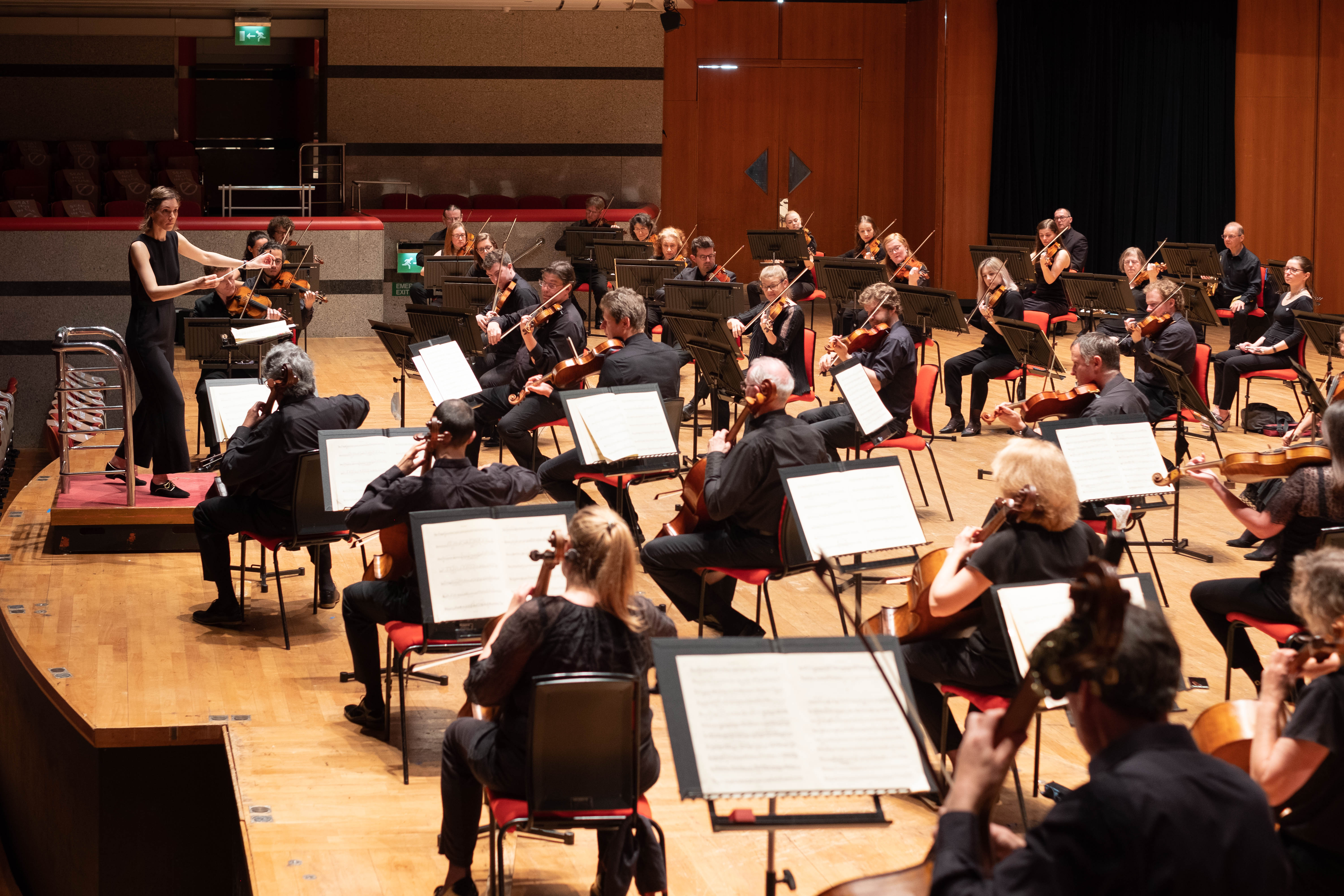
In concert – Alban Gerhardt, CBSO / Kazuki Yamada: Straight from the Heart

kazuki-yamada

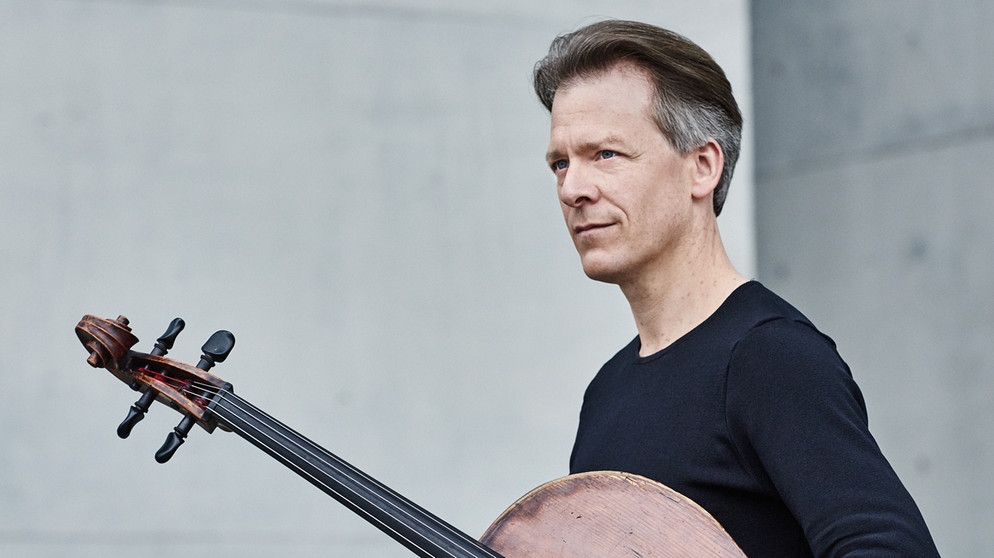
Alban Gerhardt (cello, below), City of Birmingham Symphony Orchestra / Kazuki Yamada (above)

Anderson Litanies (2018-19) [CBSO Centenary Commission: UK premiere]
Dvořák Symphony no.7 in D minor Op.70 (1884-5)

Symphony Hall, Birmingham
Wednesday 30 June 2021 (6.30pm)

Written by Richard Whitehouse Photo of Alban Gerhardt courtesy of Kaupo Kikkias

Losing the greater part of the City of Birmingham Symphony Orchestra’s schedule across the past two seasons has meant postponing many of its ‘Centenary Commissions’, but of those which have been rescheduled, none was more keenly anticipated than that of Julian Anderson’s Litanies.

Anderson produced four works during his tenure as the CBSO’s Composer-in-Residence over 2001-5, this new piece renewing its formal and expressive archetypes by fresh and intriguing means. The first of three continuous sections presents cello and orchestra – its modest forces including double wind, harp and piano, their pitches modified by a quarter-tone – as sparring partners in propulsive, toccata-like music. This gradually mutates into a central slow section, whose fraught lyricism intensifies (with unexpected if effective assistance from the orchestra) towards a chorale in memory of Oliver Knussen. From here an increasingly animated cadenza leads to a capricious, dance-like final section that culminates in a splenetic orchestral outburst; the soloist then resuming for a soulful postlude which brings about a calmly equivocal close.

Alban Gerhardt (below) made the most of some finely gauged technical challenges, as he overcame passing vagaries of sound-balance (and what appeared to be a leg injury) to give a confident realization of a piece already heard in Paris, Örebro and Lausanne. The CBSO was no less assured under Kazuki Yamada; if balance between strings and wind occasionally lost focus (second violins placed further to the rear of the platform than would normally be the case), this did little to offset the attractions of a notable addition to the contemporary repertoire.
During a break for platform rearrangement, the CBSO’s Principal Guest Conductor spoke of his gratitude that audiences were again able to attend live concerts. Something of this evident pleasure came through the ensuing performance of Dvořák’s Seventh Symphony – not least an opening Allegro that, despite a few tentative string entries, undoubtedly had the measure of its stoic defiance and underlying seriousness of purpose. Best was a coda whose dramatic initial stages subsided effortlessly and inevitably into sombre rumination towards the close.

The highlight, however, was a slow movement whose Poco adagio marking was studiously observed – Yamada infusing the emotional ebb and flow of a movement whose formal follow -through can seem fitful with unfailing poise, the CBSO wind eloquent in their contribution. Nor was anything amiss in the Scherzo, its ‘furiant’ rhythm audible not just in the trenchant outer sections but also the trio where its simmering presence ensured no let-up in tension on route to a subtly modified reprise then explosive coda. The final Allegro capped the reading accordingly – Yamada never rushing its stealthy alternation between starkness and lyricism, while ably negotiating several testing changes in tempo as the composer ratchets up tension going into an apotheosis whose inherent fatalism was enhanced by the resplendent playing.

A gripping performance, then, as was met with a suitably enthusiastic response. The CBSO is back this Friday with altogether lighter fare for a programme of Summer Classics (including The Lark Ascending), which is conducted by Michael Seal and presented by Andrew Collins.

You can find information on the CBSO’s Summer Classics concert at their website. For more information on composer Julian Anderson, click here – and for more on cellist Alban Gerhardt, visit his website here

In concert – Karen Cargill, CBSO / Mirga Gražinytė-Tyla: Mirga conducts Weinberg

Mirga

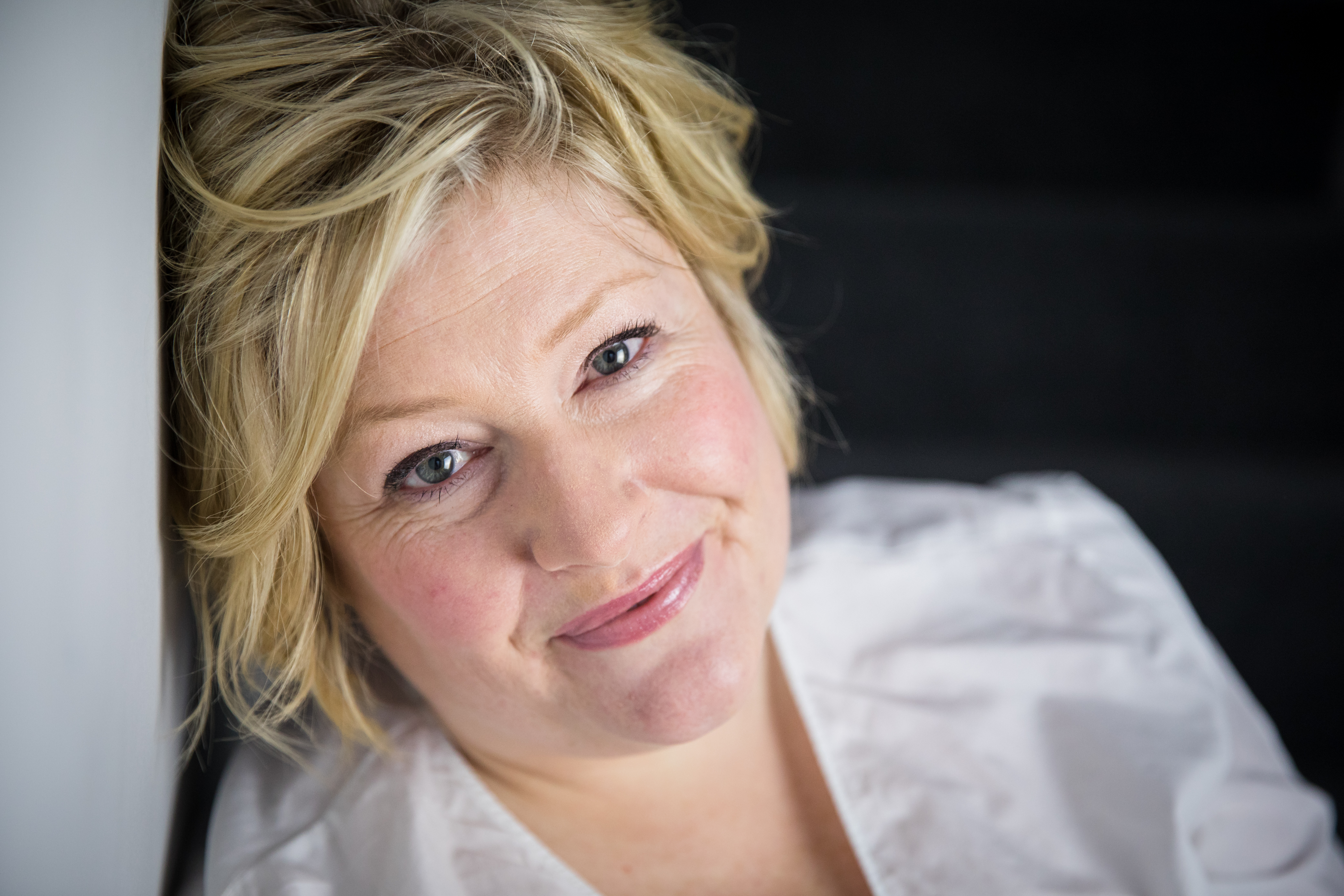
Karen Cargill (mezzo-soprano, below), City of Birmingham Symphony Orchestra / Mirga Gražinytė-Tyla (above)

Weinberg Rhapsody on Moldavian Themes Op.47/1 (1949)
Mahler Rückert-Lieder (1901-02)
Weinberg Symphony no.3 in B minor Op.45 (1949-50, rev. 1960)

Symphony Hall, Birmingham
Wednesday 23 June 2021 (6.30pm)

Written by Richard Whitehouse Photo of Karen Cargill courtesy of Nadine Boyd Photography

The music of Mieczysław Weinberg has been a prominent feature in the City of Birmingham Symphony Orchestra’s programmes with its music director Mirga Gražinytė-Tyla, and the Rhapsody on Moldavian Themes duly started this latest of the orchestra’s concerts in impressive fashion.

Written when Soviet composers were under intense pressure to create music of a populist – or rather, nationalistic – nature, its recourse to melodies emanating from the region of Bessarabia (from where the composer’s parents hailed) draws directly on a lineage from Liszt to Bartók and Kodály. Weinberg’s handling of these, in its subtle take on a slow-fast trajectory, is never less than assured. MGT undoubtedly had its measure, whether in the ruminative opening with its plangent woodwind or the boisterous later stages when brass comes irresistibly to the fore.

Itself a revival (having been played at Symphony Hall in 2019 then at that year’s Proms), the Third Symphony is a more considered response to the anti-formalist campaign spearheaded by Andrei Zhdanov with the intention of making Soviet music more accountable to its public. Hence the inclusion of Belorussian and Polish folksong, though Weinberg is mindful to offset these with a formal rigour as, in the initial Allegro, ensures an emotionally restless unfolding to a coda shot-through with foreboding – one of several passages likely made more explicit in the subsequent revision. Here, as in the wistful second theme (akin to what Malcolm Arnold was writing around this time) then a climactic transition heading into the reprise, the CBSO’s playing underlined its ongoing affinity with this music which held good through to the close.

Hardly less idiomatic was the scherzo’s interplay of capricious with a more sardonic humour, then the Adagio’s sustained yet cumulative progress towards a climax of stark tragedy – only slightly pacified in the inward closing phase. If the animated finale strives to secure an overly affirmative ending, it was a measure of this account that any such optimism was held in check until the peremptory last bars. Weinberg could scarcely have hoped to hear a more perceptive performance: good to hear both this and the Rhapsody were being recorded for future release.

Between these pieces, Karen Cargill joined the CBSO for Mahler’s Rückert-Lieder (evidently the first time the orchestra has given them since baritone Olaf Bär with Simon Rattle in 1992). She drew a keen irony from Blicke mir nicht in die Lieder, then rendered Ich atmet’ einen linden Duft with appealing deftness. With its fugitive writing for woodwind and brass, and a fervent climax capped by garish arabesques from piano, Um Mitternacht is a difficult song to bring off but was notably effective, and the only disappointment was a rather inert take on Liebst du um Schönheit – Max Puttmann’s sub-Léhar orchestration at least partly to blame. Nor was Ich bin der Welt abhanden gekommen ideally transcendent, yet the eloquence of Cargill’s response left no doubt concerning its status as arguably the greatest orchestral Lied.

A judiciously planned concert, then, in which the rapport between orchestra and conductor came through these past 15 months unscathed. The CBSO returns next Wednesday with its principal guest conductor Kazuki Yamada in a programme of Julian Anderson and Dvorák.

You can find information on the CBSO’s next concert at their website

In concert – Ian Bostridge, CBSO / Michael Seal: Britten Nocturne & Malcolm Arnold Symphony no.5

michael-seal

Ian Bostridge (tenor), City of Birmingham Symphony Orchestra / Michael Seal (above)

Britten Nocturne Op.60 (1958)
Arnold Symphony no.5 Op.74 (1961)

Symphony Hall, Birmingham
Wednesday 9 June 2pm

Written by Richard Whitehouse

It may have been centred on ‘England’s dreaming’, but there is surely a future for such astute juxtapositions of works by British composers as that heard in this latest concert by the City of Birmingham Symphony Orchestra; two pieces separated by just three years but poles apart stylistically.

The fourth and last of Britten’s orchestral song-cycles, Nocturne is a sequence with emphasis very much on the cyclical aspect. Its eight settings each features an obbligato instrument heard alongside string orchestra, the tenor adopting a flexible arioso manner with which to deliver a range of texts across centuries of English poetry. After a somnolent initial setting of Shelley – strings introducing a spectral rhythmic figure acting as a ritornello across the work – the bassoon emerges for an ominous setting of Tennyson, then the harp for a jejune rendering of Coleridge.

Notably restrained with his characterization thus far, Ian Bostridge upped the expressive ante when horn came to the fore in an evocative treatment of Middleton; the more so as timpani entered for Wordsworth’s troubled verses on the aftermath of revolution. Accrued tension spilled over to a plangent setting of Owen with cor anglais in attendance, then flute and clarinet joined the voice in a rapt take on Keats. All seven instruments duly reappeared for the final setting of Shakespeare – complementing tenor and strings when they arrived at a barely tangible repose.

Throughout, Michael Seal was typically alert and sensitive in accompaniment – before letting the CBSO off its collective leash for Malcolm Arnold’s Fifth Symphony. If not the finest of his cycle (which accolade would likely go to the Seventh), the Fifth is the most representative in its disjunct contrasts and fraught emotions – not least in an opening Tempestuoso whose pivoting between stark irony and consoling empathy results in several assaultive climaxes as were fearlessly delivered. In his pointedly succinct note for the premiere, Arnold confessed himself ‘‘unable to distinguish between sentiment and sentimentality’’ – a disingenuity that made possible the Andante with its aching main melody and soulful secondary theme which between them engender a baleful culmination before the earlier raptness is fitfully regained.

In his unequalled 1973 recording with this orchestra, Arnold secured playing of transcendent poise from the strings in this movement, but Seal was not far behind in the sustained intensity he drew from the present-day CBSO. Nor was there any lack of sarcasm in the scherzo which follows – wind and brass exchanging gestures either side of the clarinets’ freewheeling tune in the trio, then an abrasively confrontational coda. It remains for the Risoluto finale to attempt a summation with elements from the earlier movements thrown together in an atmosphere of martial volatility; climaxing in a restatement of the slow movement’s main theme resplendent but, ultimately, futile – the music collapsing into a void in which bells echo forlornly against fading lower strings. The CBSO imbued these closing minutes with truly graphic immediacy.

This instructive and cathartic programme brought a (rightly) enthusiastic response from those present. Next week features another British symphony, the first by Thomas Adès, alongside music by Purcell and Mozart for what should be a no less provocative and absorbing concert.

For further information about the CBSO’s current series of concerts, head to the orchestra’s website

For further information about the next concert of Purcell, Mozart and Adès on Wednesday 16 June, click here, and for more on Sir Malcolm Arnold you can visit the website dedicated to the composer.

In concert – Paul Lewis, CBSO / Chloé van Soeterstède: Mozart, Beethoven & Mendelssohn

chloe_conductor

Paul Lewis (piano), City of Birmingham Symphony Orchestra / Chloé van Soeterstède (above)

Mozart Don Giovanni K527: Overture (1787)
Beethoven Piano Concerto no.2 in B flat major Op.19 (1787-9, rev. 1795)
Mendelssohn Symphony no.5 in D minor Op.107 ‘Reformation’ (1830)

Symphony Hall, Birmingham
Wednesday 2 June 2pm

Written by Richard Whitehouse

Photos from Symphony Hall by Hannah Blake-Fathers

‘Heaven and Hell’ might have been too histrionic a title for this latest concert by the City of Birmingham Symphony Orchestra, yet it indicated the trajectory of a programme featuring Mozart at his most Romantic, Beethoven at his most Classical then Mendelssohn at his most Baroque.

Making her debut with this orchestra, French conductor Chloé van Soeterstède played down the rhetoric in those indelible opening chords of the overture to Mozart’s Don Giovanni but maintained impetus throughout the deftly modified sonata design as it sets out the tone if not content of what follows. In its theatrical context the music continues directly into the opening scene, but – despite (or even because?) of its emotional terseness – the ‘concert ending’ is by no means un-effective in its propelling the dramatic focus on towards a decisive conclusion.

Paul Lewis then joined the CBSO for Beethoven’s Second Piano Concerto – actually, the first in chronological terms and easy to underestimate in terms of its stylistic antecedents. Yet, as Lewis demonstrated in engaging terms, this is only incrementally less then characteristic and such as the close of the first movement’s initial tutti and transition into the reprise could only be by Beethoven. Lewis now feels the composer’s 1809 cadenza involves too great a stylistic disparity, and his own solution is formally and expressively consistent with what went before.

The highlight of this performance was nonetheless the Adagio (probably the earliest music in what was a lengthy gestation), limpid and poetic while never cloying – the closing interplay between soloist and orchestra unerringly well judged. Lewis then set a swift if not headlong tempo for the ensuing Rondo which gave full rein to the music’s bracing vigour but also its deftly ironic asides. Not least those tonal sideslips near the outset of the coda, with pianist and conductor at one in projecting an ebullience right through to the spirited final pay-off.

Good to see Mendelssohn’s Reformation reasserting its place in the repertoire after decades at the periphery. With controversies over a Jewish-born composer commemorating a Protestant anniversary (and quoting the ‘Dresden Amen’ of Catholic liturgy) now consigned to history, the innate power of the initial Allegro can readily be appreciated and not least in so assured a reading as this. Van Soeterstède brought out its inexorable onward motion in full measure, the scherzo providing an ideal foil in its infectious gaiety and the whimsical guile of its trio.

Eloquently rendered as a soulful ‘song without words’, the third movement thus balanced the work’s introduction as a searching contrast to what follows – here, a finale which unfolds as an extended paraphrase on the Lutheran chorale Ein’ feste Burg ist unser Gott, its heady if sometimes overbearing emotional force adroitly channelled toward a fervent apotheosis. The CBSO woodwind made a felicitous contribution, not least Marie-Christine Zupanic with the flute’s gentle intoning of that chorale – Mendelssohn’s devotion to Bach here made manifest.

An auspicious showing for Van Soeterstède, who will hopefully be returning in due course. Next week sees a very different programme of Britten’s Nocturne and Malcolm Arnold’s Fifth Symphony, doubly welcome in view of his centenary and its close association with the CBSO.

For further information about the CBSO’s current series of concerts, head to the orchestra’s website

For further information about the next concert on Wednesday 2 June, click here, and for more on conductor Chloé van Soeterstède you can visit her website

In concert – Lawrence Power, CBSO / Nicholas Collon: Stravinsky, Britten & Shostakovich

nicholas-collon

Lawrence Power (viola), City of Birmingham Symphony Orchestra / Nicholas Collon (above)

Stravinsky Symphonies of Wind Instruments (1920, revised 1947)
Britten Lachrymae Op.48a (1950, orch. 1976)
Shostakovich Symphony no.5 in D minor Op.47 (1937)

Symphony Hall, Birmingham
Wednesday 26 May 2pm

Written by Richard Whitehouse

This second in the City of Birmingham Symphony Orchestra’s live concerts, heading out of lockdown, featured works from the first half of the last century – focussing on wind then strings, before bringing the whole orchestra into play for one of the defining symphonies from this period.

It was an astute move to open with Stravinsky’s Symphonies of Wind Instruments as, 14 days short of the centenary of its premiere to a bemused London public, the extent of its innovation and influence was there for all to hear. The performance was attuned to its bracing alternation of diverse musical types, and while the elongated platform layout might have caused passing uncertainties, Nicholas Collon made a virtue of its fluid continuity right through to the final chorale which ‘remembers’ Debussy with an emotion the more acute for its hieratic restraint.

It may have entered the repertoire but slowly, Britten’s Lachrymae is now well to the fore of the viola’s still limited concertante output and Lawrence Power gave a potent rendering of a piece conceived for William Primrose then orchestrated for Cecil Aronowitz. The evocative if sparse writing for strings is a reminder this was Britten’s final creative act, bringing out the ambiguous shadings of these variations on Dowland’s Flow my tears (played and sung at the outset by Power) which culminate with a rendering of the full song in all its grave elegance.

Speaking beforehand, Collon (who gave a perceptive account of the Ninth Symphony with the CBSO some years back) spoke of his pleasure in utilizing the extent of Symphony Hall’s platform to programme a work on the scale of Shostakovich’s Fifth Symphony. Accordingly, this was a performance whose impact and intensity were evident from the outset; the opening movement unfolding gradually but with keen underlying intensity though its searching, then wistful main themes, to a surging development and climactic reprise before subsiding into a fateful coda. If the scherzo was less capricious than it often is, Collon’s trenchant handling   of its outer sections exuded an acerbic charm – offset by the trio’s deadpan humour (with an airily whimsical solo from leader Jonathan Martindale), before a pay-off of ominous import.

The ensuing Largo is the work’s emotional heart in every sense, and this afternoon’s reading made the most of its fraught eloquence with some limpidly unforced string playing then, in the mesmeric central episode, woodwind soliloquys of a spectral remoteness. Nor was there any lack of gravitas as the movement reached a baleful culmination, and from where Collon oversaw a faultless transition through to those consoling final bars. Always difficult to bring off, the finale had the virtue of almost seamless progression through its high-octane opening stages then the musing introspection at its centre – Collon making light of some tricky tempo changes on the way to an apotheosis of unremitting focus. The tonal ambivalence between triumph and tragedy might have been more acute, but its inevitability was never in doubt.

An impressive way to conclude what was almost a full-length concert (and one these players had to repeat just three hours later). The CBSO returns next Wednesday with a less strenuous programme which will include a welcome outing for Mendelssohn’s Reformation Symphony.

For further information about the CBSO’s current series of concerts, head to the orchestra’s website

For further information about the next concert on Wednesday 2 June, click here