In concert – Helena Juntunen, CBSO / Osmo Vänskä: Sibelius & Shostakovich

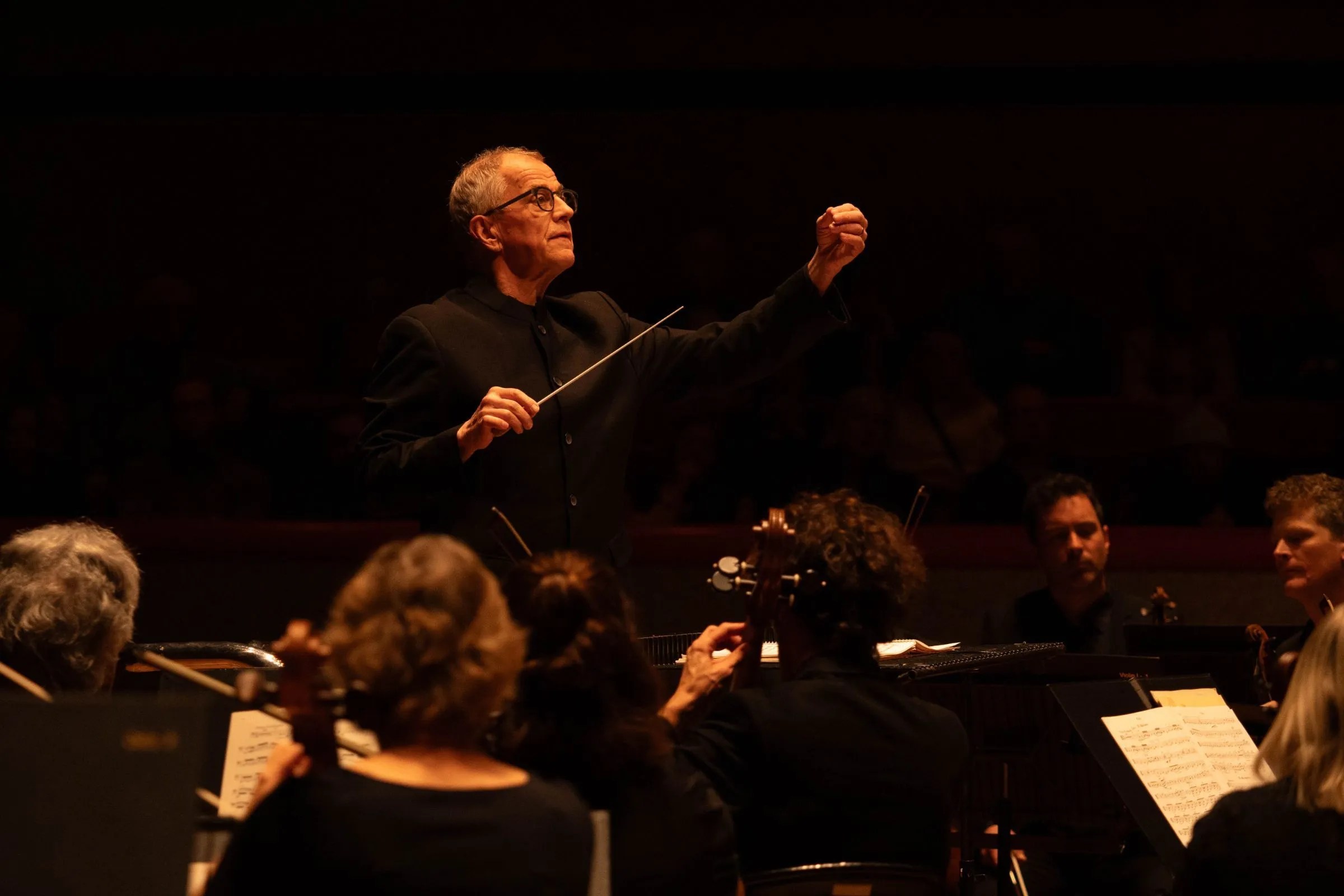
Helena Juntunen (soprano), City of Birmingham Symphony Orchestra / Osmo Vänskä (above)

Sibelius
Karelia Suite Op.11 (1893)
Songs – Höstkväll Op.38/1 (1903, orch. 1904); Hertig Magnus Op.57/6 (1909, orch. 1912); Våren flyktar hastigt Op.13/4 (1891, orch. 1913)
The Bard Op.64 (1913)
Luonnotar Op.70 (1913)
Shostakovich
Symphony no.15 in A major Op.141 (1970-71)

Symphony Hall, Birmingham
Wednesday 19 November 2025

Reviewed by Richard Whitehouse Pictures (c) Jonathan Ferro

Finnish conductor Osmo Vänskä makes relatively UK appearances these days such that this evening’s concert with the City of Birmingham Symphony Orchestra was to be anticipated, given the never less than intriguing juxtaposition of works from Sibelius and Shostakovich.

It now appears less frequently on programmes than half a century ago, but Karelia Suite finds Sibelius at his most uninhibited and Vänskä responded accordingly – whether the simmering motion of its Intermezzo or the pulsating activity of its Alla Marcia; its Ballade distilling the keenest atmosphere with Rachel Pankhurst making the most of her plaintive solo. Harpist Karherine Thomas was similarly attuned to her almost obligato role in The Bard, a tone poem whose sombre understatement hardly prepares one for the surging emotion towards its climax.
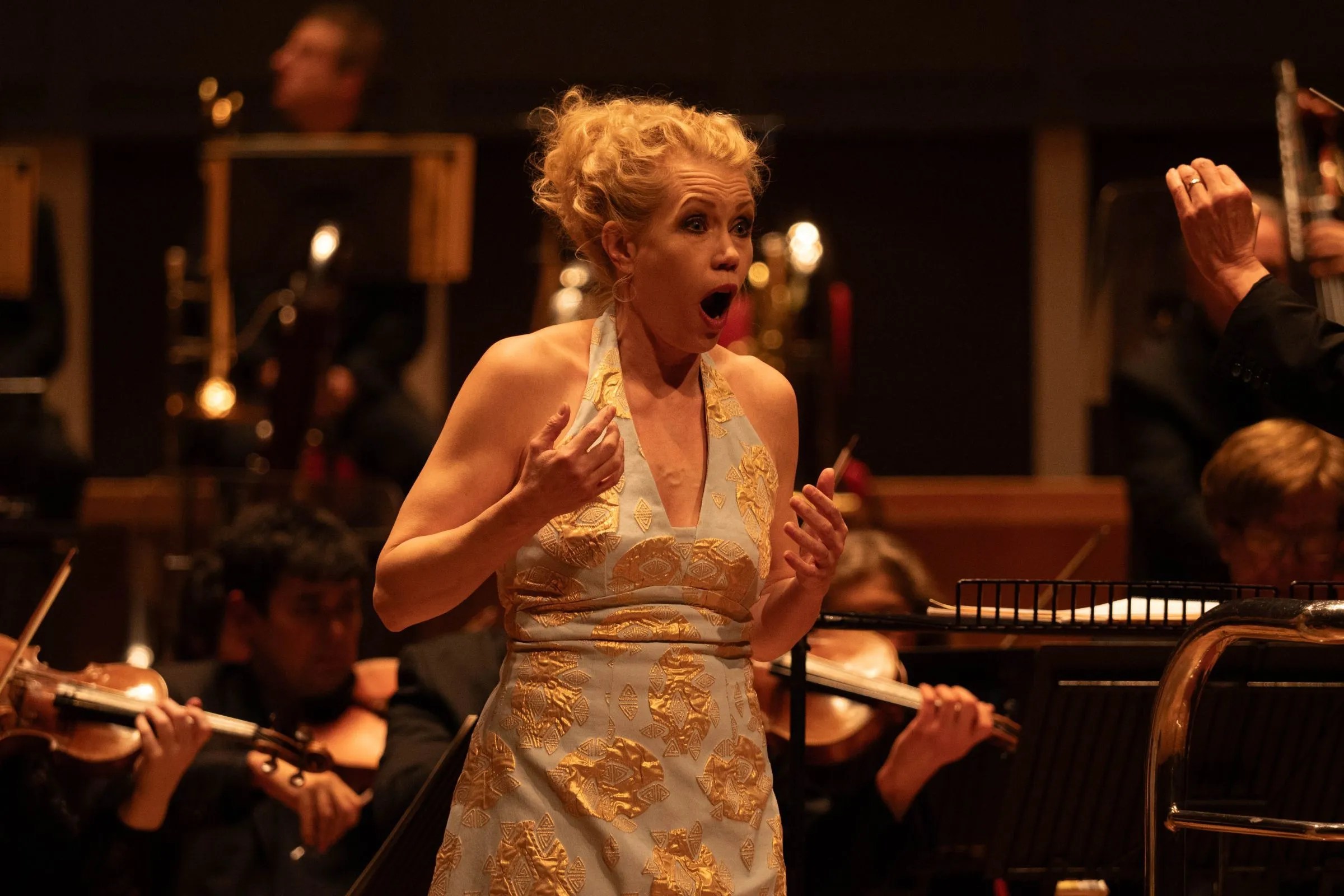
Elsewhere in this half it was Helena Juntunen (above) who stole the show with her judicious selection of Sibelius songs. That almost all these are settings of Swedish texts reflects an introspective Romanticism often overlooked in his output and Juntunen brought out the stark imagining of Autumn Evening then restless aspiration of Baron Magnus as potently as the ecstatic yearning of Spring is Flying. Her swapping sophisticated gown for traditional dress may have pointed up stylistic differences with Luonnotar, but it also underlined the inimitability of this setting from Finnish national epic the Kalevala. Birmingham audiences had been spoiled by hearing Anu Komsi in the piece, but Juntunen was no less inside music whose extremes of timbre or texture result in as heady a culmination then as spellbinding a conclusion as any in Sibelius.

Hard now to recall a time when Shostakovich’s 15th Symphony was believed too inscrutable for wider appreciation, rather than that masterly reassessment of Classical symphonism it is. Vänskä brooked no compromise in an initial Allegretto not without its technical mishaps, for all its sardonic and even scabrous humour came over unimpeded, but it was with the Adagio this performance wholly found its stride. As enhanced by eloquent contributions from cellist Eduardo Vassallo then trombonist Richard Watkin, this was palpably well sustained through to a climax shot through with a defiance borne of desperation, before retreating back into its initial numbness. Continuing directly, the ensuing Allegretto was an intermezzo no less acute in its expression and not least for the way solo instruments melded so deftly with percussion.

Vänskä did not make the mistake of rendering the finale an Adagio, such as holds good only with its portentous introduction. The main Allegretto was persuasively handled – broadening marginally for a central passacaglia builds stealthily if inevitably to a climax corrosive in its dissonance, before retracing its thematic steps towards a coda which evokes the notion of the ‘unbearable lightness of being’ more completely than any other music. Here, also, there was no mistaking the CBSO’s collective focus in bringing this totemic work to its deathless close.

Shostakovich 15 does not lack for probing or memorable readings these days and, if tonight’s did not answer all its questions, Vänskä nevertheless ensured this piece left its mark on what was a commendably full house, and which set the seal on a flawed while memorable concert.

For more information on the 2025-26 season head to the City of Birmingham Symphony Orchestra website. Click on the names to read more about soloist Helena Juntunen and conductor Osmo Vänskä

Published post no.2,727 – Sunday 23 November 2025
News – Winter Music in City Churches

published by Ben Hogwood from the original press release

Almost at the mid-way point between the past and future Summer Music in City Churches festivals, we bring news of two winter warming concerts to enjoy in the lead-up to Christmas.

Pavel Sporcl, English Chamber Orchestra, Holy Sepulchre EC1A 2DQ Sunday 30 November, 7pm

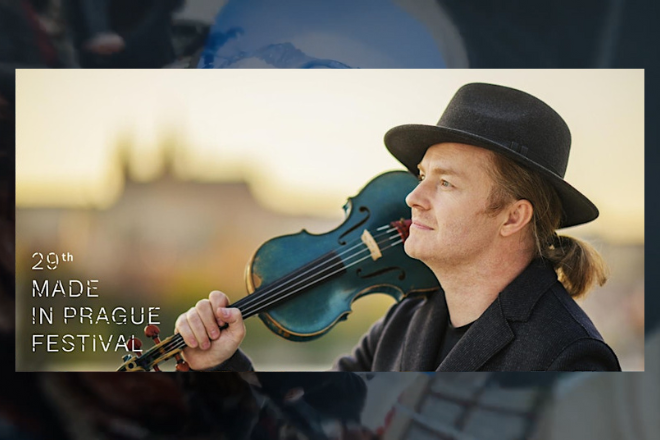
The 29th Made in Prague Festival concludes in grand style with a gala celebrating Czech violin virtuoso Pavel Šporcl, whose expressive artistry and dazzling technique have enthralled audiences worldwide.

The programme features Mendelssohn’s Octet in E-flat major, bursting with youthful brilliance, alongside Dvořák’s lyrical Romance and spirited Mazurek. Šporcl’s virtuosity will shine in a solo by Paganini, ensuring a thrilling and unforgettable finale to this year’s festival.

City of London Choir: Carols in the City – St Giles Cripplegate EC2Y 8DA Friday 19 December, 6.30pm

Just ahead of a sell-out carol concert in the Barbican with the King’s College Cambridge choir, the City of London Choir and conductor Daniel Hyde return to St Giles Cripplegate with a wonderful selection of carols and Christmas music, in the company of organist Andrew Lumsden.

Beloved carols by contemporary composers including John Rutter, Morten Lauridsen and Cecilia McDowall sit alongside traditional favourites – with plenty of audience participation. The perfect start to your family festivities.

For links to the concerts, click here for the English Chamber Orchestra and here for the Carols in the City.

Published post no.2,721 – Monday 17 November 2025

News – Australian Chamber Orchestra celebrate 50 years with new recording

published by Ben Hogwood from the original press release

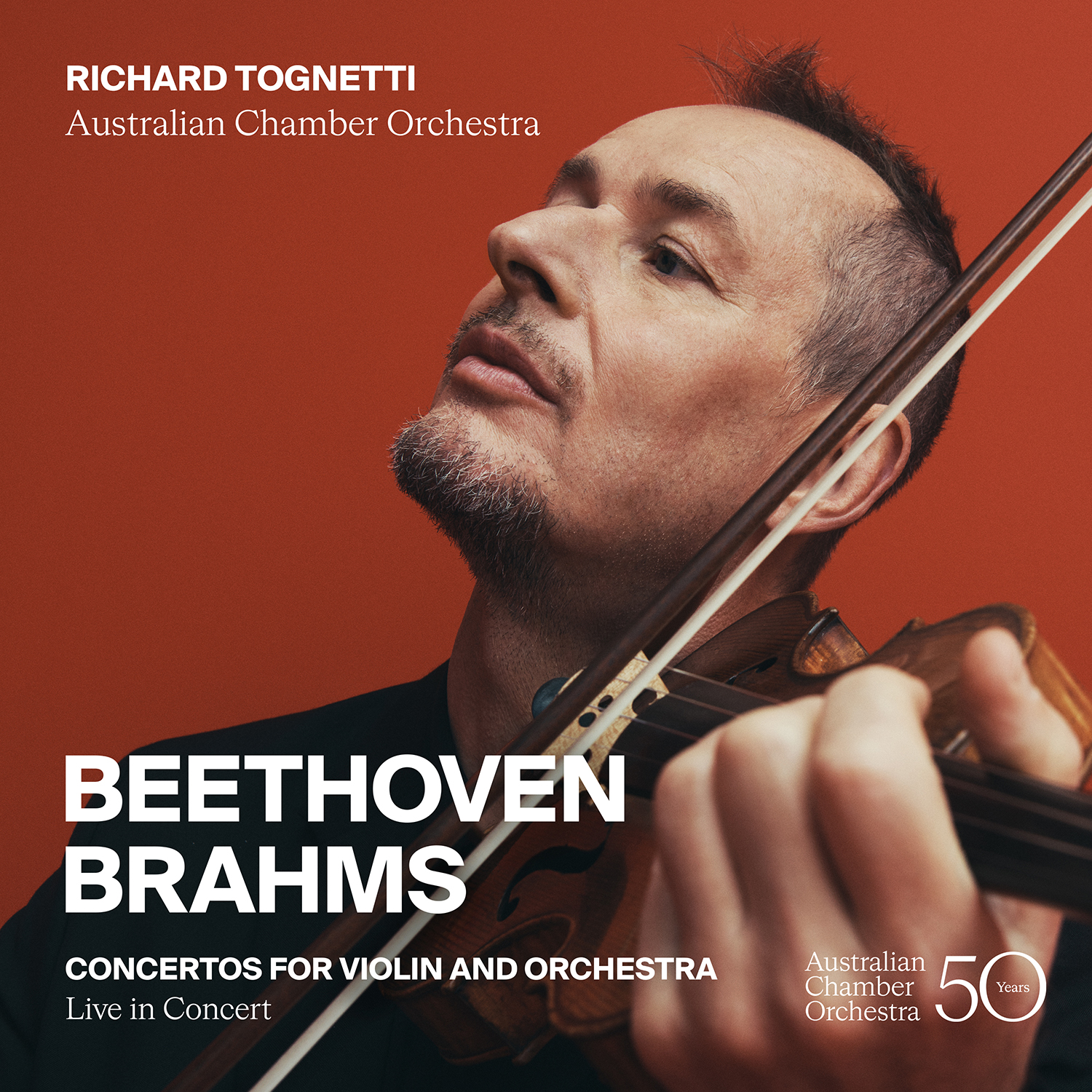
The Australian Chamber Orchestra (ACO) continues its 50th anniversary celebrations with the release of a landmark new album, Beethoven & Brahms: Concertos for Violin and Orchestra, featuring Artistic Director Richard Tognetti as soloist. Timed to coincide with the 50th anniversary of the Orchestra’s very first concert, on 21 November 1975 at the Sydney Opera House, this release pays tribute to the ACO’s remarkable legacy while also honouring Artistic Director Richard Tognetti’s extraordinary 35 years of leadership.

Recorded live, the album showcases Tognetti and the ACO at their most vital and alive. Beethoven’s Violin Concerto in D major, Op. 61 was recorded in 2018 and Brahms’s Violin Concerto in D major, Op. 77 earlier this year. These cornerstones of the violin repertoire are reframed with the clarity, intimacy, and daring that have become hallmarks of the ACO’s sound.

It is the first time that Richard Tognetti has recorded the Brahms Concerto and his first full recording of the Beethoven for over 25 years.

Over the last five decades the ACO has become one of the world’s most dynamic ensembles, renowned for fearless programming, boundary-pushing collaborations and a singular, expressive sound. Tognetti has been at the centre of this transformation, reshaping the Orchestra into a globally recognised force through relentless curiosity and risk-taking artistry. More than a celebration, this album is a statement of intent: an affirmation that, at 50, the ACO remains as fearless, passionate, and forward-looking as ever.

Beethoven & Brahms: Concertos for Violin and Orchestra will be available as a special limited-edition vinyl release, with each copy signed by Richard Tognetti, as well as being released as a CD and in digital streaming and download formats.

Full details can be found on the Australian Chamber Orchestra website

Published post no.2,724 – Thursday 20 November 2025

News – the CBSO are Bringing The Light

published by Ben Hogwood from the original press release

This winter, the City of Birmingham Symphony Orchestra will illuminate Birmingham’s Symphony Hall with Bringing the Light – a remarkable celebration of music, culture and community, featuring three brand-new pieces by Roxanna Panufnik, Joan Armatrading and Cassie Kinoshi alongside A.R. Rahman’s Slumdog Millionaire Suite arranged by Matt Dunkley.

Taking place on Sunday 7 December at 5pm, this uplifting afternoon of music and storytelling harnesses the full strength of the CBSO, the CBSO Chorus, CBSO Youth and Children’s Choruses, alongside presenter Satnam Rana, conductor Michael Seal and sitar soloist Akash Parekar. The programme blends orchestral and choral brilliance, contemporary composition and global influences, promising an unforgettable celebration of togetherness and creativity.

Emma Stenning, Chief Executive of the CBSO said: “This concert shines a light on Birmingham’s extraordinary diversity and creativity. ‘Bringing the Light’ will fill Symphony Hall with music that uplifts, connects and inspires – a true celebration of what makes this city so special. After a year that has been characterised by so much division and polarisation, this concert will do a great deal to remind us of what we as people all have in common – and the power of music as a force to unite us all.

“At the CBSO, we’re passionate about creating experiences that feel both rooted in our home city and open to the world. This concert brings together voices from different traditions, faiths and generations to reflect the vibrancy of Birmingham today.”

At the heart of the concert is Aurora a new work by composer Roxanna Panufnik and writer and librettist Jessica Duchen, co-commissioned by the CBSO, Royal Choral Society and the Arktisk Filharmoni. It is a powerful piece that explores the power of light as a universal symbol of hope, connection and unity – drawing inspiration from festivals of light from around the world. Developed in close collaboration with 14 UK faith leaders and devotional musicians, the text of each movement represents a different faith: Christian Christmas; Muslim Milad un Nabi; Sikh, Jain and Hindu Diwali; Jewish Hanukkah; Tibetan Buddhist Gaden Ngamchoe and ending with a beautiful, musical depiction of the Aurora Borealis for those of all faiths and none.

Roxanna Panufnik said: “When we hear about different faiths in the media it’s too often about conflict between them and very rarely about their respective beauty and the common themes we all share. We have planned this work over the past 10 years, and it has been hugely inspirational collaborating with our phenomenal consultants: 14 UK Faith leaders and their respective devotional musicians. The CBSO is perfectly placed, in a city with a fabulous and dynamic diversity of cultures and faiths, to premiere this work. Our 270 singers will be of multiple ages and faiths – so will, we hope, our audience. This is a piece for EVERYONE.”

Jessica Duchen adds: “The overarching image of Aurora: Faith in Harmony is the Northern Lights, a miracle of nature that can inspire the kind of awe in us all that some people find in faith. Embracing the secular community alongside a range of world faiths that have festivals of light in the depths of winter, the piece celebrates the virtually universal human longing for light in darkness, which we hope can help to bring people of all cultures together. It has been an incredible journey for us both – and Roxanna has excelled herself in writing music of extraordinary beauty.”

The performance opens with a world premiere of Homeland by singer-songwriter Joan Armatrading CBE– which she describes as her “love letter” to Birmingham.

Joan Armatrading comments: “Homeland is a piece that highlights the city of Birmingham and its people, reflecting their strong sense of community, resilience and warmth. It is a tribute to a place to which I am bonded, and one I will always hold with affection and pride. Through both words and music, the piece weaves together the sounds, energy, and rhythms of the city while reaching out into its vast surrounding countryside. This is Birmingham not simply as a backdrop, but as a living, breathing presence – an often-underrated landscape where industry and nature exist side by side in quiet beauty.”

The concert also includes a new commission by Mercury Prize-nominated and Ivors Academy Award-winning composer and saxophonist Cassie Kinoshi with lyrics by poet Lydia Luke.

Cassie Kinoshi said: “I was in the state of mind to stay centres on how nature grounds and steadies us within the constant movement of city life. It captures the ways young people find calm and connection in fleeting everyday moments; rain against a bus window; flowers at a market stall; or the scent of trees through an open window; and celebrates the beauty of finding stillness amid the noise. Created with input from the Southwark Playhouse Youth Company, the piece offers a portrait of the city through young people’s eyes: a place where nature and metropolitan life coexist. It is about recognising how these small, tender moments can bring comfort, belonging, and a sense of balance in an increasingly hectic world. Rather than portraying nature as something distant or idealised, the piece treats it as part of daily life: a source of connection to oneself, and a reminder that even in the most built-up places, the natural world remains ever-present.”

The CBSO acknowledges the generous gift from Frances and Barry Kirkham, whose support helped ​make Aurora and i was in the state of mind to stay possible.

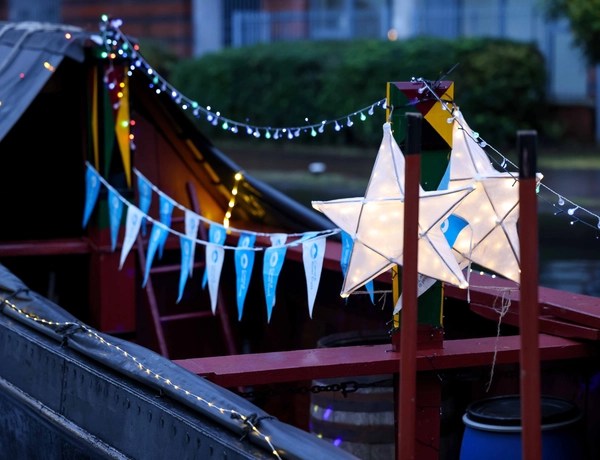
Leading up to the performance, there will be lantern-making workshops in partnership with the Canal and River Trust and Crafting Community. As well as a beautiful lantern walk along Birmingham’s canals, accompanied by narrowboats decorated by light artist Sophie Handy and featuring local musicians, which begins at Roundhouse Birmingham and ends at the ICC with a performance by the CBSO’s community choir SO Vocal.

Audiences are warmly invited to this vibrant celebration of culture and light which unites communities from across the city and beyond to share a moment of joy, hope and reflection.

Full details can be found on the CBSO’s website

Published post no.2,721 – Monday 17 November 2025

In concert – Gwilym Bowen, Gareth Brynmor John, William Vann, Navarra String Quartet @ Temple Church, London – Ian Venables: Out of the Shadows (a 70th birthday concert)

Gwilym Bowen (tenor), Gareth Brynmor John (baritone), William Vann (piano), Navarra Quartet [Benjamin Marquise Gilmore, Eva Aronian (violins), Sascha Bota (viola), Brian O’Kane (cello)]

Venables Out of the Shadows Op.55 (2023)
Vaughan Williams arr. Vann Fantasia on Greensleeves (1934)
Vaughan Williams On Wenlock Edge (1909)
Vaughan Williams Love Bade Me Welcome (1911)
Venables Portraits of a Mind Op.54 (2022)
Howells An Old Man’s Lullaby (1947)

The Temple Church, London
Tuesday 4 November 2025

Reviewed by Richard Whitehouse

The emergence of Ian Venables as the leading British art-song composer was suitably marked with a 70th-birthday concert, sponsored by the Morris-Venables Charitable Foundation under the auspices of Temple Music Foundation and held in the evocative setting of Temple Church.

Song cycles being at the forefront of Venables’s output, it made sense to start with one of his most recent – Out of the Shadows a wide-ranging overview of male love. From the coyness of Constantine Cavafy’s At the Cafè Door and the barbed humour of Horatio Brown’s Bored, this takes in the fleeting ecstasy of Cavafy’s The Mirror in the Hall and stark soulfulness of Alfred Tennyson’s Dark House, prior to the overt playfulness of John Addington Symonds’s Love’s Olympian Laughter and calm affirmation of Edward Perry Warren’s Body and Soul.

Affectingly sung by Gareth Brynmor John (above), it preceded likely the most influential such cycle in English. A. E. Housman may have disliked his settings, but Vaughan Williams always gets to the heart of the matter in On Wenlock Edge. Hence the volatile imaginings of its title-number or hymnic poise of ‘From Far, from Eve and Morning’, the brooding dialogue of ‘Is My Team Ploughing’ or nonchalant wit of ‘Oh, When I Was in Love with You’; reaching a climax in the innocence to experience of ‘Bredon Hill’, with ‘Clun’ ending the sequence in fatalistic repose.

Gwilym Bowen gave a searching account of this cycle (doubly so having replaced Alessandro Fisher at such short notice), with Brynmor John comparably attuned to the understatement of George Butterworth’s Love Blows as the Wind Blows. These settings of W. E. Henley amount to a cohesive yet subtly contrasted entity – the existential musing of In the Year that’s Come and Gone followed by the deadpan charm of Life in Her Creaking Shoes and effervescence of Fill a Glass with Golden Wine, then On the Way to Kew brings a close of deftest poise.

Bowen duly tackled a further Venables cycle. Written to commemorate the 150th anniversary of Vaughan Williams’s birth, Portraits of a Mind is a notably inclusive one of the composer. Hence the gentle pantheism of George Meredith’s The Lark Ascending and the meditation on creativity of Ursula VW’s Man Makes Delight His Own; the engaging impetus of R. L. Stevenson’s From a Railway Carriage a perfect foil to the resignation of Christina Rosetti’s Echo, before lines from Walt Whitman’s A Clear Midnight conjure a warm transcendence.

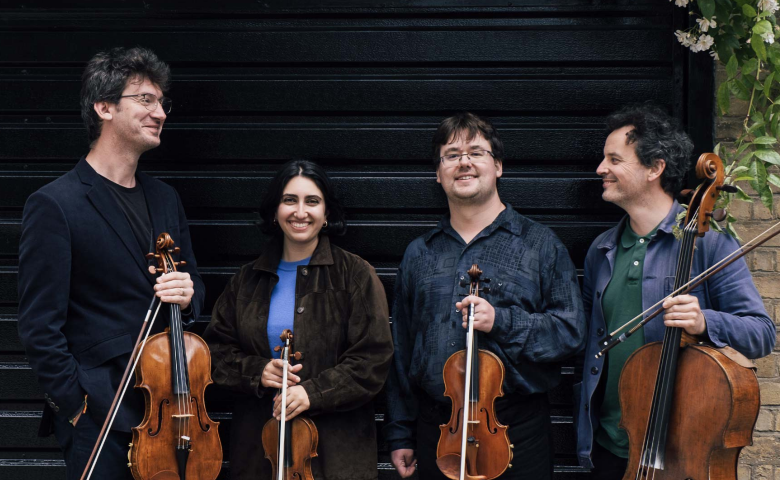
Throughout these performances, the playing of the Navarra Quartet (above) evinced an incisiveness and eloquence always at the service of this music; William Vann’s attentive pianism astutely deployed in his appealing arrangement of VW’s Fantasia on ‘Greensleeves’. Brynmor John opened the second half with that composer’s disarming take on George Herbert’s Love Bade Me Welcome (first of Five Mystical Songs), with both vocalists heard to advantage in An Old Man’s LullabyHerbert Howells’s setting of Thomas Dekker that made for a winsome envoi.

Taken overall, this was a wholly pleasurable evening and welcome confirmation of Venables’ creative prowess – his corpus of songs or song-cycles surely second to none among those for whom the English language is a source of never-ending and always unexpected possibilities.

Click here to read an extensive tribute to Ian Venables on from his husband, pianist Graham J. Lloyd – or click on the names to read more about Gwilym Bowen, Gareth Brynmor John, William Vann, the Navarra Quartet and Temple Music Foundation

Published post no.2,710 – Thursday 6 November 2025