Proms premieres – Birds with new plumage

tui-bird
The Tui Bird from New Zealand. Photo (c) Sid Mosdell

Messiaen, orch Christopher Dingle – Un oiseau des arbres de Vie (1987-1991, orch 2015)

Ravel, arr. Colin Matthews – Oiseaux tristes from Miroirs (1905, orch 2015)

BBC Philharmonic Orchestra / Nicholas Collon (Prom 29)

Duration: 4 minutes each

BBC iPlayer link

http://www.bbc.co.uk/events/ef3zc8#b0640p40

The Messiaen can be heard from 1:55; the Ravel from 35:02

What’s the story behind the pieces?

Messiaen’s Un oiseau des arbres de Vie (A bird from the tree of life) is music that is ‘incredibly technically difficult to conduct’, in the words of Nicholas Collon, given the job of overseeing its first performance in this guise, arranged by scholar Christopher Dingle.

The relatively short piece originally intended to be part of his massive, multi-movement orchestral piece Éclairs sur l’Au-Delà…, but was removed before the first performance. It is mostly scored for percussion but changes tempo and time signature more or less every bar. In the piece Messiaen profiles the New Zealand tui bird through a written-out melody of its song.

Meanwhile Ravel’s Oiseaux tristes (Sorrowful birds) is the latest French piano piece to be orchestrated by Colin Matthews. The composer has tried his hand at a number of Debussy Préludes, imagining how Ravel might have undertaken the task, but here he looks at one of the six parts of Miroirs, the suite written by the composer for piano. Ravel himself orchestrated two of the other movements, Une barque sur l’océan (A boat on the ocean) and Alborada del gracioso (Morning song of the jester).

The piece is intended to portray the sorrowful birds in the depths of a very hot summer forest. They are lost.

Did you know?

Ravel’s orchestration of Musorgsky’s Pictures at an Exhibition is one of many versions of the Russian composer’s suite for piano – but is the most performed.

Initial verdict

The Messiaen is bright and strongly rhythmic, but not in a conventional sense. It is very treble based, and is punctuated by crisp chords that have an unusual colour, with the wood block and tuned percussion heavily in evidence.

Colin Matthews’ orchestration is evocatively coloured, ideal for a humid evening at the Royal Albert Hall. The mood is oppressive, the brass lending weight to the lower end of the sound. It is clear from this that Matthews has listened closely to Ravel’s own methods of orchestration, because his way with the colours available is surely near to what the composer might have imagined.

Second hearing

tbc!

Where can I hear more?

Colin Matthews’ orchestrations of Debussy Préludes can be heard in a release made by the Hallé record label, found on Spotify here

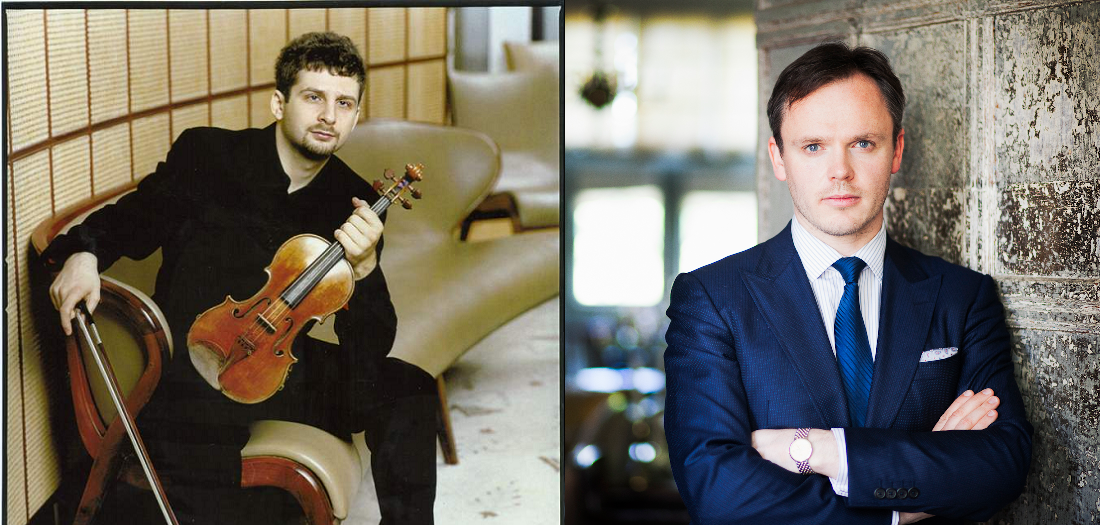
Ilya Gringolts and Ashley Wass – Debussy and Korngold at the Wigmore Hall

A beginning and an end – Debussy and Korngold Violin Sonatas at the Wigmore Hall

ilya-gringolts-ashley-wass

Ilya Gringolts (violin), Ashley Wass (piano) – Wigmore Hall, London, live on BBC Radio 3, 29 June 2015

Listening link (opens in a new window):

http://www.bbc.co.uk/programmes/b060brzw

on the iPlayer until 28 July

Spotify

In case you cannot hear the broadcast, here is a Spotify playlist of the music in this concert (which Gringolts and Wass have not yet recorded):

What’s the music?

Debussy: Violin Sonata (1917) (12 minutes)

Korngold: Violin Sonata (1912) (42 minutes)

What about the music?

Perhaps surprisingly, the violin sonata was one of the main forms in use for chamber music in the first few decades of the twentieth century. Perhaps aware that composers such as Mozart, Beethoven, Brahms and Schumann had mastered the form impressively, others took up the challenge as the new century began its musical breakaway. Ravel, Vaughan Williams, Fauré and Walton – these and more were authors of one or more sonata for violin and piano. Meanwhile an elderly Debussy and child prodigy Korngold offered their own take on the form within four years of each other.

The composers could not have been more different in their circumstances or approach. Debussy was fading fast due to cancer, and the Violin Sonata – a compact yet concentrated piece – was his final published work, meaning we would not get to see the last three sonatas of his projected six-part series. Those that remained – the Sonata for flute, viola and harp, the Cello Sonata and the Violin Sonata – are rightly held in high regard.

Korngold, meanwhile, was just into his teens, somehow with an orchestral work under his belt at the outrageously young age of twelve. This sonata, only three years later, was written just after he had been learning with Zemlinsky, who taught Berg and Schoenberg. It was completed for no less a pair than violinist Carl Flesch and pianist Artur Schnabel. It is an imposing work, clocking in at over forty minutes, and is full of big, romantic gestures and rich, chromatic harmony. It also contains melodic pointers towards the much shorter Violin Concerto he was to complete in 1945.

Performance verdict

A fascinating double act, this – chalk and cheese, but the two works complementing each other perfectly as they represent two centres of musical development in Europe at the start of the century.

Debussy, representing Paris, is by far the more concentrated, and both performers are careful not to be too outrageous with the sudden loud bits, nor too restrained in the quiet moments. Technically very sound, Gringolts has a consistently appealing tone, and the shading from Ashley Wass’s colourful piano part brings out the detail.

The Korngold could not be more different – more than three times the length, and focussing in on Vienna with its rich musical language, its big gestures and its long, florid tunes. With this we hear something of what composers like Zemlinsky (his teacher) and Schoenberg (in his early works) were up to.

Both performers give this their all, and the balance between singing violin and quasi-orchestral piano is impeccably observed, particularly in the heavy set second movement. Gringolts really sings in the more lyrical passages – notably the trio of the second movement – and the whole performance stands as a most impressive achievement, with its most concentrated moment right at the end.

What should I listen out for?

Debussy

1:42 – the first of three short movements in this sonata, notable for its brief but intense ideas, and a tendency to go from private thoughts to sudden outbursts. The use of chromatic harmony makes the music a bit wary at times, before it signs off quickly and emphatically.

6:01 – Gringolts and Wass waste no time in moving straight into the second movement, which is once again elusive. Several ideas sound instinctive, almost improvised, and perhaps indicate the composer’s restless move. Debussy makes a very distinctive sound when the two instruments play the same tune at 7:56. The performers lead straight into…

10:13 – the final movement, which moves swiftly into a memory of the main tune from the first. Again the violin and piano spar with each other, sometimes playfully, and sometimes with brief aggression that Debussy lets loose. The end, when it comes, is high-spirited.

Korngold

16:02 – this massive work begins quite innocuously, with a movement marked ‘ben moderato, ma con passione’ (a moderate tempo, with passion). Then it really gets going, as though the young composer is straining at the leash. The piano part is expansive and wide ranging, as though Korngold has an orchestral sound in his head.

All the opening thoughts head for a massive climax point at 21:43, after which point the music subsides a bit, though the rich, lyrical melodies continue to pour from the violin.

26:39 – the second movement, a scherzo, reveals two very different musical strands. The first is jumpy, with an angular line, both players are performing gymnastics as they leap up high and crouch down low. Then at 27:12 there is a sly melody that slips down on the violin, with a languid piano line for company. This is at odds with most of the movement though, as the high voltage musical exchanges continue – with the sly melody now heard at full volume (around 29:10).

Then at 31:12 the contrasting ‘trio’ begins, with a beautiful and graceful melody from the violin and flowing piano. This reverie is broken at 33:56 by the return of the jumpy opening material, and around 35:30 we hear some pretty savage chords from the piano, leading to the end at 37:49

38:14 – the slow movement, and a time for a little respite. Korngold once again writes a tune with some unusual contours to it, but one that suits the singing tone of the violin. From 40:55 the violin uses a mute briefly, the sound constricted and quite ghostly, but by the time we reach 43:00 there are forceful and passionate thoughts once again – leading to the soaring violin of 45:58. After that it effectively collapses in a heap!

46:56 – quite an elusive tune from the violin to begin the finale, wandering amiably. Gradually the music picks up momentum and Korngold introduces more dialogue between the instruments, culminating at 51:09 when a fugue starts in the piano left hand, picked up by the violin at 51:14. Again the lines become more angular – but then at 52:20 calm prevails, and a beautiful coda begins. Both violin and piano are serene, the passion of the preceding forty minutes or so summed up in the soft but heartfelt closing pages, finishing at 55:06.

Further listening

If you want further music for violin and piano, a nice calling point from the Debussy is the Violin Sonata no.1 by fellow French composer Fauré:

If however it’s more Korngold that you want the album below offers you a way in to The Sea Hawk, one of his finest film scores – while the one below that will introduce you to the substantial Symphony in F sharp, an increasingly popular orchestral work.

For more concerts click here

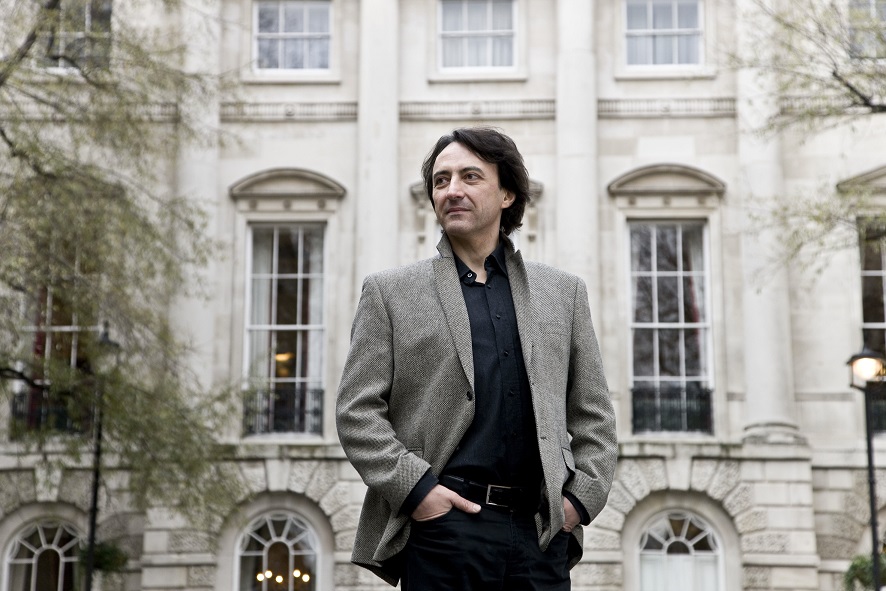
Jean-Efflam Bavouzet at the Wigmore Hall – Imitations and Studies

Imitations and Studies – Jean-Efflam Bavouzet at the Wigmore Hall

Jean-Efflam Bavouzet (piano) – Wigmore Hall, London, live on BBC Radio 3, 25 May 2015

Listening link (opens in a new window):

http://www.bbc.co.uk/programmes/b05w7tdx

on the iPlayer until 23 June

Spotify

In case you cannot hear the broadcast, I have put together a Spotify playlist of most of the music in this concert, including recordings the artists have made where possible. The playlist can be found here

What’s the music?

Beethoven: Piano Sonata No. 24 in F sharp major Op. 78 ‘A Thérèse’ (10 minutes)

Boulez: Piano Sonata No. 1 (11 minutes)

Maurice Ohana: 3 from the 12 Études d’interprétation, Book 1 (Mouvements parallèles; Quintes; Main gauche seule) (15 minutes)

Debussy: 3 from the Etudes Book I (Pour les tierces; Pour les sixtes; Pour les octaves) (10 minutes)

What about the music?

At first glance this program has the appearance of a slightly random but interesting set of composers and works; on closer inspection they are shown to have intriguing connections.

Beethoven’s middle period sonata, subtitled ‘à Thérèse’ in recognition of its dedicatee, Countess Thérèse von Brunswick, is a snip at just ten minutes and is one of the lesser known of the 32 sonatas. It also has a strange key and unusual structure, so to all intents and purposes it feels like an experimental work – yet it is concentrated in its emotion and ultimately rewarding for the listener.

The Boulez sonata, his first of three, was written when the composer – now 90 – was just 21. It was intriguingly modelled on the Beethoven work just heard – both in length and design – so it makes sense to hear the two together. Going further than Beethoven’s unusual key choice, Boulez writes using the ‘twelve-tone’ method – which means each note of the conventional Western notation has to sound before the initial note can be heard again. Twelve-tone pieces can often present challenges for audiences, but this one does still emphasise certain pitches – ‘B’ especially – and uses a wide range of dynamics and expressive nuances that make it much more palatable to the untrained ear.

Maurice Ohana is not a composer often encountered in the concert hall at all. His upbringing as an Andalusian of Jewish descent born in Morocco and eventually settling in France is reflected in the cosmopolitan nature of his music, uniting all these strands. Ohana often makes use of microtonality, using pitches between the semitones we are so used to in Western music. That of course is not possible on a tuned piano as in this concert – but we hear a flavour if his unusual harmonies in this selection of Etudes, modelled on Debussy’s equivalent works for the piano. The final etude is written for the left hand only.

Debussy’s Études are masterpieces that follow Chopin’s lead in making colourful and often emotional pieces from what are ostensibly technical exercises. Jean-Efflam Bavouzet chooses three here.

Performance verdict

An inventive program from Bavouzet, whose relatively recent recordings of Beethoven are complemented by a Boulez piece where the pianist is able to put his friendship with the composer to great authoritative use.

Bavouzet’s technical command is formidable, and comes to the fore in the studies by Ohana and Debussy, where we can hear each composer exploring the limits of the pianist through some particularly athletic writing.

What should I listen out for?

Beethoven

2:04 A short introduction leads to the main theme proper of the first movement (around 2:34). The music is relatively at ease here, but not a note is wasted, especially when Beethoven develops this theme – an intense section where the melody twists around but never beyond recognition. The tune dominates but Beethoven’s continued stress of the unusual F sharp tonality creates an unusual form of tension in this performance.

9:38 Bavouzet moves quickly into the second movement, where the first tune has a clipped melody, then the second sounds like two fingers chasing each other repeatedly around the keyboard.

Boulez

14:13 Like the Beethoven, the music seems very sure of itself right from the off. Although this is what is known as a ‘twelve tone’ piece, certain pitches come to the fore and there is an unmistakeably expressive shape to each statement. As the movement progresses there are some particularly crunchy discords, and often a longer phrase is followed by a flurry of notes in a downward descent. The movement ends convincingly at a lower pitch.

19:46 A wiry sound to the lower edge of the piano as this movement starts, and then the mood gets a bit more frivolous – with the ‘chasing’ around the keyboard as experienced in the Beethoven. This more ‘playful’ movement, which still sounds quite straight faced (in the manner of its creator, perhaps!) leads to an uncompromising and perfunctory finish.

Ohana

26:50 – the first etude, a study in parallel motion, starts at the extremes, with the right hand high and the left hand low. The inflections in the melody are full of Eastern flavour, then some of the chords are clumped together before a firm end. This is a virtuoso piece that has a greater rhythmic profile

31:37 – a cool profile to the beginning of Etude no.5, which is a study in the hands playing in fifths. The irregular rhythms make the music feel less secure, but the Eastern flavour is there once again in some of the softer melodies.

36:54 – a study for the left hand only, beginning immersed right at the bottom of the piano but soon ascending to the heights. Ohana asks a lot of the pianist here, and it is difficult to believe that some of the gymnastics here are for just the one hand, as this study flies along – until a stately slower passage.

Debussy

43:24 (Pour les cinq digits) (For the five fingers) A deceptive piece this, as it starts with a simple scalic motif but then moves about restlessly before filling out considerably.

46:38 (Pour les tierces (For the thirds) As the title indicates, this study uses a lot of smaller chords made up of thirds, Debussy giving a unique rocking motion to the music. If anything by the end the music is also a study in octaves as well as thirds.

50:36 Pour les octaves (For the octaves) Some big stretches for the hands in this piece, often playing an octave apart and at quick motion. Then in a typical move for Debussy we suddenly arrive at an emphatic finish in a key that is at once a logical but also surprising move.

Encore

54:22 An encore of Debussy’s L’isle joyeuse (The joyful island), played with typical pizzazz by Bavouzet!

Further listening

With the emphasis still on studies and modern music, an interesting – if challenging – next step are some Studies by Conlon Nancarrow, arranged for instrumental ensemble. These were originally written for a ‘player piano’ – that is, a piano that plyed itself – because the music was thought to be too difficult for human performance. Some pianists do defy gravity to play it, but the versatility of the music is shown by the ease with which it transfers to instruments. Nancarrow’s fiercely original voice can be heard in technicolour here

For more concerts click here