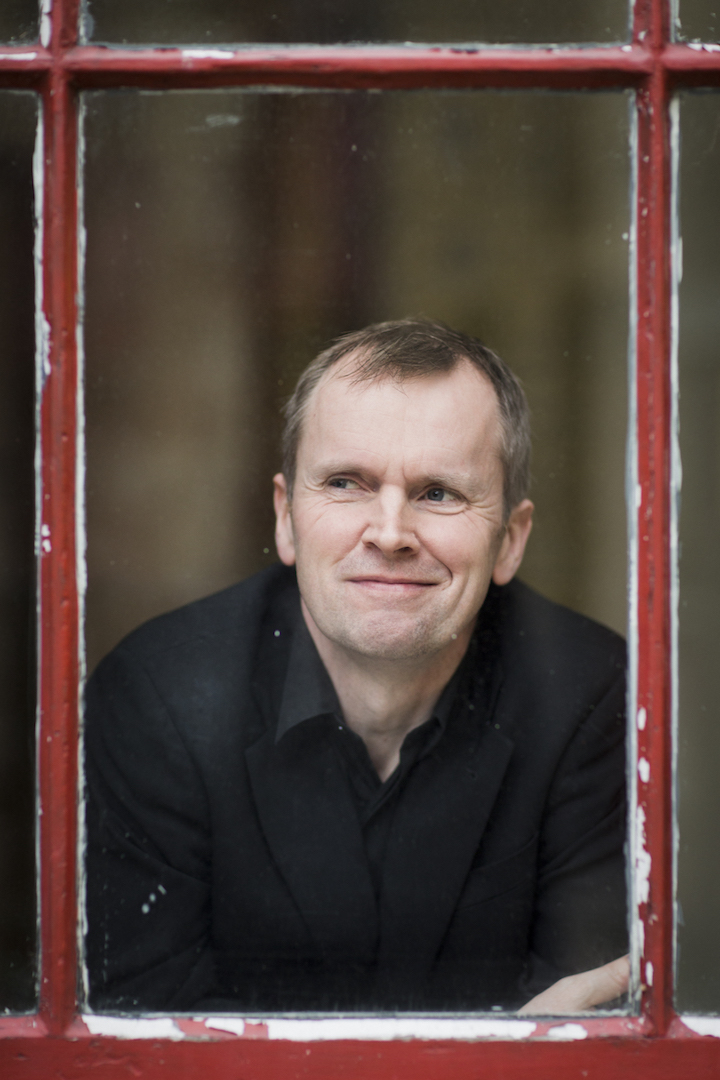
On Record – Royal Liverpool Philharmonic Orchestra / Domingo Hindoyan – Debussy, Dukas & Roussel (Onyx Classics)

Debussy Prélude à l’après-midi d’un faune L86 (1894); Jeux, L133 (1912)
Dukas La Péri (1911)
Roussel Bacchus et Ariane Op.43 – Suite no.2 (1931)

Royal Liverpool Philharmonic Orchestra / Domingo Hindoyan

Onyx Classics ONYX4224 [68’07″’]
Producer Andrew Cornall Engineers Philip Siney, Christopher Tann
Recorded 20-21 January, 24, 25 & 27 February 2022 at Philharmonic Hall, Liverpool

Reviewed by Richard Whitehouse

What’s the story?

Domingo Hindoyan’s first release as Chief Conductor of the Royal Liverpool Philharmonic Orchestra is a sequence of French ballet music which stretches across almost three decades, taking in that broad stylistic succession from Impressionism to Neo-Classicism as its remit.

What’s the music like?

Belatedly acknowledged as one of the defining masterpieces from the 20th century, Debussy’s Jeux is more familiar in the concert hall, where its myriad of formal subtleties and expressive nuances can more fully be savoured. Without ever feeling rushed, Hindoyan’s take is an alert and impulsive one – lacking just a last degree of mystery in its opening and closing pages, but with its larger sections maintaining a flexible momentum and those calmer interludes exuding a tangible expectancy. A reading, then, which would rank high on any shortlist of recordings.

Almost two decades on, Roussel’s Bacchus et Ariane ballet inhabits a very different aesthetic. Effectively its second act, the Second Suite is not lacking for any sensual appeal – witness the interplay of violin and viola in its ‘Introduction’ (eloquently rendered by Thelma Handy and Nicholas Bootiman), or mounting fervour of The Kiss then ingratiating poise in Dance of Ariadne and Bacchus. Hindoyan has their measure, duly taking the final Bacchanale at an impetuous if never headlong tempo that builds to an apotheosis of finely controlled abandon.

Although it achieved notoriety via Nijinsky’s choreography (and dancing) in 1912, Debussy’s Prélude à l’après-midi d’un faune was fully established as a game-changer in Western music – its opening flute melody (languidly played by Cormac Henry) setting in motion a sequence of episodes whose content is only marginally less remarkable than those seamless transitions between them. Ensuring an unbroken continuity, Hindoyan summons a response of unforced rightness in music whose essence is only made explicit as the last notes resonate into silence.

Finally, to Dukas and La Péri which proved his final work of any real consequence. After its brass delivers a lusty rendering of the Fanfare, the orchestra makes the most of this ‘poème dansé’ – whether in its crepuscular initial stages, the sweeping melody that duly comes to the fore then that orgiastic passage which sets in motion a gradual if unfaltering approach toward the main climax. Suitably uninhibited here, Hindoyan rightly places greatest emphasis on the ensuing postlude – its mingled radiance and regret surely as affecting as any music of this era.

Does it all work?

Yes, in terms of individual works. Hindoyan is evidently at home in this music, and the RLPO clearly relishes playing music not at the forefront of its programmes during recent years. The Roussel seems a little out of context, those ‘symphonic fragments’ from his earlier ballet Le festin de l’araignée would have been more appropriate, with Debussy’s Prélude replaced by Ravel’s Valses nobles et sentimentales for a cohesive selection of French ballet music from just before the First World War. Hopefully Hindoyan will tackle these pieces in due course.

Is it recommended?

Indeed. The RLPO’s playing is abetted by the spaciousness and definition of sound obtained from Liverpool’s Philharmonic Hall, and Andrew Stewart pens succinctly informative notes. The association between orchestra and conductor looks set to go from strength to strength.

Listen

For more information on this release, and for purchase options, head to the Onyx Classics website. For more on the artists, head to the websites of the Royal Liverpool Philharmonic Orchestra and their principal conductor Domingo Hindoyan.

In concert – CBSO / Mirga Gražinytė-Tyla: The Sea – Britten, Adès, Weinberg & Debussy

Britten Four Sea Interludes from Peter Grimes, Op. 33a (1945)
Adès The Exterminating Angel Symphony (2020)
Weinberg Jewish Rhapsody, Op. 36 No. 2 (1947) [First public performance]
Debussy La mer (1905)

City of Birmingham Symphony Orchestra / Mirga Gražinytė-Tyla

Symphony Hall, Birmingham
Wednesday 28 September 2022

Reviewed by Richard Whitehouse

This afternoon concert by the City of Birmingham Symphony Orchestra found Mirga Gražinytė-Tyla at the helm for her first concert as the orchestra’s principal guest conductor in what was a varied programme featuring music of (more or less) Jewish emphasis framed by evocations of the sea.

The Four Sea Interludes that Britten extracted from his opera Peter Grimes invariably makes a worthwhile concert-opener, not least with Dawn as hauntingly poised as this. MG-T drove Sunday Morning hard, so that the cross-rhythmic interplay between wind and strings came close to decoupling, but there was no lack of atmosphere either here or in Moonlight where a sense of emotional disintegration was almost tangible. Storm was as relentless and, in its latter stages, imploring as the music requires – hurtling forth toward a close of brutal finality.

Next, a revival of The Exterminating Angel Symphony as derived from the eponymous opera by Thomas Adès, commissioned and premiered by the CBSO last August. As previously, its four sections feel more a symphonic suite than symphony per se – the whole still amounting to more than the sum of its constituent parts. MG-T secured a virtuoso response – whether in the encroaching expressive ambivalence of Entrances, or relentless build-up and malevolent aura of March. Berceuse remains uninvolving in emotional content despite the allure of its scoring, while Waltzes provides a suavely ingenious finale in its inexorable motion towards catastrophe. It would be hard to imagine a more committed or convincing account, such that the composer – making one of his rare appearances as a non-performer – looked well pleased.

After the interval, MG-T continued her advocacy of Mieczysław Weinberg in what was billed as a ‘first public performance’ for his Jewish Rhapsody. One of various pieces at a time when Soviet composers attempted (inevitably unsuccessfully) to placate officialdom with music of an outwardly populist nature, it forms the middle part of a Festive Scenes trilogy only recently located in its entirety. Beginning with an affecting melody for flutes it proceeds, via solos for clarinet and violin, to sombrely eloquent music (a little akin to that of Kodály’s folk-inspired works from the 1930s) which gains in energy until breaking out in dance-music of decidedly manic cast – a recall of the initial melody on flute then oboe leading to the headlong pay-off. Superbly rendered by the CBSO, this is no mean discovery and warrants repeated hearings.

Finally, to La mer – a piece of which this orchestra has given many memorable performances over the decades, and which did not disappoint here. If the opening stages of From Dawn to Midday on the Sea were a little tentative, the theme for divided cellos was finely articulated and the apotheosis powerfully wrought. Play of the Waves had no lack of capriciousness or delicacy, while Dialogue of the Wind and the Sea duly contrasted those visceral and poetic elements towards a peroration that never lost sight of the essential pathos within its triumph. An impressive close, then, to a concert such as gave notice of the continued rapport between orchestra and conductor. MG-T returns next week for an equally diverse selection with Sheku Kanneh-Mason in Haydn and the CBSO’s own Marie-Christine Zupancic in more Weinberg.

You can read all about the 2022/23 season and book tickets at the CBSO website. You can visit Mirga Gražinyte-Tyla‘s website here – and for further information on Weinberg or Adès, click on the composer names

BBC Proms #44 – Soloists, BBC Symphony Chorus & Orchestra / Sakari Oramo: Ethel Smyth ‘Mass’ & Debussy ‘Nocturnes’

Prom 44 – Nardus Williams (soprano), Bethan Langford (mezzo-soprano), Robert Murray (tenor), Božidar Smiljanić (bass), BBC Symphony Chorus, BBC Symphony Orchestra / Sakari Oramo

Debussy Nocturnes (1897-9)
Smyth Mass in D (1891, rev. 1924) [Proms premiere]

Royal Albert Hall, London

Saturday 20 August 2022

Reviewed by Richard Whitehouse Photos (c) Chris Christodoulou

His third Prom this season found Sakari Oramo conducting the BBC Symphony Orchestra in an unlikely yet, in the event, thought provoking double-bill of pieces composed at either end of the same decade and which duly played to the strengths of all those who were taking part.

The music of Ethel Smyth has been a prominent feature of this season and while her Mass in D comes too early in her career to be considered ‘mature’, it does evince many of those traits as defined the operas that followed. Written during a brief flush of adherence to Anglicanism, this is demonstrably a concert rather than liturgical setting (which makes its apparent status as the first Mass heard publicly in England for almost 300 years the more ironic) and, moreover, one of a ‘symphonic’ rather than ‘solemn’ conception despite the audible debt to Beethoven.

Smyth reinforces this aspect by placing the Gloria at the close – thereby making it the finale of a sequence in which the Kyrie, building gradually to a baleful climax before returning to its initial sombreness, becomes an extended introduction to the Credo whose numerous sub-sections facilitate a sonata-form design of no mean formal cohesion and expressive breadth. For their part, the Sanctus, Benedictus and Agnus Dei function as extended slow movement whose (for the most part) emotional restraint enables the soloists to come to the fore – after which, the Gloria takes its place as a finale not least in terms of drawing on previous themes and motifs through to the forceful though never merely bathetic culmination. That Smythe did not essay a symphony given her evident structural command seems the more surprising.

Tonight’s performance was no less assured than that which Oramo gave at the Barbican (and subsequently recorded, albeit with different soloists) three seasons ago. The soloists made the most of their contributions – Nardus Williams bringing a plaintiveness and elegance that was ideally complemented with Bethan Langford’s warmth and understated fervency, and though Robert Murray’s ardency showed signs of strain, he was no less ‘inside’ his part than Božidar Smiljanić, whose solo was more affecting for its burnished eloquence. The BBC Symphony Chorus responded as one to the full-on contrapuntal writing of those main movements, while Richard Pearce ensured the (too?) extensive organ part did not muddy the orchestral textures. Oramo directed with clear enjoyment a work that, for the most part, justified its 62 minutes.

In the first half, Oramo presided over a searching account of Debussy’s Nocturnes – its three movements still sometimes encountered separately but far more effective heard as a complete entity. Not its least impressive aspect was the ease with which these followed on from each other with a cumulative inevitability – the fugitive shading of Nuages (melting cor anglais playing by Helen Vigurs) leading to the half-lit activity of Fêtes, with its darting gestures and a central march-past of vivid understatement, then on to the sensuous allure of Sirènes.

As enticing as the women’s voices of the BBCSC sounded in this closing movement, it was the fervency with which Oramo infused its recalcitrant content such as made it the natural culmination of the sequence – the final bars dying away with a tangible sense of fulfillment.

Click on the artist names for more information on Nardus Williams, Bethan Langford, Robert Murray, Božidar Smiljanić and Sakari Oramo and for more information on the BBC Symphony Orchestra head to their website. For more on composer Dame Ethel Smyth, click here

Summer heat – Debussy’s Prélude à l’aprés-midi d’un Faune

by Ben Hogwood Picture – Impression: Sunrise by Claude Monet

As our UK-based readers will know, England is bracing itself for what could be the hottest week on record. With that in mind, I began thinking of musical evocation of hot weather, and each time I kept on coming back to Debussy‘s influential masterpiece of 1894, the Prelude à l’après-midi d’un faune.

Few orchestral works create such an immediate heat haze, but with one deceptively languid flute solo Debussy set the scene, against a cushion of sunbathed strings and soporific, enchanting woodwind.

I remember playing this piece as an orchestral cellist and falling under the spell of the music, with its rich harmonies and persuasive melodies. Debussy’s mature style was established here – revealing an uncommon ability to tug at the senses and lull the brain at his command. Bask in the sunshine and enjoy!

In concert – Sunwook Kim, CBSO Youth Chorus, CBSO / Mihhail Gerts: Kodály, Rachmaninoff, Debussy & Stravinsky

Mihhail-Gerts

Kodály Dances of Galánta (1933)
Rachmaninoff
Rhapsody on a Theme of Paganini, Op. 43 (1934)
Debussy
Nocturnes – Sirènes (1899)
Stravinsky
The Firebird – Suite (1919)

Sunwook Kim (piano, below), CBSO Youth Chorus, City of Birmingham Symphony Orchestra / Mihhail Gerts

Symphony Hall, Birmingham
Thursday 17 February 2022

Written by Richard Whitehouse

As Mihhail Gerts (taking over at short notice from Lionel Bringuier) said in his initial remarks, all four pieces in this concert by the City of Birmingham Symphony Orchestra were written by composers born within 20 years of each other and made for some intriguing interconnections.

Youngest of these composers, Kodály’s piece was on one level the most traditional – Dances of Galánta looking back to the Hungarian Rhapsodies of Liszt with its bringing together folk melodies in a free flowing fantasia whose larger paragraphs were judiciously shaped by Gerts so that a cumulative overall structure was always evident. The CBSO responded with alacrity to Kodály’s vivid if sometimes workaday orchestration, Oliver Janes making the most of the clarinet solo as stealthily sets the course for all that follows through to a teasing final pay-off.

By the time of Rhapsody on a Theme of Paganini, Rachmaninoff’s music had all but shed its earlier opulence for a tensile, even sardonic quality pointing up expressive contrasts between the 24 variations which fall naturally while ingeniously into a three-movement continuity. It helped that Sunwook Kim constantly brought out those subtle changes of emphasis to which the theme is put, not least when combined with the Dies irae plainchant as if to underline the darker ambivalence at work in this music. That said, the 16th and 17th variations might have been probed even more deeply, so making the famous 18th more affecting in its catharsis, but the six variations of the ‘finale’ headed with unfailing panache to the suitably deadpan close – Kim responding to the enthusiastic applause with a limpid take on Brahms’s Intermezzo in A.

Whether or not it was the earliest piece to use wordless voices as a facet of the orchestration, Debussy’s Sirènes provided a template for numerous comparably innovative works across the next quarter-century and beyond. Gerts was scrupulous as to his enfolding of the textural strands into a cohesive and diaphanous whole; one to which the CBSO Youth Chorus made a suitably ethereal contribution. Nor was this too passive a reading as it moved with notably restive intent toward a culmination which brought a necessary measure of emotional repose.

But (and to misquote Ronald Reagan’s immortal words) ‘where was the rest of it’? Debussy’s Nocturnes being as integrated a triptych as his later La Mer or Ibéria, it seemed unfortunate to jettison Nuages and Fêtes – especially as they would have added no more than 15 minutes to a relatively short programme rounded off with Stravinsky’s The Firebird. This was heard in its 1919 suite, currently returning to favour given the over-exposure of the complete ballet over recent decades. Gerts duly encouraged the CBSO to give its all – whether in the sombre Introduction and a dextrous Dance of the Firebird, the affecting poise of The Princesses’ Khorovod or animated virtuosity of Kashchei’s Infernal Dance, then a Berceuse of real pathos as merged seamlessly into a Finale which conveyed the necessary emotional frisson.

A fine showing for Gerts who, as artistic director of the TubIN Festival, ought to be invited to schedule the Estonian’s Sixth Symphony on a future appearance. The CBSO returns next week in a concert featuring a UK premiere for R. Nathaniel Dett’s oratorio The Ordering of Moses.

For more information on the next CBSO concert, visit their website. Meanwhile click on the links for information on conductor Mihhail Gerts and Sunwook Kim.