
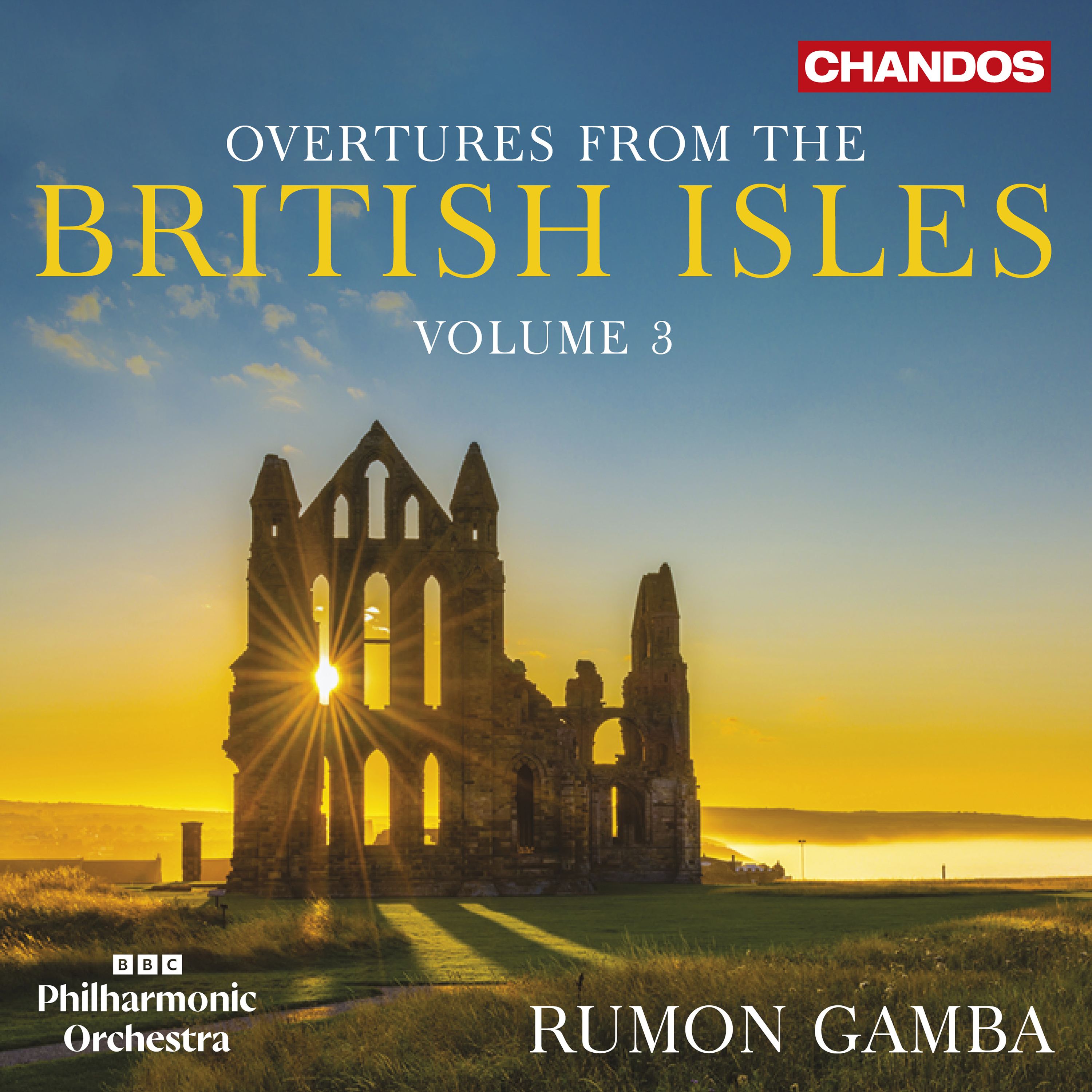
BBC Philharmonic Orchestra / Rumon Gamba
Arnell The New Age, Op. 2 (1939)
Brian The Tinker’s Wedding (1948)
Bridge Rebus H191 (1940)
Britten orch. Colin Matthews Overture to ‘Paul Bunyan’ Op.17 (1941)
A. Bush Resolution Op.25 (1944)
G. Bush Yoric (1949)
Fenby Rossini on Ilkla Moor (1938)
Jones Comedy Overture (1942)
Orr The Prospect of Whitby (1948)
Parker Overture to ‘The Glass Slipper’ (1944)
Rawsthorne Street Corner (1944)
Chandos CHAN20351 [77’20’’]
Producer Jonathan Cooper Engineer Stephen Rinker, Philip Halliwell
Recorded 23 May (Arnell, Brian, Britten, G. Bush, Rawsthorne), 20 November (Parker), 21 November 2024 (Bridge, A. Bush, Fenby, Jones, Orr) at MediaCityUK, Salford, Manchester
Reviewed by Richard Whitehouse
What’s the story?
Chandos continues its series devoted to British Overtures with the third instalment featuring three first recordings among those eleven works which, between them, demonstrate just how significant to British concertgoing was this now neglected genre throughout the inter-war era.
What’s the music like?
The album gets off to a cracking start with The Tinker’s Wedding – Havergal Brian’s overview of a play by J. M. Synge, by turns uproarious and ruminative, that duly launched his abundant Indian Summer. After this, Geoffrey Bush’s Yorick cannot help sounding well-behaved if with sufficient expressive contrast for an evocative portrayal of Shakespeare’s hapless jester. In his detailed booklet note, Lewis Foreman describes Alan Rawsthorne’s Street Corner as ‘‘largely forgotten’’, which is a pity given its vivid conjuring of time and place has dated as well as the best Ealing Comedy. If Daniel Jones’ take on its subject may be less memorable, his Comedy Overture exudes more than enough humour and intrigue to make its acquaintance worthwhile.
Frank Bridge’s last completed work, Rebus was unheard for decades after its premiere but this third recording confirms it as a minor masterpiece and the finest of all these pieces – not least as an object-lesson in being accessible without diluting individuality. Robin Orr first attracted attention with The Prospect of Whitby, and his bracingly resourceful evocation of the London pub should not have waited so long for its recording. Richard Arnell was clearly out to make a statement of intent with The New Age, which generates real energy between imposing outer sections. Benjamin Britten might not have intended to preface his operetta Paul Bunyan with an overture but, as realized by Colin Matthews, it leaves a pleasing if anonymous impression.
Far more personality is conveyed by Alan Bush in Resolution, derived from an earlier piece for brass band and which continues that dialectical facet evident in much of his earlier music through its contrapuntal dexterity. There could be no greater contrast than The Glass Slipper, Clifton Parker’s overture to Herbert and Eleanor Farjeon’s ‘fairy tale with music’ that found success as a Christmas Matinee in London’s West End. Most appealing for its slightness and knowingly fey charm, it ideally complements Rossini on Ilkla Moor – Eric Fenby’s ingenious homage to the Italian master which came about through (deliberate?) misunderstanding only to enjoyed frequent performance, and which entertainingly rounds off the present collection.
Does it all work?
Yes, whether in terms of the overtures heard individually and a continuous overall sequence. Those who have acquired those previous volumes (or Chandos’s two issues of British Tone Poems) will recall that Rumon Gamba favours predominantly swift tempos and so it proves here, though there is never a sense of this music unnecessarily being rushed, while the BBC Philharmonic is more than equal to the often considerable technical demands of each piece. None of those overtures previously recorded can surely have emerged so effectively as here
Is it recommended?
Indeed it is. The continued absence of overtures from the programmes of most UK orchestras means such pieces have little chance of reaching a new public other than with recordings, and there could be no greater incentive to get to know them than through a collection such as this.
Listen / Buy
You can hear excerpts from the album and explore purchase options at the Chandos website, or you can listen to the album on Tidal. Click to read more about the BBC Philharmonic Orchestra and conductor Rumon Gamba
Published post no.2,794 – Tuesday 10 February 2026
 Arcana.fm