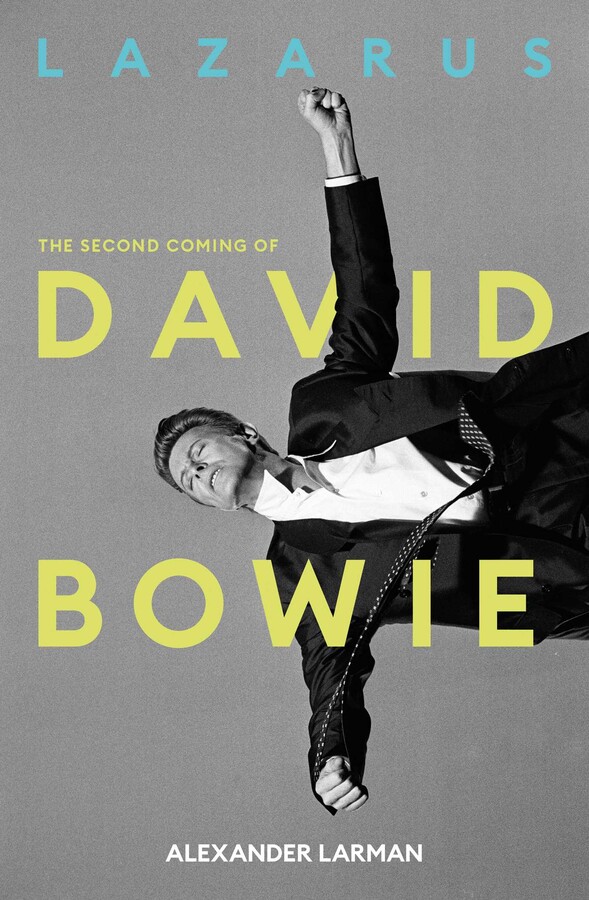
On Paper – Lazarus: The Second Coming of David Bowie by Alexander Larman

Lazarus: The Second Coming of David Bowie
by Alexander Larman
New Modern 2026 (hardback 432 pages, ISBN: 9781917923446)

Reviewed by John Earls

On 25 June 2004 David Bowie suffered a near-fatal heart attack whilst on stage in Scheeßl in Germany. Alexander Larman begins his absorbing new book Lazarus: The Second Coming of David Bowie by contemplating what might have happened had Bowie died in 2004 and what this might have meant for his reputation.

Bowie had been in the middle of a comeback following a much-praised Glastonbury headlining performance in 2000 and had released the albums Heathen (2002) and Reality (2003). Whilst something of a bounce back from the embarrassment of his late 1980s output, Reality wasn’t his best work nor would it have been an appropriate memorial to such a great artist who would chiefly be remembered for his outstanding achievements of the 1970s and early 1980s.

Of course, Bowie didn’t die in 2004. He went into a period of retirement and recovery and came back with The Next Day album in 2013 and the exceptional Blackstar album, which was released on 8 January 2016, Bowie’s 69th birthday. Two days later Bowie died of liver cancer.   

In a bid to challenge the common marginalisation of a significant chunk of Bowie’s latter-day career, Larman presents this book as “the pensive B-side to the triumphant A-side of his heyday”. It is an illuminating delve into this particular chapter of Bowie’s life. Comprehensively researched and drawing on many interviews and reviews of the time, it also features some important and revealing original contemporary interviews. Not least of these are those with Reeves Gabrels – “the man who would become [Bowie’s] most consistent, and important, collaborator throughout the 1990s” and the pianist Mike Garson, who first worked with Bowie in 1972 and played on many of his albums and tours, who gives some insightful and moving contributions.

The book is mostly structured in chronological order starting with the much-derided Tin Machine project whereby Bowie was a member of the four-piece band formed in 1988. Larman has already reminded us in his prologue of Jon Wilde’s infamous 1991 review of the second Tin Machine album which concludes, “Hot Tramp! We loved you so. Now sit down, man. You’re a fucking disgrace”.

We are also reminded of Bowie’s rather mocking appearance with Tin Machine on Terry Wogan’s BBC TV show in August 1991 – Wogan is reported to have subsequently said that Bowie was the most difficult interviewee he’d encountered. But if Tin Machine is one of the most scorned parts of Bowie’s career, for Larman it was “important for both introducing him to [Reeves] Gabrels and for, in Bowie’s estimation, whetting his almost blunted purpose and teaching him how to be a rock star again”. From here the book takes us through his next phase including the making of Black Tie White Noise (1993) which saw Bowie reunited (less than happily) with Nile Rodgers who had co-produced the hugely successful Let’s Dance album (1983).

The Bowie on Screen chapter looks at Bowie’s film activity in this period including playing Andy Warhol in Julian Schnabel’s Basquiat (1996) and a small part in Martin Scorcese’s Last Temptation of Christ (1988). I was particularly intrigued to discover that when Scorcese was toying with a biopic of George Gershwin, Fred Astaire suggested before his death in 1987 that Bowie was the sole actor who he would allow to play him (Astaire) on screen. This chapter also contains an example of some of Larman’s teases as, in one of a number of Bowie lyric references, he says of Gunslinger’s Revenge (1998) that “the film, unfortunately, is a saddening bore”.

In the chapter on Bowie’s fine art activities, he has the delicious line “It is the prerequisite of every wealthy middle-aged man to have his own boutique publishing business”. This refers to Bowie founding 21, a small fine art publisher that published the book Nat Tate: An American Artist, 1928-1960 by William Boyd, which had a New York launch in Jeff Koon’s studio on 1 April 1998. However, no such artist exists and the hoax was exposed a week later in a gossip column in the New York Herald Tribune. The chapter also covers Bowie’s own exhibition New Afro / Pagan and Work 1975-1995 (1995) – largely pilloried by the critics – and his time on the board of the Modern Painters publication (which he had also written for).

There are also sections on some of Bowie’s other non-musical ventures including the launch of the internet service provider BowieNet in 1998 and the selling of ‘Bowie Bonds’ in 1997, giving investors a share in Bowie’s future royalties for 10 years.

But it is the music that is foremost and Larman walks us through the albums and tours from Tin Machine until Bowie’s “wilderness years”. I was grateful to be reminded of how good the much neglected The Buddha of Suburbia (1993) is and to revisit the best bits of Toy (posthumously released in 2021 but recorded in 2000). I also enjoyed slightly rubbing up against Larman’s own evaluation of some of the albums – I’m not quite as enthusiastic as he is about Outside (1995) or as scathing of Earthling (1997), but these are mostly marginal differences and his general assessments are sound and well argued.

One of the most touching passages of the book concerns a BBC Radio One interview Bowie did with Mary Ann Hobbs in New York on 7 January 1997 to mark his 50th birthday. Questions and tributes from celebrities are presented and subject to banter and then we get a “sudden, fleeting insight into the real, unvarnished David Bowie”. The cause of Bowie’s unguarded few minutes is a recorded personal message from Scott Walker which leaves Bowie speechless before he admits: “You really got me there, I’m afraid…He’s probably been my idol since I was a kid. That’s very moving.” You can hear it for yourself on the internet.

The closing chapters cover Bowie’s extraordinary return to the limelight that was the January 2013 release Where Are We Now with its remarkable and somewhat unsettling video, the subsequent album The Next Day, the opening of the David Bowie Is exhibition at London’s V&A Museum and the theatre musical show Lazarus (premiered in 2015) written with Enda Walsh and directed by Ivan van Hove. The song Lazarus from the show features on Bowie’s final album Blackstar (2016) and was to be the last Bowie single released during his lifetime. The astonishing video made for the track was released on 7 January 2016, three days before Bowie’s death.

Blackstar is the culmination of opinions about Bowie’s albums converging back into universal acclaim. It is unquestionably a masterpiece and all the more incredible knowing the circumstances in which it was made.

Larman acknowledges in a final Bonus Track postscript that he did not have access to the Bowie archive at the David Bowie Centre at the new V&A Storehouse East in east London which opened in September 2025 whilst writing the book. One can only imagine what difference it might have made. Nonetheless, his book is a welcome and original contribution to a less explored period in Bowie’s career and its significance.

John Earls is Director of Research at Unite the Union and posts at @johnearls.bsky.socialon Bluesky and @john_earls on X. You can subscribe (free) to his Hanging Out a Window Substack column here: https://johnearls.substack.com/

Published post no.2,800 – Monday 16 February 2026
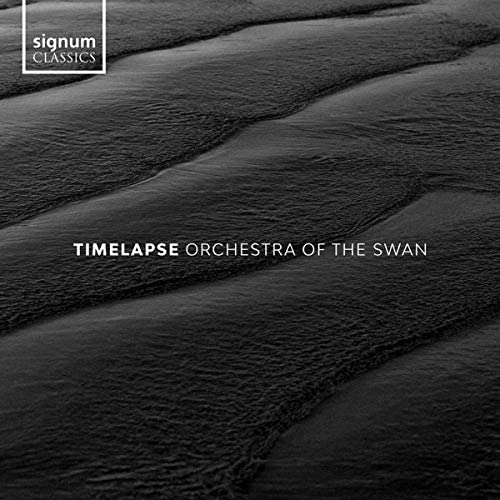
On Record – Orchestra of the Swan: Timelapse (Signum Classics)

reviewed by Ben Hogwood

What’s the story?

Timelapse is a concept album from the Orchestra of the Swan, conductor Bruce O’Neil and its artistic director David Le Page. Together they have created a sequence of works from as far back as the 17th century or as recently as last year, the concept illustrating how music can transcend time. In Le Page’s summary, Rameau and Vivaldi can be seen as fresh contemporaries of Thomas Adès or Radiohead, while the roots to songs from David Bowie and The Smiths are seen to lie in the music of Mahler and Vaughan Williams.

What’s the music like?

Timelapse hangs together as an hour of music perfectly suited to either end of the day. Its sequence is an imaginative one, and it hangs together in the way Le Page indicates thanks to the quality of his arrangements. There are no syrupy cover versions here; instead a song like Bowie’s Heroes is reduced to its bare elements. In the orchestra’s hands it becomes a contemplation on the original, a free improvisation from the flickering string ensemble complemented by icy droplets of melody from the harp.

The Smiths’ There Is A Light That Never Goes Out has similar qualities, though the substitution of an oboe for Morrissey’s voice, while beautifully played, is arguably less effective. Radiohead’s Pyramid Song fares better.

The ‘older’ music, as Le Page suggests, dovetails beautifully. François Couperin’s Les Barricades Mystérieuses and a sequence from Rameau’s Les Boreades work really well, while the addition of Trish Clowes’ saxophone to Vivaldi’s music for Sleep 1 is a nice touch, her recitative sensitively done.

The cold, spidery figurations of Schubert’s Sleep Softly – a meditation on his Serenade by Le Page – cut to a robust, bluesy solo, while the Couperin segues rather nicely to Steve Reich’s Duet and Thomas Adès O Albion, a chamber-music alternative to the Enigma Variations’ Nimrod, drawn from his Arcadia string quartet.

At the close of the set, Errollyn Wallen’s Chorale contains both soothing textures and an impassioned, wordless plea, while the last of Górecki’s Three Pieces in Old Style has a moving simplicity harking back over centuries, illustrating Le Page’s point rather nicely.

Does it all work?

Everything fits together nicely, the overall mood one of contemplation in the half light. I found the phrasing on Grieg’s Air a bit rushed at times, but that is personal taste of course – and when you’ve got round the idea of an oboe replacing Morrissey’s voice on There Is A Light That Never Goes Out you’ll agree that it works rather well.

Is it recommended?

Enthusiastically. There is a great need at the moment for music to soothe the fevered brow, and Timelapse is an effective playlist fulfilling that function every time you listen to it.

Stream

Buy

You can buy the album from the Signum Records website

On record – Aurora Orchestra / Nicholas Collon: Music of the Spheres (DG)

Pekka Kuusisto (violin), Iestyn Davies (countertenor), Sam Swallow (vocalist), Aurora Orchestra / Nicholas Collon

Mozart Symphony no.41 in C major K551 ‘Jupiter’ (1788)
Richter Journey (CP1919) (2019)
Dowland arr. Muhly Time Stands Still (1603)
Adès Violin Concerto ‘Concentric Paths’ (2005)
Bowie arr. John Barber Life on Mars? (1971)

Deutsche Grammophon 4838228 [69′]

Recorded 9 June 2019, Maida Vale Studio 1, London

Written by Ben Hogwood

What’s the story?

Only the Aurora Orchestra could put together an album running from Mozart to David Bowie. Yet as we have seen from their previous themed releases such as Insomnia and Road Trip, there are no gimmicks involved in their musical choices and a clear theme runs through the programming.

Music of the Spheres is no exception, beginning with Mozart’s Jupiter symphony before music from Max Richter (Journey), Dowland via Muhly (Time Stands Still) and the Violin Concerto of Thomas Adès, subtitled Concentric Paths. The soloist here is Pekka Kuusisto, while the Aurora play the Jupiter symphony entirely from memory, as they did in the BBC Proms in 2016.

What’s the music like?

There is something for everyone here. Mozart’s Jupiter symphony is his 41st and final essay in the genre, setting a new bar for the form when it was completed. While the first three movements are particularly fine it is the finale that comes in for the greatest acclamation, for its well-nigh perfect fusion of melody and counterpoint.

Richter’s Journey CP1919, is inspired by and named after the discovery of the first Pulsar star. It fits perfectly onto the tail of the Mozart, running at a slow speed and operating in C minor rather than the earlier piece’s key of C major.

By contrast Adès’ Concentric Paths operates in a wider orbit, the violin soaring at great heights over the compelling orchestral writing, which has in its spiralling strong echoes of the music of Benjamin Britten. As soloist Pekka Kuusisto has described, ‘it’s hyper-emotional music for people in an accelerating world’.

Complementing these instrumental pieces are two songs of identical length but very different form – a serene early 17th century song from Dowland and one of the best-known pop songs of the 20th century. Having heard from Jupiter and CP1919, Sam Swallow asks, to effective arranged accompaniment, is there Life On Mars?

Does it all work?

Pretty much! The Jupiter gets an athletic performance from the Aurora Orchestra – no dallying here, or lingering on expressive notes. That does mean a darkening of the slow movement, and maybe some constricted phrases, but by contrast it means an exciting first movement, a mysterious Menuetto and a lithe finale, busy and brilliantly played.

The Richter is haunting and really effective, its simplicity leaving the orchestra plenty of room to create a remote atmosphere. The songs are great too – Iestyn Davies is the perfect choice for the Dowland, with Nico Muhly’s sensitive orchestration, while Sam Swallow puts his own stamp on Life on Mars? without losing the essence of the original, which is an impressive achievement.

Yet the performance I kept coming back to was Pekka Kuusisto’s white-hot rendering of the Adès. This is terrifically difficult music to play, but he makes it sound easy even at the highest points of the violin range, and the moods range from serenity to power and even anger as the music moves relentlessly forwards. On occasion I have to admit I find Thomas Adès music hard to relate to emotionally, but this is a clear exception and the music digs deep.

Is it recommended?

Yes. The Aurora’s albums are great at bringing music of very different origins together, exposing new elements and old qualities, and it does so again here. Freshly minted Mozart and brilliantly played contemporary works, plus a good deal of imagination. What’s not to love?

Listen

Buy

You can purchase this recording from various digital outlets via the Presto website

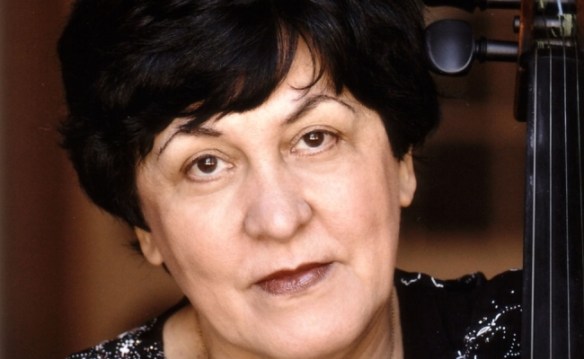
Friendly Fire – Natalia Gutman, London Philharmonic Orchestra / Vladimir Jurowski

natalia-gutmanFriendly Fire – Natalia Gutman (above), London Philharmonic Orchestra / Vladimir Jurowski

Royal Festival Hall, London; Wednesday 27 January 2016

Welcome to Arcana’s new ‘alternative’ reviews slot! It is an ‘ask the audience’ feature – where I (Ben Hogwood) take a friend / colleague who doesn’t normally attend a classical concert and get them to review it in the bar afterwards. First up is Tony Winter, a young-at-heart 50-something from Watford, who shares his thoughts on a program of Schnittke (Pianissimo), Shostakovich (Cello Concerto no.2) and Bruckner (Symphony no.3 – original version)

tw

Arcana: How did you prepare for this concert?

Tony: Well I had a shave (d’oh! – Ed) No, I’ve been playing some recordings of the Shostakovich and a little bit of the Bruckner. Not the Schnittke, which was a bit of a surprise! I haven’t done an enormous amount of preparation.

What was your musical upbringing?

I had a brief encounter with the violin which I never really got on with – I didn’t get on with the teacher – and then when I was about 13 the guitar, but that was rock music. I played the guitar for years. When I retire it’s going to come out again! I played in a band called The Committee, but to be fair by the time they’d risen to fame they’d chucked me out!

Name three musical acts you love and why:

I love Bach, just because of the melodies. I think you can look at other people and say the orchestration is great but for me the genius is the melody. James Rhodes says ‘the immortal Bach’, which sums it up.

I’ve been playing a lot of David Bowie recently with his demise, I was a big fan of Bowie up to about the Let’s Dance era, and now suddenly I’ve been playing some of the later albums as I’ve been guilty of overlooking some of them. I don’t like it when it gets too commercial! But I think later on he was saying that he didn’t give a shit, which is an approach I’ve always liked.

The Outside album was described as ‘difficult and industrial’ but I think it’s great. I wonder in 200 years if people will be playing Bowie? He died at the same age as Shostakovich but who knows? Only time will tell. How many people were on stage tonight, over 100? I’m sure everyone would be using that if there weren’t cost implications to it!

I don’t know whether to say the Rolling Stones or Mozart for the third!

Have you been to classical music concerts before, and if so what has been your experience?

I’ve been to a few over the years – I’ve even started going to a few operas! Living close to the Watford Colosseum I’ve been going to concerts there as I’m a bit of a lazy bugger. I tend to go to any classical concerts they put on there. I’ve seen Beethoven’s 9th at Westminster Abbey, but that was a bit echoey!

James Rhodes sticks in the mind for his more modern presentation which particularly appealed to my kids. They’re learning the piano so that helped but it helped that he stood up and made a few jokes. I’m not saying everyone has to turn into a variety act but he judged it right. I like sitting at the front in an intimate gig, but coming here tonight though I think I should drag my sorry arse into London more as I don’t think you could fit that orchestra on the stage in Watford!

What did you think of the Schnittke?

I think I’d have to give it a few more listens. It did somewhat sound like they were tuning up for a while, and I’m not sure I liked the screeching of the flute over the top. Parts of it were interesting though, and when the violins came in quietly and slowly it almost sounded like a Jimi Hendrix track where he’s playing the guitar backwards. There were elements of it that appealed to me, and I will definitely investigate more. It didn’t grab me by the throat.

What about the Shostakovich?

I enjoyed that for a variety of reasons. Because I had prepared by having a few versions on in the background it had sunk in a bit, and then when you’re actually watching it live you’ve got to concentrate on it, and I thought Natalia Gutman was obviously really fantastic. It was an interesting piece and I really enjoyed it.

What about the Bruckner?

I did enjoy it but it was a different version to the one I’d been playing. It felt like it was building up to the end for a while! When I was listening to it at home I thought there were echoes of Beethoven in it, but listening to it tonight he was heavily influenced by Wagner and I could hear that. It wasn’t as melodic as some of the Beethoven symphonies, and I wasn’t overwhelmed by it.

I don’t think Bruckner will be one of my favourites, but then again, maybe I need to go back and listen to it! It was fantastic seeing an orchestra of that size, with ten double basses. As a bit of a hi-fi geek, you think that’s what it should sound like!

What about the environment and setting of the concert, and how it was promoted?

Well they didn’t get me down here, you did! I do feel strongly about this though because at the Watford Colosseum you go down there, and they’re absolutely fantastic, and the place is quarter full. You think why is this, as it’s fantastic value for money and there are as many people on stage as in the audience!

The Royal Festival Hall is very nice though and before the concert the youth musicians of the London Philharmonic Orchestra, The Foyle Future Firsts, were great. They were playing Shostakovich’s incidental music to Hamlet, and Vladimir Jurowski got up and talked about the piece and gave us loads of facts about it for ten minutes before they played. I was hugely impressed by that, it was really nice to see and the musicians were great. It was well worth the effort getting down here early!

Arcana’s brief thoughts on the concert:

A really rewarding evening which represented great value with a concert that lasted two and a half hours. The Schnittke, as Tony says, sounded a bit like an excerpt from a horror movie.

The Shostakovich was deeply considered by Natalia Gutman, who did not play with great volume but who managed to project her thoughts to a spellbound audience. She is one of the great surviving musicians from Shostakovich’s era, and it was a humbling experience to see her play – she may have missed one particularly crucial entry in the finale but her thoughts elsewhere were extremely profound.

Finally the Bruckner, a real tour de force – and a superb account from the orchestra and the brass in particular. This is one of Bruckner’s wildest symphonies, full of ideas that are not always controlled, and Jurowski projected the tension between instinct and adhering to symphonic form. The triumphant end was well-earned.