A Russian Song and Dance – a varied program of Shostakovich, Musorgsky and Glazunov from the BBC Scottish Symphony Orchestra and Ilan Volkov

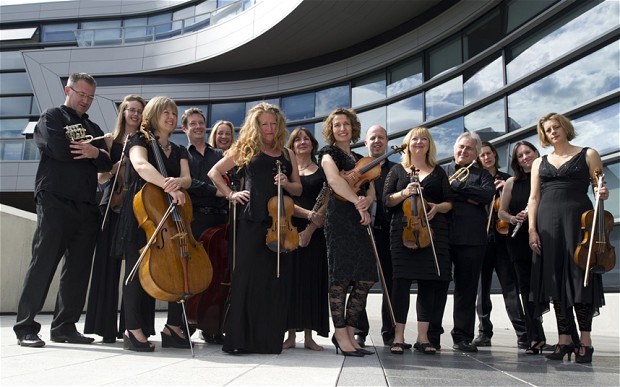
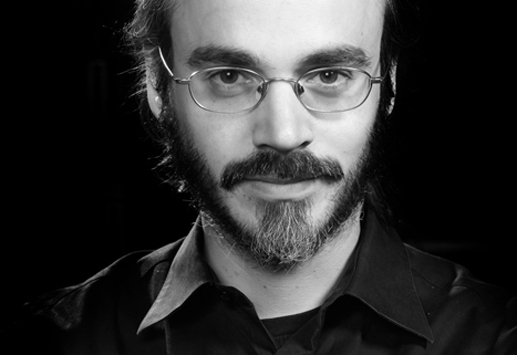
Yuri Vorobiev (bass voice), BBC Scottish Symphony Orchestra / Ilan Volkov (pictured) – City Halls, Glasgow, live on BBC Radio 3, 5 February 2015
Listening link (opens in a new window):
http://www.bbc.co.uk/programmes/b050xqzs
on the iPlayer until 6 March
For non-UK listeners, this Spotify playlist is available.
With no recordings of this music made by the BBC Scottish Symphony Orchestra to date, I have chosen suitable alternatives:
What’s the music?
Shostakovich – a selection from King Lear (1971) (18 minutes)
Musorgsky – Songs and Dances of Death (1875-1877) (18 minutes)
Glazunov – The Seasons (1900) (38 minutes)
What about the music?

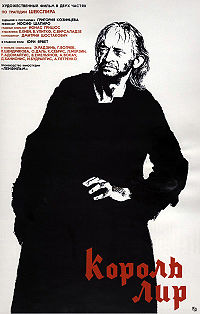
A poster for the 1971 Grigori Kozintsev’s King Lear
Russian composers took frequent inspiration from the works of Shakespeare, especially Tchaikovsky and Prokofiev, responsible for arguably the two most famous interpretations of Romeo and Juliet. Shostakovich wrote a mass of film and ballet scores, but only encountered The Bard twice – once in Hamlet and twice in the darkly scored King Lear – for the stage in 1940 and then in 1971 for Grigori Kozintsev’s film.
Musorgsky wrote Songs and Dances of Death, his last and most popular song cycle* for voice, between 1875 and 1877, but he did not live to be old enough to orchestrate the four songs. The collection was orchestrated initially by Glazunov and Rimsky-Korsakov, who worked together in making a number of the composer’s scores fit for orchestral purpose. Shostakovich himself arranged a version in 1962, but here the conductor Ilan Volkov opts to use a ‘cleaner and simpler’ version by Edison Denisov from 1982.
As to the texts, they are each a nail in the coffin – but Lullaby, Serenade, Trepak and The Field Marshal do on occasion have slightly lighter moments, the rich timbre of the Russian bass is offset by gallows humour from the accompaniment. The texts are difficult – a mother’s last vigil over an infant in Lullaby, with death standing at the door, then the story of a terrible courtship in Serenade, an apparition in a forest for Trepak and finally, famously, The Field Marshal, who surveys his dead soldiers as though in victory.
Glazunov is often looked down on by people outside of the history of Russian music, regarded as an inferior composer to those around him such as Rachmaninov or his teacher Rimsky-Korsakov. Yet he had a big part to play in the country’s musical history and was hugely admired by Shostakovich and Prokofiev if not Stravinsky. As well as teaching and conducting he wrote nine symphonies, ballets, concertos and a number of orchestral pieces – The Seasons among them. As Ilan Volkov says in a brief interview before the performance here, Glazunov is in effect a bridge between Tchaikovsky and Stravinsky where ballet is concerned. As you will hear from this work, there is rarely anything less than a hummable tune!
Glazunov opts to begin with the Spirit of Winter, expressed through dance variations for Frost, Ice, Hail and Snow that have orchestral touches similar to those used by Tchaikovsky in The Nutcracker. The music gets warmer as Spring arrives, then positively bathes in the Summer sunshine, before the big tune of the whole evening is revealed at the onset of Autumn. Not for Glazunov the bleakness of the trees stripped bare – rather he prefers to celebrate the leaves whirling around his head!
Performance verdict
A really well thought out program from the typically enterprising Ilan Volkov, leading his BBC Scottish Symphony Orchestra charges in a powerful concert. The Shostakovich is dark and rather foreboding, and although lacks the intensity of the composer’s symphonies it still carries some of his distinctive musical fingerprints, which the woodwind in particular find.
Yuri Vorobiev gives a thoroughly authentic performance of the Musorgsky, and even listening on the radio you can catch a glint in the eye at times. The reduced orchestration of Denisov helps with clarity when placing the words.
The Seasons is a warm-hearted performance, with charm aplenty from the orchestra. The woodwind sparkle, with excellent contributions from flute (winter) and oboe, while the strings have a really nice bounce to their rhythms.
The rustic Autumn Bacchanal is a winner!
What should I listen out for?
Shostakovich
3:40 – a stern brass statement
9:03 – The creeping (and creepy) line assigned to low bass strings – pure Shostakovich, this! It opens out into a tense orchestral discourse at 10’58”
14:47 – The start of the storm. A curiously slow storm, this does nonetheless have staying power.
19:33 – another dark passage of music, culminating in a bold clarinet cry at 20:42 (brilliantly played!)
Musorgsky
The words can be found here, on page 20 of the pdf booklet
23:40 – A reedy introduction cuts to the singer who sings sorrowfully. Listen to the single strike of the percussion when he proclaims how “death the deliverer is here!” Vorobiev shows beautiful control at the end
28:05 – The Serenade, and the “magical, tender night!” has a silvery sheen in Denisov’s orchestration. There is a terrible stroke of death right at the end from the orchestra.
31:58 – The dance of Trepak is a rather grotesque affair, Vorobiev taking the lead even as the forest closes in through swirling woodwind and strings.
36:12 – a triumphant start to The Field Marshal, with strings swirling and trumpets blazing in the heat of battle. A thrilling and ultimately uplifting end, the singer defiant even in death.
Glazunov
1:05:22 – the cold winter casts its frozen spell, but with elaborate flourishes from the orchestra less than two minutes in Glazunov quickly sets out his stall for a colourful piece.
1:11:37 – a jaunty second part of the Ice variation, showing off the composer’s prowess with orchestration
1:21:07 – a sweeping violin melody that sees the culmination of Spring.
1:22:35 – The lovely Waltz of Corn Flowers and Poppies, music that brings summer in with a real swing – though Volkov is very subtle in this performance, the poise of the waltz reminding me of the Strausses.
1:26:36 – the Variation within Summer, complete with burbling clarinet.
1:31:58 – probably the most famous tune heard within The Seasons. This is the soaring Bacchanal, the dance that opens Autumn. The accompaniment effectively describes the leaves swirling around!
1:39:55 – the bracing final section, The Satyr.
Want to hear more?
For more Glazunov, the Violin Concerto is heartily recommended, a single movement piece lasting 20 minutes that packs in thrills and spills with plenty more good tunes.
This website is already exploring a fair bit of Musorgsky, having talked about Pictures at an Exhibition earlier in the week. For even more I would take a deep breath and explore the incredible epic opera Khovantschina, one of the great cornerstones of Russian opera.
For Shostakovich there is plenty more to hear, but keeping in with his works for stage and screen, I would suggest the ballet The Age of Gold, a story about football!
Glossary
*song cycle – as the name suggests, a group of songs written by a composer tending to focus on a specific theme or author.
For more concerts click here

 Arcana.fm