
BBC Proms 2023 – Dame Sarah Connolly, BBC Philharmonic Orchestra / John Storgårds – Weber, Pejačević, Alma Mahler-Werfel & Rachmaninoff

Prom 33 – Dame Sarah Connolly (mezzo-soprano), BBC Philharmonic Orchestra / John Storgårds

Weber Oberon – Overture (1825-6)
Pejačević Zwei Schmetterlingslieder Op.52 (1920); Verwandlung Op.37b (1915); Liebeslied Op.39 (1915). [Proms premieres]
Mahler-Werfel orch. Colin & David Matthews Die stille Stadt (pub. 1915); Licht in der Nacht (pub. 1915); Bei dir ist es traut (pub. 1910)
Rachmaninoff Symphony no.1 in D minor Op.13 (1895)

Royal Albert Hall, London
Wednesday 9 August 2023

by Richard Whitehouse photos by Chris Christodoulou / BBC

This evening’s Prom brought a welcome appearance by the BBC Philharmonic with its chief conductor John Storgårds, in what was a typically enterprising programme that continued this season’s emphasis on the music of Dora Pejačević in the centenary (last March) of her death.

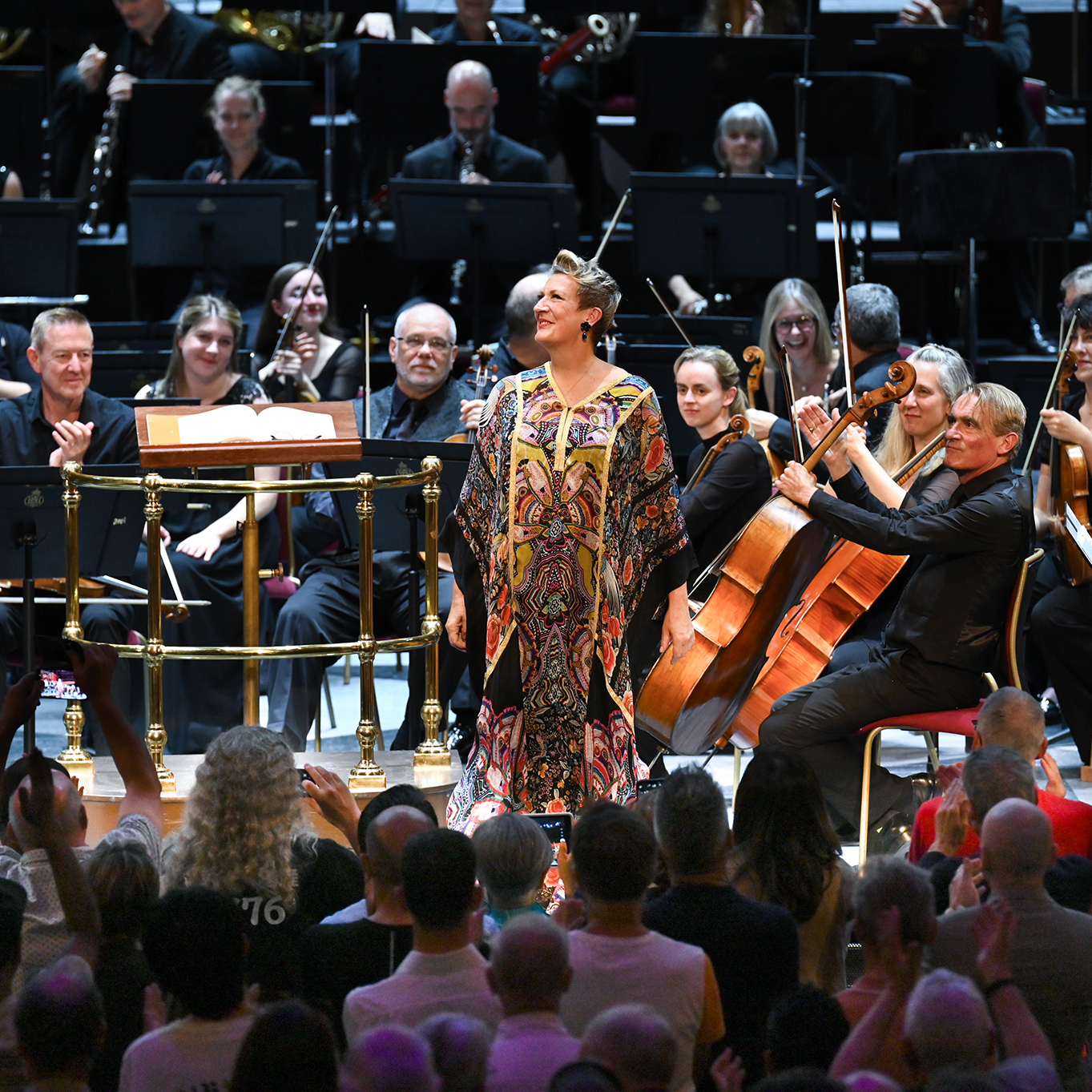
Among Pejačević’s sizable output of songs are four with orchestra, making a viable sequence in its own right. Dame Sarah Connolly (above) brought out the searching whimsicality from Karl Henckell’s Butterfly Songs, whether the fanciful imaginings of ‘Golden stars, little bluebells’ or the more concrete thoughts of ‘Flutter, o butterfly’ with delicate contributions by flute and glockenspiel. The setting of Kael Kraus’s Transformation taps deeper emotion, not least with those ecstatic violin solos between stanzas (eloquently rendered by Yuri Torchinsky), whereas that of Rainer Maria Rilke’s Love Song is notable less for the gently undulating phrases of its vocal writing than for the soaring ecstasy of its central interlude which only double one’s regret that neither composer nor poet lived long enough to collaborate on an opera project as had been mooted.

Making up this sequence were three songs by Alma Mahler-Werfel, taken from sets published in 1910 and 1915. Neither those contrived sentiments of Richard Dehemel’s The Silent Town or self-conscious emoting of Otto Julius Birbaum’s Light in the Night summons an especially personal response; only the winsome poise of Rilke’s I feel warm and close with you implies any individuality. The orchestrations by Colin and David Matthews are sensitive and apposite, but the latter might reasonably have expected more from the Proms in his 80th birthday-year.

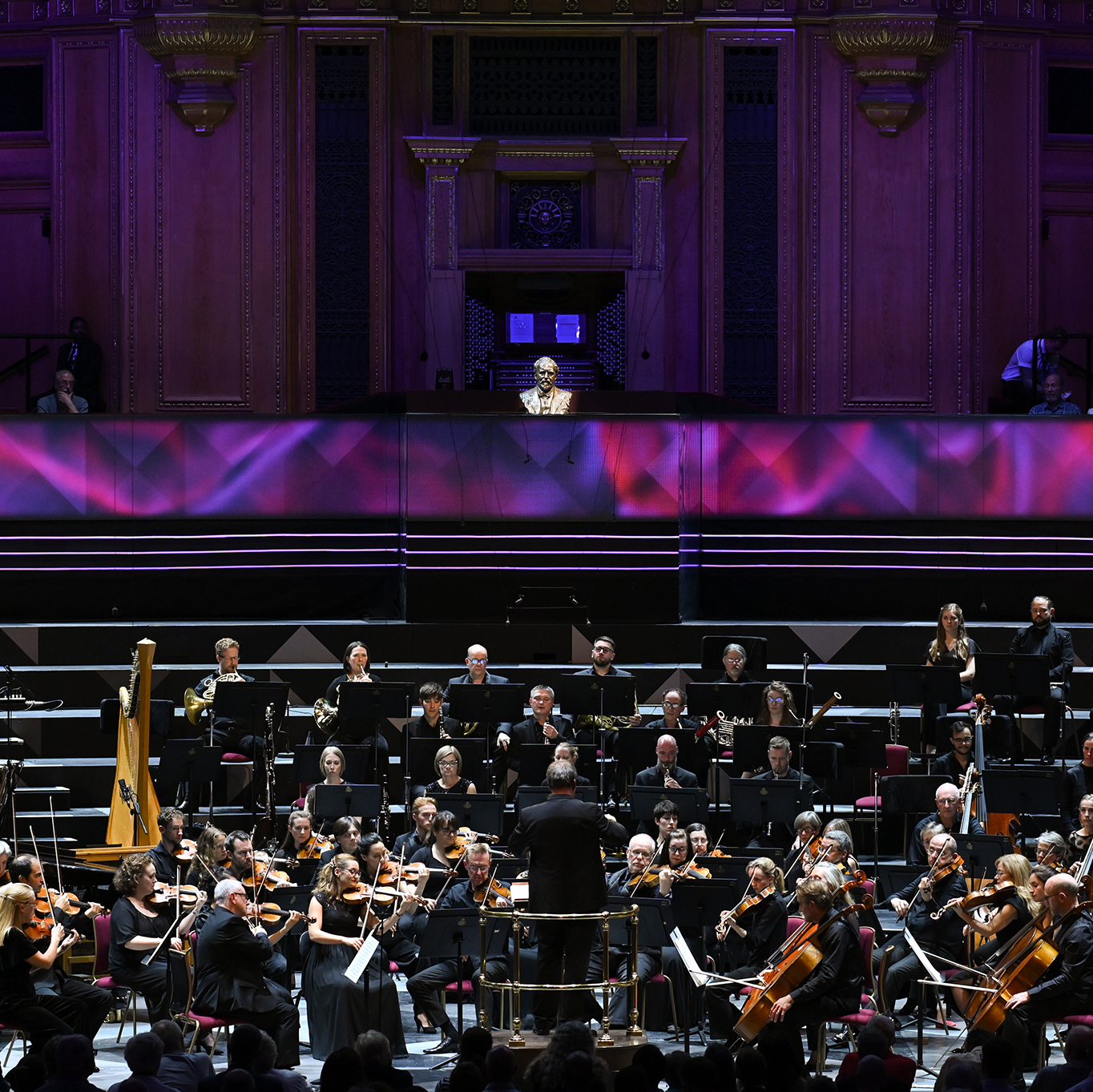
Opening this concert was a beautifully judged reading of the overture to Weber’s final opera Oberon – less often heard now that overtures are no longer the automatic curtain-raisers they once were but which, in its deft interplay of evocative and energetic, still casts a potent spell.
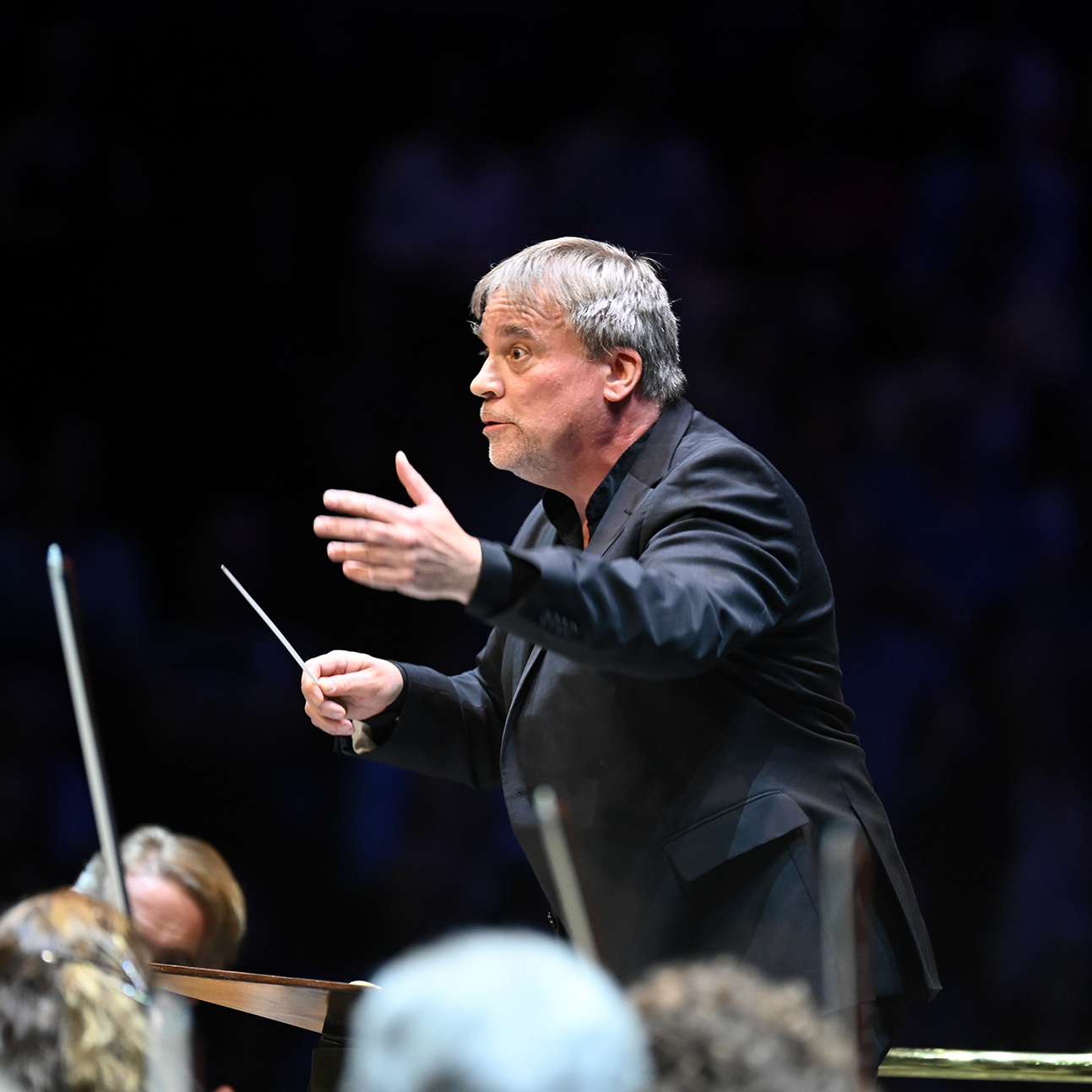
By contrast, Rachmaninoff’s First Symphony has come much more into its own now that the composer’s orchestral output has moved to the centre of the repertoire. Unheard for 48 years after its disastrous premiere in 1897, it remains a testament to the young composer’s ambition – not least in an opening Allegro whose implacable ‘motto’ sets the course for this movement overall. Storgårds had its measure, not least in the mounting fervency of its development, then delivered a probing account of a scherzo the more ingenious for its pervasive understatement.

Although it will never supplant that of its successor in audience affection, the slow movement is a minor miracle of thematic subtlety and emotional restraint as came through via felicitous playing by the BBC Philharmonic woodwind. Launching the finale in suitably visceral fashion, Storgårds (rightly) made the most of its contrasts between the celebratory and the speculative – any remaining ambivalence not so much resolved as forced into submission through a coda which renders the fatalism of Tchaikovsky’s Pathétique from a distinctly personal vantage.

So, an unlikely programme which worked well as a concert – the more so given it proceeded without an interval. Those in the audience surreptitiously eating or drinking between pieces might have preferred otherwise, but for both music and performances it was nothing but gain.
For more on the 2023 BBC Proms, visit the festival’s website at the BBC. Meanwhile click on the names for more information on artists Dame Sarah Connolly, John Storgårds and the BBC Philharmonic Orchestra – and for information on the composers Dora Pejačević and Alma Mahler-Werfel

BBC Proms 2023 – Geneva Lewis, BBC National Orchestra of Wales / Jaime Martín – Pejačević, Grace Williams & Holst

Prom 32 – Geneva Lewis (violin), BBC National Orchestra of Wales / Jaime Martín

Pejačević Overture in D minor Op.49 (1919) [Proms premiere]
Williams Violin Concerto (1950) [Proms premiere]
Holst The Planets Op.32 (1914-17)

Royal Albert Hall, London
Tuesday 8 August 2023

by Richard Whitehouse photos by Chris Christodoulou / BBC

Although this evening’s Prom did not quite conform to that ‘overture – concerto – symphony’ format it came quite close, with its first half bringing to the attention of a near-capacity house two representative pieces by women composers who most definitely warrant greater exposure.

The centenary of Dora Pejačević’s death has duly consolidated what was already a burgeoning reputation curtailed by her untimely demise at only 37. Written two years after her impressive Symphony, which Sakari Oramo has performed and recorded (and will revive at these concerts on August 14th) to great acclaim, the Overture is a curtain-raiser as succinct as it is eventful – ably contrasting its respectively impetuous and equable main ideas in a tensile development, then on to a coda which rounds off this immensely appealing piece with decisive affirmation.

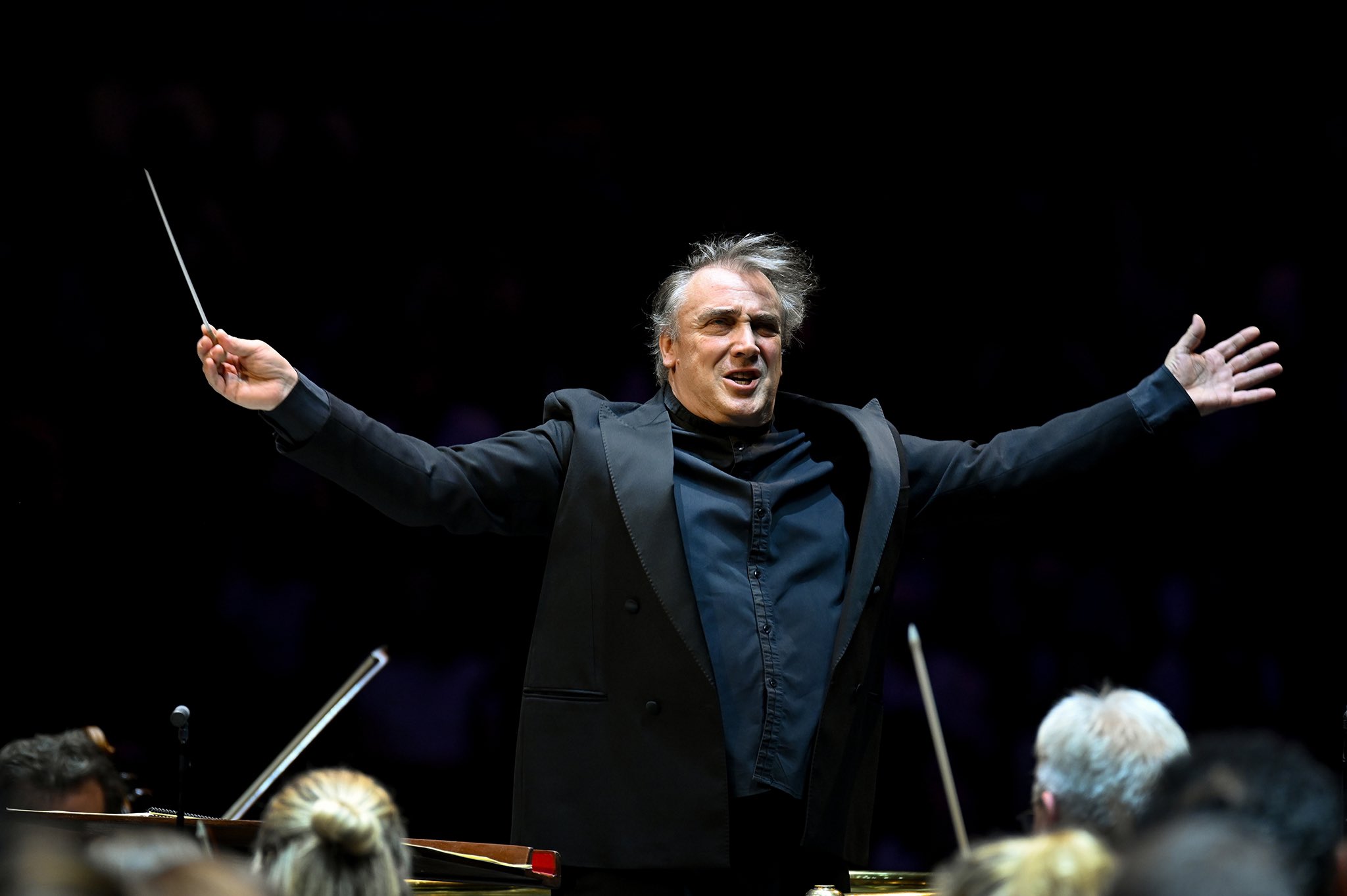
With Jaime Martín an animated podium presence, the BBC National Orchestra of Wales gave it a rousing rendition then was no less finely attuned to the very different ethos of the Violin Concerto by Grace Williams, which it premiered (as the BBC Welsh Orchestra) 73 years ago. There have been few performances since but, on the basis of that tonight, New Zealand-born Geneva Lewis is an eloquent advocate – even if the initial Liricamente arguably needed more purposeful sense of direction for its pensive and often searching inwardness not to risk inertia.

Not that Lewis’ unforced manner or tonal elegance were other than appropriate in this music, as was demonstrated even more directly in the central Andante with its impressionist eddying of melodic phrases and fastidious timbral shading. Following without pause, the final Allegro brought the work’s only fast music in which Lewis’s deftness and articulation gained through her assured coordination with BBCNOW. The cadenza was incisively despatched, while the ensuing coda brought the work to a close the more satisfying for its teasing unexpectedness.

There cannot have been many Proms season this past half-century when Holst’s The Planets has not been played, and it would be good to have welcomed this account more consistently. As it was, the performance took time to recover from a Mars whose stolid tread and lack of textural clarity made for a less than gripping traversal. Venus was better, for all that Martín’s fluctuations of pulse undercut its essential raptness, and though Mercury started off with the requisite humour, some effortful playing in its latter stages left the music feeling earthbound.

This was less of an issue in Jupiter, whose outer sections had all the right verve and energy, even if the trio’s indelible tune verged on the blousy. Pacing its stark opening bars effectively, Martín rather rushed the baleful climax of Saturn, though the radiance of what followed was nothing if not eloquent and bought the best out of BBCNOW. Uranus was almost as fine in this respect, and if the central processional sounded affable rather than sardonic, the sudden emptiness of its closing stages prepared well enough for the otherworldliness of Neptune.

If Martín might have obtained even more hushed and inward playing in this final movement, a sensuous contribution from the London Symphony Chorus enhanced the music-making. An enjoyable reading, albeit one where the whole was less than the sum of its individual planets.

For more on the 2023 BBC Proms, visit the festival’s website at the BBC. You can also click on the link to listen to Dora Pejačević’s Cello Sonata, performed by Laura van der Heijden and Jâms Coleman as part of their Proms at Dewsbury concert on 6 August.

Meanwhile click on the names for more information on artists Geneva Lewis, Jaime Martín and the BBC National Orchestra of Wales – and for information on the composers Dora Pejačević, Grace Williams and Holst

In concert – Marija Vidović, Tamsin Waley-Cohen, Zagreb Philharmonic Orchestra / Jan Latham-Koenig – Pejačević, Sibelius & Mahler

tamsin-waley-cohen-c-patrick-allen

Pejačević Verwandlung, Op. 37b (1915), Liebeslied, Op. 39 (1915), Zwei Schmetterlingslieder, Op. 52 (1920)
Sibelius Violin Concerto in D minor Op. 47 (1903-04, rev. 1905)
Mahler Symphony no. 1 in D major (1899 version)

Marija Vidović (soprano), Tamsin Waley-Cohen (violin), Zagreb Philharmonic Orchestra / Jan Latham-Koenig

Cadogan Hall, London
Thursday 13 April 2022

Written by Richard Whitehouse. Photos (c) Patrick Allen (Tamsin Waley-Cohen), Paul Persky (Jan Latham-Koenig)

Visits from overseas orchestras are only now getting into their stride following the abeyance caused by the pandemic, so credit to the Zagreb Philharmonic for having undertaken its first UK tour in over half a century with a programme whose challenges were not to be gainsaid.

A recent BBC performance of her Symphony confirmed the significance of Dora Pejačević (1885-1923) in European music of the early 20th century, and it was a pleasure to encounter these four orchestral songs from her maturity. A setting of Karl Kraus’s Transformation won grudging admiration of Schoenberg; here, even more so in that of Rainer Maria Rilke’s Love Song with its winsome violin solo and fervent orchestral interlude, the influence of Strauss is directed towards audibly personal ends. Marija Vidović (above) gave them with no mean eloquence and did comparable justice to those charms of Karl Henckell’s verse in Two Butterfly Songs – the elegance of ‘Golden stars, little bluebells’ then the poise of ‘Flutter by, butterfly, flutter away’, each of them benefiting from especially deft contributions by the Zagreb musicians.

Tamsin Waley-Cohen duly joined the orchestra for Sibelius’s Violin Concerto – likely more popular than ever these days, here receiving a confident and forthright account that was at its most persuasive in a trenchant and cumulative take on the developmental cadenza toward the centre of the first movement, then an Adagio more than usually restive and even ominous as it unfolded. The soloist’s astringent tone might not be to all tastes, but it effectively banished any risk of expressive blandness while maintaining an impulsive interplay with the orchestra – not least in that opening Allegro’s combative coda or a finale which, while its Allegro was not ideally ‘non tanto’, generated an impressive momentum which carried through to a truly visceral close. Some solo Bach enabled Waley-Cohen to demonstrate a more inward touch.

A pity Jan Latham-Koenig (above) rarely appears in the UK, as his engagements seldom disappoint. For all its rawness and passing inelegances, this was as gripping an account of Mahler’s First Symphony as one is likely to encounter. Its opening movement was evocatively launched, the sounds of nature gradually admitting of a human presence such as filters through in its lilting exposition (not repeated) then comes to the fore with joyous immediacy in the coda. Robust and forthright, the scherzo’s outer sections found contrast in the ingratiating charm of its trio.

A symphony with a complex gestation (admirably set out in Timothy Dowling’s programme notes), its ensuing fantasy on a well-known children’s song is shot through with elements of klezmer and art-song in a portrayal of a huntsman’s funeral vividly ironic in its tragicomedy. Latham-Koenig was almost as persuasive in the lengthy finale – its Dante-esque contrasts of violence and supplication channelled convincingly to the spellbinding recollection of earlier motifs which made way for a chorale-dominated apotheosis of notably unsparing immediacy.

Few countries have yet had a composer for president, but Ivo Josipović served Croatia during 2010-15 and the encore of his Prelude to the Millenium sounded redolent of early Ligeti or Lutosławski in its uninhibited verve. The Zagreb musicians gave their collective all – to his evident pleasure.

For further information on the Zagreb Philharmonic Orchestra, click here – and for information on the artists, click on the names to find out more about Marija Vidović, Tamsin Waley-Cohen and Jan Latham-Koenig. Meanwhile for more on composer Dora Pejačević, click here

In concert – Vilde Frang, BBC Symphony Orchestra / Sakari Oramo: Beethoven Violin Concerto & Dora Pejačević Symphony

Sakari Oramo

Beethoven Violin Concerto in D major Op.61 (1806)
Pejačević
Symphony in F# minor Op.41 (1916-17, rev. 20)

Vilde Frang (violin, below), BBC Symphony Orchestra / Sakari Oramo

Barbican Hall, London
Friday 26 November 2021

Written by Richard Whitehouse. Pictures (c) Mark Allan

The latter-day uncovering of music from the past two centuries by female composers has not always been determined by its intrinsic quality yet, on the basis of this evening’s account by the BBC Symphony Orchestra, the Symphony by Dora Pejačević was certainly worth revival.

Born in Budapest and growing up within the Croatian nobility, Pejačević (1885-1923) early on evolved an idiom whose pivoting on the cusp between late-Romanticism and Modernism was well suited to those large-scale instrumental and, latterly, orchestral works that dominate an output curtailed by her death – from kidney failure – at just 37. Certainly, there is nothing at all cautious about her Symphony in F sharp minor, composed during the later stages of the First World War and a piece audibly indebted to though never merely beholden to its times.

The BBC Symphony Orchestra conducted by Sakari Oramo with Vilde Frang on violin perform Ludwig van Beethoven’s Violin Concerto and Dora Peja?evi?: Symphony in F-sharp minor, op. 4 in the Barbican Hall on Friday 26 Nov. 2021. Photo by Mark Allan

Surprisingly, the opening movement is in most respects the weakest – its main Allegro failing to sustain the impact of its impressive slow introduction (Brahms’s First Symphony the likely precursor), in terms of questing harmonic trajectory or purposeful momentum, once the lyrical if rather flaccid second theme has taken hold. The development relies more on rhetoric than motivic ingenuity over its too brief course, followed by an awkwardly modified reprise then a coda whose glowering intensity reveals an intermittent tendency to overscore for the brass.

Such failings are largely absent from what follows. Centred on a soulful melody given to cor anglais, the Andante builds methodically while irresistibly to its pathos-laden climax before subsiding into the lower reaches of the woodwind; while the Scherzo (better placed second in context) utilizes tuned percussion to underpin a progress whose rhythmic vitality is unusual in symphonies from this era. The final Allegro revisits the first movement’s emotional angst, but its relative succinctness on the way to an ultimately cathartic peroration feels securely judged.

Such, at any rate, was the impression left by this performance – the BBCSO responding with alacrity to Sakari Oramo’s belief in music scored, for the most part, with no little imagination for forces including triple woodwind, six horns and four trumpets. If not the masterpiece some might like to believe, Pejačević’s Symphony is evidently worth revival as frequently as, say, that by Korngold – a potent of what this composer would surely have gone on to create. That she enjoyed only a short-lived maturity need not detract from extent of her legacy as it stands.

The BBC Symphony Orchestra conducted by Sakari Oramo with Vilde Frang on violin perform Ludwig van Beethoven’s Violin Concerto and Dora Peja?evi?: Symphony in F-sharp minor, op. 4 in the Barbican Hall on Friday 26 Nov. 2021. Photo by Mark Allan

Despite sustaining a hand injury, Vilde Frang took the stage in the first half for a reading of Beethoven’s Violin Concerto (replacing that by Stravinsky) as brought the genial and restive aspects of its expansive first movement into effortless accord; after which, the variations of the Larghetto were exquisitely delineated then the humour of the final Rondo shot-through with an incisiveness through to the emphatic close. Among the most astute of accompanists, Oramo drew felicitous playing from the BBCSO’s woodwind and a reduced string-section.

As encore, Frang gave an eloquent take on Gott erhalte Franz den Kaiser, Haydn’s theme for the variations in his ‘Emperor’ Quartet. Hopefully those still trying to reconcile the movement-headings of the Pejačević as given erroneously for the Beethoven were not unduly distracted.

For the repertoire in this concert, listen to the Spotify playlist below:

For further information on the concert, click here For more on Dora Pejačević, click here – and for more on soloist Vilde Frang, here