In concert – Roberts Balanas, Ealing Symphony Orchestra / John Gibbons: Electrifying Ealing – Bernstein, Ángela Luq, Coleridge-Taylor & Bliss

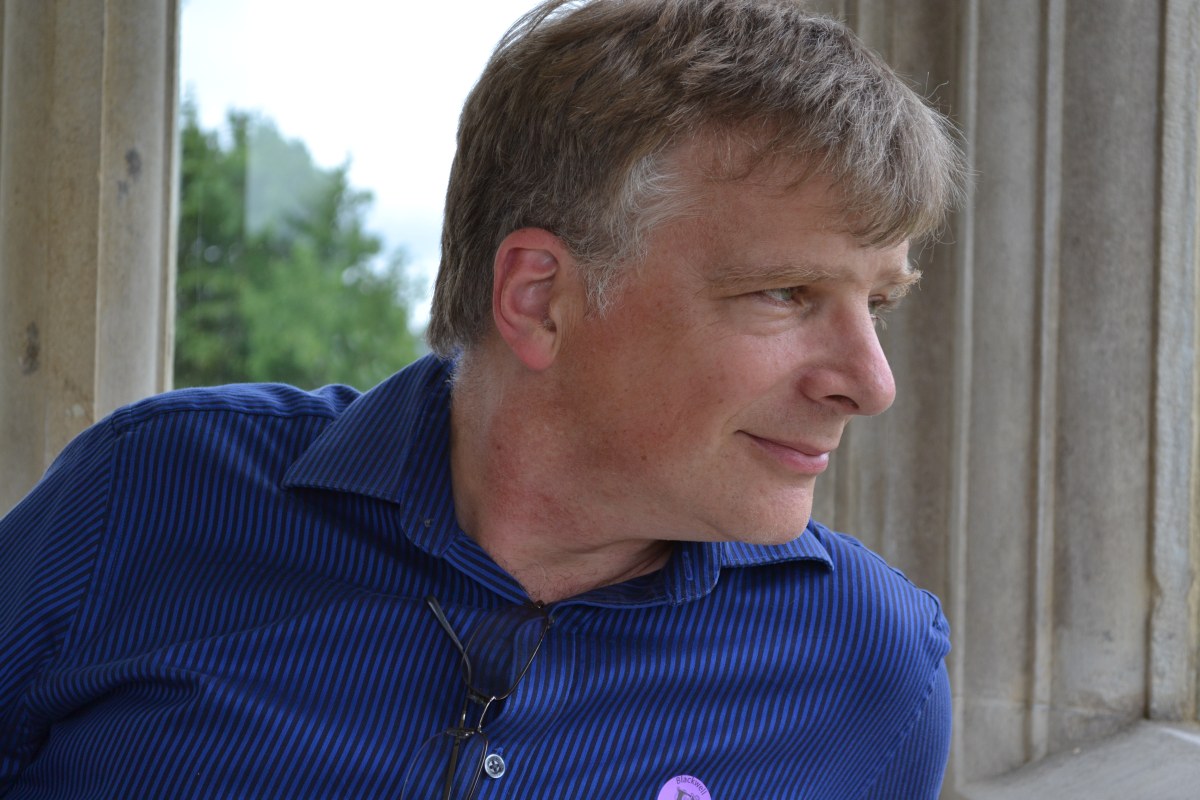
Roberts Balanas (electric violin, below), Ealing Symphony Orchestra / John Gibbons (above)

Bernstein orch. Kostall & Ramin Symphonic Dances from West Side Story (1957 arr. 1961)
Luq Electric Violin Concerto ‘Machina Humana’ (2023-24) [World Premiere]
Coleridge-Taylor Valse de la reine Op.22/3 (1899)
Bliss A Colour Symphony Op.24 (1921-22, rev, 1930)

St Barnabas Church, Ealing, London
Saturday 10 May 2025

Reviewed by Richard Whitehouse Picture of Roberts Balanas (c) Kiril Kozlov

Another typically enterprising concert by the Ealing Symphony Orchestra and its longstanding music director John Gibbons, featuring the first performance (albeit not designated such) of a major work for electric violin and pieces from a diverse trio of British or American composers.

It might have been orchestrated by regular collaborators Irwin Kostall and Sid Ramin, but the Symphonic Dances from Leonard Bernstein’s West Side Story is as characteristic of the latter’s idiom as it is representative of his most successful musical. Rhythmically a little straightlaced in the Prologue, the performance audibly hit its stride with a Somewhere of melting pathos then a vivacious Scherzo leading to an impulsive Mambo, before the insouciant Cha Cha and ominous fugal Cool presaged a visceral Rumble then a Finale of heartfelt eloquence.

Lauded for her work with electronics, Spanish composer Ángela Luq evidently had no qualms when tackling a full-scale concerto for electric violin. Comprising four contrasted movements, Machina humana duly exploits those timbral and expressive possibilities of its solo instrument – whether in the intricate rhythmic dialogues of its opening Machina, the lucid textures and sensuous harmonies of Sueño (Dream), the impulsive conflict between soloist and orchestra of Animal, then the surging emotions of the final Amar (Love). Musical content may have lacked memorability, with the work rather falling short of its ambition (at least as expressed in the composer’s programme note), but the virtuosity or finesse of Roberts Balanas in realizing this innovative project was unarguable, with the Ealing SO audibly relishing its involvement.

No doubt this piece will secure even greater attention when soloist, orchestra and conductor tour it to Latvia in due course. Maybe on that occasion Gibbons will take the opportunity to give what would likely a first hearing there of Valse de la reine by Samuel Coleridge-Taylor. Third in a sequence of Four Characteristic Waltzes, this is a reminder that its composer was highly adept at ‘light’ music; its halting gait and its affecting lyricism to the fore in what was a welcome revival and a pertinent reminder of his legacy at the time of his premature death.

It also made a telling entrée into A Colour Symphony by Arthur Bliss. This 50th anniversary-year of his passing has led to a notable upsurge in performance and not least of what remains his best-known orchestral work. Whether or not Gibbons has previously conducted it, he had the measure of this piece. Purple made for a thoughtful yet never turgid prelude; one whose stately processional found immediate contrast in the alternate impetus and effulgence of the scherzo that is Red. Nor was there any underplaying of that ambivalent and even ominous element which underpins the outwardly placed unfolding of Blue, a slow movement which leads effortlessly into the finale that is Green with its intricately arrayed double-fugue that builds to a peroration whose outcome is a true declaration of intent thrillingly conveyed here.

An impressive performance, then, which once again confirmed Gibbons’s prowess across the broad spectrum of British orchestral music. Hopefully the Ealing SO will be able to include more Bliss in future programmes, this being music it had clearly taken to its collective heart.

Published post no.2,541 – Thursday 22 May 2025

Live review – Ealing Symphony Orchestra / John Gibbons: Stanford: Symphony no.6

ealing-symphony-orchestra

Ealing Symphony Orchestra / John Gibbons

St Barnabas Church, Pitshanger Lane, London

Broadcast Thursday 10 June 2021, available online

Stanford Symphony no.6 in E flat major Op.94 ‘In honour of the life-work of a great artist: George Frederick Watts (1905)

Written by Ben Hogwood

Next year will be the centenary of the independent Ealing Symphony Orchestra, one of the leading voluntary ensembles in London. In more recent years the group have built a reputation for deviating from ‘normal’ repertoire, and their return from a tortuous year-and-a-half of lockdown saw an immediate return to that approach.

It came in the form of a welcome reappraisal of the Sixth symphony of Charles Villiers Stanford. Stanford occupies a godfather-like position in British music, credited with the instruction of many leading composers (Vaughan Williams, Holst, Coleridge Taylor and Ireland to name but a few), but his music tends to be admired rather than deeply loved. Stanford acknowledges the influence of continental Romantic composers in his music, with hints of Mendelssohn, Brahms and Wagner to be found, but in the course of this symphony closer parallels emerge to the music of Elgar, whose own first symphony was still three years away.

Conductor John Gibbons gave a heartfelt introduction from the podium at St Barnabas Church, where the orchestra are based, and the online pictures illustrated a wide spacing between the instruments, with many players wearing masks. Through necessity the strings were further apart, the cellos particularly far back, with the brass on the conductor’s far left. None of these unconventional placings harmed the performance, however, and there was a very strong sense of joyful homecoming, the opening of a new chapter.

physical energy

A good deal of this was due to Stanford’s music. The sixth symphony celebrates sculptor and artist George Frederic Watts, and in the first movement takes inspiration by Watts’ Physical Energy sculpture, now in Hyde Park (above, picture by David Hawgood). Stanford begins with the most positive and exultant music, played with appropriate gusto here. There were occasional lapses in the strings’ turning early on, but it bears remembering that amateur players in particular have been devoid of ensemble practice for so long, and such moments are inevitable as part of the ‘reawakening’ process. In any case the music powered forward with increasing conviction, its prevailing mood of strength and resolve in keeping with the players’ emergence from lockdown. A particularly fulsome solo from the orchestra’s leader (uncredited) was in keeping with the sunny disposition all around.

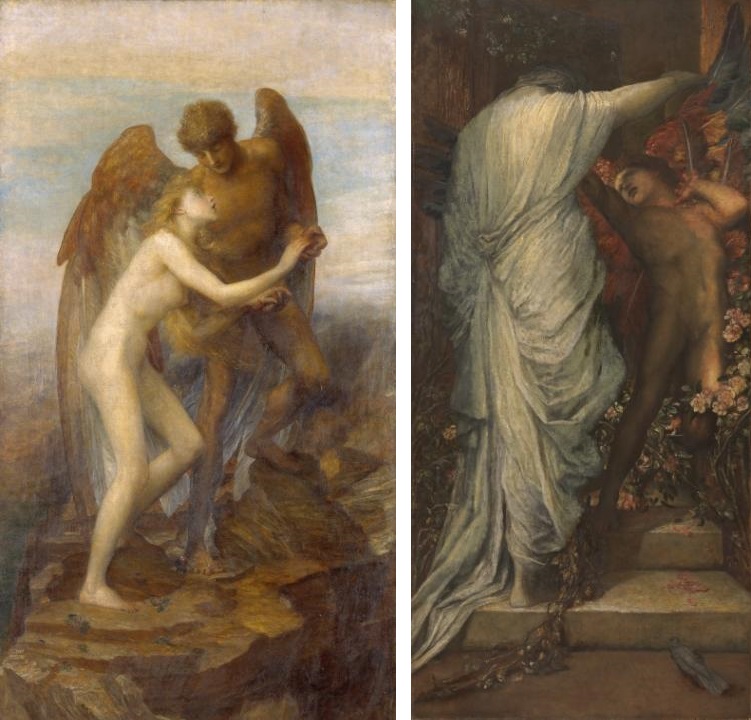
Love and Life c.1884-5 by George Frederic Watts 1817-1904

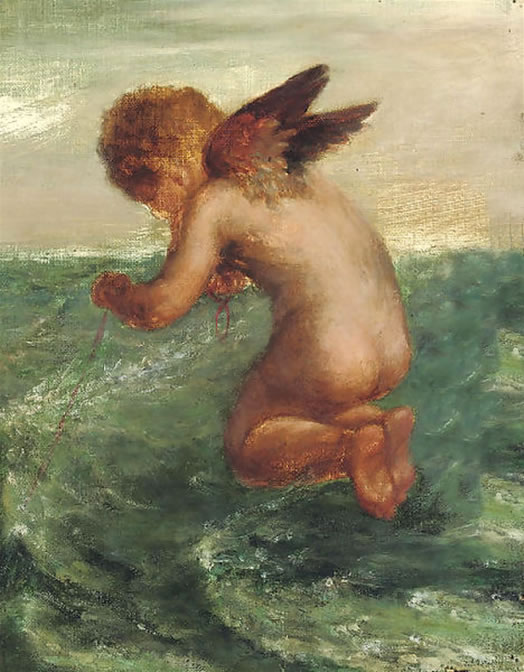
The heart of Stanford’s Sixth lies in the slow movement, where a soulful cor anglais solo sets the tone but long phrases were expertly paced towards the big climax. Based on Watts’ paintings Love and Life and Love and Death (both above), there was an appropriate romanticism near the surface throughout. The scherzo of light and shade was elusive, portraying the movement of water as depicted by Watts in Good Luck to your Fishing (below).

Good_Luck_to_your_Fishing_by_George_Frederick_Watts
This third movement would have benefited from a bit more rhythmic definition, but was still a n engaging account, especially as Gibbons plotted a smooth transition to the finale, where the drama heightened further. The venue proved its worth here, with just the right amount of reverb – and as all passion was spent towards the end the music slowed slightly, giving plenty of room for some excellent woodwind playing.

This was a fine and extremely enjoyable performance, passionate and concentrated – a persuasive advocate for Stanford’s music. His voice is all too seldom heard in this country, but performances like this ought to ensure greater coverage. It was the ideal choice for the Ealing Symphony Orchestra to reassert their identity after lockdown, and the enthusiasm and optimism throughout were uplifting. Watch it if you can.

For more information on the Ealing Symphony Orchestra’s return from lockdown on Saturday 10 July, and further events, visit the orchestra website