Online concert – English Symphony Orchestra / Kenneth Woods: Steven R. Gerber – Music In Dark Times

Gerber Music in Dark Times [UK premiere]

English Symphony Orchestra / Kenneth Woods

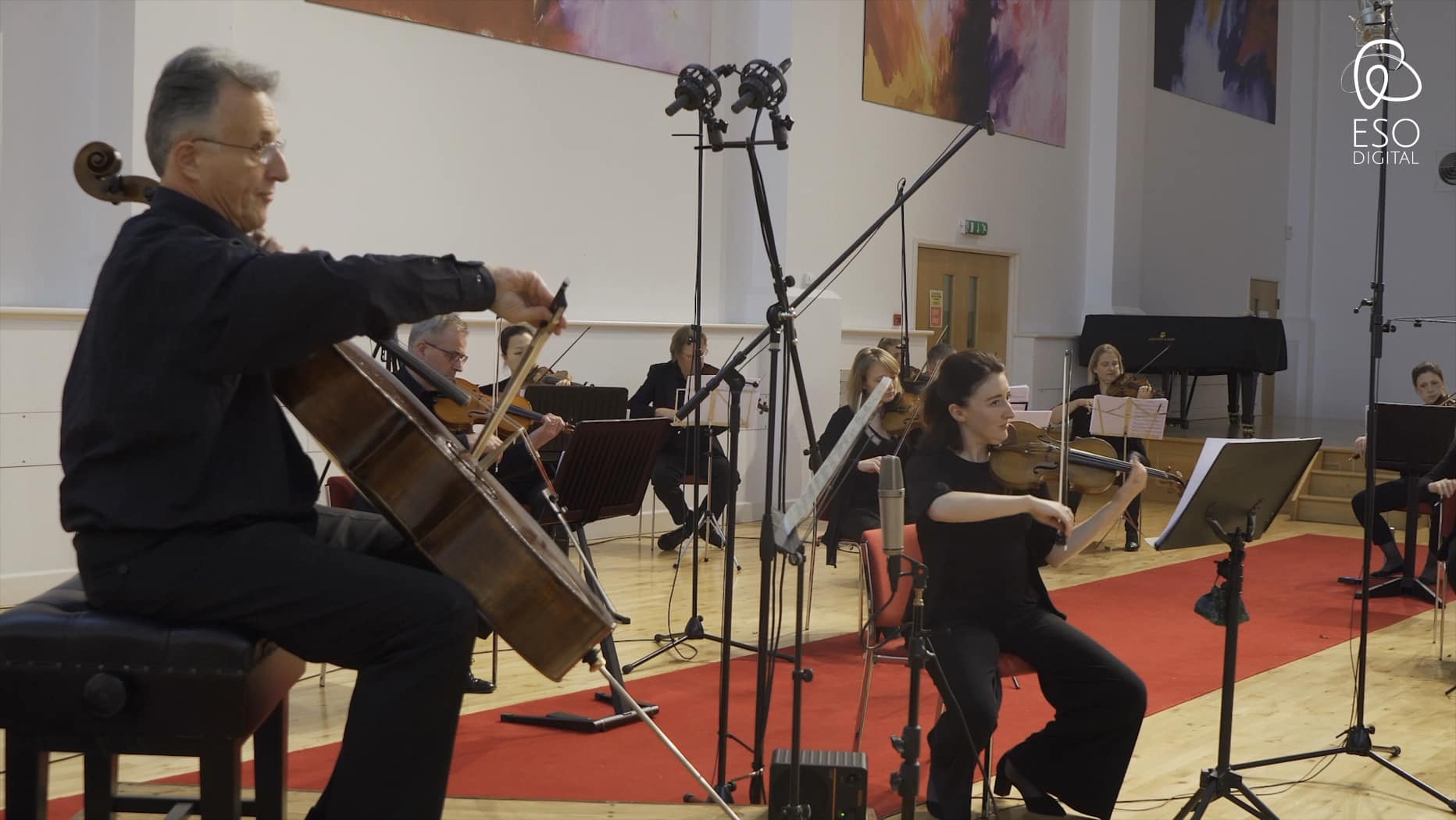
Recorded at Wyastone Concert Hall, Monmouth, 2 December 2021

by Richard Whitehouse

The English Symphony Orchestra has been assiduous in promoting Steven R. Gerber (below), not least with a release of string-orchestra arrangements of his chamber music from Darron Hagen and Adrian Williams (Nimbus NI6423), and now this online performance of Music in Dark Times.

Written to a commission by Vladimir Ashkenazy and the San Francisco Symphony Orchestra, who gave the first performance in March 2009, this is very much a synthesis of traits from its composer’s maturity and, in contrast to the largely interiorized world of his chamber output at this time, a demonstrably public statement with resonances beyond its immediately American context. Opening with an expanded version of the Fanfare for the Voice of America, written in the aftermath of those events of 9/11, it continues with a Pavane featuring the diaphanous interplay of brass and strings, then by a Dance of Death whose tarantella-like underpinning adds greatly to its malevolence. This, in turn, finds contrast in a Dead March which builds in a steady crescendo towards a climax left ominously unresolved. It remains for an Elegy, scored only for strings, to provide a measure of solace in music that reaches back to pieces by composers such as Piston, Carter and Barber; after which – a full orchestral Fanfare brings this sequence to a close which, while far from affirmative, offers at least a glimmer of hope.

Although scored for sizable forces – including triple woodwind, five horns and four trumpets – Music in Dark Times is resourcefully as well as atmospherically orchestrated so that salient details are always heard to register. The ESO players are audibly at home in this piece, while Kenneth Woods directs with assurance music he clearly – and rightly – believes in. Hopefully it will be issued on a future release of Gerber’s orchestral work (including the still unrecorded Second Symphony), but for now this latest ESO online offering can be well recommended.

This concert can be accessed free from 14-18 October 2022 at the English Symphony Orchestra website, then through ESO Digital by way of a subscription. Meanwhile click on the names for more on the English Symphony Orchestra and Kenneth Woods – while information in the orchestra’s Steven R. Gerber release can be found here

On Record – English Symphony Orchestra / Kenneth Woods – Adrian Williams: Symphony no.1, Chamber Concerto (Nimbus Alliance)

Adrian Williams
Symphony no.1 (2020)
Chamber Concerto: Portraits of Ned Kelly (1998)

English Symphony Orchestra / Kenneth Woods

Nimbus Alliance NI6432 [70’31’’]
Producers/Engineers Phil Rowlands, Tim Burton
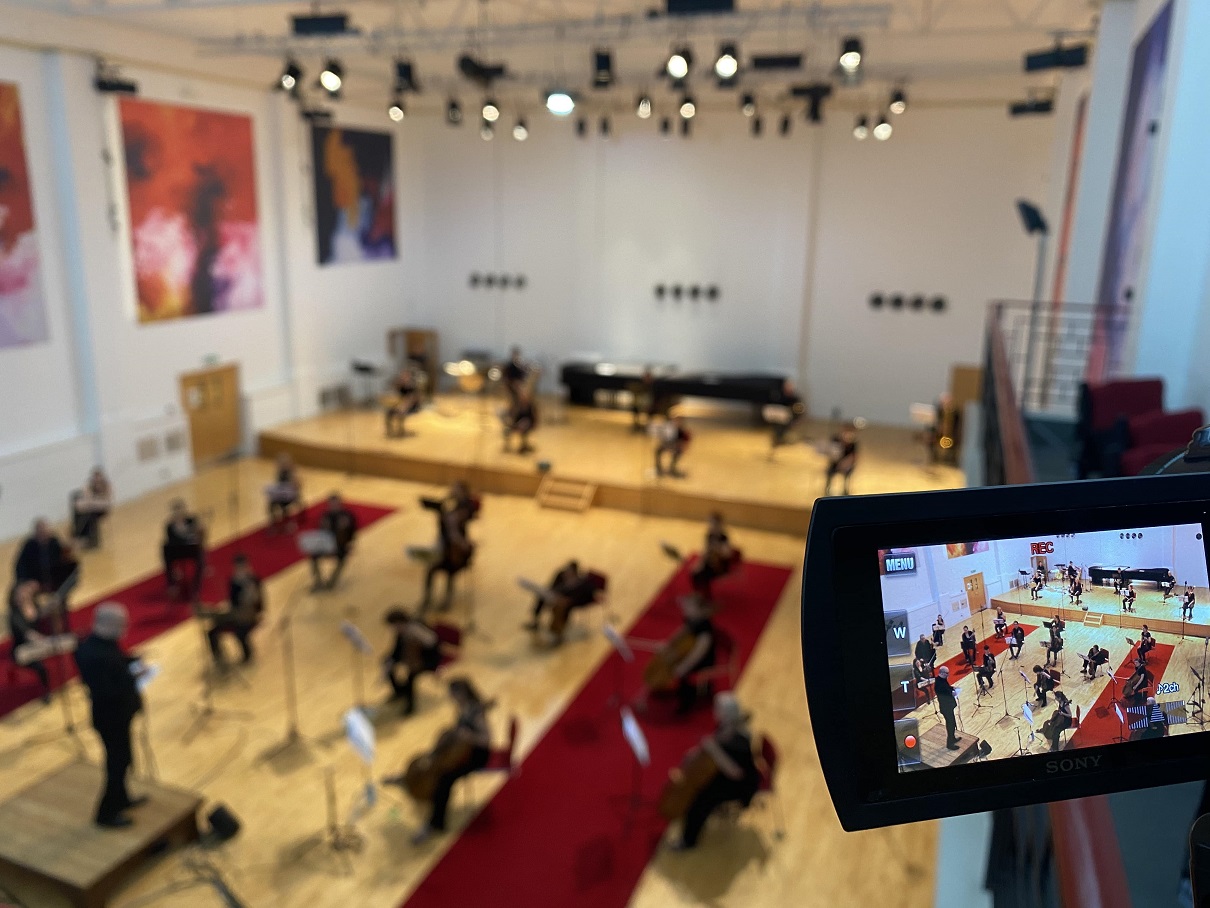
Recorded 8 April 2021 (Chamber Concerto), 1-2 December 2021 (Symphony) at Wyastone Concert Hall, Monmouth

Reviewed by Richard Whitehouse

What’s the story?

This latest release in the English Symphony Orchestra’s 21st Symphony Project features its most ambitious instalment yet in the First Symphony by Adrian Williams (b1956), coupled with a no less eventful piece by this ‘dark horse’ among British composers of his generation.

What’s the music like?

Although having written various orchestral works, Williams had never tackled the symphonic genre before prior to being the ESO’s John McCabe Composer-in-Association in 2019 (he is currently its Composer Emeritus) but has confronted the challenge head-on. Playing almost 50 minutes and scored for an orchestra including triple woodwind, five horns, four trumpets and four percussionists with harp, piano and celesta, the work is evidently a summation of where its composer felt he had reached over the course of his musical odyssey. Yet for all its textural complexity and its pervasive richness of thought, this is music created out of basic motifs; the initial three notes generating the first movement’s main themes, as well as essentializing that longer term tonal goal as remains a focal point towards which intervening activity is directed.

From its imposing Maestoso epigraph, the opening Stridente unfolds against the background of (without necessarily adhering to) sonata-form design – its motivic components drawn into a continuous and frequently combative evolution purposefully unresolved at the close. There follows a Scherzando that eschews ternary design for a through-composed format proceeding by tension and release to a decisive ending. The expressive crux of the whole work, the Lento evinces a plangent and desolate tone whose sparse textures and elliptical harmonies re-affirm that ‘less is more’ maxim. Despite its Energico marking the finale unfolds with slow-burning momentum, made the more cumulative by channelling its motivic evolution toward a Dolente apotheosis whose outcome proves as inevitable formally as it feels transcendent emotionally.

The artist Sidney Nolan was latterly a neighbour of Williams, his powerfully un-romanticized evocations of famed Australian outlaw Ned Kelly directly influencing this Chamber Concerto. Its pungent opening sets wind quintet against string quartet, with double-bass and harp adding subtle contributions as the piece unfolds. The inward central section builds towards a febrile culmination – after which, wind and strings are drawn into a monody which brings a resigned though hardly serene ending. A purposeful overall trajectory ensures cohesion at every stage.

Does it all work?

Absolutely. These are impressive piece in terms of their ambition but also realization. There are considerable technical challenges on route, but they are met with conviction and no little resourcefulness by an expanded ESO which is often tested but never fazed. Kenneth Woods directs with his customary attention to detail as goes a long way toward clarifying music that is ‘complex and luminous’ in spirit as by design. Williams has evidently been waiting for this opportunity to contribute to the symphonic tradition and his execution rarely, if ever, falters.

Is it recommended?

Indeed. The recording is as focussed and spacious as is necessary, and there are informative notes from composer and conductor. Next from this source is a release of concertos by Philip Sawyers, then one of symphonic works by the current Composer-in-Association Steve Elcock.

This recording is released on Friday 7 October 2022.

You can watch the world premiere of Adrian Williams’ Symphony no.1 on the English Symphony Orchestra website, and you can listen to clips from the recording at the Presto website. For more information on the composer, visit the Adrian Williams website – and for more on Sidney Nolan click here. Click on the names of Kenneth Woods and English Symphony Orchestra for their websites.

Online concert – English Symphony Orchestra / Kenneth Woods: Music from Wyastone – Sibelius: Symphony no.6 & Tapiola

Sibelius Symphony no.6 in D minor Op.104 (1923); Tapiola Op.112 (1926)

English Symphony Orchestra / Kenneth Woods

Recorded at Wyastone Concert Hall, Monmouth, 1-2 March 2022

by Richard Whitehouse

A cycle of Sibelius symphonies by the English Symphony Orchestra got underway last year with an impressive account of the Seventh, making this second instalment the more pertinent for showing just how the composer had arrived at that work and where he went from there.

Only if the Sixth Symphony is viewed as neo-classical does it feel elusive, rather than a deft reformulation of Classical precepts as here. The first movement duly unfolded as a seamless evolution whose emotional contrasts are incidental – Kenneth Woods ensuring its purposeful course complemented the circling repetition of the following intermezzo, with its speculative variations upon that almost casual opening gesture. Ideally paced, the scherzo yielded a more incisive tone which the finale then pursued in a refracted sonata design as gained intensity up to its climactic mid-point. Tension dropped momentarily here, quickly restored in a disarming reprise of its opening and a coda whose evanescence was well conveyed; a reminder Sibelius Six is as much about eschewal of beginnings and endings in its seeking after a new cohesion.

A suitably expanded ESO then tackled Tapiola – Sibelius’s last completed major work, whose prefatory quatrain implies an elemental aspect duly rendered through the near/total absence of transition in music of incessant evolution. A quality to the fore in this perceptive reading with Woods finding the right balance between formal unity and expressive diversity throughout its underlying course. Just occasionally there was a lack of that ‘otherness’ as endows this music with its uniquely disquieting aura, yet a steadily accumulating momentum was rarely in doubt towards the seething climax, then a string threnody whose anguish can bestow only the most tenuous of benedictions. A reminder, too, that not the least reason Sibelius might have failed to complete his Eighth Symphony was because he had already realized it in the present work.

The ESO being heard to advantage in the spacious clarity of Wyastone Hall, these accounts will be worth getting to know on commercial release (with the Seventh Symphony) early next year, when this cycle will itself continue with recordings of the Fourth and Fifth Symphonies

These works are available for viewing on the English Symphony Orchestra website from 29 July – 1 August, then through ESO Digital by way of a subscription. Meanwhile click on the names for more on the English Symphony Orchestra and Kenneth Woods

In concert – April Fredrick, English Symphony Orchestra / Kenneth Woods: Mozart, Richard Strauss, Doolittle & Dvořák

Mozart Adagio and Fugue in C minor K546 (1783, rev 1788)
Richard Strauss (arr. Burke) Morgen! Op.27 no.4 (1894)
Doolittle A Short, Slow Life (2011)
Dvořák (arr. Burke) Rusalka B203 – Song to the Moon (1900)
Mozart Symphony no.39 in E flat major K543 (1788)

April Fredrick (soprano), English Symphony Orchestra / Kenneth Woods

Great Malvern Priory, Malvern
Wednesday 15 June 2022

Written by Richard Whitehouse

This latest concert in its current season found the English Symphony Orchestra back at the Priory in Great Malvern in a programme with, at its centre, a contrasting triptych of vocal items from April Fredrick which continued her Affiliate Artist role in impressive fashion.

At its centre was a performance (the UK premiere?) of A Short, Slow Life, Emily Doolittle’s setting of a poem which finds Elizabeth Bishop at her most Dickinson-like with its reflection on growing up in a seeming Arcady latterly undone as much by existential as environmental factors. Enfolding and intricate, its scoring for nine instruments offers an evocative context for the vocal line to emerge from and with which to interact – Fredrick making the most of their dialogue in this winsome and, thanks to Kenneth Woods, finely co-ordinated reading.

Either side came chamber reductions from Tony Burke. In Morgen!, Strauss’s setting of John Henry Mackay, it was the understatement of Fredrick’s approach that compelled by drawing this relatively early song into the emotional orbit of those from half-a-century later. In ‘Song to the Moon’ from Dvořák’s opera Rusalka, her unaffected eloquence arguably came through more directly in an arrangement that (rightly) predicated the soloistic nature of the orchestral writing. Technically immaculate, Fredrick’s artistry was itself never less than life-affirming.

Framing this programme came two not unrelated works by Mozart. Written in 1783 when the composer was extending the formal and expressive weight of his music by intensive study of Bach and Handel, this C minor Fugue’s two-piano austerity took on a greater richness when arranged for strings and prefaced by a brief if searching Adagio which throws its successor’s contrapuntal density into greater relief. The ESO duly responded with playing of sustained trenchancy that incidentally reminded one no less than Beethoven took its example to heart.

Having given perceptive accounts of Mozart’s 40th and 41st symphonies earlier this season, it made sense that Woods and the ESO to include the 39th as opens what increasingly seems a symphonic triptych in design and intent. This performance was no less idiomatic – the first movement’s introductory Adagio imposing yet flexible so that its ‘heroic’ quality with those wrenching harmonies was never in doubt, the main Allegro building up tangible momentum through a tensile development then an even briefer coda decisive in its impetus and sweep.

Even more than its successors, the Andante is the heart of the work – among the most striking instances of that ineffable pathos Mozart made his own. Inward while with no lack of forward motion, it made a telling foil to the Menuetto with its bracing outer sections and a trio which featured a delectable expressive pause prior to a last hearing of the clarinet’s amiable melody. Nor was there any lack of wit in the scintillating finale, the repeat of its second half necessary for one of Mozart’s rare incursions into the ‘false ending’ beloved of Haydn to leave its mark. A fine conclusion, then, to another worthwhile concert by the ESO which returns early next month for a very different, all-American programme that includes a rare outing for the full-length version (including the ‘hurricane’ episode) of Copland’s ballet Appalachian Spring.

For further information on April Fredrick, click here, and for more on Emily Doolittle click here. To find out more about the artists, click on the names for more Kenneth Woods and the English Symphony Orchestra.

Online concert – Raphael Wallfisch, English Symphony Orchestra / Kenneth Woods: Elgar Reimagined

Elgar, arr. Fraser Miniatures for cello and strings: Chanson de Matin; Chanson de Nuit; The Wild Bears (Wand of Youth Suite No.2); Nimrod (Enigma Variations); Romance Op.62; Sospiri Op.70; Mazurka; Pleading; In Moonlight; Salut d’Amour; Adieu

Raphael Wallfisch (cello), English Symphony Orchestra / Kenneth Woods

Live performance at Guildhall, Worcester, 29 October 2021

by Richard Whitehouse

An afternoon concert at last year’s Elgar Festival, these Miniatures for cello and strings had been arranged by Donald Fraser for Raphael Wallfisch. Extending to an 11-movement suite, its viability in terms of smaller groupings was certainly demonstrated by this performance.

Chanson de Matin provided a mellifluous entrée, and if the cello’s assumption of the melodic line marginally obscured the strings’ contribution, that could not be said of Chanson de Nuit whose sombre inwardness was unerringly realized. Nor did The Wild Bears lose on impetus, and if the arrangement conjured Saint-Saëns, this only served to underline the importance of ‘Second Empire’ music on Elgar’s own thinking. Interesting, too, how the Romance brought soloist and strings into an even closer accord than the composer’s version with orchestra. The highlight, however, was Sospiri, for presenting one of Elgar’s finest inspirations in a striking new light. Salut d’Amour then conveyed the music’s essence without cloying, but the cello’s dominance in Nimrod detracted from its subtlety of orchestration as an ‘Enigma Variation’.

A wistful take on Adieu provided an affecting encore, but almost all these pieces would make a viable such item after the Cello Concerto or another British concertante work. What was a relaxed occasion does not imply any less commitment from Wallfisch and the English String Orchestra, heard to advantage with Kenneth Woods in the acoustic of Worcester’s Guildhall. The Miniatures sequence can be heard in full on Elgar Reimagined (Lyrita), but this selection offered an attractive contrast to those larger symphonic works heard elsewhere at the festival.

These works are available for viewing on the English Symphony Orchestra website, by way of a subscription or free trial. Further information on the Elgar Reimagined series can be found here. Meanwhile click on the names for more on Raphael Wallfisch, the English Symphony Orchestra and Kenneth Woods