In concert – Frank Dupree, Philharmonia Orchestra / Santtu-Matias Rouvali: Kapustin, Glinka, Borodin & Rimsky-Korsakov

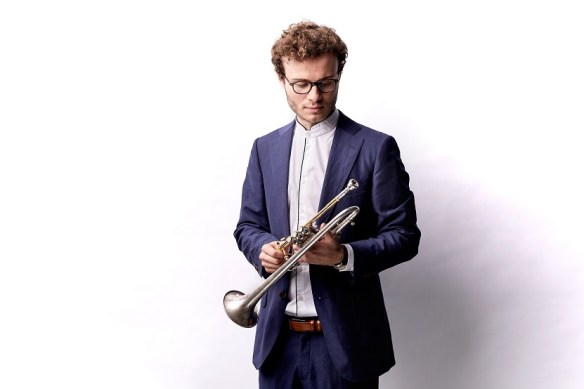
Frank Dupree (piano, above), Philharmonia Orchestra / Santtu-Matias Rouvali (below)

Glinka Capriccio brillante (Spanish Overture no.1 ‘Jota Aragonese’) (1845)
Kapustin Piano Concerto no.5 Op.72 (1993)
Borodin Symphony no.2 in B minor (1869 – 1876)
Rimsky-Korsakov Capriccio Espagnol Op.34 (1887)

Royal Festival Hall, London
Thursday 7 March 2024 (7.30pm)

Reviewed by Ben Hogwood Pictures (c) Raphael Steckelbach (Frank Dupree), Sisi Burn (Santtu-Matias Rouvali)

After this orchestral spectacular, I can confidently say that the Royal Festival Hall is free of cobwebs!

This most appealing program from the Philharmonia Orchestra was a cosmopolitan collection of works with roots in Russia, in the symphonic tradition (Borodin), delivering postcards from Spain (Glinka and Rimsky-Korsakov) or bringing in music from even further across the Atlantic (Kapustin).

The work with the farthest reach took top billing, thanks to the advocacy and breathtaking pianism of Frank Dupree. Making his debut with the Philharmonia, the soloist seized the opportunity to share his love of the music of Nikolai Kapustin, a composer he has championed on record in the past three years.

To call Kapustin ‘eclectic’ would be an understatement, but the label fits his unusual gift for looking outwards from classical music to jazz, boogie-woogie, Latin and even rock. To his credit none of those stylistic references sound hackneyed, and although the single-movement Piano Concerto no.5 is written out on paper it has a fresh, improvisatory quality that Dupree and the Philharmonia fair lifted off the page.

There were fun and games in this performance, harnessing elements of Gershwin, Milhaud and Shostakovich’s jazz writing, but ultimately channelling a style all of Kapustin’s own. Dupree shared the many musical jokes with the audience, while the Philharmonia percussion section – drum kit, bongos, castanets, everything but the kitchen sink! – was on hot form, Santtu-Matias Rouvali conducting with relish. The slow music explored more tender asides, evoking Harlem nights or even poolside in a hotter climate, while the fast music found Dupree exhibiting deceptive virtuosity as he navigated riffs and syncopations aplenty.

Even this wasn’t quite the highpoint, for there followed a high-spirited encore, Dupree leaning into the piano to thrum the strings in an atmospheric introduction to rhythmic high jinks, the percussion section – including Rouvali – out front to joust playfully with the soloist. It brought the house down.

With such a crowd-pleasing concerto, it was to the Philharmonia and Rouvali’s enormous credit that the rest of the program did not suffer, thanks to sparkling performances of music by three of the ‘mighty handful’ from late 19th century Russia.

Glinka’s clever interpolation of Spanish themes into his own Romantic language was brilliantly conveyed, a colourful account where Rouvali’s tempo had just the right ebb and flow. It is easy to forget this music is as old as 1845, and while the influences of Berlioz and Mendelssohn were still relatively fresh there was plenty of swagger in the dancing rhythms, the percussion again enhancing the brassy swagger of the closing pages.
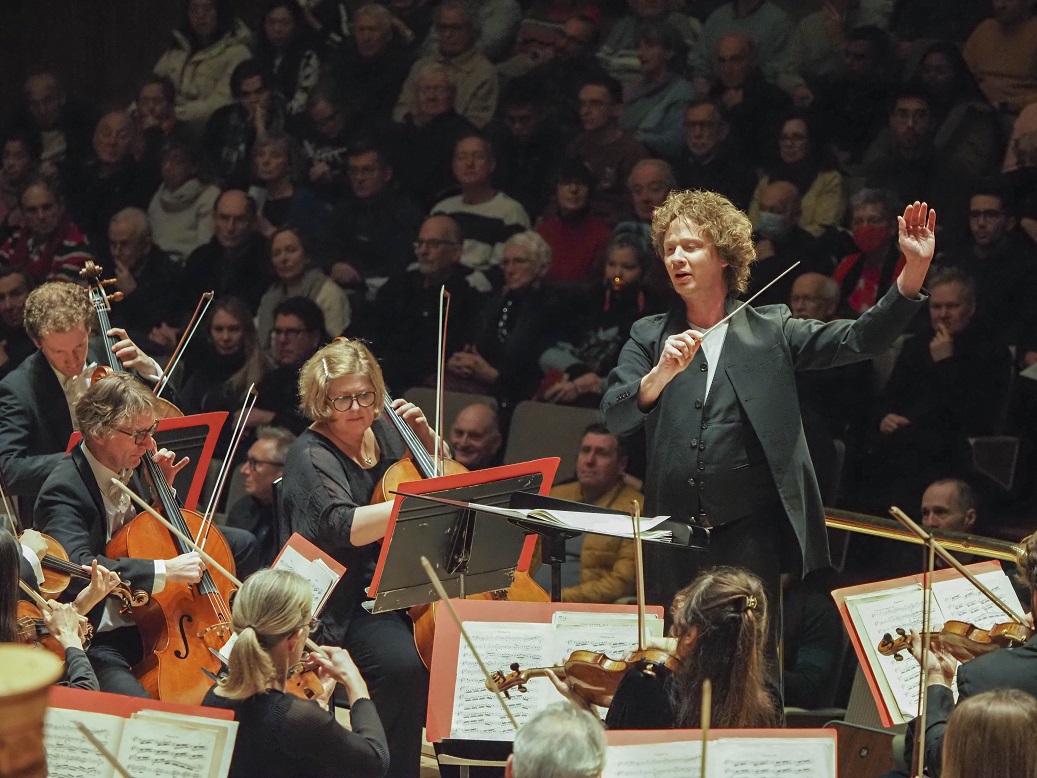
Rimsky-Korsakov’s Capriccio Espagnol was even more successful, a treasure chest of melodies opened with evident enthusiasm by Rouvali, whose rapid tempo changes did occasionally leave the string section needing to make up ground. Cadenzas for violin (orchestra leader Zsolt-Tihamér Visontay), flute (Samuel Coles), clarinet (Mark van de Wiel) and harp (Heidi Krutzen) were superbly executed, Rimsky’s mini ‘concerto for orchestra’ revealed in glorious technicolour.

Rimsky wrote the Capriccio while orchestrating his friend Borodin’s opera Prince Igor – and it was his own Symphony no.2 that was in theory the most ‘sober’ of the night’s four works. We reckoned without a powerful performance from Rouvali and his charges, however, making the most of a work bursting with melodic ideas that should be heard much more often in the concert hall. The first of these ideas sets the tone for the symphony, a stern utterance with strings digging in and brass solemnly intoning their thoughts. Once heard the melody sticks in the listener’s mind, dominating the first movement where symphonic arguments were tautly exchanged.

There was room for lightness, however, in the quickfire scherzo and jubilant finale. These movements were bisected by an emotive third movement of deeper Russian origin, its theme lovingly delivered by cellos but finding plangent brass (the wonderful horn section led by Ben Hulme) and superb woodwind solos to complement. Rouvali relished the chance to dust off this relative symphonic outcast as part of a thrilling, memorable concert. The smiles on the faces of the Royal Festival Hall concertgoers as they filed into the open air said it all.

You can find more information on further concerts at the Philharmonia website

Published post no.2,112 – Saturday 8 March 2024

Timothy Ridout & Frank Dupree – Bridge, Britten & Bowen @ Wigmore Hall

Timothy Ridout (viola, above), Jack Dupree (piano, below)

Bridge Pensiero; Allegro appassionato (1908)
Britten Lachrymae: Reflections on a Song of John Dowland Op. 48a (1950)
Bowen Viola Sonata No. 1 in C minor Op. 18 (1907)

Wigmore Hall, London
Tuesday 5 February 2019

Photo credit Kaupo Kikkas (Timothy Ridout)

Review by Ben Hogwood

The first Tuesday in the month usually brings with it a lunchtime recital at the Wigmore Hall from an artist on the YCAT roster. YCAT (Young Classical Artists Trust) is a charitable organisation looking after the development of emerging classical artists. A snapshot of its alumni (Alison Balsom, Simon Haram, the Belcea Quartet and Sean Shibe) bears testament to the success of their program and the longevity of the careers they boost.

On this evidence, viola player Timothy Ridout is another who looks set for great things – as does German pianist Frank Dupree, with whom he gave this recital. Dupree was demonstrating his versatility with a second appearance at the hall in nine days (previously appearing with BBC New Generation artist, trumpeter Simon Höfele)

The pair began with two compositions by Frank Bridge, himself a viola player – but one who seemed reluctant to write anything substantial for his own instrument. The Pensiero and Allegro appassionato are the only works that survive. Written in 1908, they fall into Bridge’s late Romantic period and make a very satisfying double. Ridout played the Pensiero affectionately and with a beautiful tone, which opened out for the surge of the Allegro appassionato that followed.

Bridge and Benjamin Britten enjoyed an inspirational creative partnership, the elder man a lasting influence on his pupil. Britten’s Lachrymae is his major work for viola and piano, though is more commonly heard in its orchestral arrangement. It is a masterful set of variations on a song by John Dowland, If my complaints could passions move, and reverses the variation format so that we hear all the variations first and the tune right at the end. He also refers to a second Dowland song, Flow my tears, in the course of the piece.

Ridout and Dupree gave a superb performance, atmospheric right from the start with a commendable attention to detail and a brooding passion which was unleashed in the fifth and sixth variations. The dynamic shadings were exquisitely realised, Ridout’s tone was beautifully judged, and Dupree’s punctuation marks were ideally clipped in the seventh variation.

Finally a very different form of Englishness was heard in the form of York Bowen’s Viola Sonata no.1. Bowen wrote this at the age of 20, and it shows an early command of the required form, as well as melodic invention, which both players clearly enjoyed. There was humour, too, in the coda parts of the first movement, and in the closing pages, which felt like a race to the finish between the two.

The sonata’s dimensions are considerable – 29 minutes in this performance – but the work did not outstay its welcome, thanks to the energy of the outer movements. These drove forward with great enthusiasm and lyrical input. Ridout’s tone was consistently strong and rich in the low register, his phrasing ideal – while Dupree matched him note for note in the tricky accompaniment. The slow movement found the emotional heart of the piece, but the sweeping optimism of the last movement stayed with the audience the longest.

As a nicely chosen encore Ridout introduced Bowen’s Melody for the G string (1917), its title a lightly humourous take on Bach’s Air but also rooting the viola player to the same string for the whole five minutes. With a charming tune, it provided a winsome finish to a very fine concert.

More music

You can watch Timothy and Jack in York Bowen’s Romance below, also at the Wigmore Hall:

Meanwhile to hear the music in this concert, the Spotify playlist below includes all the works performed, in versions currently available:

Timothy has not yet recorded any of the works featured, but his debut disc for Champs Hill is well worth hearing – the complete works for viola and piano by Belgian composer Henri Vieuxtemps:

Links

You can find out more about the work of YCAT and their artists on their website

Wigmore Mondays – Simon Höfele & Frank Dupree in 20th century works for trumpet and piano

Simon Höfele (trumpet, above) & Frank Dupree (piano, below)

Enescu Légende (1906) (2:07-8:20)
Takemitsu Paths (In Memoriam Witold Lutoslawski) (1994) (8:39-14:48
Hindemith Trumpet Sonata (1939) (16:56-33:30)
Savard Morceau de Concours (1903) (35:20-41:05)
Gaubert Cantabile et scherzetto (1909) (41:33-46:20)
Charlier Solo de Concours (1900) 47:39-54:26)

Wigmore Hall, London
Monday 28 January 2019

To hear the BBC broadcast through BBC Sounds, please follow this link

Photo credits Sebastian Heck (Simon Höfele)

Commentary and Review by Ben Hogwood

There is more music for the combination of solo trumpet and piano than you might think – and how gratifying for the BBC New Generation Artist Simon Höfele to remind us of that on his debut at the Wigmore Hall. Forming a most impressive partnership with pianist Frank Dupree, he gave us four works from the first decade of the 20th century, three by composers new to Arcana pages – and a masterpiece of the century’s repertoire.

Initially playing a trumpet ‘in C’ (that is, calibrated to sit naturally in the key of C major), Höfele listened to Dupree solemnly intoning the opening chords of the Enescu Légende (from 2:07 on the enclosed BBC Sounds link). A competition piece written by the Romanian composer for the 1906 trumpet competition (concours) at the Paris Conservatoire, it begins in a deceptively languid mood, the trumpet low in its register, but soon begins to stir, Höfele hitting a faultless top ‘C’ around 5:50. Then the thoughtful mood returns, the trumpet using the mute at the very end.

From this soft dynamic comes the beginning of the next piece, Takemitsu’s Paths (8:39). The paths in question are very separate – soft, ruminative phrases using the mute, answered by much bolder and generally higher writing. The piece ascends to the relative heights, the piercing rasp of the mute-inflected phrase brings it towards earth, but it ultimately ends in mid-air contemplation.

Hindemith was an incredibly versatile composer, in his career writing sonatas for no fewer than 16 of the instruments of the orchestra. His Trumpet Sonata is one of the finest examples of this canon, and betrays its 1939 origins with frequent references to the actions of his ‘home’ country Germany. At this point the composer was an exile in Switzerland, and this work effectively shows both his horror and sorrow at the annex of Austria, the occupation of Czechoslovakia and ultimately the invasion of Poland.

Turning to a trumpet ‘in B flat’, Höfele leads a brisk and busy start (from 16:56), though signs of the composer’s tongue-in-cheek writing are never far from the surface, peeking through at 17:50. Once reasserted, however, the main thematic material is impossible to shift.

The second movement (22:26) has a spirit of soft-hearted lazy play about it initially, with light hearted piano comments (ideally voiced by Dupree here) that are punctuated by the trumpet. From 29:19, the last movement, the piano distractedly accompanies the long trumpet phrases in lamentation, using as their source a chorale. Then the music builds to a resentful peak before fading away.

Very little is known of the French composer Augustin Savard – though he did win the coveted Prix de Rome with his oratorio La Vision de Saül in 1886. This Morceau de Concours is a competition piece for the trumpet that shows an impressive grasp of the instrument, not to mention drama in the slow introduction (35:20). By 39:06 the music has worked its way round to a genial theme for the faster section, after which trumpet and piano enjoy some light hearted exchanges.

Philippe Gaubert’s Cantabile et scherzetto, published six years later, enjoys a similar profile. Gaubert’s output is mostly directed towards the flute, but he too wrote a competition piece with a serious introduction (41:33) and a playful counterpart (44:20), packed with repeated triplets.

For the Solo de Concours by Belgian composer Théo Charlier (47:39) a slow introduction is not necessary, the piano firmly setting the scene before the trumpet’s arrival. An attractive slower theme (50:15) gives the other side of the story. A poignant aside from the muted trumpet follows before all the shackles are cast off in the final section (52:44) Just occasionally here Höfele felt as though he was overreaching with some of the more complicated phrases, but this – as with all the other pieces – was brilliantly handled.

The encore was a great choice, a Song Without Words by Russian composer Sofia Gubaidulina (56:03-58:30), a solemn tune spiced with the odd ‘wrong’ note in the piano accompaniment, almost in the manner of Charles Ives.

Further listening

Simon Höfele and Frank Dupree have not yet recorded any of the repertoire performed in this concert. However the playlist below assembles the music in a number of different recordings, headed by Alison Balsom and Tom Poster in the Hindemith Trumpet Sonata:

Höfele does however have an extremely impressive disc of modern works in the bag, including music by HK Gruber, Takemitsu, Jolivet and Iain Hamilton:

Hindemith’s sonatas are intriguing pieces that combine flair and depth with concise writing structures. This disc, commonly linked by pianist Alexander Melnikov, is a winner: