Wigmore Mondays – Denis Kozhukhin – Out of Doors

denis-kozhukhin
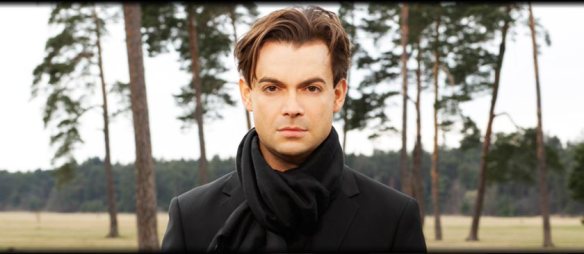
Denis Kozhukhin (piano)

Wigmore Hall, London

Monday, 22 February 2016

Audio (open in a new window)

http://www.bbc.co.uk/programmes/b071774c

Available until 24 March

What’s the music?

Haydn – Piano Sonata in D major, HXVI:24 (1773) (10 minutes)

Brahms – Theme and Variations in D minor (1860) (10 minutes)

Liszt – Benediction du Dieu dans la solitude (1847) (16 minutes)

Bartók – Out of Doors (1926) (14 minutes)

Spotify

Denis Kozhukhin has recorded the Haydn sonata but not any of the other works in this repertoire. In case you are unable to hear the radio broadcast the below playlist contains legendary recordings of the Brahms (Radu Lupu), the Liszt (Claudio Arrau) and Andreas Haefliger’s account of the Bartók:

About the music

Haydn is acknowledged as the godfather of so many forms that became the norm in classical music from the late 1700s onwards. As well as the symphony and the string quartet, he left a great body of piano sonatas that are fresh, original and ground breaking. Later examples from Beethoven and Schubert would surely not have been written were it not for works such as the D major example here.

The Brahms Theme and Variations is actually an arrangement of the second movement of his String Sextet no.1 – and transcribes for piano effortlessly, so much so that the listener would think it was a piano original. This was in order for it to be played by Clara Schumann, who received the score as a forty-first birthday present in 1860.

Liszt wrote his Benediction as part of a cycle of ten pieces for piano called Harmonies poétiques et religeuses in 1847. It is a relatively long, single span of contemplation, and in it the composer writes music that could be seen as an early pointer towards the so-called ‘impressionism’ of Debussy and Ravel. So often known for writing barnstorming piano pieces, Liszt takes his foot off that particular pedal for once.

Liszt’s fellow Hungarian Béla Bartók wrote his short set of five pieces, Out of Doors, in 1926. As its name suggests it is a celebration of the Hungarian countryside, by raucous day – pipes, drums and chases – and by atmospheric night, where the sounds of amphibious creatures can be heard in some of his exquisite nocturnal picture painting.

Performance verdict

From this concert it is very clear that Denis Kozhukhin is a special talent. The well-designed hour of music moved almost seamlessly from the simplicity of Haydn to the brazen antics of the Bartók with almost no join.

Kozhukin’s Haydn was lovely, the D major sonata receiving an airy performance with plenty of rubato – which means a stylish way of letting the music breathe – so that the rhythms were not too rigid.

The Brahms was similarly magical in the quieter passages, allowing Kozhukhin to use an imposing tone when the music returned to the minor key. This was a performance flying in the face of the obvious technical difficulties presented by the composer – and the same could be said for the Liszt, reaching moments of hypnotic beauty in its outer sections.

Kozhukhin took his time here, creating and maintaining the mood of contemplation, holding the atmosphere while easily managing the fiendishly difficult writing for the right hand. In the Bartók he found a good balance between percussive power and the primitive, folksy material that the composer brings to the surface. As a result Out of Doors felt like a celebration, entertaining and energetic, but with an added chill to the night pieces.

What should I listen out for?

Haydn

1:10 – the piece starts with a flourish in the right hand, one that recalls the sonatas of Scarlatti – as BBC Radio 3 announcer Fiona Talkington points out. It is a fresh tune that twinkles with the accompaniment that Haydn chooses, with very little bass. As is customary the first section is repeated (2:14) before at 3:20 Haydn starts to develop his main idea, moving it around harmonically. This is brief – as at 4:25 we hear the main idea again.

5:47 – the slow movement, which is immediately quite sombre and preoccupied. It is in the style of an aria, as though an imaginary singer were taking the line Haydn gives to the right hand. It is a brief but poignant movement, lost in thought towards the end. Haydn emerges from the quiet mood, leading straight into…

8:54 – the last movement, a short structure bright in tone and with an amicable tune. The end is rather nicely done.

Brahms

11:44 – Brahms begins with a grand statement. The first statement of the tune is given to the right hand, while the left plays arpeggiated chords. It is a big tune – and the first of six variations starts at 13:09, still in the minor key. By 15:38 the music is worked up and full of darkly coloured passion, but then Brahms slips effortlessly into the major key and a lighter outlook (16:54), from where Kozhukhin leads to a radiant variation. At 20:04 the austere minor key returns, but Brahms still finished in the major key, settling the strife experienced earlier.

Liszt

22:35 – Benediction du Dieu dans la solitude (God’s blessing of solitude) is a radiant performance of a piece that begins with a very long melodic phrase. It is quite unusual for Liszt in having very few moments of fire and brimstone, and instead achieves a kind of ecstasy of contemplation. The key – F sharp major – is key to this, the black keys somehow much more mystical than the white on this occasion! There are two central sections – both calming influences (28:39 and 30:58) before the original material returns (32:28). We hear all three tunes before the piece closes softly.

Bartók

39:03 – With Drums and Pipes – an exuberant if heavy start, low on the piano. This is almost an early precedent of rock music with its pounding rhythms!

40:40 – Barcarolla – a slower dance that flows nicely but which sounds uneasy, as though the direction of the boat on the water is uncertain.

43:10 – Musettes – this is rustic, dance-based material, where a lot of the tunes sound as though they are packed with wrong notes (they aren’t!) It makes them strangely charming.

46:05 – The Night’s Music – a classic example of a Bartók night setting. The music closes in on itself, and in the distance some animal / insect noises can be heard, disturbing the night’s piece when they get closer or make sudden noises, such as when Kozhukhin slams the upper end of the piano. It is an atmospheric and highly descriptive piece of music, and more than a little eerie as the sounds persist, seemingly stopping any chance of sleep.

51:11 – The Chase – a bruising encounter with the hands seemingly all over the place on the keyboard. The rhythms are deliberately inconsistent as the music hurries along, with great dissonance and surprises in both parts.

Encore

54:35 – the first encore is a sonata from Domenico Scarlatti – a relatively slow one that makes much of a trill in the right hand. It was published as Kk247 and lasts four minutes…after which point (at 59:01) we hear another sonata, this time from the Spanish composer Antonio Soler – a brighter example in D major – just the two minutes.

Further listening

At the bottom of the playlist you can hear the original Brahms Theme and Variations, written as the second movement in his String Sextet no.1. You can then hear another set of variations – on a theme of Haydn – as well as trying to second guess where Liszt was heading, in the direction of Ravel’s Jeux d’eau! Finally some more Bartók – his three movement Piano Sonata, just as raucous and unhinged as Out of Doors. Listen below:
Wigmore Mondays – Dejan Lazić plays Haydn, Shostakovich, Schumann and his own work

dejan-lazic

Dejan Lazić (piano) plays a concert of Haydn, Shostakovich, Schumann and his own Istrian Dances

Wigmore Hall, London; Monday, 18 January 2016

written by Ben Hogwood

Audio (open in a new window)

http://www.bbc.co.uk/programmes/b06vrk8d

Available until 17 February

What’s the music?

Haydn – Piano Sonata in E flat major, Hob.XVI:52 (1794) (20 minutes)

Shostakovich – 3 Fantastic Dances Op.5 (1922) (4 minutes)

Schumann – Waldszenen Op.82 (1849) (23 minutes)

Lazić – 3 Istrian Dances Op.15a (2008) (4 minutes)

Spotify

If you cannot hear the broadcast then this attached playlist covers almost all of the repertoire. Dejan Lazić has already recorded the Haydn and Schumann, while the Shostakovich is included in a recording by Vladimir Ashkenazy:

About the music

Haydn’s late Piano Sonata in E flat (given no.52 in the catalogue by the compiler Hoboken) is one of his grandest statements for the keyboard, an imposing piece that is often regarded as having a scope well beyond the solo instrument. It has Haydn’s characteristic wit but also an impressive stature.

By complete contrast the young Shostakovich – just fourteen at the time of writing the 3 Fantastic Dances – was just striking out, and you can sense him champing at the bit in these pieces. All three last under five minutes but are great fun.

Schumann was a great writer of character pieces for the piano, and Waldszenen (Forest Scenes) is one of the finest examples of his ability to paint portraits in relatively short periods of time. A group of nine pieces, these are often played with very little in the way of a break between them, and are often understated but without losing any intensity. Originally they were headed by poetic quotations, but the shadowy set of pieces was instead published without these and were given headings instead.

Finally Lazić himself gets in on the act, his 3 Istrian Dances rather similar to the solo piano works of Bartók in their reworking of national themes. Istria is a peninsula in the Adriatic Sea, shared by Croatia, Italy and Slovenia.

Performance verdict

Arcana was not present at the Wigmore Hall on this occasion, so this appraisal was done via the BBC iPlayer. Even from that it is quite clear not just what an accomplished pianist Lazić is, but that he has a strong sense of national identity in his compositions. In the lively Istrian Dances this takes him close to the sound world of Bartók, and this energetic performance proved an invigorating final number in the concert.

Lazić clearly has affection for the works of Haydn, and although some of his phrasing was quite mannered – nothing wrong with that, but not necessarily to everyone’s taste! – his technical control was superb, and some of the rapid passagework Haydn assigns to the right hand was thrown off with aplomb. Meanwhile the slow movement of the E flat sonata had a real depth of feeling.

His Schumann was excellent, very strongly characterised and recognising the intimacy found in a lot of these short pieces, the comfort of the forest sometimes spilling over into claustrophobia. Meanwhile the impudent Shostakovich was pure fun, the sound of a young composer flexing his muscles.

What should I listen out for?

Haydn

01:54 – a grand theme to start, anticipating Beethoven in its big scale. This is one of Haydn’s most substantial sonata themes. After an elaborate development, the first half of the movement is repeated from 4:06. Then from 6:22 Haydn takes the two main themes for a walk, running through some unexpectedly far-off keys until reaching home at 8:08.

10:12 – the slow movement starts in E major, the last key you would expect Haydn to use. But then this is Haydn, who likes to throw in a surprise or two to what ought to be conventional works! It is a thoughtful, intimate theme, too, one of his more profound slow movements for piano. Then at 13:09 Haydn moves the music into the minor key, and an unpredictable section based on the main tune, but before long we return to the opening material (14:16)

16:14 – a cheeky, stop-start last movement with repeated notes in the main tune. They sound like an over eager woodpecker or something similar! With typical wit Haydn develops these, making great use of silence in between some of his phrases and introducing some really difficult runs in the right hand. Again Haydn is adventurous in the rapid development section (from 18:46) until the witty theme makes a comeback (20:13)

Shostakovich

23:42 March – Allegretto – a thoughtful but quite carefree notion to this piece, and to the right hand especially, which becomes quite frivolous.

25:08 Waltz – Andantino – a relatively gentle start is misleading, as this piece turns out to be reckless and quite impetuous at times, making the listener jump!

26:32 – Polka – Allegretto – Shostakovich shows an early mastery of the piano, and despite pronounced influences from Chopin and Scriabin there is plenty of individuality to his style here too. Cheeky but meaningful.

Schumann

27:39 – Eintritt (Entry) – an endearing privacy immediately descends on Schumann’s music, beautifully written. The harmonies are open, and the melodies subtly restless, wandering for a while.

29:45 – Jäger auf der Lauer (Hunters on the lookout) – a furtive piece, hiding in the shadows initially, then becoming a lot bolder.

31:07 – Einsame Blumen (Lonely Flowers) – quite sparse, bring a melody and relatively economical accompaniment. It is a beautiful melody though, and has a strong yearning.

33:42 – Verrufene Stelle (Haunted Place) – the quietness of the piano is laced with tension, the scene far from comfortable. The music gets more animated but quickly retreats into its shell again, scarred by what it might have seen. There is a happier ending, mind, as the music moves to a major key and peace of mind.

37:51 – Freundliche Landschaft (Friendly Landscape) – a quickfire piece, happy go-lucky in these hands, relieved after the haunting has passed.

38:55 – Herberge (Wayside Inn) – the welcoming inn is a lively place in Schumann’s description, with a warm welcome, carrying on from the happy place above.

40:54 – Vogel als Prophet (Bird as Prophet) – a fascinating, mysterious piece that leaves a mark through its distinctive melodic profile. Its foreboding message hangs on the air.

43:58 – Jagdlied (Hunting Song) – an open air call to arms. Schumann wrote a lot of hunting songs for voice and piano and piano alone, but this one is reminiscent of Beethoven in its profile and the choice of E-flat major.

46:24 – Abschied (Farewell) – initially confident but immediately thoughtful, and the rest of the piece is relatively sombre and quietly moving.

Lazić

51:52 – an arresting call to arms in the first dance, with the notes in the right hand close together, creating crunchy dissonances.

The second dance is underway at 52:40 and is equally spiky, with quickfire shots from the right hand and powerful double notes in the left. At 53:39 a languid dance makes itself known and turns in on itself softly.

The third dance gets underway at 54:39 with highly distinctive rhythms, detached and tumbling down the keyboard at times before finishing suddenly at 55:24.

Encore

56:43 – the encore is the finale of one of Haydn’s best-loved Piano Sonatas, in C major (published as HXVI:50). You can sense the composer thumbing his nose at the audience in his witty asides and false approaches to the ending, which finally arrives at 58:53.

Further listening

Having mentioned Bartók earlier it would be churlish not to include something of his for solo piano, so attached to the bottom of the concert playlist you will find the 3 Rondos, played by Zoltan Kocsis. Alternatively you could try a whole set of Mazurkas by the Polish composer Karel Szymanowski, on the album below:

Wigmore Mondays – Alexei Ogrintchouk and friends play music for oboe and string trio

Picalexei-ogrintchouk

Picture used courtesy of the BBC

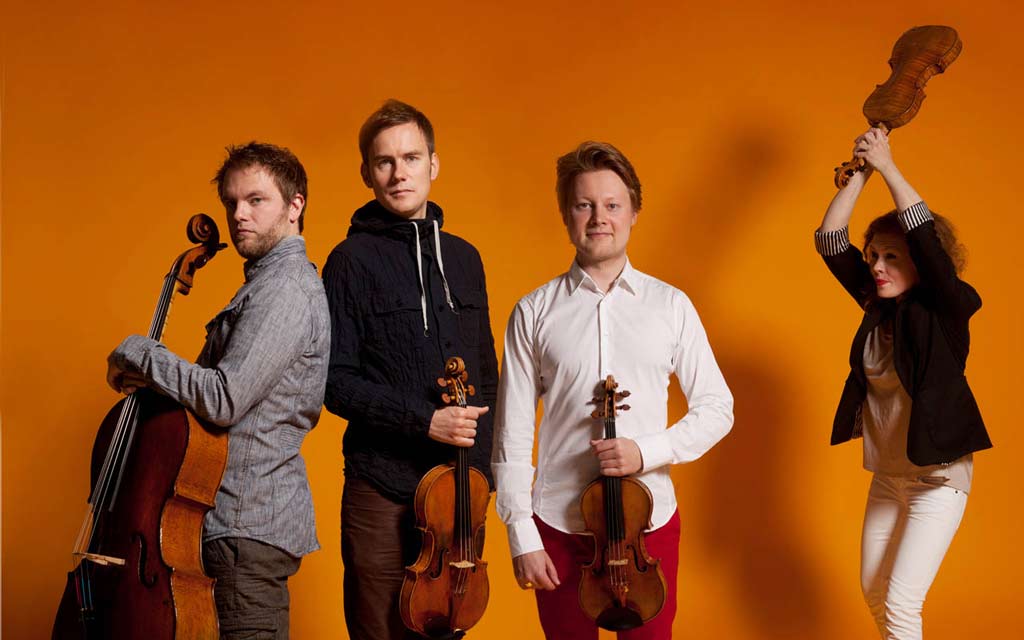
Alexei Ogrintchouk (oboe), Boris Brovtsyn (violin), Maxim Rysanov (viola) and Kristina Blaumane (cello) – Wigmore Hall, London, live on BBC Radio 3, 12 October 2015

Listening link (open in a new window):

http://www.bbc.co.uk/programmes/b06hjxlv

on the iPlayer until 18 November

Spotify

In case you cannot hear the broadcast, here is a Spotify playlist of the music in this concert, from available versions on Spotify. Alexei Ogrintchouk has recorded the Mozart, while available versions of the Haydn, Britten and Schubert pieces are also included.

What’s the music?

Attributed to Haydn: Divertissement in B flat, HII:B4 (not known) (10 minutes)

Britten: Phantasy Quartet, Op 2 (1932) (13 minutes)

Schubert: String Trio in B flat, D471 (1816) (8 minutes)

Mozart: Oboe Quartet in F, K370 (1781) (14 minutes)

What about the music?

Often in chamber music the strings get a lot of the glory, so it is good to report on a concert where the oboe is invited to take centre stage. The instrument is on occasion associated with sad music (Midsomer Murders use it a lot!) and it is perfect for autumnal listening, but it should be remembered that the oboe is also responsible for a lot of happy music too, as Mozart’s Oboe Quartet testifies.

This piece is a beauty, seemingly free of any constraints in its outer fast movements, while the inner slow movement is short yet poignant, set in the minor key. Mozart wrote it for the virtuoso Friedrich Ramm, and composed the oboe line to sit above that of the violin, thus using the higher register of the instrument a lot.

Britten uses a wider range of colour in his Phantasy, written as a competition piece when he was at the Royal College of Music. Thanks partly to the advocacy of the legendary oboist Leon Goossens, but also to his musical craft, the piece won its competition in Paris. Set over nearly 15 minutes, it has a dramatic profile, beginning as a march that seems to process in from nothing – started by the cello – until the sweep of lyrical oboe and punchy strings together is striking.

The first piece in the concert is a two movement Divertissement attributed to Haydn but, it is not wholly certain who actually wrote it. To my slightly untrained ears it sounds like it could be earlier than Haydn, but regardless of who the composer is the music is polite and attractive, the four instruments set in close dialogue.

Schubert’s single movement for String Trio is in the same key – B flat major – and has a similar profile, though does make the most of a striking descending motif throughout. Originally Schubert wanted this to be the first movement of a bigger piece, but after sketching some bars of the slow movement he stopped writing.

Performance verdict

Over the last few years Alexei Ogrintchouk has developed from a very promising musician to an oboist right at the top of his game – and that was evident throughout a highly enjoyable concert.

The peak was undoubtedly reached in the Mozart, where he met the virtuosic demands of the piece head on but without losing the airy, lyrical approach that makes the Oboe Quartet such a charmer. The performance of the Britten dug in much more firmly, the strings encouraged to project outwards, and this they did with impressive power when the march took hold. Britten’s genius in working with small forms was evident even at this point, and not a note was wasted in the performance.

Both the Haydn and Schubert performances charmed, the Schubert nicely placed so that the strings had a brief moment in the sun – which they enjoyed, with lightness and dexterity, clearly listening to each other.

What should I listen out for?

Attrib.Haydn

2:01 – this light hearted piece begins with an oboe-led melody, while the cello supplies a chugging pulse. The music is polite and attractive. At 5:13 a central section begins, based on the melody from the start.

7:50 – a slightly slower second movement, a courtly dance – in the form of a rondo, which essentially means the same theme recurs at regular intervals. The violin and viola assume greater importance in this movement. The theme itself makes a final appearance at 11:02.

Britten

14:25 – the beginning is almost imperceptible, a little phrase from the cello which is gradually joined by the other two stringed instruments. When the oboe joins at 15:07 the tone is songful, though the spiky accompaniment continues, leaving some tension until a firm statement of the main tune at 16:12. Then a different section takes over, with heavier string writing.

20:25 – the writing now has a softer, hazy hue, as the strings enjoy a slower and more obviously lyrical section. At 22:30 a higher melody from the oboe floats above the texture.

24:52 – the main march idea makes a reappearance, striding forward purposefully – until the music fades, as though it were walking over the horizon and out of earshot.

You can read more about the Britten Phantasy on a blog entry I made two years ago here

Schubert

29:52 – the Schubert String Trio, set in one movement, begins with an attractive melody led by the violin. There is a distinctive downward sweep that is heard from 30:40, and which becomes an important part of the piece. The three instruments stay closely aligned throughout. After developing his main tune, Schubert restates it at 35:22.

Mozart

40:04 – the oboe is already high in its register when the distinctive tune of the first movement is heard, top of an extremely light texture. The strings are busy in their accompaniment. Mozart then proceeds to manipulate his memorable tune through different methods of presentation, until a slight lull at 43:53 – and the return of the main tune at 44:57.

46:44 – A slight shadow falls over the music for the second movement Adagio, where the strings are softer and the oboe a little mournful if still beautiful in its first melody. At around 48:57 the oboe is left exposed in a kind of cadenza, leading up to the thoughtful end.

49:57 – once again the brightness in this music is evident as a light hearted theme sways between oboe and strings. The oboe enjoys the recurrences of its tune, with Mozart subtly varying the accompaniment each time before finishing on the high ‘F’ of the oboe at 54:00.

Further listening

If you enjoyed the sound of the oboe, then a logical next step is a couple of orchestral pieces, added to the bottom of the playlist, that use the instrument to its fullest capabilities:

First of all is Ravel’s subtle but gorgeous Le tombeau de Couperin, the oboe taking up the first theme in the Prélude and also enjoying prominence in the slow Menuet.

Then we have Vaughan Williams’ beautiful, autumnal Oboe Concerto, heard here in a new recording from the oboist Nicholas Daniel. The wistful quality perhaps gives away the fact this piece was written in the Second World War. Daniel’s disc is reviewed on Arcana here

Meta4 play Haydn and Schumann string quartets at Wigmore Hall

The Finnish quartet Meta4 play Haydn and Schumann string quartets at Wigmore Hall

meta-4

Meta4 (Antti Tikkanen & Minna Pensola (violins), Atte Kilpeläinen (viola) & Tomas Djupsjöbacka (cello)) – Wigmore Hall, live on BBC Radio 3, 6 April 2015.

Listening link (opens in a new window):

http://www.bbc.co.uk/programmes/b05pqzdk

on the iPlayer until 6 May

Spotify

This Spotify link is for those unable to gain access to the broadcast. As Meta4 have not recorded any of this music, two alternatives have been chosen in recordings by the Hagen Quartet:


What’s the music?

HaydnString Quartet in C major Op.20/2 (1772) (20 mins)

Schumann String Quartet no.1 (1842) (27 mins)

What about the music?

haydn

Haydn string quartets are so often a feature in an hour-long quartet recital that it is easy to forget just how revolutionary they were at the time of composition. The publication of his six ‘Sun’ quartets in 1772 (so-called because an early edition had the sun on its cover) represented a massive step forward in the history of the form towards what it has become today. One of the best quotes about the string quartet comes from Goethe – who referred to Haydn’s mastery of it as ‘’

Before the ‘Sun’ quartets the violins had almost total dominance in the melody – but the gradual development of viola and cello into melody instruments was well underway, and Haydn ensured that in the second of the six works he gave special attention to the cello from the outset – before bringing all four instruments together as equals. The musical language, too, is expressive, the composer moving to unusual keys and harmonies to present music that is far from simple – as C major often suggests it should be.

Schumann, on the other hand, is not really regarded as a string quartet composer – his primary instruments being the voice and the piano. Yet he contributed three very attractive works to the medium, all written in 1842, a year after his so-called ‘year of song’. This was after an intense period of study of the quartets of Haydn, Mozart and Beethoven.

Schumann dedicated the three quartets published as Op.41 to Mendelssohn – who loved them.

Performance verdict

These are spirited performances from Meta4. For the Haydn they bring out some of the revolutionary aspects of the writing by using less vibrato, giving a more austere sound when the harmonies get darker. Some of the tuning here is not perfect, but there is never lack of expression.

The Schumann quartet is extremely enjoyable, vigorous in its faster movements but finding the lyricism Schumann invests in his quartet writing especially in the slow movement.

What should I listen out for?

2:36 – the quartet begins with quite a sinewy sound. There is a sense of discovery here, a little similar in mood to the opening shades of Haydn’s ‘Le Matin’ symphony. A rather more austere section begins at 6:49, darker in mood, before the cello takes up the theme once again at 8:22.

10:01 – a louder attack from Meta4, and a more dramatic section of music from Haydn that seems to hark back towards the Baroque in its stormy implications. It is no coincidence that the music has shifted from C major to C minor, and the emotions are troubled. The movement ends, almost with a whimper.

13:05 – now the music is rather sweet, with an attractive line given to the first violin – but again the ‘sturm and drang’

A relatively genial last movement begins, but still doesn’t sound fully sure of itself until the pace picks up finishes at 22:42

Schumann

25:57 – a subdued beginning to the quartet, with careful interplay between the instruments. After this slow introduction the music speeds up and gets to the heart of its argument.

35:30 – a restless second movement with what is nonetheless quite a catchy tune when heard several times! A contrasting ‘trio’ section begins at 37:03, which has more graceful contours but still sounds a bit on edge with its chromatic nature.

39:53 – a rising line from the cello signals the beginning of the slow movement, with this material used as the basis

46:59 – a brisk last movement begun with three ‘snap’ chords before the music becomes more rustic and outdoors. Rushes to what looks like a false ending at 51:32, but then an extraordinary passage of play starts where the four instruments sound like bagpipes.

Encore

55:06 – the encore chosen by Meta4 is a ‘local’ one – Jusslin by the contemporary Finnish composer Timo Alakotila (5 mins)

Want to hear more?

After hearing one of the Haydn ‘Sun’ quartets, the other five are also strongly recommended. You can hear the Hagen Quartet playing them on Spotify here.

Similarly the other two Schumann quartets of the Op.41 set are recommended, together with the Piano Quintet (for piano and string quartet) written soon after. The Hagen Quartet are once again in action, playing the First String Quartet and Piano Quintet here (pianist Paul Gulda), and quartets nos. 2 & 3 here

For more concerts click here

Danish String Quartet – Haydn and Shostakovich

The Danish String Quartet play works by Haydn and Shostakovich at Wigmore Hall

danish-string-quartet
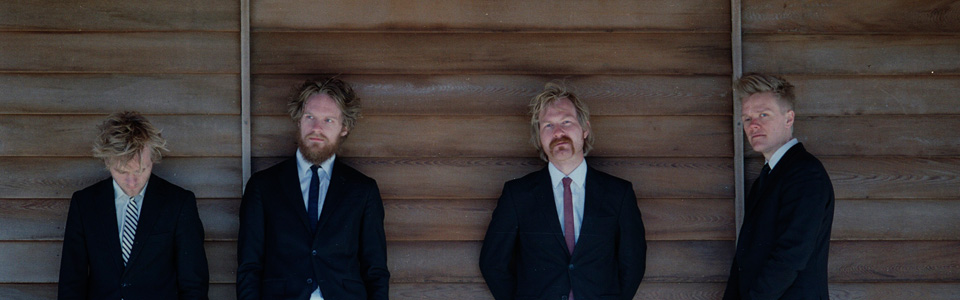
Danish String Quartet (Frederik Øland, Rune Tonsgaard Sørensen (violins), Asbjørn Nørgaard (viola), Fredrik Sjølin (cello)) – Wigmore Hall, live on BBC Radio 3, 23 March 2015.

Listening link (opens in a new window):

http://www.bbc.co.uk/programmes/b05mqmkv

on the iPlayer until 22 April

Spotify

The Danish Quartet are yet to record either of these pieces, so for listeners unable to hear the BBC audio here is a Spotify playlist of the same works from the Lindsay Quartet (Haydn) and the Aviv Quartet (Shostakovich) – two fine versions:

What’s the music?

HaydnString Quartet in C major Op.54/2 (1788) (20 minutes)

Shostakovich String Quartet no.9 (1964) (25 minutes)

What about the music?

[PIC]

As my concert-going companion remarked, Haydn string quartets are always used as curtain openers, which can be something of a shame, as they are always performed when the quartet is at its ‘coldest’. This particular work, seemingly written for the violinist Johann Tost in 1788, can not be allowed to fall into that category, for the first violinist has a lot of demands made on him right from the start.

As with many Haydn works this quartet is deceptive, for it has the routine layout – yet tinkers with the overall design of a conventional string quartet. The first movement is a lot faster than it would be normally, while the second movement (the slow movement here) runs straight into the third (a minuet), a tactic very seldom witnessed. Not only that, the last of the four movements is predominantly slow.

Shostakovich’s most private thoughts went into his string quartets, which often convey the intense fear and claustrophobia he felt with the authorities seemingly poised to knock on his door in the middle of the night, ready to remove him forever for his supposedly rebellious musical tendencies. Ultimately he found ways of expressing himself in a private musical code, and the string quartets were especially vivid at using that.

Yet his ninth published string quartet is much more positive in mood than most, seemingly gathering itself to renounce the fear and stand confidently on two feet. As the Wigmore Hall program note states, this may have been due to the composer’s recent marriage – his third – and the slight ‘thaw’ in relations that was allowing him to revive the previously out-of-bounds opera Lady Macbet of the Mtsensk District.

Performance verdict

How refreshing to hear Haydn played with the energy the Danish String Quartet gave it in this performance. All too often these quartets sound too polite, but this account was a good reminder of Haydn’s innovations in the form, and in the way he makes this piece sound a bit like a miniature violin concerto. First violinist Frederik Øland was up to the job.

The Shostakovich was even better, given a depth of feeling and range of colour that suited the piece perfectly. Whereas some of the composer’s quartets are very closed in this felt like a positive, outgoing experience, standing tall in the face of the horrors of the time. Particularly effective was the Rossini-like polka that danced manically, while the slower sections – and in particular the quotes from Musorgsky’s Boris Godunov – were beautifully handled.

The quartet’s ensemble playing was superb, and their togetherness and positivity were two standout features of a superb concert.

What should I listen out for?

Haydn

1:49 – the first movement, unusual in the composer’s output for being marked Vivace (lively). The Danish Quartet enjoy its contours – particularly first violinist Frederik Øland, who has a challenging part!

8:14 – the mood turns sombre (and the key changes from C major to C minor) for the slow movement. Again the first violin starts to take the lead but sounds a bit absentminded against the long, slow chords from the other three instruments. This moves straight into…

11:27 – the Menuetto, an injection of pace and poise, with a typically upbeat theme from the composer. This is in direct contrast to the Trio section, from 13:03, with its discords. The texture is surprisingly full here for four instruments. The Menuetto reappears to put things right at 14:01, as though nothing had happened!

15:06 – a solemn introductory theme, which turns into a thoughtful and deeply felt Adagio. Very unusual for a slow movement to appear last in a typical four-movement quartet structure in the eighteenth century…and yet there is fast music to come, from 19:54 as the music scampers away…only to return to its previous slow tempo, on which it ends at 22:12.

Shostakovich

This quartet runs continuously but is in five distinct sections / movements:

24:48 – an airy beginning, with hints of unease from the inner and lower parts. The second violin is playing a theme associated with Pimen in Musorgsky’s opera Boris Godunov. A light dance is played out and an air of tranquillity takes over. Yet even here, as the upper parts circle, nervy thoughts lurk in the shadows. Then we move to the second ‘movement’…

…at 29:05. A romance in all but name with happier thoughts, possibly inspired by the composer’s recent marriage (his third). The harmonies are lush here, and after some thought the tempo begins to increase…

..to 33:24, where a polka starts up, and the rat-a-tat rat-a-tat rhythm – a quotation from Rossini’s William Tell Overture­ – begins to obsessively take hold.  A furious energy is unleashed, brilliantly captured by the Danish Quartet, who keep an appealing roughness around the edges when the music is most fractious. The instruments converse with some of these melodic figures.

37:13 – the music takes on a mood of deep thought, but is wrenched from its reverie by violent pizzicato (38:09), a tactic used several times to unsettle the listener, before a piercing and unnerving violin cadenza briefly takes centre stage.

40:38 – the substantial final movement starts with a jolt, the music thrown forwards like a car starting suddenly. Having started this mad push forwards Shostakovich has to keep it going, and does to with some emphatic and blustery unison passages for two or more instruments of the quartet. Powerful lines on the cello are compromised by what can only be described as ‘scrubbing’ from the persistent second violin. Shostakovich’s sardonic humour makes itself known through ‘glissandi’ (where a note slides in pitch, mostly upwards in this case!), before an emphatic finish.

Encore – NielsenMit hjerte altid vanker arranged by the Danish String Quartet second violinist Rune Tonsgaard Sørensen

52:40 – Chosen to celebrate 150 years since the Danish composer’s birth, this is a short but sweetly voiced chorale lasting just under two minutes.

Want to hear more?

As the Danish Quartet mentioned, their compatriot Carl Nielsen is in an anniversary year, born 150 years ago – and the foursome have recorded his complete string quartets, not often heard but here on this album on Spotify:

For more concerts click here