Wigmore Mondays: Ilker Arcayürek & Ammiel Bushakevitz – Schubert: The Path of Life

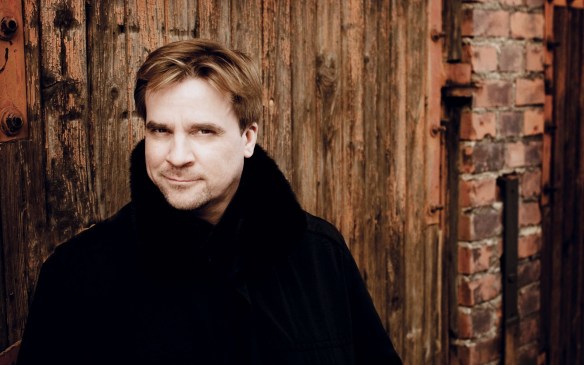
Ilker Arcayürek (tenor, above), Ammiel Bushakevitz (piano, below)

Schubert
Fischerweise D881 (1826) (2:21 – 5:12)
An Silvia D891 (1826) (5:21 – 8:06)
Der Wanderer an den Mond D870 (1826) (8:21 – 10:32)
Atys D585 (1817) (10:51 – 15:00)
Sei mir gegrüsst D741 (1821-22) (15:20 – 19:20)
Wehmut D772 (1822) 19:46 – 23:10)
Der Wanderer D493 (1816) (23:16 – 28:42)
Litanei auf das Fest aller Seelen D343 (1816) (28:47 – 32:20)
Einsamkeit D620 (1818-1822) (34:45 – 52:03)

Wigmore Hall, London; Monday 10 September 2018

You can listen to the BBC Radio 3 broadcast by clicking here

Written by Ben Hogwood

A fascinating anthology of Schubert songs from BBC Radio 3’s New Generation artist, tenor Ilker Arcayürek, and pianist Ammiel Bushakevitz. If you wanted an introduction to the composer’s approach to song in his mid-twenties – sadly towards the end of his short life – then you could hardly ask for better than this.

The performers include songs short and long, bright and downbeat, bringing to the table some of the contrasting moods Schubert uses in his songs, which are surely the crowning glory of his compositional output.

The concert begins with the steady passage of Fischerweise (Fisherman’s Song, 2:21 on the broadcast) – a bright song, full of purpose and with a piano part that burbles like the water. The fisherman’s ‘work gives him vigour’, proclaims von Schlechta’s poetry, and this song is a great way to set the scene.

Following that is An Silvia (5:21), written in the same year of 1826, nicely pointed in this performance with an effortless conversation between singer and piano, exchanging short musical figures. Right from the start of Der Wanderer an den Mond (8:21) a clear story is being told by piano and tenor, leading ultimately to happiness in the major key at the end.

Atys (10:51) is an earlier song and quite urgent, especially when the piano leans provocatively on the more chromatic notes. Meanwhile Sei mir gegrüsst (I greet you, 15:20) is a more languid affair that looks forward towards Schumann, with a highly distinctive and slightly awkward (but highly effective) vocal line.

Wehmut (Melancholy, 19:46) has a solemn piano introduction and ultimately gives way from the joys of spring to the cold regret of winter. In Der Wanderer (23:16) we hear hollow octaves from the piano for dramatic effect at 27:32, where the ‘ghostly breath that calls back to me’ sends shivers down the spine in Arcayürek’s delivery. Then Litanei auf das Fest aller Seelen (Litany for the Feast of All Souls, 28:47) explores a lovely major key contrast after the desolation of Der Wanderer’s end.

And so to Einsamkeit (34:45), the remarkable 18-minute song that Schubert expert Graham Johnson cites as the first example of his song cycle writing. Certainly it is a song of epic proportions, a kind of forebear of today’s suite-like progressive rock epics – but also of the song cycle as a whole, as employed not just by Schubert but by Schumann, Mahler and others. While Schubert traverses a wide range of moods and emotions there is still a telling shift at 45:32, where the poet proclaims ‘give me my fill of gloom’, before a dramatic recitative. After this tour de force both performers end in relative contentment given what has gone before.

Perhaps not surprisingly this concert ended with demands for an encore, given Ilker Arcayürek’s clear yet rounded delivery and the extremely responsive piano playing of Ammiel Bushakevitz. They responded with Wandrers Nachtlied II D768 (1822, from 53:35 – 56:13), a lovely bit of space after the tumult of Einsamkeit. It put the seal on a very fine recital indeed – a place to introduce yourself to the Schubert song if you haven’t already done so.

Further listening

Ilker Arcayürek has already recorded a disc of Schubert songs with Simon Leppner for the Champs Hill label, which can be heard on Spotify below:

Only one song from that release was included in this concert – the below playlist contains all the others in versions from leading Schubert interpreters:

Prom 14 – BBC Philharmonic / John Storgårds: Single-movement Sibelius, Zimmermann, Schubert & Wagner

Prom 14: Elizabeth Watts (soprano), Louis Lortie (piano), BBC Philharmonic OrchestraJohn Storgårds

Wagner Die Meistersinger von Nürnberg – Prelude to Act One (c1861)
Schubert (orch. Liszt) Four Songs (1825/1815/1826/1815, orch. 1860)
Zimmermann Symphony in One Movement (1947-51, rev. 1953)
Schubert (arr. Liszt) Fantasy in C, D760, ‘Wanderer’ (1822, arr. c1850)
Sibelius Symphony No. 7 in C, Op. 105 (1924)

Royal Albert Hall, Tuesday 24 July 2018

You can listen to this Prom by clicking here

Reviewed by Richard Whitehouse

John Storgårds has given some enterprising concerts during his tenure as Chief Conductor of the BBC Philharmonic Orchestra, and this evening’s Prom was a further instance with its programme of mainly one-movement pieces and an underlying emphasis on symphonic cohesion, even unity.

The exception was the sequence of four songs by Schubert, arranged for orchestra by Liszt so that a tenuous cohesion is evident – without this being a song-cycle as such. Elizabeth Watts (below) duly had the measure of their predominantly sombre sentiments – ranging from the distanced recollection of Die junge Nonne, via remorseless passing of experiential time in Gretchen am Spinnrade and speculative radiance of Lied der Mignon, to visceral representation of fate in Erlkönig. Storgårds teased many subtleties from Liszt’s judiciously restrained orchestration.

Preceding this came a surprisingly dour account of the Prelude from The Mastersingers of Nuremburg. This grandest of Wagner music-dramas is also the most symphonic, not least its Prelude as it deftly outlines a four-movements-in-one format. While not being oblivious to this, Storgårds might have characterized these episodes more potently, though this may have been in line with his tendency to play down the music’s opulence and majesty. What resulted was a subdued and earnest performance that hardly marked him out as a budding Wagnerian.
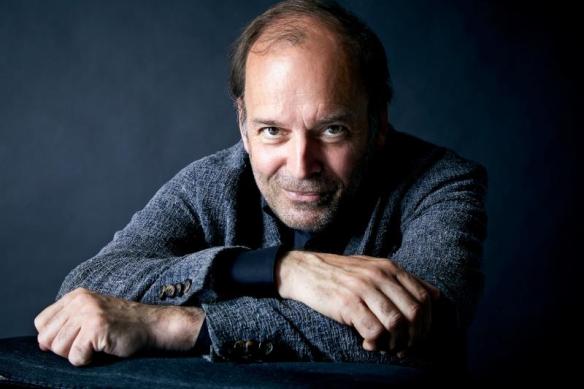
Concluding the first half was the Symphony in One Movement by Bernd Alois Zimmermann; a timely hearing in this centenary year of the composer’s birth. Although the more discursive original version (complete with organ histrionics) has recently been revived, this revision is audibly more focussed in form and expression as it traverses a quirky yet combative sonata design – (modified!) exposition repeat included – before emerging full circle in a mood of unbridled ferocity. Storgårds was at his interpretative best here, maintaining a tensile course over an eventful score where influences of mid-century symphonism do not outface pointers to the intricacy or intensity of Zimmermann’s mature music. A notably enthusiastic reception suggested that tonight’s audience ‘got’ what the composer was about in this singular piece.

Time was when Liszt’s concertante realization of Schubert’s Wanderer Fantasy was a staple at these concerts, but this was only the second hearing in nearly six decades. 33 years ago, the soloist was Jorge Bolet at his unpredictable best, but Louis Lortie’s rendition (above) was altogether subtler as he brought out the pathos of the Andante then jocularity of the Presto. If the outer Allegro sections felt reined-in, this was not at the expense of that keen virtuosity informing Lortie’s playing in his solo passages or coruscating interplay with the orchestra at the close.

A century on, Sibelius not only ran movements together in his Seventh Symphony but fused them into a seamless and powerfully cumulative whole. Storgårds was certainly alive to this in what was a purposeful and often insightful reading; a little unsettled in those introductory pages, perhaps, but thereafter gauging the various transitions with a sure sense of where this music was headed while investing the vertiginous trombone entries with implacable majesty. One of this season’s most absorbing concerts thus far was brought to an impressive close.

Wigmore Mondays: Golda Schultz & Jonathan Ware – Mozart, Schubert, Amy Beach & John Carter

Golda Schultz (soprano, above) and Jonathan Ware (piano, below – credit Kaupo Kikkas)

Mozart An Chloe, K524; Das Lied der Trennung, K519 (both 1787)
Schubert Heimliches Lieben, D922 (1827); Romanze (Rosamunde, D797 No 3b) (1823); Suleika I, D720; Suleika II, D717 (both 1821)
Amy Beach Three Browning Songs, Op 44 (1900)
John Carter Cantata (1964) (40:33-53:30)

Wigmore Hall, London; Monday 5 February 2018

You can listen to the BBC Radio 3 broadcast by clicking here

Written by Ben Hogwood

It is always welcome to see a singer make their debut at a venue like the Wigmore Hall with a less than usual recital programme in tow. South African soprano Golda Schultz did just that, giving with pianist Jonathan Ware a concert ranging some 200 years and crossing from Europe to North America as it progressed.

Europe first, and two songs from Mozart. While known as a vocal composer, Mozart’s songs are relatively rarely heard in the concert hall, and it was nice to hear two substantial, more mature examples, from around the time of Le Nozze di Figaro. An Chloe made a relatively graceful start, Schultz exhibiting a full voice with a lovely bright top end to the soprano voice, but the more substantial Das Lied der Trennung (6:49-11:30) told a story of greater angst.

The Schubert selection (from 19:32-29:28) was a quartet of the composer’s settings of women poets, beginning with the late (for him, anyway!) song Heimliches Lieben. Written when the composer was still only 29, it is a deeply passionate affair, and Schultz involved herself completely. Then we heard the lovely Romanze (16:20), with its deep longing, persuasively phrased in accompaniment by Ware.

Both Suleika songs followed, often wrongly attributed to Goethe but with words by Marianne von Willemer. The first, initially an edgy affair (19:32), was described by Brahms as ‘the loveliest song ever written’, and here benefited from Schultz’s poise and Ware’s telling shifts from major to minor key before evening out for a radiant coda. The second (25:16) included the same shifts, but danced lightly on its feet.

Amy Beach was one of the first women composers to really make a lasting impression in classical music, terrible as that sentence sounds. Some of her songs are well known, in particular these three short settings of poetry by Robert Browning (31:02-33:50 on the broadcast). The first, The Year’s at the Spring! (31:02), was a rapturous picture postcard with which to throw open the doors, while Ah, Love, but a Day! (32:13) grew gradually higher in range, Schultz making the most of this with an exquisitely floated delivery. Finally I Send My Heart Up To Thee (33:50) was a joyful ray of light.

Ending the program was a real curiosity, the Cantata by little-known Afro-American composer John Carter (1932-c1981). Written for and premiered by Leontyne Price in 1964, it is based on settings of Negro spirituals, but adds some particularly vivid descriptions in the piano part, heroically played here by Jonathan Ware. His Prelude (40:33) set out an impressive stature for the piece, which Schultz built on with Peter, Go Ring Dem Bells (41:23). This developed into a tour de force, increasingly fervent with peals of bells in the right hand and a soaring top B flat from Schultz, brilliantly delivered.

After this a step backwards was needed – and found – in Sometimes I Feel Like A Motherless Child (45:12), a solemn utterance, before the contemplative Let Us Break Bread Together On Our Knees (48:02). From the silence came a tumultuous final movement (51:22), the Toccata Ride On King Jesus. Both performers gave it everything, capturing the mysterious power of Carter’s music.

There were two encores – an affectionate account of Somewhere Over The Rainbow (54:48), vibrato beautifully controlled, and then, closer to home for Schultz, an Afrikaan song entitled Homesickness (1:00:28).

Further listening

You can watch an intriguing interview with Golda Schutz below, in which she candidly discusses her own stage fright – which certainly was not on show at the Wigmore Hall!

Meanwhile to hear recordings of the music from this concert you can use the Spotify playlist below:

Listening to the John Carter Cantata I was reminded of Copland’s Old American Songs – and you can hear them in their choral versions below, conducted by Michael Tilson Thomas:

BBC Proms 2017 – BBC Scottish Symphony Orchestra with Thomas Dausgaard: Mahler & Schubert ‘Unfinished’

Prom 36: BBC Scottish Symphony Orchestra, Thomas Dausgaard (above)

Schubert Symphony No. 8 in B minor, D759, ‘Unfinished’ (1822)

Mahler Symphony No. 10 in F sharp, realized Deryck Cooke (1910; 1959-76)

Royal Albert Hall, Saturday 12 August, 2017

You can listen to this Prom by clicking here

Having made an auspicious start to his tenure with the BBC Scottish Symphony Orchestra, Thomas Dausgaard tonight brought the orchestra to the BBC Proms for its most ambitious concert this season – Mahler’s I, given in the ‘performing edition’ by Deryck Cooke.

Left unfinished at Mahler’s death in 1911, the work was partially premiered in 1924 though it was not for another four decades that a complete rendering was heard – Berthold Goldschmidt conducting the London Symphony Orchestra at the Proms in Cooke’s realization. Since when his (subsequently revised) edition has become the preferred option for those tackling Mahler’s last symphony in its entirety. Dausgaard recently won praise for his recording with the Seattle Symphony, and his account this evening proved no less successful as an overall interpretation.

Other than the notably deliberate tempo for the violas’ initial theme, such as made it almost an epigraph to the movement overall, the opening Adagio was flexibly paced; the wrenching theme heard on massed strings finding contrast with the sardonic, waltz-like music as passed between solo woodwind. The development’s polyphonic intricacy was eventfully unfolded, then the climactic dissonance – with its piercing trumpet note – was pointedly drawn into the whole so that the lingering coda evinced a serenity whose fulfilment was at best provisional.

The first Scherzo emerged even more impressively. Texturally the least cohesive movement as Mahler left it, its contrapuntal density allied to elliptical harmonic progressions make it the most radical (the earlier music of Hindemith and Weill tangibly within reach) and Dausgaard expertly integrated its increasingly close-knit sections into a stretto of mounting excitement. The brief, fulcrum-like Purgatorio which follows was a little matter-of-fact for its glancing irony wholly to come through, and Dausgaard ought to have made an attacca into the second Scherzo (the three movements of this second part ideally form a continuous whole). Not that there was much to fault in this latter as it pivoted between anguish and appeasement, before vanishing into that ‘tunnel’ of darkness whose nihilistic overtones were palpably to the fore.

Come the Finale and Dausgaard might ideally have deleted the opening drum stroke, while the climax of the central Allegro really needed underpinning from drums for its intensified reprise of the first movement’s dissonance to make its fullest impact. But these were minor flaws in a perceptive rendering overall – sepulchral opening brass making way for the most eloquent flute melody in the symphonic literature (not least as played by Charlotte Ashton), transformed into a radiant string threnody which brings about this work’s cathartic ending.

An impressive reading was fittingly programmed within the context of Schubert’s Unfinished, of which Dausgaard has made a fine account with the Swedish Chamber Orchestra. While his rapid take on the first movement (little ‘moderato’ about this Allegro) did not transfer ideally onto full orchestra (at least in the resonance of the Albert Hall acoustic), the ensuing Andante had no lack of poise: the hushed dynamics of its coda no less arresting than the blissful final cadence in which Mahler’s transcendent leave-taking, 88 years on, was not hard to perceive.

Richard Whitehouse (photo of Thomas Dausgaard (c) Thomas Grøndahl)

You can listen to Dausgaard’s recordings of these pieces on the Spotify playlist below:

Oberon Symphony Orchestra – UK premiere of Enescu’s Fourth Symphony

Richard Whitehouse on a major British premiere given by the Oberon Symphony Orchestra and their conductor Samuel Draper (above)

St James’s, Sussex Gardens, London on Saturday 29 April 2017

Mahler Blumine (1884)

Bartók Romanian Folk Dances, BB76 (1917)

Schubert, realized Newbould Symphony No. 10 in D, D936A (1828) – Andante

Enescu Symphony No. 4 in E minor (1934, orchestration completed Bentoiu) UK premiere

Tonight’s concert from the Oberon Symphony featured a British premiere (the second from this orchestra) in the Fourth Symphony by Enescu. Written largely during 1933-4, this was left in abeyance with only the first movement and the start of its successor orchestrated. That the work was structurally complete enabled the composer and musicologist Pascal Bentoiu (who would have turned 90 this month) to prepare this in 1996 for performance; since when, there have been several more hearings in Romania and Germany but not until now in the UK.

Compared to the opulence of its two predecessors, the Fourth Symphony is audibly a product of the inter-war years. Playing for around 33 minutes, its three movements evince traits from Bartók and Stravinsky, but there is little overtly neo-classical about a content which features some of the most emotionally charged music Enescu wrote. Much of this impact is achieved by opening-out the nominal formal designs in a process of continuous variation that extends across the piece, and resulting in a ‘tragedy to triumph’ trajectory beholden to no precedent.

It was that sense of music in perpetual evolution that came over strongly in this performance. Adopting a trenchant yet never inflexible tempo for the opening Allegro, Samuel Draper duly brought out the drama and pensiveness of its main themes, then found no mean eloquence in the climactic stages prior to a brutal descent into silence. From here emerges a fusion of slow movement and intermezzo that unfolds uncertainly but never aimlessly across a landscape of echoes and allusions; an intensifying processional Draper controlled superbly while ensuring the melismatic solo writing was accorded necessary expressive space. There was a palpable expectancy conveyed as the finale hovered into view; this free rondo evolving as if a ‘stretto’ of mounting activity to a coda whose affirmation is informed by evidently bitter experience.

It was just such an ambiguity that came across so tangibly here, Draper maintaining seamless momentum throughout this movement’s formal complexity and textural intricacy as found its fulfilment in the tonal resolution of the closing bars with their implacable final chord. This set the seal on a reading of real conviction and insight, in which the Oberon SO has rarely played better, that communicated itself readily to the enthusiastic audience. The UK may have had to wait over two decades to hear this work live, yet its essential worth was more than vindicated.

The first half prepared well for the Enescu with a trio of contrasted pieces whose juxtaposition itself offered food for thought. Starting as incidental music then briefly finding a home in his First Symphony, Mahler’s Blumine had a wistfulness and poise to the fore here, then Bartók’s Romanian Folk Dances elided keenly between incisiveness and elegance. Schubert’s ‘Tenth Symphony’ is one of music’s great might-have-been’s, the Mahlerian overtones of its central Andante made explicit in Brian Newbould’s realization as in Draper’s sensitive interpretation.

An impressive showing, then, for the Oberon Symphony as it approaches five years of making music. And, with the Fourth Symphonies of Brahms and Vaughan Williams scheduled for the next two concerts, its future programming promises to be no less ambitious and resourceful.

Further information can be found at the orchestra’s website