
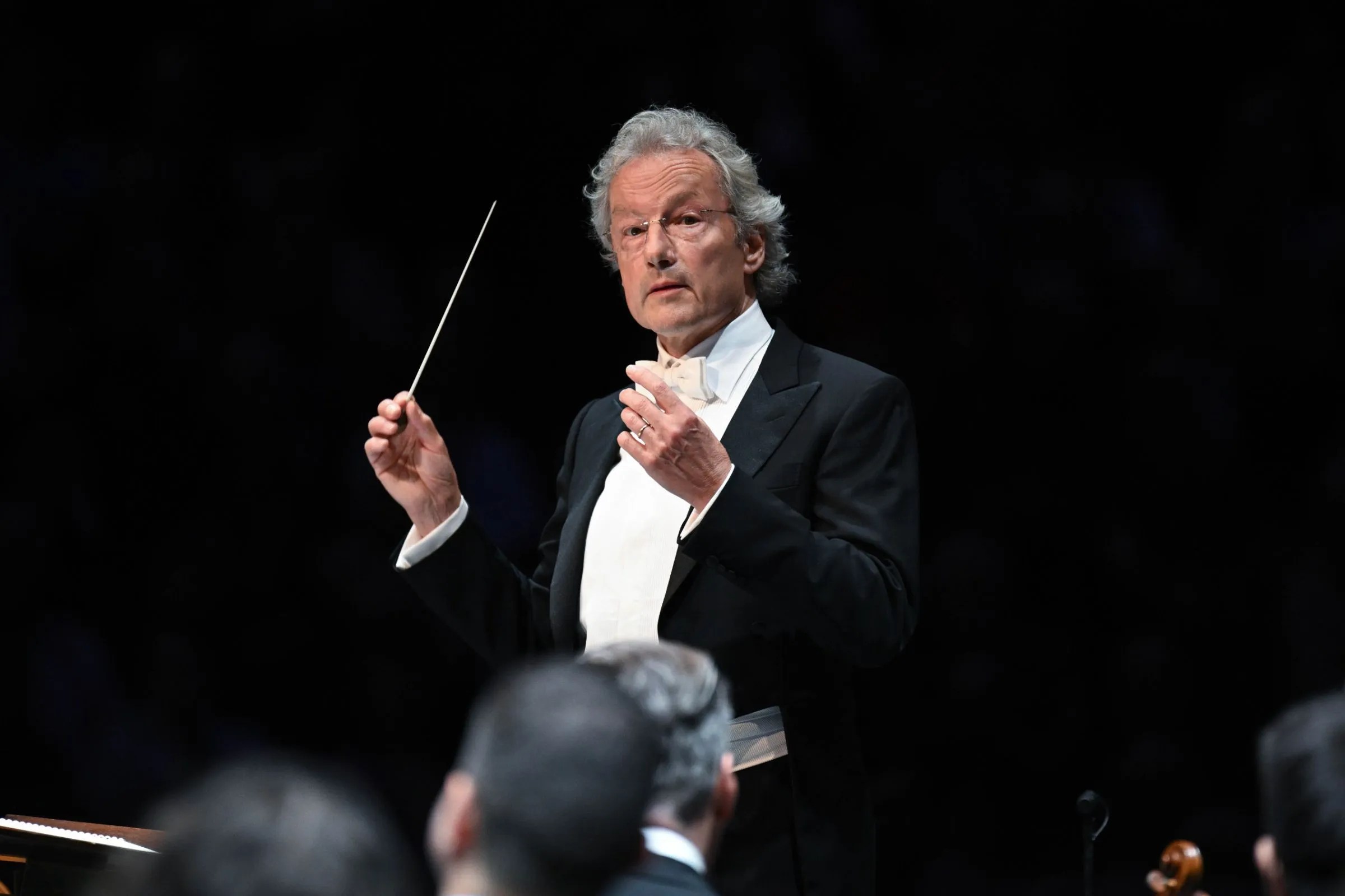
In concert – Vienna Philharmonic Orchestra / Franz Welser-Möst @ BBC Proms: Mozart & Tchaikovsky

Vienna Philharmonic Orchestra / Franz Welser-Möst (above)

Mozart Symphony no.38 in D major K504 ‘Prague’ (1786)
Tchaikovsky Symphony no.6 in B minor Op.74 ‘Pathétique’ (1893)

Royal Albert Hall, London
Tuesday 9 September 2025

Reviewed by Ben Hogwood Photos (c) BBC / Chris Christodoulou

The music of Mozart is the lifeblood of the Vienna Philharmonic Orchestra, so to describe their performance of the composer’s Prague symphony as routine is to say that everything was present and completely idiomatic.

Completed in Vienna, the Prague deserves to be mentioned with the last three symphonies as among Mozart’s greatest. In the hands of guest conductor Franz Welser-Möst, its phrases were stylishly turned, violins silky-smooth but keeping clear of full fat over-indulgence. This performance drew the audience in, with a chamber orchestra sound that acquired more beef when needed in the first movement, which had appropriate drama, or the boisterous passages of the finale. The woodwind were superb throughout.

Most intriguing was the Andante, a thoughtful repose whose chromatic melodies were lovingly shaped, while the central section was notable for its autumnal frissons whenever the music headed for a minor key. Meanwhile the faster music was imbued with the spirit of the dance, a performance carefully considered but let off the leash when appropriate.
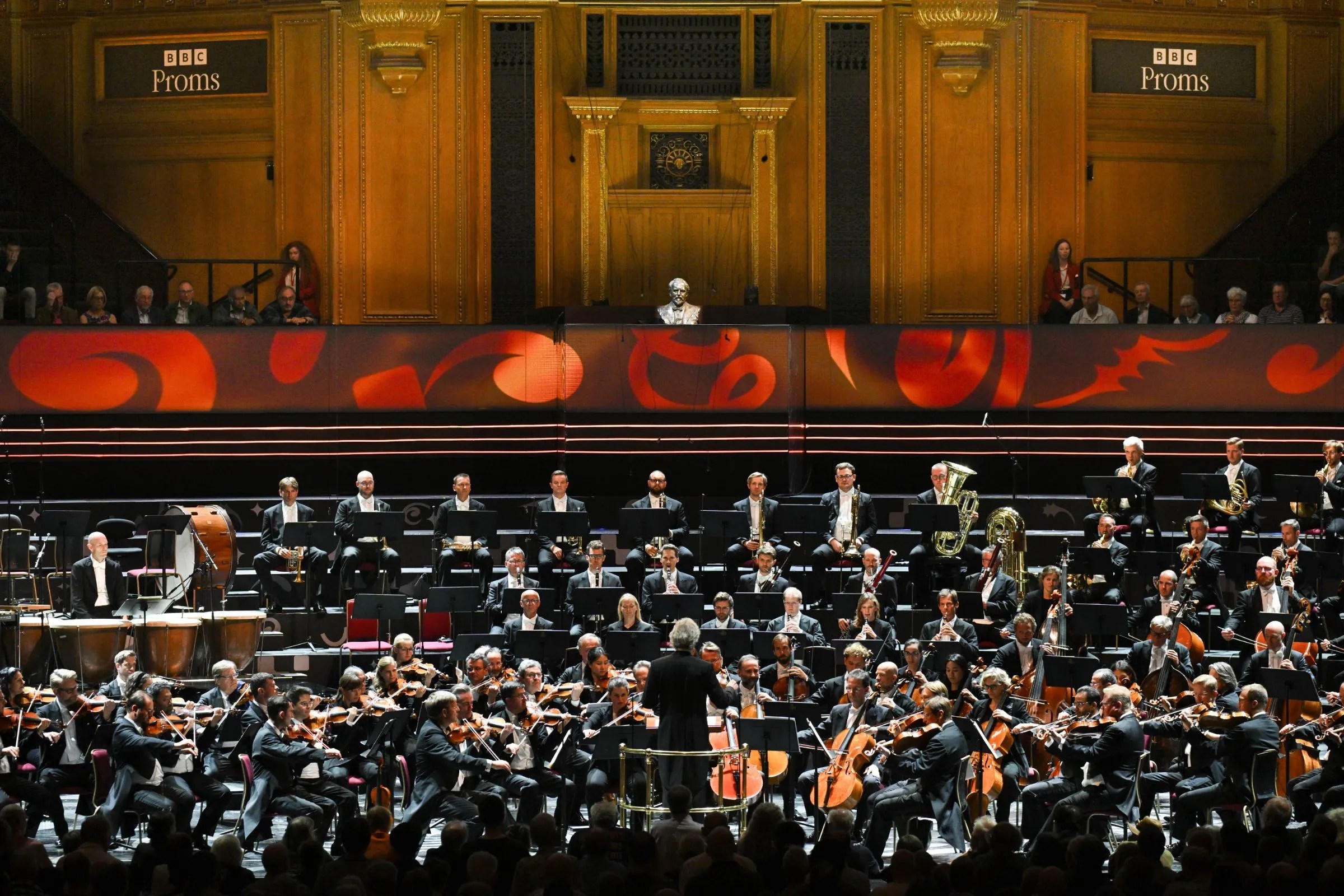
Tchaikovsky’s Pathétique symphony took a while to get going, revealing the composer’s own Mozartian influence in the process. Initially the first movement felt underpowered, its sense of dread kept to a minimum and the second theme kept within itself – though that did mean a particularly beautiful clarinet solo from Matthias Schorn. This turned out to be an effective interpretative ploy on the part of Welser-Möst, for the impact of the stormy section was heightened, the orchestra suddenly playing hell for leather.

The 5/4 metre of the second movement was persuasively realised, the lilt of its dance compromised by unexpected syncopations, alternating between charming and disturbing. By this point the Proms audience notably rapt in their attention, and still between movements.

The scherzo felt Viennese yet acquired a manic need to please more in keeping with Mahler – not encouraged as much by Welser-Möst as previous Vienna Philharmonic incumbents (Herbert von Karajan, for example) but effective, nonetheless. It all set up the devastating pathos of the finale, taken relatively smooth and never lingering, but still uncommonly moving. Double basses were appropriately knotty, while the effect of the stopped horns, playing low and loud, was genuinely chilling. The fabled gong stroke, on the light side, was still a telling moment in the hall, as was the silence following the last note, Welser-Möst giving us over a minute to consider the masterpiece we had just heard. After that, there could be no encore.

Franz Welser-Möst is a subtle conductor who over the years has developed a close relationship with his charges in Cleveland and Vienna particularly. His poised approach brings optimum virtuosity and watertight ensemble, to which can be added artistic approaches with a great deal to commend them. In this case both Mozart and Tchaikovsky were the beneficiaries.

You can listen back to this Prom concert on BBC Sounds until Sunday 12 October.

Click to read more about the BBC Proms

Published post no.2,653 – Wednesday 10 September 2025
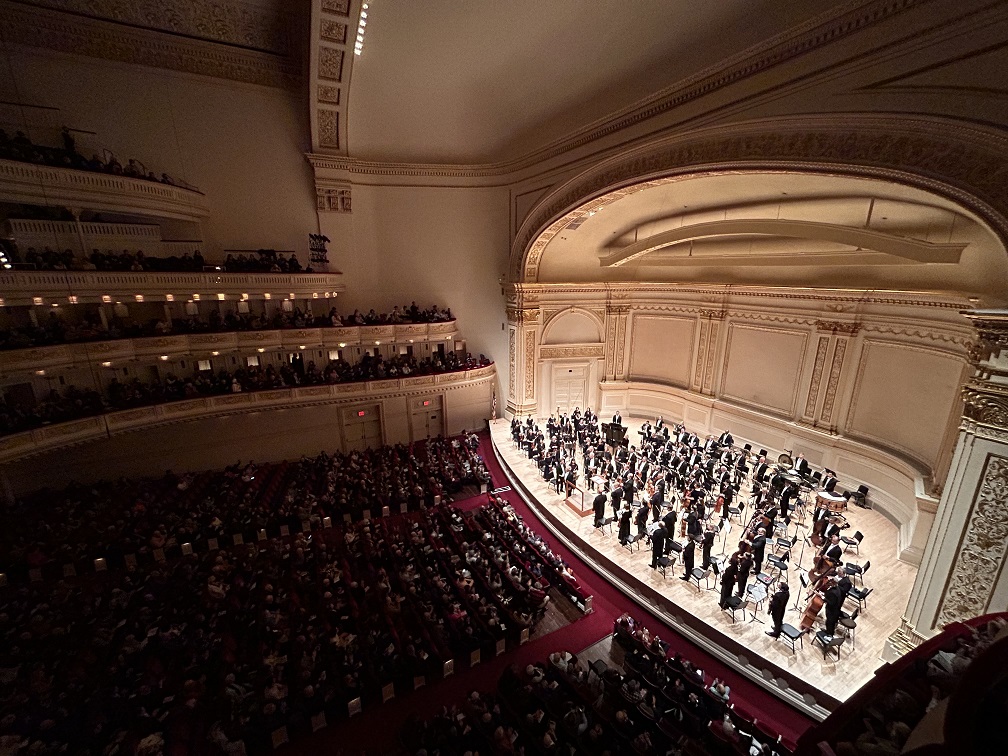
In concert – Cleveland Orchestra / Franz Welser-Möst @ Carnegie Hall: Prokofiev & Webern symphonies

Prokofiev’s trademark technicolour orchestration contrasted with Webern’s sparse score for his Symphony Op.21 performed by the Cleveland Orchestra with Franz Welser-Möst.

Cleveland Orchestra / Franz Welser-Möst

Prokofiev Symphony No. 2 in D Minor Op. 40 (1924-1925)
Webern Symphony, Op. 21 (1927-1928)
Prokofiev Symphony No. 5 in B-flat Major, Op. 100 (1944)

Carnegie Hall, United States
Sunday 21 January 2024

Reviewed by Jon Jacob. Photo (c) Jon Jacob

Most concerts start with some kind of concert opener. An overture, for example, gives the band on stage the opportunity to get accustomed to the acoustic with an audience in it, while giving the audience a chance to settle down before the main event. That the Cleveland Orchestra got underway so deftly with the epic industrial landscape of Prokofiev’s Second Symphony immediately hinted at the kind of concert this would turn out to be. 

Conducted by their music director, Austrian conductor Franz Welser-Most, the Cleveland Orchestra presented three works as part of Carnegie Hall’s ongoing series examining the fall of the Weimar Republic: two symphonies by Russian composer Prokofiev, contrasted with Webern’s Symphony for chamber ensemble. 

Prokofiev’s Second Symphony, written in 1924 and premiered in Paris in 1925, is an epic work brimming with fiendish detail and tantalising textures. The first movement’s brutal industrial landscape is depicted with a gargantuan, lumbering brass section, piercing brass top lines, and occasionally shrill woodwind. The combination did at times cause the person sat next to me at Carnegie Hall to put her fingers in her ears. This was contrasted by a tender oboe solo at the beginning of the short second movement theme, followed by a series of short variations which saw a remarkable range of colours and textures from the strings and woodwind. This was a polished, confident and assertive performance throughout, right from the start.  

In contrast, the material in the Prokofiev’s Fifth Symphony, written in 1944 when the composer had returned to the Soviet Union, is lighter and the treatment of it far more playful, energetic and in places vigorous. In the performance, the orchestra sometimes sounded underpowered meaning things felt overly romantic. The second movement Allegro had spirit and bounce, moving through multiple personalities and moods, cheerful, cheeky and, from to time, just a hint of macabre too, though, like the final movement, it did feel like it lacked a bit of grit. After Franz Welser-Most paused for a police siren to disappear out of earshot down 7th Avenue, the third movement opened with tantalizingly papery strings over which the solo was passed effortlessly between different combinations of woodwind instruments whilst still making everything feel whole. Later we heard rich, warm, heart-tugging string sounds (the leaps in the upper strings got me every single time).

Webern’s ‘miniature’ ten-minute, two-movement Symphony, written three years after Prokofiev’s Second Symphony, could have sounded like an academic curiosity in comparison to the Russian composer’s technicolour orchestration. Yet in this concert, Webern’s Op. 21 acted as a palette cleanser, pivoting us from the epic Second to the more box-office appealing Fifth of Prokofiev’s symphonies.

Special praise to Cleveland’s principal clarinet Afendi Yusuf, whose rounded burgundy tone was simply to die for. A gorgeous sound throughout. Excitable applause also for some fruity queues from bass clarinetist Amy Zoloto and contrabasoonist Jonathan Sherwin.

Further listening

Some recommended recordings to listen to are based simply on the final movement allegro which in the case of Herbert von Karajan’s Berlin Philharmonic recording is a tour-de-force. On the other hand, in Valery Gergiev and the London Symphony’s performance, there’s a crazed sense of menace. In concert, Franz Welser-Most seemed to pull out a more playful character in the final movement and this is also reflected in the Cleveland’s 2023 recording under his direction. I’m always going to prefer the unhinged characterisation, but that probably says more about my character than it does about the performance.

Meanwhile the Cleveland Orchestra recorded Webern’s Symphony as part of an album devoted to the composer’s orchestral music, under their former music director Christoph von Dohnányi in 1998.

Jon Jacob is a writer, digital content producer and strategist, authors the Thoroughly Good Classical Music Blog, and produces the Thoroughly Good Podcast.

Published post no.2,064 – Monday 22 January 2024