

In concert – Isata Kanneh-Mason, CBSO / Ilan Volkov: Sibelius, Prokofiev & Freya Waley-Cohen

Isata Kanneh-Mason (piano), City of Birmingham Symphony Orchestra / Ilan Volkov

Sibelius The Oceanides, Op. 73 (1914)
Prokofiev Piano Concerto No. 3 in C, Op. 26 (1921)
Waley-Cohen Demon (2022) [CBSO Centenary Commission: World Premiere]
Sibelius Symphony No. 5 in E flat, Op. 82 (1915-19)

Symphony Hall, Birmingham
Wednesday 22 February 2023

Reviewed by Richard Whitehouse

A frequent visitor during the past quarter-century, Ilan Volkov’s concerts with the City of Birmingham Symphony Orchestra are always to be anticipated, and so it proved with this evening’s programme which brought together the familiar and the new to engaging effect.

Sibelius provided a potent framework, The Oceanides (of which the CBSO made a fine recording with Simon Rattle now almost four decades ago) heard in a reading of unusual breadth and deliberation. Not that this ever impeded the progress of music whose almost impressionistic eddying goes hand in hand with inexorability of motion; the outcome a double climax whose spiralling intensity – visceral even in the context of Sibelius’s later music – makes way for a coda whose understated fatalism was affectingly conveyed here.

Along with her brother Sheku, Isata Kanneh-Mason has had a major impact on the UK music scene – her skill and insight evident throughout this performance of Prokofiev’s Third Piano Concerto. There was no lack of élan in passagework where the composer sought to confirm his own pianistic credentials as he built a career in the West, but also a tendency to brittleness as arguably sold the music short. It was in more reflective sections that Kanneh-Mason came fully into her own – the limpid musing on its main theme at the centre of the first movement, the spectral half-lights of its successor’s third variation, or the warmly expressive melody at the heart of the finale in which her rapport with Volkov was tangible. If the electrifying close brought less than the ultimate frisson, it still set the seal on a reading of impressive potential.

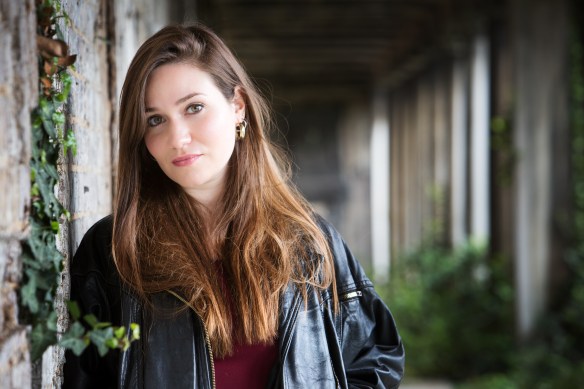
After the interval, another in the CBSO’s Centenary Commissions – the well-regarded Freya Waley-Cohen (above) duly responding with Demon. Its scenario evoking the more ominous of folk stories, this piece packed a considerable amount of incident into its 11 minutes – a Ligetian playfulness offsetting its frequently intricate polyphony to diverting and, throughout the final stages, impulsive effect. Drawing an incisive and precise response, Volkov seemed intent on presenting this colourful curtain-raiser as well worthy of further and repeated performance.

Volkov’s accounts of Sibelius’s Third and Fourth Symphonies were highlights of a complete cycle at the 2015 Proms, and this account of the Fifth found his advocacy undimmed. Others have found greater atmosphere in the first movement’s earlier stages, but the purposefulness with which he built to its defining climax was undoubted; as too a corresponding build-up of momentum in its ‘scherzo’ – Matthew Hardy’s volleys of timpani spearheading the propulsive coda. More intermezzo than slow movement, the Andante had an appealingly winsome aura for all its darker undertones (with some delectable woodwind playing), while the finale made the most of its contrasts in motion – the ‘swan melody’ eloquently rendered – on the way to an apotheosis whose surging affirmation was driven home by those indelible closing chords.

An impressive performance, then, such as brought this concert to a suitably inspiring close. Volkov is on the podium again this Sunday – directing the CBSO Youth Orchestra in a new piece by Bergrun Snaebjörnsdottir, heard alongside music by Grażyna Bacewicz and Berlioz.

You can read all about the 2022/23 season and book tickets at the CBSO website. Click on the artist and composer names for more on Ilan Volkov, Isata Kanneh-Mason and Freya Waley-Cohen

Online recommendations – Living Room Live

Today’s nudge in the direction of an online concerts brings us to Living Room Live.

This is an exciting new initiative from a group of musicians keen to make a difference to those in isolation, led by violinist Tamsin Waley-Cohen and her composer sister Freya, together with pianist George Fu, consultant Daniel Ross and viola player Ann Beilby.

Living Room Live started just two months back but is already hosting three concerts a week through Facebook live, each concert starting at 6pm BST.

This week you can catch Zoë Martlew‘s cabaret alter-ego Nefari on Monday 18 May, then up and coming cellist Laura van der Heijden playing Bach‘s wonderful Solo Cello Suite no.4 on Wednesday 20 May. Meanwhile Friday’s concert, from violinist Amalia Hall, will feature the virtuosity of Ysaÿe, channelled through two sonatas for solo violin.

All concerts can be viewed in real time and in catch-up mode through Living Room Live’s Facebook page here

Britten Sinfonia at Lunch – Katie Bray sings Freya Waley-Cohen’s Spell Book @ Wigmore Hall

Katie Bray (mezzo-soprano), Britten Sinfonia Soloists [Jacqueline Shave, Miranda Dale (violins), Clare Finnimore (viola), Caroline Dearnley (cello), Joy Farrall (clarinet), John Lenehan (piano)]

Leclair Trio Sonata in D major Op.2/8 (1728)
Mahler arr. Waley-Cohen Rückert-Lieder (1901-2, arr. 2019)
Lutosławski Bukoliki (1952 arr. 1962)
Waley-Cohen Spell Book (2019)

Wigmore Hall, London
Wednesday 22 January 2020

Photo credits Patrick Allen (Freya Waley-Cohen); Tim Dunk (Katie Bray)

Review by Ben Hogwood

The previews for this concert were intriguing. As well as a performance of a new arrangement of Mahler’s Ruckert-Lieder, we were to be treated to Spell Book, the world premiere tour of a new dramatic work by Freya Waley-Cohen.

Inspired by the composer’s encounter with Rebecca Tamás’ collection of poems WITCH, the song cycle was written for and performed by mezzo-soprano Katie Bray, singing with an ensemble of string quartet, clarinet and piano. In terms of forces used this gave the work a similar profile to Schoenberg’s famous melodrama Pierrot Lunaire. The music fulfilled Waley-Cohen’s wish that it would place us under a spell, as the book had clearly done for the composer. She brought it to life with music of luminosity and captivating drama.

She was helped considerably by Bray (above), who held the attention effortlessly with a commanding performance. The first and most substantial song, spell for Lilith, found her word emphasis in the observation that Lilith is ‘such a bad girl’ setting the expressive tone. The music swept up to impressive heights, Bray’s voice stopping the listener in their tracks while simultaneously nailing the acoustic of the hall.

Waley-Cohen’s response to the text was often vivid, the instruments either offering weighty support to the words or dropping away under their feet. The observation that ‘Lilith, you have a great body’ received appropriately slinky contours, while the contrast of suspension and movement towards the end led to a delirious postlude from John Lenehan’s piano.

The following two songs were more compact but retained Lilith’s intensity. spell for sex had a soft, alluring vocalise that was also remote, while the spell for logic was much more active, pockets of instrumental music bumping into the vocal line but never overwhelming it. The open-ended challenge to the audience was effective, as was the relatively sudden finish, concluding a mysterious and strangely euphoric piece. The spell had indeed been cast.

Spell Book was complemented by Waley-Cohen’s arrangement of Mahler’s Rückert Lieder. In this regard she was bravely nailing her colours to the mast alongside the intimidating figure of Schoenberg, whose arrangement of the composer’s Lieder eines fahrenden gesellen (Songs of a Wayfarer) for chamber ensemble around 100 years ago is still occasionally performed. The ensemble here, replicating that for Spell Book, was cut from similar cloth.

This performance was a qualified success, part of the fault for that lying with the listener and a long-held familiarity with the piano and orchestral versions of Rückert-Lieder. There were however some imaginative qualities here, particularly the technique of doubling instruments at a distance of two octaves. John Lenehan‘s high piano right hand therefore acquired a ghostly shadow in the form of Caroline Dearnley‘s low cello, and this technique was used to create an enchanting, wispy half-light.

It also suited Bray’s range and performance, and while her interpretation felt like it may still be in progress – again the problem of over-familiarity rearing its head – she grew into the songs as they unfolded. The famous Um mitternacht was an inevitable highlight, while the clarinet lines in Blicke mir nicht in die Lieder! (Do not look into my songs!) were beautifully rendered by Joy Farrall. The final song, the rapt Ich bin der Welt abhanden gekommen (I am lost to the world) was beautifully controlled if not quite reaching peak intensity.

Prior to the song cycles we heard the Trio Sonata in D major from Jean-Marie Leclair. It made a nice change to hear this music on modern instruments, the program illustrating how the Trio Sonata was in fact a predecessor of the Piano Trio. Jackie Shave, Caroline Dearnley and John Lenehan clearly enjoyed their time with this piece, and Leclair’s elevation of the cello to much more than mere accompaniment found the two string players engaged in rewarding dialogue.

In between the song collections Dearnley teamed up with viola player Clare Finnimore for Lutoslawski’s six Bukoliki, delectable folk-inspired miniatures originally conceived for piano but subsequently arranged by the composer. Lasting little more than a minute, each one was beautifully formed and strongly expressive, the string players enjoying the melodic ornaments and the rustic sweeps of the bow. The addition of subtle discords created a haunting quality to some of this music, pointing the way to Lutoslawski’s sonic innovations to come.

The Britten Sinfonia’s At Lunch series continues to impress with its imaginative programming and opportunities for contemporary composers. Both aims were realised here in a richly rewarding concert.

Further reading and listening

To discover more about Freya Waley-Cohen, you can visit her website here or listen to her music on Soundcloud here. Meanwhile the Spotify link below offers a chance to hear her Permutations, as played by her sister, violinist Tamsin.


Proms at … Cadogan Hall 8: Knussen Chamber Orchestra / Ryan Wigglesworth – A Tribute to Oliver Knussen

Knussen Chamber Orchestra / Ryan Wigglesworth (above)

Knussen …upon one note – Fantasia after Purcell (1995) (from 2:15 on the broadcast link below)
Birtwistle Fantasia upon all the notes (2011) (9:29)
Freya Waley-Cohen Naiad (2019, world premiere) (20:14)
Knussen Study for ‘Metamorphosis’ (1972, rev, 2018) (30:54)
Abrahamsen Herbstlied (1992, rev. 2009) (38:58)
Alastair Putt Halazuni (2012) (47:36)
Knussen Songs without Voices (1991-2) (tbc)

Cadogan Hall, Monday 9 September 2019

Reviewed by Ben Hogwood

You can listen to this Prom on BBC Sounds here

The BBC Proms’ 800-year odyssey of music over eight weeks at the Cadogan Hall reached the present day in the company of the UK’s newest orchestra.

The Knussen Chamber Orchestra took its bow at the Aldeburgh Festival this year. Created specifically in memory and celebration of Oliver Knussen (above), it is an ensemble for commission and festival appearances, unrestricted in the repertoire it will perform – in that way very much reflecting the approach of its dedicatee. Comprising orchestral principals and budding young talent, it also reflects Knussen’s ability to communicate with musicians regardless of their standing.

Knussen is still greatly missed, a towering figure in British music in the latter part of the 20th century and the 21st until now. Tales have emerged not just of his mentoring of young composers and influence on the established writers, but of a sparkling personality and wit, a dinner companion par excellence. As a conductor he made several richly inventive programmes for the Proms with the BBC Symphony Orchestra and the Birmingham Contemporary Music Ensemble, and as a composer his small but perfectly formed catalogue is required listening for any budding contemporary composer of today. Like the composers he adored, particularly Stravinsky and Webern, his is a musical language that speaks directly through an economy of means.

That much was immediately evident in the three and a half minutes of …upon one note – Fantasia after Purcell, which used the colours of clarinet, violin, cello and piano to lasting effect. Knussen moved the omnipresent middle ‘C’ – the ‘one note’ – around the parts effortlessly, enjoying the harmonic diversions possible around it and alternating solemnity with mischief. The piece proved both a homage to Purcell and a brief spark of invention, and was ideally weighted by the soloists.

Birtwistle’s Fantasia upon all the notes has potential for mischief in its title but is in effect a typically serious piece. Written for an ensemble of seven players this was led with authority by harpist Céline Saout, who effectively drove the piece through its initial jagged outlines. The colours available to Birtwistle were exploited through music of stern countenance, its few tender asides to be cherished as the exception rather than the rule. Only at the end, with little points of pitch from solo instruments, did the mood lighten.

In a charming conversation with BBC Radio 3 host Petroc Trelawny, Freya Waley-Cohen revealed Knussen’s qualities as a tutor and a ‘wonderful person’. Naiad (20:14 on the broadcast) was a fitting tribute, fulfilling Cohen’s description of reflections from the scales of fish and dew on a spider’s web with music that cast a rarefied light, such as the sun does this time of year. The attractive melodic cells rippled with a slight chill, piercing moments of clarity from the woodwind contrasted by fuzzier asides from the strings. Although Cohen’s description of a slow piece and a fast piece rubbing up together was more difficult to follow, that did not mar in the slightest an enjoyable and meaningful piece, whose last few bars had a lilting four-note melody that hung on the air, leaving an enchanted atmosphere in its wake.

Bassoonist Jonathan Davies then stepped forward for Knussen’s highly virtuosic Study for Metamorphosis (30:54), based on Kafka. There were some extraordinary sounds here, the composer exploiting the cartoon-like persona the bassoon can elicit but also reminding us of the instrument’s versatility, its ability to paint pictures both happy and sad. Davies was superb and clearly enjoyed the experience.

Hans Abrahamsen’s Herbstlied followed (from 38:58), an extended arrangement and combination of a Danish song and two J.S. Bach subjects from The Art of Fugue. This instrumental version was unexpectedly moving, its picture painting of leaves ‘falling as from far…’ most apt for the time of year and given a vivid account by the five players. The cor anglais of Tom Blomfield added a unique sourness to the tone, and the downward motion of the melodies indicated sorrow, but there was still a sweeter melancholy here that stayed with the listener long afterwards.

We moved into Alastair Putt’s wind quintet Halazuni (47:36) without a break. This was a less affecting piece, more calculated in its depiction of a spiral (its title is the Persian word for spiral) The colours of the instruments – flute, oboe, clarinet, horn and bassoon – were frequently attractive, and while the music did on occasion feel predetermined, there was a clear end goal.

The best was saved until last in the form of Knussen’s Songs Without Voices (not yet linked to the broadcast on BBC Sounds). A group of four pieces for an ensemble of eight players, the Songs use vivid colour combinations which bring the composer’s imagery to life. The melodies, though short, are incredibly meaningful.

The first three Songs are wordless settings of texts by Walt Whitman, starting with Winter’s Foil, which was alive with bird calls and blustery winds. As elsewhere Wigglesworth secured playing of great poise and personality, led with characteristic authority by violinist Clio Gould. Prairie Sunset showed off the colours of the ensemble both separately and in combination, before the delicate outlines of First Dandelion were revealed. ‘simple and fresh and fair’.

Finally we heard Elegiac Arabesques, Knussen’s tribute to Polish-English composer Andrezj Panufnik. This wove an incredibly poignant thread, suitable in its own way as a memorial to the composer-conductor commemorated with such grace and feeling here.

Listen

The music in this concert can be heard on Spotify below:

A playlist featuring works both composed and conducted by Oliver Knussen can be heard below. It includes …upon one note from this concert, though not the Songs Without Voices – which are in fact available on the Erato label: