
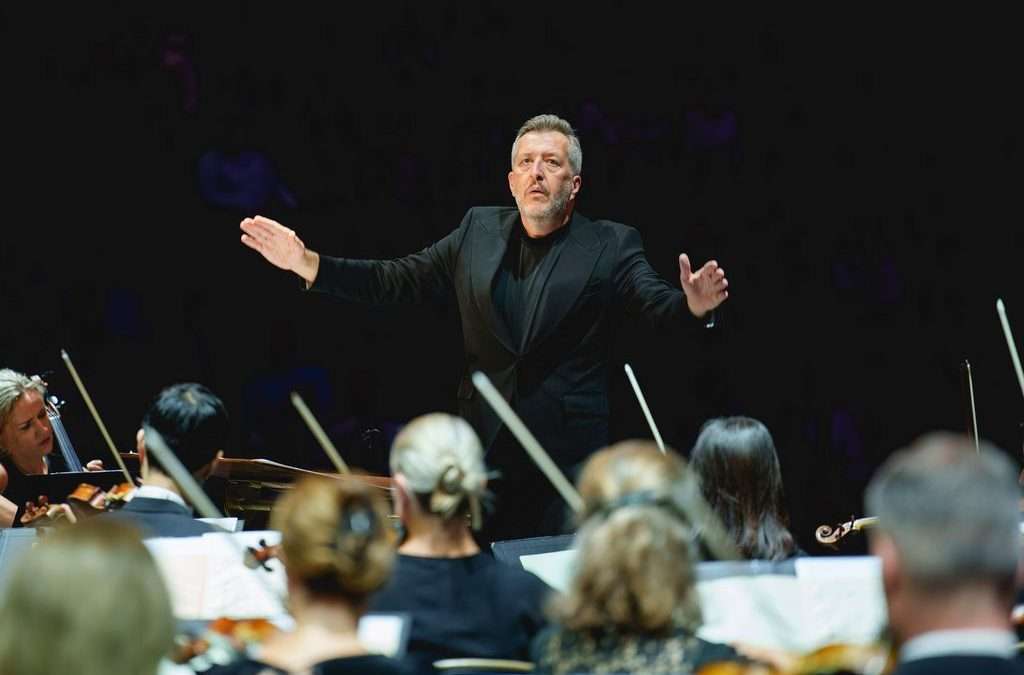
James McVinnie (organ), BBC Symphony Orchestra / Thomas Adès
Sibelius The Swan of Tuonela Op.22/2 (1893, rev. 1897 & 1900)
Gabriella Smith Breathing Forests (2021) [UK Premiere]
Adès Five Spells from The Tempest (2022) [Proms premiere]
Sibelius The Tempest – Suite No. 1, Op. 109 No. 2 (1925-6, arr. 1929)
Royal Albert Hall, London
Tuesday 2 September 2025
Reviewed by Richard Whitehouse Photos (c) BBC / Andy Paradise
Having worked across the board with orchestras in London (and elsewhere), Thomas Adès tonight conducted the BBC Symphony Orchestra in what, for his ninth Prom as a conductor, was a typically imaginative programme that centred on concepts of nature and the elements.
A concept, moreover, whose primary focus was Breathing Forests – an organ concerto by the American composer Gabriella Smith (below). She herself has described this work as ‘‘a reflection on the complex relationship between humans, forests, climate change and fire’’; one that unfolds across three interconnected movements and whose evoking the fast-slow-fast archetype belies its overall ingenuity. The opening Grow picks up on Ligeti’s ‘op-art’ pieces of the late 1960s as it pulsates gently if insistently into life, then the central Breathe draws from the interplay of soloist and orchestra a variety of methodically evolving textures; given emotional impetus in the final Burn as it builds to a climax which spatially engulfs the whole ambience, though its continuation towards a clinching apotheosis sounded just a little gratuitous in this context.
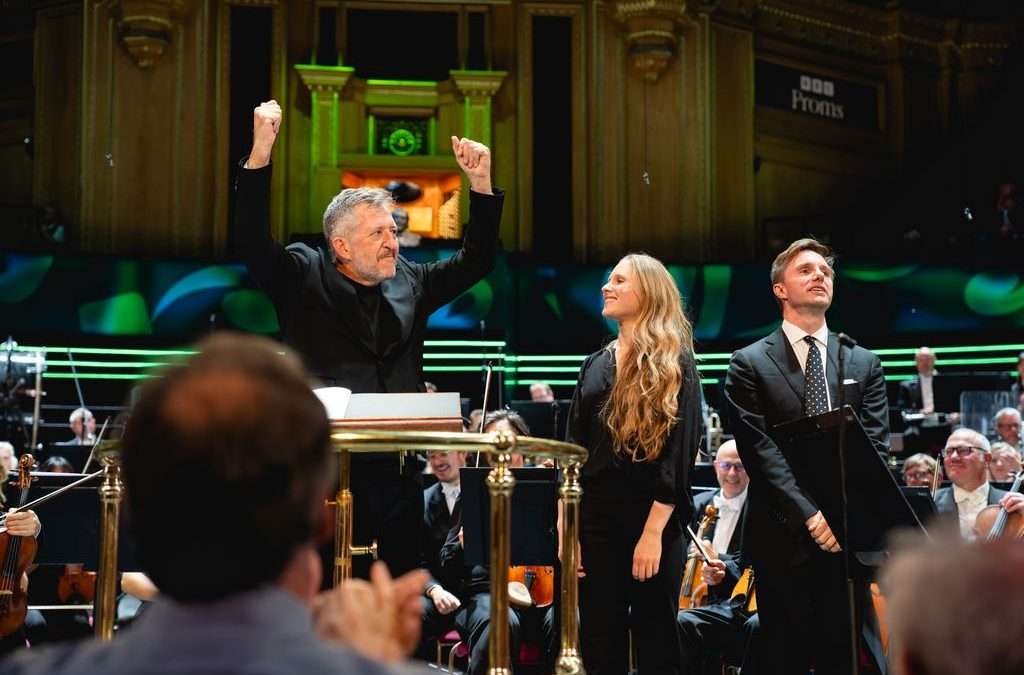
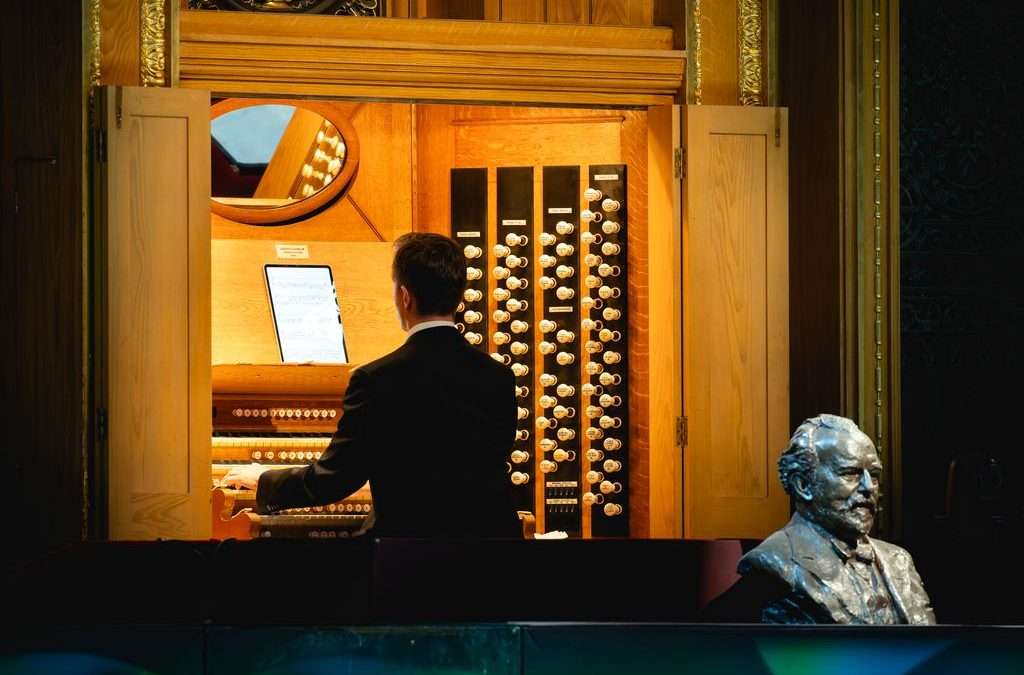
What was never in doubt was the sheer dexterity of James McVinnie (below) in conveying the power and poetry of the solo part, to which the BBCSO’s contribution was scarcely less visceral. As musical representation of the natural world in time of crisis, this piece more than left its mark.
Adès as composer was featured after the interval with Five Spells from ‘The Tempest’, a suite drawn retrospectively from his eponymous opera. This ranges widely over the parent work – beginning, not unreasonably, with its Overture such as depicts the play’s opening storm in guardedly elemental terms. From there it heads into Ariel and Prospero, akin to a scherzo where the contrasting characters of the two protagonists are vividly played off against each other. A more nuanced juxtaposition is evident from Ferdinand and Miranda, its inherently amorous nature conveyed with due reticence, then The Feast affords a culmination of sorts with its stealthy interplay of character-imbued motifs. The end comes, naturally enough, in Prospero’s Farewell – Caliban with the music evanescing in the most equivocal of terms.
The programme was framed with music by Sibelius – opening with The Sawn of Tuonela as emphasized the music’s hieratic poise and fatalistic aura, as did those eloquent contributions from cor anglais and cello. Maybe Adès will one day tackle the whole Lemminkäinen Suite?
The First Suite from Sibelius’s compendious score for The Tempest opens with the searing evocation The Oak Tree which was a little underwhelming here, though there was nothing amiss in the characterful Humoreske or in Caliban’s Song with its telling bizarrerie. The Harvesters is a reminder of Sibelius’s innate gift for light music at all stages in his career, as also the animated Canon and insinuating Scene; to which the plangent Intrada/Berceuse then the ominous Interlude/Ariel’s Song provide startling contrasts. The truncated Prelude follows on seamlessly through to its decidedly abrupt end. Right through this sequence, the BBCSO was always attuned expressively and, while a sense of the music as teetering on the edge of some greater catastrophe was minimal, there was no denying Adès’s insight overall.
Click on the artist names to read more about organist James McVinnie, the BBC Symphony Orchestra and conductor Thomas Adès. Click also for more on Thomas Adès as a composer and Gabriella Smith, and the BBC Proms
Published post no.2,648 – Friday 5 September 2025
 Arcana.fm