InFiné have been extending their reach with a clutch of interesting digital compilations of late, including Club InFiné and InFiné Rewind 2024.
The French label is largely known for its experimental strands, but they have a far musical reach – as this cosmopolitan ambient collection shows.
What’s the music like?
The mix immediately reaches its goals through the soft beats of Murcof and the beautiful sounds of Brian Eno refracted through the piano of Bruce Brubaker, whose take on Music For Airports 2/1 will soothe any fevered brow. The same can be said for Vanessa Wagner’s piano, Struggle For Pleasure viewed through the hazy viewfinder of GAS.
There are some long form ambient epics here too, in the form of Gaspar Claus with the slightly disquieting Inside, and an epic take on Carl Craig’s At Les from Abul Mogard. Elsewhere Loscil takes the slowly oscillating piano of Murcof x Wagner’s Avril 14th (Aphex Twin), opening it out in timeless widescreen. The track leads seamlessly into Cubenx’s Human Dilemma.
Does it all work?
It does indeed, especially when experienced as a 13-track whole. As a bonus, if you visit the compilation’s Bandcamp page you get helpful biographies of all the ambiently inclined InFiné composers and musicians.
Is it recommended?
Very much so. InFiné know exactly what they’re doing with this compilation, providing aural balm whenever the listener needs it.
In Maxime Caperan’s thriller Un Monde Violent, two brothers plunge into a spiral of violence, with uncomfortable results. For the soundtrack, he enlisted cellist and composer Gaspar Claus who has responded with a score in which he produces and performs.
What’s the music like?
In a word, tense. Claus has already shown a gift in his music to evoke scenes and emotions, and those qualities immediately come to the fore.
The Ouverture is laden with dread, its dark ambience creating waves of uncertainty, though it is still possible to admire the rich and fulsome colours Claus applies in his playing.
His Tancade album of 2021 showed how a wide range of techniques and skills with the cello can produce an unusually wide range of sounds, and that is again the case here, from the unsettling tremolo figures of Un meutre to the pizzicato thrumming of Moto joie or the existential dread of Moto Drame, with its widescreen panning.
Vers l’hôpital is a different story, its affecting chorale richly scored, and Claus moves from this to the flickering, wispy arpeggios of Le père, showing the sonic palette his cello has at its disposal.
The last two tracks are more substantial – Channel is a co-production with vocalist Caspar Clausen, but also features the disorientating appearance of a brass band in the middle of is cluster of chords. Peace is finally achieved in the closing credits, delivered in a concoction of softly voiced harmonics and drones.
Does it all work?
It does, provided you’re in a quiet room. Claus achieves a wide range of dynamics in his writing, and a silent backdrop will ensure all are brought to the fore.
Is it recommended?
It is. Gaspar Claus writes for the cello with great imagination and inventiveness, and this response to the story of Un Monde Violent is as dramatic as it is musically convincing. Strongly recommended.
For fans of… Julia Kent, Sarah Neufeld, Hildur Guðnadóttir, Peter Gregson
It is helpful to reproduce in full the accompanying notes Gaspar Claus has written for this release on Bandcamp:
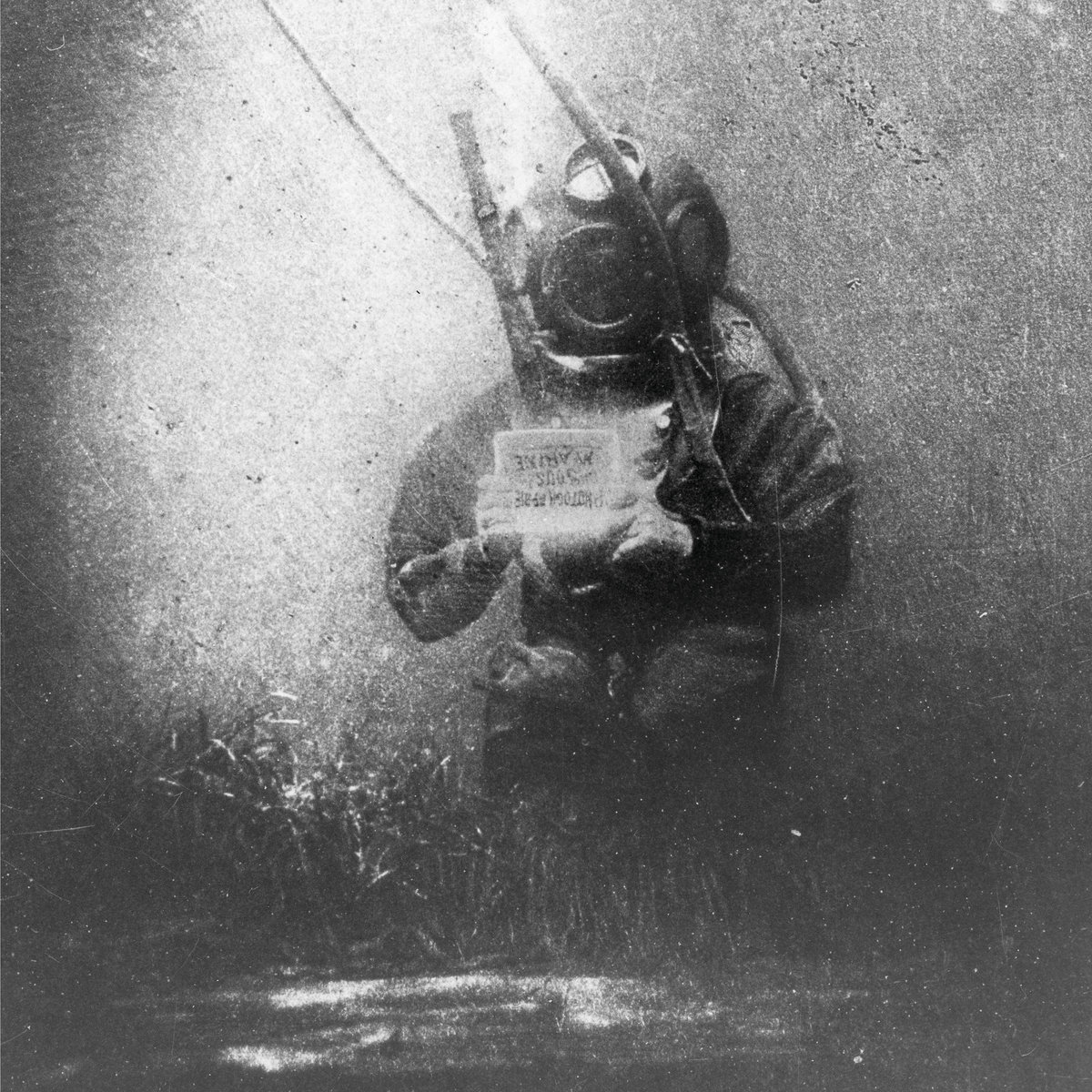
“Scaphandre is the story of an image found in a lost time on the internet a few years ago. It inspired two sound pieces conceived so that one can dive into it as into the sea.
Once their composition was finished, I looked for the origin of this image. It is one of the very first submarine pictures in history, taken by Louis Boutan in 1893 in the bay of Banyuls-sur-Mer… my home town. The original photo as well as a fantastic series of archives documenting this event can be found at the Arago Laboratory, where I often went as a child, after school, amazed by what the researchers were showing me. They just had never told me this story. This is how this record found its scenery.”
Both pieces were written alongside the composition of the album, and are broader in scope, each lasting more than 10 minutes.
What’s the music like?
Compelling, and often deeply mysterious.
Inside starts right from the depths, the instrument detuned by a distance of more than two tones. The scratchy, almost pitchless sounds gradually form a rich chord as layers of sound build up, until a rich, wooden wall of sound is secured, constantly evolving and yet acting as an immovable block. As this progresses the treble pitches start to gather and swirl, slowly orbiting the centre. There is a forbidding intensity about the progression of this piece.
Beyond has more consonant harmonies in its beginnings and occupies a safer space, suspended in a rich drone of mostly G major – but with another massive wall of sound to back it up. Gradually the music lifts, and the foundation drops away to leave mere threads, the elements of pitch dissolving into white noise.
Does it all work?
It does – but it is important to listen to these tracks in the right environment, as they are only fully impactful when a static half hour is set aside.
Is it recommended?
Yes, as a complement to the Tancade album – but if you haven’t heard that yet then it is the best place to start. Either way, Scaphandre is further proof of Gaspar Claus’s powers of invention, knowledge and deep love of the cello. He pushes its sonic boundaries further here, for sure!
It is deepest summer, and Arcana is on an online call with Arandel, live from Burgundy. Taking the music of Johann Sebastian Bach as his inspiration, the anonymous French composer and producer has been discovering a wide range of material that has so far yielded two InBach albums. The second enjoys new perspectives offered in live performance of the first, and it presented the perfect opportunity for Arcana to step in and discuss.
We begin with introductions – especially the one Arandel had with the music of Bach. “I’m not sure, but it was some of the music my father used to play on this turntable when I was a kid. I remember being very impressed by the Toccata and Fugue in D minor, it used to be the soundtrack of the opening credits for a children’s cartoon called Il était une fois… l’homme (Once upon a time…man) My father used to play all kinds of music and Bach was one of those.”
His curiosity grew. “One of the things that attracted me to the music was that I was trying to figure out why it was so present in everyone’s mind. In today’s modern music there are glimpses and traces of Bach, more than any other classical or Baroque composers.” Inspiration took hold, but what was it about Bach that made Arandel realise he could use it for his own music? “It all started with a preposition from someone I worked with at the Paris Philharmonie. He asked me to think about something for a weekend dedicated to Bach, a Bach marathon. I had carte blanche for the end of the evening, and I had 45 minutes to do whatever I wanted on Bach. I had remixed Mozart once, but while I am very impressed with and have a lot of respect for classical music, I’m not a classically trained musician at all. I can’t read or write the music, so I look at classical music with very much respect but also a bit of distance.”
In spite of the lack of experience, Bach’s music took hold. “It was never a career plan of mine to venture into electronic classical music, but I thought it was a great opportunity to work on something different. I felt like there was enough material, diversity in Bach’s music for me to find something I could work on. I think it would have been very different with Mozart or Beethoven, but with Bach there is something that makes it possible to make it your own. From this position, I dived into Bach’s music, and I asked friends and colleagues to give me recommendations on Bach. That’s how I found a lot of material for the first InBach. Every scene has its own little story – I couldn’t answer how I made those tracks in general. One is with a particular instrument, another because of cooperation with another musician. It reflects the different tones of the album.”
One of the musicians collaborating with Arandel is cellist Gaspar Claus, who appears on three tracks on InBach Vol.2, including Fabula (above). “That was a long time ago,” he recalls, “Three years, I guess. It was great. We have known each other for over 10 years now but hadn’t really worked together other than a small jam one night in a small French town. I don’t normally do this kind of improvisation because I don’t feel comfortable, but with Gaspar it was easy to think about something, because he brings so much and frees you to bring something different. I remembered this night when I asked him to if he wanted to join the InBach project. At first it was with his trio, but they were not all available, so it became just Gaspar. At first, I wanted him to play the viola da gamba, and I asked him if he was up for playing an instrument he hadn’t played before. Of course he was, but we had little difficulties with the museum we approached, because of very strict rules about the consideration of the instruments. The rule was that you couldn’t have someone playing the viola da gamba if they were not a professional. In the end he played a historical cello, and they agreed to let us use a facsimile of an old viola da gamba. It was great, very natural.”
Arandel also worked with Myra Davies, who provides vocals on Doxa Notes, the first track on the album. “I was impressed by her in a way that I was almost scared, as I have a lot of admiration for her work. Talking to her was almost challenging, in some ways, because she’s so brilliant and clever! I wasn’t sure I could keep up with her but the level of conversations we had was really interesting, about metaphysics and the meaning of live.”
Are these the sort of discussions Bach’s music could fuel? “Maybe it’s because we had the same feeling about Bach’s music being timeless. The magic of his music could be inherited, and from century to century it will survive us all. That’s probably where the metaphysics came from. When we are not here anymore, where will Bach’s music be?”
Both InBach albums are likely to surprise with the scope of their approach and invention. Was it Bach himself who brought out this creativity? “Yes, of course! To me, it’s not really my music. It’s my take on Bach’s music, and I think it’s because of the way I approached it, which was like what I would do for a remix. It is about finding the find bits of the original piece and maintain something of the original, it has to float somewhere. You have to bring your own creativity or touch. It was a bit challenging at first, because Bach’s music is regarded by some as perfect and sacred. Some of the musicians I approached for the collaborations turned it down because they said, “No, Bach’s music is perfect.” They told me it would be very cocky of me to bring something to Bach’s music. I can understand their point, but I don’t agree! I can try to bring my light touch to it and still think that Bach’s music is great on its own. I’m not trying to make it better! I always say it was like being iconoclastic, and I wanted to do it with respect to what I hear in Bach’s music.”
With such a wide and varied range of responses to Bach in pop music, is it fair to say the best ones are those treating him with great respect, such as Wendy Carlos in Switched On Bach? “Yeah. It’s not easy music to listen to, with all the bleeps – I think it’s very inspiring, but for my own taste it is a little too close to the original, and at the same time a little too ‘bleepy’. After two or three tracks, it gets hard to listen to the whole album.”
Was it an emotional experience writing the two Bach albums? “For the second one, of course – there was the whole thing about the lockdowns, and my brother passed away while I was working on it. I’m not sure how it affects the way I produce though.” I asked as one of the most telling tracks is in fact the Capriccio, subtitled by Bach as ‘on the departure of a beloved brother’, “Agnès Gayraud, a French writer and philosopher, wrote a great book called Dialectic of Pop. She wrote the press release for the album, and we had a long talk about how she felt about the album. It was really the first time I could talk to someone about this subject because I was still very immersed in it. We talked a lot about God, and dramatic apparitions. The music of Bach to her was starting to get more haunting. She really had a point, and it resonated with me very deeply. I don’t know if it’s because I’m getting older – aren’t we all?! – but I feel like I’m becoming more haunted. People who are not here any more are at a place where you can go and look for them, you know where they are.” Is it true that Bach’s music can act as a link between the two worlds? “Yes, because it says something about eternity, and how things keep on enlightening us. Death is not an end in itself.”
Bach’s music continues to inspire, whether in reinterpretations like Arandel’s but also in new recordings from classical musicians. “There is something about the composer that still resonates, but I like that after two volumes I still don’t know why! I’ll probably never know, and that’s fine. I will keep on looking, but I don’t think I will make a third album. I will keep looking at Bach’s music though.”
In spite of the lack of classical training, Arandel agrees this can be a help rather than hindrance when talking of an original approach. “I don’t see things from this perspective, but how can it have any influence on the classical world?” I suggest that it can inspire different approaches to concerts and flexible audiences, who could be pleasantly surprised by electronic musicians and their approach to Bach. “I wouldn’t really know because I don’t have much feedback from the classical world. It was actually those reviews that were interesting. I like to read reviews, and when I read them, I learn about what I did. That’s why I liked your critique, I remember reading it and thinking it was very interesting.”
With no more Bach planned for now, is there other new music on the go? “At the moment I should be working on remixes, but it’s the middle of the holidays and my mind’s not exactly in music right now. I’m in the garden, working with tomatoes and potatoes. It’s different but it’s what I need! The next album is almost ready. It was actually ready before InBach, but this project happened in a very short period of time and the label decided that instead of moving on with my next album I should put it to one side and focus on InBach. I have made some tweaks and adjustments now I have worked on InBach. I feel it might change a few things about how I listen to my own music!”
For now, the man behind Arandel will remain anonymous. “When working on the promotion of InBach we discussed a lot with the label as to how I would have to adjust my communication because it was a different project, but I felt I said everything I could say while still being anonymous and not showing my face and not doing video interviews. For a while I felt that everything that could be said had been said, and I had to do something differently. I was reluctant and still am, to use my real name!”
Interview by Ben Hogwood
Both InBach and InBach Vol.2 are out now on InFiné, with a link to the Bandcamp site for the current album below:
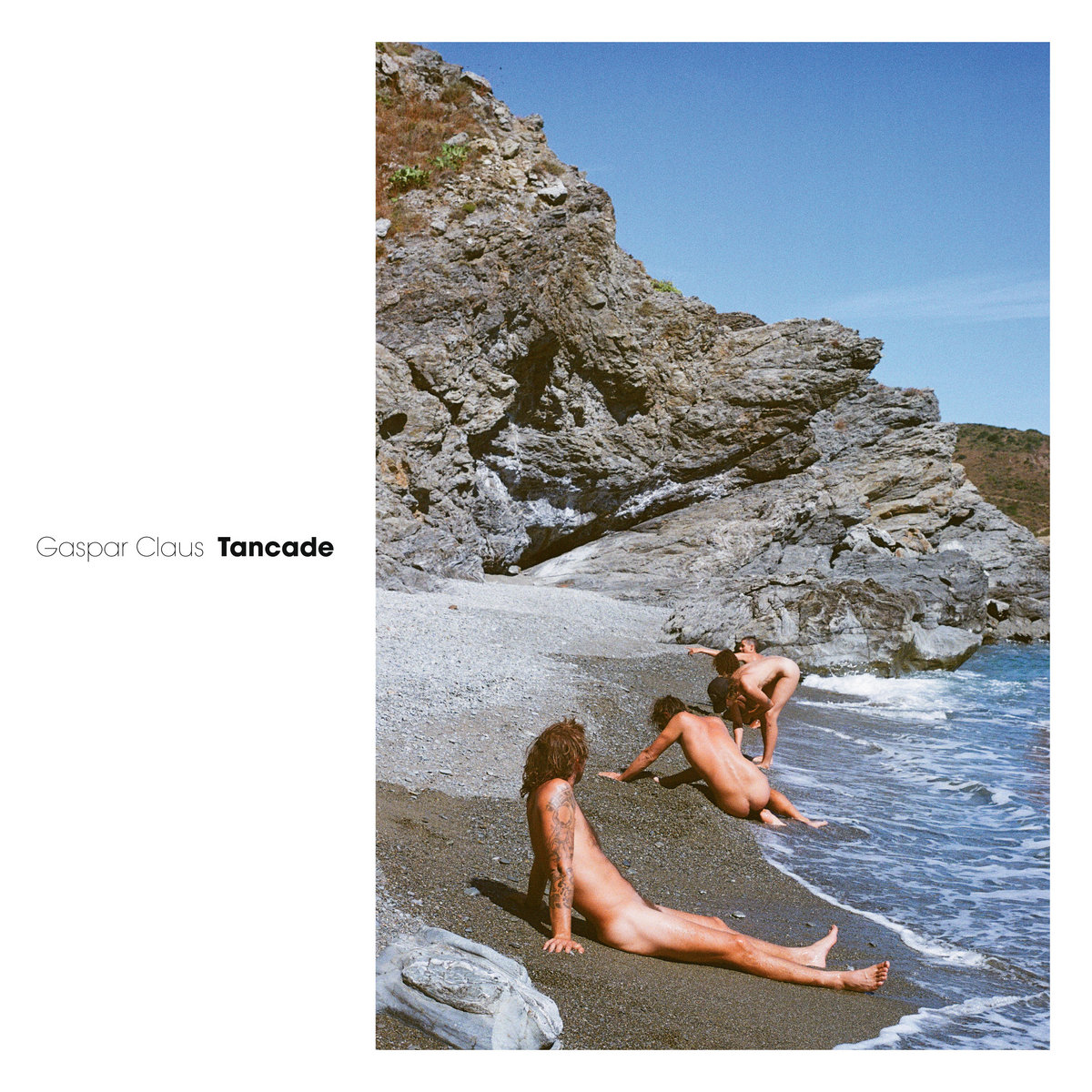
Tancade is an imaginary beach, portrayed here by a single instrument – the cello of Gaspar Claus. With technical imagination and a little bit of electronic trickery he has made an entire album with the cello, using every millimetre to conjure up wooden and metallic sounds to add depth and shade to his musical pictures.
What’s the music like?
Ghostly harmonics and trills on the outer reaches of the cello usher in Une île, which is a brief contemplation in front of the waves. Un rivage portrays the gentle lapping of water through the pizzicato (plucking) across the strings, with a slow, lamenting figure that plays out in several parts.
These first two tracks are an indication of the powerful, meditative qualities Claus brings to his work, employing great imagination to get the sounds he wants.
2359 is a great example, playing out like a game of pinball with small musical ideas pinging across the sound picture as bigger, distorted waves threaten disruption. Meanwhile E.T. (Extra Terre Version) has a ghostly presence, with Claus playing two short fragments of arpeggios together but at a distance of a microtone, creating a disquieting mood in spite of the birdsong in the background.
1999 is a foreboding presence, Claus expanding the intimacy of the solo cello into quasi-orchestral sounds. Ô Sélénites goes a step further, using a wide array of textures to portray a lunar environment. Finally Mor des mystères amoureux finds relative stillness, with sustained harmonics and pizzicato flicking lazily in the breeze before a brief but affecting spoken word passage from Lyna Zouaoui.
Does it all work?
Yes, thanks to Claus’s imagination and deep knowledge of the capabilities of the cello. He creates very personal and meaningful ideas, but against bigger backdrops the listener can dive into.
Is it recommended?
It is, especially for lovers of solo cello music by Bach – Claus offers an interesting and viable alternative for the instrument as it is now.



 Arcana.fm