Today we mark two significant anniversary the world of classical music.
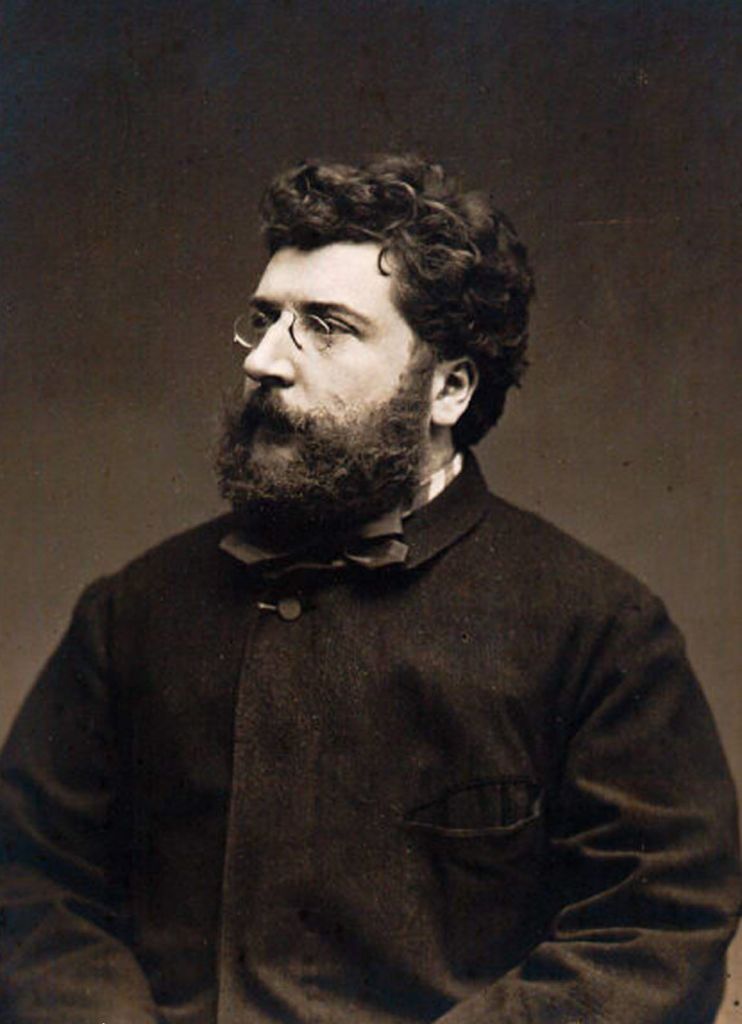
The French composer Georges Bizet died on this day in 1875. Primarily remembered for the opera Carmen, Bizet had many more strings to his bow, as a composer for the stage, the orchestra and the solo voice. One of his most popular orchestral works is the fresh-faced SymphonyinCmajor, which you can enjoy below:
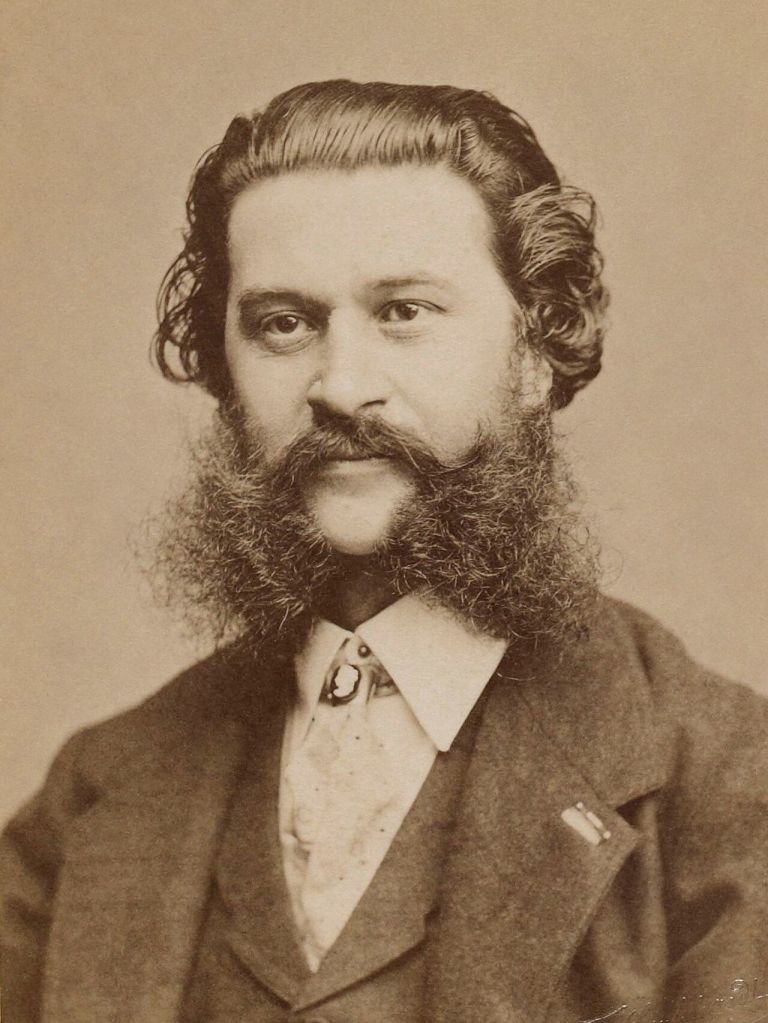
Meanwhile today also marks 200 years since the birth of the king of the waltz, Johann Strauss II. Among the miniature masterpieces in triple time that are such a feature of Johann’s output is the classic waltz OnTheBeautifulBlueDanube, performed below:
by Ben Hogwood Picture by Sl-Ziga, used from Wikipedia
Last week we learned of the sad news that Russian composer Rodion Shchedrin had died at the age of 92. You can read a brief obituary of him at the Guardian website.
Shchedrin was a colourful orchestrator, and my occasional encounters with his music were rarely less than entertaining. One that particularly stands out was his Piano Concerto no.4, a broad canvas of dazzling virtuosity and exotic harmonies.
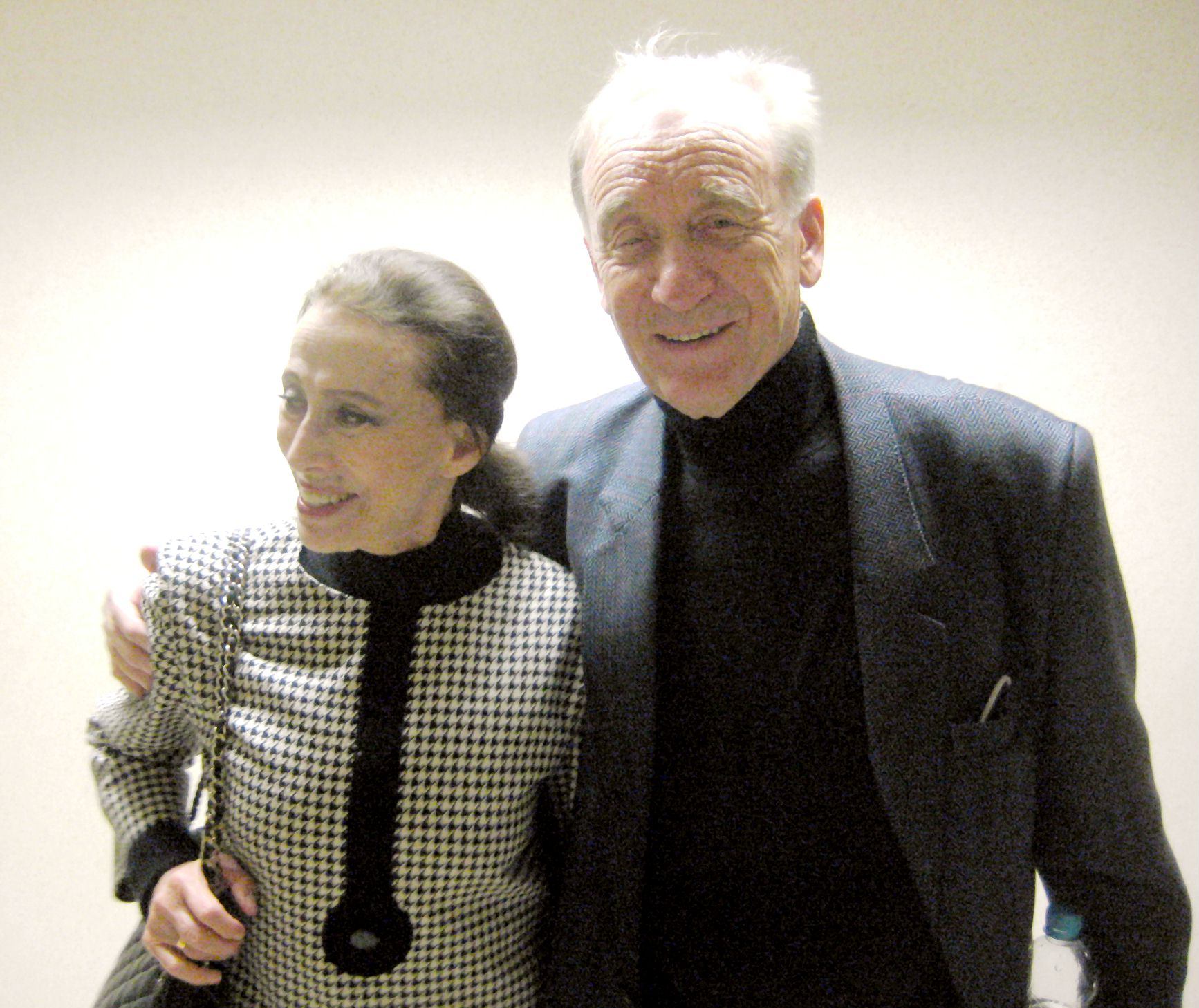
Meanwhile on record the orchestral colour is always evident in his Carmen Suite ballet, an arrangement and enhancement of Bizet’s music with percussion to the fore. His Concertos for Orchestra are also full of original thoughts, while the ballet Anna Karenina – an illuminating score – is a standout work, written for his ballerina wife Maya Plisetskaya (above, with Shchedrin).
The playlist below brings the first Concerto for Orchestra, Naughty Limericks, as an overture to the Piano Concerto no.4 and the Carmen Suite. Added to that is the Anna Karenina ballet in full.
Saint-Saëns Cello Sonata no.1 in C minor Op.32 (1872) Liszt Romance oubliée S132 (1880) Fauré Romance Op.69 (1894) Saint-Saëns Romance in F major Op.36 (1874) Bizet arr. Hollman Carmen fantaisie (not known) Willaume La noce bretonne Op.14 (pub. 1924) Holmès arr. Isserlis Noël d’Irlande (1897) Hahn 2 improvisations sur des airs irlandais (1894 rev. 1911) Saint-Saëns Cello Sonata no.2 in F major Op.123 (1905)
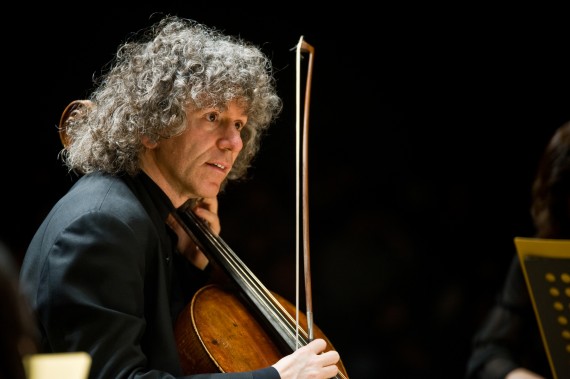
Steven Isserlis (cello, above), Connie Shih (piano, below)
Wigmore Hall, London Thursday 16 December 2021
Written by Ben Hogwood
This well-devised program to mark the centenary of the death of Saint-Saëns was put together by cellist Steven Isserlis and his regular partner, pianist Connie Shih. They presented the composer’s two cello sonatas, the first of which was recorded by Isserlis back in 1992, in an intriguing historical context.
There is no room for shrinking violets in the first movement of the Cello Sonata no.1 in C minor Op.32, a relatively early work, and both performers threw themselves headlong into the music. Saint-Saëns was a virtuoso pianist, and on occasion his writing for the instrument is as demanding if not more so than the instrument it is ‘accompanying’. Here however the two were on equal terms, with plenty of cut and thrust in a dramatic first movement. The C minor casting and stormy start draw parallels with Beethoven, and these were built upon in the players’ compelling dialogue. The improvisatory slow movement was ideally poised, with an air of mystery in its central section where the cello was in its lowest register, complemented by twinkling figures from the piano. The Allegro moderato third movement returned us to powerful, passionate music, Isserlis’ double stopping passages immaculately delivered and Shih finding the necessary definition and phrasing in a superbly played piano part.
A full 32 years elapsed between the first sonata and its sequel, the Cello Sonata no.2 in F major Op.123. By this time the 70 year-old composer’s style had developed considerably. It is a substantial piece, running over 35 minutes, and is perhaps less-performed on that basis, not to mention the demands made on the performers. Isserlis and Shih showed what a fine work it is, however, in a performance that was gripping from the off, full of passion but also finding the more elusive statements in the quieter music, where Saint-Saëns could be found writing subtle but far-reaching sleights of harmony.
A joyous opening paragraph surged forward with considerable energy, powering an impressive and flowing first movement, Shih harnessing the power of the piano but continuing to hold a sensitive balance. She led off a capricious scherzo, whose variations were brilliantly characterized, from a limpid third variation (marked Tranquille) to a rippling Molto allegro that followed.
The heart of the piece, however, lies in the substantial Romance, a dreamy slow movement with a beautiful melody and a profound middle section turning towards the minor key. Both played with poise and affection, finding the centre of music the audience could fully lose themselves in. The last movement, which the composer promised ‘will wake anyone who’s slept through the rest of the piece’, was terrific, working from its deceptively innocuous opening phrase to throw off the shackles and end in celebratory mood. Isserlis was typically generous with his expression, with Shih deserving credit for her technical command and shapely melodic phrasing. The octaves towards the end were especially well-handled.
While the two sonatas were the main works of the concert, the complementary pieces were no less involving, providing an ideal foil. Firstly we heard from Saint-Saëns’ close friend Liszt, one of his few works for cello and piano. The Romance oubliée began with a recitative, with beautiful tone in the held notes from the cello, setting the (intense) mood. Then another great friend (and pupil), Fauré – whose Romance uses the whole range of the cello, starting in the mysterious depths and ending in the rarefied upper register. Saint-Saens’ own warm-hearted Romance in F major Op.36 was affectionately recounted, before the showstopping Carmen fantasie from Saint-Saëns’ friend and regular recital partner, Joseph Hollman. This was a showstopper, with quickfire dances and a pizzicato Habanera, stylishly done by Isserlis.
Shorter pieces followed from Gabriel Willaume, Reynaldo Hahn and Augusta Holmès, each with fascinating connections to the composer. Willaume’s La noce bretonne (The Breton wedding) was rather moving, its distant drone growing in feeling and power before passing by and disappearing again. Hahn’s 2 improvisations were songlike and affecting in their simplicity, a soulful Willow Tree especially, before an arrangement by Isserlis of Holmès song Noël d’Irlande, its pentatonic language easy to absorb.
This was a very fine concert, with playing of an exceptionally high standard by both artists, but crucially with the involvement that told us how Saint-Saëns, in particular, could combine virtuosity with deep feeling, contrary to some opinion. It is hard to imagine how his centenary could have been better observed – and it ended with a perfectly weighted account of The Swan, one of his most famous shorter pieces – taken as it is from Carnival of the Animals. Isserlis needed only to introduce it with a wave of the hand.
You can watch this concert on the Wigmore Hall website for the next 28 days – and you can hear most of the music played by Isserlis and Shih on the Spotify playlist below, with some of the recordings drawn from their recent album Music from Proust’s Salons. That disc can be heard (and purchased) from the BIS website
Recorded 12 July 1955 (b), 18 September 1957 (e) at Abbey Road Studios, London; 15 February (a), 24 March (c) and 28 May 1956 (d) at Kingsway Hall, London
Written by Richard Whitehouse
What’s the story?
First Hand Records continues its exploration of pioneering stereo recordings from the EMI archives with this collection of orchestral works, mainly from the earlier decades of the 20th century, as demonstrates the success of various HMV producers and engineers in harnessing the potential of stereophonic sound to the playing of what, in the 1950s, were the two finest London orchestras – the Philharmonia and Royal Philharmonic, working with conductors in music with which they were not necessarily associated over the greater part of their careers.
What are the performances like?
Starting with an incisive yet expressively deadpan take on Ravel’s Danse générale, all that survives in stereo of Guido Cantelli’s recording of the Second Suite from Daphnis et Chloé, the selection proceeds to excerpts from Albéniz’s piano cycle Iberia, orchestrated by Enrique Arbós. Seldom encountered in concert nowadays, these five pieces (all of the First, plus one each from the Second and Third Books) constitute a worthwhile suite in themselves. Eugene Goossens duly underlines his prowess in earlier 20th-century music with performances that bring out the evocative poise of Evacación, then alternate fervour and piety of El Corpus en Sevilla, before the capricious charm of Triana and capering energy of El Puerto; the cumulative emotional charge of El Albaicin closing this sequence with unfailing panache.
Goossens is hardly less persuasive in Ravel’s Boléro – at this time, not quite the ubiquitous showpiece it became – the inexorably accumulating momentum ideally served by his refusal to rush its devastatingly effective trajectory; the final stage largely taking care of itself when allowed to emerge inevitably. A further worthwhile revival is that of Bizet’s Petite Suite, five miniatures drawn from his earlier cycle for piano duet Jeux d’enfants and given with winning deftness by Vittorio Gui – demonstrably in his element when the sessions for his re-recording of Mozart’s Le nozze di Figaro finished ahead of schedule. Kodály’s Dances of Galánta has itself returned to favour in recent years, but few accounts are ever likely to match that of Paul Kletzki in his steering this ever more animated sequence through to its breathless conclusion.
Do they all work?
Pretty much, allowing for occasional lapses in ensemble that are notably few given the hectic schedule these London orchestras pursued at this time. Remastering has been deftly handled by Ian Jones – Albéniz and Bizet being transferred from HMV Stereosonic tapes, respectively by Giampaolo Zeccara and Ted Kendall (the latter’s 1997 set of Mahler ‘first recordings’ for Conifer is fondly remembered). There are extensive background notes from David Patmore, along with observations by Peter Bromley, whose tenacity has made possible this FHR series.
Are they recommended?
Indeed, not least given the interest of the actual music and the relative unfamiliarity of most of the recordings. The rapid standardization of the listening experience through the medium of streaming has made such releases as this more valuable by (hopefully) making potential listeners aware of just what became possible with the greater recourse to the stereophonic process, as of those numerous triumphs (among not a few failings) which resulted given the right combination of technology and musicality. Further instalments are keenly anticipated.
Listen & Buy
You can get more information on the disc at the First Hand website, where you can also find information on the first, second and third volumes in the series
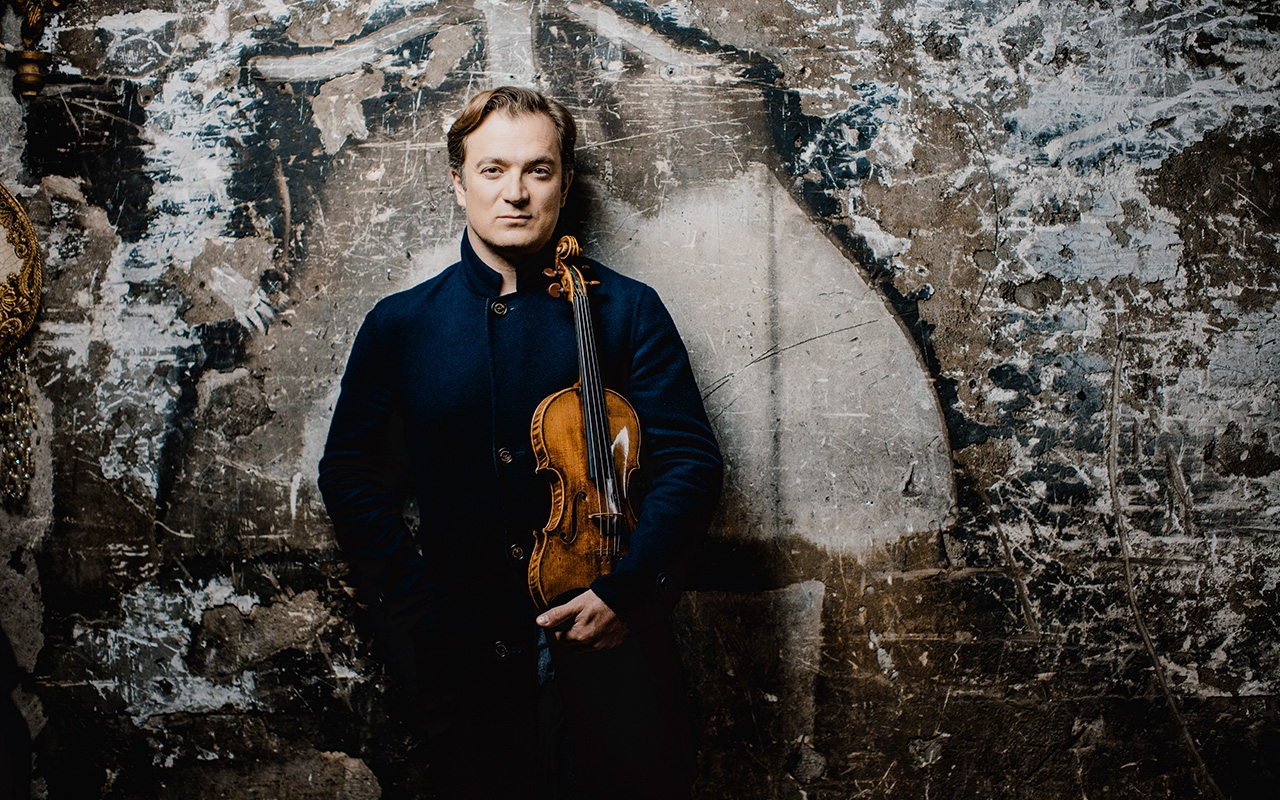
Renaud Capuçon (violin), City of Birmingham Symphony Orchestra / Anja Bihlmaier
Symphony Hall, Birmingham
Wednesday 30 October 2019 (2.15pm)
Bizet arr. Hoffman Carmen Suite no.2 (1887) Chausson Poeme Op.25 (1896) Ravel Tzigane (1924) Dvořák Symphony no.7 in D minor Op.70 (1885)
Written by Richard Whitehouse
This afternoon concert by the City of Birmingham Symphony Orchestra brought a welcome appearance from German conductor Anja Bihlmaier, presiding over an unlikely yet appealing programme as juxtaposed French and Russian music of the late 19th and early 20th centuries.
Bizet‘s Carmen has maintained its hold on the operatic repertoire such that individual items are seldom encountered in concert other than as encores. As arranged by Fritz Hoffmann, this Second Suite astutely alternates entr’actes with vocal numbers. Thus the purposeful Marche des contrebandiers (akin to an offcut from Elgar’s Wand of Youth) precedes the smouldering Habanera, then a Nocturne which is Micaela’s third act aria with its vocal line transferred to violin and soulfully rendered by guest leader Tamas Kocsis. That of the evergreen Chanson du toreador is similarly heard on trumpet, which instrument is duly partnered by flutes in the infectious La garde montante, before wind instruments variously come to the fore during the Danse boheme which rounded off the present selection in appropriately exhilarating fashion.
Renaud Capuçon then joined the orchestra for an unlikely coupling of concertante pieces that is highly effective in concert. It may have been inspired by a Turgenev story, but Chausson‘s Poème is an autonomous entity whose rhapsodic impulses are balanced by formal rigour and an organic evolution as elides between the introspective and ecstatic – a trajectory conveyed with due eloquence by Capuçon, his fastidious tonal shading deftly reinforced by Bihlmaier’s nuanced direction. What is so often an elusive work left a powerful and enduring impression.
As, albeit in its rather more demonstrative way, did Ravel‘s Tzigane. Effectively the result of a bet with violinist Jelly d’Aranyi that this composer could come up with a rhapsody inspired by Hungarian gypsy music, the piece wears its Lisztian antecedents lightly while pointing the way toward the similarly conceived rhapsodies of Bartók. Capuçon teased out the high-drama of its unaccompanied initial section, then – with harpist Alma Klemm – made a breath-taking transition into its heady medley of gypsy-inflected themes prior to the rousing final flourish.
After the interval, Dvořák’s Seventh Symphony came almost as a corrective in its seriousness of purpose and powerful formal logic. Bihlmaier directed a performance as left no doubt as to such qualities, at its best in a thoughtful while never staid account of the slow movement – its brief yet elated climax ideally judged – then a scherzo whose underlying furiant rhythm was suffused with Brahmsian trenchancy (one reason this piece displeased the anti-Dvořák faction decades hence). Not that there was much lacking with the outer movements, though the coda of the initial Allegro was a little too deadpan for its ominousness fully to register, and that of the finale felt too reined-in emotionally; those granitic cadential chords marginally failing to clinch what is surely the most fatalistic of any major-key ending in the symphonic repertoire.
Even so, this was a finely realized account of a work as can all too often misfire. Bihlmaier will hopefully return before long: next week, the CBSO’s principal guest conductor Kazuki Yamada directs a performance of Mendelssohn‘s Elijah, premiered in this city 173 years ago.



 Arcana.fm