Switched On: Mary Lattimore – Goodbye, Hotel Arkada (Ghostly International)

by Ben Hogwood

What’s the story?

This is an album about change and the lasting effects it can have on people. Its title bears the name of a beloved hotel in Croatia visited by American harpist Mary Lattimore, and closing for renovation. She takes this as a stimulus for six pieces that explore the theme of change and how nothing can ever be the same again.

The musical material has its roots in improvisation but Lattimore honed the album over two years, both in a solo capacity and in the company of a host of collaborators. To that end she was joined by The Cure’s Lol Tolhurst, Meg Baird, Slowdive’s Rachel Goswell, Ray Montgomery, Samara Lubelski and Walt McClements.

What’s the music like?

Beautiful. It is worth studying some of the stories behind Lattimore’s work, for it reveals something of her sense of humour as well as a softer side to her thinking. And Then He Wrapped His Wings Around Me – featuring Baird and Clements – is about a moment where she got to meet Big Bird with her mum, and he gave her ‘an incredible hug with this scratchy yellow wings’. The resultant track has a similar effect!

Arrivederci, with Tolhurst, is an intensely calming experience – written by Lattimore when she was at a low ebb after being let go from a project. It is styled as a round, a repetitive chord sequence where the harpist adds more and more melodic substance. Blender In A Blender goes on a compelling journey with Montgomery, becoming gradually more distorted and separated from a traditional harp sound and harnessing considerable power.

Lattimore’s titles are always eye-openers – so to speak – and Music For Applying Shimmering Eye Shadow gets music to match in the form of wonky, wobbly lines that falter over a much steadier base. It is as though one hand is faltering, the other an immovable object. There is a different kind of pitch variation in Horses, Glossy On The Hill, the idea of bells jangling together made by the clashing of semitones and microtones on the harp, before the instrument swirls in a gorgeous torrent of sound.

Yesterday’s Parties is a highly effective coda, the vocals of Goswell and Lubelski swooning as the harp plays delicate lines.

Does it all work?

It does. Lattimore’s imagination with the harp is key, producing some extraordinary sounds from the instrument in her manipulations and with studio trickery without ever becoming gimmicky or taking things too far. The underlying power in the music is also most impressive, as the likes of Arrivederci illustrate.

Is it recommended?

Wholeheartedly. This is music of beauty and inner resolve, and a powerfully moving album – arguably Mary Lattimore’s best yet.

Listen

Buy

Published post no.1,988 – Tuesday 24 October 2023

Switched On: Helios – Espera (Ghostly International)

by Ben Hogwood

What’s the story?

Keith Kenniff releases his third album as Helios on Ghostly International, a label he joined in 2018. Kenniff, though, has been making music under this alias since 2004 – a complement to his other active persona of Goldmund. Kenniff, who also explores poppier climbs with partner Hollie as Mint Julep, is a prolific composer who likes to record at night.

Espera took on its form in this way, using layers of guitar, piano and percussion and concentrating on texture and colour just as much as melody and rhythm.

What’s the music like?

In a word, lush. Espera presents wide open vistas, sunny outlooks, a light wind in the branches, an ebbing tide – all of those ambient things that we look for on holiday, presented in audio form. He presents those textures with subtly catchy hooks and melodies, the sounds warm to the touch and the harmonies easy on the ear.

From the moment Fainted Fog floats in the mood is set, and you can practically feel the sand in your toes as Intertwine takes shape. As well as pure relaxation, Kenniff’s music as Helios does have an emotional dimension, as the excellent later cuts Well Within and Rounds show. The latter has some softly voiced melodic loops linked together rather beautifully.

Meanwhile the likes of Impossible Valleys present a calming meander, outdoors in nature with not a care in the world.

Does it all work?

It does indeed, especially in the sunshine!

Is it recommended?

Yes. There are no surprises here, but that’s because Helios knows exactly what to do to set the mood. The mood here being relaxation and hot weather bliss.

Listen

Buy

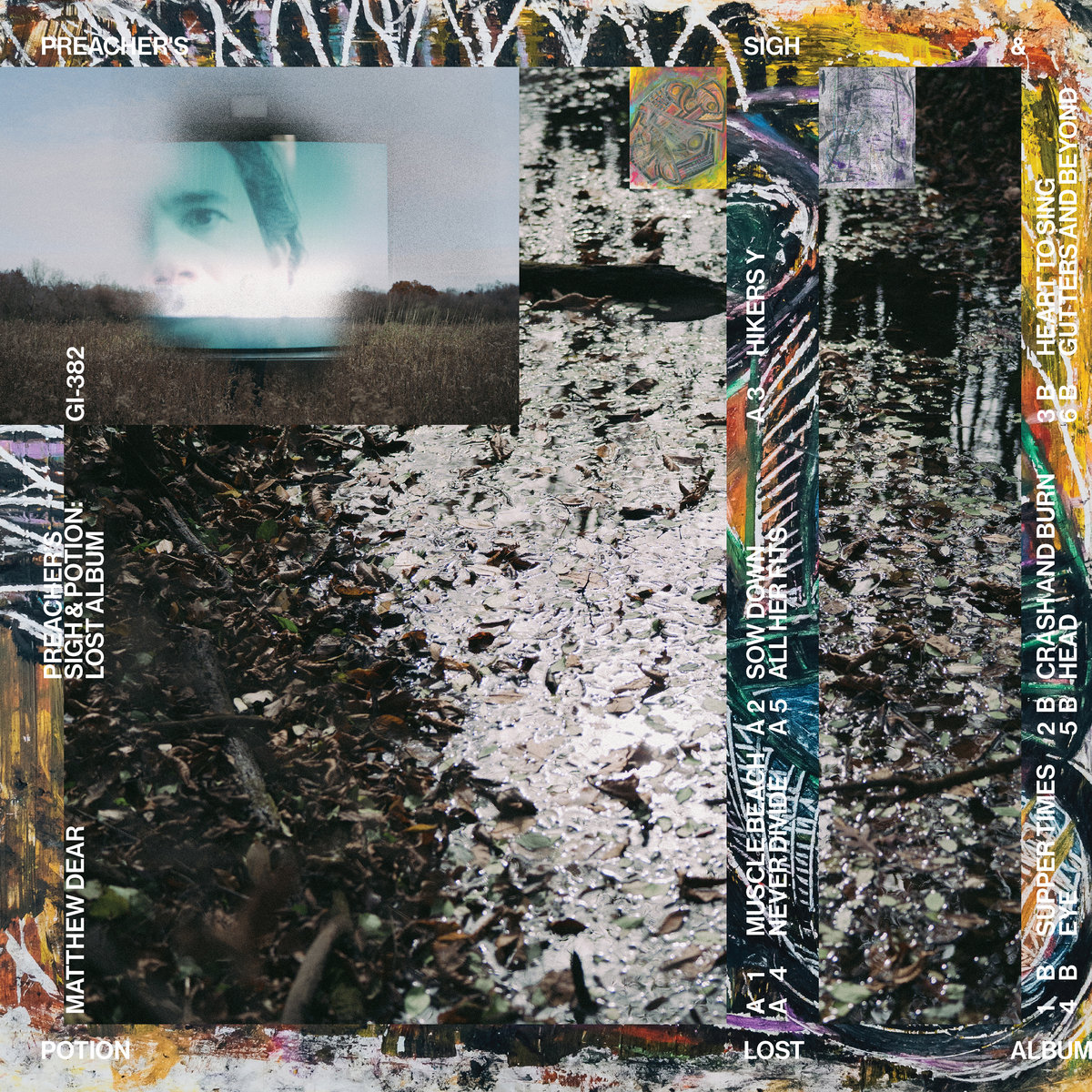
Switched On: Matthew Dear: Preacher’s Sigh & Potion: Lost Album (Ghostly International)

matthew-dear

reviewed by Ben Hogwood

What’s the story?

Matthew Dear has shown himself to be an incredibly versatile electronic music artist over the years. His distinctive baritone has powered a number of successful song-based albums, while on the instrumental side his Audion alias has shown him to be a techno producer of some repute. Preacher’s Sigh & Potion comes to light twelve years after its composition, at a point where the success of his Asa Breed album was pushing Dear in a more electronic direction.

This opus, entertainingly described as ‘a spirited country romp in the techno barn’ in the press release, was shelved as Dear followed his ‘switched on’ path, but its finger-picked guitar roots can now be revealed in songs that trace back to the music his father was making in the late 1960s. Dear wrote the music in Texas, and something of the wide open spaces works its way into the music.

What’s the music like?

A fascinating blend of influences and styles. As Dear himself notes, the production is not at all fussy, leaving rough edges and raw vocals that work really well given the musical styles at play. Those who are only familiar with Dear’s sleek electro pop might be surprised at the twanging guitar sound on Crash And Burn, which brings Beck’s Devil’s Haircut to mind, and also on Heart To Sing, where the instrument twangs against a murmured vocal. It appears right from the start, too, powering the easy paced Muscle Beach.

Despite the guitar craft the main pull for this album is once again Dear’s voice, the key instrument. He has a tone similar to Depeche Mode’s Dave Gahan in its midrange, but at the same time he is capable of plumbing the depths alongside the bass, not to mention the occasional falsetto.

The highly expressive vocals power some excellent songs. Hikers Y is the most meaningful, Dear placed against a lone beat as he finds solace alone, admitting ‘I’m through with all the conversation, I was never good with conversations’. Sow Down has a familiar chugging rhythm but a full acoustic guitar sound, while All Her Fits has a softer centre, cushioned by slow moving string lines. The dappled electronics of Supper Times continue this thread.

Does it all work?

Largely. The uncluttered production is a plus, speaking of an instinctive recording process, though there are some song structures Dear might have changed and stretched. Less is definitely more in this instance though, as the shorter songs still leave their mark.

Is it recommended?

Yes. For fans, this will be an important piece of the Matthew Dear jigsaw, left incomplete until now. It also places the excellent Asa Breed and Black City in context, illustrating in the process just what a versatile producer and vocalist he continues to be.

Stream

Buy

Switched On – Mary Lattimore: Silver Ladders (Ghostly International)

reviewed by Ben Hogwood

What’s the story?

The harpist Mary Lattimore has been busy in the two years since her last album release, Hundreds Of Days, with a good deal of touring and a remix package from that long player featuring work from Julianna Barwick and Jónsi among others.

For Silver Ladders she decamped from her Los Angeles home to the studio of Slowdive and Mojave 3 lynchpin Neil Halstead near Newquay, in Cornwall, working with him in sessions over an intense recording period of nine days.

What’s the music like?

Rather magical. The very different starting points of Lattimore and her producer are ideal, for the twinkling colours of the harp find their ideal match in Halstead’s very subtle guitar and studio work.

The harp remains the most prominent instrument and sets the tone with the beautifully poised Pine Trees, Lattimore’s silvery colours punctuated with pinpricks of intensity.

The album unfolds over seven tracks, with the centrepiece Til A Mermaid Drags You Under. This substantial piece of work begins in the lower register of the harp but gradually takes flight, the upper register adding wider perspectives and a twinkling edge. Halstead’s production touches reinforce the bass with sonorous notes and boost the reverberation, the listener given a sound picture akin to hovering over a vast bay.

Don’t Look is another extended meditation, Lattimore exploring the deep twang of a string in the harp’s lower register but with dreamy guitar from Halstead. The producer also provides thoughtful counterpoint to Sometimes He’s In My Dreams, then murmuring electronics to Chop on the Climbout, Lattimore’s harp flickering in the half light.

The closing Thirty Tulips is particularly beautiful, shifting phases and gently undulating, with a range of different sounds from the harp and broader electronic notes in the background.

Does it all work?

Yes, and repeated hearings only enhance the positive experience this album can bring. For an extra dimension, try the visual score accompaniment by Rachael Pony Cassells, which adds a further layer of enchantment to this already beautiful music:

Is it recommended?

With no hesitation. In these rather fraught times the subtleness of music like this can work wonders – though that’s not to say Mary Lattimore is without expression or imagination. Silver Ladders evokes starry ripples on the nocturnal waters with effortless ease, the listener borne away on the waves.

Stream and Buy

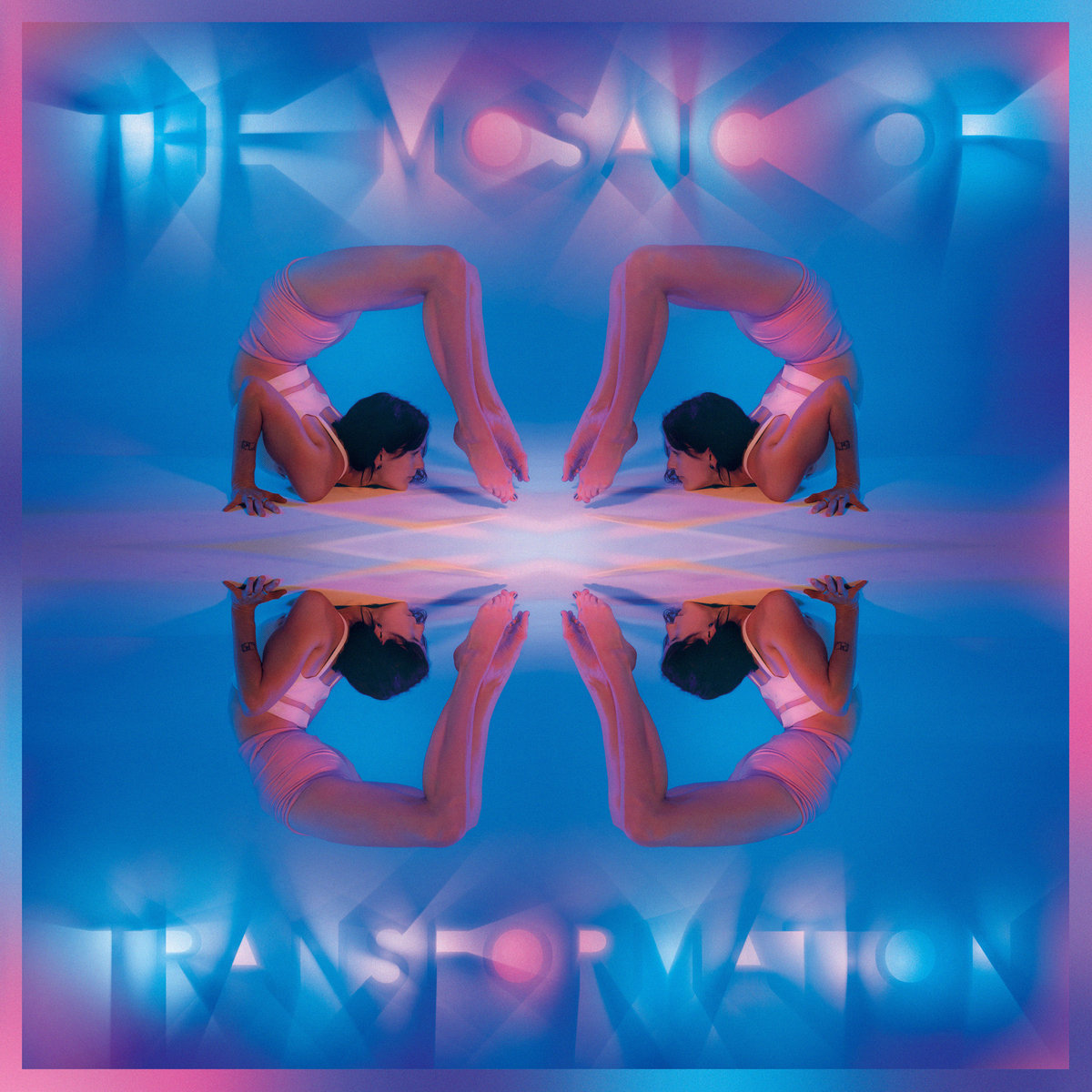
Switched on – Kaitlyn Aurelia Smith: The Mosaic Of Transformation (Ghostly International)

What’s the story?

It is tempting to put forward the idea that what the musical world needs right now is a new album from t Kaitlyn Aurelia Smith. That is because the music she has made up until now is not just a comfort for anxious times but it offers real, meaningful positivity from within. Recognising that potential, Ghostly International have proceeded with the album release rather than defer it, meaning that while Smith’s tour with Caribou may be cancelled the album she would be promoting is still with us.

Her previous release, Tides, was free of beats, and much of the rhythmic profile of The Mosaic Of Transformation is constructed without explicit use of bass drums. Yet it is an album of movement, exploring the relationship between sound and colour, and our own physical beings. She has a great wealth of knowledge and experience in this area, making music specifically designed to ‘fit’ our life experiences in a way that enhances them.

What’s the music like?

The Mosaic Of Transformation is light on its feet much of the time, but that does not make it insubstantial. Quite the opposite, for in tracks like Expanding Electricity, the ten and a half minute closing track on the album, Smith has put together sound collages of a deep and lasting beauty and also of a surprising density. If music were colour – which it often is of course – there would be deep blues and purples in this track especially, beginning with sonorous low register strings but curving upwards through the spectrum. When her multitracked voice proclaims, ‘I feel it, can you feel it expanding?’, the celebration of electrical power is wholeheartedly complete.

This love of electricity – without which very little of our music could be heard! – is felt throughout the album, where brighter pastel shades make themselves known. Carrying Gravity is another substantial track that develops instinctively and with a keen structural command. It has a luminous glow, especially as the textures thin out towards the end.

Some of the harmonic language Smith uses has an Oriental feel, which is either implied or more directly referenced – and the busy exchanges of The Steady Heart bring this through to the front. It is subtly apparent as the album gurgles into life through Unbraiding Boundless Energy Within Boundaries, while Remembering uses block chords and Smith’s distinctive layered vocals. After the initial relative stillness Understanding Body Messages stays true to its title with snippets of musical code passing along the line, conveying positive energy.

The beats are more gainfully employed in The Steady Heart, which has multi-layered vocals at its core – but everything is inevitably pointed to the closing, epic ode to electrical power.

Does it all work?

Yes – and the more you listen to The Mosaic Of Transformation, the more it has to offer. Smith’s layering technique is a sonic delight, because each visit to the music reveals previously hidden workings, subtle melodic touches and crossrhythms, all done with a light craftswoman’s touch. As the last sounds of Expanding Electricity subside, a lasting warmth is left behind.

Is it recommended?

Yes – and the more you listen to The Mosaic Of Transformation, the more it has to offer. Smith’s layering technique is a sonic delight, and each visit to the music reveals previously hidden workings, subtle melodic touches and crossrhythms, all done with a light craftswoman’s touch. As the last sounds of Expanding Electricity subside, a lasting warmth is left behind.

Listen and Buy