Switched On – Erik Levander: Jökel (Glacial Movements)

erik-levander

reviewed by Ben Hogwood

What’s the story?

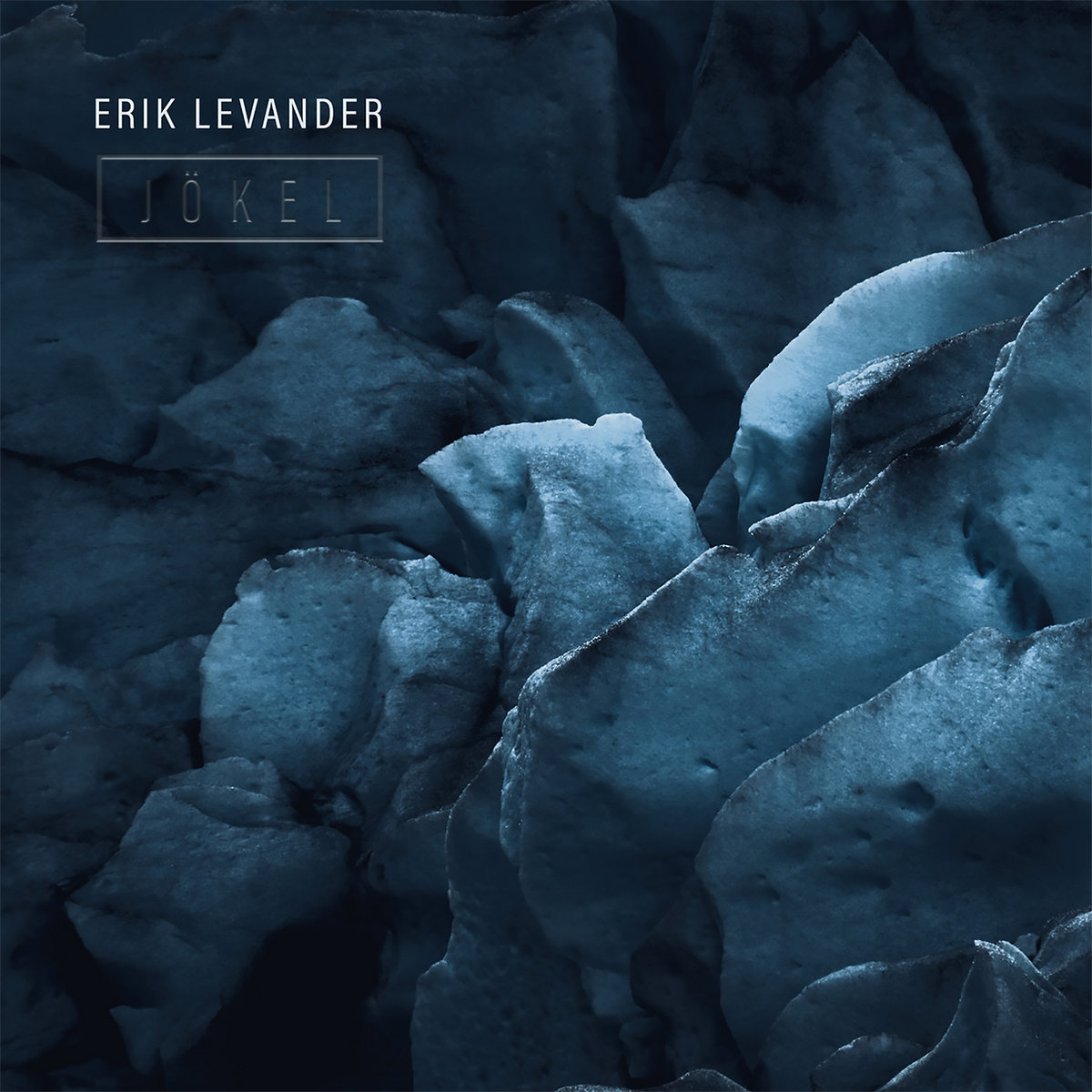
‘Jökel’ is the Swedish word for glacier, with its roots in the Icelandic word ‘Jökull’. It is an entirely appropriate title for Erik Levander’s latest album, borne out of a visit to the Mýrdalsjökull glacier in Iceland (seen below). He crafted a clutch of imaginary field recordings from the visit, inviting the listener to join him on a natural journey around and through this natural phenomenon.

What’s the music like?

Among his plentiful output, this will surely be one of Levander’s more minimal albums to date. Yet that is an entirely valid approach as he looks to capture the slow, incremental progress of the glacier, while also recognising the fact it sits on top of a volcano.

There are no melodies as such here, but the five tracks are compelling as they slowly develop in front of the listener’s ears. Tröskel (Threshold) has an ominous knocking sound that reoccurs as though natural bumps were going on that could lead to something much more substantial down the line. This is a theme developed in the longer Expansion, where the sound widens its perspective and more obvious pitches appear, winding outwards and upwards. This is quite chilling on headphones, before the comfort of the sounds submersed in thick ambience, as though wrapped up in ice.

Myrdalsjökull_01From there we move to Avstånd, where it is possible to discern pieces breaking off the main flow, the ambience still thick behind, before hissing and dripping sounds start to dominate the treble, again a spooky effect on headphones. Yta introduces the most definite pitches we have heard so far, rooted to a single chord initially but then changing to a pitch laden with overtones as the perspective changes. Finally, Massa (Mass) draws back a bit, letting us appreciate the sheer size of the construction, the wind audible over the snow and ice.

The five tracks last just over 50 minutes, and are definitely best heard as a whole in order for the listener to walk with Levander along the edge of this remarkable construction.

Does it all work?

Yes. Levander’s soundscapes are remarkably descriptive, sending a shiver of cold down the spine. This is not comfortable music, and when the listener has the subject matter to hand it is easy to think of the anguish involved with the melting of our glaciers. Levander successfully portrays his subject but with a fair bit of discomfort involved.

Is it recommended?

Yes. Jökel sits comfortably within the spectrum of the Glacial Movements label, and is a compelling document of a visit that clearly had a strong emotional effect on the Swedish artist. 

Stream

Buy


Playlist – Aria Rostami & Daniel Blomquist

It is our great pleasure to welcome Aria Rostami and Daniel Blomquist to the Arcana playlist section.

They have been working together on a second collaboration for the Glacial Movements label. Still is the culmination of years of work and musical shapeshifting, the resultant six-track album the ideal companion to our cold weather isolation here in the northern hemisphere

Still was reviewed on Arcana here, but the playlist the pair have put together reflects a little more of their listening, as well as including a couple of tracks from the album. Sit back and get horizontal with a tracklisting that includes stellar works from Bryce Hackford – the gorgeous Coast (maybe) – Mica Levi and Popul Vuh.

Our thanks to Aria and Daniel for this wonderful hour of music:

https://soundcloud.com/ariarostami/aria-rostami-and-daniel-blomquist-mix-arcana/s-qL21jUAxTUx

On Record: Aria Rostami & Daniel Blomquist: Still (Glacial Movements)

reviewed by Ben Hogwood

What’s the story?

The music of Still reflects the circumstances in which the album came together. Aria Rostami and Daniel Blomquist have already released a collaboration for Glacial Movements – the Wandering Eye album – where they focused on the Antarctic Plateau, and the best places to observe space. Yet during that work the building blocks for Still were already in place.

The music explores a process of change over time, describing how time can change its motion in cases of cold weather. Because of this, each track ends up at a different place from where it started.

What’s the music like?

As deep as the ocean, and as slow as a huge ship in icy water. This is music that works well as background listening but reveals its intensity when experienced up close. The structures are as big as the pair’s first album – ten minutes or more in some cases – but maintain their concentrated level throughout.

The use of fragments of speech in the background of Undercooled works well against the foreground and wide background elements, with flecks of piano appearing towards the end. The lovely wide outlook of Hoarfrost works well, with chords shifting very slowly and peacefully, while Crystal Gazer swirls and then settles on a harmonic bed before floating away.

Does it all work?

Yes. These pieces are like six massive chord progressions over a long period of time, but they link together beautifully to make one big structure. It is the coldest of ambient music – you can literally feel the ice at times! – but leaves the sort of warmth you feel when getting back indoors after a stint outside on a cold winter’s day.

Is it recommended?

Yes, along with the duo’s first album. It ticks all the boxes for a Glacial Movements release while keeping its own individual qualities. A subtly invigorating piece of work that makes its mark.

Stream & Buy

Switched On – Chihei Hatakeyama & Dirk Serries: Black Frost (Glacial Movements)

reviewed by Ben Hogwood

What’s the story?

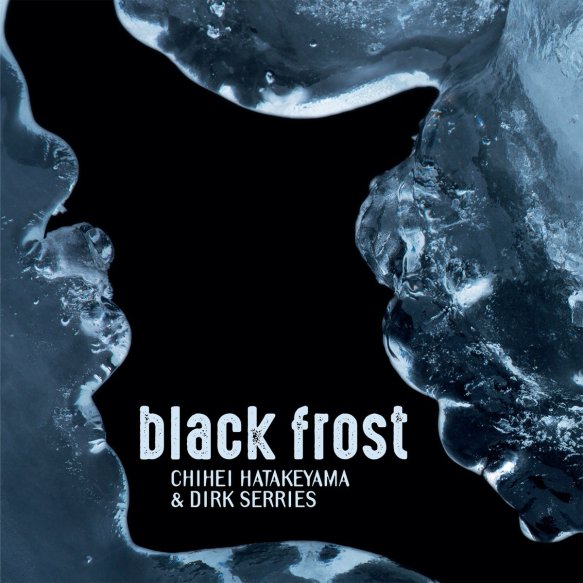
This is the second collaboration on the Glacial Movements label between Chihei Hatakeyama and Dirk Serries, a follow-up of sorts to their album The Storm Of Silence in 2016. Like that release, Black Frost has four tracks and runs for just over 40 minutes, expanding their already widescreen approach of guitars and electronics.

Chihei Hatakeyama is a musician and sound artist currently living on the edge of Tokyo, and has many releases under his belt both as a solo artist and as part of the duo Opitope, with Tomoyoshi Date. Dirk Serries, meanwhile, is an experienced ambient artist based in Belgium who has built up an impressive CV of collaborations through work on an ongoing Microphonics series.

What’s the music like?

Simple – but that word should not be taken lightly. It is simple in the sense that the music is very simple to listen to. Each track largely hangs on a specific pitch, and no effort is required on the part of the listener to reach a meditative calm. In fact the less effort made, the more effective the ambience is. And yet, if the ear moves in for a closer take, the layers and subtle oscillations / variations reveal themselves, and the 40 minutes can be seen as a single unit, one gigantic four-part chord progression.

The textures are wonderfully airy and cool, polar in their chilled temperature but with a hazy warmth too. In terms of colour the music has sharper outlines and more piercing tones than the blue wisps of The Storm Of Silence – hence the dark overtones of the cover.

Those dark colours become more evident in third track Breen, which gives off an icy residue, but they don’t take root as such – and Frossen Luft closes out the quartet with more drawn-out pitches which eventually disappear into the middle distance.

Does it all work?

Yes. As anyone familiar with Glacial Movements releases will know, the ambience is of the deeply immersive kind, ideal for the end of a working day, the beginning of a new one, or an antidote to the fast and worrisome pace of life we are faced with from time to time.

Is it recommended?

For sure. Anyone enjoying previous music from this source will not need further encouragement, for Black Frost ends up as the ideal complement to The Storm Of Silence. It may be darker in countenance but it still ends up in the same, contemplative space.

Stream

Buy

Switched On – The Orb: Abolition of the Royal Familia (Cooking Vinyl)

reviewed by Ben Hogwood

What’s the story?

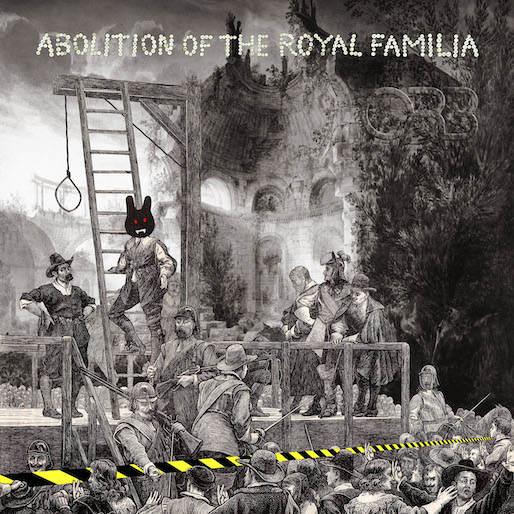
The Orb need no introduction of course, being long familiar to admirers of ambient music since 1988. Theirs is an ever-changing line-up, orbiting the one constant of the equation, Dr Alex Paterson, and on this, their 17th studio album, Michael Rendall is elevated to the top table. He joins Paterson at the controls for a record including a number of starry guest turns.

Regular collaborators Steve Hillage and Miquette Giraudy (aka System 7) and Youth appear, alongside Roger Eno, David Harrow of On-U Sound, and – this being The Orb – a four legged friend, the Paterson pooch Ruby.

The album takes as its lead the royal family’s nod to the East India Company and its opium trade – both an inspiration and a protest against a movement causing two wars between India and China in the 18th and 19th centuries.

What’s the music like?

Lovely. There is little sense of explicit protest, and the guests all fit in to the overall mood seamlessly. The Orb have a very happy knack for matching quantity with quality, and even though it is barely a year since their last outing, Abolition of the Royal Familia sounds fresh and very much at ease in its own company.

At 77 minutes it’s a good stretch, but that gives the listener even more room to drift in and out of focus if required. Working together as Paterson and Rendall do means the door is never closed to a variety of styles and, very happily, humour too.

The speed with which Daze slips into a comfortable groove might surprise, a lead on which House of Narcotics and Hawk King build with their chugging beats. The latter displays The Orb’s familiar ambient house credentials as well as paying affectionate tribute to one of their most famous fans.

Gradually the tracks pan out and we experience more horizontal musical thoughts. Spacious intros provide warmth on a Californian scale, the listener allowed to bathe in consonant harmonies that drift back and forward like the ebbing of the tide. Shape Shifters (In Two Parts) goes further, adding a dreamy trumpet solo from 17-year old Oli Cripps, who Paterson met in his local record shop.

Also easing into the long form bracket is The Weekend It Rained Forever, a spacey, piano-led number towards the end, proving the ideal foil for the clattering breakbeats of The Queen Of Hearts preceding it.

Happily the band’s trademark collage of samples will make you smile, despite the inevitable rejection of a Prince Charles number. “We are WNBC”, begins Afros, Afghans and Angels, “the West Norwood Broadcasting Corporation. Streaming live to you whoever, wherever and whatever you are.” Yet a surprising and devastating payoff is saved for the finish. “Stay in your homes, do not attempt to contact loved ones or attorneys”, runs the key refrain of Slave Till U Die No Matter What U Buy, the Jello Biafra homage unintentionally marking itself out as an isolation anthem for our time.

Does it all work?

Yes. It is arguably too long, but with music like this duration is much less of an issue, especially with plenty going on around the perimeter on headphones. Certainly seasoned Orb followers will not see it as a problem. It could also be argued that Abolition of the Royal Familia does not introduce anything particularly new – again, not a problem, since The Orb always know how to reach those ambient parts few others can reach.

Is it recommended?

Yes. Abolition of the Royal Familia falls seamlessly into line alongside the recent additions to The Orb’s cannon, and has many moments of genuine bliss. It is like a sonic warm bath at either end of a trying day.

Stream and Buy

Buy