Live review – CBSO & Ilan Volkov: Mahler Symphony no.9, Krása & Klein

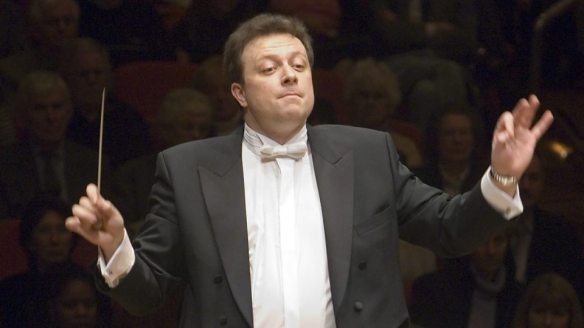
City of Birmingham Symphony Orchestra / Ilan Volkov (above)

Symphony Hall, Birmingham
Thursday 25 April 2019

Krása Overture for small orchestra (1944)
Klein arr. Saudek Partita for strings (1944)
Mahler Symphony no.9 (1909)

Written by Richard Whitehouse

Photo of Ilan Volkov (c) Astrid Ackermann

Pursuing one of the more eventful conducting careers of his generation, Ilan Volkov returned to Birmingham for this pertinent juxtaposition of music by composers who numbered among countless Nazi atrocities next to what is arguably Mahler’s greatest symphonic achievement.

Mahler has long been central Volkov’s programming (performances of the Sixth and Seventh Symphonies when principal conductor of the BBC Scottish Symphony Orchestra resonate in the memory), and this evening’s account of the Symphony no.9 exuded conviction borne of long familiarity.

Even now, it is uncommon to hear a reading of the expansive first movement which unfolded with such unforced inevitability; those extremes of anguish and introspection finding seamless accord within the composer’s most elaborate formal design. Nor was there any lack of contrast with what follows – the ‘fantasia’ on ländler rhythms whose symmetrical elegance is constantly undercut by that glancing irony at its most acute during the final pages, when the texture appears to disintegrate out of weariness then from any more rational intent.

Excellent as was the City of Birmingham Symphony’s playing thus far, it raised its game for the third movement – the Rondo-Burleske whose contrapuntal intricacy can become turgid at too stolid a tempo and lose definition at too rapid a pace. Not that this fazed Volkov, who duly steered a secure course across what is tonally and emotionally Mahler’s most fractious statement – the soulful strains of its trio section allowing for precious little repose before the initial music returns in an explosive denouement. After this, the closing Adagio emerged as long-breathed yet never flaccid as it accumulated gravitas through to a fervent climax, then subsided into a coda shorn of false emoting or affectation – the CBSO strings all the while maintaining focus as Mahler’s silence-riven gestures seemingly attained the desired closure.

The brief though worthwhile first half had featured a brace of works by Czech composer who both flourished in the Nazi transit camp at Terezin before being murdered at Auschwitz. Not that there is any sense of encroaching dread in the Overture by Hans Krása – its purposeful elision of traits drawn from Stravinsky and Hindemith abetted by scoring as economical as it is characterful. Volkov secured an incisive rendering, only easing up for the final bars whose sense of suddenly opening-out onto new and unforeseen vistas was palpably conveyed here.

Even more engaging was the Partita by Gideon Klein. An arrangement – by Vojtěch Saudek (1951-2003) – of the String Trio that proved to be Klein’s last completed work, it features at its centre a sequence of variations on a Moravian folksong in which elements derived from Janáček take on a distinctive and undeniably personal guise at the hands of one who would have surely found a defining role in post-war Czech music. If the vigorous outer movements seem less individual, they are none the less effective within the context of this piece overall.

In both these works, Volkov secured a spirited response from the CBSO strings (perhaps a little too dogged in the Klein). Hopefully he will return to this orchestra during the 2019/20 season, and hopefully include further pieces by the ‘Terezin generation’ in his programmes.

For further information on the City of Birmingham Symphony Orchestra’s 2018-19 season click here

Further listening

This concert will be broadcast as part of ‘Radio 3 in Concert’ on Friday 3rd May. To access that concert click on this link

Ilan Volkov is yet to record a Mahler symphony, but for a leading version of the Symphony no.9 from the Berliner Philharmoniker and Herbert von Karajan you can listen on Spotify below:

Live review – Christopher Maltman & CBSO / Michael Seal perform Mahler, Sibelius & Nielsen

Christopher Maltman (baritone), City of Birmingham Symphony Orchestra / Michael Seal (above)

Symphony Hall, Birmingham
Wednesday 10 April 2019

Sibelius Symphony no.3 in C major Op.52 (1907)
Mahler Songs from Des Knaben Wunderhorn
Nielsen Symphony no.5 FS97 (1922)

Written by Richard Whitehouse

Photo of Christopher Maltman (c) Pia Clodi

Michael Seal’s concerts as Associate Conductor of the City of Birmingham Symphony are seldom without interest and tonight’s programme featured a typically bold juxtaposition of Nordic symphonies from the early twentieth century, alongside orchestral songs by Mahler.

Time was when Sibelius’s Symphony no.3 was overlooked even by his keenest advocates, but it has long since become a regular fixture and this account doubtless benefited from the CBSO’s lengthy association with the piece under Sir Simon Rattle and Sakari Oramo. That said, Seal had ideas of his own to impart – most evident with the gradually intensifying curve of momentum over the first movement’s development into the reprise, then close alignment of tempo between its successor’s diverse episodes and the lilting main theme so it elided deftly between slow movement and intermezzo. The finale was a slight disappointment – lacking that ominous mystery in its initial ‘scherzo’ phase, with the closing pages a little provisional in their affirmation – though there was no mistaking the unanimity of response on the way.

After the interval, Seal set a notably swift tempo for the first phase in the opening movement of Nielsen’s Fifth Symphony, though this was never at the expense of ongoing incident or the music’s questing ambivalence. The ensuing Adagio was eloquently projected, building to an apotheosis more powerful for Adrian Spillett’s bravura rendering of its side-drum cadenza – subsiding into a rapt though never somnolent coda where the receding presence of offstage side-drum was ideally offset by Oliver Janes’s limpid clarinet solo at the rear of the platform.

There was nothing anticlimactic about the second movement, its four-sections-in-one design itself amounting to a cohesive entity such as Seal recognized in his taut yet flexible handling of the initial Allegro – tapering away seamlessly into a Presto whose surging energy poses a challenge to ensemble that was confidently met here. The yearning polyphony of the Adagio was finely sustained by strings and woodwind, and if the notoriously tricky final pages felt a shade reined-in, their clinching of the tonal and emotional argument could hardly be gainsaid.

Between these imposing symphonies, a selection from Mahler’s song-sequence Des Knaben Wunderhorn. Christopher Maltman was the persuasive guide through their evocations of life in all its manifestations – beginning with the guileless exchanges of soldier and lover in Der Schwildwache Nachtlied (1892), before bringing a suave nonchalance to the ruminations of Rheinlegendchen (1893) then an ominous sense of dread from amid the sombre fanfares of Wo die schönen Trompeten bläsen (1898). A brief though pertinent interlude was provided by the droll moralizing of Lob des hohen Verstandes (1896), then the selection was rounded off by the stark processional of Der Tamboursg’sell (1901) with its anticipations of the Fifth Symphony then in progress. Maltman once again proved a sensitive and insightful exponent.


Throughout the selection, Seal drew playing of refinement and finesse from the CBSO which seems never to have given this sequence as an integral whole. The orchestra will, however, be returning to Mahler with Ilan Volkov when they perform the Ninth Symphony on April 23rd.

For further information on the City of Birmingham Symphony Orchestra’s 2018-19 season click here You can read about the forthcoming Mahler Ninth Symphony concert here

Further listening

Unfortunately the concert was not recorded for broadcast, but you can hear a playlist of the pieces heard on Spotify below on leading versions:

Wigmore Mondays – Leila Josefowicz & John Novacek play Sibelius, Prokofiev, Knussen, Mahler and Bernd Zimmermann

Leila Josefowicz (violin), John Novacek (piano) (photo: Hiroyuki Ito for the New York Times)

Sibelius arr. Friedrich Hermann Valse triste (1903-4) (2:10-6:40)
Prokofiev Violin Sonata no.1 in F minor Op.80: 2nd movement Allegro brusco (1938-46) (6:45-13:21)
Knussen Reflection (2016) (15:17-23:44)
Mahler arr. Otto Wittenbecher Symphony no.5 in C sharp minor: 4th movement Adagietto (1901-2, arr. 1914) (25:45-34:00)
Zimmermann Sonata for violin and piano (1950) (34:51-48:11)

Wigmore Hall, London
Monday 21 January 2019

To hear the BBC broadcast through BBC Sounds, please follow this link

Commentary and Review by Ben Hogwood

On paper, this was a strange programme for an hour-long lunchtime recital at the Wigmore Hall. Yet that in itself is refreshing. Why should programming have to be conventional and fit a particular blueprint all the time? So while I may not have necessarily warmed to their choices initially, on reflection Leila Josefowicz and John Novacek gave us something different. There was a chance for those attending and listening on BBC Radio 3 to hear two very familiar pieces out of context, complemented by music such as the Zimmermann Violin Sonata that we may not have heard before.

Josefowicz and Novacek begin with a highly charged account of Valse triste (2:10 on the broadcast link), the third number from Sibelius’s Kuolema Suite. This is normally heard in the hands of a string orchestra, but the arrangement here – and the ardour with which Josefowicz plays the violin line – especially when doubled with the piano – brings a striking dimension to the piece.

It would have been lovely to hear Josefowicz and Novacek take on the whole of Prokofiev’s Violin Sonata no.1 in F minor Op.80, for this is a dramatic piece indeed with a chill to its writing that would have matched the weather outside. Sadly the second movement was all we had time for (from 6:45), and it felt disjointed outside of its familiar context, despite the passion invested in it by both performers.

Of far greater meaning was Oliver Knussen’s Reflection (15:17), one of his last completed works. Josefowicz was a close acquaintance of the composer, and he wrote his Violin Concerto of 2002 for her. The Reflection is not necessarily what you would expect, a reminder that not all reflections are calm and reflective. It begins urgently, the violin ascending before being joined by the bell-like sonorities of the piano. Some of the reflections are jagged, and most are urgent – and typically for Knussen there is a great deal of interest in the melodies and textures, a style that is compact and extremely listenable but also forward-looking. It finishes abruptly.

The excellent writer Paul Griffiths clearly had trouble finding any information on arranger Otto Wittenbecher, let alone anything to do with his version of the Adagietto from Mahler’s Symphony no.5. This famous excerpt transfers surprisingly well to the reduced forces here, helped by sumptuous tone and control from Josefowicz, whilst Novacek distils the orchestral parts into something surprisingly manageable. Played with soft affection, the main theme leaves its mark, even though the arrangement is taken at quite a quick pace.

The main work of this recital, Bernd Zimmermann’s Violin Sonata made a strong impact. In three concise movements, it manages to explore the outer realms of twelve tone writing without compromising its composer’s folk-inflected style. From the outset at 34:51 Josefowicz and Novacek carry the urgency of the piece as though it were hot in their hands. The inflections are reminiscent of Bartók but have a more jagged melodic style; the punchy percussive approach from the piano is similar however. The slow movement (39:00), is written in a 12-tone form (that is, each of the 12 pitches has to sound before it can be heard again). It is however surprisingly tonal, with its stress on the pitches of ‘C’ and ‘F sharp’ giving the music a restless base. The nocturnal scene again recalls Bartók but is resolutely Zimmermann’s own, with passionate lines from the violin. The busy third movement (44:07) revisits the mood of the first, with terse but meaningful statements from the duo.

As an encore the duo added Charlie Chaplin’s Smile (50:06) in an initially eerie, high-range arrangement made by Claus Ogermann.

Further Listening

Most of the music in this concert (with the exception of the Knussen) can be heard on the Spotify playlist below:

For further insight into Josefowicz’s clever programming, her disc with Novacek For The End Of Time provides ample evidence, bringing together works by Falla, Messiaen, Grieg and Bartók:

Wigmore Mondays: Catriona Morison & Yuka Beppu in songs by Brahms, Korngold & Mahler

Catriona Morison (mezzo-soprano, above), Yuka Beppu (piano, below)

Brahms Meine Liebe ist grün Op. 63/5 (1873) (2:01-3:27), Alte Liebe Op. 72/1 (c1876) (3:37-6:37), Geheimnis Op. 71/3 (6:48-8:50) (1877), Ständchen Op.106/1 (c1888) (8:54-10:21), Immer leiser wird mein Schlummer Op.105/2 (1886) (10:32-13:30), Dein blaues Auge hält so still Op.59/8 (1873) (13:37-15:20) and Von ewiger Liebe Op.43/1 (1864) (15:25-19:13)
Korngold 5 Lieder Op. 38 (1947) – Glückwunsch (21:35-24:06); Der Kranke (24:11-26:10); Alt-spanisch (26:25-27:44); Alt-englisch (27:49-28:45), Kein Sonnenglanz im Auge (28:46-30:44)
Mahler Rückert Lieder (1901-2) Ich atmet’ einen linden (32:59-35:20) Blicke mir nicht in die Lieder! (35:24-36:33); Liebst du um Schönheit (36:43-39:12); Um Mitternacht (39:21-45:22); Ich bin der Welt abhanden gekommen (45:35-51:50)

Wigmore Hall, London; Monday 8 October 2018

You can listen to the BBC Radio 3 broadcast by clicking here

Written by Ben Hogwood

Catriona Morison and Yuka Beppu began their first recital at the Wigmore Hall with a group of seven Brahms songs, drawn mostly from the composer’s forties and fifties. There was an immediate surge of headstrong passion with the music of Meine Liebe est grün (My love’s as green) (2:01 on the broadcast link), with a typically full texture in the piano, but shadows fell in a moving account of Alte Liebe (Old love) (3:37), especially when the music turned back to its original minor key.

Geheimnis (Secret) (6:48) was notable for its pure stillness, while Ständchen (Serenade) (8:54) was restless but enjoyably so. Dein blaues Auge (Your blue eyes) (13:37) was bittersweet, but the most substantial song was left until last. Von ewiger Liebe (Eternal love) (15:25) threw off the shackles to rejoice in the power of its subject matter. Morison was superb here, pacing herself through to the final, glorious ode, showing here and elsewhere an admirable control of the full tones she has at her disposal. Yuka Beppu was a sensitive partner, bringing clarity to Brahms’ more congested part writing.

Morison clearly has a soft spot for the music of Korngold, and enjoyed the characterisations offered by the composer’s 5 Lieder of 1947. In each his melodic gifts and economy of setting are clearly evident, and in Der Kranke (24:11) the piano’s obsession with a nagging phrase, brilliantly handled by Beppu, felt like a recurring ache. Morison enjoyed the contrasting Alt spanisch (26:25) and the brash Alt-englisch (27:49) before the softer tones of Kein Sonnenglanz im Auge (My mistress’ eyes) (45:35)

In the right performance Mahler’s Rückert Lieder can present an unforgettable concert experience, which was exactly the case here. The flowing, outdoorsy Ich atmet einen linden Duft (I breathed a gentle fragrance) (32:59) had the ideal weight and pitch, delighting in its floral subject, while Blicke mir nicht in die Lieder! (35:24) found the subtle humour comparing the privacy of bees and songwriters! The ‘dying’ phrases of Liebst du um Schönheit (If you love for beauty) (36:43) were really well done, turning inwards, Morison’s voice again an instrument of beauty, while the famous Um Mitternacht (39:21) cast its spell through descriptive piano playing and expressive singing in Morison’s gorgeous lower register sound, the song’s pain vividly conveyed. Finally Ich bin der Welt abhanden gekommen (I am lost to the world) (45:35) reduced the audience to silence and reflection on how remarkable it was that two young interpreters of this song could bring so much insight.

A deserved encore followed, returning us to Korngold and one of his finest songs, Schneeglöckchen – where Morison charmed throughout.

Further listening

Catriona Morison has not yet recorded the music heard in this concert, but it can be heard on the Spotify playlist below:

Meanwhile you can explore the chamber music and songs of Korngold on this double album from Deutsche Grammophon, with the mezzo-soprano Anne Sofie von Otter and friends:

Meanwhile the orchestral versions of the Mahler songs appear on this peerless disc from Dame Janet Baker, one of the all time classics of the vocal classical repertoire:

Joanne Lunn, Hallé Orchestra / Ryan Wigglesworth – Mozart & Mahler

Joanne Lunn (soprano, above), Hallé Orchestra / Ryan Wigglesworth (conductor and piano)

Mozart Ch’io mi scordi di te, K505 (1786)
Mozart Symphony no.34 in C major, K338 (1780)
Mahler Symphony no.4 in G major (1892, 1899-1900, rev. 1901-10)

Bridgewater Hall, Manchester; Wednesday 8 November 2017

From 24 November you will be able to listen to a BBC Radio 3 broadcast of this programme – link to follow

Written by Ben Hogwood

This was a nicely programmed afternoon concert, an attractive set of pieces with a Viennese connection that could initially be seen as lightweight but which were anything but.

First up was an inventive choice, Mozart’s standalone concert aria Ch’io Mi Scordi De Te?, a tribute to the soprano Nancy Storace. Written for soprano with piano and reduced orchestral forces, the composer used a text attributed to Lorenzo Da Ponte, who wrote the libretto for Don Giovanni, The Marriage of Figaro and Così fan tutte. Joanne Lunn sang with great purity of tone, with her high notes particularly well-judged, while Ryan Wigglesworth (below) directed with sensitivity from the piano in the tender duet sections, where the orchestra felt like eavesdroppers.

This was followed by an extremely tasteful reading of Mozart’s Symphony no.34. This is a work that doesn’t get to poke its head above the parapet as much as its neighbouring ‘named’ symphonies in the composer’s output such as the Haffner and Linz. Wigglesworth chose his speeds well, so that the lovely Viennese textures were just the right density for Mozart’s lighter (but not lightweight) melodies. The energetic Hallé strings went well with the more graceful woodwind, particularly in the joyful finale, while the serene slow movement was also a highlight.

Mahler’s Symphony no.4 is, on face value, his most ‘classical’, following traditions established by Schubert and the like, innovatively adding a soprano for the final movement, a child’s vision of heaven. Wigglesworth’s interpretation was carefully thought out and extremely well played, the woodwind of the Hallé rising to the considerable challenges posed by this deceptively difficult symphony.

On the surface, the Fourth is grace and charm personified, but the cracks often show in the music, the lower you go in the orchestra. The first movement was crisp and clear, a bright outdoors scene beautifully painted, but a chill shadow was cast in the second movement thanks to leader Paul Barritt’s solo contribution on a specially tuned violin, not to mention those ominous rumblings in the bass. The slow movement had a beautiful serenity but the feeling of slight unease persisted, quelled briefly by a magnificent evocation of the gates of heaven, Wigglesworth securing rich, bright colours from the orchestra.

Lunn returned to the stage for the child’s vision of heaven, a radiant encounter but with the macabre orchestral elements present and correct. Wigglesworth consistently found the delicacy of Mahler’s scoring, as well as the ghoulish apparitions that are never far from the surface of this enchanting piece.

While this concert is not yet available online, you can listen to a Spotify playlist of the works performed below: