
In concert – Dame Sarah Connolly, CBSO / Gustavo Gimeno: Humperdinck, Chausson & Tchaikovsky

gustavo-gimeno

Humperdinck Hänsel und Gretel – Prelude (1891-2)
Chausson
Poème de l’amour et de la mer Op.19 (1882-92)
Tchaikovsky
Symphony no.6 in B minor Op.74 ‘Pathétique’ (1893)

Dame Sarah Connolly (mezzo-soprano, below), City of Birmingham Symphony Orchestra / Gustavo Gimeno

Symphony Hall, Birmingham
Thursday 23 September 2021

Written by Richard Whitehouse

This afternoon’s programme (repeated from yesterday) by the City of Birmingham Symphony Orchestra saw a welcome reappearance from Dame Sarah Connolly for a relatively rare hearing, at least in the UK, of Ernest Chausson’s probable masterpiece Poème de l’amour et de la mer.

Often described as a song-cycle, Poème is closer to a scena with its unfolding over two large parts separated by an orchestral interlude. Drawing on texts by Maurice Bouchor, these evoke what is ostensibly the protagonist’s ill-fated affair but whose deeper resonance suggests more that disillusion afforded when revisiting the past. Such a trajectory could easily have resulted in indulgence or even self-pity, avoided through Chausson’s unerring formal control over his subject-matter as well as a thematic resourcefulness sustained across the near half-hour span.
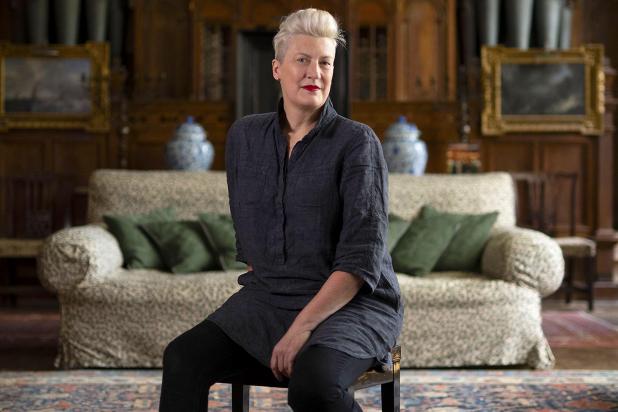
Following in a distinguished lineage of mezzos (among them Dame Janet Baker), Connolly brought out the playfulness of La fleur des eaux as it conveys the burgeoning of love against a heady seascape – doubt only creeping in towards the close as the passing of a year is contemplated. This is represented by the Interlude in which first appears a theme dominant by the close, and while the opening of La mort de l’amour brings a renewed anticipation of arrival, the anguish occasioned by forgetfulness is transmuted into a brooding fatalism – the composer drawing on an earlier song for this sombre final stage. Connolly’s eloquence came into its own here, abetted by a soulful response from cellist Eduardo Vassallo among an orchestral response abounding in soloistic finesse. A powerful reading of a still underestimated piece.

Chausson lived a further six years after its premiere in 1893, whereas Tchaikovsky lived just nine days after the premiere that year of his Pathétique before his still-contested demise. Here again, there was no undue emoting thanks to Gustavo Gimeno’s firm grip over the complex formal and emotional trajectory of the first movement – not least its explosive development culminating in an anguished yet also consoling reprise. The ensuing intermezzo had charm but also a purposeful underlying tread – not least in its wistful trio, then the scherzo amassed no mean impetus through to an explosive second half whose orchestral response evinced no mean virtuosity. Heading straight into the finale, Gimeno sustained expressive tension right through to the closing bars as here faded into a silence born of resignation rather than defeat.

The close of that year brought the premiere of Humperdinck’s ‘fairy-tale’ opera Hänsel und Gretel – then, as now, the work by which this undervalued composer is best remembered and whose prelude encapsulates the essence, though not the totality, of the drama while proving equally effective as a concert-overture. Gimeno paced this unerringly, thereby allowing its animated central phase to merge unobtrusively out of then back into the confiding warmth either side. At least one major work written in 1893 can be said to have a ‘happy ending’.

Next week’s concert brings pieces from very different eras – Brahms’s First Symphony and Rachmaninov’s Third Piano Concerto being preceded by another of the CBSO’s Centenary Commissions, an evidently celebratory overture by Mark-Anthony Turnage called Go For It.

For more information on next week’s concert, click here for tickets. You can find information on the new CBSO season here, and for more on Symphonic Sessions click here


Live review – Jeremy Denk, CBSO / Gustavo Gimeno: Beethoven & Stravinsky

Jeremy Denk (piano, below), City of Birmingham Symphony Orchestra / Gustavo Gimeno (above)

Symphony Hall, Birmingham
Wednesday 20 November 2019 (2.15pm)

Beethoven
Egmont Op.84 – Overture (1810)
Piano Concerto no.3 in C minor Op.37 (1800, rev. 1803)
Stravinsky
Petrushka (1911, rev. 1947)

Written by Richard Whitehouse

Beethoven and Stravinsky might not be felt natural bedfellows (whatever the latter claimed in later life), but this afternoon’s concert with the City of Birmingham Symphony Orchestra and fast-rising conductor Gustavo Gimeno was evidently intent on demonstrating otherwise. The overture from Beethoven‘s music for Goethe’s play Egmont duly launched the programme in imposing fashion, Gimeno securing a trenchant while slightly inflexible response across the main Allegro, with no lack of rhythmic definition as held good during an incisive peroration.

If his Third Piano Concerto finds Beethoven more overtly indebted to Classical precedent, its palpable emotional breadth is a clear pointer to what lay ahead. As soloist, Jeremy Denk had the measure of the opening movement’s often abrupt alternation between imperiousness and intimacy – not least a probing take on the development with those eloquent woodwind contributions. If the cadenza was a shade too volatile in its later stages, the fateful emergence of the coda (timpani and strings) was suitably rapt in its intensity. Raptness was equally the watchword of the central Largo, Denk pointing up the stark contrast of his E flat entry then duetting blissfully with bassoon and flute in its transition to the main theme, but as the coda (seemingly) evanesces into silence a greater dynamic subtlety would have been welcome.

Interestingly, Denk supplied this in abundance at that mesmeric point in the finale when the rondo theme ventures into the major as if to goad the music back to the prevailing C minor. Elsewhere, this was an impetuous and assured account which reached its culmination with a heady solo transition into a coda that dispersed preceding tensions through its unchecked ebullience. Denk returned for an unlikely yet appealing encore – a paraphrase (his own?) on the Pilgrims’ Chorus from Wagner‘s Tannhauser as rapidly evolved into a full-blown rag.

Few British orchestras can have performed Stravinsky‘s early ballets with the frequency and consistency of the CBSO, which is not to suggest Gimeno was other than his own man in this reading of Petrushka – heard in its streamlined 1947 revision rather than the texturally more imaginative 1911 original (which this past nine decades the orchestra has only played under Pierre Boulez). Certainly the revision’s tendency to encourage a headlong and even ruthless approach was evident in an overly regimented take on the Russian Dance, the scene-setting that precedes it audibly lacking atmosphere, but thankfully not the central tableaux depicting Petrushka and the Blackamoor – the former as nervous and agitated as the latter was moody and, not least following the arrival of the Ballerina, ominous in its smouldering sexuality.

No less impressive were the surrounding evocations of the Shrovetide Fair – the latter with its various set-pieces vividly and tellingly characterized, on route to the sudden reappearance of the main protagonists then Petrushka’s death and ghostly apparition for what remain some of the composer’s most affecting pages. The stentorian trumpet writing was fearlessly delivered, and if those concluding pizzicato chords might have been more unanimous, it only marginally detracted from the conviction of what was a well conceived and finely executed performance.

This performance will be repeated at Symphony Hall, Birmingham, on Saturday 23 November at 7pm. For more details head to the CBSO website