

In concert – Gwilym Bowen, Gareth Brynmor John, William Vann, Navarra String Quartet @ Temple Church, London – Ian Venables: Out of the Shadows (a 70th birthday concert)

Gwilym Bowen (tenor), Gareth Brynmor John (baritone), William Vann (piano), Navarra Quartet [Benjamin Marquise Gilmore, Eva Aronian (violins), Sascha Bota (viola), Brian O’Kane (cello)]

Venables Out of the Shadows Op.55 (2023)
Vaughan Williams arr. Vann Fantasia on Greensleeves (1934)
Vaughan Williams On Wenlock Edge (1909)
Vaughan Williams Love Bade Me Welcome (1911)
Venables Portraits of a Mind Op.54 (2022)
Howells An Old Man’s Lullaby (1947)

The Temple Church, London
Tuesday 4 November 2025

Reviewed by Richard Whitehouse

The emergence of Ian Venables as the leading British art-song composer was suitably marked with a 70th-birthday concert, sponsored by the Morris-Venables Charitable Foundation under the auspices of Temple Music Foundation and held in the evocative setting of Temple Church.

Song cycles being at the forefront of Venables’s output, it made sense to start with one of his most recent – Out of the Shadows a wide-ranging overview of male love. From the coyness of Constantine Cavafy’s At the Cafè Door and the barbed humour of Horatio Brown’s Bored, this takes in the fleeting ecstasy of Cavafy’s The Mirror in the Hall and stark soulfulness of Alfred Tennyson’s Dark House, prior to the overt playfulness of John Addington Symonds’s Love’s Olympian Laughter and calm affirmation of Edward Perry Warren’s Body and Soul.

Affectingly sung by Gareth Brynmor John (above), it preceded likely the most influential such cycle in English. A. E. Housman may have disliked his settings, but Vaughan Williams always gets to the heart of the matter in On Wenlock Edge. Hence the volatile imaginings of its title-number or hymnic poise of ‘From Far, from Eve and Morning’, the brooding dialogue of ‘Is My Team Ploughing’ or nonchalant wit of ‘Oh, When I Was in Love with You’; reaching a climax in the innocence to experience of ‘Bredon Hill’, with ‘Clun’ ending the sequence in fatalistic repose.

Gwilym Bowen gave a searching account of this cycle (doubly so having replaced Alessandro Fisher at such short notice), with Brynmor John comparably attuned to the understatement of George Butterworth’s Love Blows as the Wind Blows. These settings of W. E. Henley amount to a cohesive yet subtly contrasted entity – the existential musing of In the Year that’s Come and Gone followed by the deadpan charm of Life in Her Creaking Shoes and effervescence of Fill a Glass with Golden Wine, then On the Way to Kew brings a close of deftest poise.

Bowen duly tackled a further Venables cycle. Written to commemorate the 150th anniversary of Vaughan Williams’s birth, Portraits of a Mind is a notably inclusive one of the composer. Hence the gentle pantheism of George Meredith’s The Lark Ascending and the meditation on creativity of Ursula VW’s Man Makes Delight His Own; the engaging impetus of R. L. Stevenson’s From a Railway Carriage a perfect foil to the resignation of Christina Rosetti’s Echo, before lines from Walt Whitman’s A Clear Midnight conjure a warm transcendence.
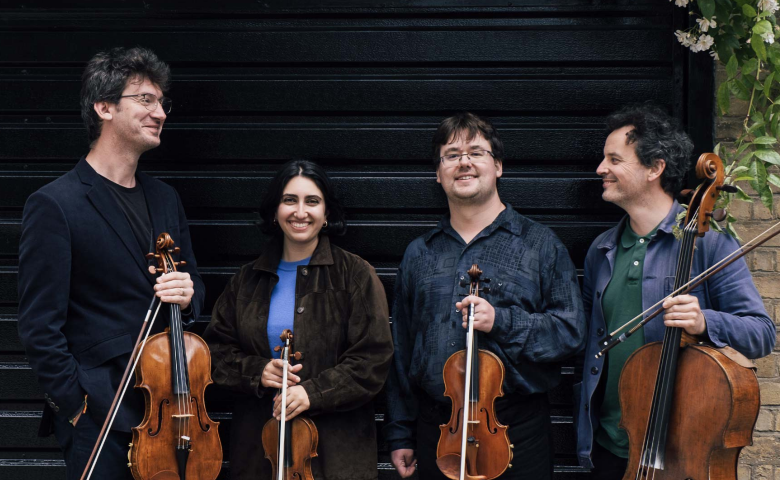
Throughout these performances, the playing of the Navarra Quartet (above) evinced an incisiveness and eloquence always at the service of this music; William Vann’s attentive pianism astutely deployed in his appealing arrangement of VW’s Fantasia on ‘Greensleeves’. Brynmor John opened the second half with that composer’s disarming take on George Herbert’s Love Bade Me Welcome (first of Five Mystical Songs), with both vocalists heard to advantage in An Old Man’s LullabyHerbert Howells’s setting of Thomas Dekker that made for a winsome envoi.

Taken overall, this was a wholly pleasurable evening and welcome confirmation of Venables’ creative prowess – his corpus of songs or song-cycles surely second to none among those for whom the English language is a source of never-ending and always unexpected possibilities.

Click here to read an extensive tribute to Ian Venables on from his husband, pianist Graham J. Lloyd – or click on the names to read more about Gwilym Bowen, Gareth Brynmor John, William Vann, the Navarra Quartet and Temple Music Foundation

Published post no.2,710 – Thursday 6 November 2025
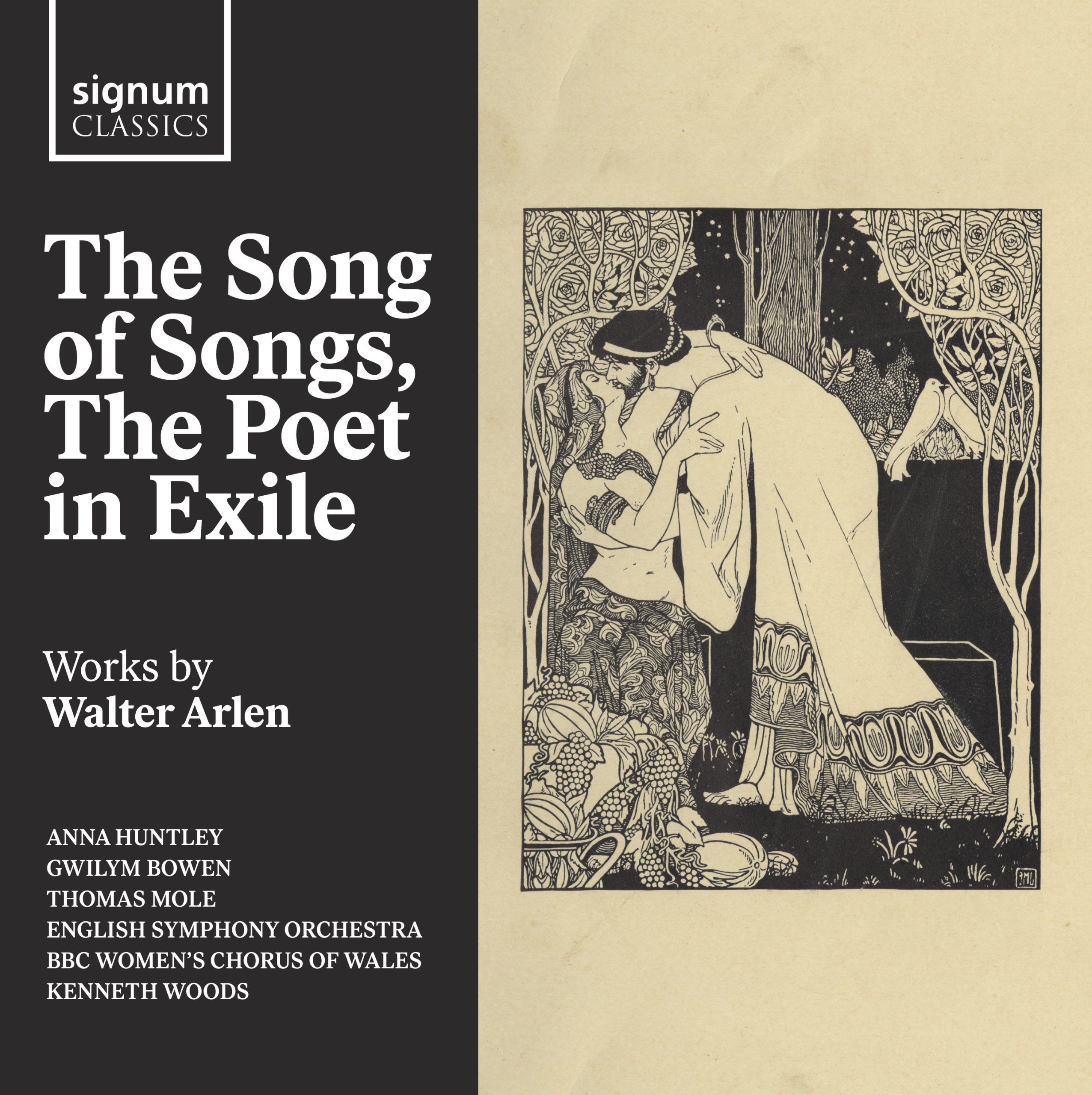
On Record – Anna Huntley, Gwilym Bowen, Thomas Mole, BBC Women’s Chorus of Wales, ESO / Kenneth Woods – Walter Arlen: The Song of Songs, The Poet In Exile (Signum Classics)

Arlen arr. Bekmambetov / ed. Woods The Song of Songs (1953)
Arlen ed. Woods The Poet in Exile (1988, rev. 1994)

Anna Huntley (mezzo-soprano), Gwilym Bowen (tenor), Thomas Mole (baritone), BBC Women’s Chorus of Wales, English Symphony Orchestra / Kenneth Woods

Signum Classics SIGCD879 [52’21’’]
Producer / Engineer Phil Rowlands, Engineer Andrew Smilie

Recorded 17-20 February 2022 at BBC Hoddinott Hall, Cardiff

Reviewed by Richard Whitehouse

What’s the story?

Kenneth Woods and the English Symphony Orchestra continue their exploration of music by composers murdered or forced into exile during the Third Reich with this release of Walter Arlen, whose recent death at 103 enabled him to experience a renewed interest in his music.

What’s the music like?

Although he remains best known through his trenchant music criticism for the Los Angeles Times, the Vienna-born Walter Arlen (Aptowitzer) also made a distinguished contribution to music administration and left a not inconsiderable output. Several albums featuring his songs and piano music can be heard on the Gramola label, while this latest ESO release provides a welcome introduction to two of his works that involve larger forces – the one drawing on an ancient Jewish source and the other upon poems by a seminal author from the post-war era.

Whether or not The Song of Songs is the harbinger of monogamy in the Judeo-Christian moral code, it contains some of the eloquent expression found in either Biblical testament. In just 30 minutes, Arlen’s ‘dramatic poem’ takes in the main narrative, its lively initial chorus featuring intricate polyphony for female voices and incisive orchestral textures. As the piece unfolds, its emotional emphasis is placed on the solo contributions – whether those of Solomon sung with burnished warmth by Thomas Mole, those of the Shepherdess with poise and insouciance by Anna Huntley, or those of the Shepherd given with virility and tenderness by Gwilym Bowen. Nor is the BBC Women’s Chorus of Wales wanting in intonational accuracy. If the resolution does not bring expected closure, this direct and unaffected setting certainly warrants revival.

The real discovery is The Poet in Exile, a song-cycle to texts by Polish-born American author Czesław Miłosz. These profound poems are not easily rendered in musical terms, and it is to Arlen’s credit that he goes a considerable way to achieving this. As the composer states, they ‘‘dealt with situations echoing my own remembrance of things past’’ – as holds good from the trenchant rhetoric of ‘Incantation’, via the sombre rumination of ‘Island’ then wistful elegance of ‘In Music’ or controlled fervour of ‘For J.L.’ (with its striking harpsichord obligato), to the confiding intimacy of ‘Recovery’. Some may have heard these songs with Christian Immler and Danny Driver (GRAM98946) but this orchestration by Woods, after the arrangement by Eskender Bekmambatov, offers a wider-ranging context for assured singing by Thomas Mole.

Does it all work?

Pretty much, and not least because the ESO is heard to advantage in the spacious acoustic of Hoddinott Hall while directed by Woods with unerring sense of where to place the emotional emphasis – especially important in conveying the meaning of the songs. A pity, however, that neither texts nor translations could be included here – not least as that by Leroy Waterman of The Song of Songs is appreciably different from those which have been previously set, while the Miłoz poems are worth savouring on their own terms and need to be approached as such.

Is it recommended?

It is. If not a major voice, Arlen’s music is always approachable and often thought-provoking. Initiates and newcomers alike will enjoy getting to know these works and hearing them given so persuasively – a worthy present, indeed, for this composer as he neared his 102nd birthday.

Listen & Buy

Click on the names to read more about performers Anna Huntley, Gwilym Bowen, Thomas Mole, the English Symphony Orchestra and conductor Kenneth Woods. Click on the name for more on Walter Arlen

Published post no.2,515 – Saturday 26 April 2025

Online concert – English Symphony Orchestra / Kenneth Woods: Composer Portrait – Walter Arlen

Walter Arlen
Songs of Songs (1955)
The Poet in Exile (1991)

Anna Huntley (mezzo-soprano), Gwilym Bowen (tenor), Thomas Mole (baritone), BBC National Chorus of Wales, English Symphony Orchestra / Kenneth Woods

Studio recording at BBC Hoddinott Hall, Cardiff, 17-20 February 2022

by Richard Whitehouse

Although he is likely best known by his trenchant music criticism for the Los Angeles Times, Vienna-born Walter Arlen has made a distinguished contribution to music administration and is increasingly being recognized as a composer. Several releases of his songs and piano music can be heard on the Gramola label, and this latest of the English Symphony Orchestra online concerts provides a welcome introduction to two of his works that feature orchestra – the one drawing on ancient Jewish sources with the other on poems from a leading modern author.

Whether The Song of Songs is indeed harbinger of monogamy in the Judeo-Christian moral code, it contains some of the eloquent expression in either of the Biblical testaments and has long provided a potent inspiration for musical treatment. In just under 30 minutes, Arlen’s ‘dramatic poem’ takes in the main narrative – the lively opening chorus features much sub-divided writing for female chorus underpinned by incisive orchestral textures. As the piece unfolds, it becomes evident that emotional emphasis is placed upon the solo contributions – whether those of King Solomon as sung with burnished warmth by Thomas Mole, those of the Shepherdess rendered with winsome poise and not a little insouciance by Anna Huntley, or those of the Shepherd which Gwilym Bowen here projects with no mean virility but also tenderness. Nor is the BBC National Chorus of Wales found wanting in passages with textural intricacy and intonational accuracy at a premium. If the final resolution does not bring the expected closure, the direct and unaffected appeal of this setting certainly warrants revival.

Yet the real discovery is The Poet in Exile, a song-cycle to texts by the Polish-American author and cultural eminence Czesław Miłosz. For all its undoubted depth and profundity, these texts are not easily rendered in musical terms, and it is to Arlen’s credit that he goes a considerable way towards elucidating them thus. As the latter states, these poems ‘‘dealt with situations echoing my own remembrance of things past’’; a quality which holds good from the trenchant rhetoric of ‘Incantation’, via the sombre rumination of ‘Island’ then the whimsical elegance of ‘In Music’ and controlled fervour of ‘For J.L.’ (with its distinctive obligato for harpsichord), to the confiding intimacy of ‘Recovery’. Inquiring listeners may already have heard these songs with piano on one of the Gramola releases with Christian Immler accompanied by Danny Driver (GRAM98946), but this version – as orchestrated by Kenneth Woods after an arrangement by Eskender Bekmembatov – makes for a richer and wider-ranging context for a vocal line projected with real assurance by Thomas Mole.

Throughout these works, the musicians of the ESO are heard to advantage in the spacious acoustic of Hoddinott Hall and are directed by Woods with sure sense of where to place the emotional emphasis – especially important in conveying the meaning of the songs. If not a major voice, Arlen’s output is always approachable and often thought-provoking. Anyone who has encountered it will enjoy getting to know his music on a larger scale and hearing it played so persuasively: a worthy present for the composer in advance of his 102nd birthday.

These works are available for free public viewing from 13-17 May on the English Symphony Orchestra website

For further information on Walter Arlen, click here – and for the appropriate Gramola Records link click here. Meanwhile click on the names for more on Czesław Miłosz, the English Symphony Orchestra and Kenneth Woods