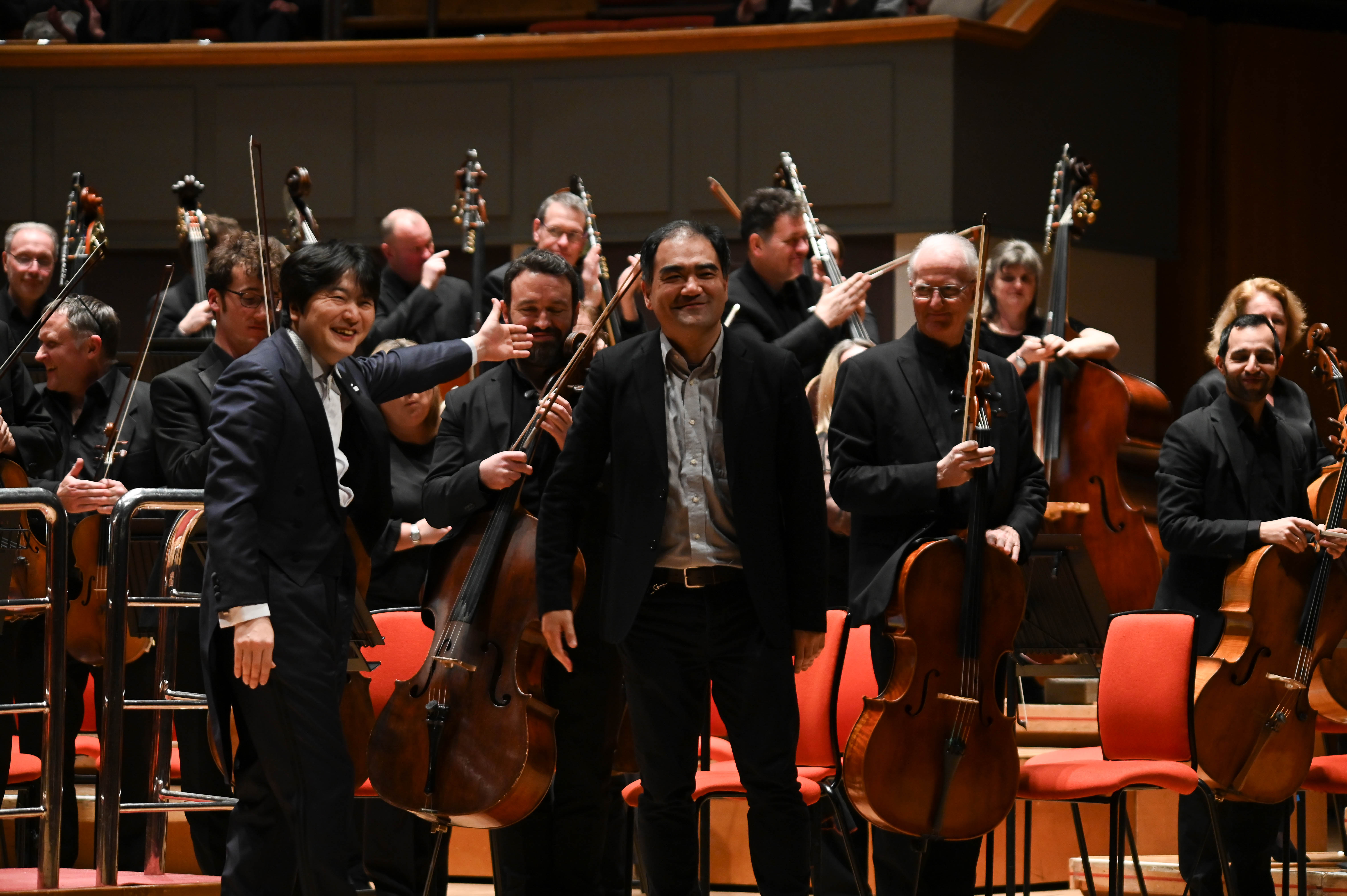
In concert – Eugene Tzikindelean, CBSO / Kazuki Yamada: Dai Fujikura, Walton & Berlioz

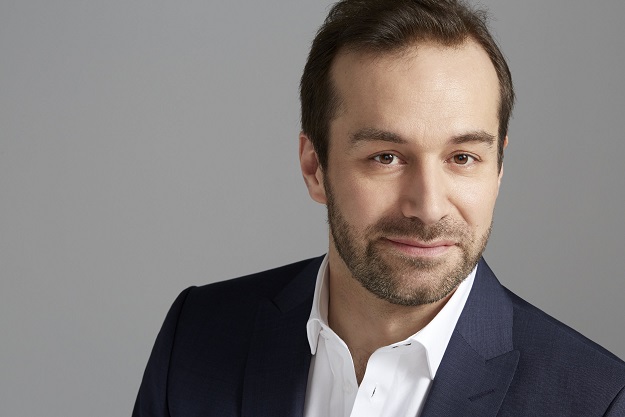
Eugene Tzikindelean (violin), City of Birmingham Symphony Orchestra / Kazuki Yamada

Fujikura Wavering World (2022) [CBSO co-commission: UK premiere]
Walton Violin Concerto in B minor (1938-9, rev. 1943)
Berlioz Symphonie Fantastique, Op. 14 (1830)

Symphony Hall, Birmingham
Wednesday 17th January 2024

Reviewed by Richard Whitehouse. Photos (c) Beki Smith

Tonight’s concert by the City of Birmingham Symphony Orchestra brought a varied trilogy of works, one which started with a first UK hearing (following its premiere in Seattle almost two years ago) of Wavering World by the Japanese-born and British-based composer Dai Fujikura.

In his programme note, Fujikura remarks on how little he knew of his traditional culture until having left Japan, and this piece draws upon the myth surrounding creation for an eventful if always cohesive journey through the emergence of the heavenly world, the human world and the underworld. This is achieved by separating the orchestra into stratified layers that do not succeed each other as merge into diverse and intricate textures where these sizable forces are imaginatively deployed; the music gradually moving away from its earlier austerity toward a luxuriance whose salient motifs are recognizable despite their transformation. Directing with unerring focus, Kazuki Yamada secured a vivid rendition which also served as a reminder that Fujikura is less often heard than might be in his country of residence these past three decades.
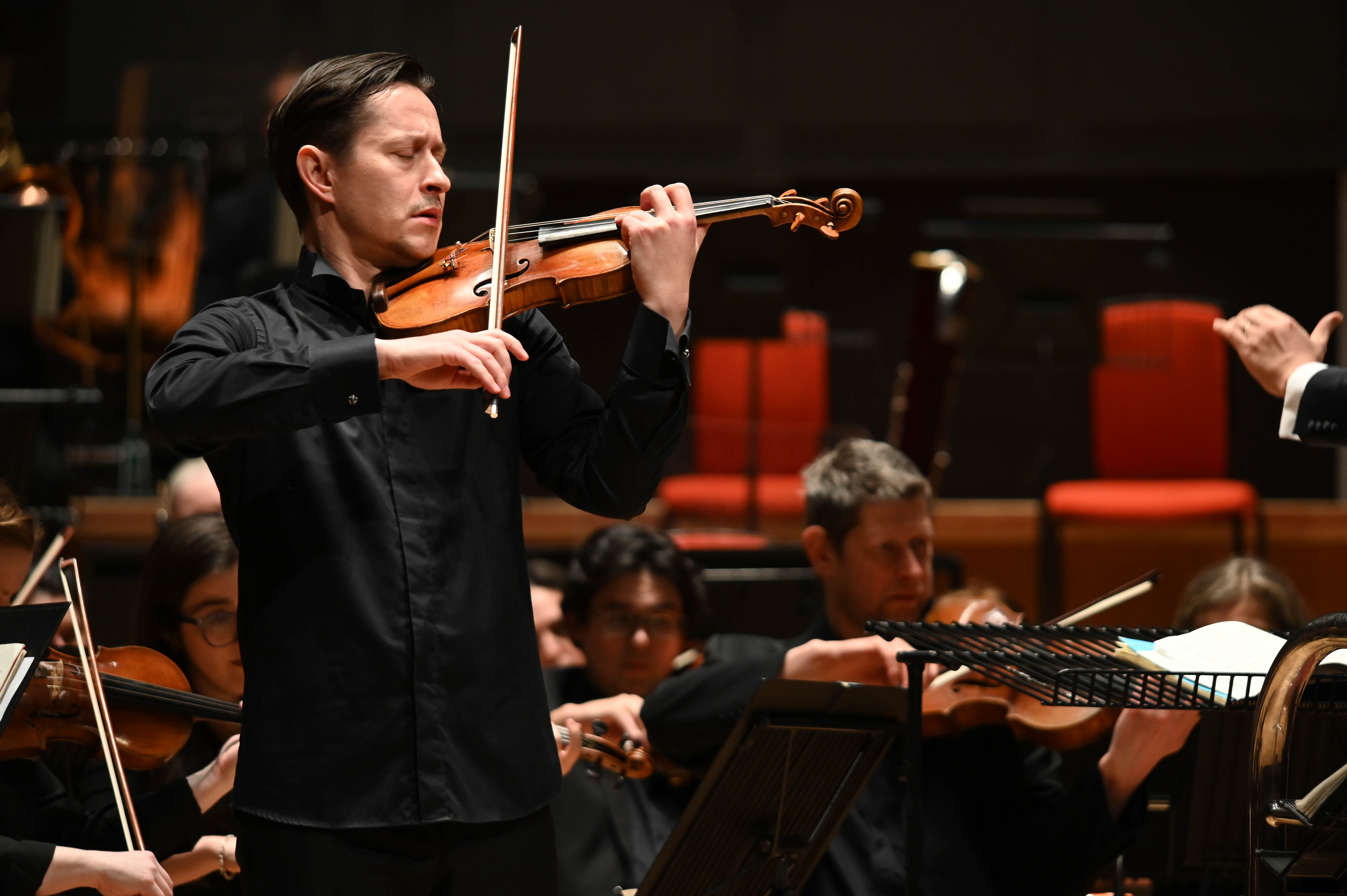
The fortunes of Walton’s Violin Concerto have lessened this past quarter-century, so Eugene Tzikindelean’s advocacy was its own justification. He had the measure of the initial Andante’s alternation between languor and agitation, ingenuity of thematic transformation offsetting any lack of originality in its themes, then gave of his best during a central Presto whose technical fireworks are tellingly balanced by yearning lyricism. If the final Vivace was less convincing, this might have reflected on the actual music – Walton putting his ideas through their audibly Prokofievian paces before evoking Elgar in a lengthy accompanied cadenza then gratuitously affirmative coda. The CBSO gave stalwart support, just over 50 years since it accompanied Yehudi Menuhin and the composer in a performance commemorating Walton’s 70th birthday.
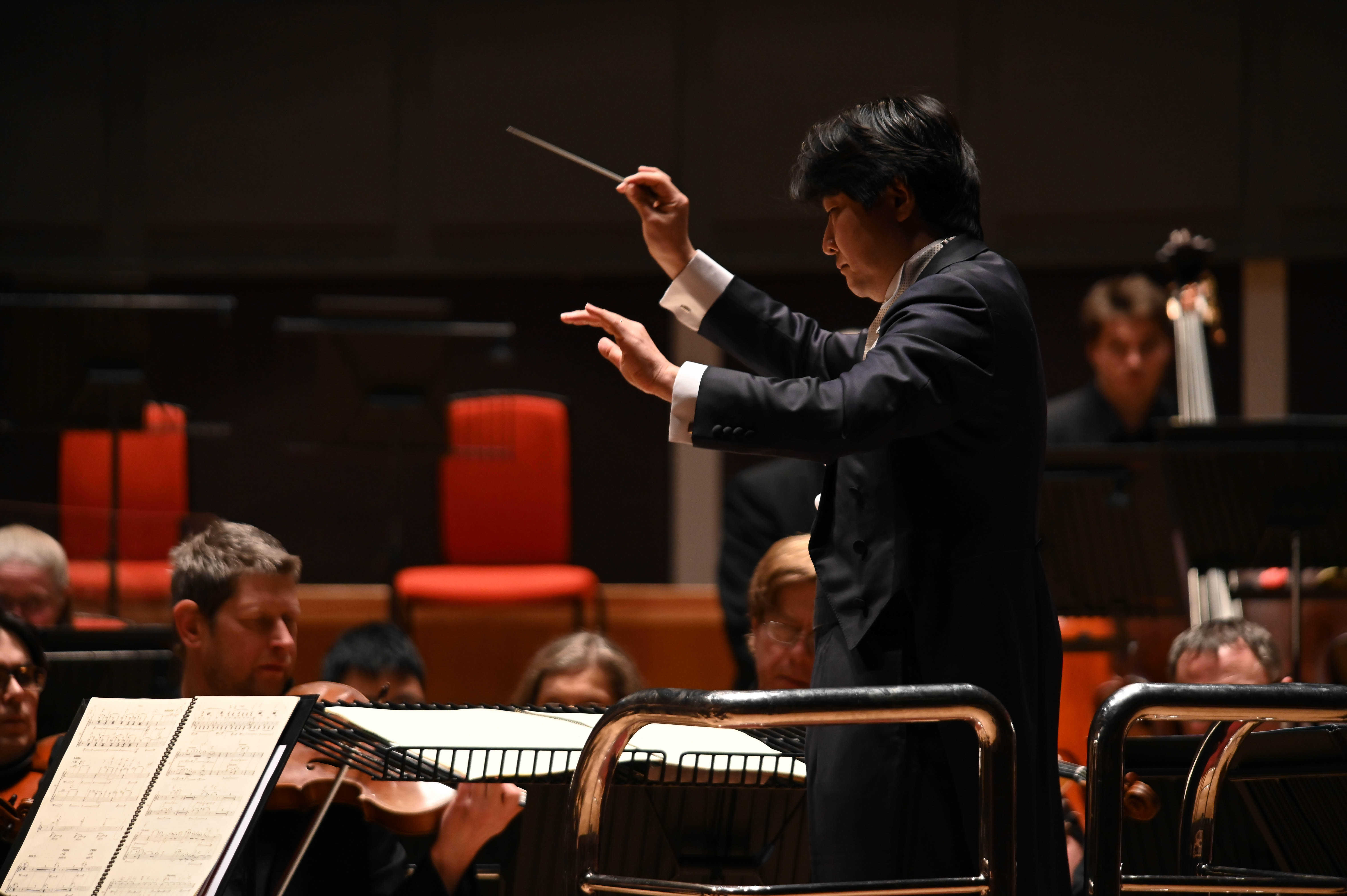
After the interval, Yamada (above) presided over a ‘no holds barred’ reading of Berlioz’s Fantastic Symphony. The latter-day tendency is to stress its symphonic cogency, but there was little of this in a Daydreams and Passions veering impulsively, even recklessly, between despondency and elation. The waltz element of A Ball was nudged out of shape, but its darker undertones were well judged, with the lengthy build-up then lingering subsidence of Scene in the Fields enhanced by Rachael Pankhurst’s plangent cor anglais and ominous timpani toward the close.

This was hardly the first performance to head off seemingly at a tangent, but March to the Scaffold (shorn of its first-half repeat, as had been the opening movement) quickly became   a parade-ground romp in which the fateful fall of the guillotine went for relatively little. Nor was Dream of a Witches’ Sabbath without its Disney-like element of overkill, though here Yamada ensured a stealthy accumulation through its reiterations of the Dies irae plainchant and fugal episode to a peroration whose thunderous power seemed nothing if not conclusive.

An Episode in the life of an Artist, indeed, as demonstrably left its mark on the enthusiastic audience. Yamada and the CBSO will be doing it all again on April 10th, but next week sees the more Classical appeal of Mozart and Beethoven in the company of Maxim Emelyanychev.

Click on the link to read more on the current CBSO concert season, and on the names for more on violinist Eugene Tzikindelean, conductor Kazuki Yamada and composer Dai Fujikara

Published post no.2,063 – Sunday 21 January 2024

In concert – Daniel Lozakovich, CBSO / Fabien Gabel – Beethoven Violin Concerto & Berlioz Symphonie fantastique

daniel-lozakovich

Beethoven Violin Concerto in D major Op. 61 (1806)
Berlioz
Symphonie fantastique Op. 14 (1829-30)

Daniel Lozakovich (violin, above), City of Birmingham Symphony Orchestra / Fabien Gabel

Symphony Hall, Birmingham
Wednesday 2 February 2022

Written by Richard Whitehouse. Photo credit (Lozkanovich) Maison Simons

Juxtaposing these works in a single concert made good sense such that one wonders why this coupling has not been played more often, not least when the City of Birmingham Symphony Orchestra sounded fully aware of the very different motivations which lay behind each piece.

One of several concertos in-itself a first half, Beethoven’s Violin Concerto was performed by Daniel Lozakovich – who, just into his 20s, already has a worldwide reputation. His finespun if never meagre tone proved eminently suited to this most inward of its composer’s orchestral works, as was his deftly inflected vibrato. The expansive first movement proceeded securely, Fabien Gabel galvanizing tuttis and preventing the development from losing momentum (due credit to Matthew Hardy’s immaculate timpani playing) before a heady surge into the reprise.

Any sense of Lozakovich – who gave the Kreisler cadenza with real fervour – eschewing ‘give and take’ with the orchestra had gone by the Larghetto, its variations unfolded eloquently and with no lack of expressive contrasts, abetted by felicitous playing from the CBSO woodwind. His impulsive approach to the linking passage into the ensuing Rondo then set the course for a finale which, though just a shade headlong compared with what went before, had a vitality and insouciance such as carried through to the close. The pathos that Lozakovich brought to its central episode and whimsy teased out of its coda (whose closing chords were a little too emphatic) were undoubted highpoints, and the soloist returned to acknowledge considerable applause with an artless reading of the Allemande that commences Bach’s Second Partita.

Whereas Beethoven’s concerto took over half a century to enjoy wider acceptance, Berlioz’s Symphonie fantastique was immediately recognized (however grudgingly) as a trailblazer in the emergent Romantic aesthetic. It was left to later generations to equal out its ‘symphonic’ undertow with its ‘fantastic’ overlay, Gabel’s astute handling of the prolix if never unwieldy structure making for the best of both worlds – not least his conveying the sonata design that focusses the alternate dejection and elation of Rêveries-Passions, or those ominous asides which offset the ingratiating charms of Un bal. The highlight, though, was an unfailingly cohesive Scène aux champs – its fraught culmination emerging inevitably from then back into the evocative outer sections with plangent cor anglais playing from Rachel Pankhurst.

Having (rightly) included the first movement’s repeat, Gabel did not take that in the Marche au supplice which consequently was over all too soon, though its high drama prepared well for a final Songe d’une nuit du Sabbat whose heightened flights of fancy were once again held in check by a sure sense of where this music was headed. Offstage contributions were convincingly drawn into the overall texture, and if the closing pages can yield even more of a ‘white-knuckle ride’, the visceral impact of Berlioz’s garish imaginings was never in doubt.

Nor, for that matter, was the sheer unanimity of the CBSO’s response across what is so much more than an extended showpiece. After next week’s Rush Hour Concert, the orchestra can be heard in a scarcely less virtuosic programme that concludes with Stravinsky’s Firebird suite.

For more information on the current CBSO season, visit their website. Meanwhile click on the links for information on the artists Daniel Lozakovich and Fabien Gabel.

In concert – Baiba Skride, CBSO / Andrew Gourlay: Rossini, Mozart, Berlioz & Prokofiev

Rossini Guillaume Tell – Overture (1829)
Mozart
Violin Concerto no.5 in A major K219 (1775)
Berlioz
Le carnaval romain, Op.9 (1844)
Prokofiev
Romeo and Juliet – Suite no.2 Op.64ter (1936)

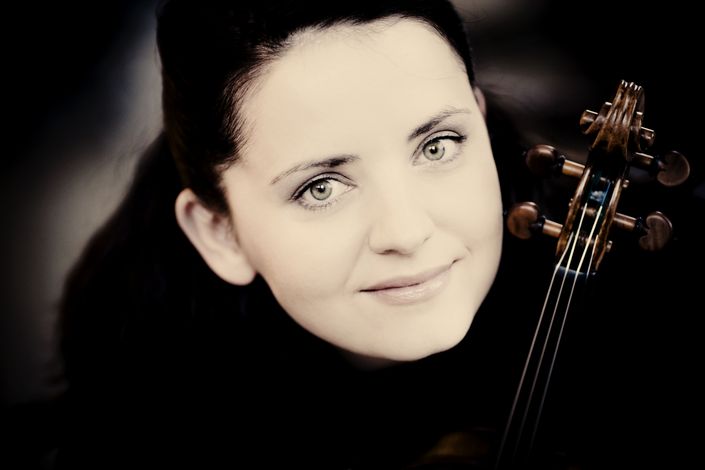
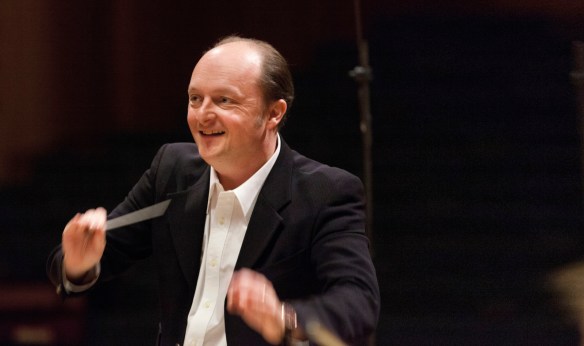
Baiba Skride (violin, below), City of Birmingham Symphony Orchestra / Andrew Gourlay (above)

Symphony Hall, Birmingham
Wednesday 13 October 2021, 2pm

Written by Richard Whitehouse; Picture of Andrew Gourlay (c) Kaupo Kikkas, Baiba Skride (c) Marco Borggreve

This afternoon’s concert by the City of Birmingham Symphony Orchestra saw an unexpected but welcome return from Andrew Gourlay (replacing an indisposed François Leleux) for this diverse programme as worked much better as a concert than it might have appeared on paper.

Its fame as a novelty item in cartoons et al can easily obscure the innovative qualities of the Overture to William Tell, last and most ambitious of Rossini’s operas, in terms of its eliding between curtain-raiser and symphonic poem; which latter aspect Gourlay emphasized in this evocative but cohesive account – whether in the ruminative calm of its opening section with the CBSO cellos eloquently fronted by Eduardo Vassallo, a scrupulously controlled ‘storm’ episode, a not unduly mawkish ‘lullaby’ then a closing galop free from Hollywood overkill.

Mozart was barely out of his teens on writing his Fifth Violin Concerto, if not the finest then certainly the most eventful of his cycle through such as the soloist’s alluring first entry in the opening Allegro with music not directly related to either of the main themes and rendered by Baiba Skride with real finesse. Equally successful was her succinct yet ideally proportioned cadenza prior to its close; after which, the Adagio had elegance without excessive sweetness. In the final Rondeau, others may have made more of that contrast between graceful lyricism and the robust humour of its central section’s stylized Turkishness, but Skride brought these into complete accord and, with Gourlay securing limpid playing from a scaled-down CBSO, this was a persuasive performance of music whose felicities can easily be taken for granted.

Formerly ubiquitous as a concert-opener, Berlioz’s Roman Carnival – the inspired recycling of music from his opera Benvenuto Cellini – launched the second half to striking effect. If the soulful introduction took a little time to settle (doubtless occasioned by a soon extinguished onstage rebellion before Gourlay’s return), what ensued was not lacking rhythmic elan or that scintillating interplay of orchestral timbres as was Berlioz’s gift to the orchestra. Effecting a tangible crescendo into the blazing peroration, Gourlay undoubtedly saved the best until last.

Ad hoc selections from Prokofiev’s Romeo and Juliet rarely provide a satisfying second half, making one of three suites the composer extracted from his ballet the more viable option. Of these the Second Suite is the best overview, and this account quickly found its stride with a visceral take on the music which opens Act Three, the grinding progress of Montagues and Capulets proving no less forceful. Juliet as a young girl exuded the right insouciance and pathos, as did Friar Laurence that of earnest authority. The lithe Dance made a telling foil to Romeo and Juliet before parting, its fraught rapture potently conveyed here, then Dance of the girls with lilies made for an appealingly wistful entrée into Romeo at Juliet’s grave with its searing anguish that only gradually subsides into expectant calm towards the close.

Gourlay had previously directed a fine account of Rachmaninov’s Third Symphony with this orchestra and the Prokofiev confirmed his prowess in Russian music. The CBSO, meanwhile, returns next Wednesday for a varied American programme with the saxophonist Jess Gillam.

Further information on the CBSO’s current season can be found at the orchestra’s website. For more on Baiba Skride, click here – and for more information on Andrew Gourlay, head to the conductor’s website

BBC Proms – Dame Sarah Connolly, BBC SO / Brabbins: Berlioz, Payne & Beethoven

sarah-connolly

Dame Sarah Connolly (mezzo-soprano, above), BBC Symphony Orchestra / Martyn Brabbins (below)

Payne Spring’s Shining Wake (1980-81) (Proms premiere)
Berlioz Les nuits d’été Op.7 (1840-41, orch. 1856)
Beethoven
Symphony no.6 in F major Op.68 ‘Pastoral’ (1808)

Royal Albert Hall, London
Friday 13 August 2021

Written by Richard Whitehouse

A family bereavement meant that Sir Andrew Davis was unable to conduct this Prom, the baton having been taken up by Martyn Brabbins – whose currently in-demand status is a reflection not least of his broad range of musical sympathies and an inherent ability to ‘get things done’.

Not too many conductors would have taken on at relatively short notice a long-unheard piece by the late lamented Anthony Payne then render it with the familiarity of a repertoire staple. Seemingly unheard for 15 years, Spring’s Shining Wake was a breakthrough piece in several respects: the composer fashioning a ‘contemporary’ yet never esoteric idiom, unencumbered by stylistic precedent, as reflected his love of an earlier generation of English music. Delius’s In a Summer Garden is a focal-point in several respects, but what comes over most strongly in its modest scoring (seven wind, one percussionist and strings) is a sense of organic growth from the overtly static formal framework; textures diversifying and intensifying, yet without changing as to their essential features, in music exemplifying the ‘same yet different’ maxim.

From there to the limpid Romanticism of Berlioz’s song-cycle Les nuits d’été is nearer than might be imagined, this latter being notable for its range of expressive nuance despite (even because of) its pervasive restraint. Certainly, there was no uniformity of response from Dame Sarah Connolly – whose whimsical response to Villanelle contrasting with the wide-eyed fantasy of Le spectre de la rose, and becalmed rapture of Sur les lagunes thrown into relief by the fervent heartache of Absence then the spectral imaginings of Au cimetière; itself finding purposeful response in the animated L’île inconnue with its vouchsafing new imaginative realms. Coordination between soloist and orchestra is paramount throughout, and there was no lack of that in a reading as conveyed this music’s potent sensibilities with acute insight.

Nor was there anything routine about Beethoven’s Pastoral after the interval. Readers may remember a cycle of all nine symphonies which Brabbins (above) gave with the Salomon Orchestra just over a decade ago, and his purposeful if never inflexible take on the opening movement left room for its reflective asides and heady flights of fancy. This was no less evident in the Scene by the brook, with its emphasis on seamlessness of transition and unity of content – not least in the way those bird-calls of the coda were integrated into their textural context.

Unfolding with consistency of pulse, the remaining three movements yielded few surprises but no failings. A touch of blandness in the scherzo was duly countered with the immediacy   of the Thunderstorm and its nexus of accrued emotion whose dispersal makes possible the Shepherd’s Song – less cumulative in its eloquence than others have made it, perhaps, but whose inevitability of progress was sustained through to a close of serene poise; underlining the degree to which any trace of ego has been sublimated in the enveloping cosmic dance.

Some elegant and characterful playing from the woodwind of the BBC Symphony Orchestra was a highlight of this performance, a reminder that even a work with a Proms tally running to several dozen never need sound routine when approached with such unaffected reverence.

For further information on the music of Anthony Payne, visit the composer’s website. You can find more information on the BBC Proms at the festival’s homepage

Live review – Hannah Hipp, CBSO / François Leleux: Mendelssohn & Berlioz

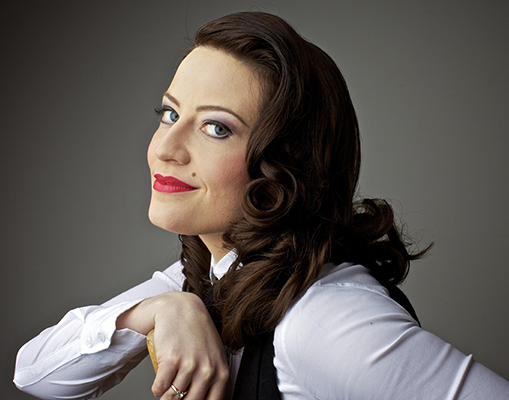
Hannah Hipp (mezzo-soprano), City of Birmingham Symphony Orchestra / François Leleux (conductor/oboe)

Town Hall, Birmingham
Wednesday 4 December 2019

Mendelssohn Overture to A Midsummer Night’s Dream Op.21 (1826)
Berlioz Les Nuits d’été, Op. 7 (1840/1, orch. 1856)
Mendelssohn arr. Tarkmann Five Songs Without Words (arr. 2009)
Mendelssohn Symphony no.3 in A minor Op.56 ‘Scottish’ (1829-31, 1841/2)

Written by Richard Whitehouse
Photo credits François Leleux: © HR/Thomas Kost; Hannah Hipp: Matthew Plummer

No doubt about it – Mendelssohn is still a prime attraction in Birmingham, the near-capacity audience for last month’s Elijah at Symphony Hall matched by that at Town Hall for tonight’s programme in which the City of Birmingham Symphony Orchestra was conducted by François Leleux.

Oboists turned conductors have a formidable precedent in Heinz Holliger, but even he cannot often have directed from his instrument as did Leleux when, commencing the second half, he presided over a selection of Mendelssohn Songs Without Words in an appealing arrangement by Andreas Tarkmann. Lauded in their day only to be patronized by subsequent generations, the pieces retain a melodic appeal exemplified by Venetian Goldola Song as its centrepiece. Switching adeptly between playing and directing, Leleux certainly relished them to the full.

Prior to the interval, he had partnered mezzo Hannah Hipp (above) in Berlioz‘s Les nuits d’été. Often considered the first orchestral song-cycle, these six songs to texts by Theophile Gautier were only belatedly orchestrated and are linked more by shared expression then any overt thematic links. Nor are they easily encompassed by one singer, but Hipp tackled their highly distinct tessitura with some confidence – moving seamlessly from the whimsy of Villanelle, via the distanced eloquence of La Spectre de la rose to the enfolding inertia of Sur les lagunes; then from the stark anguish of Absence, via the poetic fatalism of Au cimetière, to the impulsive anticipation of L’ile inconnue. For his part, Leleux ensured that those diaphanous and subtly differentiated orchestral textures audibly underpinned the often heady emotional sentiments.

Pieces from Mendelssohn’s earlier and later maturity framed this concert. The overture to A Midsummer Night’s Dream remains a teenage masterpiece by any standards, not least for its evocation of the spirit-world to whose quicksilver elegance the CBSO did ample justice. If the more demonstrative passages sounded a little too generalized in expression, there was no lack of projection overall or doubt as to Leleux’s welding of these elements into an integrated whole. Only the forward ambience of the refurbished Town Hall prevented a true pianissimo.

Dynamic niceties are less of an issue with the Scottish Symphony, its lengthy gestation likely indicating a summative intention on the part of the composer. The first movement’s resigned introduction was superbly rendered, though the ensuing Allegro lacked focus in its trenchant development and surging coda. Not over-driven as often can be, the Scherzo exuded humour alongside its incisiveness, while the Adagio had both grace and suppleness to offset any risk of earnestness or stolidity. Nor did the finale want for energy or purpose, and if Leleux was more insightful during its hesitant transition than the triumphal apotheosis that follows, there was no doubting the underlying conclusiveness with which it rounded off this most inclusive and ambitious of Mendelssohn’s orchestral works – to the evident delight of those present.

A well balanced and immensely enjoyable concert, then, which further attests to the rapport that Leleux enjoys with these musicians. The CBSO is back in Symphony Hall next Thursday for another of the orchestra’s Centenary Commissions alongside music by Elgar and Brahms.

Further listening

With the exception of the Songs Without Words arrangements, the music in this concert can be heard on the Spotify playlist below. This includes recent recordings of the Mendelssohn pieces by the CBSO themselves, conducted by Edward Gardner:

For further information on the orchestra’s next concert, under their chief conductor Mirga Gražinytė-Tyla, click here