On Record – Helsinki Philharmonic Orchestra / Pekka Kuusisto; BBC Scottish SO / Martyn Brabbins – Jaakko Kuusisto: Symphony (BIS)

BBC Scottish Symphony Orchestra / Martyn Brabbins (Birthday Variations); Helsinki Philharmonic Orchestra / Pekka Kuusisto (Symphony)

Various Pictured Within: Birthday Variations for M.C.B. (2019)
Jaakko Kuusisto (comp. Pekka Kuusisto & Eskola) Symphony Op.39 (2020-21)

BIS 2747 [66’32”]
Producers Andrew Trinick (Variations), Robert Suff (Symphony) Engineers Graeme Taylor (Variations), Enno Mäemets (Symphony)
Live recordings, 13 August 2019 at Royal Albert Hall, London (Variations); 8 December 2022 at Music Centre, Helsinki

Reviewed by Richard Whitehouse

What’s the story?

The BIS label issues one of the most fascinating among recent releases, one that juxtaposes a latter-day equivalent to Elgar’s Enigma Variations with a posthumously completed symphony by one of Finland’s leading conductors which now becomes a tribute to his untimely passing.

What’s the music like?

It was clearly a great idea that the BBC commission a piece to mark Martyn Brabbins’s 60th birthday, featuring 14 composers with whom this stylistically most wide-ranging of current British conductors has been associated. The outcome is Pictured Within: Birthday Variations for M.C.B. – each composer having provided a variation on the ‘anonymous’ theme for what here becomes an inverse take on Elgarian procedure in the latter’s Variations on an Original Theme; a work whose ground-plan also furnishes the formal framework of the present piece.

It is worth considering the ways in which these composers seem either inhibited or liberated by their placing (determined beforehand by Brabbins) within the overall scheme. Given this theme – understated to a fault – yields its potential more from the harmonic then melodic or rhythmic angle, the most successful tend to make a virtue of such constraints: thus the ‘Tact 60’ of Variation I finds Dai Fujikura hinting guardedly at ‘C.A.E.’. David Sawer capriciously conjures ‘H.D.S-P.’, while Sally Beamish offers a deftly ironic parallel to ‘R.B.T’ and Colin Matthews rumbustiously complements ‘W.M.B.’ Iris ter Schiphorst captures the pensiveness if not the geniality of ‘R.P.A.’, whereas violist-turned-composer Brett Dean proves a natural fit for the undulating poise of ‘Ysobel’ and Win Henderickx evokes ‘Troyte’ with real gusto.

His ruminative Variation VII finds Richard Blackford emulating more the connection with a country house than ‘W.N.’, while Harrison Birtwistle throws caution to the wind in a darkly inward contrast to ‘Nimrod’, and ‘Sixty Salutations’ finds Judith Weir in an engaging take on the halting charms of ‘Dorabella’. Gavin Bryars rouses himself to unexpected activity in his reading of ‘G.R.S.’, whereas Kalevi Aho is more suited to the sombre eloquence of ‘B.G.N.’ and Anthony Payne ably plumbs the inherent mysteries of ‘***’. John Pickard then takes on the daunting challenge of ‘E.D.U.’ in The Art of Beginning – the mingling of portentousness and humour appearing to make light of its Longfellow association, but whose organ-capped apotheosis confirms real appreciation of the ‘right ending’ as constituting an art unto itself.

The coupling is as unexpected as it proves apposite. Remembered as a notable violinist and a versatile conductor, Jaakko Kuusisto (1974-2022) turned increasingly to composition and, at his untimely death through brain cancer, had planned a symphony for Osmo Vänskä and the Minnesota Orchestra. Acting on behalf of his widow, his younger brother Pekka and copyist Jari Eskola realized this piece from several minutes of extant fragments such that Kuusisto’s Symphony takes its place as the last statement by one who ostensibly had much more to give.

Playing just over 25 minutes, the work falls into two separate movements. Shorter and more outwardly cohesive, the first of these emerges as imperceptibly as it evanesces – taking in a tersely rhythmic central episode, then a warmly expressive melody with more than a hint of American post-Minimalism. Almost twice as long, the Lento seems more discursive but no less absorbing – picking up where its predecessor left off as it builds to impulsive climaxes, separated by an eloquent span derived from a chorale-like theme. Nothing, though, prepares one for the ending – a sequence of quietly interlocking ostinato patterns, evidently inspired by light signals beamed in the Gulf of Finland and underpinned by undulating timpani. The effect is haunting and unworldly but, for these very qualities, wholly fitting as a conclusion.

Does it all work?

Pretty much always. Those expecting an Elgarian ‘re-run’ may be disconcerted by Pictured Within, but this only serves to reinforce the stylistic autonomy and variety of the composers involved (three of whom sadly no longer with us) in what is a tribute to Brabbins’s acumen for involving them in the first instance. Quirky and compelling, the Kuusisto is appreciably more than a labour of love on behalf of those who brought about its completion: both works deserving revival for their intrinsic merits rather than commemorating a particular occasion.

Is it recommended?

Absolutely. These live performances (that of Pictures Within being that of the premiere) have come up well as presented here, while there are detailed notes on each piece by John Pickard and Jaani Länsiö. This fascinating release more than justifies itself musically and artistically.

Buy

For purchasing options, and to listen to audio clips, visit the Presto website. For more information on the artists, click on the names for more on Martyn Brabbins, Pekka Kuusisto, the BBC Scottish Symphony Orchestra and the Helsinki Philharmonic Orchestra For dedicated resources on the composer, you can visit a website dedicated to Jaakko Kuusisto

Published post no.2,265 – Friday 9 August 2024
Live review – Kirill Gerstein, Helsinki Philharmonic Orchestra / Susanna Mälkki: World premiere of Saariaho’s ‘Vista’; Schumann & Debussy

susanna-malkki

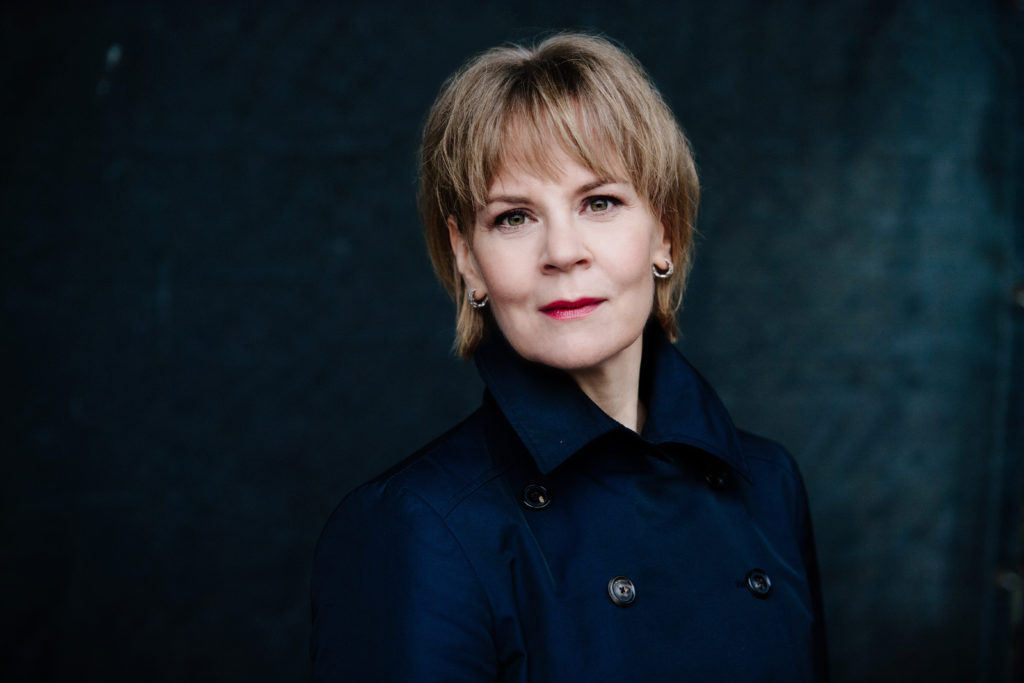
Kirill Gerstein (piano), Helsinki Philharmonic Orchestra / Susanna Mälkki (above, photo (c) Jiyang Chen)

Helsinki Music Centre, Helsinki
Broadcast Wednesday 12 May 2021, available online

Schumann Piano Concerto in A minor Op.54 (1841)
Debussy Pièce pour Le Vêtement du blessé (unknown, publ. 1925); Berceuse héroïque (1914); Les soirs illumines par l’ardeur du charbon (unknown, publ. 2001); Élégie; Étude retrouvée (both 1915)
Saariaho Vista (2019, world premiere)

Written by Ben Hogwood

One of the very few advantages of being restricted to online concerts in the last year has been the chance to enjoy music making on an international scale. This happily gave the opportunity to hear a major world premiere, a new orchestral work from Finnish composer Kaija Saariaho.

A truly international piece, Vista was co-commissioned by the Helsinki Philharmonic Orchestra, the Berlin Philharmonic, the Oslo Philharmonic and the Los Angeles Philharmonic Association. Its title page has the inscription For Susanna – presumably a dedication to the night’s conductor, Susanna Mälkki.

Although scored for a large orchestra, Vista is economical in its use of the forces. Inspired by road signs the composer saw in California – all promising great ‘vistas’ – the work has something of the West Coast about it, a shimmering heat haze and dust on the horizon. In its darker moments the twinkling of the stars, and the metropolis, can be discerned.

Vista impressed from the outset. Its first section, Horizons, began with a high oboe solo, played with very impressive control in this performance. As always with Saariaho’s music, the vivid colours in the orchestra made themselves known early on and after the initial intimacy of the wind instruments the view panned out appreciably, to an expansive picture.

Microtones and almost imperceptible changes in pitch were part of the evocation, and when the music alighted on a particular pitch the effect was striking. Saariaho’s music continuously evolved – shimmering, glistening, darkening, lightening, or casting shadow, as it did in a particularly vivid section where the metallic percussion took centre stage. Here the twinkling of glockenspiel contrasted with the spidery flurries of the strings.

saariaho

Targets, the second section, began with a blast of sound, before brass and strings were involved in dialogue – and we heard a flurry of activity from the whole orchestra, after which all the forces reached the same pitch, the view panning out again. Now the vista was nocturnal, with a shiver in the air.

Saariaho (above) was present, and in a rather moving response to the piece the orchestra and conductor applauded the composer, rather than the other way around. It is always difficult to appraise a major orchestral piece on the basis of its premiere, but on this evidence Vista is a major achievement and a piece to return to as often, Thankfully Mälkki is conducting it with the Berliner Philharmoniker on 22 May, but this was a special performance from the composer’s ‘home’ orchestra.

kirill_gerstein

Elsewhere on the program we enjoyed a fresh, vibrant performance of Schumann’s Piano Concerto in which the soloist was Kirill Gerstein (above). He clearly enjoys the piece, and the fast movements were notable for the clarity of their phrasing and lightness of touch. The first movement had an attractive lilt and some very appealing dialogue with the orchestra woodwind, oboe particularly. The slow movement gave plenty of room for Schumann’s softer sentiments, and the finale danced attractively.

The Schumann was complemented by some well-chosen solo Debussy, Gerstein opting for five lesser-known piano works. A palette-cleansing Pièce pour Le Vêtement du blesse, a posthumous publication, was followed by the steady tread of the Berceuse héroïque, given a solemn account. Les soirs illumines par l’ardeur du charbon was next, a piece unearthed in 2001 – sounding like a previously unreleased Prélude in these descriptive hands. The profound Élégie was next, then a rippling Étude retrouvée, a seldom-heard study written prior to the book of Études in 1915.

This was a fine concert, nicely structured and pointed towards the Saariaho – which fully lived up to its billing. Catch it if you can!

You can watch the concert on the Helsinki Philharmonic Orchestra website here

For more information on the Helsinki Philharmonic Orchestra digital season, you can visit their website here

A golden week for Finnish orchestras

The Helsinki Philharmonic Orchestra and Lahti Symphony Orchestra in concert, April 2015

sibelius-hall-lahti

The Sibelius Hall, Lahti

This year the Association of Finnish Symphony Orchestras celebrates its fiftieth anniversary. In a country of five and a half million people that might not seem like a big deal, but the association currently has thirty member orchestras – a sign that classical music in the country is in rude health.

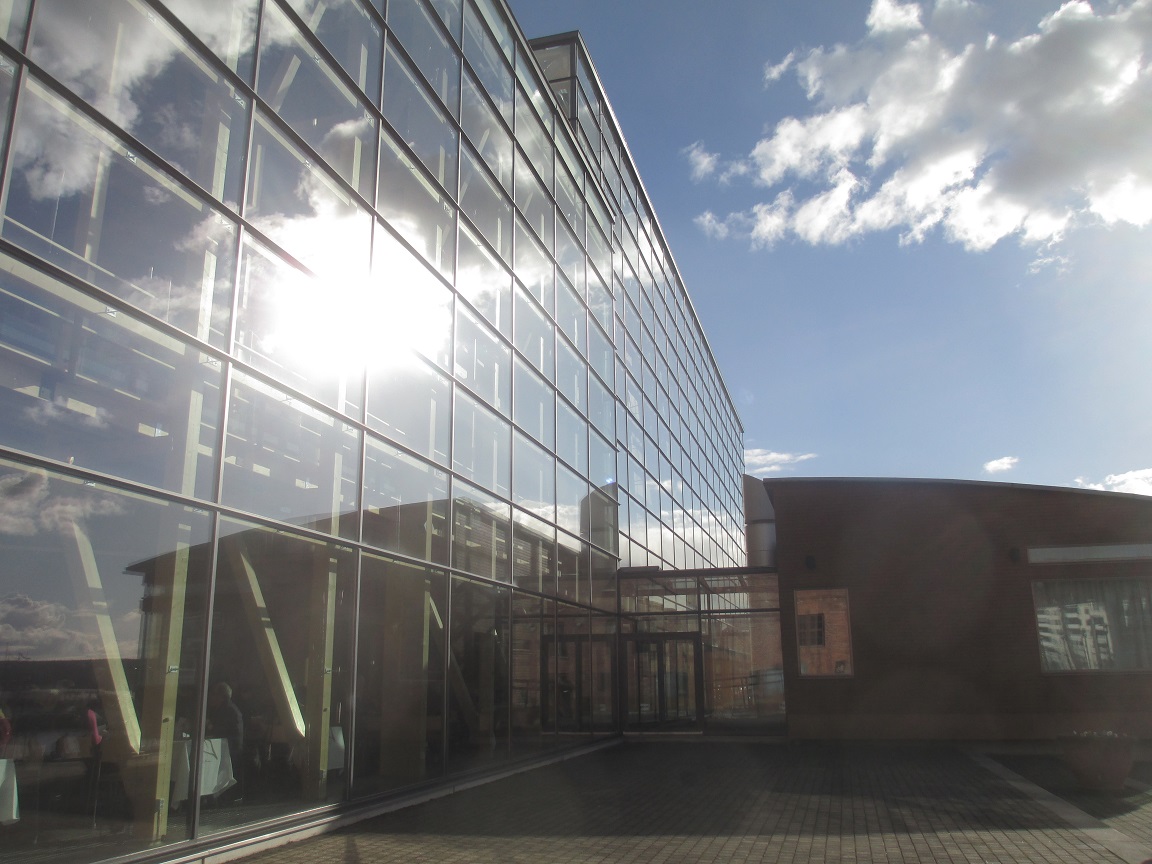
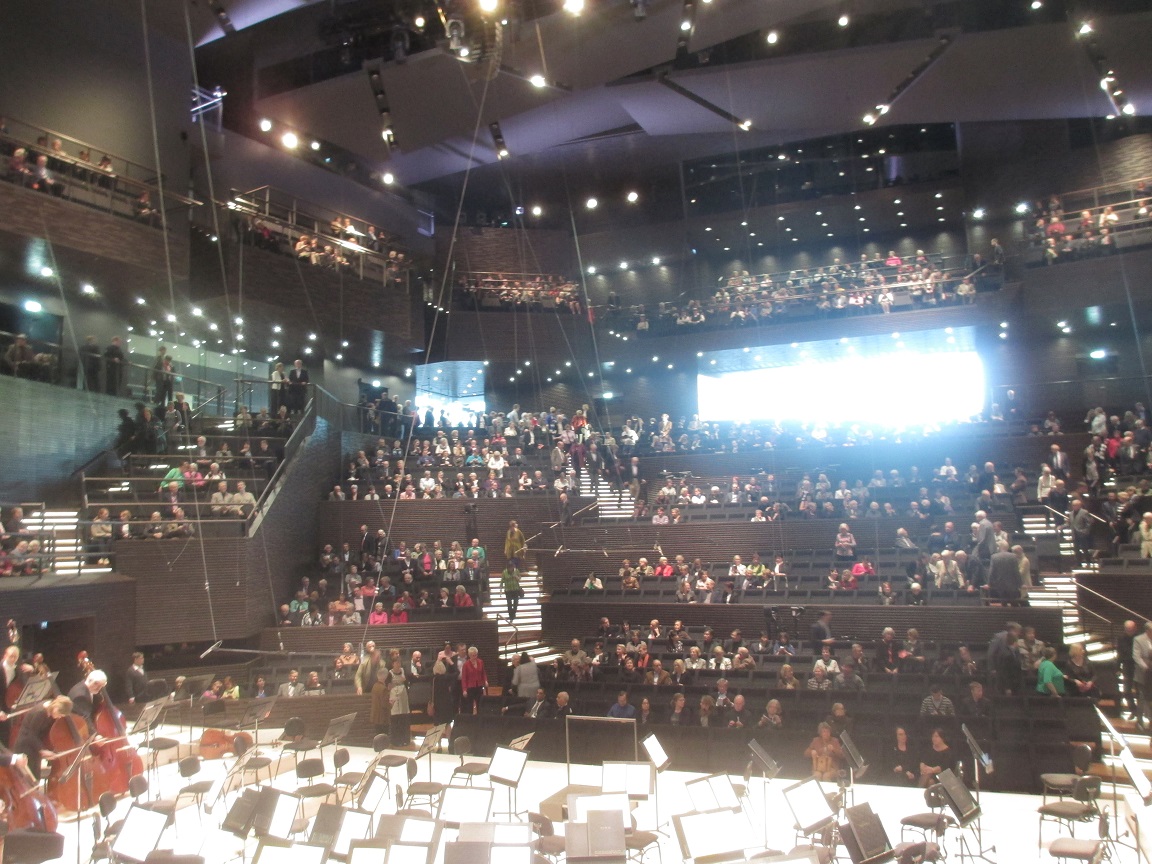
They are helped considerably by the stunning venues in which their music making takes place. The Helsinki Music Centre, for instance, is a miracle of sliding partitions and glass panels allowing shafts of sunlight to stream in up to 30 seconds before a performance begins – as if reminding us that classical music need not be dim and fusty.

helsinki-music-hall

The main concert hall, Helsinki Music Hall

Lahti’s Sibelius Hall, situated on the edge of a lake, also enjoys a rarefied light, this time piercing the huge glass panels that frame the concourse, from which the audience are led to the spectacular wood panelled hall.

The resurgence of the Lahti Symphony Orchestra in the last 25 years has seen it draw level with – and arguably pass – its compatriots in Helsinki, due largely to the remarkable leadership of Osmo Vänskä.

It was here, in the Sibelius Hall, that the Association officially blew out the 50 candles on the cake on 24 April. To do so they were aided by Lahti’s composers in residence present (Kalevi Aho) and past (Jonas Kokkonen), and Okko Kamu, now the orchestra’s chief conductor. He conducted Aho’s short 1982 piece Hiljaisuus (Silence), an atmospheric piece of mood music that swells into an angry climax before subsiding. Aho himself was visible in the interval, drinking a Sibelius beer in a wonderful demonstration of unity!

We then heard only the orchestra’s second performance of Beethoven’s Triple Concerto, which was the relative disappointment of the evening. In the best performances this piece can be a frothy extravagance but here it sounded short on rehearsal time and humour. Soloists Réka Szilvay (violin), Marko Ylönen (cello) and Heini Kärkkäinen (piano) seemed disjointed, tending to look at their music rather than each other, while the elegant orchestral accompaniment, nicely shaped by Kamu, often disappeared behind the bluster of the front three.

This disappointment was quickly removed by some wonderful Sibelius to start the second half, a joyous Festivo from the suite Scènes Historiques Scene I. Then we heard a new commission, Arctic Light, from the orchestra’s principal bassoonist Harri Ahmas. This bold and descriptive piece effectively transferred the listener back outside to the lake, the shadows moving and the light dancing on the cold water. Perhaps unusually for a new piece of orchestral music the most effective music came at the end, a powerful resolution of quiet harmonic tension. Not a sound could be heard in the hall at the end.

Finally the Kokkonen; an elusive but attractive piece with lovely orchestral colours, a tight structure and an elegiac mood putting it close to late Vaughan Williams. The elegant melodies were beautifully teased out from the texture by Kamu, while the clarity of the orchestral sound was consistently impressive.


The Lahti Symphony Orchestra play the end of the Lemminkainen Suite under Okko Kamu at the Sibelius Festival 2013.

The previous night Helsinki’s Music Centre played host to the Helsinki Philharmonic Orchestra and Eivind Gullberg Jansen, in a concert whose first half featured clarinettist and composer Jörg Widmann in both his disciplines. Firstly Con brio took its lead from Beethoven’s Fifth Symphony, with fragmented motifs fired between sections of the orchestra like light sabres. This was a clever piece, but not for cleverness’ sake, Widmann communicating by striking orchestration, powerful dynamic variations and a number of quirks from the timpani.

The contrast between this and Mozart’s Clarinet Concerto could hardly have been greater, though Widmann – now with clarinet in hand – negotiated the switch with ease. In the slow movement he was especially sensitive, and although he did not appear to be playing with a basset clarinet – which reaches lower notes in the concerto – the elegance and grace of the performance were really attractive.

Finally a Russian powerhouse, Rachmaninov’s Second Symphony, showed the versatility of the Helsinki Philharmonic. There was a little in reserve here compared to Russian interpretations, but Jansen clearly loves the piece and knew what he wanted to do with it. A lovely clarinet solo enabled the famous Adagio to hit the emotional heights, but the second and fourth movements didn’t fully harness the power at Rachmaninov’s disposal.

From both these concerts, however, it was abundantly clear classical music is in very good health in Finland. Contemporary music is encouraged, orchestral players clearly enjoy their work and venues are – quite literally – blossoming. Go and visit if you can! And if you need any further convincing, watch this video to see just how good the Helsinki Philharmonic are at contemporary music…