Switched On – Primitive Motion: Portrait Of An Atmosphere (A Guide To Saints)

by Ben Hogwood

What’s the story?

Brisbane duo Primitive Motion present a new album of unique sound worlds through Lawrence English’s A Guide To Saints imprint.

One look at the credits on their Bandcamp site reveals just how many instruments, colours and textures the two sonic creators have at their disposal. Sandra Selig is credited with contributions through voice, handclap, flute, cymbals, melodica, radio, saxophone, glass bowl, drums, marble in bamboo, zither, wind chimes and bowed cymbal. Meanwhile Leighton Craig contributes on the acoustic guitar, reed organ, cymbals, field recordings (Kyoto Japan), tremolo guitar, miniature saxophone, voice, piano, metal stool, bird call, synthesiser, wind chimes, shaker and timber box.

Between them, Primitive Motion have made a four-part Portrait Suite, bolstered by a fifth track, Trenches Of Time.

What’s the music like?

Intensely descriptive. Although all the instruments above are used, they are of course employed sparingly, and it is immediately clear how much thought has gone into the resultant colours and textures. Yet to their enormous credit Primitive Motion never make anything sound forced. They create their sonic visions with a healthy degree of musical instinct, allowing their material plenty of room to live and breathe.

Portrait is without question an outdoor suite, using field recordings as well as some deeply evocative percussion and instruments where the textures are very clearly thought out. The woozy reed organ with which Portrait II ends is a case in point, and so are Sandra Selig’s vocals, which have a unforced yet primal beauty in the first of the four movements, lost in thought as they are. The mournful and muffled saxophone at the start of Portrait III is striking, its line taken up by Selig’s vocalise. Her mysterious vocal drone on Portrait IV is also a prominent feature, fading in and out over a distracted piano line.

Trenches Of Time sits outside the four-part suite but is more than a coda. Instead it presents what, to this listener at least, feels like a heat-soaked tundra, with distant structures shimmering in the hot sun. Drones reinforce the intense musical humidity.

Does it all work?

It does – though the listening conditions have an important part to play here. This is definitely not an album to experience on the move, as much of the shading and detail will be lost.

Is it recommended?

It is. The name Primitive Motion is well chosen, for Selig and Craig strip music back to its basic elements in order to create pictures and meditations that leave a lasting impression.

Listen

Buy

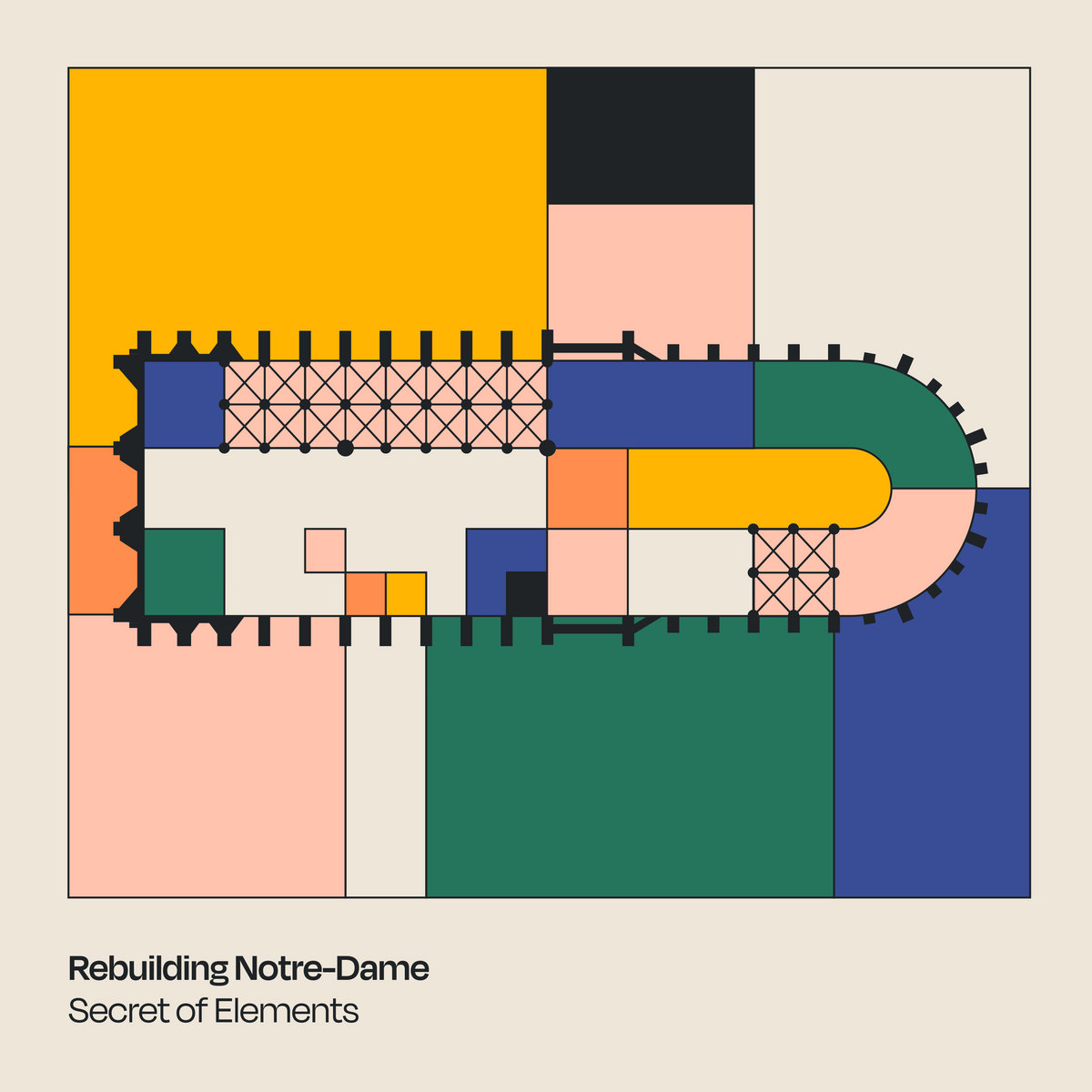
Switched On – Secret of Elements: Rebuilding Notre Dame OST (InFiné)

by Ben Hogwood

What’s the story?

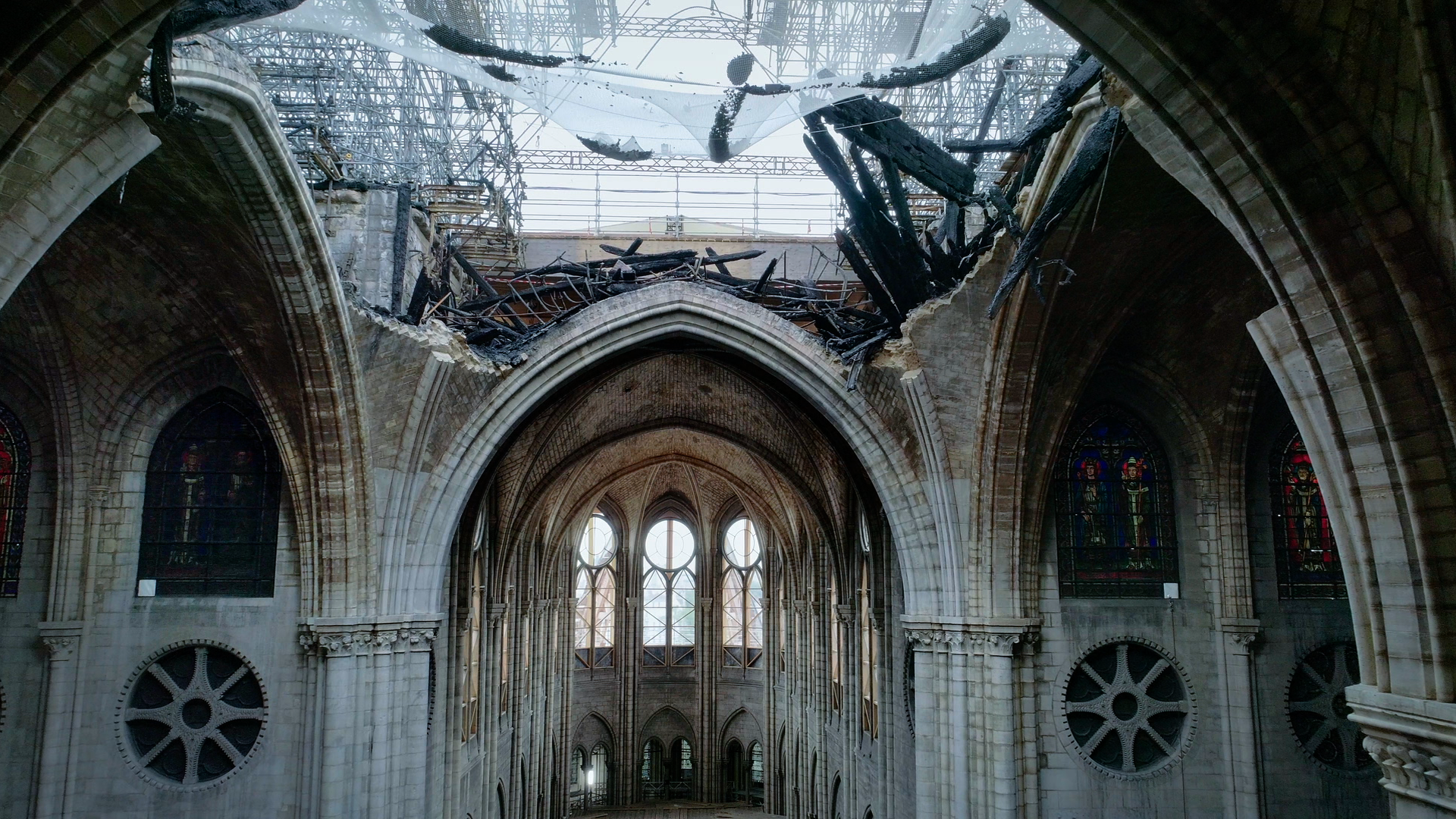
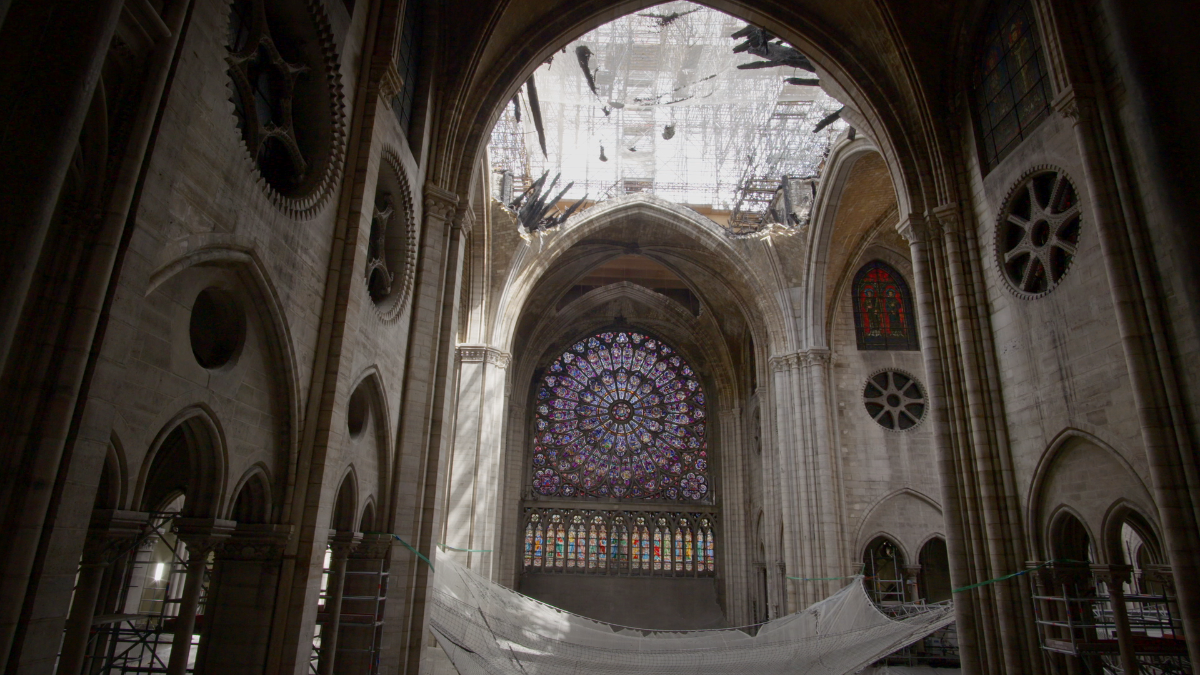
What a daunting prospect it must have been for Rostock composer and multi-instrumentalist Johann Pätzold, when he was approached to write the music for a documentary on the recovery of the great Notre-Dame cathedral in Paris. With well over 1,000 years of musical tradition inside its walls, where would a composer start?

Pätzold – who records under the name Secret of Elements – stripped the ideas back to the elements themselves, with each of the documentary’s three episodes focused on wood, glass and stone. Building on these three fundamentals, he added aspects of spirituality and mechanics, including on the way musical references to the cathedral’s organ and choir.

What’s the music like?

Rebuilding Notre-Dame leaves a lasting and powerful reflection, and for Johann Pätzold it can be counted as a job very well done. He successfully evokes the distant past and the future within a sound framework that conveys the massive spaces in which the workers are restoring the cathedral. There is an air of reverence for sure, but also one of barely concealed horror at the plight in which the building finds itself.

The root of the music is the Adagio for Notre-Dame, composed first, and from this all the other ideas spring. It is a true lament, music of powerful regret and sorrow but also with an undercurrent of hope in its rising from the depths. Ruins also proves a moving utterance, an evocation of the choir, soaring to the heights over the support of the organ.

Born Again ends with a powerful and brilliant chord from the organ, the climactic notes of a surge of movement suggesting strong new beginnings. A New Chapter capitalises on this but with a rhythmic drive.

Shattered Glass is especially effective, while Stones generates urgency, suggesting many hands at work. The figurations in darker lower strings for Holy Grounds could be borne of Philip Glass, also with the organ towards the end, while Wood and Forest draws an exciting combination of scurrying orchestral figures and voices.

The final Resurrection is a suitably majestic way to bow out, restoring the cathedral to its former glory in music of power and splendour, great drums pounding in response to choral and orchestral might.

Does it all work?

Yes. Pätzold makes great use of audio perspective to convey the vast, empty spaces, while also bringing through a potted history of the music heard in the cathedral in the preceding years.

Is it recommended?

It is. This is a deeply impressive achievement from Secret of Elements, who has somehow captured all the emotions at play in the task of restoring one of the world’s most famous sacred buildings to its former glories. The fitting soundtrack suggests they will indeed be restored.

Listen

Buy

Switched On – Gaspar Claus: Scaphandre (InFiné)

by Ben Hogwood

What’s the story?

It is helpful to reproduce in full the accompanying notes Gaspar Claus has written for this release on Bandcamp:

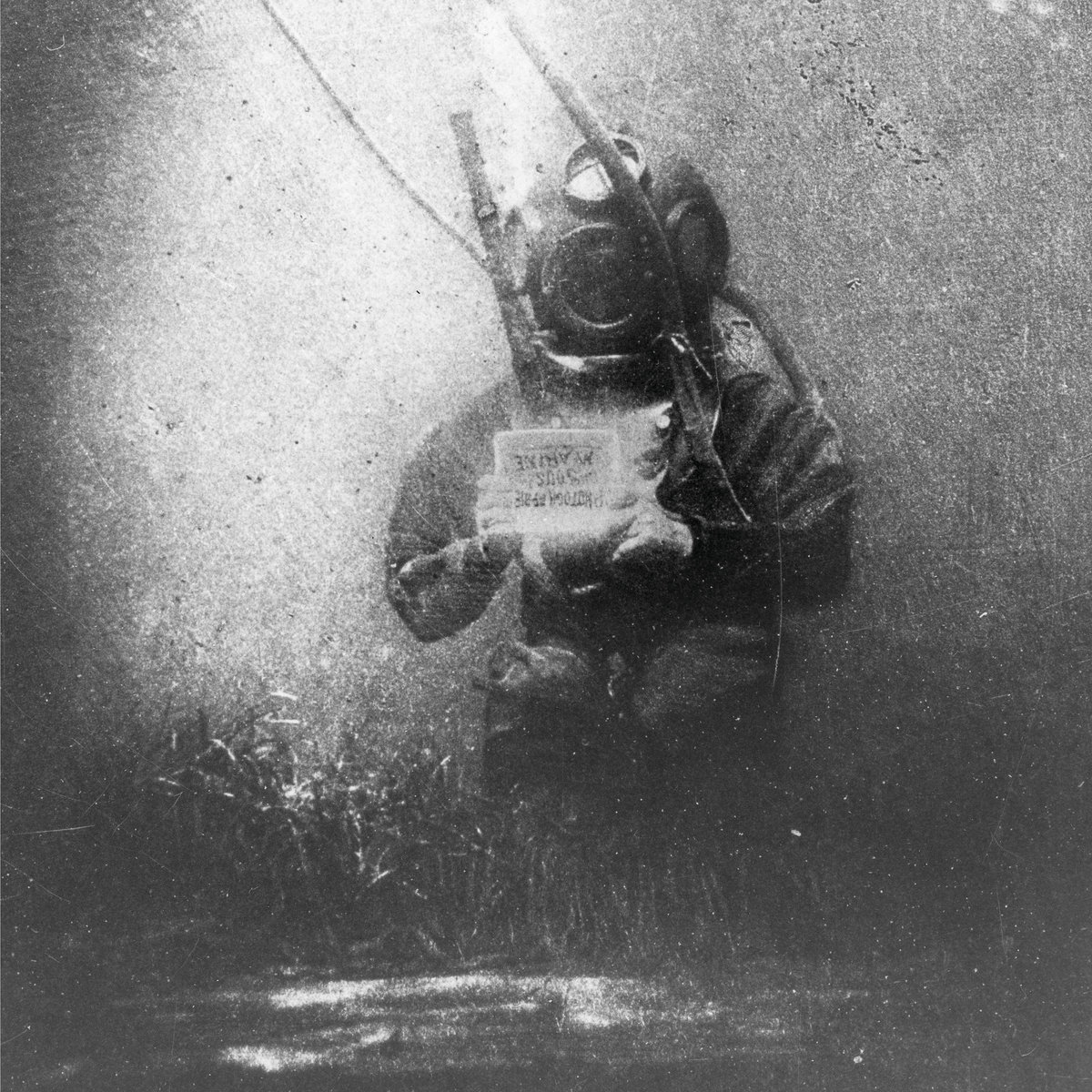
Scaphandre is the story of an image found in a lost time on the internet a few years ago. It inspired two sound pieces conceived so that one can dive into it as into the sea.

Once their composition was finished, I looked for the origin of this image. It is one of the very first submarine pictures in history, taken by Louis Boutan in 1893 in the bay of Banyuls-sur-Mer… my home town. The original photo as well as a fantastic series of archives documenting this event can be found at the Arago Laboratory, where I often went as a child, after school, amazed by what the researchers were showing me. They just had never told me this story. This is how this record found its scenery.”

The two pieces Claus brought together on Scaphandre (which translates as ‘diving suit’ or ‘space suit’ in English) are described as ‘an abstract and mysterious B-side of Tancade’, the album released by the French cellist and composer towards the end of 2021.

Both pieces were written alongside the composition of the album, and are broader in scope, each lasting more than 10 minutes.

What’s the music like?

Compelling, and often deeply mysterious.

Inside starts right from the depths, the instrument detuned by a distance of more than two tones. The scratchy, almost pitchless sounds gradually form a rich chord as layers of sound build up, until a rich, wooden wall of sound is secured, constantly evolving and yet acting as an immovable block. As this progresses the treble pitches start to gather and swirl, slowly orbiting the centre. There is a forbidding intensity about the progression of this piece.

Beyond has more consonant harmonies in its beginnings and occupies a safer space, suspended in a rich drone of mostly G major – but with another massive wall of sound to back it up. Gradually the music lifts, and the foundation drops away to leave mere threads, the elements of pitch dissolving into white noise.

Does it all work?

It does – but it is important to listen to these tracks in the right environment, as they are only fully impactful when a static half hour is set aside.

Is it recommended?

Yes, as a complement to the Tancade album – but if you haven’t heard that yet then it is the best place to start. Either way, Scaphandre is further proof of Gaspar Claus’s powers of invention, knowledge and deep love of the cello. He pushes its sonic boundaries further here, for sure!

Listen

Buy

On Record – Vanessa Wagner: Mirrored (InFiné)

by Ben Hogwood

What’s the story?

Vanessa Wagner has been quick to follow up her March release, Study Of The Invisible, where she thoughtfully compiled an album of modern piano music that might be described as ‘minimal’ but which led to a series of inventive and rewarding compositions, imaginatively sequenced.

Mirrored is a collection of studies for solo piano, largely contemplative spaces that leave plenty of room for meditation and a get-out clause from today’s fast-moving world. Normally a listener might associate piano studies with application of technique; functional pieces rather than emotive; but this collection is very much studies in the form of moods and mental images.

What’s the music like?

Introspective, yet wholly rewarding. Particularly engaging is Wagner’s selection of music by Philip Glass, well-chosen and beautifully played. The Poet Acts is a sombre, thoughtful piece, opening out like an uneasy berceuse. Etude 4 is very different, a turbulent and agitated piece generating a large amount of nervous energy. By contrast Etude 2 is a thoughtful contemplation with a hint of darkness, led as it is by the low left hand, before building to a forceful conclusion.

Ryuichi Sakamoto’s Solitude has a similar profile, though its plaintive right hand melody leads the way. Plaintive is also the word that could be used for Nico Muhly’s Quiet Music, though this has an inner power generated through a soft but meaningful chorale, which makes it sound like a deeply spiritual statement. Melaine Dalibert’s Six + Six has gentle undulations that go on their way in watery figurations, while Sylvain Chauveau adopts a still profile for the simple and meaningful Mineral.

Moondog’s Sea Horses is short but descriptive, an active piece flitting this way and that. A similar freedom is afforded to the right hand in Léo Ferré’s Opus X, where the melody is free to travel up and down in the treble as it wishes.

Does it all work?

It does. Once again Vanessa Wagner has chosen a logical and rewarding sequence of pieces, and her affinity with the music of Philip Glass in particular makes these compelling recordings. She has an unusual and vivid sensitivity for this music, creating many different keyboard colours in the course of the collection.

Is it recommended?

Yes – provided you also have Study Of The Invisible, which is the ideal complement to these pieces.

Listen

Buy

Switched On – O’o: Touche (InFiné)

reviewed by Ben Hogwood

What’s the story?

O’o are a French duo, Victoria Suter and Mathieu Daubigné, who are based in Barcelona. Their name makes an immediate impact, but is not an attempt to beat Google searching or make things difficult for fans to find. In fact their venture is named after the Kaua’i Ō’Ō bird of Hawaii, which has sadly been extinct since the late 1980s.

Touche is their debut album, a record of profound longing that speaks of their love of Laurie Anderson but also Björk and Kate Bush. The duo mostly use synthesizers to create their sonic picture, though there is a wealth of lavish scoring throughout the record.

What’s the music like?

Enchanting – and fulfilling the promise of the extremely colourful cover. Suter’s voice is perhaps the main reason for this, a beautiful instrument that responds well to multitracking, creating a velvety wall of sound. The production responds in kind, with a whole variety of different settings bringing the text to life. The sung texts appear to be in French and English, though the warmth to the productions takes them towards the Mediterranean.

Dorica Castra is one of the standout vocal cuts, the production retreating to minimal electronics so we can hear Suter’s voice, which here bears the powerful influence of Kate Bush. The backdrop plays around with echo effects that have a great impact on headphones, with a fulsome beat to go underneath.

Aquamarine is a beauty, with a dubby beat and rich vocals, building from small beginnings to an all-encompassing whole. Moon and Touche itself dabble more in the melancholy, with a longing arc to Suter’s singing above minor-key harmonies.

There are folksy tinges to the melody of Somewhere, which dispenses with drums and creates layered tunes, while the triple time Spin is pure fantasy. The final song, Tohu Bohu, is an enchanting story, taking all manner of musical turns as the electronics squiggle and squirm beneath, and ending with what feels like a heavenwards ascent.

Does it all work?

It does – and if anything on repeated listening the spell of Touche is cast deeper still. These are multilayered songs with much to reveal, and the structure of the album means there is a beautiful ebb and flow of emotions. They really do tell a story.

Is it recommended?

It is – O’o are quite a find for the InFiné label, and on the strength of this wonderful debut they could really go places.

Listen and Buy