Proms guide – First Night: A tale of two Belshazzars

belshazzars-feast-rembrandt

Belshazzar’s Feast by Rembrandt

Prom 1 – Christopher Maltman, BBC Symphony Orchestra / Sakari Oramo

BBC iPlayer link

http://www.bbc.co.uk/iplayer/episode/b062nrdk/bbc-proms-2015-season-first-night-of-the-proms

Sibelius’ suite begins at 57:45; Walton’s interpretation at 1:18:36.

The Biblical tale of Belshazzar’s Feast, where the downfall of Babylon is predicted by a human hand writing on the wall during a lavish party, inspired three very different responses. The first, from Handel in 1744, took the form of a large scale sacred piece, but the second half of this Prom threw together two very different responses by twentieth century composers.

Sibelius wrote a score of ten scenes, condensing it into a suite of four for concert performance. It finds the composer in typically economic form, though it is a surprise to note the exotic Oriental Procession, colourfully rendered by Sakari Oramo and the BBC Symphony Orchestra. The Finnish conductor is an expert in this music, and found the emotional depths of the stark Solitude and the emotive Nocturne, where flautist Michael Cox spun a delectable web of notes. The finale, Khadra’s Dance, signed off in typical style.

058
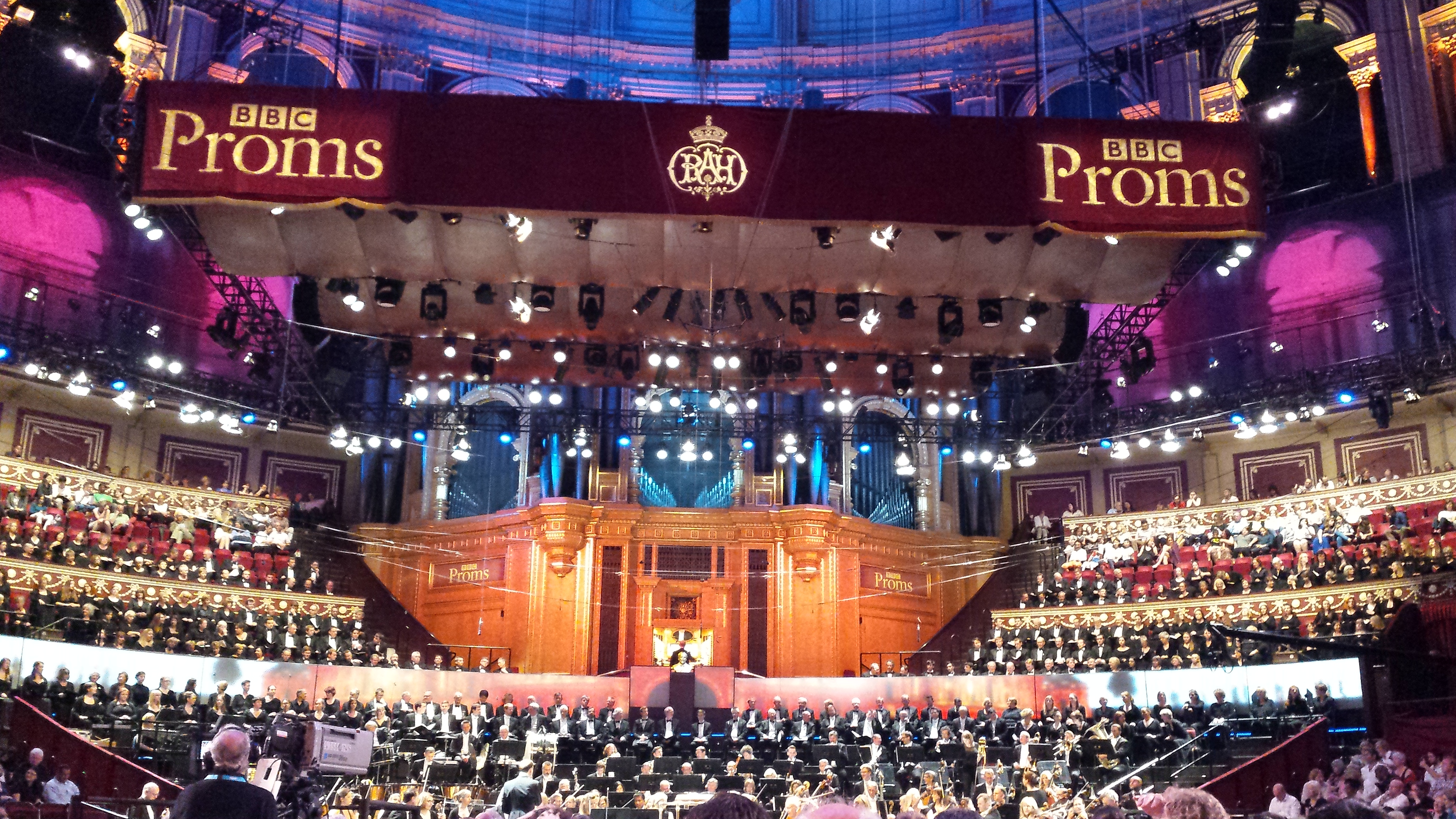
The massive forces assembled for Walton’s Belshazzar’s Feast. Photo (c) Ben Hogwood

Walton, on the other hand, throws everything at his 35-minute tale, including the whole story in a choral dramatisation that at times threatened to take the roof off the Royal Albert Hall. With 256 singers (give or take one or two on the naked eye count from the Arena!) this was a massive scale on which to play out the story, and Christopher Maltman did a sterling job in the baritone solo role.

The chorus were the stars, though, and the combined forces of the BBC Singers, the BBC Symphony Chorus and the BBC National Chorus of Wales were absolutely superb; hair-raising, even. Their shout of “SLAIN!” when Belshazzar finally perished was terrifying. No less chilling was the macabre percussion used when the hand appears.

Yet the epic climax of the piece, with Babylon’s redemption trumping the empty jubilation of the feast, was the crowning glory. Brilliantly marshalled by Oramo and superbly sung by the assembled BBC National Chorus of Wales, BBC Singers and BBC Symphony Chorus, this was a piece to fire the starting gun on the 2015 Proms with maximum power. Here’s to the next 75!

Further listening

If this is your first encounter with the music of Walton, a strong recommendation goes to the composer’s Symphony no.1, his finest orchestral composition:

Sibelius‘ incidental music is curiously elusive – so here is some more in the form of his score for the play Pelléas et Mélisande. You will doubtless recognise the first movement, At the Castle Gate, as the music used for the BBC’s The Sky at Night:

If your curiousity is aroused for the third of the Belshazzar interpretations, this Spotify link gives you Handel‘s oratorio in its entirety:

This BBC Prom also included Nielsen’s ebullient overture to Maskarade and Mozart’s masterly Piano Concerto no.20, with soloist Lars Vogt. They are also on the iPlayer link above

A mother’s inspiration

mum

While the object of Arcana is to share music and thoughts, it is also to acknowledge some influential people in the world of music. For many people the most influential people in this field are their parents or grandparents – so I hope you will forgive me for sharing a personal inspiration on all of my work here.

Very sadly my mother Coralie passed away two weeks ago (May 2015). Mum was many things for me, but what I want to praise here is her encouragement of my musical exploits, because without that I would not be writing this piece.

I am fortunate to have grown up in a happy household with brothers Nick and Jonathan and sister Clare, all of us at close quarters in a terraced house in Thetford, Norfolk. Gradually, at the age of four, I was drawn to Mum’s record collection, enjoying the delights of Dvořák’s New World Symphony, Rimsky-Korsakov’s Sheherazade, Tchaikovsky’s Fifth Symphony and Romeo and Juliet and especially Holst’s The Planets. To her credit, though nerves were tested with the frequent repetition of these pieces, Mum encouraged me to keep on listening to them with a patient smile.

Then, at the age of eleven, I started to learn the cello. As anyone that age knows, one of the least attractive things about learning a musical instrument is the practice. Mum nagged me to do scales, arpeggios, proper warm ups, sight-reading and the interminable repetition of the exam pieces themselves, though they must have been driving her crazy. At the time I wasn’t grateful – but I certainly am now!

My cello playing helped get me on to the Music ‘A’ Level course at Norwich City College, where I made it my mission to discover classical music in all its forms – and where Mum and Dad generously invested in a restored cello for me. Then I went on to the University of Surrey at Guildford, where I furthered that education but also discovered a love of dance and electronic music. Then I was fortunate to move on to the jobs I have had since, leading to PPL where I have been for thirteen years – and of course to start with writing about music, which is what I love to do here.

At all these points Mum has been a constant source of encouragement, and we had many long chats about classical music she had heard on Radio 3. If I was reviewing a lunchtime concert at the Wigmore Hall I knew she would be there, on the other end of the radio – which, in a sense, she always will be.

When in Finland recently I was lucky enough to visit the house of Jean Sibelius at Ainola, 20km from Helsinki. Sibelius was Mum’s favourite composer – and is one of mine too. Into this year I hope to start listening to all his works – and at every turn Mum’s smiling face will be there, enjoying the music with me.

So thanks, Mum, from the bottom of my heart. I owe you so much for all you have done for me, and I just hope I can provide similar inspiration for others. I leave below the music played at her funeral service, Farewell to Stromness by Sir Peter Maxwell Davies. It sums up her gentle nature beautifully, and also the sparkle that never left her eyes.

Joseph Tong – Sibelius and the piano

joseph-tong

Joseph Tong, St John’s Smith Square, 13 May 2015.

It is surprising, the number of famous composers with piano works that are rarely if ever heard in concert. Tchaikovsky, Elgar, Dvořák and Wagner – all wrote a considerable amount of keyboard music that remains relatively unheard.

To that list can be added Jean Sibelius, whose canon of piano works runs from early juvenilia to the late Five Esquisses of 1929. Sibelius wrote at the piano in his Ainola house, but the suspicion persists that a lot of his work was a necessary complement to the popular orchestral works we do hear a lot of – and that it wasn’t always designed for outings in the concert hall.

sibelius-piano

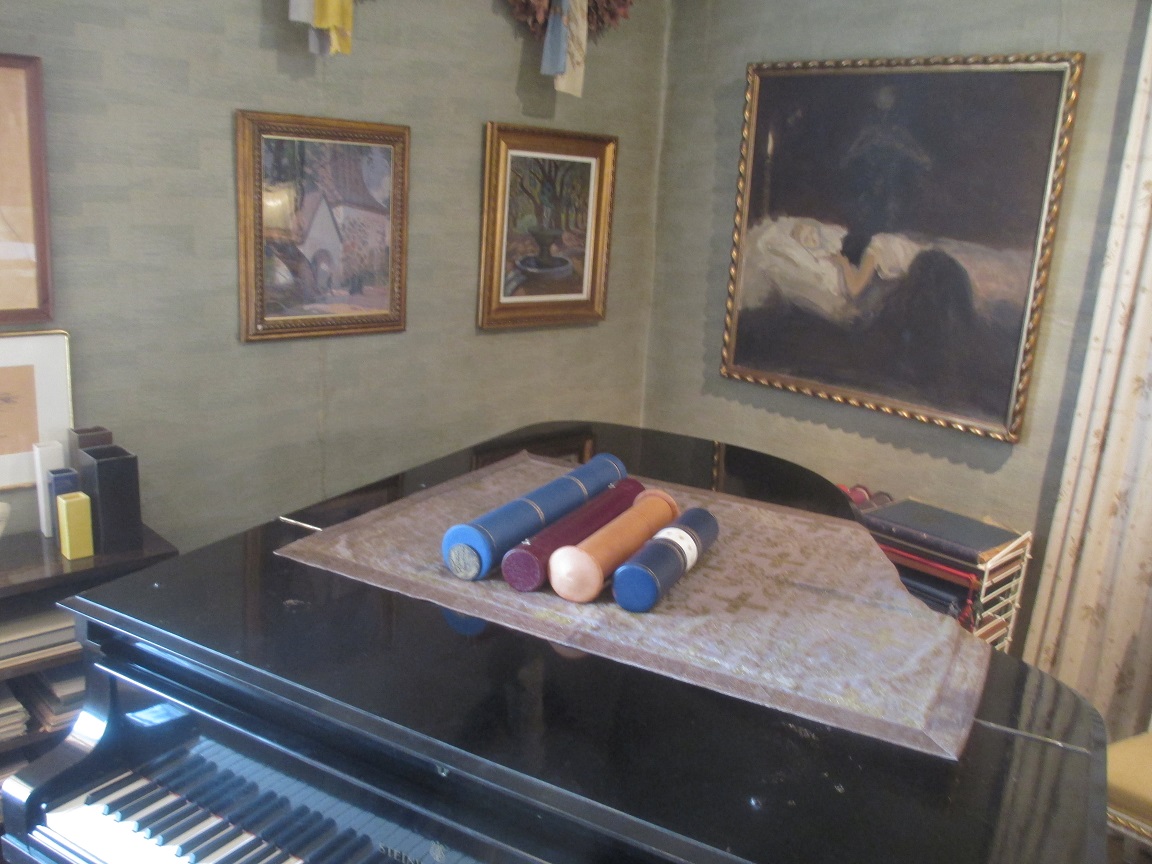
Sibelius’ piano at his Ainola home.

Joseph Tong sought to challenge that notion with a concert composed entirely of Sibelius piano works, given at St John’s Smith Square in the presence of the Finnish Ambassador. While the attendance suggested the music was not a great draw, the end product was never less than intriguing and often provided clues to Sibelius’s overall style.

Tong constructed a logical program that took us to the outer edges of the Finn’s piano output, from earlier pieces with a nationalist bent (the three movement suite Kyllikki and the five-piece suite The Trees) to some of the more rigorously structured pieces from Sibelius’ neo-classical period (a surprisingly touching Sonatina and two Rondinos) and finally to a strikingly effective transcription of the great Finlandia.

Tong was the ideal exponent, enjoying the intimacy of Sibelius’ writing and the occasionally abrupt manner in which he finishes his musical phrases. The Sonatina was a particular treat, its last movement hanging on the air like a branch after a bird has flown from it. Also notable was The Spruce last of The Trees, a popular work Tong played again as an encore. The later works were deeper and darker, suggesting winter claustrophobia in Sibelius’ house at Ainola, with only the hint of brighter times in evocations of spring.

To understand Sibelius as a composer the piano works are an invaluable and private aside, and in the right environment – such as this – they work very well as an intimate concert experience. Even the bluster of Finlandia, brilliantly played here, had its tender moments in the slow chorale theme that Tong gave lovingly. For an anniversary tribute with a difference, the pianist deserves great credit.

Joseph Tong has recorded a CD of Sibelius piano works, structured in a very similar way to the concert. It can be heard here on Spotify, with a second volume apparently in the pipeline for 2016.

Ainola – a visit to the house of Jean Sibelius

ainola

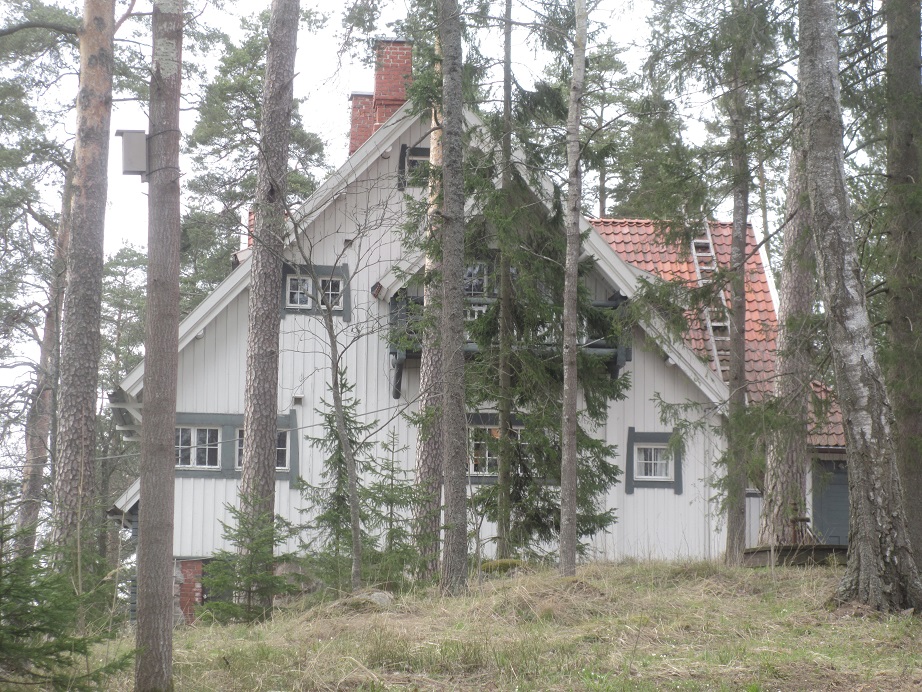
The house of Jean and Aino Sibelius, Ainola

Visiting a composer’s house can be both revealing and alarming. Revealing because you have the chance to peel back the layers behind some of your favourite music; alarming because you might not always like what you see when you get there!

Visiting the Sibelius house in Ainola was a case in point, though ultimately the trip was an overwhelmingly positive insight into the Finnish composer, his mind and the process used to create his wonderful music – or not, of course, as the great man’s pen was famously silent for his final 30 years.

First impressions are key. The house, secluded in the grasp of tall, rangy fir trees, is a calm and uncluttered place, save for a number of intriguing devices on display on the kitchen stove. Built in 1904, it is beautifully preserved, with incredible attention to detail.

Rows of glasses in a cabinet suggest Sibelius and his wife Aino enjoyed entertaining, while looking in the study to see the composer’s hat and stick on the table was strangely comforting, as though he were getting ready elsewhere in the house to go out for a walk.

sibelius-desk

Sibelius’s desk, Ainola

The piles of scores by the piano were illuminating, with Mendelssohn’s Elijah and St Paul not perhaps the first works that might come to mind. The Steinway faces a corner of the sitting room, around which is dotted some lovely landscapes and other works of art from friends of the family. A cold scene with swans, a characteristically blue-bright Finnish sky, green trees and the composer’s portrait are all homely and reassuring. Yet if you sit at the piano and raise your head a sudden chill pierces the air.

Here can be found A Prayer to God by Oscar Parviainen, erected to remind Sibelius of the death of his daughter, Kirsti, when just a year old. In the picture the child is comforted by its mother, but with a chilling figure that looks like Death hovering above.

sibelius-piano

Sibelius’s piano and paintings, Ainola

That Sibelius would always see this when sat at his piano brings new meaning to his darker music, a frisson of danger and deep dread. This impression stayed with me, even beyond the sight of the lake visible from the front room, glinting in the sunshine. This is countered by a softer woodland scene representing the view from the composer’s desk in the back room.

From there the grave of both Sibelius and Aino can be glimpsed, and it is a moving time indeed spent in contemplation in that quiet spot, the wind breathing softly in the branches. A busy road in the middle distance disturbs the peace on occasion – Sibelius would surely not have had that to contend with when living here – but a sense of calm soon returns.

sibelius-grave-house

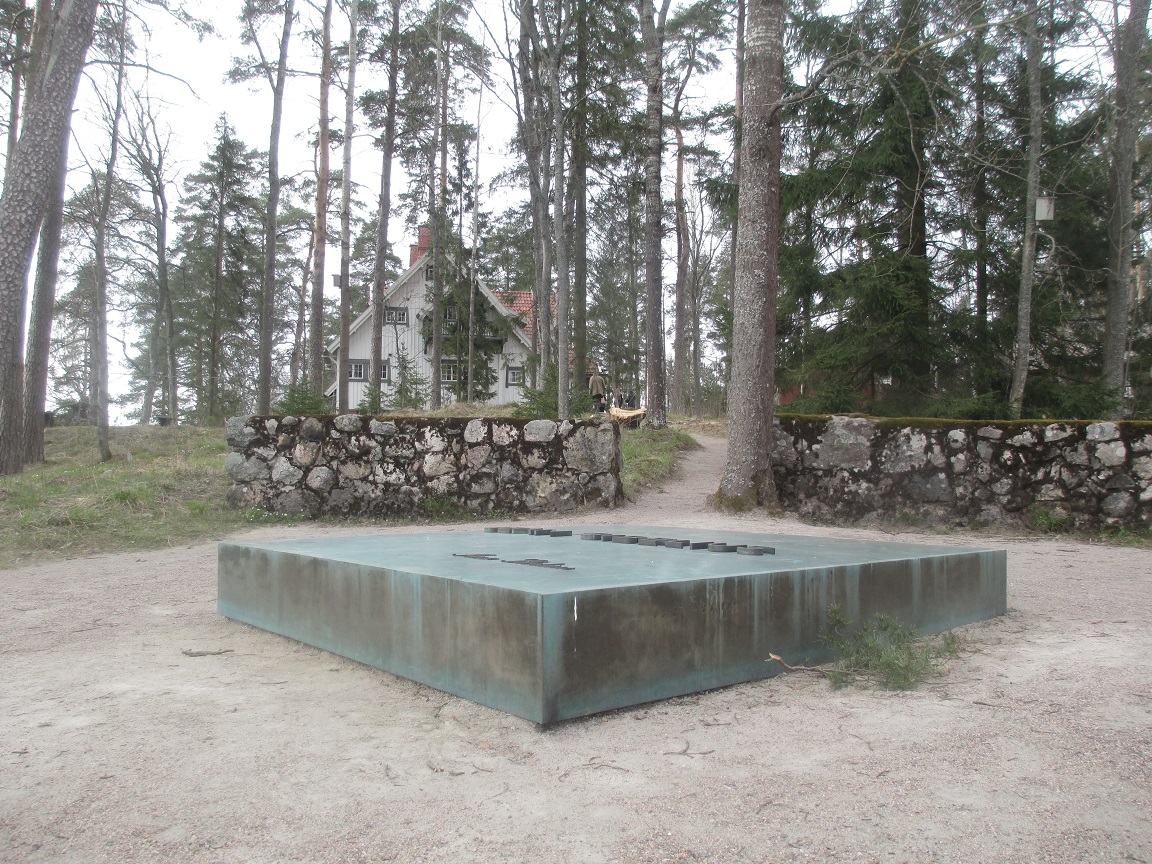
The grave and house, Ainola

Ainola is utterly inspiring but also deeply troubling in parts – a mirror, then, of its composer’s music. If you are a Sibelius fan I urge you to go there, as it leaves a lasting impression.

The Inextinguishable Fire

The Inextinguishable Fire – The BBC Symphony Orchestra and Sakari Oramo reach the Fourth Symphony in their Nielsen cycle, adding Sibelius, Ravel and Zemlinsky for good measure

sakari-oramo
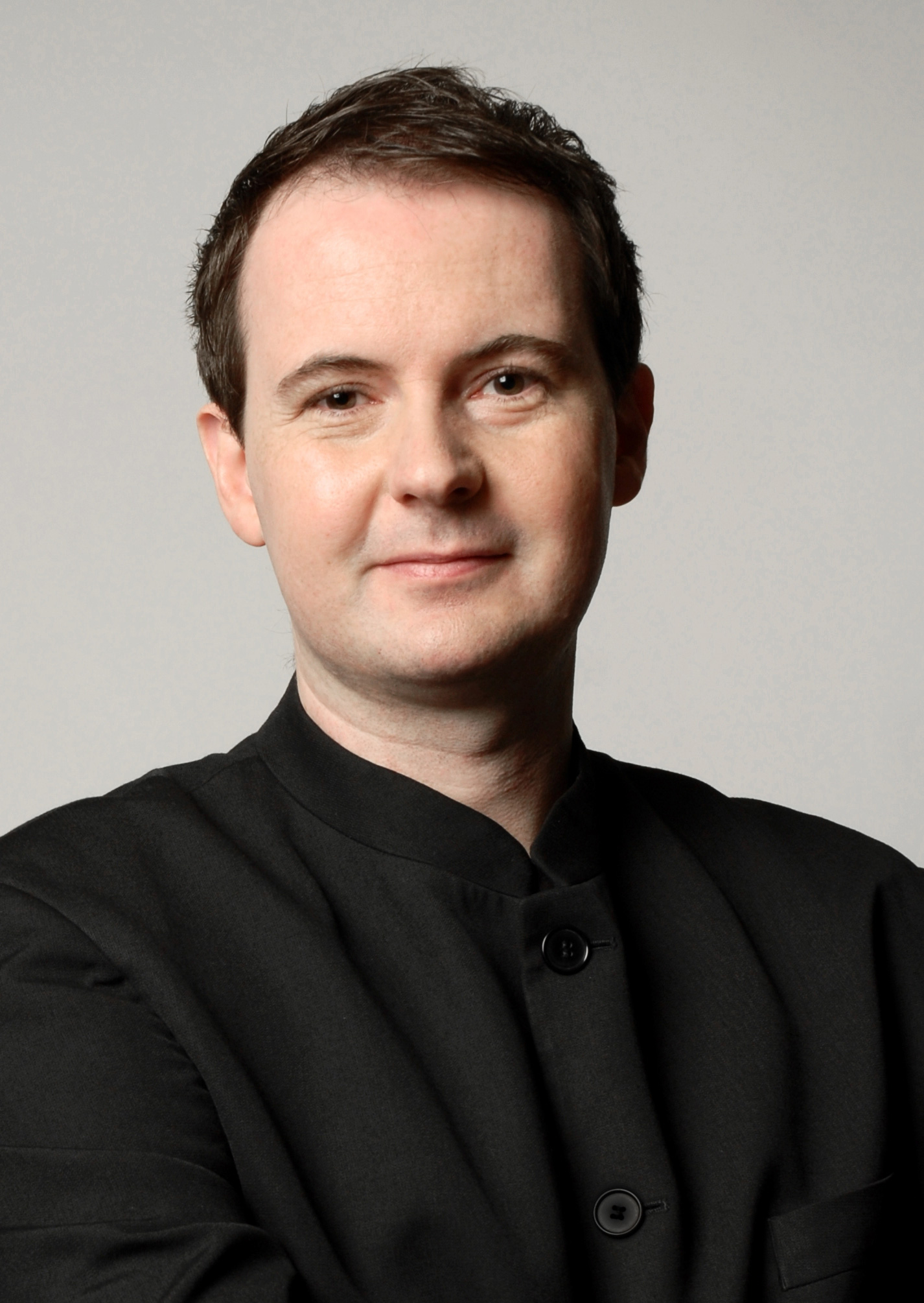
Anne Sofie von Otter (mezzo-soprano), BBC Symphony Orchestra / Sakari Oramo (pictured) – Barbican Hall, 19 February 2015

Listening link (opens in a new window):

http://www.bbc.co.uk/programmes/b052lpjh

on the iPlayer until 19 March

Spotify

Those unable to get the BBC concert can follow the same pieces here in appropriate recordings:

What’s the music?

Sibelius – The Oceanides (1914) (9 minutes)

Zemlinsky – 6 Maeterlinck Lieder, Op.13 (1913, orchestrated 1921) (19 minutes)

Ravel – Le Tombeau de Couperin (1914-17, orchestrated 1919) (18 minutes)

Nielsen – Symphony no.4, ‘Inextinguishable’ (1914-16) (34 minutes)

What about the music?

nielsenThe composer Carl Nielsen

This is a carefully picked program of intriguing opposites, part of the BBC Symphony Orchestra’s celebration of 150 years since the birth of Danish composer Carl Nielsen. All four pieces date from the same decade, and inevitably the First World War is an immovable presence, but these are four very different works that look to harness strength in adversity.

Sibelius, in his tone poem The Oceanides, looks abroad for its stimulus. He was on his only trip to America when he wrote the work at Yale University, taking an Ancient Greek legend as his inspiration. The ‘Oceanides’ are daughters of the water that circles the earth – water in all of its forms – and in this piece Sibelius describes the water as ‘a single breaker growing in force’. The version played here is the Yale version, rather than the later (and longer) revision.

Zemlinsky wrote his Six Maeterlinck Lieder while digesting the news that Alma Schindler, a long time obsession, had decided to marry the composer Gustav Mahler. This news upset and angered him, for he was preoccupied with Alma for many years – yet in these elusive and often unresolved songs he found the ideal vehicle for his response. As Anne-Sofie von Otter said in an interview broadcast on BBC Radio 3, the cycle of six songs is ‘not easy to get the balance right’ between voice and orchestra.

The work is ‘elusive and enigmatic. The stories aren’t straightforward!’

Le Tombeau de Couperin worked for Ravel on a couple of levels; firstly it helped him to observe the passing of several close friends in the First World War, while secondly it gave him chance to pay homage to the great composers of the French Baroque (from the 1700s) such as Couperin, held up as a national treasure and regarded as superior to the German equivalents, especially in time of war! It is an elegant piece, revelling in its role as a pastiche composition – using dance forms of the Baroque – but never resorting to imitation. Instead Ravel uses some cheeky and quite spicy harmonies to keep the hint of a smile on the face of the music.

Finally we have the Inextinguishable symphony, Nielsen’s Fourth and best known example in the form. This is a hugely affirmative piece of music, ‘that which is life’. David Fanning describes it as a ‘midlife crisis’ piece, as Nielsen’s life was undergoing a number of changes. It runs without a break, from searing melodies to small evocations of a village band – truly embracing the many forms and sizes of life itself.

Performance verdict

A fascinating and stimulating concert. Sakari Oramo has already gained a reputation for his prowess in Scandinavian music, and he brought Sibelius’ brief tone poem to life with a succession of watery colours. This was in direct contrast to the Nielsen, which was taut and thrilling, the strings producing some piercing lines while the real glory went to the drums, rolling like thunder in the background.

The Ravel, meanwhile, was notable for its glassy clarity, each melodic line clear to the ear and lovingly turned by the conductor. Oboist Richard Simpson was superb throughout, each of his leading tunes beautifully phrased and voiced. In some ways it was the Zemlinsky, the least known piece of the four, that made the greatest impact. Anne Sofie von Otter, ideally dressed in a long burgundy gown, got right to the heart of these poems – as much as you can with verse such as Maeterlinck’s, at any rate!

What should I listen out for?

Sibelius

3:47 – a murky start with very quiet strings and murmuring timpani. The two harps are prominent at this stage. As the music grows louder you can almost feel the water with every swirl of the harps!

6:09 – a trademark figure for woodwinds which falls back to the murky depths of the soft strings.

8:11 – the big wave grows and swells, powered by timpani, strings and woodwind

9:54 – the music settles on a home note and immediately takes on a happier air

12:09 – the big spray of a ‘breaker’ – and a typically concise finish to the piece, courtesy of a single clarinet – whose note resolves right at the end.

Zemlinsky

16:39 – Die drei Schwestern (The Three Sisters). The music moves with deliberate tread, as though walking carefully. The music moves through a succession of harmonies without stopping, and the singer too is tense – until a brief but meaningful climax which cuts off suddenly.

20:34 – Die Mädchen mit den verbundenen Augen (The Maidens with Bound Eyes). Silvery strings introduce the singer, who initially shadows the cor anglais. Zemlinsky uses the orchestra very deftly, with lots of light and shade, though eventually this song becomes darker and sorrowful.

23:41 Lied der Jungfrau (The Song of the Virgin) The otherworldly sound of the harmonium can be heard at the start of this song in conjunction with a solo violin. Zemlinsky reduces the string section to eight players and there is some truly odd but rather enchanting music here!

26:21 – Als ihr Geliebter schied (When her lover went away) Richly coloured but once again strangely elusive. This is one of the songs Zemlinsky wrote as Alma Mahler, the long-time object of his affections, had a ‘dalliance’ with another man, a year after her husband’s death

28:25 – Und kehrt er einst heim (And should he return one day)­ – the golden ring of the song glints in Zemlinsky’s orchestration for harp and celesta.

31:23 – Sie kam zum Schloss gegangen (She came towards the castle) – this song to me sounded more like Mahler than any of the other five. The oboe and cello paint a ghostly picture to begin with, and as the mysterious story unfolds there is a curious fascination on the part of the listener.

Ravel

1:03:11 – Prélude – a graceful and slightly furtive solo, beautifully played here by Richard Simpson. The strings offer a silvery melody as a complement

1:06:43 – Forlane – a French dance form that Ravel wanted to make like the tango. In the event he is quite restrained here, but the use of ‘wrong’ notes in the melody makes the dance more exotic. At 1:11:37 the clarinet introduces another section, then at 1:12:12 the melodies become awkward and twisted.

1:13:09 – Menuet – the emotional centre of the work, with a polite if slightly sad melody from the oboe, then a minor key section (1:15:08) where the shadows cast over the work get longer. Again this is beautifully phrased by the BBC woodwind, with harmonics on the strings in the background.

1:18:28 – Rigaudon – here is music of greater hope, a quick and high spirited dance that skips along.

Nielsen

1:25:24 – with a massive heave the symphony gets underway, unleashing a seemingly unstoppable force through the whole orchestra.

1:26:56 – the clarinets duet in what becomes the great theme of the symphony, heard softly at first but then in an affirmation from the whole orchestra at 1:29:31

1:35:15 – the affirmative second theme returns to close off the first movement in joyous spirits, at which point we lead to…

1:36:37 – a small village wind band pipe up with a thoughtful melody. The sound is small compared to the first movement and not rhythmically consistent.

1:40:01 – the village band returns, but the music still feels a little distracted

1:41:29 – the third movement, a tense exchange that begins with piercing high notes on the violins.

1:50:41 – strings hurry around at the start of the fourth movement, exerting a sheer primal force

1:52:35 – rolling timpani, one set of drums each side of the orchestra, dominate the sound

1:56:48 – rolling timpani return, driving forward to a thoroughly affirmative finish where the big theme from the first movement comes back in its crowning glory

Want to hear more?

The Spotify playlist link above also contains some extra items for each composer. These are the short but tuneful Karelia Suite of Sibelius, then the two other movements from Le Tombeau de Couperin that Ravel did not orchestrate, a Fugue and a Toccata. There is Zemlinsky’s highly regarded three movement Sinfonietta, a major work, and to finish the suite written by Nielsen for Aladdin.

For more concerts click here