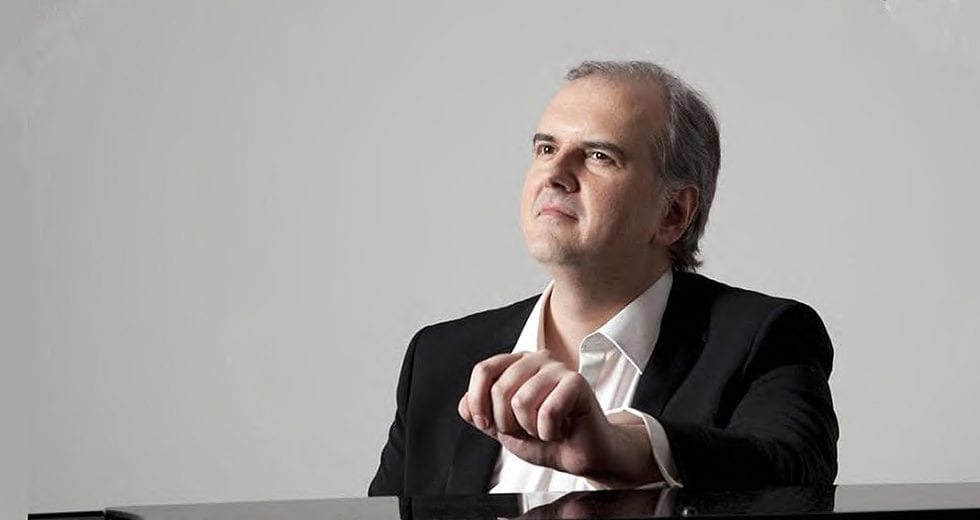
Earlier this week the very sad death of Nicholas Angelich was announced, at the age of just 51. Thankfully the highly-regarded pianist made a good deal of recordings for Virgin Classics and later Warner, many of which included the music of Beethoven and Brahms, at whom he excelled.
This playlist includes the late set of Fantasias published by Brahms as Op.116, then a sparkling clip from Prokofiev’s arrangement of music from his ballet Romeo and Juliet. I was lucky to see Angelich perform Brahms’s Piano Quartet no.1 in G minor at the Wigmore Hall with violinist Renaud Capuçon, viola player Antoine Tamestit and cellist Gautier Capuçon, around the time of their excellent recording for Virgin Classics. You can hear that as part of the playlist, which ends with Angelich in Beethoven’s Emperor Concerto, a lean account with the Insula Orchestra and Laurence Equilbey:
Mozart Horn Quintet in E flat major K407 (1782) Brahms String Quintet no. 1 in F major Op. 88 (1882)
CBSO Soloists: Mark Philips (horn), Philip Brett and Charlotte Skinner (violins),Christopher Yates and Catherine Bower (violas), Arthur Boutillier (cello)
CBSO Centre, Birmingham Thursday 3 February 2022 2pm
Written by Richard Whitehouse
The Centre Stage series, featuring musicians from City of Birmingham Symphony Orchestra, continued this afternoon with an attractive coupling of quintets written exactly a century apart and which are among the most characteristic works of their respective composers’ maturities.
His first piece for the virtuoso Joseph Leutgeb (quite frequently the butt of Mozart’s scabrous humour, though for whom he went on to write four concertos) the Horn Quintet remains one of Mozart’s most engaging chamber pieces – not least through the presence of two violas that yield additional tonal depth to the lively outer Allegros, besides reinforcing the limpid pathos of the Andante. A little reticent toward the outset, Mark Philips came into his own during that central movement with its wistful poise and elegant interaction with those middle registers of the strings. Nor was there any lack of wit in the scintillating finale, its writing for the horn of no less agility than that found in the parallel movements of Mozart’s concertos; all the while suggesting the association between composer and musician was, after all, an endearing one.
Although he had originally intended his Piano Quintet to be a string quintet with two cellos, Brahms only got round to composing what became his First String Quintet as he was nearing fifty. Eschewing both the immediacy of his sextets and the austerity of his quartets, this piece typifies the ruminative warmth but also the expressive ambivalence of his music henceforth – not least an opening movement whose emotional surges are kept in check by the burnished richness of ensemble. The highlight, of the work as of this performance, is a slow movement that offsets its underlying introspection with two scherzo-like episodes whose effervescence carries over the finale – an Allegro of an impetus not so often encountered in Brahms’s later music, while culminating in a coda such as reinforces the home-key with exhilarating effect.
Such, at any rate, was the impression left by an assured and involving performance of a piece which conveyed the extent of this ‘dark horse’ among Brahms’s chamber compositions. Next week sees an ensemble from the CBSO tackle the epic expanse of Schubert’s String Quintet.
You can read more about that next Centre Stage recital, and book tickets, on the CBSO website
Beethoven 7 Variations on ‘Bei Männern, welche Liebe fühlen’ from Mozart’s Die Zauberflöte WoO 46 (1796) Britten Cello Sonata in C major Op.65 (1961) Piazzolla Le grand tango (1982)
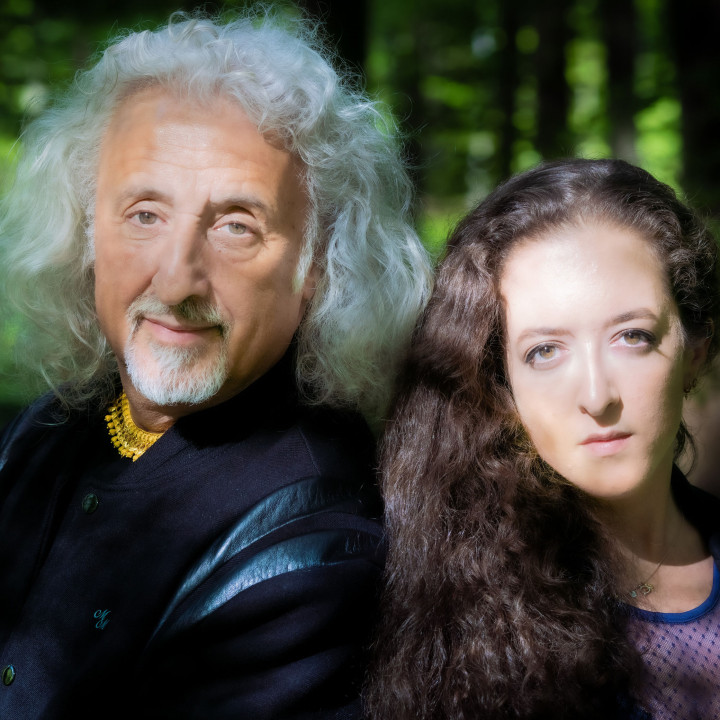
Mischa Maisky (cello), Lily Maisky (piano)
Wigmore Hall, London Monday 1 November 2021
Written by Ben Hogwood
Father and daughter duo Mischa and Lily Maisky presented an imaginative program of works for cello and piano in this BBC Radio 3 Lunchtime Concert, where it was gratifying to note a full attendance at the Wigmore Hall.
They immediately found the light-hearted spirit of Beethoven’s 7 Variations on Bei Männern, welche Liebe fühlen, an aria from Mozart’s Die Zauberflöte. The piano takes the lead for much of this work, and Lily’s phrasing was subtle yet nicely shaped. The burnished tone of Mischa’s cello was a feature in the minor-key fourth variation, while Lily’s sensitive ornamentation at the start of the sixth was especially attractive.
A compelling performance of Britten’s Cello Sonata followed. As a former pupil of Mstislav Rostropovich, Mischa Maisky effectively has a direct line to a work that started the beginning of an extremely fruitful musical friendship between Britten and Rostropovich that lasted up to the composer’s death 15 years later. This performance inhabited the spirit of the work from first note to last, with the feeling in the first movement Dialogo that we were eavesdropping on a private conversation. Britten’s frequent but subtle references to Shostakovich were nicely highlighted here, with a few witty asides.
In the second movement Scherzo the Maiskys were dancing a balletic routine, Mischa’s pizzicato questions finished off by Lily’s featherweight answers. The tempo was slightly slower than is often used here, but in this way the pair effectively pointed out the work’s proximity in Britten’s output to the opera A Midsummer Night’s Dream. The sombre third movement Elegie had a silvery tone from the cello, while the following Marcia dealt in sardonic humour. The finale was a tour de force, featuring low notes from Mischa’s cello capable of rattling the windows, before powering through to an emphatic finish.
Piazzolla’s Le Grand Tango celebrates the dance form with which the Argentinian composer became obsessed, though as he stated the preoccupation was in his mind rather than the dancing feet. This was a passionate performance, the Maiskys in hold throughout as they maintained their close musical chemistry, right from the full bodied notes with which the cello began to a red-blooded dance for the closing pages. In between we had music of great tenderness and affection, not to mention rhythmic persuasion.
The duo gave us two encores, the first of which was a heartfelt tribute to the recent passing of Nelson Freire, clearly a dear friend. Bloch’s Prayer, from the short suite From Jewish Life, was an ideal choice, reverently played and with a searing tone quality to the highest register. It was a moving tribute that could hardly be bettered. There was also an ideal response in the form of Mischa’s own transcription of Brahms’s Lerchengesang Op.70/2, where Lily’s piano took the expressive lead.
You can hear the music played by Mischa and Lily on the Spotify playlist below, compiling Mischa’s recordings for Deutsche Grammophon of all the repertoire:
For more information on Mischa Maisky you can visit hisartist page
Schulhoff 5 Pieces for String Quartet (1924) Kurtág Officium breve in memoriam Andreae Szervánszky Op.28 (1988-9) Mendelssohn String Quartet No. 3 in D major Op.44/1 (1838)
Written by Ben Hogwood (reviewed live from online stream below)
The Aris Quartet are part of the BBC Radio 3 New Generation Artists scheme, and this was their first appearance at the Wigmore Hall. They presented themselves as a lively ensemble who clearly enjoy their music, and they played with sensitivity and panache
Also revealed was a strong instinct for programming. Schulhoff’s 5 Pieces for String Quartet are beginning to make themselves known more in the concert hall, presenting as they do a number of sides of this unique musical personality. The Czech composer was arrested in Prague before he could be issued with a visa to emigrate to Moscow in the Second World War, and died at the Wülzburg concentration camp at the age of 48. His music is still relatively young in its exposure because of this, only really coming through in the 1990s. Initial criticism from those sceptical at his integration of jazz and dance forms is giving way to more outright respect, and – as could be seen here – the 5 Pieces make a great start to a concert.
The Aris Quartet gave a vibrant account of the first movement, marked Alla Valse viennese, but soon a chill was forming as the Alla Serenata progressed, its ghostly presence reminiscent of early Shostakovich. The muted instruments danced over a distracted drone from the cello before biting hard in a sequence that was almost anti-lyrical. There was an impressive cut and thrust to the Alla Czeca, bringing out the composer’s heritage, then an attractive sway to the Alla Tango milonga, beautifully played but with an unexpectedly ominous finish. Finally the buzz of the lively Alla Tarantella set a strong unison violin melody against brisk viola and cello.
Officium breve by György Kurtág was next, a requiem to fellow Hungarian composer Andreae Szervánszky. By his standards it is a lengthy piece indeed, but with 15 sections in barely 12 minutes it was packed with compressed melodies of great intensity. Kurtág is a master in obtaining deep expression from the shortest of phrases, achieving this through carefully pointed melodies and highly imaginative quartet textures. Such a thorough knowledge of string quartet capabilities informs the many sides of grief felt here, and the Aris Quartet reveled in the nuances of the piece. The gripping account took hold from the distracted opening, where cellist Lukas Sieber effectively set out the pitches of the open strings of hit instrument, to savage chords wrought with pure anger later on. The composer’s use of microtones was deeply expressive, as were the ‘double stopping’ passages, the quartet playing as one instrument with eight or more voices. It was a moving and mind-expanding performance.
A wholesale change of mood took us to Mendelssohn, and the joyous outpouring of the first in his trio of quartets published as Op.44. Anna Katharina Wildermuth’s songful first violin was key here, but so were the quartet textures, with lots going on but impressive clarity to reveal the dialogue between the instruments. This was a lovely, fluid performance, with a sunny first movement giving way to a less excitable but equally persuasive Menuetto, showing off its rhythms and soft-hearted theme. Feelings ran deep in the slow movement, especially in the minor key episode, where Wildermuth probed deeper with her phrasing. The finale recaptured the mood of the first movement, good spirits bubbling over to cap an affectionate and energetic performance.
It was great to see an ensemble playing as one with such obvious enthusiasm and commitment for the music, and based on this evidence the Aris Quartet have a bright future indeed. Watch the concert stream and see for yourself!
You can also listen to the repertoire from the Aris Quartet’s concert on this Spotify playlist:
For more information on the Aris Quartet visit their website
Prokofiev Piano Sonata no.6 in A major Op.82 (1939-40) Ravel Valses nobles et sentimentales (1911) Schumann Carnaval Op.9 (1834-5) Ravel La valse (1920)
Boris Giltburg (piano, above)
Wigmore Hall, London Monday 4 October 2021
Written by Ben Hogwood
This review marks your correspondent’s first visit to the Wigmore Hall for 18 months – after weekly coverage of the hall’s wonderful Monday lunchtime series. It was so good to be back! In that time it seems the core audience has changed, dropping by a couple of decades at least. This could be due to understandable caution on the part of the older members of the audience to get back to the post-Coronavirus version of concert life, but it is more likely to be the regular streaming of concerts that has lured in a much younger generation. This concert was streamed (you can watch below) and, for the record, the audience were enthusiastic and immaculately behaved – in fact there was a celebratory atmosphere.
Boris Giltburg fully inhabited the positivity. The pianist was beginning a new, two-year look at the piano music of Ravel, and if this first instalment was anything to go by, we are in for a treat. Giltburg’s first selection concentrated on the waltz in its many forms – with two very different approaches to triple time from Ravel, complemented by Schumann and Prokofiev.
It was with the coruscating tones of the latter’s Piano Sonata no.6 in A major that Giltburg began, something of a shock to unaccustomed ears with its discordant language. This underrated work is first in a trilogy of sonatas written during World War Two. The impact was immediate and confrontational, delivered with impressive force but also control. The serrated edges of the first movement were complemented by a poetic second theme, and the tension relaxed a little further for the second movement’s witty march. The right hand of the piano drew parallels with the Ballet of the Unhatched Chicks from Mussorgsky’s Pictures At An Exhibition, as the left hand ascended with a probing melody. The slow movement had a softer, yearning heart, though the dissonant harmonies lingered around the edges, before the runaway theme of the finale took hold. This could easily be a silent film soundtrack, but its cat and mouse nature was challenged and ultimately caught by the reappearance of the first movement’s angular melody. Giltburg staged a profound drama between these elements before bringing the sonata to a shattering conclusion.
Ravel’s Valses nobles et sentimentales was next, providing a relatively controlled contrast to the Prokofiev’s unwieldly ways. Giltburg enjoyed the music greatly, swaying to the rhythms as he played. His control was immaculate but the rhythmic profile of the waltzes was instinctive, holding back or pressing forward as appropriate. A tender, intimate second waltz (marked Assez lent – avec une expression intense) brought the audience in closer, while the fourth waltz (Assez animé) twinkled in the night air. Giltburg could be forceful when needed, as in the first (Modéré) and seventh (Moins vif) waltzes, and his Épilogue was exquisitely voiced.
The second half began with Schumann’s Carnaval, a tableau of portraits and personal insights completed in the composer’s mid-twenties. Schumann’s ability to paint vivid pictures at the piano is rightly celebrated, and the sketches here were rich in colour and implied detail. Giltburg relished the extravert Florestan as much as he did the reserved poetry of Eusebius, both sections portraying the personality of Schumann himself. The nagging ‘answer’ motif of Pierrot left its mark, as did the repeated notes of Reconaissance. Meanwhile Papillons quoted from one of Schumann’s first piano pieces with a slightly shy countenance. Schumann’s portraits of Chopin and Paganini were once again fascinating in their insights, while finally the triumphant Marche des Davidsbündler contre les Philistins carried all before it in a triumphant account.
As did Ravel’s La valse, which followed, though here there was a very different outcome. La valse describes the destruction wrought by the First World War, its closing bars collapsing in vivid imagery, but it could just as easily describe elements of our civilization over the last few years. Giltburg seemed to inhabit that possibility, the warm-hearted dance dropping in temperature as his account progressed, until the end when it was rumbling throughout the piano in a self-destructive whirlpool. This is a fiendishly difficult transcription, but Giltburg made it seem effortless as he inhabited each and every twist and turn, hurling out the final pages with formidable power.
After this alarming turn of events we returned to the solace of Giltburg’s first encore, a limpid Intermezzo in A major Op.118/2 by Brahms, then marvelled at the passion in his second choice, Rachmaninov’s Prelude in G# minor Op.32/12. A memorable recital, and an auspicious start to what promises to be a great series. Best experienced in person rather than online though!
You can listen to the repertoire from Boris Giltburg’s concert on this Spotify playlist, which includes the pianist’s recordings of the Prokofiev, Schumann and Rachmaninov:
For more information on Boris Giltburg you can visit his website