HAAi’s second album, as its title implies, is a look at what it means to be human in an increasingly automated age, “as AI threatens to eclipse everything and our screens separate us from each other”.
With that in mind, HAAi – real name Teneil Throssell – returns to her songwriting roots, using her own vocals and further enhancing the human element in a series of carefully chosen collaborations.
These include her friends Jon Hopkins, Alexis Taylor from Hot Chip, singer Obi Franky and rapper KAM-BU, the poet Kaiden Ford, James Massiah and not one but two choirs – TRANS VOICES and a gospel choir led by Wendi Rose.
What’s the music like?
Humanise is as emotive as the story demands it should be. HAAi has a beautiful voice, and lends it to a wide variety of soundscapes that range from harder, beat driven affairs to big, spacious areas for contemplation.
Often both of these elements combine, as they do on the Jon Hopkins collaboration Satellite, the comforting lead vocal boosted by Obi Franky, ILĀ & TRANS VOICES, with glitchy beats and surround sound provided by Hopkins. The same ploy works well for Stitches later on.
There is a sense of melancholy running through the album, to tangible effect on the otherwise anthemic Can’t Stand To Lose and the brilliant New Euphoria, where Alexis Taylor helps lift the music to a higher plane.
Meanwhile Shapeshift carries an impressive weight while Voices is superb, powering through. Go is a really good slow burner, while at the other extreme the nippy Hey! races forwards; both examples of the variety found on Humanise.
Does it all work?
It does – the album is well structured, and there is a satisfying ebb and flow to the tempo choices and peaks of intensity. In spite of the many collaborations, HAAi’s voice shines through.
Is it recommended?
Enthusiastically. This may be an electronic album, but it is one stressing the importance of the human brains behind our automated tools, and what keeps those brains and minds ticking and alive.
Listen / Buy
Published post no.2,717 – Thursday 13 November 2025
London-based, Australian-born producer, songwriter and DJ, HAAi (aka Teneil Throssell) has announced details of her highly-anticipated new studio album – HUMANiSE – out on 10 October 2025 via Mute on limited edition clear double gatefold vinyl and limited edition CD in eco card packaging.
You can watch the video for Satellite featuring Jon Hopkins, lead vocals by Obi Franky, plus ILĀ and TRANS VOICES, a crescendo of celestial glitch-pop that references early Kompakt records, 90s rave and 2-step, below. The accompanying visualiser is by Dobermann Ltd, who Teneil has been working closely with on the artwork.
Teneil goes on to say, “Satellite encapsulates everything HUMANiSE stands for: the importance of your people and the unique humaneness we offer one another in a rapidly changing world. I feel so lucky to have shared this track with Jon and Obi, ILĀ and TRANS VOICES.
This album is for my trans and queer family and our allies, to say thank you for lighting up every space you’re in. I will always be in your army.”
Talking about the track, Obi Franky explains, “Inspired by my father’s passing, I decided to write a message that I believe we share for each other. And this can apply to various situations for so many people including those that live far away from each other. Sometimes being reminded someone’s energy is there is enough to keep you going. We are all satellites and have the power to create a sense of unity, the power to receive and give what ultimately a human wants – love.’
HUMANiSE stands as an immense evolution from the debut, Baby, We’re Ascending, and arrives at a prolific time for the artist. Her BBC Radio 6 Music A-listed track, ‘Can’t Stand To Lose’ was reworked by HAAi and Tom VR and soundtracked a groundbreaking visual which premiered on the Outernet’s digital exhibition space for Women’s History Month. That was followed soon after by a collaboration with KAM-BU, Shapeshift, and recent (and forthcoming) DJ appearances that include Coachella, Movement, Glastonbury and helming her community-focussed night in London, UNiSON.
In all of her work, Teneil has always sought to conquer new frontiers in electronic music, and on the new album, she’s drilling deeper into the grid. HUMANiSE reckons with what it is to be human in an increasingly digital world, as AI threatens to eclipse everything and our screens separate us from each other. The result is an ambitious and thrilling epic: embodying a sonic step up, exploring the sweet spot between machine-led dystopia and emotion-filled utopia.
“Throughout the album, I kept thinking about a machine with a human heart,” she says. Where previously she’s been hidden by a laptop, or obscured behind the decks, more recently she was, “inspired to return to my songwriting roots and use my voice more in my own music.” “Throughout the album, I kept thinking about a machine with a human heart,” she says. Vocals are front and centre, stunningly delicate and giving a newfound dimension to her kinetic productions. “It took a long time to get there, it’s such a vulnerable thing to do,” she continues, “but for this album, it was important for me to allow this ‘human heart’ to be front and centre.”
The human heart has another focus on the album: unity and community. HAAi explains, “Even though HUMANiSE is about how the world is starting to change beyond our control, it’s important to keep a sense of togetherness and hope.” These ideas of community and a sense of belonging is of utmost importance, and she has returned to work with friends including Jon Hopkins, Alexis Taylor from Hot Chip, singer Obi Franky and rapper KAM-BU, artist Kaiden Ford, as well as poet James Massiah, who guests on All That Falls Apart, and two choirs: TRANS VOICES with choir leader ILĀ and a gospel choir led by Wendi Rose. But this is no clique, the community she surrounds herself with is inclusive, with ample space for the listener on a journey where you are suspended in dreamlike euphoria, drawing the most human part of you to the surface – the part where nothing matters more than family, friends, and togetherness.
HUMANiSE is out on 10 October 2025 via Mute on limited edition clear double gatefold vinyl and limited edition CD in eco card packaging. You can pre-order here
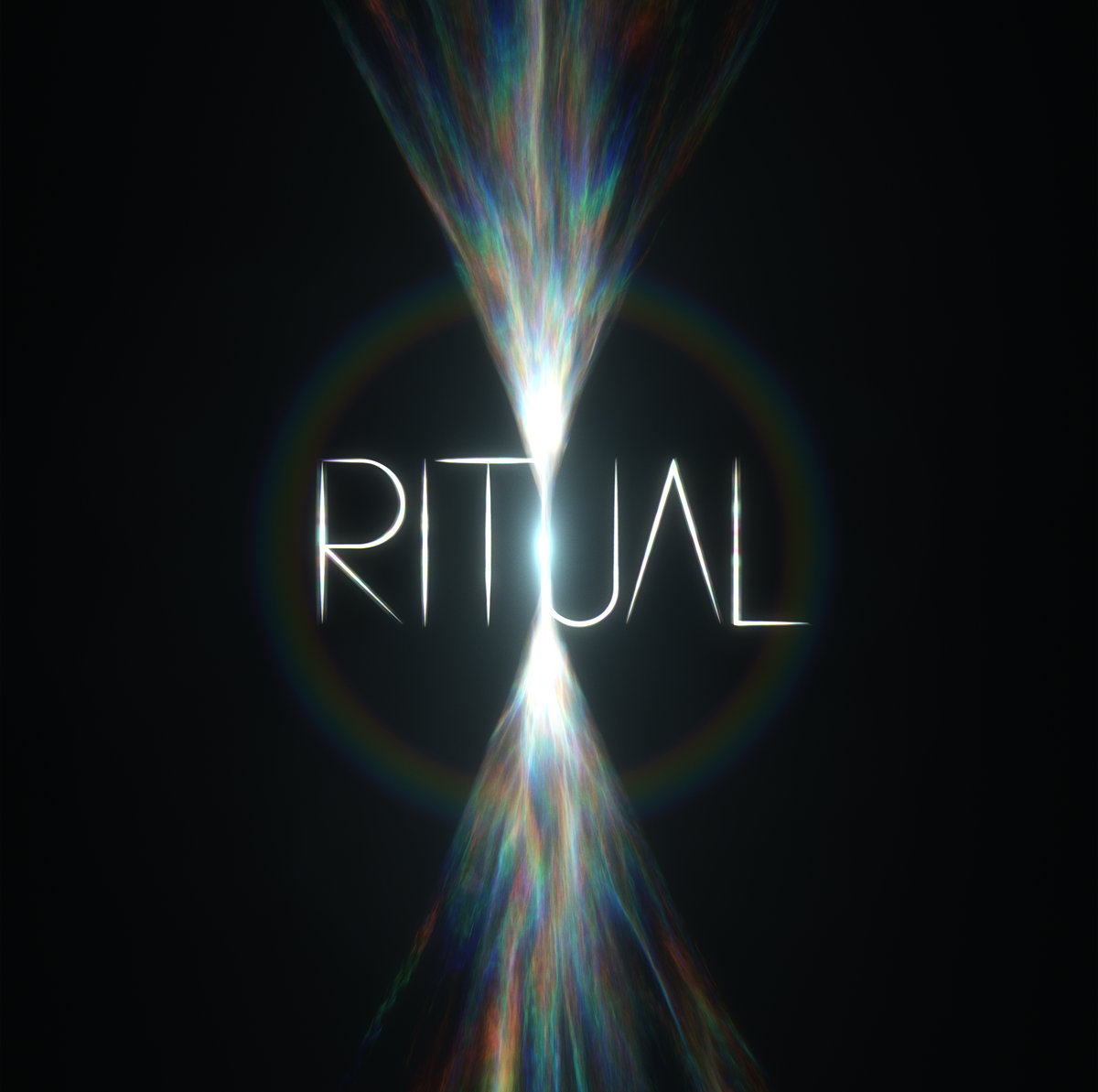
RITUAL, the latest from the ever-ambitious Jon Hopkins, is described as ‘a 41-minute electronic symphony built from cavernous subs, hypnotic drumming and transcendent melodic interplay’.
The project was conceived in 2022, when Hopkins received a commission for London’s Dreamachine experience. He wrote a shorter piece that became the cell from which RITUAL grew, with the help of collaborators Vylana, 7RAYS, Ishq, Clark, Emma Smith, Daisy Vatalaro and Cherif Hashizume.
What’s the music like?
RITUAL is a compelling piece of work – and a mindful treat. Best experienced in a single sitting, it grows from a small cell, a single pitch of ‘G’ – and a very similar opening to that of friend Brian Eno’s Reflection album.
Soon the differences become more pronounced, and Hopkins gathers the forces at his disposal – wordless voices, sonorous bass, slow moving drones at both ends of the audible scale, and rising energy levels, such as on the palace / illusion section, where a steady throb emanates from the bass drum.
The music expands still further, reaching its ultimate apex on solar goddess return, where the bass is joined by a bold treble and a rush of white noise, like walking outside and standing under a starry sky. Soon the bottom drops out of the sound, the listener left suspended through dissolution, before nothing is lost offers consolation through its piano loop.
Does it all work?
It does – thanks to a firm grip on the structure, Hopkins allowing the music to move at a natural pace.
Is it recommended?
It is. Jon Hopkins is becoming a very impressive long form composer, his credentials surely leading him towards a full-blown orchestral piece before long, bigger even than the music heard in his BBC Proms concert in 2023. RITUAL works both as a serious piece of keenly structured music, and as a musical mind cleanser. A very fine piece of work.
For fans of… Ólafur Arnalds, Jóhann Jóhannsson, A Winged Victory For The Sullen, Max Richter
Some exciting news from Erased Tapes… who have announced they will be releasing the soundtrack to forthcoming film Falling Into Place, a collaboration between Jon Hopkins and Ben Lukas Boysen, featuring performances by pianist Lisa Morgenstern and cellist AnneMüller.
He takes up the story: “The film in general, and therefore the score, deals a lot with reflecting on needs and the feeling of belonging. Each piece of the score is devoted to one of the many stations our protagonists visit on their journey and Some Kind Of Pattern represents an early and careful approach towards their feelings and who they want to be, for themselves and also for each other.”
Some Kind Of Pattern is the early taster of what the soundtrack will be like, a contemplative but assured piece of work whose descriptive powers are evident. It has a compelling stillness that bodes well for the album.
The score to Falling Into Place will be released on Erased Tapes on 28 March, in conjunction with Piano Day 2024.
Published post no.2,102 – Wednesday 28 February 2024
Hopkins ATHOS (arr. Jules Buckley) (BBC Commission, world premiere) Feel First Life (arr. Peter Riley & Leo Abrahams) The Wider Sun (arr. Sam Gale) Singularity (arr. Simon Dobson) Music for Psychedelic Therapy – excerpt (arr. Peter Riley) Form by Firelight (arr. Peter Riley) Luna Moth (arr. Sam Gale) Collider (arr. Simon Dobson) Abandon Window (arr. Tom Trapp) Recovery
Jon Hopkins (piano, programming), Leo Abrahams (guitar), BBC Singers, BBC Symphony Chorus (chorus master David Young), BBC Symphony Orchestra / Jules Buckley
Royal Albert Hall, London Tuesday 29 August 2023
by Ben Hogwood photos by Mark Allan / BBC
Electronic and orchestral music are more closely related than you might think, with Jon Hopkins a classic case in point. For 15 years, the pianist and producer has been carefully sculpting his music either as a contributor for other artists (King Creosote, Coldplay and Brian Eno to name just three) or making his own, weather-beaten albums. Starting with Opalescent and Insides, these have developed into immersive meditations (Singularity and the most recent long player Music for Psychedelic Therapy) by way of more full-bodied rave music (2013’s Immunity). How, then, does this music hold up in a packed and expectant Royal Albert Hall?
Extremely well as it turns out. In order to achieve what he described beforehand as ‘a meditation for 5,000 people’, Hopkins has to temporarily turn his back on beat-driven, post-rave landmarks such as Collider or Form By Firelight. When such material appears, its percussive impact is modified so that the main job is done by the timeless, meditative chorale echoing around the hall.
Hopkins’ music is repetitive, but as with the best exponents of minimalism – Steve Reich, Philip Glass and John Adams, for instance – the material under repetition rewards the investment made. The mind is eased, enjoying the upfront melodies but also taking up the option of picking out new threads beneath the surface, like examining a tartan pattern under a magnifying glass.
The tartan analogy is purposeful, for Hopkins’ earlier music has a distinctive Celtic edge furthered by his work with King Creosote. The Wider Sun, from 2009 album Insides, has an authentic left of centre tuning, is slow but packs emotional heft, beautifully arranged by Sam Gale and masterfully weighted by Jules Buckley and the BBC Symphony Orchestra strings.
Before that we hear a new piece, the 25-minute ATHOS demonstrating Hopkins’ control of larger structures. This is a natural direction for his music to be taking after Music for Psychedelic Therapy, for it is effectively an album ‘A’ side of several interwoven tracks. The profile and material of ATHOS sits closely to composers such as Arvo Pärt, and in particular his Credo, but Hopkins has up his sleeve a number of heart-shifting modulations. Accentuated by the Royal Albert Hall organ, these are once heard, never forgotten moments.
So, too, are the choral passages, thanks to pinpoint interpretations from the BBC Singers and BBC Symphony Chorus, whose lines float effortlessly above the orchestral forces. Their vocal control is masterful and effortless, ensuring the sustained notes keep their emotional impact without wavering. Lesser singers would have tailed off long before these ones even think of blinking!
The sequence of music, running for approximately 75 minutes, is well chosen. Only on occasion does the source material become oversimplified, and as it turns out these moments serve as natural pauses for breath in the musical tapestry.
Guitarist Leo Abrahams, appearing for the last two numbers, makes a critical contribution (above). A good friend and established collaborator with Hopkins and Eno, he brings a sharper timbre to the shredded distortion of Recovery, which is – as throughout – complemented by imaginative and sympathetic lighting.
This was a multisensory Prom, containing a different sort of symphony to which the Royal Albert Hall is normally accustomed. Hopkins has proved his credentials in mastering larger structures, and his development in this field will be worth watching for sure. For now, the afterglow remains.





 Arcana.fm