In concert – Juilliard String Quartet @ Wigmore Hall: Beethoven Op.130 & Jörg Widmann

Juilliard String Quartet [Areta Zhulla, Ronald Copes (violins), Molly Carr (viola), Astrid Schween (cello)]

Beethoven String Quartet no.13 in B flat major Op.130 (1825-6)
Widmann String Quartet no.8 ‘Beethoven Study III’ (2020)

Wigmore Hall, London
Monday 20 January 2025 (1pm)

by Ben Hogwood

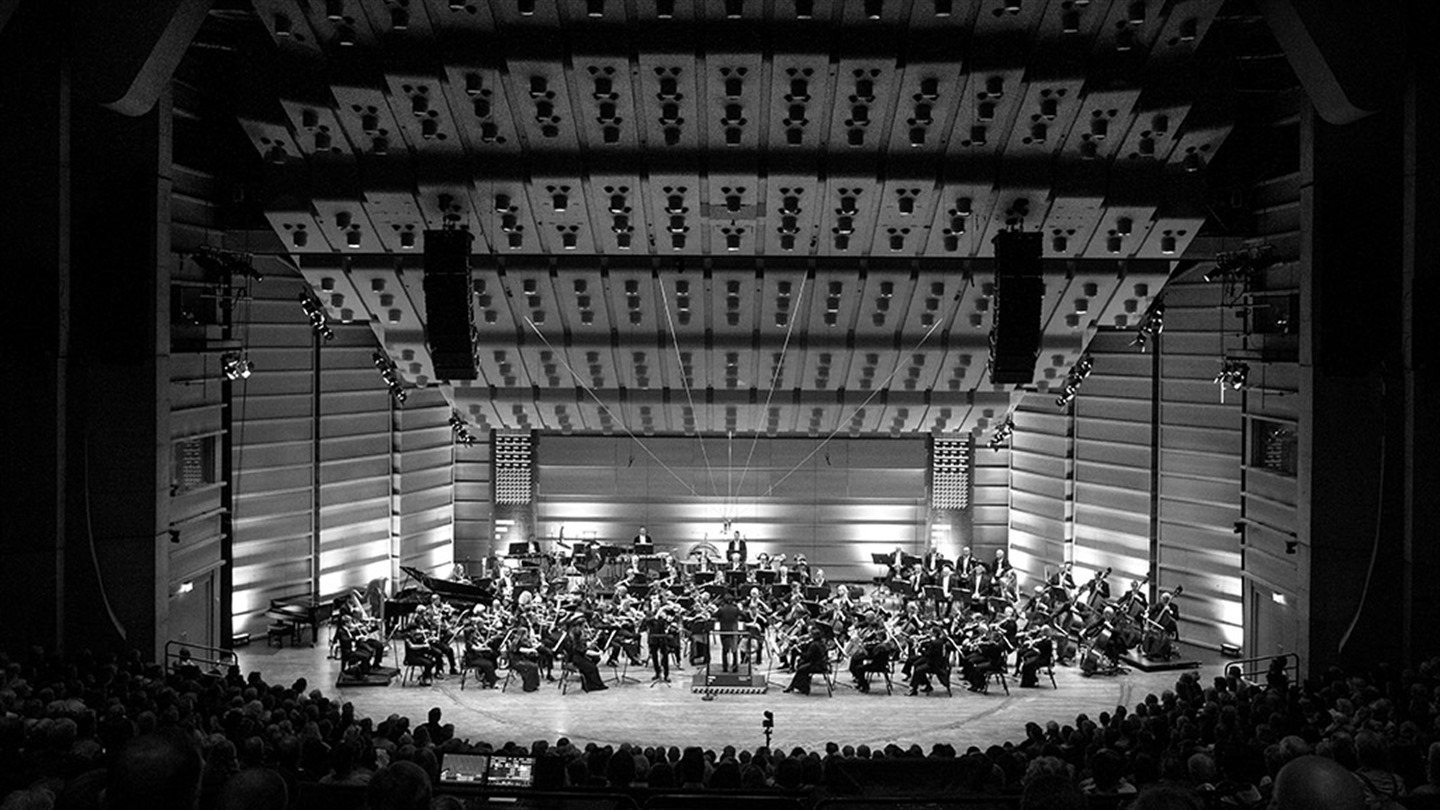
Since its formation in 1946, the Juilliard String Quartet has not surprisingly undergone a number of iterations. Its present line-up, nearly 80 years on, has brought new impetus to carry the group far into the 21st century. For this Wigmore Hall visit, a BBC Radio 3 Lunchtime Concert, the quartet paired late Beethoven with relatively late Jörg Widmann – a piece he wrote in the last five years.

More of that below, but the quartet’s decision to begin with the longer Beethoven was vindicated on account of the musical material. The String Quartet no.13 was the second of Beethoven’s five ‘late’ quartets to be published, and the third in order of composition – with its sixth and final movement known as the Grosse Fuge. A highly unusual and forward-looking piece, this movement was initially shunned by audiences, described by a critic as ‘incomprehensible, like Chinese’. Ultimately it has been recognised as a masterpiece of counterpoint and structure.

In light of its reception Beethoven completed an alternative finale for the quartet in November 1826, four months before his death – in fact the last music he wrote. The Juilliard chose this path, changing the balance of the work to place extra emphasis on the penultimate Cavatina, a movement of special grace. Indeed much of this performance found the quartet taking on serenade-like qualities, the Juilliard preferring to stress the sunlit melodies and textures, while emphasising the dance rhythms.

The first movement’s Adagio and Allegro sections had vivid colours and phrasing, brilliantly played but needing more contrast between the sections. The following Prestissimo was over in the blink of an eye, forceful when needed, and providing a contrast with the attractively voiced Andante, with tasteful melodic phrasing. The attractive Alla danza tedesca brought a serenity to Beethoven’s late writing, as opposed to the restrained beauty of the Cavatina, where first violinist Areta Zhulla’s playing was especially fine. The finale introduced a playful approach, especially welcome as the music approached its final bars, which were authoritative while lacking the outright drama the Grosse Fuge would have brought.

The connection between Beethoven and Jörg Widmann is unusually strong, the German clarinettist and composer completing a clutch of works (to date) drawing on his predecessor’s inspiration. Five of those works are his string quartets nos.6-10, a series titled Study on Beethoven, of which this quartet is the third instalment. Taking the fourth movement Alla danza tedesca from the Beethoven we had just heard, Widmann worked the second movement of this quartet into eight striking variations on its theme, explaining the placement of this work in the concert running order.

It was played with commendable virtuosity, and often enjoyable in its knowing use of Beethoven’s themes. The BBC Radio 3 announcer Fiona Talkington said the quartet had confided how Widmann now felt Beethoven was a ‘close friend…someone you can poke fun at!’, and he certainly took the opportunity for high jinks in the finale, where references to the Emperor piano concerto were rather heavily signposted.

The second movement was the most inventive, a fever dream refracting Beethoven’s theme through instrumental prisms of wildly varying shades. Ultimately you had to admire Widmann’s craft, and Beethoven’s initial invention, forgiving the occasional tendency to play more obviously to the audience. On this occasion it proved a most successful tactic, finishing a concert packed with positive energy. The only slight blot on the landscape came via some low frequency drilling which could be heard in quiet passages, no doubt emanating from one of the many building sites currently adorning Central London. Thankfully the music of Beethoven transcends such things!

Listen

You can listen to this concert as the first hour of BBC Radio 3’s Classical Live, which can be found on BBC Sounds

Published post no.2,417 – Tuesday 17 January 2025

In concert – Jörg Widmann, CBSO – Weber, Widmann & Beethoven 7th symphony

City of Birmingham Symphony Orchestra / Jörg Widmann (clarinet)

Weber (arr. Widmann) Clarinet Quintet in E flat major J182 (1815, arr. 2018)
Widmann Con Brio (2008); Drei Schattentänze (2013)
Beethoven Symphony no.7 in A major Op. 92 (1812)

Symphony Hall, Birmingham
Wednesday 10 May 2023

Reviewed by Richard Whitehouse

Jörg Widmann has enjoyed a productive association with the City of Birmingham Symphony Orchestra, having been Artist in Residence during the 2018/19 season, and tonight’s concert was typical with its playing to his strengths as composer, clarinettist and (by no means least) conductor.

Arranger, too, given this programme commenced with his take on Weber’s Clarinet Quintet. Most ambitious of its composer’s works for Heinrich Baermann, it demonstrably gains from receiving a concertante treatment. The interplay between clarinet and strings pointed up the acute contrasts of mood and motion in the initial Allegro, then transformed the Fantasia into an operatic ‘scena’ of sustained plangency. With its ‘capriccio presto’ marking and teasingly playful manner, no movement could be less like a Menuetto than the scherzo which follows; here and in the final Rondo, Widmann summoned a tensile virtuosity paying dividends in the latter’s impetuous course to a thrilling denouement. Having given us Weber’s ‘Third Clarinet Concerto’, maybe Widmann could add a Fourth by transforming the Grand Duo Concertant?

The stage was reset for Con Brio, most often played of Widmann’s orchestral works and (in other contexts) a curtain-raiser bar none. Commissioned to accompany Beethoven’s Seventh and Eighth Symphonies in a cycle by Mariss Jansons with the Bavarian Radio Symphony Orchestra, it alludes to both pieces while casting an ear – sometimes facetious, always provocative – over two centuries of European art-music. Whether Widmann hears this as running on borrowed time, the closing bars do not so much resolve as atrophy via a break-down of graphic intent.

A darkened stage greeted listeners after the interval, across which was placed the music for each of Widmann’s Three Shadow Dances. These combine extended clarinet techniques with engaging, often playful virtuosity – moving (right to left) from the deadpan jazz gestures of ‘Echo-Tanz’, through the submerged remoteness (with no electronic treatment) of ‘(Under) Water Dance’, to the uproarious routines of ‘Danse africaine’ where the instrument becomes its own percussion outfit as it bounds towards the ‘elephant calls’ that signify its conclusion.

It made sense to round off the evening with Beethoven’s Seventh Symphony, having already been anticipated in the first half. In his opening remarks, Widmann spoke of the life-changing effect this work had at first hearing, and he duly threw caution to the wind with a reading that brimmed over with the excitement of new discovery. Surprisingly, he chose not to divide the violins right and left, as this would have emphasized their dizzying antiphonal exchanges in the outer movements. Having set a challengingly fast tempo for the scherzo, which the CBSO met with assurance, he might profitably have held back marginally for the greater part of the finale – enabling the coda to ‘take off’ with a frisson as could only be inferred here. This was otherwise a performance that conveyed the music’s visceral essence with thrilling immediacy.

It set the seal on an impressive showing for Widmann and this orchestra, who will hopefully be working together again in a future season. Next week sees the CBSO reunited with Mirga Gražinytė-Tyla for a performance of Mahler’s decidedly non-valedictory Tenth Symphony.

You can read all about the 2022/23 season and book tickets at the CBSO website – and for specific information on Mirga conducting Mahler, click here. There are several sites to visit for more info on Jörg Widmann – click here for his official site, here for his profile at publisher Schott Music, and here for information from his management at HarrisonParrott

In concert – Sol & Pat (Sol Gabetta & Patricia Kopatchinskaja) @ Queen Elizabeth Hall

pat-sol

Leclair Violin Sonata in C major Op.5/10: Tambourin (c1734)
Widmann 24 Duos: Valse bavaroise; Toccatina all’inglese (2008)
J.S. Bach Prelude in G major (from BWV860) (c1722)
Francisco Coll Rizoma (2017)
Domenico Scarlatti Sonata in G, Kk.305
Ravel Sonata for violin & cello (1922)
J.S. Bach 15 Two-part Inventions BWV772-86 (selection) (c1723)
Ligeti Hommage à Hilding Rosenberg (1982)
Xenakis Dipli zyia (1951)
C.P.E. Bach Presto in C minor Wq114/3 (c1768)
Kodály Duo Op.7 (1914)

Patricia Kopatchinskaja (violin), Sol Gabetta (cello)

Queen Elizabeth Hall, London
Tuesday 26 October 2021

Written by Richard Whitehouse

Combining two of the most charismatic and creative string players of their generation was such a good idea to make one surprised it had not happened earlier, but tonight the Patricia Kopatchinskaja and Sol Gabetta double-act hit the Southbank Centre in no uncertain terms.

A stomping entrée to Leclair’s Tambourin in C (a rare instance when Kopatchinskaja donned footwear) launched proceedings in arresting fashion, while Jörg Widmann’s Valse bavaroise and Toccatina all’inglese – both from his resourceful playbook of 24 Duos – allured and engaged. Bach’s Prelude in G (from BWV860) afforded a limpid breathing-space, then Francisco Coll’s Rizoma fairly intrigued with its incrementally shifting textures and ethereal harmonics – just the sort of piece, indeed, necessary for energizing the violin-and-cello medium. Kopatchinskaja admitted to disliking the arrangement of Scarlatti’s Sonata in G (Kk305) and canvassed the audience for its opinion, the response encouraging an incisive take on music whose enthusiastic response left her shaking her head in mock consternation.

The first half concluded with Ravel’s Sonata for violin and cello – much less often revived than it should be, ostensibly on account of the duo-medium, but an undoubted masterpiece when rendered with such commitment as here. Kopatchinskaja and Gabetta teased out those exquisite tonal obliquities of the Allegro, countered by the alternate brusqueness and suavity of the scherzo or distanced rapture of the slow movement; before the finale brought matters to a head with its headlong syncopation and no lack of that ‘spirit’ as indicated in the score.

A brief inclusion from Bach’s 15 Two-Part Inventions (BWV772-86) opened the second half with pointed understatement (presumably more so than the Scarlatti sonata that was originally scheduled), with the expressive poise of Ligeti’s Hommage á Hilding Rosenberg duly making way for the acerbic interplay of Xenakis’s Dipli zyia which is among the most Bartókian of the formative pieces to have found posthumous revival by this composer (who is hopefully being suitably commemorated throughout his centenary in 2022).

Kopatchinskaja and Gabetta then sat side by side for a speculative reading of C.P.E. Bach’s Presto in C minor (Wq.114 No. 3) made the more so through its being played pizzicato throughout. Interesting, too, how such an arrangement can dissolve any perceived boundary between musical epochs.

The programme reached a culmination in every sense with Kodály’s Duo, one of several large-scale chamber-works for strings on which his reputation as a composer of ‘abstract’ music rests. After a tensile account of the preludial Allegro, Kopatchinskaja and Gabetta rendered the central Adagio with sustained pathos and a timbral acuity made more so by their faultless intonation. Nor was there any lack of eloquence in the finale, its deliberate progress building a momentum that was released in the coda to heady and exhilarating effect.

Quite a concert, then, with a performance to match by two musicians who complement each other’s playing to a mutually beneficial degree. Hopefully they will be returning with another wide-ranging programme before too long. The enthusiastic audience evidently felt likewise.

For more information on the new Sol & Pat release, head to the Linn Records website

Online recommendations – Bergen International Festival 2020

How long is it since you last experienced live music?

For the vast majority of us it will be two months and counting now…the last for Arcana having been on Monday 16 March at the Wigmore Hall.

Thankfully in that time a huge number of artists, organisations and orchestras have stepped into the breach, either with archive concert footage or with online concerts and recitals. One of the biggest contributions to date, however, comes from the Bergen International Festival, which is streaming over 50 events online for free.

These are genuine live events, given without an audience and streamed across the world from the festival’s website – and there is some quality music making coming up.

The evening of Saturday 23 May will see Leif Ove Andsnes and friends giving an all-Schumann concert at 20:00 (19:00 GMT), capped by the wonderfully invigorating Piano Quintet, while Sunday 24 May (21:15, 20:15 GMT) brings the traditional festival performance of Grieg‘s evergreen Piano Concerto. The soloist will be Víkingur Ólafsson, with the Bergen Philharmonic Orchestra under chief conductor Edward Gardner. Intriguingly, the Grieg will be prefaced by VasksThe Fruit Of Silence, with the Edvard Grieg Kor.

Meanwhile Monday 25 May brings an intriguing concert from ​Leif Ove Andsnes (piano), Sonoko Miriam Welde (violin), Ludvig Gudim (violin), Eivind Ringstad (viola) and Amalie Stalheim (cello). The quintet will perform works by Schubert, Mozart and Jörg Widmann – the composer’s Idyll and Abyss and String Quartet no.3. Nicknamed the Hunt, it will follow Mozart’s quartet of the same name.

These three concerts alone give an idea of the breadth of repertoire and quality we can expect from the festival. Head here to experience it for yourself!

Enescu Festival 2019 – Michael Barenboim, Francesco Tristano, Sibiu Philharmonic Orchestra / Cristian Lupeş: Dediu, Basica, Widmann & Tristano

Michael Barenboim (violin), Francesco Tristano (piano), Sibiu Philharmonic Orchestra / Cristian Lupeş (above)

Radio Hall, Bucharest
Sunday 15th September 2019 (1pm)

Dediu Elegia minacciosa, Op.161 (2017)
Tristano Island Nation (2016)
Widmann Violin Concerto no.1 (2007)
Basica Concerto for Conductor and Orchestra (2019) [World premiere]

Review by Richard Whitehouse

Cristian Lupeş has enjoyed a long association with the Enescu Festival as both conductor and administrator, and now combines these roles in his activity with the Sibiu Philharmonic. This afternoon saw him directing the orchestra for a wide-ranging programme, given as part of the festival’s ‘Music of the 21st Century’ series, which demonstrated Lupeş’ ability to secure a committed response in music that makes few concessions either technically or interpretatively. The outcome was a programme which fascinated, provoked and frustrated to an equal extent.

Provocation was the watchword in Elegia minacciosa by Dan Dediu (b1967), the most prominent Romanian composer of his generation. Emerging almost imperceptibly, this short if eventful piece assumes an increasingly ominous demeanour – not least through allusions to Satie from solo piano (hence the subtitle con Gnossienne-Mandala), then the explosive interjections of bass drum heard from behind the auditorium. A piece whose poly-stylistic connotations could easily result in fragmentation and diffuseness here sustained powerful cumulative momentum through to its atmospheric yet unresolved conclusion. Lupeş evidently had the measure of this ‘threatening elegy’ as he secured playing of verve and commitment from his forces, leaving this listener keen to experience the piece again – albeit in an appreciably different context.

Not that hearing Island Nation was time wasted, though this concerto by Francesco Tristano (b1981) impressed more in the freely extemporised nature of its solo part and the composer’s magnetic realization of this than for intrinsic musical content. Most involving was its central movement The Islanders, with what sounded like an amplified metronome pulse providing the basis for an accumulation of orchestral activity – capped by piano playing channelled into a cadenza both pensive and, in its Parsifal allusion, equivocal. Otherwise, the energetic outer movements offered energy aplenty in their manufactured post-minimalist idiom, the orchestra matching the soloist (a distinctive exponent of Bach as of numerous 20th century composers) in immediacy of response. Great for first impressions, though not much of actual substance.

By comparison, what is now the First Violin Concerto by Jörg Widmann (b1973) is audibly within a lineage of mid-20th century European modernism – specifically that of Berg, whose own concerto proves a touchstone in many respects. Indeed, it seemed at times as though this latter work’s opening Andante had been extended into a whole work – such was the inward and self-communing nature of Widmann’s own piece, with its virtually continuous solo part heard against orchestral writing of exquisite textural nuance yet little rhythmic or expressive variety. The former had a formidable exponent in Michael Barenboim, playing with audible finesse and a frequently mesmeric concentration such as provided the ‘thread’ around which the orchestra wove a hardly less committed response – with Lupeş assured in his direction.

What to make of Concerto for Conductor and Orchestra by Constantin Basica (b1985)? This evidently arose from its composer’s investigating the interface of neurology and technology at Stanford University (and which interested readers can peruse at length on the composer’s website). The work, though, gave all the appearance of a spoof with its presentation of a lengthy film where composer and scientist discussed their researches, during which the orchestra was presided over by Lupeş – clad in an eco-friendly ‘Tarn-helm’ as his physical gestures were apparently transmuted into the real-time musical responses from his players. Trouble was, the sonic element was no more than a generalized backdrop that culminated rather too predictably with a brief burst of audience participation.

Whatever else, this was an entertaining way to round-off a demanding programme to which the audience responded with enthusiasm. Quite what it said about Basica’s music is another matter, but the composer played a central role in both performance and film while enacting the ‘mad scientist’ accordingly. Lupeş directed proceedings with aplomb: he clearly has an effective rapport with the Sibiu orchestra, and one looks forward to their appearance at this festival in 2021 – hopefully in an equally diverse though musically more consistent concert.

Further listening

You can hear more of the music of Jörg Widmann, including the Violin Concerto no.1, in first class performances on the disc below:

Meanwhile Francesco Tristano‘s most recent album Tokyo Stories can be heard here: