In concert – Mimi Doulton, Thando Mjandana, BCMG: Songs at Day, Songs at Night

Mimi Doulton (soprano), Thando Mjandana (tenor), Birmingham Contemporary Music Group / Vimbayi Kaziboni

Kidane Primitive Blaze (2022)
Birtwistle Today Too (2004)
Birtwistle …when falling asleep (2018)
Kendall Tuxedo: Between Carnival and Lent (2022)
Kidane Cradle Song (2023) [BCMG Sound Investment commission: World premiere]
Anderson Mitternachtslied (2020) [UK premiere]
Anderson THUS (2023) [World premiere of final extended version]

Elgar Concert Hall, University of Birmingham
Wednesday 18 October 2023

Reviewed by Richard Whitehouse

A varied programme greeted attendees at tonight’s concert from Birmingham Contemporary Music Group (to be repeated in Bristol on October 29th), consisting largely of vocal pieces and directed with precise assurance by the highly regarded (justifiably so) Vimbayi Kaziboni.

Equally well regarded at present, Daniel Kidane (recently signed to Schott) was represented by two works – of which Primitive Blaze made for an effective curtain-raiser with its array of interlocking rhythmic patterns whose elaboration brought greater emphasis on a linear continuity in its wake. Both the electric guitar and tenor saxophone were prominent within this ensemble – the latter instrument emerging at the forefront in the final stages, when its plangent tones signified a closure as decisive formally as it sounded decidedly equivocal.

Next came settings by Harrison Birtwistle. To a text by the 18th-century Japanese poet Tanko (translated by Joel Hoffman), Today Too found tenor, flute and guitar evoking a twilit scene whose ominous elements are subsumed into an aura of shimmering, even sensuous stillness.

Rehearsal considerations necessitated exclusion of the David Harsent setting From Vanitas (hopefully not in Bristol) but not of …when falling asleep – Birtwistle’s last completed work, which intersperses lines by Rilke (translated by Jochen Voigt) with those by Swinburne in a sequence the more affecting for its understatement. Mimi Doulton brought a keen eloquence to the sung component, though Thando Mjandana seemed a little tentative with those spoken in parallel, and quite why the final lines of his contribution had been excluded was unclear.

Doulton returned for Between Carnival and Lent – one of Hannah Kendall’s ongoing Tuxedo series drawing on the art-print of that name by Jean-Michel Basquiat; abrupt juxtaposition of keening melisma with spoken polemic rather tending to cancel out each other as it proceeded.

Mjandana duly came into his own with the premiere of Cradle Song, Kidane’s setting of verse from the poem by Blake, though an evident desire to avoid the winsomeness associated with ‘innocence’ led to a highly rhetorical vocal line surely at odds with the semantics of this text.

The evening closed with two settings by Julian Anderson, both from his song-cycle In statu nascendi and drawing on a linguistic variety of verse in the context of an ensemble similar in line-up while not in usage to that of Schoenberg’s Pierrot Lunaire. Nietzsche (in the original German) was the basis for Mitternachtslied, familiar lines here exuding an anguished elation wholly different from that encountered in Mahler or Delius. Longfellow at his most visionary was the starting-point for THUS, building gradually from speculative beginnings towards a climactic section whose visceral impact felt less a setting than an intuitive riposte to its text. This premiere of the ‘final extended version’ drew a forceful though slightly self-conscious response from Doulton, in what seems the likely culmination of the song-cycle in question.

It certainly brought to a striking close a programme whose relative short measure was more than outweighed by its variety or its intrinsic interest. Hopefully those who hear it in Bristol will be equally responsive to its enticements as those who were present at Elgar Concert Hall.

For ticket information on the forthcoming Bristol concert on Sunday 29 October, click here, and click here for more information on the Birmingham Contemporary Music Group. Click on the artist names for more information on Vimbayi Kaziboni, Mimi Doulton and Thando Mjandana, and on the composer names for more on Julian Anderson, Harrison Birtwistle, Hannah Kendall and Daniel Kidane

Published post no.1,986 – Sunday 22 October 2023
In concert – Nash Ensemble @ Wigmore Hall: Side by Side & Nash Inventions

Side by Side

Royal Academy of Music Students [Christopher Vettraino (oboe), Silvia Bettoli, Johan Stone (horns), Magdalena Riedl (violin), Gordon Cervoni (viola)], Members of the Nash Ensemble – Adrian Brendel (cello), Alasdair Beatson (piano)

Colin Matthews Time Stands Still (2004)
Balency-Bearn Entre-Deux (2022)
Alberga No-Man’s-Land Lullaby (1996)
Keting before we were ocean (2021)
Colin Matthews Dual (2021)
Abrahamsen Congratulations Greeting (2022)

Nash Inventions

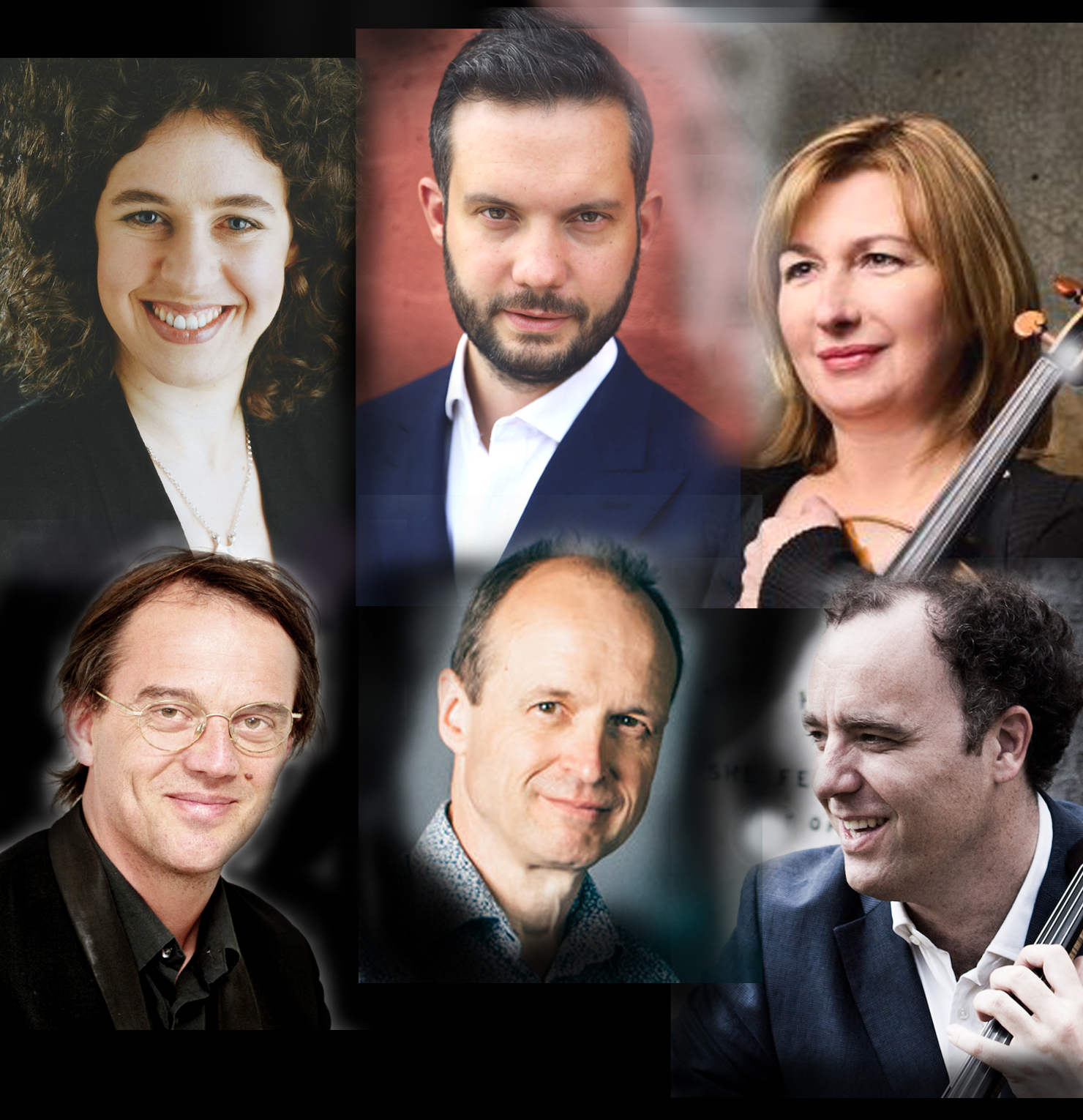
Claire Booth (soprano), Mark Padmore (tenor), Nash Ensemble [(Philippa Davies (flute), Gareth Hulse (oboe), Richard Hosford, Marie Lloyd (clarinets), Richard Watkins (horn), Sally Pryce (harp), Benjamin Nabarro, Michael Gurevich (violins), Lars Anders Tomter, Jennifer Stumm (violas), Adrian Brendel (cello), Graham Mitchell (double bass), Alasdair Beatson (piano)] / Martyn Brabbins

Casken Misted Land (2017)
Colin Matthews Seascapes (2021)
Anderson Van Gough Blue (2015); Three Songs (2018-22) [World Premiere of THUS]
Benjamin Viola, Viola (1997)
Turnage A Constant Obsession (2007)

Wigmore Hall, London
Tuesday 28 March 2023 (5pm and 7.30pm)

Reviewed by Richard Whitehouse

It has become such a fixture on the London calendar that Nash Inventions, given annually by the Nash Ensemble at Wigmore Hall, could easily be taken for granted. As tonight’s concert proved, however, the range and quality of those works performed is anything but predictable.

His long-time drawing inspiration from the landscape of the North-East might suggest Misted Land as a ready-made title for John Casken. Yet this quintet for clarinet and strings focusses on emotion as much, if not more than evocation by unfolding from the intangible impressions of its initial movement, via impulsive contrasts of its intermezzo, to a finale whose visceral progress is curtailed by a timely return to the initial equivocation. Richard Hosford made the most of his alternately insinuating and forceful writing in a piece that well deserved revival.

Although settings by Michael Tippett early on confirmed the musicality of his verse, Sidney Keyes (1922-43) has been relatively little set – making this selection by Colin Matthews in Seascapes the more welcome. From the unforced rhetoric of The Island City, it takes in the fleeting sensations of From : North Sea and the tense rumination of Night Estuary; a brief Interlude leading to the heartfelt expression of Seascape – one of Keyes’s greatest poems, in which Claire Booth’s commanding eloquence (above) more than vindicated the cycle as a whole.

Last in an informal trilogy centred on the colour, Van Gough Blue sees Julian Anderson pay tribute to this artist in a sequence traversing dawn to night. A speculative emergence of sound and texture in l’Aube, soleil naissant precedes the heady rhythmic and melodic interplay of Les Vignobles then mounting animation of Les Alpilles. Nothing, though, prepares for the inward rapture of Eygalières or the dance toward destruction of la nuit, peindre les étoiles: pieces wholly characteristic of this composer and as finely realized as anything he has written.

Further music by Anderson followed the interval – three in an ongoing series for soprano and ensemble identical to, but very different in usage from, that of Schoenberg’s Pierrot Lunaire. The viscerally sensual overload of Mallarmé’s Le Tombeau d’Edgar Poe (here made a tribute to Debussy in the centenary of his death) contrasted with the disarming sincerity of le 3 Mai – an email by composer Ahmed Essyad written during the pandemic, then lines by Longfellow in THUS – Claire Booth here enacting what is less a setting than a musical riposte to its text.

Writing what had become a tribute to Takemitsu 18 months after his death, George Benjamin turned what might have reflected the viola’s innate introspection into an intensive exploration by two of these instruments of how they might discover rhythmic then melodic and harmonic accord. Music diverse in content and logical in its unfolding, its technical challenges remain considerable – making this performance by Jennifer Stumm (having replaced Timothy Ridout at short notice) and Lars Anders Tomter the more engaging through its audible conviction.

It might come a fair way back in his sizable output, but the song-cycle A Constant Obsession remains among Mark-Anthony Turnage’s finest vocal works. This reflection on ‘love’ – what it might be, what it becomes and what it could have been – is articulated across five settings of Keats, Hardy, Edward Thomas, Graves and Tennyson; its course predicted in a ‘Prologue’ and encapsulated in the bleakly humorous final poem. Mark Padmore (above) conveyed its measure now as 14 years before, as did Martyn Brabbins (below) with his attentive and unobtrusive direction.

The early evening slot brought together players from the Nash and Royal Academy of Music. Entre-Deux saw Andrea Balency-Béarn opening out the timbral and harmonic space between pitches with discreet elegance, and No-Man’s-Land Lullaby found Eleanor Alberga working toward a totemic melody with combative fervency. Sun Keting contributed music laced with nostalgia but also indignation in before we were ocean while, in Congratulations Greeting, Hans Abrahamsen commemorated the RAM’s bicentenary in lively and resourceful terms.

Colin Matthews provided a more quixotic take on that event in the subtle contrasted sections of Dual, with his music also opening and concluding this selection. Time Stands Still marked Simon Rattle’s 50th birthday in (surprisingly?) inward and even inscrutable terms, while 23 Frames marked the 30th anniversary of the Nash through that number of miniatures whose character felt as distinctive as their order was random. The outcome found this composer as his most entertaining, with no complaints if several ‘frames’ exceeded their 30-second remit.

A lengthy evening, then, and an impressive showcase for the Nash in term of marking those achievements past or present. Now is hardly the time for any complacency regarding events such as this, which remains a template for what is possible in matters of artistic excellence.

Click here for the Nash Ensemble website, and here for the Royal Academy of Music

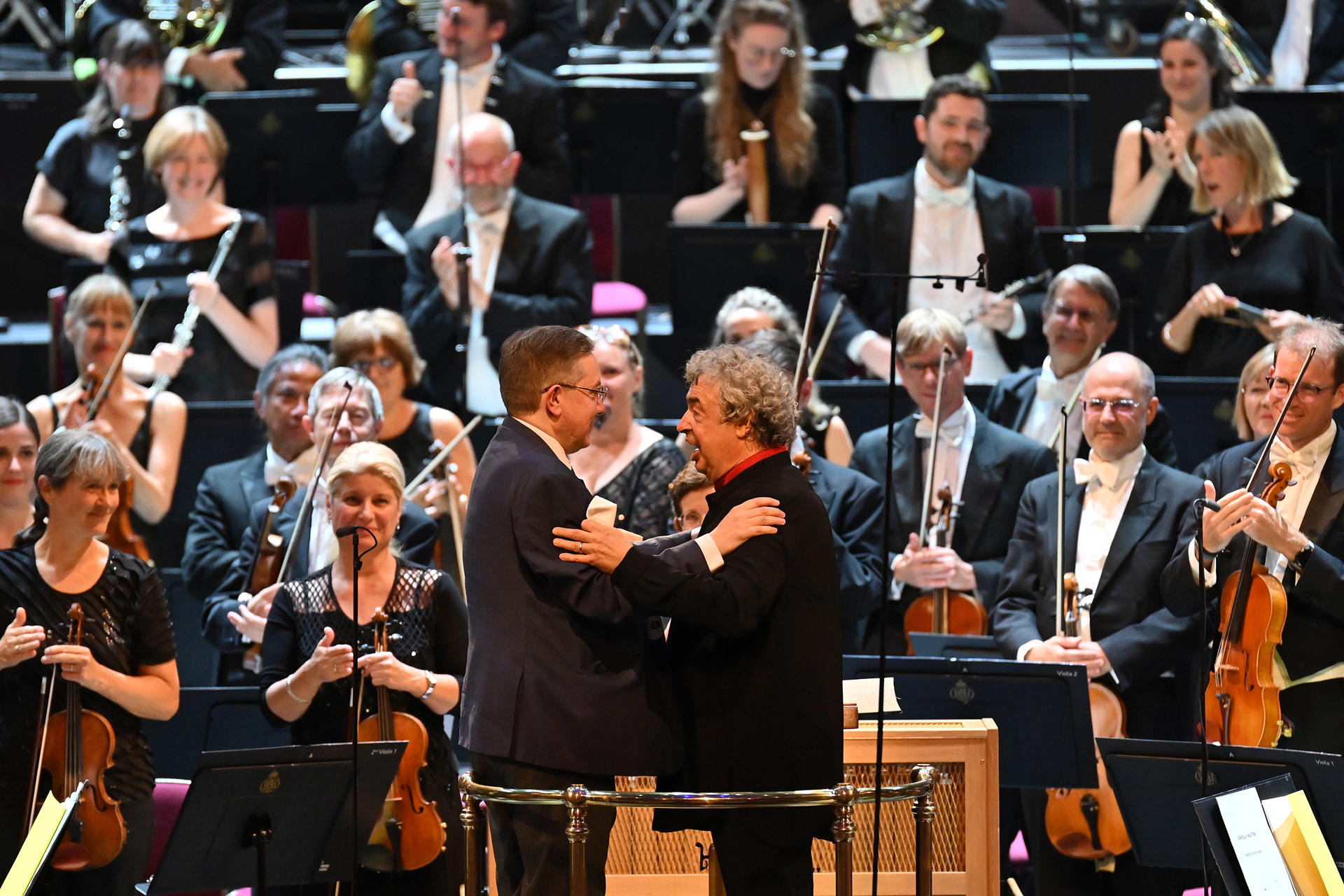
BBC Proms #26 – The Labèques, BBC Symphony Orchestra / Semyon Bychkov: Julian Anderson premiere, Martinů & Rachmaninoff

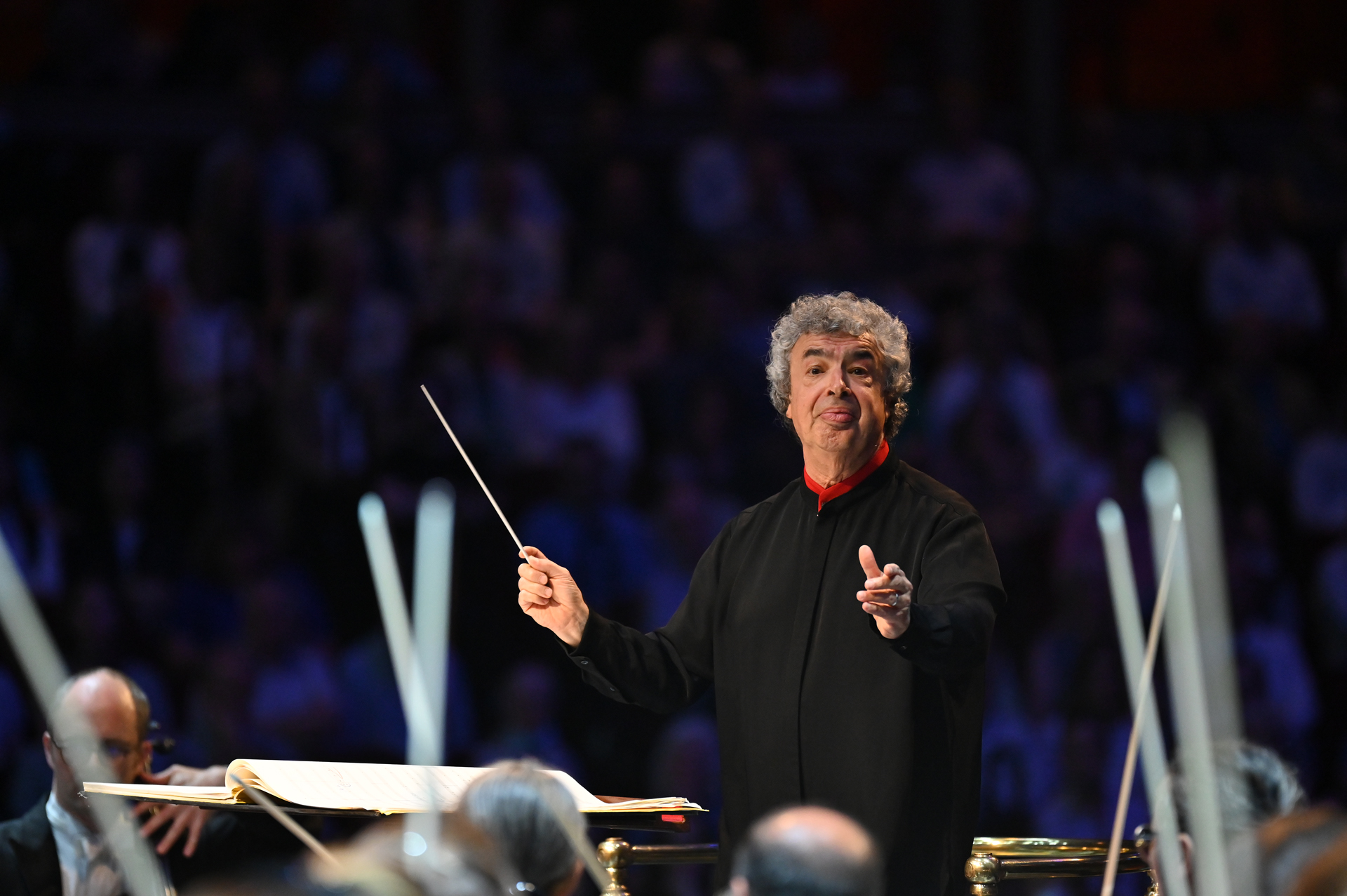
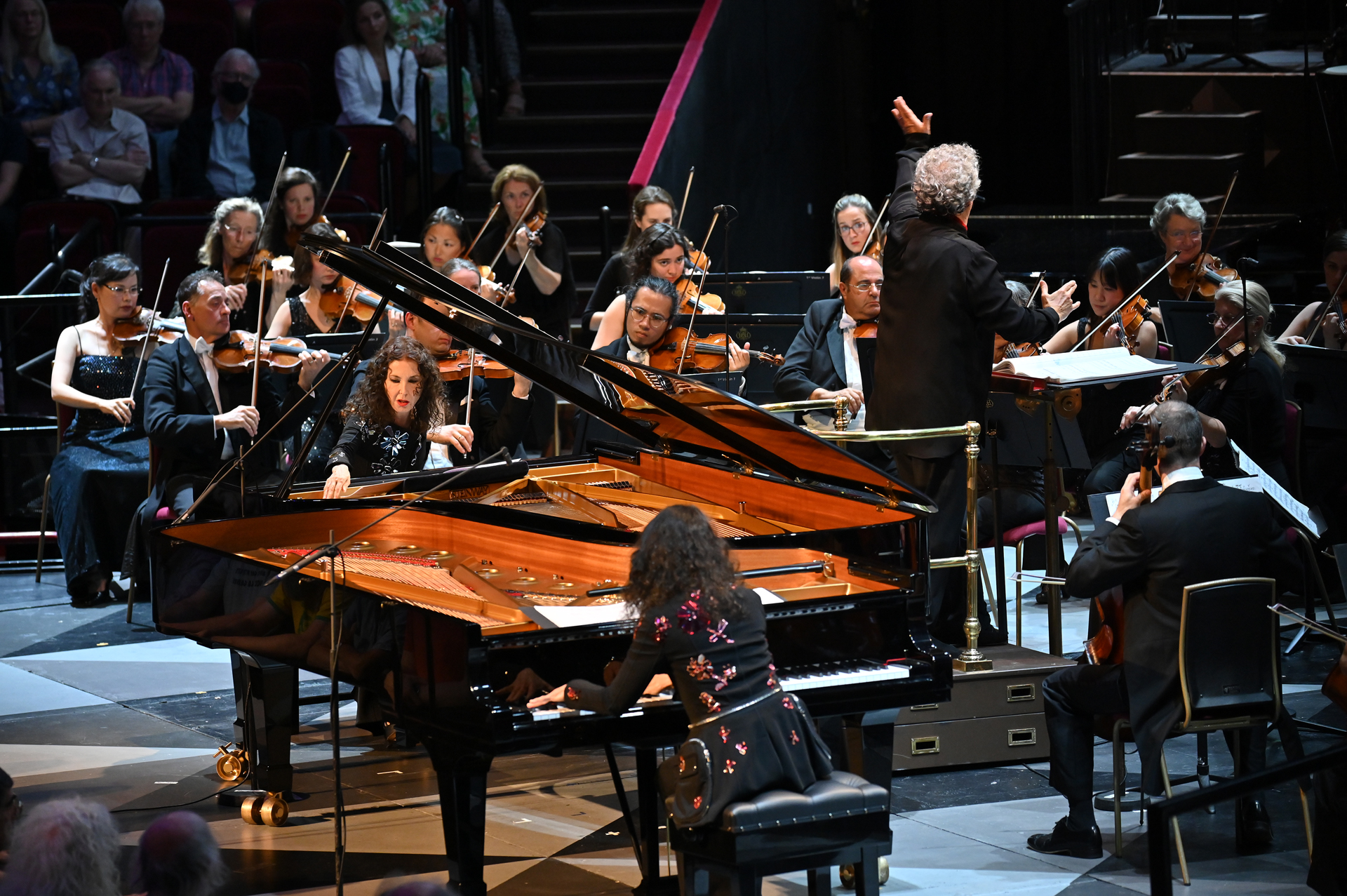
Prom 26 – Katia and Marielle Labèque (pianos), BBC Symphony Orchestra / Semyon Bychkov (above)

Anderson Symphony No. 2 ‘Prague Panoramas’ (2020-22) (BBC co-commission: World premiere of complete work)
Martinů Concerto for Two Pianos and Orchestra H292 (1943)
Rachmaninoff Symphonic Dances Op.45 (1940)

Royal Albert Hall, London
Friday 5 August 2022

Reviewed by Richard Whitehouse Photo (c) Chris Christodoulou

An unusually well-assembled concert this evening with what might be termed a programme of ‘three-by-threes’ – each of these three works having three movements which, in each case, results in a broadly symmetrical design, not least the Second Symphony by Julian Anderson (with the conductor, below).

Inspired by Josef Sudek’s photographs of Prague while utilizing two medieval Czech hymns, Prague Panoramas (might Prague Pictures be even more apposite?) is typical in its fusing evocativeness with precision. Not least the preludial opening movement, its stark alternation of quick-fire chords and silence evolving into aspiring melodic lines as build to a tumultuous if quickly curtailed climax, though this linear aspect comes to dominate the nocturnal central movement with its expressive intensifications then fades against a backdrop of bell resonance and luminously modal polyphony. The finale is a deftly organized rondo – its energetic main material, inspired by Josef Lada’s almost Rabelaisian depictions of pub brawls, interspersed with more lyrical ideas through to the heady peroration later subsiding into a calm postlude.

Although its first two movements had been heard in Munich and Prague, this was the work’s first complete performance and found the BBC Symphony at its collective best – not least the lambently interweaving woodwind and strings, the visceral impact of brass and a substantial array of percussion whose contribution was pervasive. Semyon Bychkov (under-appreciated as an exponent of contemporary music) duly brought out that unity-within-diversity such as gave this work an underlying focus across the 32 minutes of its eventful yet cohesive course.

From Prague-inspired music by a British composer to that by a Czech composer in America – Martinů’s Concerto for Two Pianos may never have gained the plaudits of his earlier Double Concerto but it typifies this composer’s exile in a tried-and-tested interplay of folk-inflected melodicism with a harmonic acerbity recalling Prokofiev and rhythmic dexterity redolent of Stravinsky. Its undoubted highlight is a central Adagio whose almost ‘harmonie’ woodwind writing and circling piano figuration (had the composer come across the gamelan-influenced music of Colin McPhee?) feels mesmeric and affecting. Neither outer movement comes close in their audibly contrived amalgam of the rumbustious and lyrical, but this is music in which Katia and Marielle Labèque excel and tonight’s performance could rarely have been equalled.

Nor was there any doubting Bychkov’s authority in Rachmaninoff’s Symphonic Dances that followed the interval. Admittedly this now regularly played while technically exacting piece needed more rehearsal than the BBCSO was able to give it on this occasion, though the outer sections of the first dance had just the right ominous incisiveness and its middle part featured winsome alto saxophone from Martin Robertson. The second dance had irony and angularity aplenty, as was slightly offset by the strings’ less than unanimous response towards the close.

Its sombre ambivalence and intricate textures give the central span of the final dance a quality unique in this composer: if Bychkov might have endowed it with even greater intensity, there was no doubting his identity with this music here or on the way to its resplendent apotheosis.

For more information, click on the names of composer Julian Anderson – and for more on the artists, click on the names of Katia and Marielle Labèque, Semyon Bychkov and the BBC Symphony Orchestra. For more on this year’s BBC Proms as it continues, head to the Proms website

For more information, click on the names of composers Kalevi Aho and Kaija Saariaho – and for more on the artists, click on the names of Carolina Eyck, John Storgårds and the BBC Philharmonic Orchestra

In concert – Do we need a new compass? / BCMG NEXT @ Jennifer Blackwell Performance Space, Symphony Hall, Birmingham

compass

Meredith Four to the Floor (2005)
Heather Ryall, Emily Wilson, Beth Nicholl, George Blakesley (bass clarinets)

Mason Heaven’s Chimes Are Slow (2010)
Rebecca Speller (flute), Joe Howson (piano)

Howard Cloud Chamber (2006)
Emily Wilson (clarinet), Mikaella Livadiotis (piano)

Anderson Scherzo with Trains (1993)
Heather Ryall, George Blakesley (clarinets), Beth Nichol (basset horn), Emily Wilson (b-clarinet)

Jennifer Blackwell Performance Space @ Symphony Hall, Birmingham
Thursday 17 March 2022 (1pm)

Written by Richard Whitehouse

BCMG NEXT may have had a major role in tonight’s concert at CBSO Centre, itself marking the culmination of a major project that has already featured events in Bologna and Hannover, but it was a worthwhile move to include more of these young musicians in a lunchtime recital.

Anna Meredith has written numerous chamber pieces, among which Four to the Floor has an immediate appeal – not least through the uniform line-up of its clarinet quartet in music whose methodical exploration of timbre almost inevitably results in the descent intimated by its title. It may have been a transcription of the final item from his song-cycle after Christina Rosetti, but Christian Mason’s Heaven’s Chimes Are Slow felt no less evocative in this incarnation for flute and piano – not least as rendered with such poise by Rebecca Speller and Joe Howson.

Emily Howard’s composing career has unfolded parallel to her scientific research, such that Cloud Chamber bridges any likely divide through its iridescent timbral interplay for clarinet and piano – realized here with precision and verve by Emily Wilson and Mikaella Livadiotis. The recital ended with Scherzo (with trains), one of Julian Anderson’s most engaging shorter works whose inspiration in Thoreau as well as rhythms of high-speed trains puts its diverse clarinet quartet through an unpredictable discourse here ensuring a characterful performance.

This diverse and enjoyable recital was also the second BCMG-related event to be held at the Jennifer Blackwell Performance Space, adjacent to the Circle level at Symphony Hall – itself much improved as a setting with the overhead promotional screen turned off for the duration.

Further information on BCMG events in the 2021/22 season can be found at their website. Click on the names to read more detail on composers Julian Anderson, Emily Howard, or for more on Christian Mason and Anna Meredith

In concert – Echoes/BCMG NEXT @ Centrala

bcmg-next-centrala

Anderson Scherzo (with trains) (1993)
Salonen
Pentatonic Étude (2008)
Birtwistle
Duets for Storab (1983)
Donatoni
Soft (1989)
Finnis
Brother (2012/15)

Musicians from BCMG NEXT

Centrala, Digbeth, Birmingham
Thursday 16 November 2021

Written by Richard Whitehouse

It may not be the most easily locatable arts venue of those within Birmingham’s inner suburbs, but Centrala – launched almost a decade ago as a base for the dissemination and promotion of Central and Easter European cultures – was an appealing space for this latest recital featuring NEXT musicians from Birmingham Contemporary Music Group. The performance area itself might have been compact to a fault, but there no feeling of excessive restriction in the course of what was a varied yet balanced programme of works stretching across almost four decades.

It began in invigorating fashion with a timely revival of Scherzo (with trains) whose premiere at Wigmore Hall was an early success for Julian Anderson – being one of his most engaging works for ensemble and a major contribution to its genre. Drawing inspiration from Thoreau as well as rhythms of high-speed trains, two clarinets (Heather Ryall and George Blakesley), basset horn (Beth Nichol) and bass clarinet (Emily Wilson) unfold an unpredictable discourse; one whose requirements of technique and coordination were met in this assured performance.

A pity that the scheduled account of Anna Thorvaldsdottir’s Spectra was lost through Covid-related issues, but a further hearing for Esa-Pekka Salonen’s Pentatonic Étude was certainly no hardship. This testing paraphrase on a passage from Bartók’s unfinished Viola Concerto puts the soloist through its paces, restating the original in an understated apotheosis realized by Cameron Howe with evident sensitivity. Also reappearing from NEXT’s recent recital at Coventry Cathedral was Harrison Birtwistle’s Duets for Storab. Written when the composer lived on the Inner Hebridean island of Raasay, its inspiration lies in locations each having the name of a Viking prince whose shipwreck, pursuit and death are charted over six evocative pieces. Flautists Rebecca Speller and Leila Hooton were heard in (mainly) whimsical accord.

The music of Franco Donatoni enjoyed a brief vogue here in the decade before his death, but there have been few performances since – so making this revival of Soft the more welcome. Written for the late Harry Sparnaay, the bass clarinet’s doughtiest champion, this tensile and eventful piece feels typical of his late maturity in the way that seemingly detached, and even arbitrary gestures gradually build into a cohesive and cumulative continuity; one in which the expressive possibilities of the instrument are explored intensively though with no little irony.

Heather Ryall proved no mean exponent of this piece, as were Claudia Dehnke and Cameron Howe of Brother by Edmund Finnis. Written while he was composer-in-residence with the London Contemporary Orchestra, its four movements chart a gradually elaborating interplay between violin and viola, evolving from the meditative and incremental to the energetic and demonstrative – without the rapport between these instruments drawing apart in the process. Suffice to add the present performance lacked for nothing in terms of incisiveness or finesse.

It also brought to a close this final BCMG event for 2021. Dates of further performances are being announced in the new year, and it would be a shame if these not to feature a return to Centrala – well worth a visit by anyone who happens to be passing through Birmingham B5.

Further information on the BCMG can be found at their website. For more on NEXT Musicians click here, then on each of the composers names for the websites of Julian Anderson (with an alternative here), Esa-Pekka Salonen, Harrison Birtwistle, Franco Donatoni and Edmund Finnis. Finally for more information on the Centrala venue, click here