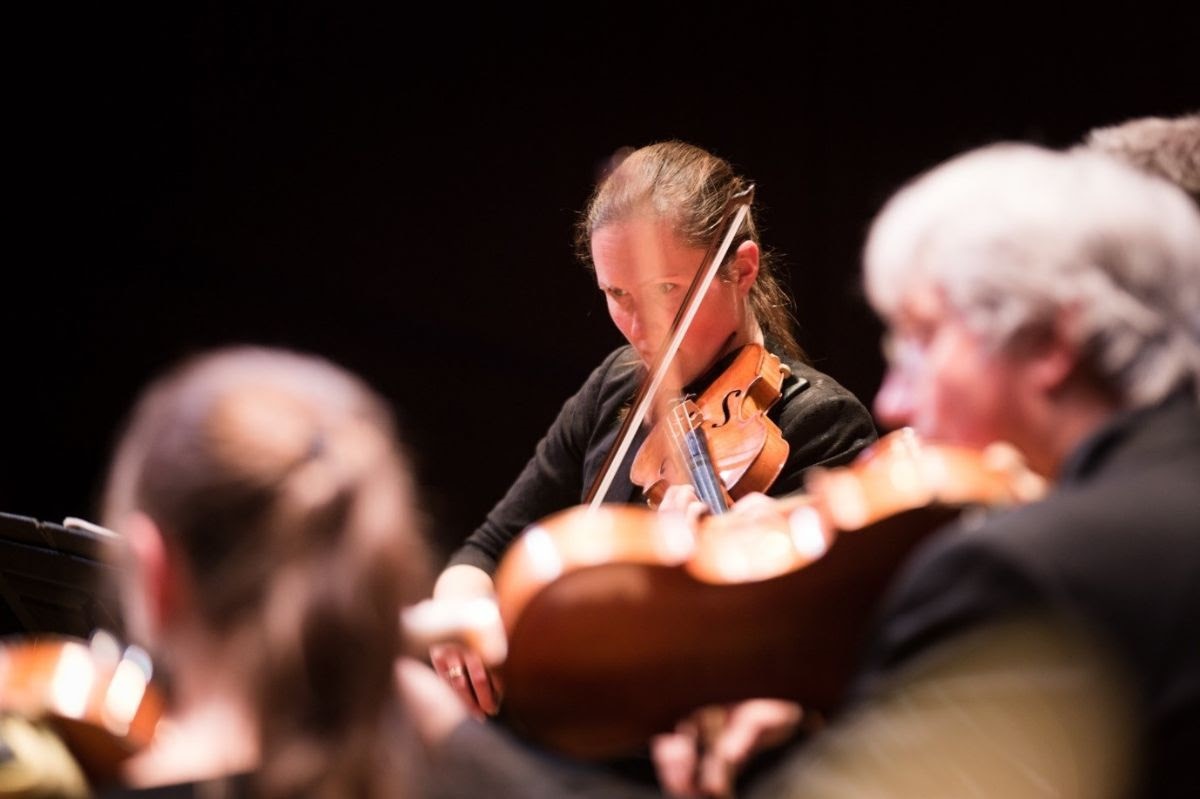
reposted by Ben Hogwood Photo Zoe Beyers leading the English Symphony Orchestra (c) Michael Whitefoot
The renowned English Symphony Orchestra (ESO), under their principal conductor Kenneth Woods, is to make a highly anticipated return to Malvern Theatres, Worcestershire on Wednesday 12 November at 7:30pm with a programme celebrating the adventurous spirit and playful energy of the 1920s, as part of their Autumn-Winter Residency.
LIVELY SPIRIT OF THE ROARING TWENTIES
The evening will feature works by composers who captured the era’s lively spirit, including Erwin Schulhoff’s Suite for Chamber Orchestra, Darius Milhaud’s The Ox on the Roof’ and Kurt Weill’s raucous cabaret songs, to be performed by the ESO’s first affiliate artist, soprano April Fredrick. The programme opens with the music of Joseph Haydn and a performance of his Symphony No. 60 entitled The Absent-Minded Gentleman, delighting in the composer’s celebrated wit and humour.
Kenneth Woods, Artistic Director and Principal Conductor of the ESO, introduces the programme: “Erwin Schulhoff’s suave Suite for Chamber Orchestra takes listeners on a guided tour of 20s dance crazes, from the shimmy to the tango. Milhaud’s zany ballet score The Ox on the Roof was inspired by the comedy of Charlie Chaplin and the dance music of Brazil, while Kurt Weill’s songs reflect life in and around the cabaret scene in all its humour and sensuality. The programme opens with Haydn’s Symphony No.60, The Absent-Minded Gentleman, quite possibly the funniest and most surreal symphony ever composed.”
ENGLISH SYMPHONY ORCHESTRA – MALVERN RESIDENCY
Wednesday 12 November 2025, 7.30pm Malvern Theatres Grange Road, Malvern, Worcs. WR14 3HB English Symphony Orchestra: The Joker’s Wild – Mischief in Music Haydn Symphony No. 60 (‘Il Distratto’) in C Weill Cabaret Songs Schulhoff Suite for Chamber Orchestra Milhaud The Ox on the Roof
April Fredrick (soprano), English Symphony Orchestra / Kenneth Woods
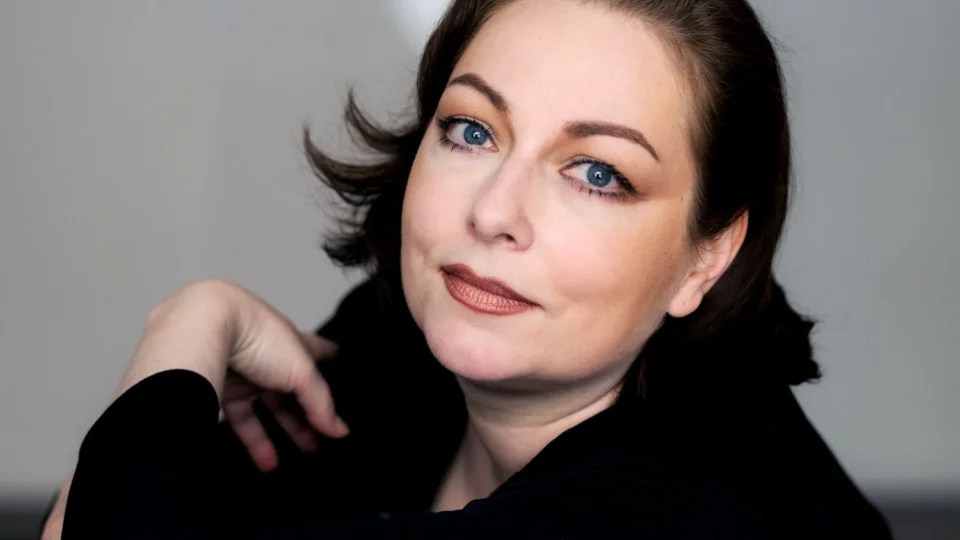
Dorothea Röschmann, soprano & Joseph Middleton, piano Saturday 1 November 2025, 7.30pm Bliss Song Series, Pembroke Auditorium, Cambridge
Don’t miss this exceptional recital by Grammy Award-winning soprano Dorothea Röschmann and world-renowned pianist Joseph Middleton, featuring an evocative programme of Schubert, Brahms, Schoenberg and Weill.
Celebrated for her “superbly expressive and richly coloured” voice (The Guardian), Röschmann is one of the most compelling recitalists of her generation. Her artistry brings rare emotional depth to repertoire ranging from the Romantic to the cabaret-influenced songs of 20th-century Berlin. She is joined by Joseph Middleton, praised by The New York Times as “the perfect accompanist” and Artistic Director of the Bliss Song Series—the East of England’s leading platform for song.
Experience two of the world’s finest recital artists in an evening of profound storytelling, wit, and beauty.
Here they are in concert at the Leeds Lieder Festival in 2022:
Their program on Saturday is as follows:
SCHUBERT
Romanze aus Rosamunde
Des Mädchens Klage
Auf dem Wasser zu singen
Der Tod und das Mädchen
Die junge Nonne
Nachtstück
Nacht und Träume
Der Zwerg
BRAHMS
Vier ernste Gesänge
– Interval –
SCHOENBERG
Galathea
Gigerlette
Der genugsame Liebhaber
Mahnung
Arie aus dem Spiegel von Arkaien
KURT WEILL
Berlin im Licht
Je ne t’aime pas
Klops Lied
Nana’s Lied
Youkali
🎟 Student tickets: £5 + £2.50 booking fee
Pre-concert talk: 6.45pm Dr Jane Hines, specialist in German Romantic poetry, Gonville & Caius College Dr Jane Hines | Gonville & Caius
Published post no.2,703 – Thursday 30 October 2025
Weill Die sieben Todsünden (1933) Die Dreigroschenoper – Suite, arr. Schönherr (1928, arr. 1956) Suite panaméenne (1934) September Song (1938) Surabaya-Johnny (1929)
Serena Wey (soprano), Martin Müller, Werner Güra (tenors), Othmar Sturm (baritone), Grzegorz Rózycki (bass), Basel Sinfonietta / Mark Fitz-Gerald
First Hand Records FHR140 [65’48’’] German texts included. Producer Philipp Steiner Remastering Engineer John Croft Recorded 3 February 1991 and 5 September 1993 (Suite panaméenne) at Stadtcasino, Basel
Reviewed by Richard Whitehouse
What’s the story?
First Hand Records continues its series of reissues with this appealing collection of music by Kurt Weill, capably performed by the Basel Sinfonietta and judiciously conducted by Mark Fitz-Gerald, who has since become synonymous with recreating Shostakovich’s film scores.
What’s the music like?
The main work is The Seven Deadly Sins, the ‘ballet chanté’ Weill wrote in Paris after having departed Berlin in the wake of Nazi rule and which was his final collaboration with Berthold Brecht. Written as a vehicle for his wife Lotta Lenya this found only limited success, though its conceit of the main role being split between singer and dancer was to prove influential on later generations of dramaturgs. Serena Wey captures the spirit of Anna in her journey from innocence to experience over each of those sins, their respective settings in seven American cities pointing up that critique of Capitalism which Brecht and (still at this time) Weill were intent on making. The four male vocalists ably convey the role of ‘The Family’, somewhere between Greek Chorus and Barbershop Quartet in its pertinent observations and occasional tendency to moralize. Often revived with its main role transposed to the mezzo register, the piece benefits from being heard as it was conceived and, had it been issued at the time, this account would have been early in establishing an authentic ‘tradition’ of Weill performance.
Suites derived from two of Weill’s other stage-works are further enhancements, even if that from The Threepenny Opera is not the one he himself adapted – rather, a truncated selection by Max Schönherr (1903-84), a composer and conductor of light music whose arrangement for full orchestra is expert rather than inspired but features most of the items for which this ‘play with music’ remains famous. More valuable, though, is the Panamanian Suite drawn from incidental music to the play by Jacques Deval that takes in a breezy Introduction and uproarious March of the Panamanian Army alongside the pert fusion of Tango-Habañera and no less catchy Tempo di Foxtrot – this suite echoing the masterly and still underrated Second Symphony from the same time in its deft irony and edgy melodicism. Of those two songs which round off this release, September Song (Knickerbocker Holiday) sounds oddly uninvolving in German, despite Martin Müller’s mellifluous delivery, but Surabaya-Johnny (Happy End) leaves a plangent spell even out of context through Wey’s affecting eloquence.
Does it all work?
Pretty much. As already indicated, the performances are never less than idiomatic thanks to Fitz-Gerald’s evident sympathy with Weill’s subtle changing idiom and committed playing from the Basel musicians. The sound is a little dull and unyielding, though the remastering has clearly done much to improve it, with Rodney Smith’s succinct and informative notes a welcome addition. A pity that only the original German texts have been included here, but English translations can be found online while the presentation cannot otherwise be faulted.
Is it recommended?
Indeed, and as more than merely an archival release. The performance of the main work can hold its own with most of those which choose the original version, and it is to be hoped that more instances of Fitz-Gerald’s Basel collaborations from this period can be made available.
Breathtaking music-making for an attentive audience including a sparkling Petrushka.
Marcus Roberts Trio [Marcus Roberts, Martin Jaffe, and Jason Marsalis] Philadelphia Orchestra / Yannick Nézet-Séguin
Stravinsky Petrushka (1910-11 rev.1947) Weill Symphony No. 2 (1933-34) Gershwin Rhapsody in Blue (1924)
Carnegie Hall, United States Tuesday 23 January 2024
Reviewed by Jon Jacob. Photo (c) Jon Jacob
For those of us from the UK more accustomed to perfunctory applause, the enthusiastic response from the audience welcomed conductor Yannick Nézet-Séguin to the stage ahead of Stravinsky‘s ballet Petrushka came as a bit of a surprise. The sound of the applause crinkled in the acoustics in a way I don’t remember hearing at the Cleveland concert. The capacity crowd was already psyched. Uplifting stuff before a single note was heard.
The Philadelphia Orchestra’s sound is incredible, generated by a powerful, carefully controlled machine that delivers both weight and delicacy. The band feels incredibly responsive, meaning the smallest of gestures can bring about a range of different colours and textures that illicit all manner of emotional responses. This receptiveness demands players at the top of their game. They are the elite.
There’s also a perceptible self-assurance in the sounds they produce. That promotes a sense of confidence in the listener, in turn elevating listening experience. Put simply if the first sounds you hear aren’t like anything you’ve heard before you’re going to listen more attentively, in the same way you’ll drive an expensive BMW differently simply because of the feel of the steering wheel and the smoothness of the ride.
In Petrushka the principal flute had a bright sweet sound, flanked by a delicate and precise piccolo. There were beautifully burbling and babbling clarinets. Trumpets sparkled with rapid articulation that was clear but avoided fussy-ness. A virtuosic piano line highlights that the material was originally conceived as a concert piece for piano – the demands Stravinsky makes on the pianist remain high and it’s a dazzling contribution from pianist Kiyoko Takeuti.
Elsewhere, the big string section brings phenomenal weight given the heft (no great surprises perhaps – 17 first violins, 14 seconds, 12 violas, 10 cellos and 8 basses). When the basses underpinned a sequence, it felt as though we were digging down into the foundations, great jabs slicing into the ground with a sharp-edged spade.
The WeillSecond Symphony opened the second half. A smaller number of players on stage but still the same detail, responsiveness and jaw-dropping spirit that elevates this band above so many others. At three movements it is a concise work, packed full of evocative tunes, inventive treatments, and tantalising textures. It undoubtedly entertains but does it move? I’m not entirely convinced, although age has mellowed me, so my conclusions are not as severe as those reported by Weill to a friend after the 1934 premiere who said the work had been dismissed as ‘banal, ‘disjointed’, and ‘empty’.
There were plenty of entertaining thrills and spills conjuring up nail-biting peril and jeopardy in the first movement. The Mahlerian second movement funeral march had some respite from the powerful grandeur on display in the sweet flute and trombone solos. It was a much prompter reading compared to some of the recordings I’ve listened to after the concert. Weill’s trademark melodies are evident in the final raucous movement.
Running to half an hour, Weill’s second symphony isn’t a long work, but given the stage move necessary to bring the piano and drum kit on for the final Rhapsody in Blue, the evening was feeling long. But the payoff was undoubtedly worth it. Hearing the music of New York, written in New York, here in New York was special. So too hearing the Marcus Roberts Trio with Philadelphia Orchestra.
Pianist Marcus Roberts treats the work’s piano sequences with far more improvisational zeal than the more familiar ‘straight’ recordings (you can get a sense of the material from this performance filmed in Geneva’s Victoria Hall
The familiar signpost orchestral sequences remain, but the energy is upped tenfold by the seeming flights of creative fancy the trio embarked upon. Excited applause rippled around the auditorium accordingly. The effect of this ‘directors cut’ was for competition to emerge between orchestra and trio. When the improvisations concluded and the orchestra kicked in, the well-known orchestral score sounded dull in comparison to the spectacle we had been treated to before. Was the kind of ‘Experiment in Modern Music’ Gershwin had in mind when the work was first premiered at the Aoliean Hall down the road a hundred years before?
The energy in the auditorium unexpectedly seemed to come with me as I made a ‘dash’ up the steep balcony steps for the exit. After I’d run for a subway train (conveniently located outside the concert hall), I sat down and immediately yawned. Heads turned.
“It was a long evening, wasn’t it?” said the man sat next to me. “It was. But I loved every single minute of it.” “The Weill was fantastic. I do think they packed in more than they needed to. And I’m sure the ensemble was off in the Petrushka.” He looked across the aisle to a couple who were listening to our exchange. “I thought so too,” said the woman. Then a man stood in the aisle, “No. It was the Weill that was the problem. I can’t stand Weill.”
I gently protested, jokingly telling them they were all wrong and they should take a long hard look at themselves and listen back to the broadcast when they got home. A surprisingly in-depth conversation ensued amongst the five of us. I missed my stop as a result.
“You know, you’d never have this kind of post-kind of conversation on the Tube in London”, I explained. “Oh we know,” replied the woman, “That’s what we do here.” It’s a lovely thing too.
Jon Jacob is a writer, digital content producer and strategist, authors the Thoroughly Good Classical Music Blog, and produces the Thoroughly Good Podcast.
Published post no.2,066 – Wednesday 24 January 2024
Prom 60 – Kirill Gerstein (piano), Berlin Radio Symphony Orchestra / Vladimir Jurowski
Weill Kleine Dreigroschenmusik (1928, arr. 1929) Adès Piano Concerto (2018) [Proms premiere] Rachmaninoff Symphony no.3 in A minor Op.44 (1935-6, rev. 1938)
Royal Albert Hall, London Thursday 31 August 2023
by Richard Whitehouse photos by Andy Paradise / BBC
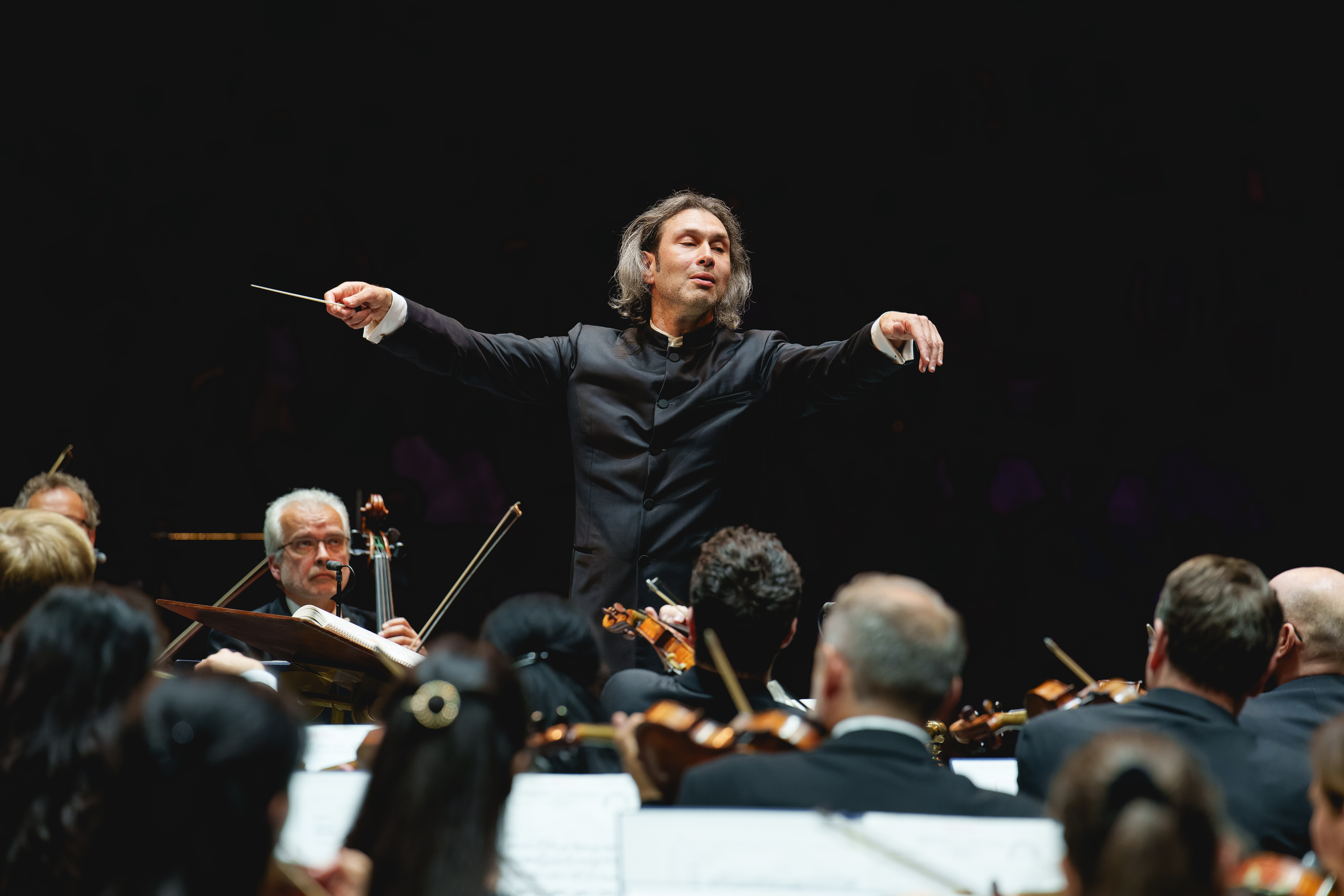
Marking its centenary this October, the Berlin Radio Symphony Orchestra may be less known abroad than other Berlin orchestras but this Proms debut under chief conductor Vladimir Jurowski confirmed an ensemble at home across the broad range of modern and contemporary music.
Not least in Little Threepenny Music, a ‘selection’ Kurt Weill arranged from his and Bertold Brecht’s reworking of The Beggar’s Opera which takes in several of that show’s best-known numbers while also affording a demonstrable overview of its satirical concerns. The BRSO responded with vigour and not a little pathos – above all, in the Threepenny Finale and its juxtaposing pensive ambivalence with a glowering decisiveness: that final chorale making plain its damning inditement of German cultural failings in the era of the Weimar Republic.
A spirited participant, Kirill Gerstein took centre-stage for the first hearing at these concerts of the Piano Concerto written for him by Thomas Adès. Now as before, Gerstein’s dexterity in negotiating this score’s pert amalgam of intricacy and bravura warranted respect: whether in what might be called the ‘Self-Portrait with Gershwin and Ligeti (though Prokofiev is also there)’ of the first movement, Stravinskian cortège of the central Andante, or the interplay of vivacity and uncertainty in the final Allegro. An attentive accompanist, Jurowski summoned playing as tensile and supple as the orchestral writing demands – though abetting the overall impression (his recent works in particular) that even as consummate a conceptualist as Adès needs to instil those ideas, often arresting in themselves, with comparable musical substance.
Gerstein’s transcription of Rachmaninoff’s In the Silence of the Secret Night (Op.4/3) duly prepared for the latter’s Third Symphony. First given at the Proms 85 years ago, it still attracts dislike from those who find it a self-conscious update of the composer’s inherently Romantic idiom as well as those who dislike such an idiom in any case. Not that Jurowski’s account brooked any compromise in marrying consistent technical precision to a powerfully shaped conception of music often appealing, frequently intriguing and not a little unsettling.
The stark rendering of its introduction – spectral ‘motto’ then surging tutti – set the course for an initial movement where contrast between expectancy and eloquence came to a head in the development with its anguished fusion between heart and brain. The Adagio unfolded with an almost Sibelian inevitability, not least in the seamlessness by which its outer sections flowed into then out of a central scherzo abounding in that sardonic humour as became a mainstay of Rachmaninoff’s later years. Nor was there anything blandly predictable about a finale whose opening exuberance was ably maintained through a consoling but never wantonly languorous secondary theme, eventually resolving into a coda whose unfolding as a crescendo of activity brought the whole work – and the present reading – animatedly and satisfyingly full circle.
Impressive music-making on all levels and Jurowski further cemented the Proms connection, specifically that between Rachmaninoff and Henry Wood, with the latter’s transcription of the former’s Prelude in C sharp minor Op.3/2) – as tempestuous as it proved exhilarating.



 Arcana.fm