
Online Concert: Tine Thing Helseth & Kathryn Stott @ Wigmore Hall

Tine Thing Helseth (trumpet), Kathryn Stott (piano)

Nordheim Den første sommerfugl (1982)
Martinů Sonatina for trumpet and piano (1956)
Shostakovich 4 Romances on Poems by Alexander Pushkin Op. 46 (1936-7)
Piazzolla Café 1930 from Histoire du Tango (1986)
Grieg 6 Songs Op. 48 (1884-8)
Gershwin Prelude No. 2 in C sharp minor (c1923-6); By Strauss (1936)
Weill Youkali (1934)
Kreisler Toy Soldiers March (1917)

Wigmore Hall, Monday 6 March 1pm

by Ben Hogwood

What a joy to see the partnership of trumpeter Tine Thing Helseth and pianist Kathryn Stott renewed at Wigmore Hall, united in an original program of trumpet originals and imaginative arrangements from vocal sources.

Dreamy lines from the piano introduced the concert’s first item, Arne Nordheim’s Den første sommerfugl (The First Butterfly), full of spring promise as the insect’s flight gracefully orbited the hall. Helseth’s trumpet line was a lyrical one, speaking faintly of folk song. From here the pair moved straight into the compact and winsome Sonatina for trumpet and piano, one of the Czech composer Martinů’s miniature gems. Written while experiencing homesickness in New York, the work began with a gruff introduction from the piano, its repeated note figurations taken up by the trumpet in fanfare-like salvos generating a good deal of energy. Gradually this subsided into more poignant thoughts, the composer revealing his softer centre, and by the bittersweet chorale with which the work ends the sense was that of a composer looking for his fortunes to change. Both performers caught that shift of focus.

Next up was an imaginative choice, an arrangement of Shostakovich’s Four Pushkin Songs. The vocal lines transfer to the trumpet with surprising accuracy, both artists playing in such a way that the original spirit of the songs was fully maintained. Regeneration, the first song, was thoughtfully done, held notes on the trumpet carrying above delicate figuration on the piano. Premonition was an easy amble in triple time, but the fourth song, Stanzas, held the cycle’s emotional centre. A substantial song, as long as the other three combined, it began with a stern introduction from Stott before a compelling dialogue unfolded.

Complementing this was a beautifully floated account of Piazzolla’s Café 1930, tastefully augmented by Stott’s rhythmic attention to detail. The melodies really sang from Helseth’s trumpet, any breathing challenges overcome with deceptive ease. As she said at the end, a bit of Piazzolla is never wrong!

Helseth’s announcements between the groups of pieces were nicely done, with an easy charm that also showed how much the two artists were enjoying themselves. This much was clear again in six songs by Grieg, grouped together as Op.48 but once again transcribing with relative ease for the trumpet. Gruss (Greeting) featured a lovely depiction of bells, an outdoor scene, while Lauf der Welt was a rustic march. Helseth’s characterisation of Die verschwiegene Nachtigall (The secretive nightingale) was nicely done. Zur Rosenzeit (Time of roses) presented bright colours, while the final Ein Traum (A dream) was especially full of feeling.

We moved to a stylish Gershwin duo, starting with an account of Prelude no.2 that was especially enjoyable when the main theme returned with the mute in the trumpet. By Strauss was also a highlight, enjoying the Viennese waltz send-up, while Weill’s Youkali was a soave tango. Finally Kreisler’s Toy Soldiers March was a perky account, led off by the piano with crisp fanfares. Topping a highly enjoyable concert was an encore of Piazzolla’s Libertango, led off with a swing by Stott and played with great panache by Helseth, including pitch slides to perfection.

For more livestreamed concerts from the Wigmore Hall, click here
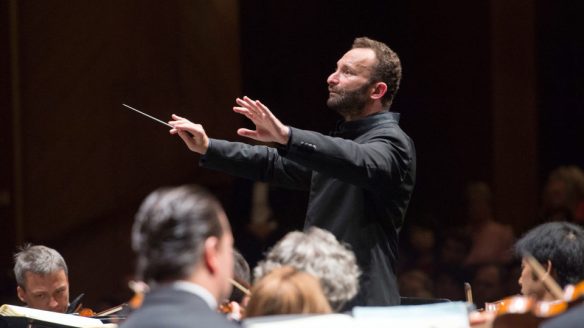
In concert – Berliner Philharmoniker / Kirill Petrenko: The Golden Twenties – Weill & Stravinsky

Michael Spyres (Oedipus), Ekaterina Semenchuk (Jocasta), Andrea Mastroni (Tiresias), Krystian Adam (Shepherd), Derek Welton (Creon, Messenger), Bibiana Beglau (speaker), Men of the Rundfunkchor Berlin, Berliner Philharmoniker / Kirill Petrenko (above)

Weill Symphony no.1 in one movement (1921)
Stravinsky Oedipus Rex (1927)

Philharmonie, Berlin
Saturday 13 February (review of the online broadcast)

Written by Ben Hogwood

“This is no little hicktown. This is one helluva city!”

The words of Bertolt Brecht, writing about his home city in the song Berlin im Licht, set to music by Kurt Weill. It is a sentiment brought to the front of The Golden Twenties, an online festival from the Berliner Philharmoniker running through February, examining ‘a metropolis of contrasts…the epicentre of artistic modernism’.

The festival’s first concert, streamed from the Philharmonie via the orchestra’s Digital Concert Hall, featured the Berliner Philharmoniker’s first ever performance of Weill’s single-movement Symphony no.1 from 1921. This seems like a remarkable historical oversight, even for a work as little-known, but the performance gave this student piece the best possible platform to reach a new audience.

After a thoughtful and revealing introduction from the orchestra’s concertmaster Noah Bendix-Balgley, the Symphony’s distinctive main motive rang out like an extended peal of bells. With this arresting opening Weill laid out the ambition of his work, writing as a student of Busoni looking to impress. This bold statement was complemented by intricate and intimate solo episodes through the inner workings of the orchestra.

Kirill Petrenko conducted a cohesive and convincing account, making sense of the more congested writing and bringing out the parallels with Hindemith and Schoenberg, which he spoke about in the interval. The work’s fulsome harmonies had plenty of deep colour, and it was revealing to hear the counterpoint in such detail. The double basses made an eerie contribution through a fugal episode which wound its way up through the orchestra at several points in the work, before an impressive climax and a darkly shaded postscript. Petrenko nailed the scope of the piece but ensured there was plenty of room for the phrases to breathe individually.

Stravinsky’s Oedipus Rex could hardly have been a more appropriate counterpart for a concert filmed behind closed doors. With its chilling opening statement, ‘The plague is destroying us!’, sung by a socially distanced male chorus from the choirstalls, it was a stark reminder of our current, locked down predicament – and struck an inevitable parallel with the state of the performing arts currently.

This 50-minute opera / oratorio is one of the most notable achievements in Stravinsky’s so-called ‘neo-classical’ period, a dramatic response to Sophoclese‘s tragedy that is not the easiest to digest but which packs an expressive punch.

Petrenko’s incisive conducting brought its message home with a lasting power, and in the performance he was aided by a strong cast of soloists. Michael Spyres’s tenor dominated in the title role, his ringing tones promising deliverance but ultimately winding up in great anguish before the end. He was given ample support by Creon (bass-baritone Derek Welton) and mezzo-soprano Ekaterina Semenchuk, whose fulsome contribution was made in a bright red dress bringing her into dramatic contrast with the funereal black of chorus and orchestra.

Petrenko kept things moving throughout, with virtuoso contributions from woodwind and percussion in particular. In spite of their social distancing the chorus lost none of their power, playing out the tragic story with detail but an ominous inevitability. Holding the threads together was narrator Bibiana Beglau (above), an excellent choice and with strong proejction in the empty hall.
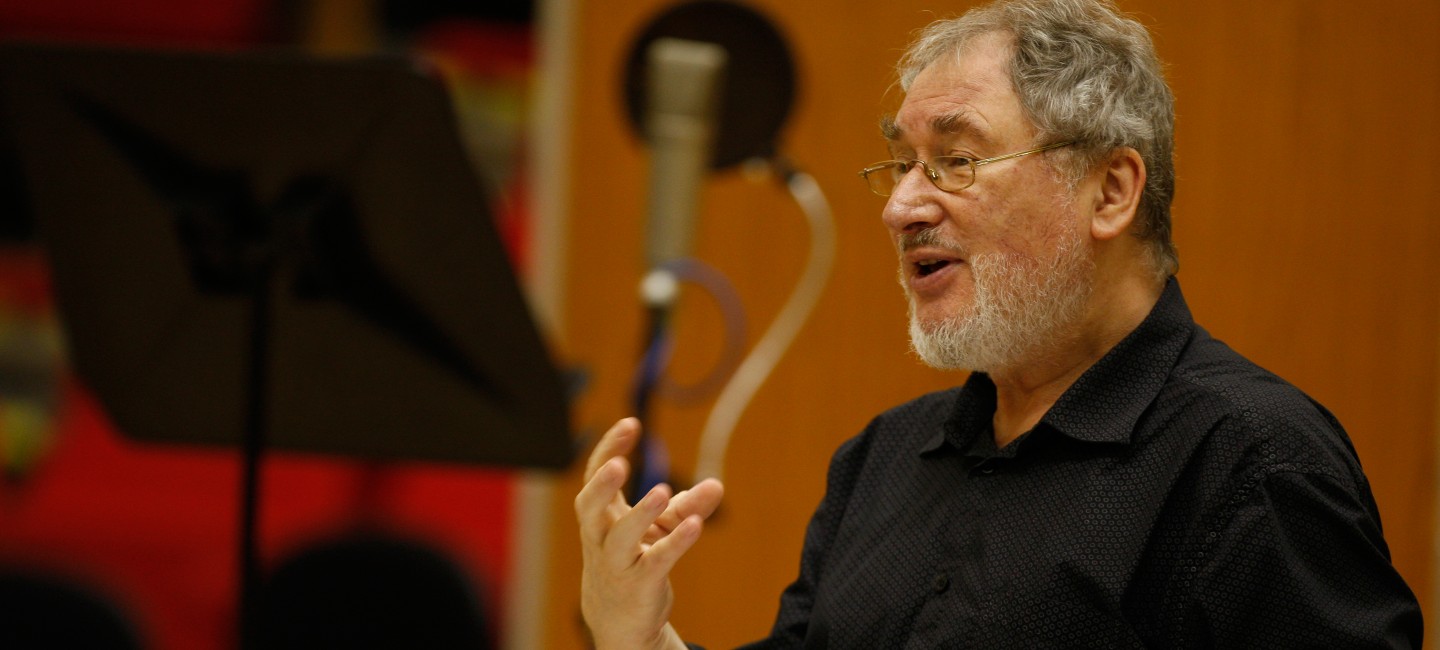
Highlights could be found in the assertive delivery of Welton in the ‘Avenge Laius’ section, while Spyres gave an impassioned promise that he would solve the riddle of the Sphinx. The chorus alternated between a horror at the plague, a sorrowful realisation of the plight of Oedipus, which was particularly moving, and the cold, regretful end.

This was an auspicious start to what promises to be a revealing celebration of Berlin and particularly Weill in the 1920s. The next concert on 16 February will look at the composer’s better-known Second Symphony, while this and future instalments will include the music of HindemithRichard Strauss and Eisler. If the performances are as good as these then online attendance is highly recommended.

The next concert in The Golden Twenties season can be seen and heard at the Berliner Philharmoniker website


Proms premiere – HK Gruber: into the open…

hk gruber

HK Gruber photo by Jon Super

Colin Currie (percussion), BBC Philharmonic Orchestra / John Storgårds (Prom 5)

Duration: 28 minutes

BBC iPlayer link

http://www.bbc.co.uk/programmes/b062jn0t/player

The Gruber starts at 3:46 on the programme, with commentary beforehand

What’s the story behind the piece?

In an interview with Arcana, Colin Currie revealed the piece to be a memorial to David Drew, who in 1976 was appointed director of publications at the leading music publisher Boosey & Hawkes. Drew became known principally for his work revitalising the output and reputation of the composer Kurt Weill. In his obituary of the director, composer Alexander Goehr wrote for the Guardian how “he prepared scores, travelled Europe and America promoting the works, was instrumental in forming the Weill Foundation (1973) and not only changed, if not created, the public perception of the composer, but contributed to a sea-change in the development of composition in the second half of the 20th century.”

These works included Die Sieben Todsünden (The Seven Deadly Sins). Weill is a composer close to HK Gruber’s heart – and Gruber became an established composer on the Boosey roster.

Currie told Arcana about how, “The piece itself is about thwarted feelings of desperation and loss. It confronts bereavement in an angry and passionate way. It is a violent piece, and an unhappy one too – but it is also extremely lyrical and tender. The person, the subject, is clearly missed – but it is not easy to put into words.”

The Radio 3 broadcast talks of how the performance parts ‘verge on the impossible’ – and not just for the soloist!

Did you know?

Gruber sang with the Vienna Boys’ Choir as a child – and went on to play double bass in the Vienna Radio Symphony Orchestra.

Initial verdict

The immediate reaction to this piece is that it will need more than two hearings to fully come to terms with the music within! It is a substantial piece of work, a work of many colours – using the multitude of percussion to the limits of its potential.

A cold emptiness is immediately evident at the beginning, the marimbas in prominence early on, as the size of the structure becomes clear. This is a slow building piece, in keeping with Gruber’s concept of it as a procession – and there are a few signposts that became clear on the first hearing.

At 8’40” in the program link there is a notable change as softly oscillating woodwind offer some consolation, then the brass have more thoughts about 11’32”, the orchestra gathering itself for a powerful onslaught towards the end of the piece – but the end is quiet.

To be honest I did rather lose the thread of the piece from halfway but I suspect that is a ‘listener fault’ rather than anything Gruber has done! Hence the need for more than one further listen.

It should be pointed out the performance standard seems to be incredibly high, despite what Currie was saying about the difficulty!

Second hearing

tbc!

Where can I hear more?

A good next port of call is BBC Radio 3 program CD Review, who explore recordings of Gruber’s music here – which gives you the ideal opportunity to hear snapshots of his music along with the thoughts of others.