In Appreciation – Lars Vogt

by Ben Hogwood

Yesterday we learned of the incredibly sad news that the pianist Lars Vogt had died, at the age of 51.

The warmth and appreciation of tributes paid to him from fellow artists yesterday evening testify to his warm personality, strength of character and great musicianship. Lars was diagnosed with cancer early in 2021, but even in his chemotherapy found that playing the piano channelled the most positive energy and feeling. Here, for instance, is a wonderful performance of Mozart’s Piano Concerto no.24 given as part of the Parnu Festival with the Estonian Festival Orchestra and Paavo Järvi.

Lars was an extremely versatile artist, either as a soloist, chamber musician or conductor. Regular partners included violinist Christian Tetzlaff and cellist Truls Mørk, while he took part in a formidable piano trio with Christian and cellist Tanja Tetzlaff. He also proved himself a conductor of some note from the keyboard, directing the Royal Northern Sinfonia from the piano in recordings of the concertos of Beethoven and Brahms, and the Orchestre de Chambre de Paris in the concertos of Mendelssohn.

His orchestral partners spoke of him with great warmth, and certainly his time in Newcastle with the Royal Northern Sinfonia was characterised by energetic, creative music making and seasonal planning. My own memories of solo performance run back to a spellbinding account of the Goldberg Variations at Wigmore Hall:

As a concerto soloist I also recall a memorable account of BrahmsPiano Concerto no.2 with the BBC Symphony Orchestra and Jiří Bělohlávek at the Proms:

At the same festival, I also recall a full-blooded account of the Bartók Violin Sonata no.1 with Christian Tetzlaff:

As a recording artist, Vogt enjoyed many peaks, mostly in the company of the Ondine label. The playlist below brings together just a section of these recordings, in the knowledge that a couple more are yet to be released.

He will be greatly missed, and we send condolences to all his family and friends. His lasting gift to us is in the form of recordings we will treasure greatly:

Online concert review – Lars Vogt, Estonian Festival Orchestra / Paavo Järvi @ Pärnu Festival – Mozart & Tubin

paavo-jarvi

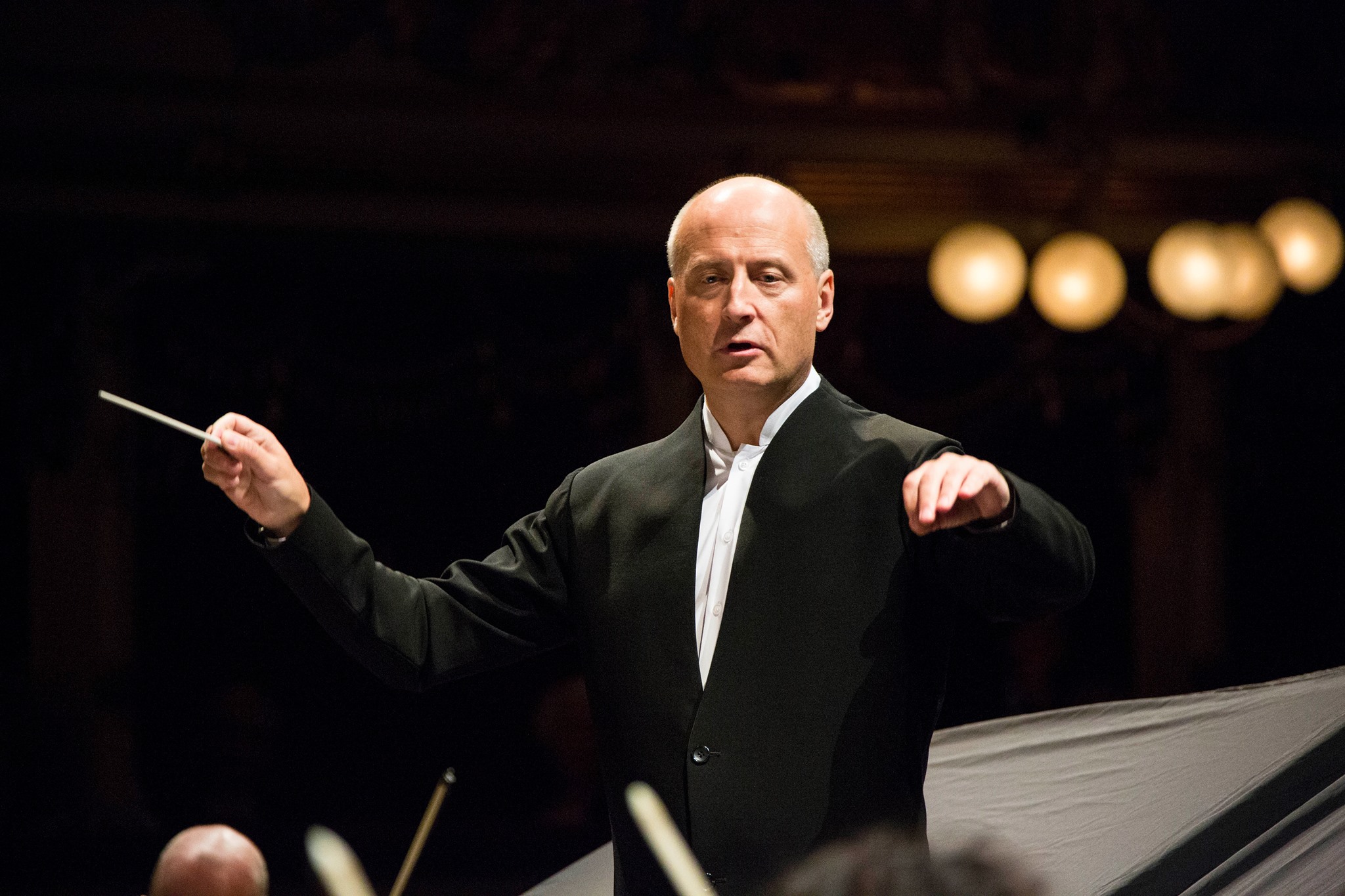
Lars Vogt (piano), Estonian Festival Orchestra / Paavo Järvi (above)

Mozart Piano Concerto no.24 in C minor K491 (1786)
Tubin Music for strings (1963); Suite from The Goblin (Kratt, 1961)

Pärnu Concert Hall, Estonia
Wednesday 14 July 2021, available online

Written by Ben Hogwood
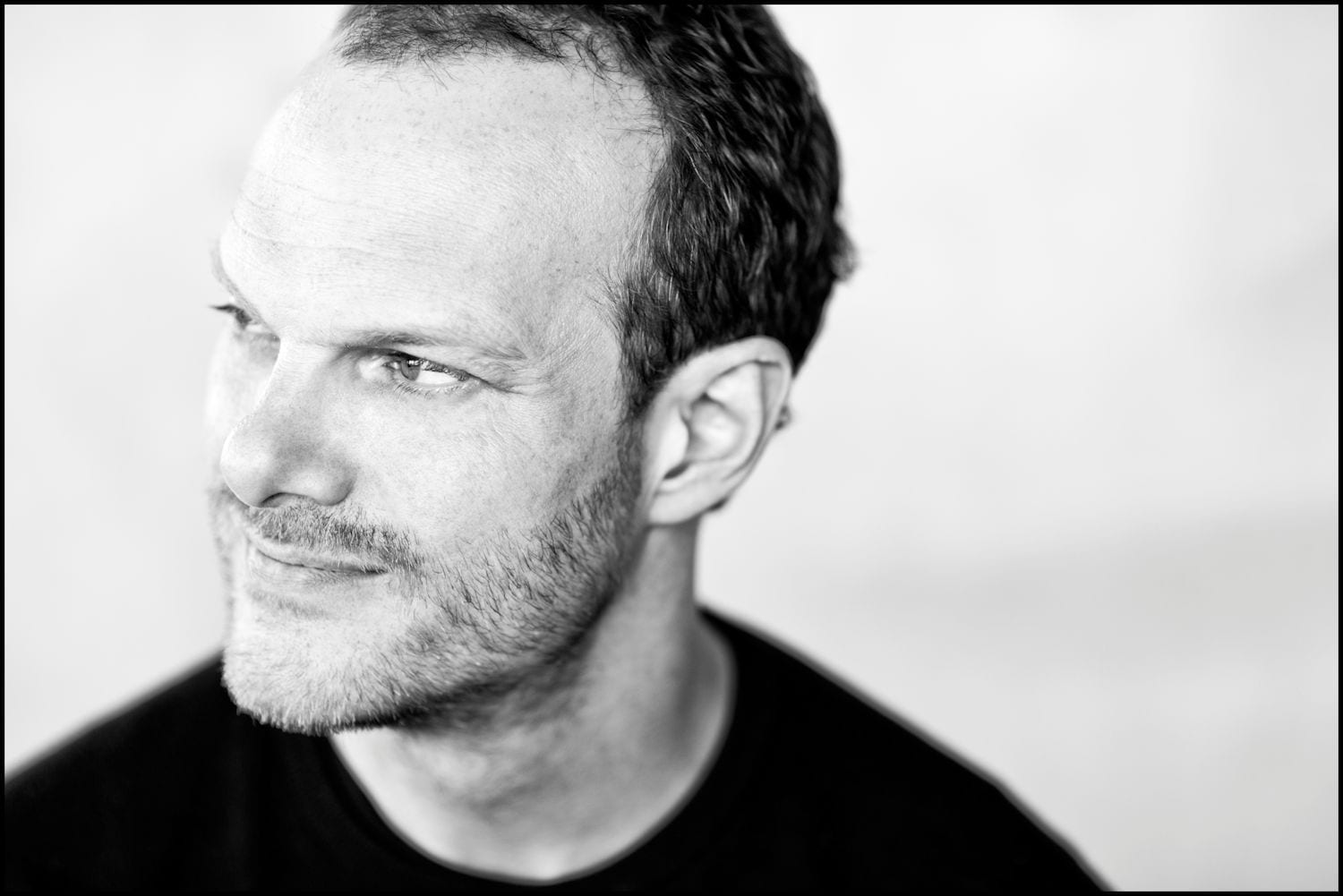
Picture of Lars Vogt (c) Giorgia Bertazzi

This attractive concert was one of the calling cards for the Pärnu Festival, an annual event marking the end of its first decade in the Southern Estonia city. Its patron, conductor Paavo Järvi, was conducting his ‘home’ orchestra, the Estonian Festival Orchestra, inspired by Lucerne’s festival orchestra, in a nicely devised program of Mozart and the seldom-heard composer Eduard Tubin.

To begin with, Järvi and the orchestra were joined by pianist Lars Vogt in one of Mozart’s stormier utterances, the Piano Concerto no.24 in C minor. Vogt has been an inspiration in his career but particularly of late, documenting his battle with cancer in an admirably forthright fashion. Part of his therapy is to play music, to the extent of playing on an upright piano during his chemotherapy sessions, and also to take every chance offered to him to playing music live.

This only heightened the admiration and enjoyment for his performance here, as with heartfelt playing Vogt got right to the centre of this most dramatic of Mozart’s concertos. Järvi followed his lead and was helped by some very fine wind playing, particularly in the slow movement. The first movement had a great deal of Sturm und Drang, the angular contours of the main theme ideally phrased. Vogt’s solo episodes were impeccably delivered but always had an ear towards the orchestra, where the strings gave incisive commentary. The final Allegretto allowed a bit more room for playful exchange, and there was a wonderful shaft of sunlight as the music turned from minor to major key, sensitively engineered by the conductor. As a suitable ⁹encore, Vogt chose Brahms’ Intermezzo in A major Op.118/2, watched appreciatively from the sidelines by Järvi.

Lars-Portrait-3-©-Giorgia-Bertazzi

Eduard Tubin‘s Music for Strings was an intriguing choice just after the interval, representing a desire for the festival to showcase the music of Estonia itself. Tubin, who died in 1982, is still under-represented on the stage, but this was the ideal platform from which to appreciate it. Music for Strings is a slightly elusive but compelling piece, resilient and attractively scored. It brings an economical and slightly classical approach, but with forward looking harmonic language. When the bass strings dug in during the passacaglia first movement the furrowed brow of Shostakovich could be glimpsed, yet the upper reaches of the violins felt as though the music was reaching further north. The second movement was more mysterious and questioning, while the finale, an Adagio, featured excellent solo violin playing from the unnamed Estonian Festival Orchestra concertmaster.

The program finished with a suite from Tubin’s 1943 ballet Kratt (The Goblin). Composition for the whole work began in 1938, making use of melodies from the Estonian Folklore Archive in Tartu. Although the Russian occupation of Estonia in 1940 forbade modern music, Kratt passed the sensors on account of its use of traditional themes, and not the way in which they were treated – which has reminiscences of Stravinsky and Prokofiev. Tubin constructed the shorter suite in 1961, to a commission from the Royal Stockholm Philharmonic Orchestra.

The ballet is based around a peasant who builds a magical figure (Kratt) in order to make him rich – but to do this he has to give three drops of blood to the devil. Perhaps not surprisingly the story does not run smoothly, with the peasant – and his soul – meeting a grisly end at the hands of the goblin. Yet the side plot of a love affair on the farm where the peasant lives brings more light hearted material.

Tubin’s music is ideal concert fayre, tuneful and with lively orchestration. Järvi ensured the syncopations of the dance numbers were sharply rendered, bringing through Tubin’s imaginative writing for wind and brass in particular. The final dance scene was the most captivating, with a soulful cor anglais solo leading into the driven rhythms of the Dance of the Exorcists, featuring the added punch of the orchestral piano. The Goat and The Cock were sharply characterised, bringing reminders of Mussorgsky’s Pictures At An Exhibition, before snarling brass punctuating the outgoing Dance Of The Northern Lights, a more rustic affair. The brass themselves were completely on point, especially in the final statement, warmly received by the audience.

This was a most enjoyable concert, confirming the warm atmosphere in which this festival operates. It is clear Paavo Järvi and friends are building something special here, and it is to be hoped when restrictions are finally lifted that the chance will arise to experience it in person.

You can watch the concert on the festival’s dedicated TV channel here

Lars Vogt talks about his music making after his cancer diagnosis in February and his ongoing treatment with Kate Molleson on BBC Radio 3’s Music Matters, available on BBC Sounds

For more information on the Pärnu Festival you can visit their website

Wigmore Mondays – Lars Vogt plays the Bach Goldberg Variations

lars-vogt

Lars Vogt (piano)

Wigmore Hall, London, 6 June 2016

written by Ben Hogwood

Audio (open in a new window)

http://www.bbc.co.uk/programmes/b07dkdt8

Available until 4 July

What’s the music?

J.S. Bach Goldberg Variations, BWV 988 (1742) (55 minutes)

Spotify

In case you cannot hear the broadcast, Lars Vogt has recorded the Goldberg Variations which can be heard here:

About the music

The Goldberg Variations have an intriguing genesis. The generally accepted account is that they were written by Bach for performance by Johann Gottlieb Goldberg, who needed something to play to pass the time when his master, Count Keyserlingk – the Russian ambassador to the court of Dresden – was unable to sleep.

Bach wrote the variations for him and published them in 1742, though their lack of a dedication coupled with a few other factors have led some to doubt their authenticity as a work for Goldberg.

That is a minor aside, though, for the Goldberg Variations are one of the pinnacles in keyboard music. Lasting almost an hour, they are a huge set of variations on an Aria, which is a three-minute, self-contained unit in itself. Throughout the duration Bach reaches profound emotional depths, especially in the minor key variations, while in the more exuberant fast music he explores complex but extremely positive music. They are a tour de force for any keyboard player, and are perhaps the work by which the legendary Canadian pianist Glenn Gould is best remembered.

Performance verdict

Lars Vogt clearly has a great deal of admiration and affection for this music, for this was a spellbinding performance of one of the great cornerstones of the keyboard repertoire. The Goldbergs make great demands on the versatility of an artist, exposing any limitations in their technique – but where Vogt was concerned, there did not appear to be any.

It was helpful that he paused after some of the bigger variations, allowing Bach’s revelations in the minor key in particular to sink in. Others he linked very closely together, so that there was a natural ebb and flow between the fast music and the slow.

This was an incredibly assured performance, after which Vogt simply raised the music itself to the audience – a gesture that spoke volumes for the stature in which the work continues to be held.

What should I listen out for?

1:23 – the Aria, which is a slow Sarabande. It is heavily ornamented – by which it is meant the right hand of the piano decorates its melodies. Yet there is a sense of time standing still as Bach announces the main theme for his variations.

5:02 – Vogt moves straight into the lively Variation 1, where Bach builds up a fluid momentum.

5:54 – the bright Variation 2, a little quieter and beautifully poised with discussion of the melodies between both hands (or ‘counterpoint’ as it is commonly known!)

6:41 – Variation 3, a Canon – where one part shadows the other throughout. Again Bach gives this a totally natural appearance, in a lilting triple time.

8:32 – the more rigid Variation 4.

9:34 – the quickfire Variation 5, with a rapid figuration of semiquavers as the music hurtles forwards.

10:17 – Variation 6, the second Canon in the variations and one that explores some advanced harmonic movements.

11:28 – a detached profile to the melody of Variation 7, with a detached and staccato nature that gives it a French flavour.

12:14 – the busy eighth variation brings the two hands close together on the keyboard, and streams forward, leading straight into…

13:08 – the ninth variation, a slower, poised affair, and the third of Bach’s Canons.

14:43 – Variation 10, a ‘fughetta’ – by which you can hear each part entering individually with Bach’s new theme. The counterpoint builds in a compact statement.

15:28 – Variation 11 is quicker, and tricky to execute.

16:24 – Variation 12, and Bach’s fourth canon, is a stately and expansive affair.

19:24 – Variation 13 is a Sarabande, the first to fully evoke the spirit of the Aria and to behave in a similar, decorated way.

21:38 – the reverie is burst by Variation 14, a brisk affair that has some striking, jumpy rhythms in the right hand. Legendary pianist Glenn Gould compared this variation to Scarlatti.

22:38 – Variation 15, the fifth canon. It has some adventurous chord progressions, moving mysteriously through the minor key as it becomes progressively more anguished. Gould says this would not be out of place in Bach’s St Matthew Passion, as a genuine piece of mourning. A period of silence at the end only heightens the impact.

26:18 – the flavour of a French Ouverture runs through Variation 16, which has a ceremonial air, with some florid statements from both hands. It opens out into a faster section.

28:57 – a virtuosic Variation 17

29:56 – the dance returns for Variation 18, which is another canon, the parts dancing in a calculated but surprisingly breezy near-unison.

31:19 – Variation 19, and Bach still as prodigiously inventive as he was at the beginning. This is a relatively gentle, triple time dance.

31:58 – Variation 20 quickens the pace again, with quick interaction between the hands.

32:58 – for the seventh canon, Variation 21, Bach moves back to the minor key and a solemn exchange of melodies.

35:23 – back to the major key for 22, where Bach often fills out the texture to four parts.

36:05 – a bright Variation 23, where the hands are higher up the keyboard, exchanging some florid ideas.

36:59 – another canon, the eighth, for Variation 24, a triple time dance with an attractive lilt.

39:47 – the third and last minor key variation, 25, is a darker turn after the positivity of the previous one. It is also a lot slower, with time seemingly coming to a halt towards the end of Bach’s discourse. Because of its emotional impact it has been described as ‘the black pearl’ of the set.

43:23 – after the depths of the minor key, Variation 26 sounds like a frivolous thought, with a burbling idea exchanged between the two hands.

44:27 – Variation 27, a little stern in its set canon but with a strong air of positivity.

46:29 – Variation 28 is higher up the keyboard, with repeated figures that Bach moves around a harmonic sequence. There is a lot of hand crossing for the pianist here.

48:13 – in Variation 29 the tempo is still quick and the hands stay close together, though the right one does run off alone at times.

50:16 – Variation 30, the last one, is given the title of Quodlibet, a kind of improvised work. Here Bach really lets his invention go, using the melodies of a couple of folksongs as he strays far from the original.

52:01 – a note for note repeat for the Aria from the start, closing the entire Goldberg Variations.

Further listening

Rather than another set of variations, the recommended further listening is for a set of shorter Bach pieces played on the piano. These can be heard in a stylish album from Alexandre Tharaud, who has incidentally also recorded the Goldberg Variations. Here he focuses on some of Bach’s works with an Italian flavour, including the Italian Concerto among others: