It is now 25 years since Kathryn Williams earned a Mercury Prize nomination for the album Little Black Numbers, and 15 since she started the productive partnership with label One Little Independent. In that time her reputation has persisted as a purveyor of quality folk music, exhibiting the “quiet emotional depth and lyrical precision” the press release for this album accurately describes.
For Mystery Park she strips back the sound, but gathers a high-quality team of musicians in the form of multi-instrumentalist Leo Abrahams (guitar, piano, bass, vocals) and guitarists Neill MacColl and Polly Paulusma, all of whom contribute backing vocals – as does multi-instrumentalist Ed Harcourt. Drummer Chris Vatalaro and harmonica player David Ford are also present, as is Paul Weller, credited with Hammond organ as well as vocals.
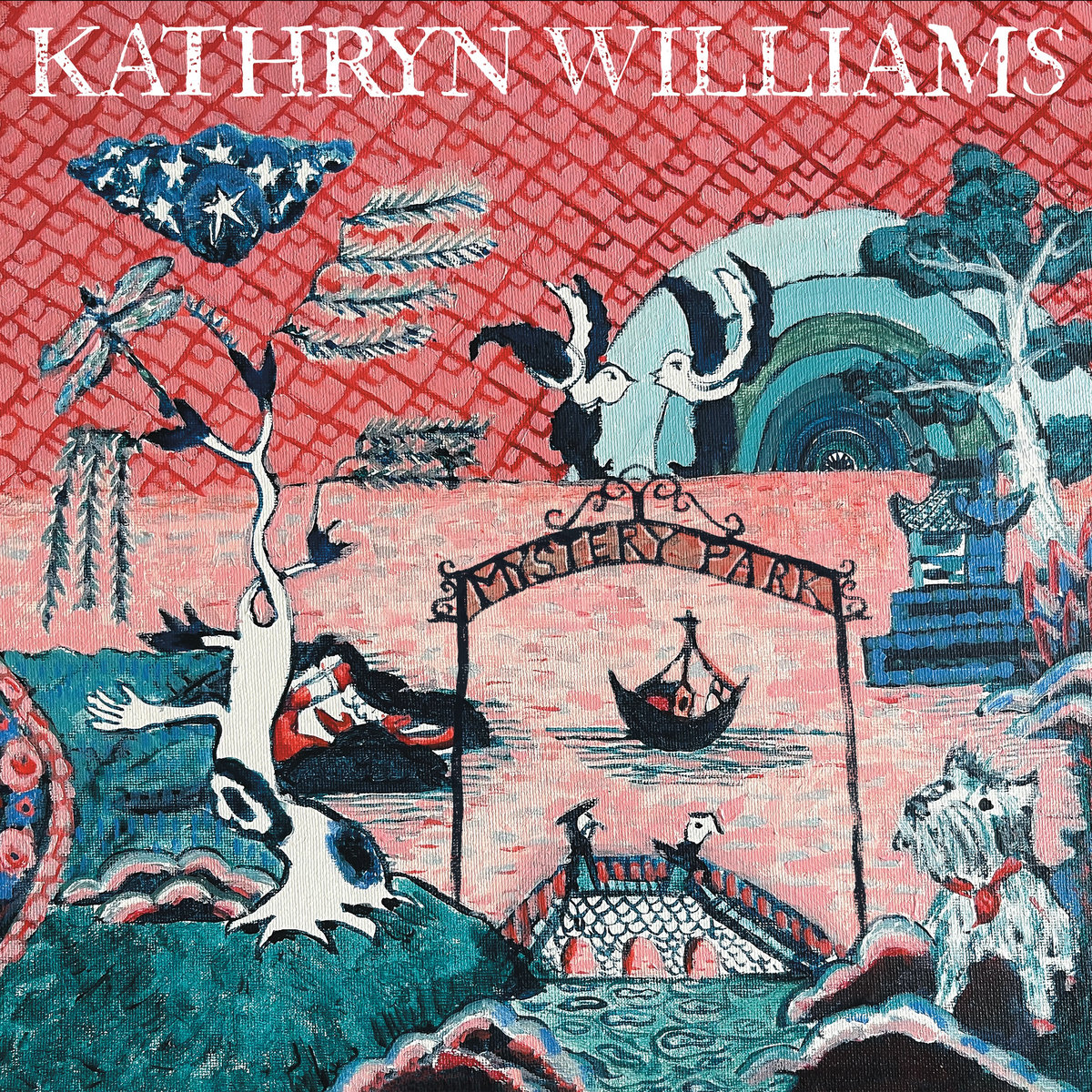
Importantly, Williams pinpoints the album as the most personal record she has made, featuring as it does her own painting on the cover, based on her grandmother’s tea sets.
What’s the music like?
There is a strong autumnal feel to Williams’ music this time round, the basis of a strong seasonal attachment running through the record like a thread. This is most obvious in the Polly Paulusma collaboration Goodbye To Summer, where the swallows leave and the inevitable question is asked, “how many more summers do we have?”
The personal attachments range from a celebration of her eldest son in Sea Of Shadows but also This Mystery, where she addresses her father’s dementia in moving clarity. Weller’s guest appearance is saved for the striking Gossamer Wings, where Williams’ talents for spinning quite oblique melodies are exploited – as indeed they are throughout the album.
Does it all work?
It does. Williams exudes a quiet confidence, able to express herself with the minimum of fuss but also in a way that draws the listener in to the middle of her conversational ways – by which point they can also appreciate the detailed and often exquisite instrumentation at work here.
Is it recommended?
It certainly is. Kathryn Williams makes music that is all the more beautiful for its subtlety, beckoning the listener over to spend more time in its company. Once there, it is pretty much guaranteed they won’t leave without seeking out more of her impressive discography. This particular listener will be doing just that!
For fans of… Laura Marling, Unthanks, Lisa Hannigan, Joanna Newsom
Listen / Buy
Published post no.2,709 – Wednesday 5 November 2025
This is the second outing for the duo of guitarist / producer Leo Abrahams and drummer Martin France, pooling their considerable musical resources for four tracks of contemplation and improvisation.
The first instalment of Krononaut, released in 2021, featured guest appearances from Arve Henriksen, Matana Roberts and Shahzad Ismaily. This one is restricted to just the two musicians, and brings in a number of influences explored by Leo on this playlist for Arcana a few weeks back:
What’s the music like?
There is some rather special music making here. The sessions took place over the course of a single afternoon in Abrahams’ East London studio, and it’s possible to imagine the sunlight making a play on the studio walls, and the possibility of it shimmering through leaves as interpreted by Abrahams’ guitars.
These are intensely layered but full of melodic invention, either in short nuggets or in broad, arches. The descending motif that starts to take over in Spindle suggests an object moving down through the sky, doing so over a backdrop of rolling drums from France, before Abrahams’ guitar suggests Spanish influences in its rich harmonies. Meanwhile the rarefied atmosphere of Silver Silver gnaws at the tendrils of icy clouds high up in the atmosphere.
France’s drumming is entirely acoustic and often extremely intricate – but never overdone. He pushes the momentum forwards towards the end of Silver Silver, but contrasts with considerable restraint on Mirage, where Abrahams’ dreamy lines curl upward and take the lead.
PGC 20513 – which appears to be the name of a star in the constellation Gemini – gets an appropriately spacey backdrop, beautifully cast by Abrahams, with reverberation that sets the wide screen picture but ensures it is filled with complementary musical motifs. The longest composition here, it inhabits a far-off world, ending in a compressed cell of melodies from the guitar, rich in treble and prompted by steady hi-hats and rolling toms.
Does it all work?
Yes – it does. Moments and moods captured in sound, that would only sound this way once – which makes them all the more special.
Is it recommended?
Yes, enthusiastically. The chemistry between these two musicians is rather special, and the four meditations unfold naturally in a four-part suite that inspires the senses.
For fans of… Bill Laswell, Kit Downes, Harold Budd, Terry Riley
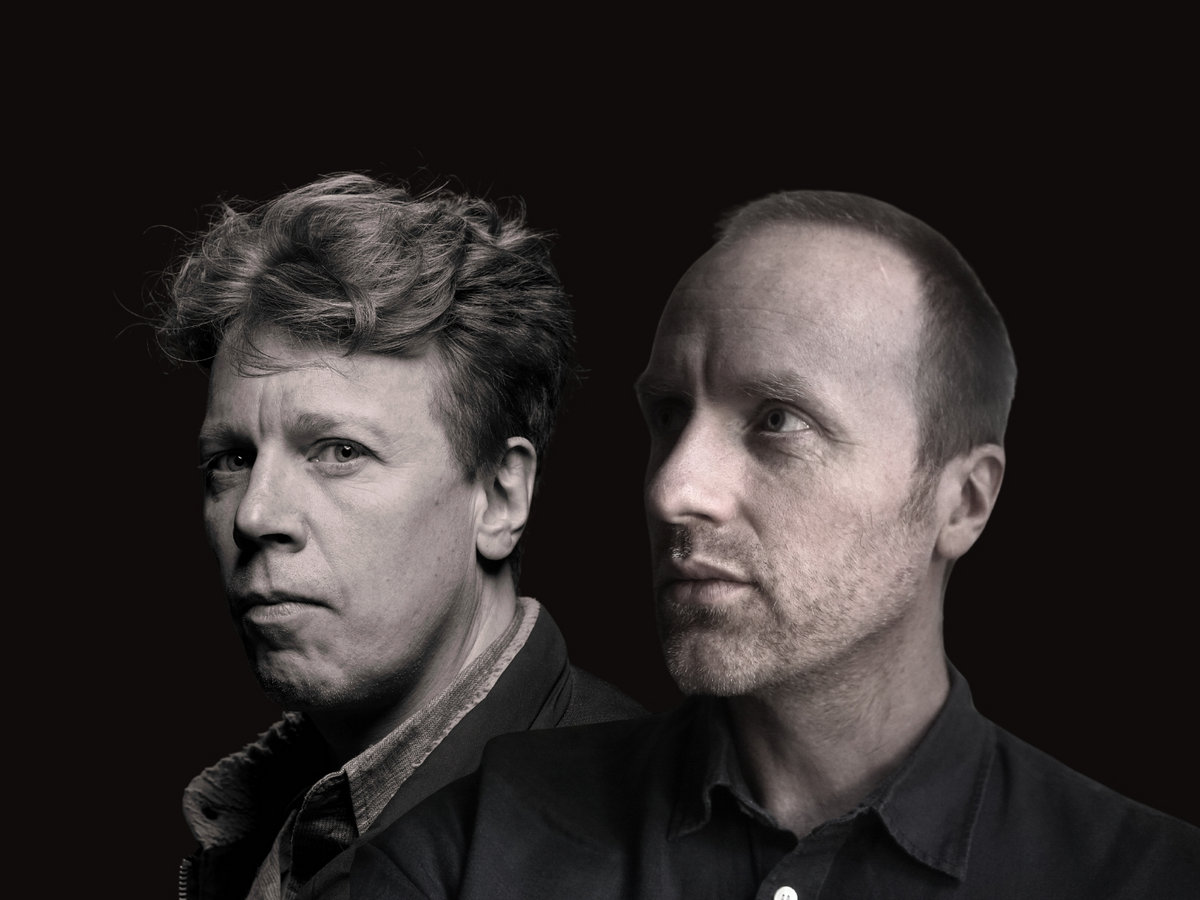
It gives us great pleasure to welcome Krononaut‘s Leo Abrahams (above, front) for the latest Arcana playlist guest turn. The improvisatory duo release Krononaut II on Palomino on 9 August, and Abrahams has generously given us an insight into the working process behind the album. Here is the playlist – and you can read below the detail on his choices:
Schneider TMFirst Of May Ingenious sonic investigations of the guitar from a studio master.
Mazz SwiftHidden In Plain Sight I met Mazz playing in Anohni’s band recently. Their record absolutely blew me away with its sincerity and erudition.
Ovalhmmm So playful and so detailed, all these years on I still have no idea how he did it, but it’s firmly lodged in my subconscious.
Spin MarvelTuesday’s Blues The record that first brought Martin France to my attention. Astonishing drumming – melodic, refined and furious.
John Hassell, Brian EnoDelta Rain Dream One of those records that is responsible for a whole new genre, it is tremendously free.
Sulton NazarOmaded Mehmoni Mo Recorded by Lu Edmonds in the mountains of Tajikistan in the early 2000s, this master of maddoh opened my ears to a whole new culture.
KrononautConvocation This track from the first record gets closest to the till-but-not-static feeling that we were reaching for on the second.
Morton FeldmanPalais de Mari A relatively concise piece from one of my favourite composers, this is deep, concentrated and compelling music.
Our very grateful thanks to Leo for his selection.
Brian Eno (vocals, instruments), Melanie Pappenheim (vocals), Leo Abrahams (guitar), Peter Chilvers (instruments, software), Peter Serafinowicz (vocals), Baltic Sea Philharmonic Orchestra / Kristjan Järvi
Brian Eno The Ship [The Ship, Fickle Sun (I), Fickle Sun (II) The Hour Is Thin, Fickle Sun (III) I’m Set Free] By This River, Who Gives A Thought, And Then So Clear, Bone Bomb, Making Gardens Out Of Silence, There Were Bells
Royal Festival Hall Monday 30 October (9 pm concert)
by Ben Hogwood photos (c) Ben Hogwood, not to be reproduced without permission
The estimable Setlist website, documenting the concert history of artists and bands, has a notable seven-year gap between Brian Eno’s last live appearances and this new tour, in which he has been bringing an orchestral perspective to his 2016 album The Ship.
Many artists in Eno’s ambient sphere have looked at the orchestra as a vehicle for original composition, but more recently the tendency has been for artists to use it to regenerate past material, and – perish the thought – boost awareness and bank balance by association through touring. This tactic is clearly not for Eno, who invested a great deal of time in finding the right ensemble before even looking at the layout of this tour. Seeking fresh talent and players with flexibility, he alighted on the Baltic Sea Philharmonic Orchestra, a ten-year-old ensemble conducted by the dynamic Kristjan Järvi. It is fascinating to think that Kristjan, part of a remarkable Estonian conducting trio after father Neeme and elder brother Paavo, is creating new directions for his family, stepping out on ever more adventurous voyages into contemporary music.
This one – on the banks of the Thames – takes its lead from the most famous voyage of the 20th century, the Titanic. Yet Eno chooses not to tell the story in graphic detail, portraying the ship instead through shades of orchestration, atmospheric noise and folk-like utterances. These are made through his own sonorous tones, which worked in this concert to vivid effect. The sonic picture was surely aided by the inclement weather in the UK, the audience becoming part of the vessel as the sea spray splashed against the side. Meanwhile the creaks of the orchestra’s wooden instruments portrayed the boat’s natural bowing and bending.
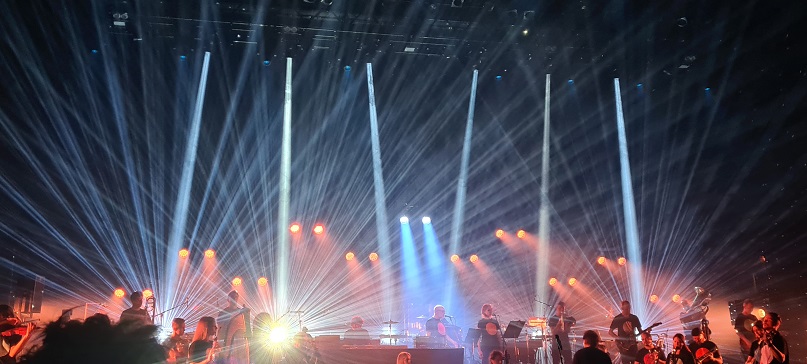
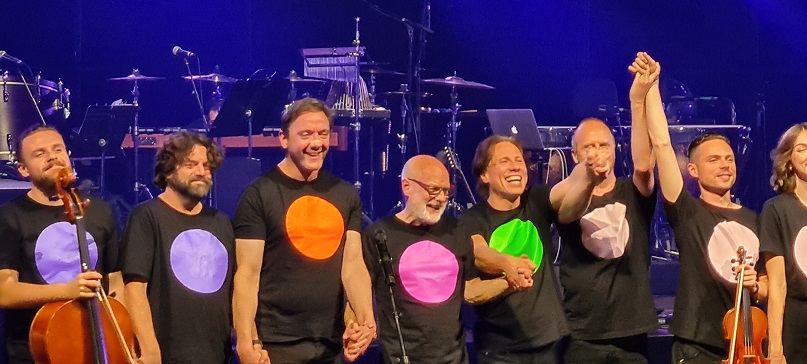
Eno’s music for The Ship reflects his ambient work, in which the music makes incremental changes in its own sweet time, but it shows how ambient music can also be loud. As time progressed this performance assumed a dramatic intensity way above that of the home listening experience. The orchestra’s control was a key aspect, with Järvi ensuring the musicians had as much freedom as they wanted. He walked around the stage to cajole individual players or sections, then faced the audience as though looking out to sea himself. Dressed in colour-co-ordinated t-shirts, the players could see each other and their conductor in the dark – not to mention the cerise shirt of Eno, a point of vivid colour in the middle.
Eno’s vocal was complemented by the understated yet versatile voice of Melanie Pappenheim, and the thoughtful input of guitarist Leo Abrahams and keyboard player / software designer Peter Chilvers. Also present was the actor and comedian Peter Serafinowicz, reading a monologue on war through rich bass tones.
The Ship, a three-movement suite, had at its heart Fickle Sun, itself in three parts. Here the onward motion of the orchestra was irresistible, still moving slowly like the Titanic but flattening everything in its path. Then, the struggle over, Eno reached for the Velvet Underground cover I’m Set Free, its heart-shifting chord progression nudging at the emotions with every repetition, providing an tidal swell for the audience.
This performance was a triumph of spirit and resolve, a warming combination in these troubled times. The encores continued in the same vein, though the deeply uncomfortable Bone Bomb, from 2005 album Another Day On Earth, provided painful relevance with its response to an article on a suicide bomber in Palestine. Eno paused the music after this to give his own unstinting views on the conflict with Israel, declaring proceeds from the Ships gigs would go to help those suffering from the war in Gaza.
Of the other encore items Making Gardens Out Of Silence, from last year’s ForeverAndEverNoMore, reached a more obvious inner peace, before There Were Bells, found Eno’s music once again reaching beyond the ambient to find notes of sustainable emotional power. Equal strength was found in By This River, the earliest music of the night (from 1977), and the track that stayed with the audience long after the concert had finished.
At the end Eno and Järvi generously credited the band and orchestral musicians, looking beyond to single out those responsible for monitoring and lighting, two crucial overlooked b but crucial elements of any performance. The lighting was wholly suitable, the relative darkness allowing the audience to use their mind’s eye in response to Eno’s resolute constructions. Thus was a memorable evening, and one in which the main man himself was also deeply moved.
Hopkins ATHOS (arr. Jules Buckley) (BBC Commission, world premiere) Feel First Life (arr. Peter Riley & Leo Abrahams) The Wider Sun (arr. Sam Gale) Singularity (arr. Simon Dobson) Music for Psychedelic Therapy – excerpt (arr. Peter Riley) Form by Firelight (arr. Peter Riley) Luna Moth (arr. Sam Gale) Collider (arr. Simon Dobson) Abandon Window (arr. Tom Trapp) Recovery
Jon Hopkins (piano, programming), Leo Abrahams (guitar), BBC Singers, BBC Symphony Chorus (chorus master David Young), BBC Symphony Orchestra / Jules Buckley
Royal Albert Hall, London Tuesday 29 August 2023
by Ben Hogwood photos by Mark Allan / BBC
Electronic and orchestral music are more closely related than you might think, with Jon Hopkins a classic case in point. For 15 years, the pianist and producer has been carefully sculpting his music either as a contributor for other artists (King Creosote, Coldplay and Brian Eno to name just three) or making his own, weather-beaten albums. Starting with Opalescent and Insides, these have developed into immersive meditations (Singularity and the most recent long player Music for Psychedelic Therapy) by way of more full-bodied rave music (2013’s Immunity). How, then, does this music hold up in a packed and expectant Royal Albert Hall?
Extremely well as it turns out. In order to achieve what he described beforehand as ‘a meditation for 5,000 people’, Hopkins has to temporarily turn his back on beat-driven, post-rave landmarks such as Collider or Form By Firelight. When such material appears, its percussive impact is modified so that the main job is done by the timeless, meditative chorale echoing around the hall.
Hopkins’ music is repetitive, but as with the best exponents of minimalism – Steve Reich, Philip Glass and John Adams, for instance – the material under repetition rewards the investment made. The mind is eased, enjoying the upfront melodies but also taking up the option of picking out new threads beneath the surface, like examining a tartan pattern under a magnifying glass.
The tartan analogy is purposeful, for Hopkins’ earlier music has a distinctive Celtic edge furthered by his work with King Creosote. The Wider Sun, from 2009 album Insides, has an authentic left of centre tuning, is slow but packs emotional heft, beautifully arranged by Sam Gale and masterfully weighted by Jules Buckley and the BBC Symphony Orchestra strings.
Before that we hear a new piece, the 25-minute ATHOS demonstrating Hopkins’ control of larger structures. This is a natural direction for his music to be taking after Music for Psychedelic Therapy, for it is effectively an album ‘A’ side of several interwoven tracks. The profile and material of ATHOS sits closely to composers such as Arvo Pärt, and in particular his Credo, but Hopkins has up his sleeve a number of heart-shifting modulations. Accentuated by the Royal Albert Hall organ, these are once heard, never forgotten moments.
So, too, are the choral passages, thanks to pinpoint interpretations from the BBC Singers and BBC Symphony Chorus, whose lines float effortlessly above the orchestral forces. Their vocal control is masterful and effortless, ensuring the sustained notes keep their emotional impact without wavering. Lesser singers would have tailed off long before these ones even think of blinking!
The sequence of music, running for approximately 75 minutes, is well chosen. Only on occasion does the source material become oversimplified, and as it turns out these moments serve as natural pauses for breath in the musical tapestry.
Guitarist Leo Abrahams, appearing for the last two numbers, makes a critical contribution (above). A good friend and established collaborator with Hopkins and Eno, he brings a sharper timbre to the shredded distortion of Recovery, which is – as throughout – complemented by imaginative and sympathetic lighting.
This was a multisensory Prom, containing a different sort of symphony to which the Royal Albert Hall is normally accustomed. Hopkins has proved his credentials in mastering larger structures, and his development in this field will be worth watching for sure. For now, the afterglow remains.






 Arcana.fm