In concert – Cédric Tiberghien, CBSO / Eduardo Strausser: Beethoven ‘Emperor’ Concerto & Prokofiev Symphony no.5

Wagner Lohengrin – Prelude to Act One (1846)
Beethoven Piano Concerto no.5 in E flat major Op. 73 ‘Emperor’ (1809)
Prokofiev Symphony no.5 in B flat major Op. 100 (1944)

Cédric Tiberghien (piano), City of Birmingham Symphony Orchestra / Eduardo Strausser

Symphony Hall, Birmingham
Wednesday 25 January 2023 2.15pm

Reviewed by Richard Whitehouse Picture of Eduardo Strausser (c) Peter Wallis

Is there a more evocative way to begin a concert than the Prelude to Wagner’s Lohengrin? The opera itself may fail (for the most part) to live up to the precedent set, but the quality of this piece has never been in doubt – with composers as distinct as Berlioz and Verdi having been captivated by its almost tangible atmosphere and counterpoint redolent of Palestrina in its supple inevitability. Under the assured direction of Eduardo Strausser, it made a fitting curtain-raiser to this afternoon’s concert by the City of Birmingham Symphony Orchestra.

It also provided a telling foil to Beethoven’s Fifth Piano Concerto that followed in the first half. Still the most popular of its composer’s such pieces, it is also nowadays the hardest to bring off – particularly the initial Allegro with its unabashed emotional rhetoric and overtly symphonic conception. Playing down the former aspect and rationalizing the latter, Cédric Tiberghien opted for a tensile and unaffected traversal which emphasized cohesion at the expense of grandeur – underlining just why Beethoven never again completed a concerto.

There was little to fault in Tiberghien’s take on the Adagio (save for a few errors to remind one that Beethoven’s slower music is by no means easier to play), and if the transition into the finale was less than spellbinding, that latter movement for the most part brought out the best in the rapport between pianist and conductor. The CBSO responded with the necessary rhythmic agility, and Tiberghien responded to the applause with excerpts from the Eroica Variations he has recently recorded as part of an edition of Beethoven’s works in this genre.

The engaging director of last year’s Viennese New Year concert, Strausser (above) clearly enjoys a rapport with this orchestra as was a hallmark of Prokofiev’s Fifth Symphony following the interval. Itself the most often heard of a diverse and often diffuse cycle (the ‘Classical’ more often encountered on recording than in concert), it presents notable difficulties of balance and pacing – notably the initial Andante, whose accumulating momentum needs careful handling so as not to congeal. Strausser duly had its measure, maintaining focus through to a seismic peroration – the impact from which carried over into a scherzo whose outer sections seemed more than unusually acerbic. Nor did this preclude a more genial response in the trio, its main theme held over from Romeo and Juliet and as captivating a melody as any by this composer.

That the Adagio is the emotional heart of this work only increases the need to prevent it from dragging, and Strausser’s sense of proportion ensured that the sense of dread made explicit at its climax was balanced by the serene eloquence towards its close. Heading (rightly) straight into finale, he steered a secure course through a movement whose poise is constantly being undercut by disruptive elements as take control in the coda – the composer’s perspective on imminent Soviet victory in the ‘Great Patriotic War’ remaining ambivalent even at the close.

A fine reading of a work whose stature is still questioned (and a reminder that Prokofiev’s Second Symphony still awaits its CBSO debut). Chief Conductor-designate Kazuki Yamada returns next week for an unlikely though appealing double-bill of Tchaikovsky and Holst.

You can read all about the 2022/23 season and book tickets at the CBSO website – and head to this page for the Tchaikovsky and Holst programme. Click on the artist names for more on Eduardo Strausser and Cédric Tiberghien

Listening to Beethoven #216 – Piano Sonata no.23 in F minor Op.57 ‘Appassionata’

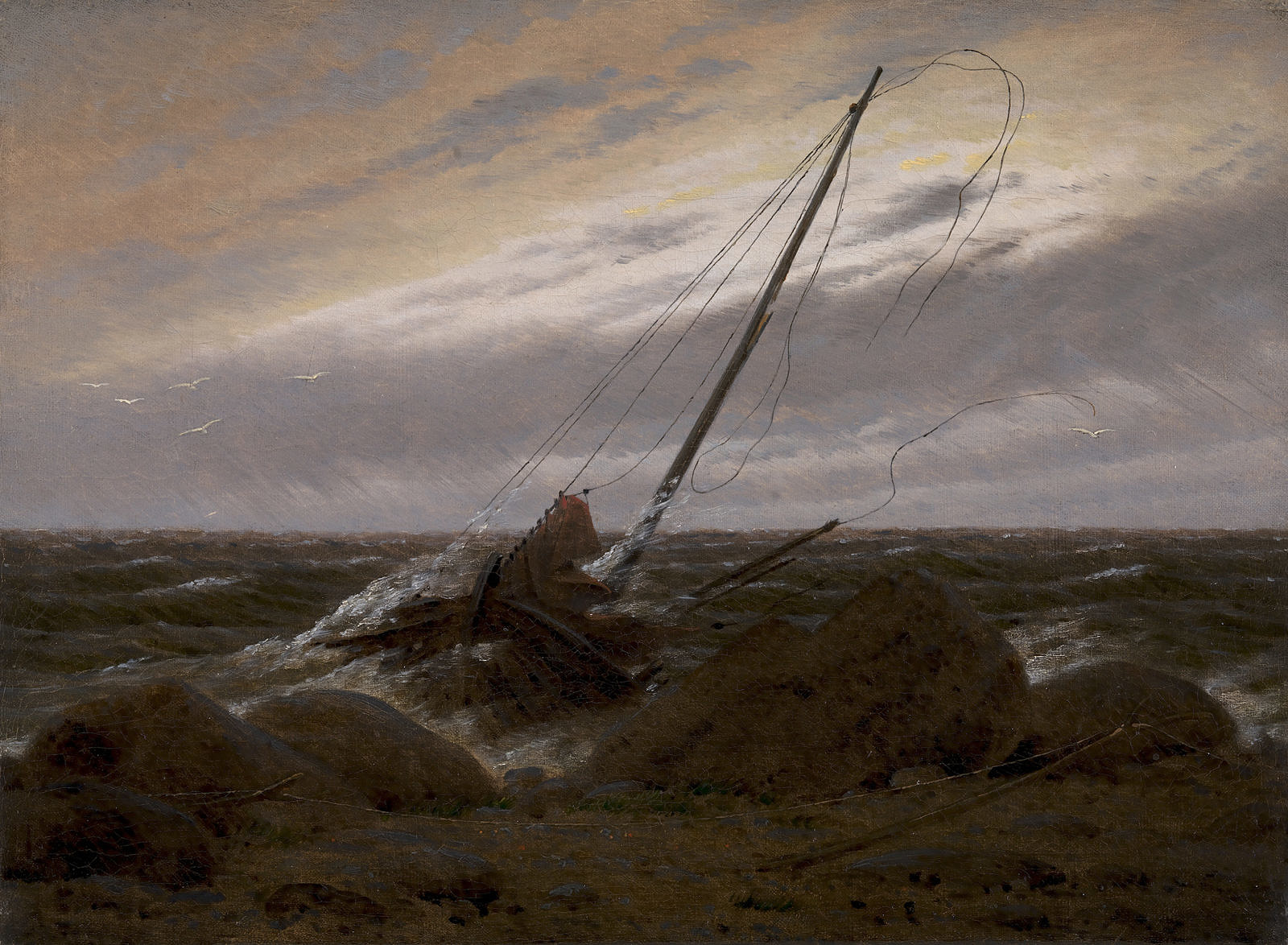
After the Storm by Caspar David Friedrich (1817)

Piano Sonata no.23 in F minor Op.57 ‘Appassionata’ for piano (1804-5, Beethoven aged 34)

1. Allegro assai
2. Andante con moto
3. Allegro ma non troppo – Presto

Dedication Count Franz von Brunswick

Duration 23″

Listen

written by Ben Hogwood

Background and Critical Reception

Even within Beethoven’s output, the Appassionata sonata is seen as a landmark. As Angela Hewitt writes in the booklet note for her recording of the work on Hyperion, it is a central part of Beethoven’s ‘heroic’ period, sat in publication order between the Eroica symphony and the Piano Concerto no.4, and at a time where Beethoven was taking risks.

Beethoven’s fellow composer and friend Ferdinand Ries recorded how he watched Beethoven at work in Baden. The two composers went for a walk, where Ries described a striking melody on the shawm – which Beethoven could not hear because of his rapidly advancing deafness. It turned out that he was preoccupied in any case, for on their return he immediately went to the keyboard, and played through the newly composed finale of the new sonata, Ries recounting a performance of ‘irresistible fire and mighty force’.

Writing in The Beethoven Companion, Harold Truscott asserts that ‘technically, apart from one or two passages, the work is not difficult to play…yet can still sound very brilliant. Its real difficulty, however, is control of its varied elements and of the great expressive power which is their sum.’

Angela Hewitt notes Beethoven’s holding back of this power until the finale – an increasingly notable feature of his writing. As Jan Swafford writes, ‘Beethoven had an incomparable skill for raising a movement to what seems an unsurpassable peak of excitement or tension, then to surpass it.’

Thoughts

In the Appassionata the risk taking can be seen everywhere you turn. It can be found in the work’s opening phrase, going down to the low ‘F’ exploiting the bigger range of Beethoven’s new Erard piano. It can be found in the stormy middle section of the first movement and the whirlwind figurations of the last, where the right hand is playing so fast it threatens to go off the end! It can also be found in the structural design, Beethoven writing a slow movement that acts initially as an equivalent to the hymnal slow movement in the Pathetique sonata, but ends up as a bridge to the finale. The consolation it was beginning to provide is wholly lost.

Its opening three notes give an immediate idea of the gravitas of the piece. They may be the notes of the F minor triad but they carry great weight – as Beethoven’s works in this key were wont to do. The first movement is compelling, the main theme littered with interruptions as though a battle is being waged between war and peace. The latter breaks out in the second movement, the hymnal motive both simple and moving, but soon gathering momentum as Beethoven finds he cannot stand still.

All is headed for a last movement of formidable power, unlike anything we have heard on the piano so far. The torrent of notes fly in the face of Truscott’s assertion that the piece is not difficult to play – but the language for the listener is unremitting and straightforward. At the end the Appassionata sets its listener down in a heap, all emotion spent.

Recordings used and Spotify links

Alfred Brendel (Philips)
András Schiff (ECM)
Angela Hewitt (Hyperion)
Paul Badura-Skoda (Arcana)
Stephen Kovacevich (EMI)
Igor Levit (Sony Classical)
Claudio Arrau (Philips)
Daniel Barenboim (Deutsche Grammophon)

There are some towering interpretations of Beethoven’s masterpiece in this playlist, not least those by Emil Gilels, Claudio Arrau and Alfred Brendel. Andras Schiff and Angela Hewitt are also very fine. Paul Badura-Skoda secures authentic drama from his Broadwood piano, dating from a mere decade after the piece was written.

You can hear clips of Angela Hewitt’s recording at the Hyperion website

You can chart the Arcana Beethoven playlist as it grows, with one recommended version of each piece we listen to. Catch up here!

Also written in 1805 Cherubini Faniska

Next up tbc!

Online Concert: Doric String Quartet & Brett Dean @ Wigmore Hall – Haydn & Beethoven

Doric String Quartet [Alex Redington, Ying Xue (violins), Hélène Clément (viola), John Myerscough (cello)], Brett Dean (viola)

Haydn String Quartet in F major Op.50/5 ‘The Dream’ (1787)
Beethoven String Quintet in C major Op.29 (1801)

Wigmore Hall, Monday 23 January 1pm

by Ben Hogwood

Is there a better musical tonic on a grey Monday in January than a Haydn string quartet? Not in this case, as the Doric String Quartet built on the solid foundations of their recent recordings of the composer’s music for Chandos with a well-crafted and nicely weighted account of one of the composer’s middle-period works.

Haydn wrote so many symphonies, string quartets and piano trios – to name just three disciplines in which he was prolific – that nicknames are helpful in identifying the works. Some of them can be quite spurious, but in the case of The Dream the label describes the serene slow movement of the quartet, and its carefree violin fantasies. The work is placed fifth work in a set of six quartets written for King Frederick William II of Prussia, and finds Haydn making further strides in the development of this new form.

The Doric captured that sense of discovery, although they took just a little while to settle, with a couple of relatively coarse moments at the start. This was however a beautifully played account, with an enjoyable lightness of touch in the outer movements and an airy account of the ‘dream’ movement itself. The players were clearly sticking to the first principles of chamber music, enjoying the conversational exchanges between the instruments but bringing the audience in on their enjoyment too. This was most evident in a lively third movement Menuetto and Vivace finale.

Brett Dean is one of the most-performed living composers, but he also has a formidable CV as a viola player, playing in the Berlin Philharmoniker for 14 years. While composing is his primary discipline these days he remains active as an instrumentalist. The Doric Quartet’s current tour includes his String Quartet Hidden Agendas, while welcoming Dean as a notable addition to the ensemble for Beethoven’s String Quintet.

The five have an easy musical chemistry, Dean effortlessly slotting in to play a work that is beginning to get the recognition it deserves, both within Beethoven’s output and in context as a fine continuation of Mozart’s innovations in the form. This performance got to the heart of Beethoven’s energetic writing in a flowing first movement, enjoying the melodic exchanges, while the second movement explored the richer mid-range colours available in music of elegiac quality, as well as enjoying the composer’s excursions to further flung keys.

In the third movement Scherzo there was a notable raising of the stakes, and an upsurge in kinetic energy. The demands were comfortably matched by the five players here, who built on this with a finale of high drama and stormy countenance.

For more livestreamed concerts from the Wigmore Hall, click here

Late night Beethoven with Emil Gilels

by Ben Hogwood

Late night Beethoven – the Appassionata Sonata

Whilst preparing for the next in Arcana’s Listening to Beethoven series – the 216th instalment, all told! – I have become more acutely aware of just how effective the Beethoven piano sonatas are for after hours listening.

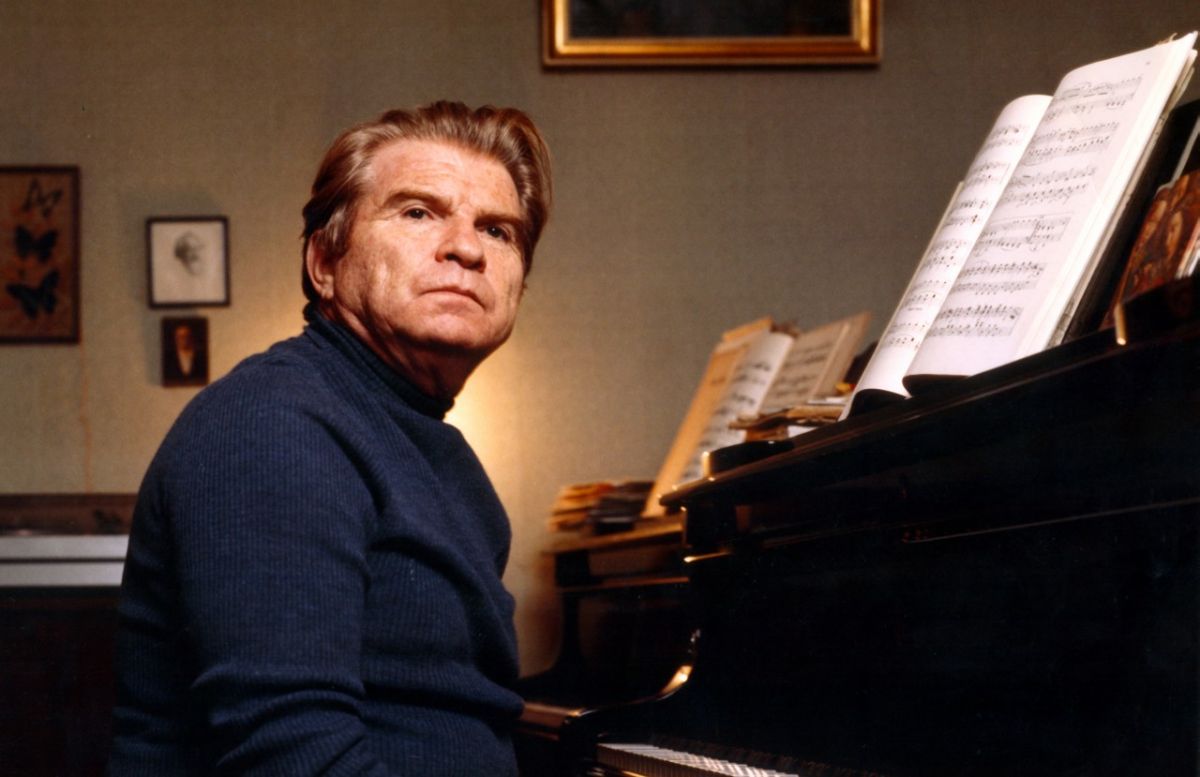
Without further ado, then, here is the Appassionata Sonata in a commanding recording made by Emil Gilels (above), part of the wonderful collection of Beethoven sonatas he made for Deutsche Grammophon. It is quite an experience:

Listening to Beethoven #215 – Triple Concerto in C major Op.56

View of the Augarten Palace and Park, Vienna by Johann Ziegler

Triple Concerto in C major Op.56 for piano, violin, cello and orchestra (1803-4, Beethoven aged 33)

1 Allegro
2 Largo (attacca)
3 Rondo alla polacca

Dedication Joseph Franz von Lobkowitz
Duration 38′

Listen

written by Ben Hogwood

Background and Critical Reception

It is fashionable in recent times to look down on Beethoven’s Triple Concerto, but despite its perceived critical failings it was an innovative work for its time. Lewis Lockwood notes how, “We can readily connect the Triple Concerto with the symphonie concertante that had prospered in France and in French-influenced centres such as Bonn and Mannheim in the later eighteenth century, and which stayed alive until about 1810.”

Beethoven had performers in mind when writing the piece, too – the violinist Georg August Seidler, cellist Anton Kraft (the senior figure in the cello-playing family) and almost certainly Beethoven himself, at the piano. Jan Swafford traces the origins of Beethoven’s thinking to the baroque concerto grosso, describing the work as ‘gorgeous but peculiar, expensive and impractical to perform’. Commentators are united in drawing a link to Beethoven’s intentions at the time of composition, where he was looking to move to Paris and impress the musical hierarchy there. The concerto would have been in his arsenal for sure, but while staying put it quickly lost its allure – with no public performance until 1808, at the summer concerts in Augarten (above)

The Triple Concerto has a substantial structure, with a first movement almost 20 minutes in length – then a relatively brief Largo in A flat major which leads directly to a Rondo alla Polacca finale. The key choice is instructive, A flat having been used for the slow movements of the Pathetique sonata and the Piano Concerto no.1. Commentators have noted how prominent the cello in this piece – and in their excellent book Beethoven’s Cello, Marc D. Moskovitz and R. Larry Todd spend time examining its role.

Along with Lewis Lockwood, they see the Triple Concerto as a forebear to techniques used by Beethoven soon after in his third Cello Sonata, Op.69, with Lockwood going further to bring in the two piano trios Op.70.

Thoughts

Listening to the Triple Concerto is a pleasant if undemanding experience – and if the listener is in the right mood an enjoyable concert experience is in store. It certainly is a long first movement, its 20 minutes an extraordinary length of time for a concerto even when there are three soloists involved. Although it can seem very drawn out at times there is a very appealing warmth, especially when the cello is to the fore. Its themes are invested with a great deal of warmth, complemented by the violin and then trumped by the piano.

The second movement feels like a flash in the pan, for it is only 5 minutes in length (roughly 15% of the work) but it has an appealing tenderness and lyricism. The Rondo alla Polacca is a ‘safe’ C major, though there is some dancing as the soloists have fun together.

The musical language of the Triple Concerto feels relatively basic – back in C major as we were in the Piano Concerto no.1 – but the interplay between the soloists is where the chief interest lies. The language feels quite basic – we are in C major as we were for the first piano Concerto – and the length of the piece is considerable. Yet, in the right combination of soloists and orchestra, the Triple Concerto can still be an appealing proposition.

Recordings used and Spotify links

David Oistrakh (violin), Mstislav Rostropovich (cello), Sviatoslav Richter (piano), Berliner Philharmoniker / Herbert von Karajan (EMI)
Christian Tetzlaff, Tanja Tetzlaff, Royal Northern Sinfonia / Lars Vogt (Ondine)
Wolfgang Schneiderhan, Pierre Fournier, Géza Anda, Deutsches Symphonie-Orchester Berlin / Ferenc Fricsay (Deutsche Grammophon)
Beaux Arts Trio, London Philharmonic Orchestra / Bernard Haitink (Philips)
Urban Svensson, Mats Rondin, Boris Berezovsky, Swedish Chamber Orchestra / Thomas Dausgaard (Simax)

The Triple Concerto discography is dripping with illustrious soloists, sometimes starry individuals in search of a winning trio showcase, or artists who have formed a genuine musical chemistry together. Of the versions listed above, there are some high voltage collisions that prove an intoxicating experience – none more so than the irresistible combination of Oistrakh, Rostropovich, Richter and Karajan.

You can chart the Arcana Beethoven playlist as it grows, with one recommended version of each piece we listen to. Catch up here!

Also written in 1804 Spohr Violin Concerto no.2 in D minor Op.2

Next up Piano Sonata no.23 in F minor Op.57 ‘Appassionata’