Listening to Beethoven #214 – Piano Sonata no.22 in F major Op.54

Sea beach with fisherman (The fisherman) by Caspar David Friedrich (1807)

Piano Sonata no.22 in F major Op.54 for piano (1804, Beethoven aged 33)

1 In tempo d’un menuetto
2 Allegretto – Più allegro

Dedication Count Ferdinand Waldstein
Duration 12′

Listen

written by Ben Hogwood

Background and Critical Reception

Beethoven biographer Lewis Lockwood has an important observation, that ‘in other middle-period pairings, a long, powerful and brilliant work (in this case the Waldstein sonata) is succeeded by a short and quiet one, with Beethoven creating a double image and a deliberate contrast, a reminder of the balance between great and small, between seemingly opposed and adjacent modes of being that can compliment one another, as a rare flower grows by a large tree’.

Little needs to be said after that rather neat summing up – though it is as always worth hearing the thoughts of pianist Angela Hewitt. Writing booklet notes for her Hyperion recording, she notes the elegance of the opening before ‘all hell breaks loose’. For the second movement, she stresses the importance of observing the composer’s ‘dolce’ marking to avoid it sounding like a study.

Thoughts

As Angela Hewitt notes, it is a graceful and genial start to this piece, Beethoven enjoying a few sleights of hand with some chromatic inflections to the melody, before the cavalry rights roughshod over the tranquil mood. There is a perceptible glint in the composer’s eye while this happens, and you can sense the frowns the first audience may well have had! This means when the mood returns to tranquil the listener is no longer as trusting as to what might happen – and they are right to be wary, for Beethoven enjoys a few more outbursts and melodic quirks.

The second movement is fast and flowing, though there is a more romantic element to the twinkling right hand, and a good deal of expressive weight when the left hand goes towards the bottom end of the piano. Once again Beethoven enjoys journeying to far-flung keys, and the momentum never lets up right to the emphatic finish.

This is a curious piece, one that is indicative of Beethoven’s quest for the new, challenging existing notions of how a sonata should behave. It has elements of the Waldstein’s virtuosity and energy in the final movement, and has all the characteristics of a ‘prelude and fugue’ from the Baroque period. There is much to enjoy here!

Recordings used and Spotify links

Alfred Brendel (Philips)
András Schiff (ECM)
Angela Hewitt (Hyperion)
Paul Badura-Skoda (Arcana)
Stephen Kovacevich (EMI)
Igor Levit (Sony Classical)
Claudio Arrau (Philips)
Daniel Barenboim (Deutsche Grammophon)

Once again a crowded field of some very fine versions, though those from András Schiff, Alfred Brendel and Stephen Kovacevich prove particularly enjoyable.

You can hear clips of Angela Hewitt’s recording at the Hyperion website

You can chart the Arcana Beethoven playlist as it grows, with one recommended version of each piece we listen to. Catch up here!

Also written in 1804 Hummel Rondo in E flat major Op.11

Next up Triple Concerto in C major Op.56

In Appreciation – Lars Vogt

by Ben Hogwood

Yesterday we learned of the incredibly sad news that the pianist Lars Vogt had died, at the age of 51.

The warmth and appreciation of tributes paid to him from fellow artists yesterday evening testify to his warm personality, strength of character and great musicianship. Lars was diagnosed with cancer early in 2021, but even in his chemotherapy found that playing the piano channelled the most positive energy and feeling. Here, for instance, is a wonderful performance of Mozart’s Piano Concerto no.24 given as part of the Parnu Festival with the Estonian Festival Orchestra and Paavo Järvi.

Lars was an extremely versatile artist, either as a soloist, chamber musician or conductor. Regular partners included violinist Christian Tetzlaff and cellist Truls Mørk, while he took part in a formidable piano trio with Christian and cellist Tanja Tetzlaff. He also proved himself a conductor of some note from the keyboard, directing the Royal Northern Sinfonia from the piano in recordings of the concertos of Beethoven and Brahms, and the Orchestre de Chambre de Paris in the concertos of Mendelssohn.

His orchestral partners spoke of him with great warmth, and certainly his time in Newcastle with the Royal Northern Sinfonia was characterised by energetic, creative music making and seasonal planning. My own memories of solo performance run back to a spellbinding account of the Goldberg Variations at Wigmore Hall:

As a concerto soloist I also recall a memorable account of BrahmsPiano Concerto no.2 with the BBC Symphony Orchestra and Jiří Bělohlávek at the Proms:

At the same festival, I also recall a full-blooded account of the Bartók Violin Sonata no.1 with Christian Tetzlaff:

As a recording artist, Vogt enjoyed many peaks, mostly in the company of the Ondine label. The playlist below brings together just a section of these recordings, in the knowledge that a couple more are yet to be released.

He will be greatly missed, and we send condolences to all his family and friends. His lasting gift to us is in the form of recordings we will treasure greatly:

Listening to Beethoven #213 – Piano Sonata no.21 in C major Op.53 ‘Waldstein’

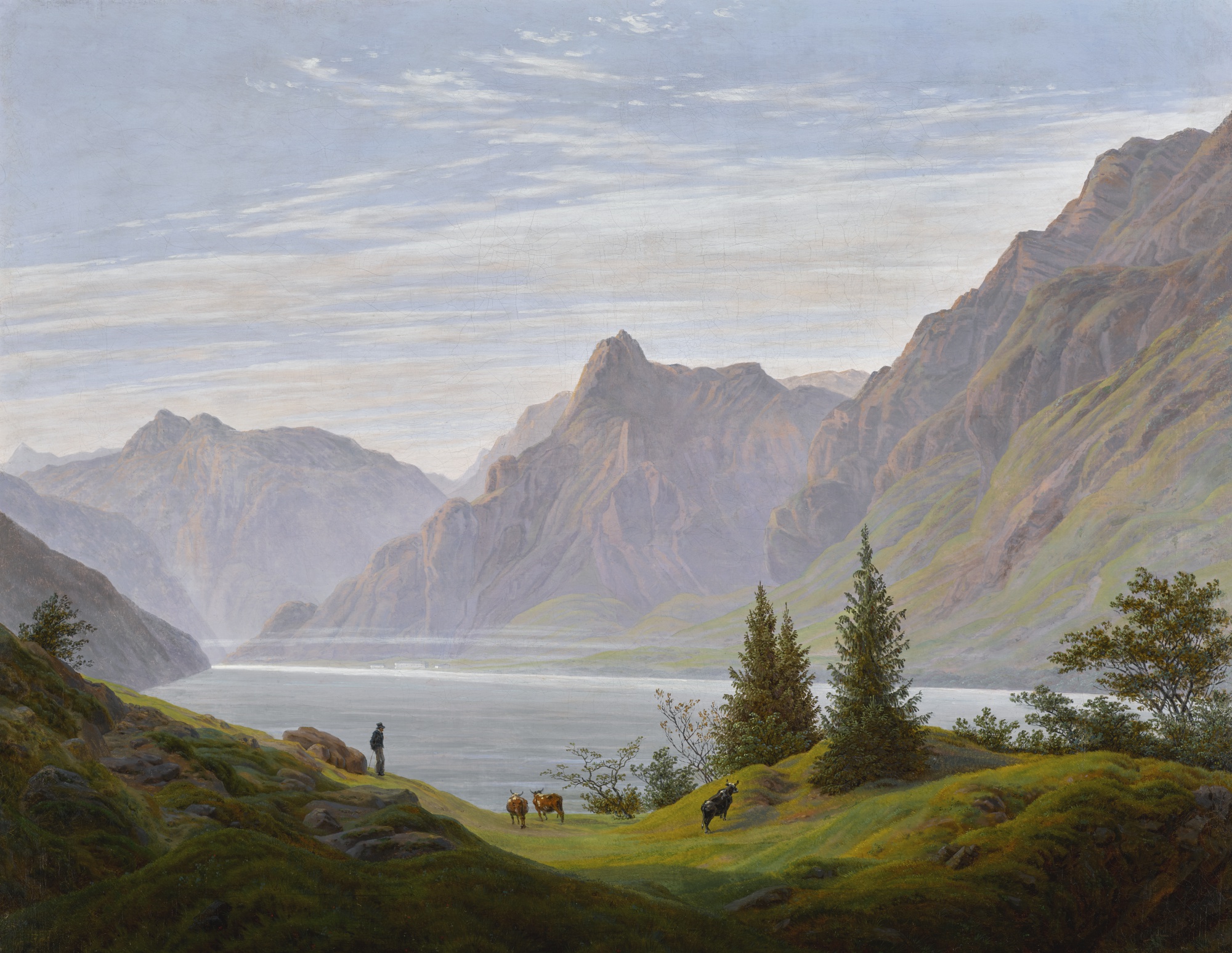
Landscape With Mountain Lake, Morning by Caspar David Friedrich (1823-35)

Piano Sonata no.21 in C major Op.53 ‘Waldstein’ for piano (1804, Beethoven aged 33)

1 Allegro molto
2 Introduzione – Adagio molto –
3 Rondo: Allegretto moderato

Dedication Count Ferdinand Waldstein
Duration 25′

Listen

written by Ben Hogwood

Background and Critical Reception

Beethoven’s next piano sonata was dedicated to the man who could claim to have had the greatest impact on his success as a composer – Count Ferdinand Waldstein of Bonn. What the Count made of this dedication we do not know, for he was fighting abroad at the time, but Beethoven had dedicated a remarkable new work in his favour.

It was written for a new piano – an Érard of French origin, with four pedals and an extended range. Jan Swafford gives a compelling account of how Beethoven wrote for this new instrument, ‘its action heavier and its sound bigger than the Viennese pianos he was used to.’ There were new colours to explore, and pedal effects with which to experiment, and Beethoven wasted no time, using the piano as ‘the vehicle of a heroic journey that ends in overflowing exaltation’. In this sense, the Waldstein Sonata was similar in thought to the recently premiered Eroica symphony.

The sonata, however, is a very different animal. Charles Rosen talks of ‘a characteristic sound, not only unlike the music of other composers, but unlike any other work of Beethoven, an energetic hardness, dissonant and yet curiously plain, expressive without richness.’ For Lewis Lockwood, ‘this sonata could never have been played by merely competent amateurs in Beethoven’s time. With its arrival the technical level of the piano sonata was elevated to that of the concerto.’ He equates it to Beethoven’s accomplishment for the violin in the Kreutzer sonata.

In an interview with Arcana, Angela Hewitt recognised its difficulties. “I don’t think it’s his greatest sonata but it is a wonderful performance piece when you can bring it off. If you look at every detail in it then it and want to play it well it is very difficult.”

The first movement draws attention for what Swafford terms its ‘surging and singularly pianistic dynamism’. The second movement was initially going to be a substantial Andante, but failed its initial audition with friends, who declared it too long. After a fit of pique, Beethoven reluctantly agreed and removed it, publishing it separately as the standalone Andante favori. Replacing it was a short transitional movement in the same key, a ‘short stretch of reverie and anticipation’.

The anticipation is lets loose by the finale, ‘one of the most ecstatic of all movement for piano’ in Swafford’s eyes, ‘like a gust of wind that shocks the listener into a sense of the joyous effervescence of life’. For him, the Waldstein is ‘a feat of disciplined craftsmanship that would have been practically unimaginable if he had not done it’. Here is a defining demonstration of what musical composition is about.’

Thoughts

I’m going to disagree with Angela Hewitt and declare the Waldstein as the finest sonata in Beethoven’s output thus far, in a crowded field. Even listening to it now, some 218 years after composition, its first movement has the power to make the listener sit up and take notice of its unusual writing.

For few works for piano are as immediately propulsive, and to be writing that now gives an idea of just how forward-looking this piece must have sounded to its first audience in 1804. The first movement bubbles with energy, establishing C major as the home key but with a restless gait and an unstoppable drive. Contrast that with the still second theme, a glimpse of pure light before the quickfire figures return.

The second movement Adagio is indeed a magical transition, but the finale into which it leads is brilliantly judged, ghosting in with a graceful, singing melody, the piano now sounding more orchestral in its wide range of colours and figures. Soon the energy levels of the first movement are met and surpassed, the deceptively simple melody keeping the ship on course while the torrent of water surrounds it from the other hands.

Everything here is done with a firm assurance, the composer fully confident in his processes and results. As a result the Waldstein is Beethoven’s most assured and confident pieces yet – impeccably structured, brilliantly written for the developing piano and full of challenges, not to mention thrills and spills for the audience.

Recordings used and Spotify links

Emil Gilels (Deutsche Grammophon)
Alfred Brendel (Philips)
András Schiff (ECM)
Angela Hewitt (Hyperion)
Paul Badura-Skoda (Arcana)
Stephen Kovacevich (EMI)
Igor Levit (Sony Classical)
Claudio Arrau (Philips)
Daniel Barenboim (Deutsche Grammophon)

Emil Gilels gives a peerless account for DG, one of his very finest piano recordings. In a crowded field his is arguably the leading version, though the others listed above are hardly slouches!

You can hear clips of Angela Hewitt’s recording at the Hyperion website

You can chart the Arcana Beethoven playlist as it grows, with one recommended version of each piece we listen to. Catch up here!

Also written in 1804 Ries Piano Sonata in A minor Op.1/2

Next up Piano Sonata no.22 in F major Op.54

BBC Proms #42 – Jan Lisiecki, BBC Scottish Symphony Orchestra / Thomas Dausgaard: Nielsen, Beethoven & Sibelius

Prom 42 – Jan Lisiecki (piano), BBC Scottish Symphony Orchestra / Thomas Dausgaard

Sibelius Symphony no.7 in C major Op.105 (1924)
Beethoven Piano Concerto no.4 in G major Op.58 (1804-6)
Nielsen Symphony no.4 FS76 ‘The Inextinguishable’ (1914-16)

Royal Albert Hall, London
Thursday 18 August 2022

Reviewed by Richard Whitehouse Photos (c) Chris Christodoulou

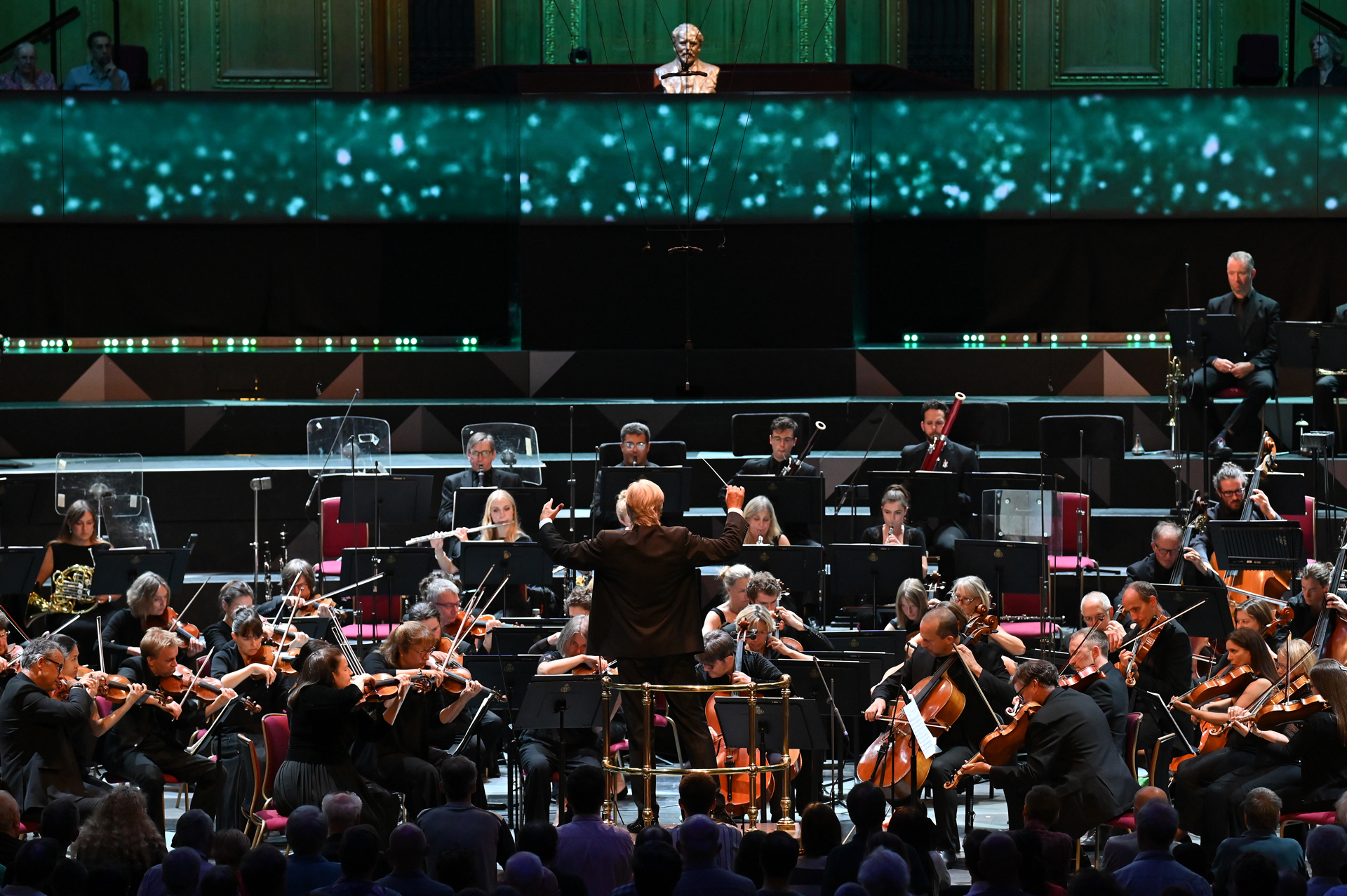
Ending his tenure as Chief Conductor of the BBC Scottish Symphony Orchestra, Thomas Dausgaard directed this programme which once again played to both his and the orchestra’s strengths – in the process underlining just what they have achieved together over the past six seasons.

He might not have scheduled Sibelius quite so assiduously as his one-time predecessor Osmo Vänskä, but Dausgaard is hardly less perceptive in this composer as was proven with his take on the Seventh Symphony. If not a tale of two parts, the first half that resonated more deeply – an introduction shot through with expectancy that preceded a powerful build-up to the first emergence of the trombone theme, and an effortlessly accelerating ‘scherzo’ as made feasible a central climax of rare intensity. From here tension dropped a little over the course of a lucid yet (in this context) over-extended ‘intermezzo’, and if the approach to the final return of the trombone theme had the right inexorability, the strings’ climactic response was a little reined-in emotionally. Nor did the fraught cadence into the home-key have the desired inevitability.

Whether or not the Sibelius should open a concert, Beethoven’s Fourth Piano Concerto made for an ideal continuation. Stepping in at the eleventh hour, Jan Lisiecki is no stranger to this music such that his lightly articulated if rarely insubstantial tone complemented Dausgaard’s incisive but never headlong accompaniment. Just occasionally in the opening movement this jewel-like pianism felt a little self-defeating, though not with a lucid rendering of the (more familiar) cadenza or transition from the Andante into the finale of heart-stopping eloquence. The latter movement had the necessary vigour but also an appealing intimacy, as in the lower strings’ transition towards the final return of the rondo theme or those ruminative woodwind asides before the decisive coda. Chopin’s C minor Nocturne (1838) made for a limpid encore.

Keen to get on with proceedings, Dausgaard launched Nielsen’s Fourth Symphony after the interval before applause had subsided. Often a conductor willing to modify his approach, he might have steered the opening Allegro less forcefully given the textural detail that was lost in the Albert Hall’s ample expanse, but the twofold appearances of the ‘motto’ theme were magisterially rendered – the shocked transition into the intermezzo proving as mesmeric as this latter movement was affecting through its deft combination of winsomeness and pathos.

Equally memorable was Dausgaard’s handling of the slow movement, here exuding fervency without undue histrionics both in the searching string threnodies and the confiding passages either side – the latter of which provided a stealthy transition into the final Allegro. Here the placing of a second timpani set front-left in the arena made stretched the antiphonal contrast a little too obviously, but the music’s overall intent came across unscathed as the ‘motto’ made its climactic final appearance then those closing bars hit the ground as they should – running. Whether or not Dausgaard intended ‘Inextinguishable’ to sum up his music-making with the BBCSSO, or whether anything might be read into his wearing a Covid mask throughout, this concert was a worthy leave-taking. Hopefully he will not be absent from the UK for too long.

Click on the artist names for more information on Jan Lisiecki and Thomas Dausgaard, and for more information on the BBC Scottish Symphony Orchestra head to their website

BBC Proms #41 – Behzod Abduraimov, Elizabeth Watts, Benjamin Appl, BBC Scottish Symphony Orchestra / Thomas Dausgaard: Nielsen ‘Sinfonia espansiva’, Beethoven & Ravel

Prom 41 – Behzod Abduraimov (piano), Elizabeth Watts (soprano), Benjamin Appl (baritone), BBC Scottish Symphony Orchestra / Thomas Dausgaard

Ravel La Valse (1919-20)
Beethoven Piano Concerto no.1 in C major Op.15 (1795, rev. 1800)
Nielsen Symphony no.3 ‘Sinfonia espansiva’ (1910-11)

Royal Albert Hall, London
Wednesday 17 August 2022

Reviewed by Ben Hogwood Photos (c) Mark Allan

There is a changing of the guard in Glasgow. On his way in as chief conductor of the BBC Scottish Symphony Orchestra is the conductor, composer and pianist Ryan Wigglesworth, an exciting and evolving artist. He will replace Thomas Dausgaard, who leaves City Halls after six years and is signing off with two consecutive Proms of symphonies by his Danish compatriot, Carl Nielsen.

We began this concert in Paris, however, with a distinctly chilly account of Ravel’s La Valse. The horrors of the First World War encroach into Ravel’s writing, and were all too audible around the edges in this performance, which was brilliantly played and lucidly controlled. The feather-light strings of the opening bars ensured the dynamic contrasts were extreme, and when the full orchestra cut loose towards the end the effect was both exhilarating and terrifying, the ‘fatal whirring motion’ of Ravel’s inspiration collapsing in the final bars.

Dynamic contrasts were a feature, too, in a fine performance of Beethoven’s Piano Concerto no.1, with soloist Behzod Abduraimov. The Uzbek pianist was the ideal foil for the clarity of the reduced forces of the BBC SSO, giving an affectionate performance notable for its dance-like qualities. There were occasional rhythmic indulgences in the solo party, but these were both tasteful and well-managed, with Dausgaard alive to his flights of fancy. The dialogue with the orchestra was often exquisite, especially when piano and clarinet (Yann Ghiro) linked in the slow movement. Time stood still for an early example of one of Beethoven’s heavenly silences, before the Rondo danced its way into the minds of the audience for the interval. Stylishly played and with some attractive, witty touches, this was an endearing account of high technical quality. Abduraimov’s encore was slightly at odds with the feather-light touches displayed in the Beethoven, being a heavyweight performance of Mercutio from Prokofiev’s Romeo & Juliet transcriptions for piano. There were fireworks and great virtuosity, though the significance of choosing a Ukrainian-born composer should not be overlooked.

Dausgaard returned after the interval to conduct his compatriot’s ‘most Danish’ symphony. David Gutman’s ever-helpful Proms notes revealed that Nielsen’s Sinfonia espansiva was somehow not performed at the Proms until 1990, and even this was its first Royal Albert Hall performance in 23 years. It was a memorable encounter, the high voltage first movement immediately into gear with its repeated notes surging forward, bursting through the dam. The exultant first movement was complemented by the radiance of the second, with wordless vocals from on high in the gallery supplied by soprano Elizabeth Watts and baritone Benjamin Appl. The combination, over hushed strings, enchanted the hall and made the best possible use of its spatial options. Surrounding their contributions were winsome cadenzas from the BBC Scottish woodwind, portraying the great Danish outdoors with crisp outlines.

The third movement built its energy cumulatively, all the while pointing towards the finale, where we heard the Danish ‘ode to joy’ in luxurious tones from assembled strings and horns. This was music of wide-eyed optimism, galvanizing orchestra, audience and conductor alike to an emphatic signing off. With contributions from golden brass and thundering timpani, this performance was truly expansive – and served to emphasise what the Proms audiences have been missing with this symphony all these years!

For more information, click on the names to discover more on the BBC Scottish Symphony Orchestra and their new chief conductor Ryan Wigglesworth