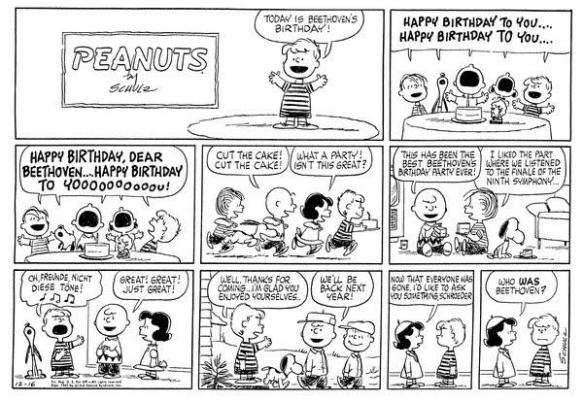
Peanuts comic strip, drawn by Charles M. Schulz (c)PNTS
Graf, liebster Graf, liebstes Schaf WoO 101 for three voices (1802, Beethoven aged 31)
Dedication Count Nikolaus Zmeskall von Domanovecz
Text Beethoven
Duration 0’45”
Listen
Background and Critical Reception
This is one of Beethoven’s early musical jokes, which he included in a letter to his friend, Count Nikolaus Zmeskall von Domanovecz. The short text translates as ‘Count, Count, dear Count, best sheep!’
Thoughts
Literally scribbled on the back of an envelope, this is a charming fragment – cleverly working the pronunciations into the melody. Very much a case of less is more!
6 Ländler WoO 15 for piano (1802, Beethoven aged 31)
Dedication unknown
Duration 6′
written by Ben Hogwood
Listen
Background and Critical Reception
Beethoven often turned to the Ländler, a folk dance in 3/4 time, as a way of helping entertain his Viennese clientele. He was able to score them for different instrumental combinations, presumably in response to the circumstances of the entertainers. This set is originally for two violins and a bass instrument – but as with many of these dances was also reworked into a piano version.
Thoughts
The piano version of these dance pieces brings out the ‘drone’ qualities in the accompaniment more. These can be heard on the first beat of the bar, where the left hand of the piano typically plays in intervals of a fifth, the support on which the more rhythmic elements of the dance can work their magic.
Recordings used and Spotify links
Jenő Jandó (Naxos)
Martino Tirimo (Hänssler)
Both versions are nicely played, bringing out the spring in Beethoven’s step.
Also written in 1802Förster 3 String Quartets Op.21
Next up Graf, liebster Graf, liebstes Schaf WoO 101
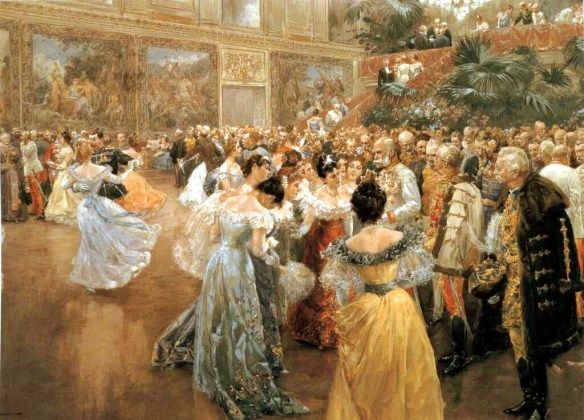
Two ladies are presented to Emperor Franz Joseph at a ball in the Hofburg Imperial Palace, painting by Wilhelm Gause (1900)
6 Ländler WoO 15 for two violins and bass (1802, Beethoven aged 31)
Dedication unknown
Duration 6′
written by Ben Hogwood
Listen
Background and Critical Reception
As we know from earlier examples, Beethoven often turned to the Ländler, a folk dance in 3/4 time, as a way of helping entertain his Viennese clientele. He was able to score them for different instrumental combinations, presumably in response to the circumstances of the entertainers. This set is originally for two violins and a bass instrument – but as with many of these dances was also reworked into a piano version.
Thoughts
D major was Beethoven’s ‘go-to’ key for Ländler – and five of the six examples in this small set are in that key. The only exception is no.4 in D minor, which works well as a ‘trio’ section if all six are played back to back. It is a frown in comparison to the other five, which are carefree examples of Beethoven fulfilling a function with ease.
The first is bright, and light on its feet, the fifth has an attractive flourish but feels half-finished. Typically the sixth and final dance, a simple arpeggiated affair, signs off with a coda.
Bagatelle in C major WoO 54, ‘Lustig-Traurig’ for piano (1802, Beethoven aged 31)
Dedication not known Duration 2′
Listen
written by Ben Hogwood
Background and Critical Reception
Around his major compositions we will continue to find Beethoven’s miniatures. This piece, whose nickname translates as ‘happy-sad’, is thought by some to have originated in 1798 – and appears to have just missed out on inclusion in the Op.33 set published earlier in the year.
Perhaps because of its size, this piece is glossed over by Beethoven commentators in favour of its more substantial companions. It appears to have been written for pianists of moderate ability, as with many of the bagatelles.
Thoughts
The happy-sad elements of this bagatelle are all told through harmony. This short character piece follows the profile of its title – switching mood between happy (C major) and sad (C minor). It’s a little doubtful if the C minor is actually sad, as it sounds more agitated, and the C major sounds happy in a slightly wary way we might associate more with Schubert.
Yet here is an aspect of Beethoven’s genius, the ability to write for all levels – be it the advanced player or the occasional one – and leave each a memorable work, a catchy tune, an enjoyable piece to return to.
Recordings used and Spotify playlist
Jenő Jandó (Naxos) Olli Mustonen (Sony BMG) Ronald Brautigam (BIS)
Three very different recordings. Olli Mustonen always has an individual take and this longer, stretched version is no exception. Brautigam is brisk, and Jandó nicely measured.
You can chart the Arcana Beethoven playlist as it grows, with one recommended version of each piece we listen to. Catch up here!
Portrait of Pietro Metastasio, c1770, by Meytens or Batoni
“Ne’ giorni tuoi felici”, WoO 93, duet for soprano, tenor and orchestra (1802, Beethoven aged 31)
Dedication Not known Text Pietro Metastasio Duration 7′
Listen
Background and Critical Reception
Ne’ giorni tuoi felici (‘In your days of happiness’) uses text from Metastasio’s L’Olimpiade, with Beethoven becoming the third recorded composer to set these words behind Leonardo Leo and Florian Gassmann. Writing briefly about the duet in booklet notes for Hyperion, Nicholas Marston notes that two of the soloists at the premiere, which appears not to have taken place until 1814, were Anna Milder-Hauptmann and Carl Weinmüller. They helped create the roles of Leonore and Rocco respectively in the premiere of Fidelio later that year.
Very little is written about this piece, other than to note its position in Beethoven’s output as one of the last vocal works written under the tuition of Salieri.
Thoughts
We hear the tenor first, pleading, ‘in the days of your happiness remember me’ – and his lover, the soprano, answers in kind. Initially the mood is relatively calm, but as the duet progresses things become more agitated. The singers’ lines are deeply expressive, and initially slower that has perhaps been the norm in Beethoven’s vocal music with orchestra so far. The composer gives the voices plenty of room, the orchestra at a polite distance, but the violins have important counter melodies to contribute.
A quicker section arrives just over half way through, the singers ‘dying of jealousy’ as they experience considerable distress, not to mention ‘savage pain’. This sours the mood and tugs at the heartstrings, ending the duet on a fractious note. At this point it feels unfinished, with more of the story to play out – as though Beethoven could have continued to write a more expansive piece using Metastasio’s text.
The soprano writing often hits the heights, but in a way less concerned with overt display and more with lyrical passion. She leads the duet, which makes a powerful impression – and gives notice that Beethoven’s dramatic gifts will be more than capable of shifting to the operatic stage before too long.
Recordings used
Dan Karlström (tenor), Reetta Haavisto (soprano), Turku Philharmonic Orchestra / Leif Segerstam (Naxos)
Christopher Maltman (tenor), Janice Watson (soprano), English Chamber Orchestra / Matthew Best (Hyperion) (an excerpt can be heard here)
Arthur Apelt (tenor), Hannelore Kuhse (soprano), Staatskapelle Berlin / Eberhard Büchner (Eterna)
You can chart the Arcana Beethoven playlist as it grows, with one recommended version of each piece we listen to. Catch up here!
Also written in 1802Charles-Simon Catel Sémiramis
Next upBagatelle in C major / minor ‘Lustig-traurig’

 Peanuts comic strip, drawn by Charles M. Schulz (c)PNTS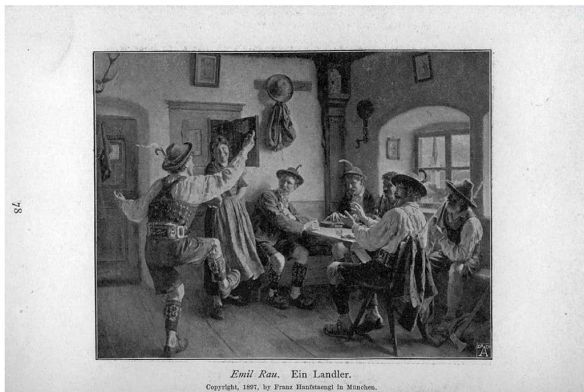
 Two ladies are presented to Emperor Franz Joseph at a ball in the Hofburg Imperial Palace, painting by Wilhelm Gause (1900)

 Arcana.fm